.webp)
.webp)
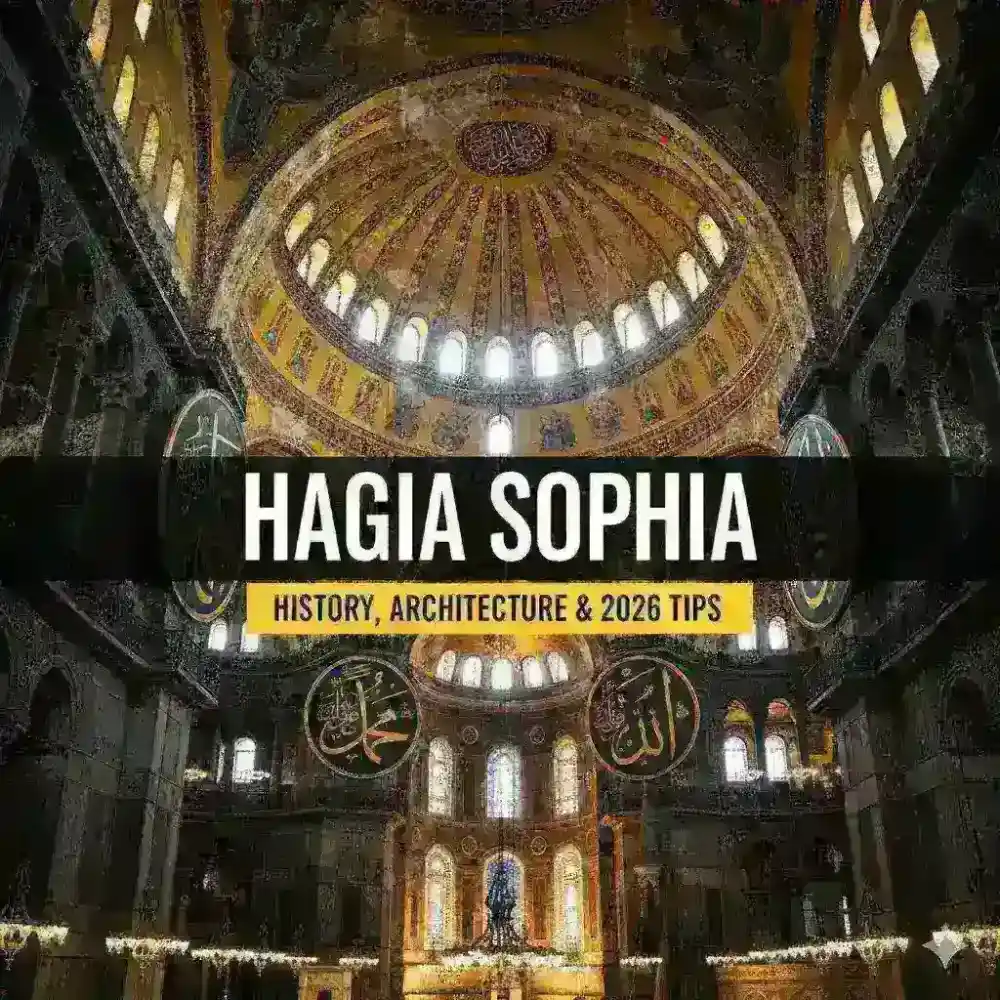
HAGIA SOPHIA: HISTORY, ARCHITECTURE, AND VISITING TIPS
Hagia Sophia stands as one of the world's most architecturally significant and historically layered monuments, a structure that has witnessed the rise and fall of empires, served as a cathedral, mosque, museum, and mosque again, and continues to captivate millions of visitors with its breathtaking beauty and profound cultural significance. Located in Istanbul's historic Sultanahmet district, this magnificent building has stood for nearly 1,500 years, bearing witness to the transformation of Constantinople to Istanbul, the convergence of Christianity and Islam, and the enduring legacy of human creativity and spiritual devotion.
In 2026, as travelers seek destinations that combine architectural splendor, historical depth, and cultural meaning, Hagia Sophia remains an essential destination for anyone visiting Istanbul. Whether you are an architecture enthusiast fascinated by Byzantine engineering, a history lover drawn by layers of civilization, a spiritual seeker inspired by sacred spaces, or simply a curious traveler awed by human achievement, this comprehensive guide will help you understand and appreciate one of the world's most extraordinary monuments.
Understanding Hagia Sophia requires more than admiring its massive dome; it demands engaging with the complex tapestry of cultures, religions, and histories that have shaped this sacred space. By approaching Hagia Sophia with curiosity and respect, you will discover not just a building but a living dialogue between East and West, between Christianity and Islam, between ancient heritage and contemporary faith.
HISTORICAL JOURNEY: FROM BYZANTINE CATHEDRAL TO OTTOMAN MOSQUE
The story of Hagia Sophia spans nearly fifteen centuries, reflecting the complex history of Istanbul itself.
Byzantine Origins (537-1453):
Hagia Sophia was originally built as a Christian cathedral by Byzantine Emperor Justinian I between 532-537 CE. The construction was remarkably swift for such an ambitious project, completed in just five years with a workforce of 10,000 men.
Historical Context:
- Original Name: "Church of the Holy Wisdom" (Hagia Sophia in Greek)
- Purpose: Principal cathedral of Constantinople and seat of the Ecumenical Patriarch
- Predecessors: Two earlier churches stood on the same site, both destroyed by fire
- Construction Cost: Reportedly consumed the entire annual income of the Byzantine Empire
Architectural Innovation:
- Architects: Anthemius of Tralles and Isidore of Miletus, renowned mathematicians and engineers
- Revolutionary Design: The massive dome appeared to float above the nave, unprecedented in scale
- Engineering Feat: The dome spans 31 meters (102 feet) in diameter and rises 55 meters (180 feet) above the floor
- Structural Challenges: The original dome collapsed in 558 CE due to earthquakes and was rebuilt with a slightly steeper profile
Ottoman Transformation (1453-1935):
When Sultan Mehmed II (Mehmed the Conqueror) captured Constantinople in 1453, he converted Hagia Sophia into a mosque, marking a new chapter in the building's history.
Conversion Details:
- Date: June 1, 1453, immediately following the conquest
- First Friday Prayer: Mehmed II prayed at the site, establishing its function as a mosque
- Additions: Minarets, mihrab (prayer niche), minbar (pulpit), and Islamic calligraphic roundels were added
- Mosaics: Most Christian mosaics were covered with plaster rather than destroyed, preserving them for future generations
Ottoman Enhancements:
- Minarets: Four minarets were added over time, transforming the skyline
- Madrasas: Islamic schools were built around the complex
- Library: A library was established within the complex
- Tombs: Ottoman sultans and family members were buried in tombs adjacent to Hagia Sophia
Museum Period (1935-2020):
In 1935, Mustafa Kemal Atatürk, founder of the Turkish Republic, converted Hagia Sophia into a museum as part of his secularization reforms.
Museum Era:
- Restoration: Christian mosaics were uncovered and restored
- Accessibility: Open to visitors of all faiths and backgrounds
- UNESCO Status: Designated as part of the "Historic Areas of Istanbul" World Heritage Site in 1985
- Symbol: Became a symbol of Turkey's secular, modern identity
Return to Mosque (2020-Present):
In July 2020, Turkey's Council of State annulled the 1934 cabinet decision that made Hagia Sophia a museum, and it was reconverted to a mosque.
Current Status:
- Function: Active mosque open for Muslim prayers five times daily
- Visitor Access: Non-Muslim visitors welcome outside prayer times
- Mosaics: Christian mosaics remain visible but may be covered during prayer times
- Controversy: The decision sparked international debate about cultural heritage and religious freedom
ARCHITECTURAL MARVELS: BYZANTINE ENGINEERING AND OTTOMAN ENHANCEMENTS
Hagia Sophia's architecture represents a masterpiece of Byzantine engineering enhanced by Ottoman additions, creating a unique fusion of Christian and Islamic architectural traditions.
The Dome: Engineering Marvel
The massive dome is Hagia Sophia's most striking feature and one of the greatest achievements of Byzantine architecture.
Dome Specifications:
- Diameter: 31 meters (102 feet)
- Height: 55 meters (180 feet) above the floor
- Weight: Supported by four massive pendentives (triangular segments)
- Windows: 40 arched windows at the base create the illusion that the dome floats
Engineering Innovation:
- Pendentives: Triangular curved segments that transition from the square base to the circular dome
- Light Effects: Windows at the dome's base create a ring of light, making the dome appear to hover
- Structural Evolution: The dome has been rebuilt and reinforced multiple times due to earthquakes
- Buttresses: Ottoman architects added external buttresses to stabilize the structure
Interior Space and Layout:
The interior of Hagia Sophia is vast and awe-inspiring, designed to overwhelm visitors with its scale and beauty.
Nave:
- Dimensions: Approximately 70 meters long and 75 meters wide
- Columns: Massive columns from various parts of the empire, including porphyry from Egypt and green marble from Thessaly
- Gallery: Upper gallery provides additional worship space and panoramic views
- Imperial Door: Bronze door reserved for the emperor's entrance
Mosaics and Decorations:
Hagia Sophia houses some of the finest examples of Byzantine mosaic art, alongside Ottoman Islamic calligraphy.
Byzantine Mosaics:
- Deesis Mosaic: Christ Pantocrator flanked by Virgin Mary and John the Baptist (13th century)
- Empress Zoe Mosaic: Depicting Empress Zoe and Emperor Constantine IX (11th century)
- Komnenos Mosaic: Showing Virgin Mary with Emperor John II Komnenos and Empress Irene (12th century)
- Seraphim Mosaics: Six-winged angels in the pendentives (some uncovered, some covered)
Ottoman Calligraphy:
- Roundels: Eight massive calligraphic roundels (7.5 meters diameter) featuring names of Allah, Prophet Muhammad, the first four caliphs, and the Prophet's grandsons
- Calligrapher: Created by Kazasker Mustafa İzzet Efendi in the 19th century
- Mihrab: Prayer niche indicating the direction of Mecca
- Minbar: Pulpit for sermons
Structural Elements:
Columns and Capitals:
- Total Columns: 104 columns throughout the building
- Materials: Various marbles including green Thessalian, purple porphyry, and white Proconnesian
- Capitals: Intricately carved with Christian symbols and monograms
- Origin: Sourced from across the Byzantine Empire, including temples in Rome, Ephesus, and Baalbek
Walls and Floors:
- Marble Panels: Walls covered with multicolored marble panels in geometric patterns
- Opus Sectile: Intricate stone inlay work on floors
- Porphyry: Purple stone reserved for imperial use
VISITING HAGIA SOPHIA IN 2026: PRACTICAL INFORMATION
As an active mosque, Hagia Sophia has specific visiting requirements and protocols that differ from its museum period.
Opening Hours and Prayer Times:
Current Schedule (subject to change):
- Visiting Hours: Generally open to tourists outside prayer times
- Prayer Times: Five daily prayers (Fajr, Dhuhr, Asr, Maghrib, Isha) based on Islamic lunar calendar
- Friday Closures: Closed to tourists during Friday midday prayers (approximately 12:00-14:30)
- Ramadan: Special hours during Ramadan; check current schedule before visiting
Checking Current Hours:
- Official Website: Check Istanbul Grand Mosque (Hagia Sophia) official website
- Local Information: Ask at your hotel or tourist information center
- Prayer Time Apps: Use Islamic prayer time apps for Istanbul to plan your visit
Admission and Tickets:
Current Policy:
- Entry Fee: Free admission for all visitors
- Donations: Voluntary donations appreciated for maintenance
- Guided Tours: Available for a fee from licensed guides
- Audio Guides: May be available for rent
Dress Code Requirements:
As an active mosque, modest dress is strictly enforced:
For All Visitors:
- Shoulders: Must be covered (no tank tops or sleeveless shirts)
- Knees: Must be covered (no shorts or short skirts)
- Head Covering: Women must cover their hair (scarves provided at entrance if needed)
- Shoes: Must be removed before entering prayer areas (shoe bags provided)
Additional Guidelines:
- Modest Clothing: Avoid tight or revealing clothing
- Scarves: Available free at entrance for those who need them
- Respect: Maintain quiet and respectful behavior
Photography Guidelines:
Photography is permitted with restrictions:
Allowed:
- Interior and exterior photography for personal use
- Architectural details and mosaics (when not covered)
- General views of the space
Restricted:
- Flash Photography: Prohibited to protect mosaics and avoid disturbing worshippers
- Prayer Areas: Do not photograph people praying
- Covered Mosaics: Some Christian mosaics may be covered during prayer times
- Commercial Use: Requires special permission
Best Practices:
- Be Discreet: Avoid disrupting prayers or other visitors
- Respect Privacy: Do not photograph worshippers without permission
- Check Coverage: Some mosaics may be partially covered; respect these arrangements
Best Time to Visit:
Timing significantly impacts your experience:
Avoid Crowds:
- Early Morning: Arrive right after opening for fewer crowds
- Weekdays: Tuesday-Thursday typically less crowded than weekends
- Off-Peak Seasons: November-March (excluding holidays) sees fewer tourists
Optimal Lighting:
- Morning Light: Interior mosaics best illuminated in morning hours
- Afternoon: Exterior photography best in afternoon light
- Golden Hour: Exterior shots spectacular at sunset
Prayer Time Considerations:
- Visit Between Prayers: Plan your visit between prayer times for uninterrupted access
- Friday Avoidance: Avoid Friday midday (12:00-14:30) when closed to tourists
- Ramadan: Special considerations during Ramadan; verify current schedule
Duration of Visit:
Recommended Time:
- Minimum: 1-2 hours for basic visit
- Ideal: 2-3 hours to appreciate architecture, mosaics, and history
- Photography Enthusiasts: Allow 3+ hours for detailed photography
- Guided Tours: Typically 1.5-2 hours
WHAT TO SEE: HIGHLIGHTS AND HIDDEN GEMS
Hagia Sophia contains numerous architectural and artistic treasures worth discovering.
Must-See Features:
The Dome:
- Look Up: Marvel at the massive dome and its 40 windows
- Pendentives: Observe the triangular segments supporting the dome
- Light Effects: Notice how light filters through the windows
Imperial Gallery:
- Upper Level: Access via ramp to the upper gallery
- Views: Panoramic views of the nave below
- Mosaics: Best-preserved Byzantine mosaics located here
- Emperor's Loge: Area reserved for the emperor and court
Notable Mosaics:
Deesis Mosaic (Upper Gallery):
- Location: South gallery
- Subject: Christ Pantocrator with Virgin Mary and John the Baptist
- Date: 13th century
- Significance: Considered one of the finest Byzantine mosaics
Empress Zoe Mosaic (Upper Gallery):
- Location: South gallery
- Subject: Empress Zoe with Emperor Constantine IX and Christ
- Date: 11th century
- Detail: Shows evidence of multiple renovations
Viking Graffiti (Upper Gallery):
- Location: Marble parapets in the upper gallery
- Inscription: "Halfdan carved these runes"
- Date: 9th-10th century
- Significance: Evidence of Viking presence in Constantinople
Ottoman Elements:
Calligraphic Roundels:
- Eight massive disks with Islamic calligraphy
- Names of Allah, Prophet Muhammad, and early Islamic leaders
- Created in 19th century by Kazasker Mustafa İzzet Efendi
Mihrab and Minbar:
- Mihrab: Prayer niche indicating direction of Mecca
- Minbar: Pulpit for Friday sermons
- Ottoman craftsmanship and decoration
Lustration Urns:
- Two large marble urns from Pergamon
- 16th century Ottoman additions
- Used for ritual ablutions
ACCESSIBILITY AND FACILITIES
Hagia Sophia strives to accommodate visitors with varying needs:
Wheelchair Accessibility:
- Ground Floor: Accessible via ramps
- Upper Gallery: Limited accessibility; steep ramps may be challenging
- Restrooms: Accessible facilities available
- Assistance: Staff available to assist visitors with disabilities
Facilities:
- Restrooms: Available on-site
- Shoe Storage: Free shoe bags or storage areas provided
- Scarves: Head coverings provided free for women
- Water: Drinking fountains available
- Seating: Benches available for rest
Nearby Amenities:
- Restaurants: Numerous options in Sultanahmet district
- Cafes: Coffee shops and tea gardens nearby
- Shops: Souvenir shops and local markets in vicinity
NEARBY ATTRACTIONS: MAXIMIZING YOUR SULTANAHMET VISIT
Hagia Sophia is located in the heart of Istanbul's historic peninsula, surrounded by other significant attractions:
Within Walking Distance:
Blue Mosque (Sultan Ahmed Mosque):
- Distance: 100 meters (2-minute walk)
- Significance: Active mosque with six minarets
- Visiting: Free entry; dress code required
- Time Needed: 1-2 hours
Topkapi Palace:
- Distance: 400 meters (5-minute walk)
- Significance: Ottoman imperial palace for 400 years
- Visiting: Admission fee; allow 3-4 hours
- Highlights: Harem, Treasury, Holy Relics
Basilica Cistern:
- Distance: 200 meters (3-minute walk)
- Significance: 6th-century underground water reservoir
- Visiting: Admission fee; allow 1 hour
- Highlights: Medusa head columns, atmospheric lighting
Archaeological Museums:
- Distance: 500 meters (7-minute walk)
- Significance: Extensive collection of ancient artifacts
- Visiting: Admission fee; allow 2-3 hours
Grand Bazaar:
- Distance: 1 kilometer (15-minute walk)
- Significance: One of world's oldest covered markets
- Visiting: Free entry; allow 2-3 hours
- Highlights: Jewelry, carpets, ceramics, spices
Suggested Itineraries:
Half-Day Itinerary (4 hours):
1. Hagia Sophia (1.5 hours)
2. Blue Mosque (1 hour)
3. Basilica Cistern (1 hour)
4. Lunch in Sultanahmet (30 minutes)
Full-Day Itinerary (8 hours):
1. Hagia Sophia (2 hours)
2. Topkapi Palace (3 hours)
3. Lunch break (1 hour)
4. Basilica Cistern (1 hour)
5. Grand Bazaar exploration (1 hour)
Two-Day Itinerary:
Day 1: Hagia Sophia, Blue Mosque, Basilica Cistern, Grand Bazaar
Day 2: Topkapi Palace, Archaeological Museums, Spice Bazaar
CULTURAL SENSITIVITY AND RESPECTFUL VISITING
As both a mosque and a UNESCO World Heritage Site, Hagia Sophia requires visitors to demonstrate cultural sensitivity and respect.
Religious Respect:
During Prayer Times:
- Quiet Behavior: Maintain silence and avoid disruptions
- Prayer Areas: Do not walk through areas where people are praying
- Photography: Avoid photographing worshippers
- Patience: Wait respectfully if prayers are in progress
General Guidelines:
- Modest Dress: Strictly adhere to dress code requirements
- Remove Shoes: Always remove shoes before entering carpeted areas
- Head Covering: Women must cover hair at all times
- Behavior: Speak quietly; avoid loud conversations or laughter
Cultural Understanding:
Historical Context:
- Learn Before Visiting: Understanding the building's complex history enhances appreciation
- Multiple Perspectives: Recognize that Hagia Sophia holds different meanings for different communities
- Respect All Faiths: Show respect for both Christian and Islamic heritage
Photography Etiquette:
- Ask Permission: When photographing people, always ask first
- Be Discreet: Avoid flash and intrusive photography
- Respect Restrictions: Follow all posted photography guidelines
- Share Responsibly: When sharing on social media, provide accurate context
SUSTAINABLE TOURISM: PRESERVING HAGIA SOPHIA FOR FUTURE GENERATIONS
As one of the world's most visited monuments, Hagia Sophia faces challenges from mass tourism. Visitors can help preserve this treasure:
Environmental Responsibility:
Reduce Impact:
- Reusable Bottles: Bring a refillable water bottle
- Waste Disposal: Use designated trash and recycling bins
- Energy Conservation: Respect lighting and climate control systems
- Minimal Touch: Avoid touching mosaics, columns, and decorations
Support Preservation:
- Donations: Consider making a donation for maintenance
- Responsible Tours: Choose licensed guides who emphasize preservation
- Spread Awareness: Share information about respectful visiting
Cultural Preservation:
Respect Heritage:
- Follow Guidelines: Adhere to all posted rules and staff instructions
- Report Issues: Notify staff if you observe damage or inappropriate behavior
- Educate Others: Share proper visiting etiquette with fellow travelers
- Support Local: Purchase from local artisans and businesses in Sultanahmet
PRACTICAL TIPS FOR 2026 VISITORS
Essential Information:
Before You Go:
- Check Hours: Verify current opening hours and prayer times
- Dress Appropriately: Bring or wear modest clothing
- Scarf for Women: Bring a headscarf or use provided scarves
- Comfortable Shoes: You'll remove and carry shoes; easy-to-carry footwear helpful
- Camera: Bring camera but respect photography restrictions
- Cash: Have Turkish Lira for donations, guides, or nearby purchases
During Your Visit:
- Arrive Early: Beat crowds by arriving at opening time
- Security: Expect airport-style security screening
- Shoe Bags: Use provided bags to carry shoes
- Stay Hydrated: Bring water, especially in summer
- Take Your Time: Don't rush; allow time to appreciate the space
- Upper Gallery: Don't miss the upper level for best mosaics
After Your Visit:
- Explore Sultanahmet: Many attractions within walking distance
- Local Cuisine: Try traditional Turkish food in nearby restaurants
- Shopping: Grand Bazaar and Spice Bazaar nearby for souvenirs
Common Mistakes to Avoid:
- Inappropriate Dress: Don't arrive in shorts, tank tops, or without headscarf (women)
- Rushing: Don't treat it as a quick photo stop; allow adequate time
- Disrespecting Prayers: Don't ignore prayer time closures or disrupt worshippers
- Flash Photography: Don't use flash; it damages mosaics and disturbs others
- Touching Mosaics: Don't touch ancient decorations; oils damage them
- Loud Behavior: Don't speak loudly; maintain respectful volume
CONCLUSION: A MONUMENT TO HUMAN SPIRITUALITY AND CREATIVITY
Hagia Sophia stands as more than just a building; it is a testament to human creativity, spiritual devotion, and cultural convergence. For nearly 1,500 years, it has witnessed empires rise and fall, faiths flourish and transform, and countless individuals find awe and inspiration within its sacred walls.
In 2026, as you stand beneath its massive dome, gaze upon its ancient mosaics, and feel the weight of history surrounding you, you participate in a continuum of human experience that spans centuries. Whether you come as a person of faith, a student of history, an admirer of architecture, or simply a curious traveler, Hagia Sophia offers something profound: a reminder of our shared human capacity for beauty, devotion, and creation.
May your visit to Hagia Sophia deepen your appreciation for the rich tapestry of human civilization and inspire your commitment to preserving cultural heritage for future generations. As the countless architects, artists, worshippers, and visitors who have walked these halls understood, true greatness lies not just in stone and mortar but in the stories, meanings, and connections we create across time and cultures. May you carry that understanding forward, wherever your journey leads.
Useful Resources:
- Official Hagia Sophia Information: Check Istanbul Grand Mosque official channels
- Istanbul Tourism: www.goturkey.com
- UNESCO World Heritage: whc.unesco.org
- Prayer Times: Use Islamic prayer time apps for Istanbul
- Emergency Services: 112 for all emergencies in Turkey
Disclaimer: Information is accurate as of early 2026. Opening hours, prayer times, and visiting policies may change; verify current details through official channels before your visit. This guide is for informational purposes only and does not constitute professional travel advice.
0 Comments