.webp)
.webp)
Guide to Traditional Textiles and Craft Markets in Chiapas
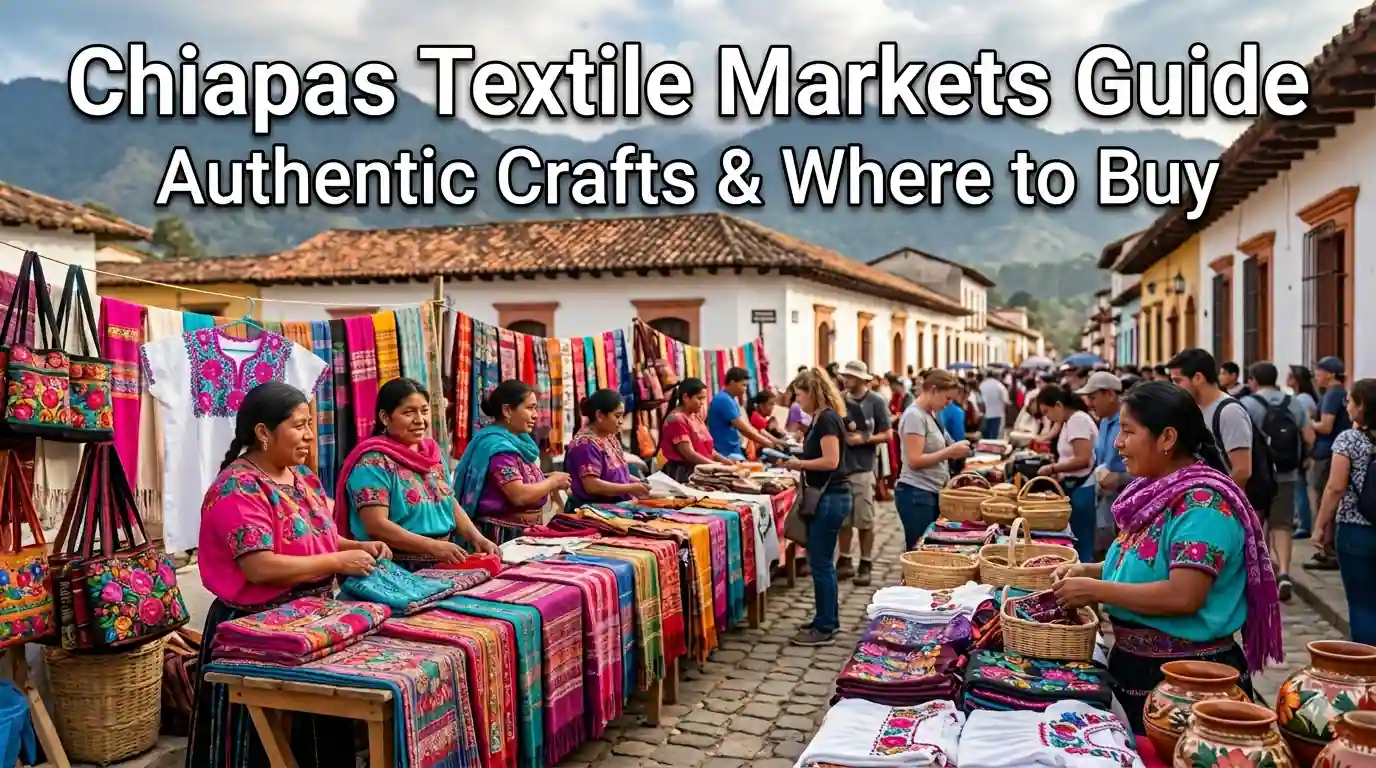
Quick Answer for Cultural Travelers
Chiapas offers Mexico's most vibrant traditional textile markets, centered in San Cristóbal de las Casas with authentic weaving villages like Zinacantán and San Juan Chamula nearby. The best markets operate daily from 9 AM to 6 PM, with Saturday markets offering the widest selection. US citizens need only a valid passport for entry with no visa required for stays under 180 days. Budget $15-50 for small textiles like bags or belts, $40-150 for huipiles (traditional blouses), and $100-400+ for large ceremonial pieces. Visit during dry season (November-April) for comfortable market exploration. Always buy directly from weavers or cooperatives to ensure fair prices and authentic handwoven quality.
Why Chiapas Textiles Represent Living Cultural Heritage

Chiapas stands as Mexico's most important region for traditional textile production, where indigenous communities have preserved pre-Hispanic weaving techniques alongside colonial-era innovations for over 500 years. The state's highland communities, primarily Tzotzil, Tzeltal, Tojolabal, and Ch'ol peoples, maintain distinct weaving traditions that communicate identity, history, and spiritual beliefs through color, pattern, and technique.
Unlike mass-produced souvenirs found in coastal resort areas, Chiapas textiles represent hours or even months of skilled labor using backstrap looms, natural dyes, and designs passed through generations. Each community develops signature styles—Zinacantán's intricate floral embroidery in bright pinks and purples, San Juan Chamula's geometric patterns in deep reds and blacks, or Oxchuc's complex supplementary weft designs.
For culturally conscious travelers, purchasing textiles directly from weavers provides economic support to indigenous families while preserving traditional crafts threatened by factory production and cultural assimilation. Understanding the difference between authentic handwoven pieces and machine-made imitations ensures your money supports genuine artisans rather than middlemen selling factory imports.
Major Craft Markets in San Cristóbal de las Casas
San Cristóbal de las Casas serves as the commercial and cultural hub for Chiapas highland textiles, offering multiple market options ranging from tourist-focused plazas to authentic indigenous trading spaces.
Mercado de Artesanías (Craft Market): Located near the cathedral in the city center, this covered market features dozens of vendors selling textiles, pottery, amber jewelry, and wood carvings. While convenient and air-conditioned, prices run 20-40% higher than village markets. Use this location for comparison shopping and smaller purchases, but verify items are genuinely handwoven rather than factory imports from Guatemala or Asia.
Mercado Municipal (Municipal Market): This authentic local market on Real de Guadalupe street prioritizes food and daily necessities but includes a textile section where indigenous women sell directly to local customers. Prices here reflect local purchasing power rather than tourist expectations, often 30-50% below craft market rates. However, selection focuses on everyday wear rather than decorative pieces, and vendors may speak limited Spanish or English.
Plaza 31 de Marzo: This outdoor plaza hosts rotating vendors selling textiles, leather goods, and souvenirs. Weekend markets offer the best selection with weavers from surrounding villages bringing fresh inventory. Morning hours (9 AM-12 PM) provide cooler temperatures and less crowded browsing conditions.
Cooperative Stores: Organizations like Sna Jolobil (House of the Weaver) and J'Manil Jovel operate as fair-trade cooperatives where weavers set prices and receive direct payment. While costs exceed street market rates, you guarantee authentic quality and ethical compensation. These stores also provide education about weaving techniques and cultural significance of designs.
Village Markets: Authentic Sources Beyond the City
Visiting weaving villages outside San Cristóbal provides deeper cultural context, better prices, and opportunities to meet artisans directly. These communities maintain traditional market days that have operated for centuries.
Zinacantán Market: Located 10 kilometers from San Cristóbal, Zinacantán hosts daily markets but Saturday offers the most extensive textile selection. Women wear distinctive embroidered huipiles with floral patterns in hot pink, purple, and turquoise. The market specializes in embroidered blouses, headpieces, and small woven bags. Expect to pay $25-60 for embroidered huipiles and $8-20 for smaller items. Combine your visit with a tour of nearby flower greenhouses and traditional Tzotzil homes.
San Juan Chamula Market: This spiritually significant village, just 8 kilometers from San Cristóbal, holds markets every Saturday and Sunday. Chamula textiles feature bold geometric patterns in deep reds, blacks, and whites using wool rather than cotton. The community's unique religious practices mean visitors should prioritize respectful observation over aggressive shopping. Purchase textiles only from designated market areas, never inside the church. Prices range $30-80 for wool huipiles and $15-40 for belts and bags.
San Lorenzo Zinacantán: This smaller village maintains traditional backstrap loom weaving with natural dyes. Visit Tuesday or Friday mornings when women gather to sell directly from their homes. You'll find exceptional quality pieces at prices 20-30% below city markets, plus opportunities to watch weaving demonstrations. Look for naturally dyed pieces using cochineal (red), indigo (blue), or moss (green).
Oxchuc and Tenango: These more remote villages require longer travel (2-3 hours from San Cristóbal) but reward visitors with some of Chiapas' most intricate supplementary weft designs. Oxchuc specializes in ceremonial huipiles that can take 3-6 months to complete, commanding prices of $200-600. Visit only with a local guide who speaks Tzeltal and can facilitate respectful interactions.
Understanding Traditional Weaving Techniques
Recognizing different weaving methods helps you identify authentic handwoven pieces and appreciate the skill and time investment behind each textile. This knowledge also strengthens your bargaining position and prevents overpaying for machine-made imports.
Backstrap Loom Weaving: The most traditional technique uses a simple loom where one end attaches to a tree or post and the other to the weaver's body. The weaver controls tension by leaning forward and backward, creating intricate patterns through manual thread manipulation. Backstrap loom pieces show slight irregularities that prove hand-weaving, and the fabric width rarely exceeds 24-30 inches. A single huipil can require 2-6 weeks of daily work.
Pedal Loom Weaving: Introduced by Spanish colonizers, pedal looms use foot treadles to control warp threads, allowing faster production and wider fabric. While still hand-operated, pedal loom pieces lack the subtle variations of backstrap work. Many cooperatives use pedal looms for larger items like rugs or table runners while reserving backstrap looms for traditional clothing.
Embroidery Techniques: Chiapas embroidery ranges from simple cross-stitch to complex satin stitch and appliqué work. Zinacantán's floral embroidery uses bright synthetic threads on machine-woven cotton bases, while more traditional communities embroider on handwoven fabric using natural dyes. Examine the back of embroidered pieces—hand embroidery shows individual stitches while machine embroidery creates uniform patterns with connecting threads.
Natural vs. Synthetic Dyes: Traditional natural dyes create softer, more complex colors but fade faster and cost significantly more. Cochineal insects produce reds and pinks, indigo plants create blues, and various mosses and plants yield greens, yellows, and browns. Synthetic dyes offer brighter, more consistent colors at lower prices. Ask vendors about dye sources and expect to pay 30-50% more for naturally dyed pieces.
Pricing Guide: What to Expect and How to Bargain
Understanding fair pricing prevents both overpaying and undervaluing artisan work. Remember that bargaining should respect the weaver's time and skill while acknowledging your budget constraints.
Typical Price Ranges for Common Items (USD):
| Item | Machine-Made/Import | Handwoven Standard | Handwoven Premium/Natural Dye |
| Small woven bag (morral) | $5 - $12 | $15 - $30 | $35 - $60 |
| Belt (faja) | $3 - $8 | $12 - $25 | $30 - $50 |
| Table runner | $8 - $15 | $20 - $40 | $50 - $90 |
| Embroidered huipil (blouse) | $15 - $30 | $40 - $80 | $100 - $200 |
| Ceremonial huipil | N/A | $150 - $300 | $400 - $800+ |
| Wall hanging (small) | $10 - $20 | $30 - $60 | $80 - $150 |
| Traditional skirt (corte) | $20 - $40 | $60 - $120 | $150 - $300 |
Bargaining Etiquette: Begin by asking "¿Cuánto cuesta?" (How much?) and showing genuine interest in the piece. If the price exceeds your budget, respond with "Es un poco caro para mí. ¿Tiene algo más económico?" (It's a bit expensive for me. Do you have something more economical?) rather than directly challenging the quoted price. Reasonable bargaining reduces prices by 10-20% in markets, less in cooperatives with fixed pricing.
Never bargain aggressively or insult the quality to drive down prices. Remember that a $40 huipil representing 40 hours of work compensates the weaver at $1/hour—far below minimum wage. If you wouldn't pay that rate for your own labor, consider whether the price truly exploits the artisan or simply reflects fair compensation for skilled work.
Buying multiple items from one vendor often yields better discounts than aggressive bargaining on single pieces. Ask "Si compro dos, ¿me hace un buen precio?" (If I buy two, will you give me a good price?) to initiate volume discounts.
Identifying Authentic Handwoven vs. Factory Imports
The Chiapas textile market suffers from factory-made imports, primarily from Guatemala and Asia, sold as authentic local crafts. Developing observation skills protects you from overpaying for mass-produced items.
Examination Techniques:
- Check the back: Handwoven pieces show the pattern reversed on the back with loose threads and slight irregularities. Machine-woven fabric appears identical on both sides with perfectly uniform stitches.
- Feel the texture: Hand-spun wool or cotton has slight thickness variations and a softer, more organic feel. Factory thread feels uniformly smooth and sometimes slightly plastic-like.
- Examine the edges: Handwoven textiles have finished edges created during weaving, often with fringe or hand-sewn hems. Factory pieces show serged edges from industrial machines.
- Look for imperfections: Slight pattern variations, minor color inconsistencies, or small weaving "mistakes" prove human creation. Perfect symmetry and uniformity suggest machine production.
- Smell the fabric: Naturally dyed pieces have an earthy, organic scent. Synthetic dyes sometimes carry a chemical odor, especially when new.
- 👉 Dominica’s 6.6km Cable Car 2026: Full guide to the world's longest ride to Boiling Lake.
- 👉 Do US Citizens Need a Passport for Mexico? (2026 Entry Guide)
- 👉 Panama Tourist Visa Guide 2026 for US Travelers
- 👉 Sanctuary Fest 2026: Complete guide to the electronic music event at TreeCasa Resort (March 20-22).
- 👉 The Cost of Food in Saint Lucia: Local Coal Pot Shops vs Resort Dining and Budget Travel Tips for 2026
Red Flags for Factory Imports: Prices significantly below market averages, vendors with enormous identical inventories, pieces with "Made in China" or "Hecho en Guatemala" tags (sometimes hidden), and sellers who cannot explain the weaving process or design meanings.
Questions to Ask Vendors: "¿Quién hizo esto?" (Who made this?), "¿Cuánto tiempo tardó en tejerlo?" (How long did it take to weave?), "¿Qué significa este diseño?" (What does this design mean?). Authentic weavers or those directly representing weavers answer confidently with specific details. Vendors selling imports provide vague responses or claim ignorance about production details.
Best Time to Visit for Market Shopping
Timing your Chiapas visit affects market selection, weather comfort, and pricing. Understanding seasonal patterns helps optimize your textile shopping experience.
Dry Season (November-April): These months offer ideal shopping conditions with sunny days, cool mornings, and minimal rain. Market attendance peaks during Semana Santa (Holy Week, March or April) when indigenous communities bring exceptional pieces for the tourist influx. However, prices rise 15-25% during this period, and popular markets become crowded. Book accommodations 2-3 months ahead if visiting during Holy Week.
Rainy Season (May-October): Afternoon showers rarely disrupt morning market hours, and reduced tourist numbers mean better bargaining leverage and more vendor attention. Prices drop 10-20% compared to peak season, and weavers have more time to explain techniques and customs. Carry a compact rain jacket and wear waterproof shoes for muddy market paths. September and October offer the deepest discounts but also the heaviest rainfall.
Market Day Calendar:
| Location | Primary Market Day | Secondary Days | Best For |
| San Cristóbal de las Casas | Daily | Saturday (largest) | Convenience, variety |
| Zinacantán | Saturday | Daily (smaller) | Embroidered huipiles |
| San Juan Chamula | Saturday-Sunday | Wednesday (small) | Wool textiles |
| San Lorenzo Zinacantán | Tuesday-Friday | Mornings only | Natural dyes, backstrap loom |
| Oxchuc | Thursday | Limited | Ceremonial pieces |
Cultural Etiquette and Respectful Shopping Practices
Shopping for textiles in Chiapas involves navigating complex cultural dynamics between indigenous communities and outside visitors. Respectful behavior ensures positive interactions and supports sustainable cultural tourism.
Photography Protocol: Always ask permission before photographing people, their work, or their stalls. Say "¿Puedo tomar una foto?" and respect refusals without argument. Some communities, particularly San Juan Chamula, restrict photography entirely in certain areas. Vendors may request payment ($1-5 USD) for professional photography—honor these requests or decline politely.
Clothing and Appearance: Dress modestly when visiting village markets, covering shoulders and knees as a sign of respect. Remove hats when entering homes or sacred spaces. In San Juan Chamula, avoid wearing clothing that mimics traditional dress, as this can appear appropriative or mocking.
Language Considerations: Learning basic Spanish phrases demonstrates respect and improves your shopping experience. While some vendors in San Cristóbal speak English, village markets operate primarily in Spanish and indigenous languages (Tzotzil, Tzeltal). A simple "Buenos días" (good morning) and "Gracias" (thank you) opens doors to warmer interactions.
Handling Textiles: Ask before touching displayed items, especially ceremonial pieces or delicate embroidery. Handle fabrics with clean hands and avoid placing bags or personal items on textiles. If you examine a piece extensively, purchasing becomes an ethical obligation even if you ultimately decline.
Understanding Sacred Designs: Some patterns carry religious or ceremonial significance and shouldn't be worn casually by outsiders. Ask vendors about design meanings and respect guidance about appropriate use. Purchasing a ceremonial huipil doesn't grant permission to wear it to costume parties or as fashion without understanding its cultural context.
Sample 4-Day Textile Shopping Itinerary
This balanced itinerary maximizes market exposure while allowing time for cultural immersion and rest.
Day 1: San Cristóbal Orientation
Arrive in San Cristóbal and acclimate to the 7,200-foot altitude with light activity. Visit Mercado de Artesanías for comparison shopping and price benchmarking without purchasing. Walk to Plaza 31 de Marzo to observe vendor setups and textile varieties. Evening: Attend a cultural presentation at Centro Cultural Na Bolom or Sna Jolobil to learn about weaving techniques and symbolism before shopping.
Day 2: Zinacantán Village Market
Take a colectivo (shared van) from San Cristóbal's main square to Zinacantán ($2-3 USD per person, 20 minutes). Arrive by 9 AM to beat crowds and heat. Explore the Saturday market, focusing on embroidered huipiles and small accessories. Visit a local family's home if invited to see weaving demonstrations. Purchase lunch from market food stalls ($5-8 USD) to support the local economy. Afternoon: Tour flower greenhouses and return to San Cristóbal by 4 PM.
Day 3: San Juan Chamula and Cooperative Shopping
Morning visit to San Juan Chamula market (respectfully observe religious practices, shop only in designated areas). Focus on wool textiles and geometric patterns. Afternoon: Visit Sna Jolobil or J'Manil Jovel cooperative stores in San Cristóbal for higher-end pieces with guaranteed authenticity. Compare prices and quality with previous days' observations. Make final purchases based on informed decisions.
Day 4: Mercado Municipal and Departure
Explore Mercado Municipal for authentic local prices and everyday textiles. This market reveals what indigenous families actually pay for clothing, providing perspective on fair pricing. Purchase final souvenirs, pack textiles carefully for travel, and arrange airport transportation. Consider shipping large pieces via postal service rather than carrying them.
Cost Breakdown for a Chiapas Textile Shopping Trip
Understanding total trip costs helps budget appropriately for both travel expenses and textile purchases.
Estimated Total Trip Cost (USD per person, 4 days):
| Expense Category | Budget Traveler | Mid-Range Traveler | Luxury/Collector |
| Flights (round-trip from US) | $250 - $400 | $400 - $600 | $600 - $900+ |
| Accommodation (3 nights) | $45 - $90 | $120 - $240 | $300 - $600+ |
| Local Transportation | $20 - $40 | $60 - $100 | $150 - $300+ |
| Food and Dining | $40 - $70 | $80 - $150 | $150 - $300+ |
| Textile Purchases | $50 - $150 | $200 - $500 | $600 - $2,000+ |
| Tours and Activities | $20 - $40 | $60 - $120 | $150 - $300+ |
| Travel Insurance | $30 - $50 | $50 - $80 | $80 - $150+ |
| Estimated Total | $455 - $840 | $970 - $1,790 | $2,030 - $4,550+ |
These estimates assume solo travel; couples can reduce per-person costs by sharing accommodations and transportation. Textile purchase budgets vary dramatically based on collecting goals—casual shoppers might buy a few small items while serious collectors invest in ceremonial pieces.
Budget travelers staying in hostels and eating at local comedores can experience Chiapas markets authentically for under $500 total. Mid-range travelers enjoy comfortable hotels, guided tours, and meaningful textile collections for $1,000-1,800. Luxury travelers and serious collectors investing in museum-quality pieces should budget $2,000+.
Shipping and Transporting Textiles Home
Large or delicate textiles require careful packing and sometimes shipping to prevent damage during travel.
Carry-On Strategy: Fold textiles flat in your carry-on bag rather than checking them. Use tissue paper or clean cotton sheets between layers to prevent color transfer. Roll rather than fold embroidered pieces to minimize creasing. Keep receipts accessible for customs declarations.
Shipping Options: Mexican postal service (Correos de México) offers international shipping from San Cristóbal's main post office. Costs range $25-60 depending on weight and destination. Insure valuable pieces and request tracking numbers. Private carriers like DHL or FedEx cost more ($50-150) but provide faster delivery and better tracking.
Customs Declarations: US travelers can import $800 worth of goods duty-free under personal exemption. Textiles for personal use typically face no additional duties, but commercial quantities may incur tariffs. Declare all purchases honestly and keep receipts. Handwoven textiles qualify as artisan crafts, not commercial goods, when imported in reasonable quantities.
Safety Considerations for Market Shopping
Chiapas generally maintains safe conditions for tourists, but standard precautions protect against petty crime and ensure positive experiences.
Money Security: Carry only the cash needed for daily shopping, leaving excess money and passports in hotel safes. Use money belts or hidden pouches rather than easily accessible pockets or bags. Divide cash between multiple locations so losing one stash doesn't eliminate all funds.
Market Navigation: Stick to main market areas during daylight hours. Avoid isolated sections or following vendors to "back room" storage areas. Shop with a companion when possible, especially in crowded Saturday markets where pickpockets operate.
Transportation Safety: Use official colectivos from designated stands rather than unmarked vehicles. Confirm prices before boarding and have small bills for exact payment. Return to San Cristóbal before dark when village markets close.
Health Precautions: Altitude in San Cristóbal (7,200 feet) can cause mild symptoms like shortness of breath or headaches. Stay hydrated, limit alcohol, and pace activities during the first 24 hours. Use sunscreen and hats—high altitude intensifies UV exposure even on cloudy days.
Supporting Ethical and Sustainable Textile Trade
Your purchasing decisions impact indigenous communities' economic sustainability and cultural preservation. Ethical shopping practices ensure your money creates positive change.
Buy Direct When Possible: Purchasing from weavers or their immediate family members ensures maximum compensation reaches the artisan. Village markets and home visits facilitate direct transactions, while city markets often involve multiple middlemen taking 30-50% of the sale price.
Support Cooperatives: Fair-trade cooperatives like Sna Jolobil, J'Manil Jovel, and Mujeres Artesanas de las Altas de Chiapas pool resources, provide quality control, and return profits to member weavers. While prices exceed street market rates, cooperatives offer transparency about compensation and community development projects.
Value Quality Over Quantity: One $100 handwoven huipil supporting a family for a month creates more positive impact than ten $10 factory imports. Prioritize authentic pieces even if it means buying fewer items. Explain to vendors when you're choosing quality over quantity—they'll appreciate your understanding of their craft's value.
Educate Yourself and Others: Learn about weaving techniques, design symbolism, and cultural context before shopping. Share this knowledge with fellow travelers to combat the market for cheap imports. Post-purchase, tell the story of who made your textile and how it was created, not just that you "bought it in Mexico."
Respect Intellectual Property: Traditional designs belong to specific communities and shouldn't be copied or mass-produced. Avoid vendors selling "inspired by" pieces that appropriate indigenous designs for factory production. Support communities' efforts to protect their cultural heritage through legal and economic means.
Final Recommendations for Meaningful Textile Shopping
Chiapas textile markets offer transformative opportunities to connect with living cultural traditions while acquiring beautiful, meaningful objects. Success requires balancing enthusiasm with respect, bargaining with fairness, and curiosity with cultural sensitivity.
Allocate more time than you think necessary for market exploration. Rushed shopping leads to regrettable purchases or missed opportunities to discover exceptional pieces. Allow conversations with vendors to unfold naturally, even if language barriers exist. Gestures, smiles, and genuine interest transcend linguistic limitations.
Document your purchases by photographing vendors (with permission) and noting where and from whom you bought each piece. This information adds provenance and story to your textiles, increasing their personal and potentially monetary value over time.
Remember that textile shopping in Chiapas isn't simply consumerism—it's participation in a cultural exchange that has existed for centuries. Approach each transaction as an opportunity to honor skill, support families, and preserve traditions threatened by globalization. The textiles you bring home carry not just beauty but the stories, hands, and hearts of the women who created them.
Whether you purchase a simple $15 woven belt or invest $500 in a ceremonial huipil, your thoughtful engagement with Chiapas textile traditions contributes to cultural sustainability and economic justice. Travel well, shop ethically, and carry these stories forward.
0 Comments