.webp)
.webp)
Bioko Biodiversity 2026: Pico Basile Endemic Species Guide
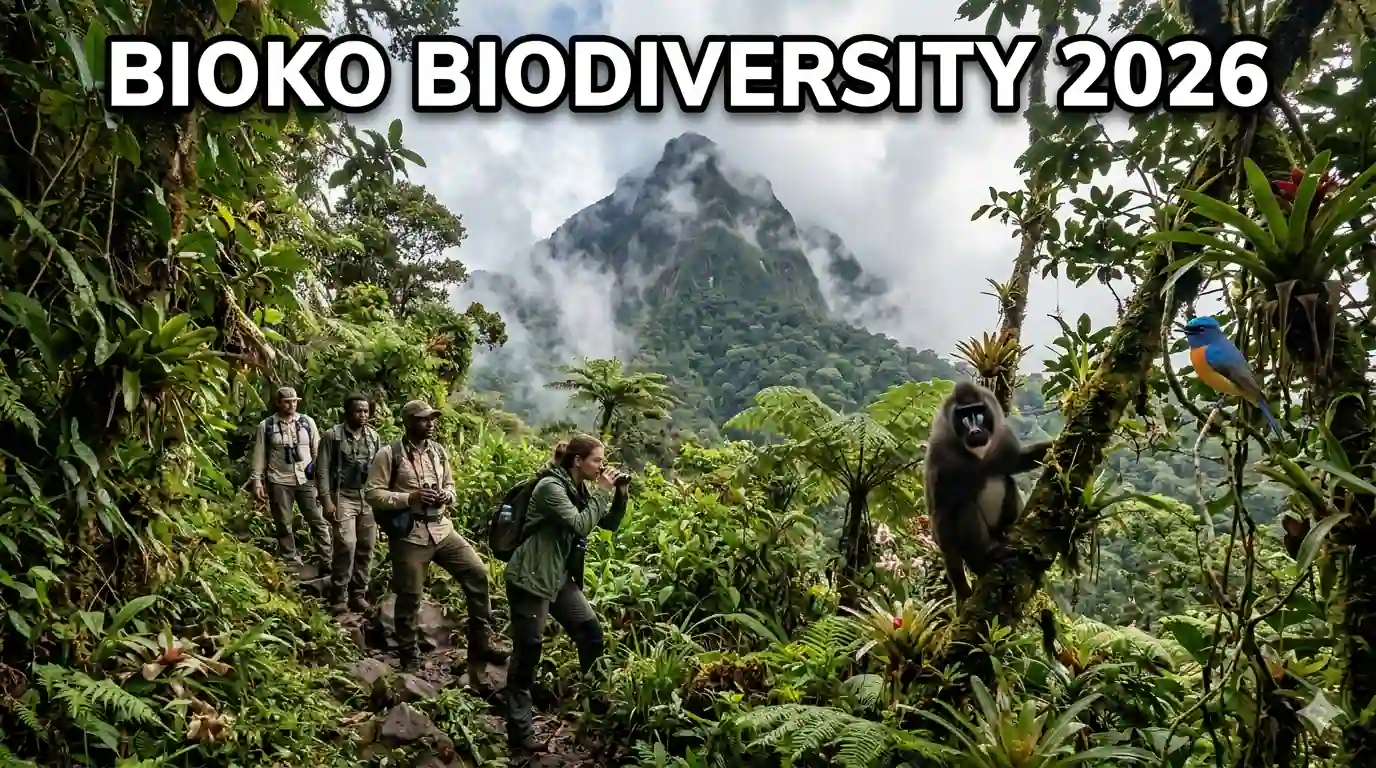
Why 2026 Is the Year of "Bioko Biodiversity": Exploring the Unique Species of Pico Basile
Bioko Island, a volcanic gem rising from the Gulf of Guinea off the coast of Equatorial Guinea, harbors one of Africa's most extraordinary and understudied biodiversity hotspots. At its heart stands Pico Basile, the island's highest peak at 3,011 meters (9,879 feet), whose mist-shrouded slopes harbor species found nowhere else on Earth. In 2026, this remote wilderness is emerging as a critical frontier for conservation science and responsible ecotourism, offering intrepid travelers and researchers alike the chance to witness evolutionary wonders in one of the planet's most pristine ecosystems.
The island's isolation—32 kilometers from mainland Africa—has created a natural laboratory of evolution where unique species have adapted to diverse habitats ranging from coastal mangroves to montane cloud forests. From the critically endangered Bioko drill monkey to endemic birds, amphibians, and plants, Bioko's biodiversity represents an irreplaceable treasure trove of life that scientists are only beginning to fully understand.
This comprehensive guide explores why 2026 marks a pivotal year for Bioko biodiversity: the island's remarkable endemic species, the unique ecosystems of Pico Basile, conservation initiatives protecting this wilderness, research opportunities, and how responsible tourism can support preservation efforts while offering unforgettable encounters with nature's rarities.
Understanding Bioko Island: A Biodiversity Hotspot

Geographic and Ecological Context
Bioko Island, formerly known as Fernando Pó, is part of Equatorial Guinea's insular region in the Gulf of Guinea. The island's volcanic origins and geographic isolation have created ideal conditions for speciation and endemism:
- Size: Approximately 2,017 square kilometers (779 square miles)
- Location: 32 km off the coast of Cameroon in the Gulf of Guinea
- Climate: Tropical with distinct wet and dry seasons; heavy rainfall on southern slopes
- Topography: Three major volcanic peaks including Pico Basile (3,011m), Pico Biao (2,260m), and Pico San Joaquin (2,250m)
- Habitats: Coastal mangroves, lowland rainforest, montane forest, and cloud forest
- 👉 Katse Tourism Festival 2026: Full guide to boat cruises, fishing, and bull-riding (Feb 26-28).
- 👉 First Time Travelers Guide to Tanzania National Cultural Centre
- 👉 Republic of the Congo Entry Requirements: A Complete Checklist for US Residents and Green Card Holders 2026
Why Bioko Is a Biodiversity Hotspot
Several factors contribute to Bioko's exceptional biodiversity:
- Geographic isolation: Separation from mainland Africa allowed unique evolutionary pathways
- Elevational gradients: From sea level to 3,011 meters creates diverse microclimates and habitats
- Volcanic soils: Rich, fertile soils support lush vegetation
- Rainfall patterns: Southern slopes receive up to 10,000mm annually, creating some of Africa's wettest forests
- Refugium status: During past climate changes, Bioko served as a refuge for species, preserving ancient lineages
- 👉 Katse Tourism Festival 2026: Full guide to boat cruises, fishing, and bull-riding (Feb 26-28).
- 👉 First Time Travelers Guide to Tanzania National Cultural Centre
- 👉 Republic of the Congo Entry Requirements: A Complete Checklist for US Residents and Green Card Holders 2026
The Significance of 2026
Several converging factors make 2026 a critical year for Bioko biodiversity:
- Enhanced conservation efforts: New partnerships between Equatorial Guinean government, international NGOs, and research institutions
- Improved accessibility: Better infrastructure for researchers and responsible ecotourism
- Urgent conservation needs: Several endemic species face critical threats requiring immediate action
- Research momentum: Ongoing biodiversity surveys revealing new species and ecological insights
- Climate change impacts: Documenting baseline data before ecosystems shift
- 👉 Katse Tourism Festival 2026: Full guide to boat cruises, fishing, and bull-riding (Feb 26-28).
- 👉 First Time Travelers Guide to Tanzania National Cultural Centre
- 👉 Republic of the Congo Entry Requirements: A Complete Checklist for US Residents and Green Card Holders 2026
Pico Basile: The Heart of Bioko's Endemism

The Mountain's Ecological Zones
Pico Basile's elevational gradient creates distinct ecological zones, each harboring unique species assemblages:
Lowland Rainforest (0-800m):
- Dense primary forest with towering emergent trees
- High diversity of primates including drill monkeys and chimpanzees
- Rich birdlife including hornbills and turacos
- Numerous epiphytes and climbing plants
- 👉 Katse Tourism Festival 2026: Full guide to boat cruises, fishing, and bull-riding (Feb 26-28).
- 👉 First Time Travelers Guide to Tanzania National Cultural Centre
- 👉 Republic of the Congo Entry Requirements: A Complete Checklist for US Residents and Green Card Holders 2026
Montane Forest (800-2,000m):
- Cooler temperatures and increased moisture
- Dense canopy with abundant mosses and ferns
- Endemic bird species adapted to cooler conditions
- Unique amphibian communities
- 👉 Katse Tourism Festival 2026: Full guide to boat cruises, fishing, and bull-riding (Feb 26-28).
- 👉 First Time Travelers Guide to Tanzania National Cultural Centre
- 👉 Republic of the Congo Entry Requirements: A Complete Checklist for US Residents and Green Card Holders 2026
Cloud Forest (2,000-2,800m):
- Persistent mist and cloud cover
- Dwarfed trees covered in epiphytes
- Highly specialized flora and fauna
- Endemic species found nowhere else
- 👉 Katse Tourism Festival 2026: Full guide to boat cruises, fishing, and bull-riding (Feb 26-28).
- 👉 First Time Travelers Guide to Tanzania National Cultural Centre
- 👉 Republic of the Congo Entry Requirements: A Complete Checklist for US Residents and Green Card Holders 2026
Summit Zone (2,800-3,011m):
- Grassland and heath vegetation
- Specialized high-altitude species
- Panoramic views of the island and mainland
- Unique alpine-adapted plants
- 👉 Katse Tourism Festival 2026: Full guide to boat cruises, fishing, and bull-riding (Feb 26-28).
- 👉 First Time Travelers Guide to Tanzania National Cultural Centre
- 👉 Republic of the Congo Entry Requirements: A Complete Checklist for US Residents and Green Card Holders 2026
Endemic Mammals: Bioko's Unique Primates and Beyond

The Bioko Drill (Mandrillus leucophaeus poensis)
Perhaps Bioko's most iconic endemic, the Bioko drill is a critically endangered primate found only on the island:
- Population: Estimated 500-1,000 individuals remaining
- Appearance: Larger and more robust than mainland drills, with distinctive facial coloration
- Habitat: Primary and secondary forests, particularly on Pico Basile's slopes
- Behavior: Lives in large troops of up to 400 individuals
- Conservation status: Critically Endangered (IUCN Red List)
- Threats: Habitat loss, hunting, and human encroachment
- 👉 Katse Tourism Festival 2026: Full guide to boat cruises, fishing, and bull-riding (Feb 26-28).
- 👉 First Time Travelers Guide to Tanzania National Cultural Centre
- 👉 Republic of the Congo Entry Requirements: A Complete Checklist for US Residents and Green Card Holders 2026
Where to observe: Guided treks on Pico Basile's mid-elevation slopes offer the best chances to observe drills in their natural habitat. The Bioko Biodiversity Protection Program (BBPP) conducts regular monitoring and can facilitate responsible viewing.
Bioko Allen's Swamp Monkey (Allenopithecus nigroviridis)
A unique population of swamp monkey adapted to Bioko's specific conditions:
- Distribution: Wetland areas and forest streams
- Adaptations: Semi-aquatic lifestyle, excellent swimmers
- Behavior: Diurnal, living in small family groups
- Conservation: Vulnerable due to habitat degradation
- 👉 Katse Tourism Festival 2026: Full guide to boat cruises, fishing, and bull-riding (Feb 26-28).
- 👉 First Time Travelers Guide to Tanzania National Cultural Centre
- 👉 Republic of the Congo Entry Requirements: A Complete Checklist for US Residents and Green Card Holders 2026
Other Endemic and Rare Mammals
- Bioko Potto (Perodicticus potto): A nocturnal primate with potential subspecies status
- Bioko Hyrax (Procavia capensis): A rare population of rock hyrax at high elevations
- Endemic rodents: Several species of mice and rats found only on Bioko
- Bats: Multiple endemic and rare bat species inhabiting caves and forests
- 👉 Katse Tourism Festival 2026: Full guide to boat cruises, fishing, and bull-riding (Feb 26-28).
- 👉 First Time Travelers Guide to Tanzania National Cultural Centre
- 👉 Republic of the Congo Entry Requirements: A Complete Checklist for US Residents and Green Card Holders 2026
Endemic Birds: Avian Treasures of the Cloud Forest

Bioko Batis (Batis poensis)
A small, colorful flycatcher endemic to Bioko's montane forests:
- Habitat: Cloud forest and montane forest above 1,500m
- Appearance: Males have distinctive black, white, and rufous plumage
- Behavior: Active insectivore, often seen in mixed-species flocks
- Conservation: Near Threatened due to limited range
- 👉 Katse Tourism Festival 2026: Full guide to boat cruises, fishing, and bull-riding (Feb 26-28).
- 👉 First Time Travelers Guide to Tanzania National Cultural Centre
- 👉 Republic of the Congo Entry Requirements: A Complete Checklist for US Residents and Green Card Holders 2026
Other Endemic and Rare Birds
- Bioko Olive Sunbird (Cyanomitra obscura): Endemic subspecies with unique plumage
- Bioko Black-casqued Hornbill (Ceratogymna atrata): Large, impressive bird of the canopy
- Endemic turacos: Several subspecies found only on Bioko
- Migratory species: Bioko serves as an important stopover for Palearctic migrants
- 👉 Katse Tourism Festival 2026: Full guide to boat cruises, fishing, and bull-riding (Feb 26-28).
- 👉 First Time Travelers Guide to Tanzania National Cultural Centre
- 👉 Republic of the Congo Entry Requirements: A Complete Checklist for US Residents and Green Card Holders 2026
Birdwatching Opportunities
Bioko offers exceptional birdwatching with over 200 species recorded, including:
- Endemic species and subspecies
- Rare forest specialists
- Spectacular hornbills and turacos
- Migratory raptors and songbirds
- 👉 Katse Tourism Festival 2026: Full guide to boat cruises, fishing, and bull-riding (Feb 26-28).
- 👉 First Time Travelers Guide to Tanzania National Cultural Centre
- 👉 Republic of the Congo Entry Requirements: A Complete Checklist for US Residents and Green Card Holders 2026
Unique Flora: Plants Found Nowhere Else

Endemic Plant Species
Bioko's flora includes numerous endemic species adapted to the island's unique conditions:
- Bioko Begonias: Several endemic species of Begonia in montane forests
- Endemic orchids: Rare orchid species adapted to cloud forest conditions
- Bioko Impatiens: Colorful flowering plants endemic to the island
- Endemic ferns: Numerous fern species found only in Bioko's cloud forests
- 👉 Katse Tourism Festival 2026: Full guide to boat cruises, fishing, and bull-riding (Feb 26-28).
- 👉 First Time Travelers Guide to Tanzania National Cultural Centre
- 👉 Republic of the Congo Entry Requirements: A Complete Checklist for US Residents and Green Card Holders 2026
Medicinal and Cultural Plants
Local communities have traditional knowledge of Bioko's flora:
- Medicinal plants used in traditional healing
- Food plants cultivated by indigenous communities
- Plants used for construction and crafts
- Cultural significance of certain tree species
- 👉 Katse Tourism Festival 2026: Full guide to boat cruises, fishing, and bull-riding (Feb 26-28).
- 👉 First Time Travelers Guide to Tanzania National Cultural Centre
- 👉 Republic of the Congo Entry Requirements: A Complete Checklist for US Residents and Green Card Holders 2026
Amphibians and Reptiles: Hidden Biodiversity

Endemic Amphibians
Bioko's amphibian diversity is remarkable, with several endemic species:
- Bioko Toad (Sclerophrys camerunensis): Endemic subspecies
- Endemic frogs: Several species of forest frogs found only on Bioko
- Cloud forest specialists: Species adapted to cool, moist montane conditions
- 👉 Katse Tourism Festival 2026: Full guide to boat cruises, fishing, and bull-riding (Feb 26-28).
- 👉 First Time Travelers Guide to Tanzania National Cultural Centre
- 👉 Republic of the Congo Entry Requirements: A Complete Checklist for US Residents and Green Card Holders 2026
Reptiles
- Bioko Chameleon (Chamaeleo feae): Endemic species
- Endemic snakes: Several species adapted to island conditions
- Lizards: Various skinks and geckos
- 👉 Katse Tourism Festival 2026: Full guide to boat cruises, fishing, and bull-riding (Feb 26-28).
- 👉 First Time Travelers Guide to Tanzania National Cultural Centre
- 👉 Republic of the Congo Entry Requirements: A Complete Checklist for US Residents and Green Card Holders 2026
Conservation Challenges and Initiatives

Threats to Bioko's Biodiversity
Despite its ecological importance, Bioko faces significant conservation challenges:
- Habitat loss: Logging, agriculture, and development fragment forests
- Hunting: Bushmeat trade threatens primates and other wildlife
- Climate change: Shifting weather patterns affect cloud forest ecosystems
- Invasive species: Non-native plants and animals disrupt ecosystems
- Limited resources: Insufficient funding and personnel for conservation
- 👉 Katse Tourism Festival 2026: Full guide to boat cruises, fishing, and bull-riding (Feb 26-28).
- 👉 First Time Travelers Guide to Tanzania National Cultural Centre
- 👉 Republic of the Congo Entry Requirements: A Complete Checklist for US Residents and Green Card Holders 2026
Conservation Initiatives in 2026
Several organizations are working to protect Bioko's unique biodiversity:
Bioko Biodiversity Protection Program (BBPP):
- Long-term research and monitoring of endemic species
- Anti-poaching patrols and law enforcement support
- Community education and outreach programs
- Capacity building for local conservationists
- 👉 Katse Tourism Festival 2026: Full guide to boat cruises, fishing, and bull-riding (Feb 26-28).
- 👉 First Time Travelers Guide to Tanzania National Cultural Centre
- 👉 Republic of the Congo Entry Requirements: A Complete Checklist for US Residents and Green Card Holders 2026
Equatorial Guinean Government:
- Establishment and management of protected areas
- Wildlife law enforcement
- International conservation partnerships
- 👉 Katse Tourism Festival 2026: Full guide to boat cruises, fishing, and bull-riding (Feb 26-28).
- 👉 First Time Travelers Guide to Tanzania National Cultural Centre
- 👉 Republic of the Congo Entry Requirements: A Complete Checklist for US Residents and Green Card Holders 2026
International Partners:
- Research collaborations with universities worldwide
- Funding for conservation projects
- Technical expertise and training
- 👉 Katse Tourism Festival 2026: Full guide to boat cruises, fishing, and bull-riding (Feb 26-28).
- 👉 First Time Travelers Guide to Tanzania National Cultural Centre
- 👉 Republic of the Congo Entry Requirements: A Complete Checklist for US Residents and Green Card Holders 2026
Protected Areas
- Pico Basile National Park: Protects the mountain and its unique ecosystems
- Gran Caldera de Luba: Protects southern lowland and montane forests
- Marine protected areas: Coastal and marine conservation zones
- 👉 Katse Tourism Festival 2026: Full guide to boat cruises, fishing, and bull-riding (Feb 26-28).
- 👉 First Time Travelers Guide to Tanzania National Cultural Centre
- 👉 Republic of the Congo Entry Requirements: A Complete Checklist for US Residents and Green Card Holders 2026
Research Opportunities in 2026

Ongoing Research Projects
2026 offers exciting opportunities for researchers and citizen scientists:
- Primate monitoring: Long-term studies of drill monkey populations and behavior
- Biodiversity surveys: Documenting species diversity across elevational gradients
- Climate change impacts: Studying how ecosystems respond to changing conditions
- Genetic studies: Understanding evolutionary relationships of endemic species
- Ecological restoration: Testing methods for habitat rehabilitation
- 👉 Katse Tourism Festival 2026: Full guide to boat cruises, fishing, and bull-riding (Feb 26-28).
- 👉 First Time Travelers Guide to Tanzania National Cultural Centre
- 👉 Republic of the Congo Entry Requirements: A Complete Checklist for US Residents and Green Card Holders 2026
How to Participate
- Research positions: Contact BBPP and partner institutions for opportunities
- Citizen science: Participate in biodiversity monitoring programs
- Volunteer programs: Conservation organizations offer volunteer positions
- Educational visits: Universities and research institutions organize field courses
- 👉 Katse Tourism Festival 2026: Full guide to boat cruises, fishing, and bull-riding (Feb 26-28).
- 👉 First Time Travelers Guide to Tanzania National Cultural Centre
- 👉 Republic of the Congo Entry Requirements: A Complete Checklist for US Residents and Green Card Holders 2026
Responsible Ecotourism: Supporting Conservation Through Travel

Why Visit Bioko in 2026
Responsible tourism can support conservation while providing unforgettable experiences:
- Direct conservation funding: Tourism revenue supports protected area management
- Community benefits: Local employment and economic opportunities
- Awareness raising: Visitors become advocates for Bioko's conservation
- Research support: Tourism can fund ongoing scientific studies
- 👉 Katse Tourism Festival 2026: Full guide to boat cruises, fishing, and bull-riding (Feb 26-28).
- 👉 First Time Travelers Guide to Tanzania National Cultural Centre
- 👉 Republic of the Congo Entry Requirements: A Complete Checklist for US Residents and Green Card Holders 2026
Best Practices for Visitors
To minimize impact and maximize conservation benefits:
- Use licensed guides: Employ local guides trained in responsible wildlife viewing
- Respect wildlife: Maintain safe distances; never feed or disturb animals
- Follow regulations: Adhere to park rules and permit requirements
- Support local communities: Purchase local goods and services
- Minimize waste: Pack out all trash; use reusable items
- Choose responsible operators: Select tour companies committed to conservation
- 👉 Katse Tourism Festival 2026: Full guide to boat cruises, fishing, and bull-riding (Feb 26-28).
- 👉 First Time Travelers Guide to Tanzania National Cultural Centre
- 👉 Republic of the Congo Entry Requirements: A Complete Checklist for US Residents and Green Card Holders 2026
Wildlife Viewing Guidelines
- Maintain at least 7-10 meters from primates
- Keep noise levels low to avoid disturbing wildlife
- Do not use flash photography near animals
- Stay on designated trails
- Do not remove plants or disturb habitats
- 👉 Katse Tourism Festival 2026: Full guide to boat cruises, fishing, and bull-riding (Feb 26-28).
- 👉 First Time Travelers Guide to Tanzania National Cultural Centre
- 👉 Republic of the Congo Entry Requirements: A Complete Checklist for US Residents and Green Card Holders 2026
Planning Your Bioko Biodiversity Expedition

Best Time to Visit
Timing affects wildlife viewing and accessibility:
- Dry season (December-February): Best for hiking and wildlife viewing; less rainfall
- Short dry season (June-August): Good conditions; moderate rainfall
- Wet season (March-May, September-November): Lush vegetation; challenging trails; excellent for amphibians
- 👉 Katse Tourism Festival 2026: Full guide to boat cruises, fishing, and bull-riding (Feb 26-28).
- 👉 First Time Travelers Guide to Tanzania National Cultural Centre
- 👉 Republic of the Congo Entry Requirements: A Complete Checklist for US Residents and Green Card Holders 2026
Getting to Bioko Island
By Air:
- Malabo International Airport (SSG): Main gateway to Bioko Island
- Direct flights: From Madrid, Paris, Addis Ababa, Casablanca, and regional African cities
- Airlines: CEIBA Intercontinental, Ethiopian Airlines, Air Europa, Royal Air Maroc
- 👉 Katse Tourism Festival 2026: Full guide to boat cruises, fishing, and bull-riding (Feb 26-28).
- 👉 First Time Travelers Guide to Tanzania National Cultural Centre
- 👉 Republic of the Congo Entry Requirements: A Complete Checklist for US Residents and Green Card Holders 2026
Entry Requirements:
- Visa: Required for most nationalities; eVisa system available
- Yellow fever vaccination: Mandatory certificate required
- Passport: Valid for at least 6 months beyond entry date
- Travel insurance: Strongly recommended
- 👉 Katse Tourism Festival 2026: Full guide to boat cruises, fishing, and bull-riding (Feb 26-28).
- 👉 First Time Travelers Guide to Tanzania National Cultural Centre
- 👉 Republic of the Congo Entry Requirements: A Complete Checklist for US Residents and Green Card Holders 2026
Accommodation Options
- Malabo: Range of hotels from budget to luxury
- Luba: Smaller town near Gran Caldera with basic accommodations
- Research stations: Some facilities offer basic lodging for researchers
- Camping: Possible in designated areas with permits
- 👉 Katse Tourism Festival 2026: Full guide to boat cruises, fishing, and bull-riding (Feb 26-28).
- 👉 First Time Travelers Guide to Tanzania National Cultural Centre
- 👉 Republic of the Congo Entry Requirements: A Complete Checklist for US Residents and Green Card Holders 2026
Permits and Regulations
- Park permits: Required for visiting Pico Basile National Park and Gran Caldera
- Research permits: Special permits needed for scientific research
- Guide requirements: Licensed guides mandatory for park visits
- Camera permits: May be required for professional photography
- 👉 Katse Tourism Festival 2026: Full guide to boat cruises, fishing, and bull-riding (Feb 26-28).
- 👉 First Time Travelers Guide to Tanzania National Cultural Centre
- 👉 Republic of the Congo Entry Requirements: A Complete Checklist for US Residents and Green Card Holders 2026
Sample Itineraries for Biodiversity Exploration
7-Day Biodiversity Discovery
- Day 1: Arrival in Malabo; orientation and briefing
- Day 2: Malabo area birdwatching; visit to local markets
- Day 3: Travel to Pico Basile base; begin ascent
- Day 4: Pico Basile cloud forest exploration; primate monitoring
- Day 5: Descend; travel to Gran Caldera region
- Day 6: Gran Caldera lowland forest; wildlife viewing
- Day 7: Return to Malabo; departure
- 👉 Katse Tourism Festival 2026: Full guide to boat cruises, fishing, and bull-riding (Feb 26-28).
- 👉 First Time Travelers Guide to Tanzania National Cultural Centre
- 👉 Republic of the Congo Entry Requirements: A Complete Checklist for US Residents and Green Card Holders 2026
14-Day Comprehensive Expedition
- Days 1-2: Malabo acclimatization and preparation
- Days 3-6: Pico Basile expedition; multiple elevational zones
- Days 7-8: Rest and data review in Luba
- Days 9-12: Gran Caldera exploration; coastal and montane habitats
- Day 13: Return to Malabo; cultural activities
- Day 14: Departure
- 👉 Katse Tourism Festival 2026: Full guide to boat cruises, fishing, and bull-riding (Feb 26-28).
- 👉 First Time Travelers Guide to Tanzania National Cultural Centre
- 👉 Republic of the Congo Entry Requirements: A Complete Checklist for US Residents and Green Card Holders 2026
Conclusion: A Critical Moment for Bioko's Future
2026 represents a pivotal year for Bioko Island's extraordinary biodiversity. The convergence of enhanced conservation efforts, urgent protection needs, and growing recognition of the island's global ecological significance creates both challenges and opportunities.
From the critically endangered Bioko drill monkey to endemic birds, plants, and countless other species, Bioko's biodiversity represents an irreplaceable treasure that has evolved in isolation over millennia. Pico Basile stands as both a symbol of this uniqueness and a critical refuge for species found nowhere else on Earth.
For researchers, conservationists, and responsible travelers, 2026 offers a unique opportunity to contribute to the preservation of this remarkable ecosystem. Whether through scientific research, conservation support, or sustainable tourism, each of us can play a role in ensuring that Bioko's biodiversity thrives for generations to come.
The mist-shrouded slopes of Pico Basile, the calls of endemic birds, and the presence of species found nowhere else remind us of nature's incredible capacity for innovation and adaptation. In protecting Bioko's biodiversity, we protect not just individual species, but the intricate web of life that sustains us all.
The time to act is now. Bioko's biodiversity awaits discovery, protection, and celebration. Will you be part of its story?
0 Comments