.webp)
.webp)
FIFA World Cup 2026 Mexico: A fan's guide to Guadalajara, Monterrey, and CDMX matches.
Introduction: Mexico Makes History as the First Three-Time World Cup Host
Mexico is poised to make football history in 2026, becoming the first nation ever to host the FIFA World Cup three times. Having previously welcomed the world's greatest football tournament in 1970 and 1986, Mexico now prepares to once again showcase its unparalleled passion for futbol, rich cultural heritage, and legendary hospitality to millions of fans from around the globe.
The 2026 FIFA World Cup will be unique in many ways: it's the first 48-team tournament, it's jointly hosted by three nations (Mexico, United States, and Canada), and it promises to be the most expansive and inclusive World Cup in history. For Mexico, this represents more than just another tournament—it's a celebration of football culture that runs deeper than perhaps anywhere else on Earth.
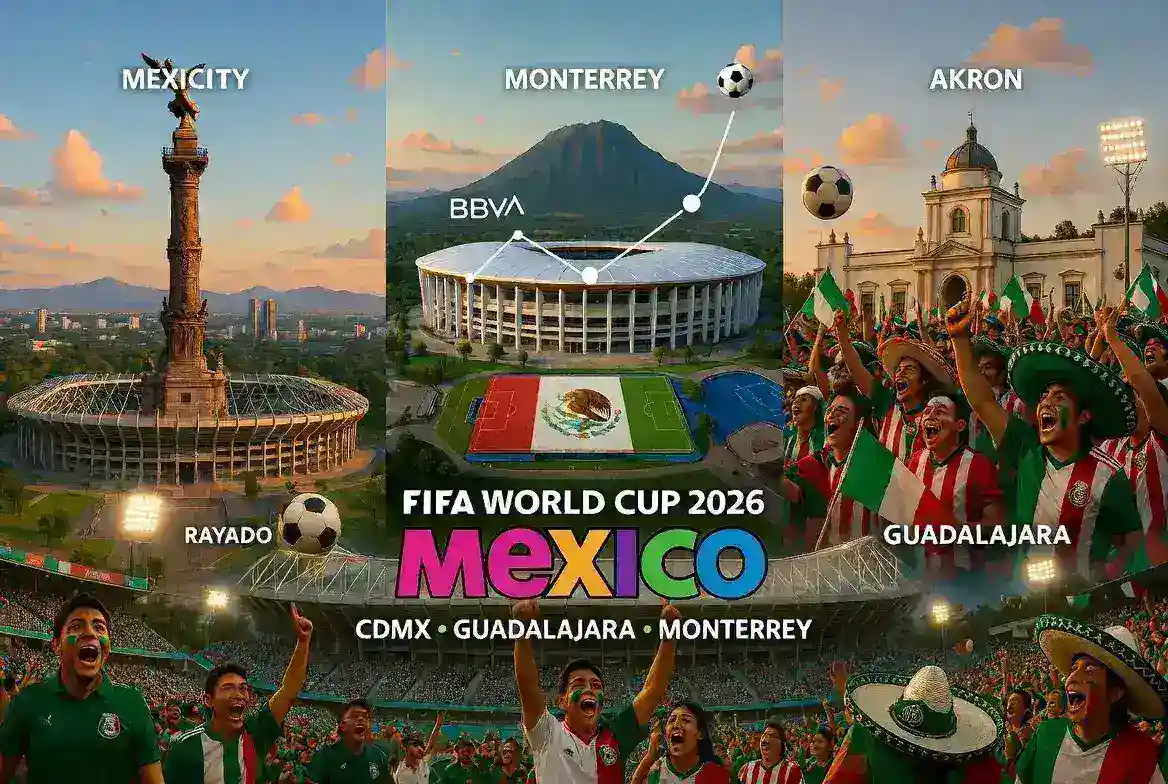
Three iconic Mexican cities will serve as host venues: Mexico City (CDMX) with the legendary Estadio Azteca, Guadalajara with the modern Estadio Akron, and Monterrey with the state-of-the-art Estadio BBVA. Each city brings its own distinct character, football culture, and attractions to create an unforgettable World Cup experience.
This comprehensive fan guide will help you navigate everything you need to know about experiencing the 2026 World Cup in Mexico. From understanding the stadiums and match schedules to finding the best accommodations, discovering local attractions, and immersing yourself in Mexican football culture, we'll ensure you're prepared for the adventure of a lifetime.
Mexico City (CDMX): The Beating Heart of Mexican Football

Estadio Azteca: A Cathedral of Football
No discussion of World Cup football in Mexico is complete without starting at the Estadio Azteca. This iconic stadium, located in the Coyoacán borough of Mexico City, isn't just a venue—it's a shrine to football history. When it hosted the 1970 and 1986 World Cup finals, it witnessed two of the greatest moments in football history: Pelé's Brazil triumph in 1970 and Maradona's "Hand of God" and "Goal of the Century" in 1986.
For 2026, the Azteca has undergone significant renovations to modernize facilities while preserving its legendary atmosphere. With a capacity of approximately 87,000 spectators, it remains one of the largest stadiums in the world and will host the tournament's opening match, making it the first stadium to host three World Cup openers—a testament to its enduring significance.
Stadium Features and Experience
The renovated Estadio Azteca offers:
- Modernized seating with improved sightlines and comfort
- Enhanced concession areas featuring authentic Mexican cuisine
- Upgraded restrooms and facilities meeting FIFA standards
- Improved accessibility for fans with disabilities
- State-of-the-art video screens and sound systems
- Museum showcasing the stadium's legendary history
- Official Club América and Cruz Azul merchandise stores
- 👉 Understanding 90 Day Stay Rule US Passport Holders Updated 2026
- 👉 Dominica’s 6.6km Cable Car 2026: Full guide to the world's longest ride to Boiling Lake.
- 👉 Saint Vincent for Digital Nomads: Best Coastal Towns with Fiber Optic Hubs and Remote Work Infrastructure in 2026
The atmosphere at Azteca during World Cup matches will be electric. Mexican fans, known as "La Marea" (The Tide) for their sea of green jerseys, create one of the most intimidating and passionate environments in world football. The stadium's high altitude (2,200 meters above sea level) adds another dimension to matches, often affecting visiting teams unaccustomed to the thin air.
Getting to Estadio Azteca
Mexico City's extensive public transportation system makes reaching the Azteca straightforward:
Metro: Line 2 (Blue Line) to Tasqueña station, then transfer to Metrobús Line 1 to Estadio Azteca stop. This is the most economical option at approximately 10 pesos total.
Metrobús: Line 1 runs directly to the stadium with dedicated lanes avoiding traffic. Cost: 6 pesos.
Taxi/Ride-share: Uber and Didi operate extensively in Mexico City. Expect to pay 150-300 pesos from central areas like Polanco or Roma. Always use official services or apps for safety.
Official Shuttles: During the World Cup, FIFA will operate dedicated fan shuttles from designated points around the city. These will be included with match tickets.
Where to Stay in Mexico City
Mexico City is vast, and choosing the right neighborhood is crucial for your World Cup experience:
Polanco: Upscale neighborhood with luxury hotels, world-class dining, and easy access to Chapultepec Park. Ideal for those seeking comfort and willing to pay premium prices. Hotels range from $200-500+ USD per night.
Roma/Condesa: Trendy, walkable neighborhoods popular with younger travelers. Great restaurants, bars, and boutique hotels. More affordable than Polanco at $100-250 USD per night. Well-connected to public transport.
Centro Histórico: Budget-friendly option in the heart of the city. You'll be steps from the Zócalo, Palacio de Bellas Artes, and countless attractions. Hotels range $50-150 USD per night. Can be noisy and crowded.
Coyoacán: Charming neighborhood near the Azteca with colonial architecture, markets, and museums. Frida Kahlo Museum is here. Good mid-range option at $80-180 USD per night.
Must-See Attractions in Mexico City
Beyond football, Mexico City offers incredible cultural experiences:
Chapultepec Park: One of the largest city parks in the Western Hemisphere, featuring Chapultepec Castle, the National Museum of Anthropology (a must-visit), and beautiful lakes.
Zócalo: The main square and one of the largest plazas in the world. Surrounded by the Metropolitan Cathedral, National Palace, and Templo Mayor ruins.
Frida Kahlo Museum: The Blue House where the iconic artist lived and worked. Book tickets well in advance.
Xochimilco: Ancient canal system where you can ride colorful trajineras (boats) while enjoying mariachi music and food.
Teotihuacan: Day trip to see the Pyramid of the Sun and Moon, one of Mexico's most important archaeological sites.
Mexican Cuisine in the Capital
Mexico City is a food lover's paradise. Don't miss:
- Street Tacos: Try al pastor, suadero, and carnitas at taquerías like El Huequito or El Califa
- Chiles en Nogada: Seasonal dish (August-September) representing Mexican flag colors
- Mole: Complex sauce with chocolate and chiles, best at traditional restaurants
- Tamales: Grab them from street vendors with hot chocolate for breakfast
- Fine Dining: Pujol and Quintonil consistently rank among world's best restaurants
- 👉 Understanding 90 Day Stay Rule US Passport Holders Updated 2026
- 👉 Dominica’s 6.6km Cable Car 2026: Full guide to the world's longest ride to Boiling Lake.
- 👉 Saint Vincent for Digital Nomads: Best Coastal Towns with Fiber Optic Hubs and Remote Work Infrastructure in 2026
Guadalajara: The Soul of Mexican Tradition

Estadio Akron: Modern Excellence in Mexico's Second City
Guadalajara, Mexico's second-largest city and the capital of Jalisco state, brings a different flavor to the World Cup experience. Home to Estadio Akron, the fortress of Chivas de Guadalajara (one of Mexico's most popular clubs), this stadium combines modern amenities with passionate local football culture.
With a capacity of approximately 46,000, Estadio Akron is smaller than the Azteca but no less intense. The stadium opened in 2010 and features:
- All-seater configuration with excellent sightlines
- Modern LED lighting and video systems
- Premium hospitality areas and VIP boxes
- Efficient crowd management systems
- Ample parking and public transport access
- 👉 Understanding 90 Day Stay Rule US Passport Holders Updated 2026
- 👉 Dominica’s 6.6km Cable Car 2026: Full guide to the world's longest ride to Boiling Lake.
- 👉 Saint Vincent for Digital Nomads: Best Coastal Towns with Fiber Optic Hubs and Remote Work Infrastructure in 2026
What sets Akron apart is the atmosphere created by Chivas fans. Chivas is unique in Mexican football for its policy of only fielding Mexican-born players, making it a symbol of national pride. The supporters, known for their colorful displays and unwavering loyalty, will create an unforgettable World Cup atmosphere.
Guadalajara's Football Culture
Guadalajara takes immense pride in being the birthplace of mariachi music, tequila, and charrería (Mexican rodeo). This cultural richness extends to football, where the city maintains a more traditional, family-oriented approach compared to Mexico City's intense rivalries.
The city is home to two major clubs: Chivas (Club Deportivo Guadalajara) and Atlas FC. While Chivas plays at Akron, Atlas plays at the nearby Estadio Jalisco, which will also host World Cup matches. This means Guadalajara will have two venues for the tournament, offering fans more opportunities to experience World Cup football.
Estadio Jalisco: The Historic Alternative
Estadio Jalisco, opened in 1960, is one of Mexico's most historic stadiums. With a capacity of around 56,000, it's actually larger than Akron and has hosted legendary matches including World Cup games in 1970 and 1986. The stadium is currently undergoing renovations for 2026.
Located in the Oblatos neighborhood, Jalisco offers a more traditional Mexican football experience with its steep stands creating an intimidating atmosphere. It's home to Atlas FC and was the site of many classic matches in Mexican football history.
Navigating Guadalajara
Guadalajara is more manageable than Mexico City, with less traffic and a more relaxed pace:
Public Transportation: The city has a modern light rail system (SITEUR) with three lines connecting major areas. Buses and the Mi Macro BRT system provide extensive coverage. Fares are approximately 9.50 pesos.
Ride-sharing: Uber and Didi operate efficiently in Guadalajara at lower prices than Mexico City. Expect to pay 80-150 pesos for most trips within the city.
Walking: Guadalajara's historic center is very walkable, with many attractions clustered together.
Where to Stay in Guadalajara
Zapopan: Upscale area near Estadio Akron with modern hotels and shopping. Best for those prioritizing stadium access. Hotels range $100-300 USD per night.
Centro Histórico: Charming colonial center with boutique hotels, restaurants, and nightlife. Great for culture lovers. $60-150 USD per night.
Providencia: Trendy neighborhood with excellent restaurants and bars. Popular with young professionals. $80-200 USD per night.
Tlaquepaque: Artistic neighborhood known for crafts and galleries. Quieter, more traditional atmosphere. $50-120 USD per night.
Guadalajara's Cultural Treasures
As the birthplace of mariachi, Guadalajara offers authentic cultural experiences:
Plaza de los Mariachis: In nearby Tlaquepaque, where mariachi bands perform nightly. Essential Guadalajara experience.
Tequila Distilleries: Take a day trip to Tequila town (about 90 minutes away) to visit distilleries like José Cuervo or Herradura. Learn about tequila production and sample premium varieties.
Hospicio Cabañas: UNESCO World Heritage Site featuring stunning murals by José Clemente Orozco.
Lake Chapala: Mexico's largest lake, about an hour south, offering beautiful scenery and expat communities.
Gastronomy of Jalisco
Guadalajara and Jalisco state are famous for:
- Birria: Slow-cooked goat or beef stew, often served at celebrations
- Tortas Ahogadas: "Drowned sandwiches" in spicy tomato sauce, a Guadalajara specialty
- Carnitas: Tlaquepaque is famous for its carnitas
- Tequila: Obviously! Sample it neat or in cocktails
- Jericallas: Local dessert similar to crème brûlée
- 👉 Understanding 90 Day Stay Rule US Passport Holders Updated 2026
- 👉 Dominica’s 6.6km Cable Car 2026: Full guide to the world's longest ride to Boiling Lake.
- 👉 Saint Vincent for Digital Nomads: Best Coastal Towns with Fiber Optic Hubs and Remote Work Infrastructure in 2026
Monterrey: The Industrial Powerhouse with Mountain Majesty

Estadio BBVA: Football in the Shadow of Mountains
Monterrey, the capital of Nuevo León state and Mexico's third-largest city, brings a different character to the World Cup. Known as "La Sultana del Norte" (The Sultan of the North), Monterrey is Mexico's industrial and business capital, surrounded by the dramatic Sierra Madre Oriental mountains.
Estadio BBVA, home to CF Monterrey (Rayados), is one of the most modern stadiums in Latin America. Opened in 2015, it features:
- Capacity of approximately 53,000 spectators
- Cutting-edge architecture with mountain views
- Premium facilities including rooftop restaurants
- Advanced security and crowd management systems
- Excellent public transport connections
- LEED certification for environmental sustainability
- 👉 Understanding 90 Day Stay Rule US Passport Holders Updated 2026
- 👉 Dominica’s 6.6km Cable Car 2026: Full guide to the world's longest ride to Boiling Lake.
- 👉 Saint Vincent for Digital Nomads: Best Coastal Towns with Fiber Optic Hubs and Remote Work Infrastructure in 2026
The stadium's location in Guadalupe, a Monterrey suburb, places it against the stunning backdrop of Cerro de la Silla (Saddle Mountain), one of Mexico's most recognizable peaks. This creates one of the most photogenic stadium settings in world football.
Monterrey's Football Passion
Monterrey is home to two major clubs: CF Monterrey (Rayados) and Tigres UANL. Their rivalry, known as the "Clásico Regiomontano," is one of Mexico's most intense. Tigres plays at the nearby Estadio Universitario, which will also host World Cup matches.
Monterrey fans are known for their passionate support and sophisticated football culture. The city's wealth and modern infrastructure create a different atmosphere from Mexico City or Guadalajara—more cosmopolitan, with strong business influences.
Estadio Universitario
Home to Tigres, Estadio Universitario (also called "El Volcán" - The Volcano) has a capacity of around 42,000. The stadium is located on the campus of Universidad Autónoma de Nuevo León and features a distinctive volcanic-inspired design. It will host World Cup matches alongside BBVA, giving Monterrey two venues for the tournament.
Getting Around Monterrey
Monterrey is more car-dependent than other Mexican cities, but options exist:
Metro: Monterrey has a clean, efficient metro system with three lines. Cost: 7 pesos.
Ecovía: BRT system connecting downtown to western suburbs.
Ride-sharing: Uber and Didi widely available. Prices similar to Guadalajara.
Rental Cars: More practical in Monterrey than other cities if you want to explore surrounding areas.
Where to Stay in Monterrey
San Pedro Garza García: Upscale suburb with luxury hotels, shopping, and dining. Safest area but expensive. $150-400 USD per night.
Centro: Downtown area with historic buildings and budget hotels. Less touristy but authentic. $40-100 USD per night.
Valle Oriente: Modern business district near shopping malls and restaurants. Good mid-range option. $80-180 USD per night.
Near Estadio BBVA: Limited options immediately near the stadium; better to stay in San Pedro or central areas.
Monterrey's Attractions
Beyond football, Monterrey offers:
Cerro de la Silla: Iconic mountain offering hiking opportunities for adventurous visitors.
Parque Fundidora: Massive urban park built on the site of a former steel foundry. Features museums, lakes, and recreational facilities.
MARCO: Contemporary art museum with impressive architecture.
Macroplaza: One of the world's largest plazas, featuring the iconic Faro del Comercio lighthouse.
Grutas de García: Spectacular cave system about 30 minutes from the city.
Santa Lucía Riverwalk: Beautiful pedestrian walkway connecting downtown to Parque Fundidora.
Monterrey Cuisine
Northern Mexican cuisine differs from central and southern regions:
- Cabrito: Roasted kid goat, a Monterrey specialty
- Machaca: Dried, shredded beef, often served with eggs
- Cortadillo: Beef in tomato sauce, typical of the region
- Arrachera: Grilled skirt steak, perfect for carne asada
- Cerveza: Monterrey is home to Cuauhtémoc Moctezuma brewery (Dos Equis, Tecate)
- 👉 Understanding 90 Day Stay Rule US Passport Holders Updated 2026
- 👉 Dominica’s 6.6km Cable Car 2026: Full guide to the world's longest ride to Boiling Lake.
- 👉 Saint Vincent for Digital Nomads: Best Coastal Towns with Fiber Optic Hubs and Remote Work Infrastructure in 2026
Match Schedule and Ticket Information

How Many Matches in Mexico?
Mexico will host 13 matches during the 2026 World Cup, including:
- Opening Match: Estadio Azteca, Mexico City (June 11, 2026)
- Group Stage Matches: 9 matches distributed across the three cities
- Round of 32: 2 matches
- Round of 16: 1 match
- Quarterfinal: 1 match
- 👉 Understanding 90 Day Stay Rule US Passport Holders Updated 2026
- 👉 Dominica’s 6.6km Cable Car 2026: Full guide to the world's longest ride to Boiling Lake.
- 👉 Saint Vincent for Digital Nomads: Best Coastal Towns with Fiber Optic Hubs and Remote Work Infrastructure in 2026
The remaining matches will be played in various U.S. cities, with the final at MetLife Stadium in New Jersey.
Ticket Categories and Pricing
FIFA typically offers several ticket categories:
Category 1: Best seats, premium pricing
Category 2: Mid-level seats
Category 3: Upper-level seats, most affordable
Hospitality Packages: VIP experiences with food, beverages, and premium seating
Expected price ranges (subject to FIFA confirmation):
- Group Stage Cat 3: $70-150 USD
- Group Stage Cat 1: $200-400 USD
- Knockout Rounds: $150-800+ USD
- Opening Match: Premium pricing, $300-1,000+ USD
- 👉 Understanding 90 Day Stay Rule US Passport Holders Updated 2026
- 👉 Dominica’s 6.6km Cable Car 2026: Full guide to the world's longest ride to Boiling Lake.
- 👉 Saint Vincent for Digital Nomads: Best Coastal Towns with Fiber Optic Hubs and Remote Work Infrastructure in 2026
How to Buy Tickets
Official FIFA ticket sales occur in phases:
- Random Selection Draw: Initial phase where applicants enter a lottery
- First-Come, First-Served: After the draw, remaining tickets sold chronologically
- Last-Minute Sales: Tickets released closer to match dates
Always purchase through official FIFA channels (fifa.com/tickets) to avoid scams. Beware of unauthorized resellers and counterfeit tickets.
Mexico National Team Matches
As host nation, Mexico automatically qualifies and will play all three group stage matches in Mexico. Expect these matches to sell out instantly and command premium prices. The atmosphere when Mexico plays at the Azteca will be absolutely electric.
Practical Travel Tips for World Cup 2026

Visa Requirements
Citizens of many countries, including the United States, Canada, UK, EU nations, Japan, and Australia, do not need a visa for tourist stays up to 180 days in Mexico. However, you must:
- Have a valid passport (at least 6 months validity)
- Complete the FMM (Forma Migratoria Múltiple) tourist card
- Be prepared to show proof of onward travel
- Demonstrate sufficient funds for your stay
- 👉 Understanding 90 Day Stay Rule US Passport Holders Updated 2026
- 👉 Dominica’s 6.6km Cable Car 2026: Full guide to the world's longest ride to Boiling Lake.
- 👉 Saint Vincent for Digital Nomads: Best Coastal Towns with Fiber Optic Hubs and Remote Work Infrastructure in 2026
Check current requirements based on your nationality before traveling.
Best Time to Arrive
The World Cup runs from June 11 to July 19, 2026. June and July are warm months in Mexico:
- Mexico City: 12-25°C (54-77°F), afternoon rain possible
- Guadalajara: 18-32°C (64-90°F), dry season
- Monterrey: 24-36°C (75-97°F), can be very hot
- 👉 Understanding 90 Day Stay Rule US Passport Holders Updated 2026
- 👉 Dominica’s 6.6km Cable Car 2026: Full guide to the world's longest ride to Boiling Lake.
- 👉 Saint Vincent for Digital Nomads: Best Coastal Towns with Fiber Optic Hubs and Remote Work Infrastructure in 2026
Pack light clothing, but bring a jacket for Mexico City's cooler evenings and potential rain.
Accommodation Booking Strategy
World Cup 2026 will bring massive demand:
- Book accommodations as early as possible (12-18 months ahead ideal)
- Consider staying outside immediate stadium areas for better prices
- Look for apartments or hostels for budget options
- Verify cancellation policies given potential schedule changes
- Book refundable rates when possible
- 👉 Understanding 90 Day Stay Rule US Passport Holders Updated 2026
- 👉 Dominica’s 6.6km Cable Car 2026: Full guide to the world's longest ride to Boiling Lake.
- 👉 Saint Vincent for Digital Nomads: Best Coastal Towns with Fiber Optic Hubs and Remote Work Infrastructure in 2026
Transportation Between Cities
If attending matches in multiple Mexican cities:
Flights: Fastest option. Mexico City to Guadalajara: 1.5 hours. Mexico City to Monterrey: 1.5 hours. Major airlines: Aeroméxico, Volaris, VivaAerobus.
Buses: Mexico has excellent long-distance bus service. ADO, ETN, and Primera Plus offer comfortable, safe travel. Mexico City to Guadalajara: 7-8 hours. Mexico City to Monterrey: 12 hours.
Domestic Flights vs. Buses: Flights are worth the extra cost for time savings, especially if attending matches on tight schedules.
Safety Considerations
Mexico's tourist areas are generally safe, but take precautions:
- Use official taxis or ride-sharing apps
- Don't display expensive jewelry or electronics
- Stay in well-lit, populated areas at night
- Keep copies of important documents
- Register with your embassy's travel program
- Follow local news and embassy advisories
- Avoid certain areas; research neighborhood safety
- 👉 Understanding 90 Day Stay Rule US Passport Holders Updated 2026
- 👉 Dominica’s 6.6km Cable Car 2026: Full guide to the world's longest ride to Boiling Lake.
- 👉 Saint Vincent for Digital Nomads: Best Coastal Towns with Fiber Optic Hubs and Remote Work Infrastructure in 2026
Money and Payments
Mexican Peso (MXN) is the currency:
- Credit cards widely accepted in hotels, restaurants, and shops
- Cash essential for street vendors, markets, and small establishments
- ATMs available everywhere; use bank ATMs for security
- Notify your bank of travel plans to avoid card blocks
- Exchange rate (approximate): 1 USD = 17-18 MXN
- 👉 Understanding 90 Day Stay Rule US Passport Holders Updated 2026
- 👉 Dominica’s 6.6km Cable Car 2026: Full guide to the world's longest ride to Boiling Lake.
- 👉 Saint Vincent for Digital Nomads: Best Coastal Towns with Fiber Optic Hubs and Remote Work Infrastructure in 2026
Language
Spanish is the official language. In tourist areas and hotels, English is commonly spoken, but learning basic Spanish phrases enhances your experience and is appreciated by locals.
Health and Wellness
- Drink bottled or purified water
- Travel insurance strongly recommended
- Mexico City's altitude can cause mild symptoms; take it easy first day
- Sun protection essential; Mexico has strong UV rays
- Street food is generally safe if busy and freshly prepared
- 👉 Understanding 90 Day Stay Rule US Passport Holders Updated 2026
- 👉 Dominica’s 6.6km Cable Car 2026: Full guide to the world's longest ride to Boiling Lake.
- 👉 Saint Vincent for Digital Nomads: Best Coastal Towns with Fiber Optic Hubs and Remote Work Infrastructure in 2026
Experiencing Mexican Football Culture

Pre-Match Traditions
Mexican football culture is vibrant and passionate:
Taquizas: Pre-match gatherings featuring tacos, beer, and camaraderie. Join locals at taquerías near stadiums.
Porras: Organized supporter groups lead chants and displays. Respect their space but enjoy the spectacle.
Face Painting: Mexicans love painting their faces in green, white, and red. Join in to show your spirit!
Fan Zones
FIFA will establish official Fan Zones in each host city where you can:
- Watch matches on giant screens
- Enjoy food, drinks, and entertainment
- Meet fans from around the world
- Participate in football activities and games
- Experience concerts and cultural events
- 👉 Understanding 90 Day Stay Rule US Passport Holders Updated 2026
- 👉 Dominica’s 6.6km Cable Car 2026: Full guide to the world's longest ride to Boiling Lake.
- 👉 Saint Vincent for Digital Nomads: Best Coastal Towns with Fiber Optic Hubs and Remote Work Infrastructure in 2026
Fan Zones are typically free to enter and create incredible atmospheres even if you don't have match tickets.
Mexican Football Chants and Songs
Learn these to blend in:
- "¡México, México, México!" - The universal chant
- "El que no salte es..." - Traditional chant (completions vary!)
- "Cielito Lindo" - Sung before matches, especially "Ay, ay, ay, ay, canta y no llores"
- 👉 Understanding 90 Day Stay Rule US Passport Holders Updated 2026
- 👉 Dominica’s 6.6km Cable Car 2026: Full guide to the world's longest ride to Boiling Lake.
- 👉 Saint Vincent for Digital Nomads: Best Coastal Towns with Fiber Optic Hubs and Remote Work Infrastructure in 2026
Conclusion: Your World Cup Adventure Awaits

The 2026 FIFA World Cup in Mexico promises to be an unforgettable celebration of football, culture, and hospitality. Whether you're watching the opening match at the legendary Estadio Azteca, experiencing the modern excellence of Estadio BBVA in Monterrey, or soaking in the traditional passion of Guadalajara's venues, you'll be part of football history.
Mexico's three host cities each offer unique experiences: Mexico City's vast cultural treasures, Guadalajara's authentic traditions and tequila heritage, and Monterrey's modern sophistication against dramatic mountain backdrops. Combined with world-class football, incredible food, and the warmth of Mexican hospitality, this World Cup will create memories that last a lifetime.
Start planning now, book early, embrace the adventure, and prepare to fall in love with Mexico's unique brand of football passion. ¡Vamos México! The world is coming, and Mexico is ready to show why it's football's spiritual home.
0 Comments