.webp)
.webp)
Understanding 90 Day Stay Rule US Passport Holders Updated 2026
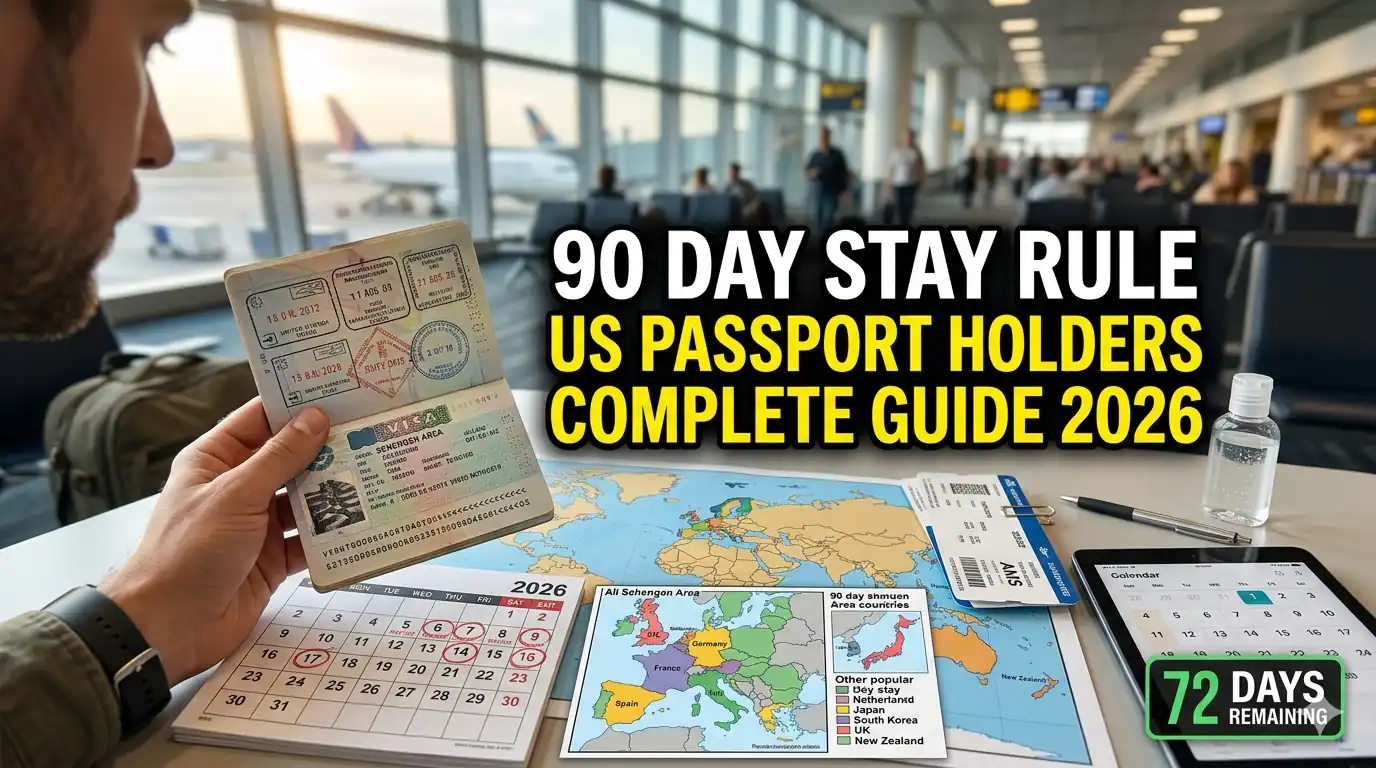
Understanding the 90 Day Stay Rule for US Travelers
The ninety day stay rule represents one of the most important yet frequently misunderstood regulations for United States passport holders traveling internationally. This rule governs how long US citizens can remain in certain countries without obtaining a formal visa.
Most prominently the rule applies to the Schengen Area a zone of twenty seven European countries that have abolished internal border controls. US passport holders may enter Schengen countries for tourism or business without a visa for up to ninety days within any one hundred eighty day period.
Understanding this rule proves essential for avoiding overstays entry bans and other complications that can affect future international travel. This comprehensive 2026 guide explains everything US passport holders need to know about the ninety day stay rule.
From calculation methods and tracking tools to consequences of non-compliance and strategies for extended travel this guide enables confident international travel planning while maintaining full regulatory compliance.
What Is the Ninety Day Rule and Where Does It Apply

The ninety day rule allows visa-free entry for US passport holders to specific countries for limited durations typically for tourism business meetings or short-term visits.
The Schengen Area represents the most significant application of this rule for US travelers. Member countries include France Germany Italy Spain Netherlands Belgium Austria Portugal Greece and many others across continental Europe.
Under Schengen regulations US citizens may stay for a maximum of ninety days within any rolling one hundred eighty day period. This means the clock continuously resets looking back one hundred eighty days from any given date.
Beyond Schengen several other countries and regions apply similar ninety day limits for US passport holders including the United Kingdom Albania Montenegro and certain Caribbean nations though rules vary by destination.
Important distinction the ninety day limit applies to the entire Schengen Area collectively not per individual country. Time spent in France counts toward your total Schengen allowance regardless of subsequent travel to Germany or Italy.
How the Rolling One Hundred Eighty Day Period Works

Understanding the rolling calculation method proves critical for compliant Schengen travel planning.
The rule operates on a rolling window meaning authorities look back one hundred eighty days from your current date to count how many days you have spent in Schengen countries during that period.
For example if you entered Schengen on January first and stayed thirty days then returned on April first for another thirty days you have used sixty of your ninety allowable days. You could return for up to thirty more days before reaching your limit.
Days are counted inclusively meaning both entry and exit dates count toward your total. A trip from Monday to Friday counts as five days not four.
The rolling nature means days gradually drop off your count as they exceed the one hundred eighty day lookback period. This enables strategic planning for extended or repeated visits.
Border officials calculate your remaining days using entry and exit stamps in your passport. Maintaining clear documentation proves essential for demonstrating compliance.
Tracking Your Schengen Stay Days Effectively

Accurate day tracking prevents accidental overstays that can result in serious consequences for future travel.
Official Schengen calculators available through European Commission websites enable precise calculation of remaining days based on your travel history. These tools account for the rolling window methodology.
Mobile applications designed for Schengen tracking allow real-time day counting and alerts as you approach your limit. Popular options include Schengen Calculator and Visa Tracker.
Manual tracking using spreadsheets or travel journals remains reliable though requires discipline. Record entry and exit dates for every Schengen country visit with clear running totals.
Passport stamps serve as official documentation though not all Schengen entries receive stamps particularly when traveling between member countries. Retain boarding passes and accommodation receipts as supplementary proof.
Consider creating a master travel calendar highlighting Schengen days in one color and non-Schengen days in another. Visual representation simplifies compliance monitoring.
Consequences of Overstaying the Ninety Day Limit

Overstaying the ninety day Schengen limit carries significant penalties that can affect future international travel for years.
Immediate consequences may include fines ranging from several hundred to several thousand euros depending on the country and duration of overstay. Some nations impose daily fines for each day beyond the limit.
Entry bans represent the most serious consequence with overstayers potentially barred from re-entering the Schengen Area for one to five years or longer for severe violations.
Overstay records become part of the Schengen Information System shared among member states. This database affects future visa applications not only for Schengen but potentially for other countries that access shared immigration data.
Deportation may occur for significant overstays particularly if discovered during border checks. Deportation records create lasting immigration complications.
Future visa applications including for countries beyond Schengen may be denied based on prior overstay history. Immigration officers worldwide review travel compliance records.
Strategies for Extended Travel Within Regulatory Limits

Travelers wishing to spend more than ninety days in Europe can employ legal strategies to extend their time while maintaining compliance.
The ninety day rule applies only to visa-free travel. US citizens may apply for long-stay national visas from individual Schengen countries for purposes including study work family reunification or extended tourism.
Some Schengen countries offer specific long-term visitor visas allowing stays beyond ninety days though requirements vary significantly by nation. Research options well in advance of travel.
Strategic travel planning enables maximizing time in Europe by combining Schengen and non-Schengen destinations. Countries like the United Kingdom Ireland Romania and Bulgaria maintain separate ninety day allowances.
Alternating between Schengen and non-Schengen countries enables extended European travel though requires careful calculation to ensure Schengen days do not exceed limits within any rolling one hundred eighty day window.
Remote workers and digital nomads should note that visa-free Schengen entry does not authorize employment. Working remotely for non-European employers while in Schengen exists in a legal gray area requiring careful consideration.
ETIAS Authorization and Its Impact on the Ninety Day Rule

The European Travel Information and Authorization System ETIAS represents a significant update affecting US passport holders traveling to Schengen countries starting in 2026.
ETIAS does not change the ninety day stay limit but adds a pre-travel authorization requirement for visa-exempt travelers including US citizens. The system enhances security screening before arrival.
Application for ETIAS authorization occurs online requiring passport information travel plans and basic security questions. Approval typically processes within minutes though some applications require manual review.
ETIAS authorization costs approximately seven euros and remains valid for three years or until passport expiration whichever comes first. Multiple Schengen entries are permitted during the authorization period.
ETIAS does not guarantee entry border officials retain authority to deny admission based on documentation or security concerns. Authorization simply permits travel to Schengen borders for assessment.
The ninety day within one hundred eighty day rule remains unchanged under ETIAS. Authorization does not extend allowable stay duration or alter the rolling calculation methodology.
Ninety Day Rules Beyond the Schengen Area

Several countries and regions beyond Schengen apply similar ninety day limits for US passport holders requiring awareness for global travel planning.
The United Kingdom allows US citizens visa-free entry for up to six months though this represents a different calculation method than Schengen. Time in the UK does not count toward Schengen limits.
Albania Montenegro and North Macedonia each permit ninety day visa-free stays for US passport holders within one hundred eighty day periods. These countries maintain separate allowances from Schengen.
Caribbean nations including the Bahamas Barbados and others often permit ninety day visa-free stays for US citizens though rules vary by island. Verify specific country requirements before travel.
Some countries apply ninety day limits but calculate them differently such as per calendar year rather than rolling periods. Research each destination's specific methodology.
Important note time spent in non-Schengen European countries does not reset or pause your Schengen ninety day clock. The Schengen calculation continues regardless of travel to adjacent non-member states.
Practical Tips for Compliant Schengen Travel

Strategic preparation enables enjoyable Schengen travel while maintaining full regulatory compliance.
Before departure calculate your planned Schengen days against the one hundred eighty day rolling window. Build buffer days into your itinerary to accommodate unexpected delays or extended stays.
Carry documentation supporting your travel purpose including return tickets accommodation confirmations and proof of sufficient funds. Border officials may request evidence of compliant travel plans.
Ensure your passport maintains at least three months validity beyond your intended departure date from Schengen though six months validity proves advisable for maximum flexibility.
Obtain comprehensive travel insurance covering medical emergencies trip interruption and evacuation. Schengen entry may require proof of adequate insurance coverage.
Keep detailed records of entry and exit dates including boarding passes hotel receipts and transportation tickets. These documents prove valuable if questions arise about your stay calculations.
Common Misconceptions About the Ninety Day Rule

Several persistent myths about the ninety day rule lead to compliance errors that US travelers should avoid.
Myth the ninety day limit resets when you leave Schengen. Reality the rolling one hundred eighty day window continues regardless of exits. Days spent outside Schengen do not reset your allowance.
Myth you can stay ninety days in each Schengen country. Reality the limit applies to the entire Schengen Area collectively. Time in any member country counts toward your total.
Myth border stamps are optional or inconsistent. Reality while internal Schengen travel may not receive stamps external border crossings typically do. Maintain all documentation for compliance verification.
Myth the ninety day rule applies to work or study. Reality visa-free entry authorizes tourism and certain business activities only. Employment or formal study requires appropriate visas.
Myth overstaying a few days has minor consequences. Reality even brief overstays can trigger entry bans and affect future travel. Compliance proves essential regardless of overstay duration.
Special Considerations for Business and Remote Work Travel

Business travelers and remote workers face unique considerations under the ninety day Schengen rule.
Visa-free Schengen entry permits certain business activities including meetings conferences and contract negotiations but not employment or providing services to Schengen-based entities.
Remote workers employed by non-European companies operating while physically in Schengen exists in a regulatory gray area. While enforcement varies this practice technically exceeds visa-free authorization scope.
Some Schengen countries offer specific digital nomad or remote work visas allowing extended stays with work authorization. Research these options if planning extended remote work in Europe.
Business travelers should carry documentation including invitation letters conference registrations or meeting agendas to demonstrate compliant travel purpose if questioned at borders.
Tracking business travel days separately from personal travel helps maintain compliance particularly for frequent travelers who combine work and leisure in Schengen destinations.
Resources and Tools for Stay Calculation and Compliance

Multiple official and third-party resources assist US passport holders in tracking and complying with ninety day stay rules.
The European Commission website offers an official Schengen calculator enabling precise day counting based on your travel history. This tool accounts for the rolling one hundred eighty day methodology.
National immigration websites for individual Schengen countries provide country-specific guidance though the ninety day rule applies uniformly across the Area.
Mobile applications including Schengen Calculator Visa Tracker and TripLimiter enable real-time day tracking with alerts as you approach limits. Verify app accuracy against official calculators.
Travel agencies specializing in European travel often provide compliance guidance though ultimate responsibility for regulatory adherence rests with travelers.
US State Department travel advisories and embassy resources offer general guidance though specific immigration rules derive from destination country authorities.
Recent Updates and Changes for 2026

Several developments affect US passport holders traveling under ninety day rules in 2026.
ETIAS authorization implementation represents the most significant change requiring pre-travel registration for Schengen entry. US citizens should complete ETIAS applications before departure.
Enhanced border technology including automated entry exit systems improves tracking of traveler movements. This increases accuracy of stay calculations and compliance monitoring.
Some Schengen countries have adjusted enforcement practices regarding documentation requirements. Carry comprehensive documentation regardless of perceived leniency.
Digital tools for stay tracking continue improving with official and third-party applications offering enhanced accuracy and user experience.
Post-pandemic travel patterns have increased scrutiny of extended stays and frequent entries. Maintain clear documentation demonstrating compliant travel patterns.
Planning Multi-Country European Itineraries

Strategic itinerary planning enables maximizing European travel while maintaining ninety day compliance.
Combine Schengen and non-Schengen destinations to extend European exploration. The United Kingdom Ireland and Eastern European non-Schengen countries offer separate ninety day allowances.
Plan Schengen segments strategically within the rolling one hundred eighty day window. Front-loading or back-loading Schengen days affects flexibility for future trips.
Consider seasonal factors when scheduling Schengen time. Peak tourist seasons may affect border processing times and documentation requirements.
Build flexibility into itineraries to accommodate unexpected delays or opportunities. Buffer days prevent accidental overstays due to flight cancellations or other disruptions.
Document your itinerary thoroughly including planned entry and exit dates for each country. This documentation supports compliance verification if questioned.
Conclusion Navigating the Ninety Day Rule with Confidence

The ninety day stay rule for US passport holders represents a manageable regulation when understood and properly tracked. The Schengen Area's rolling one hundred eighty day calculation requires attention though numerous tools and strategies enable compliant travel.
Accurate day tracking documentation maintenance and strategic itinerary planning prevent accidental overstays that can carry serious long-term consequences. Resources including official calculators mobile applications and embassy guidance support compliance efforts.
ETIAS authorization adds a pre-travel step beginning in 2026 though does not alter the fundamental ninety day limit. Completing authorization before departure ensures smooth border processing.
For travelers wishing to exceed ninety days in Europe legal pathways including national long-stay visas and strategic combination of Schengen and non-Schengen destinations enable extended exploration while maintaining regulatory compliance.
Your international travel experiences reward careful preparation and regulatory awareness. Understanding and respecting the ninety day rule enables confident exploration of Europe and other destinations while preserving future travel opportunities.
0 Comments