.webp)
.webp)
Exploring Rock Inscriptions of Chamangá Region Site Guide
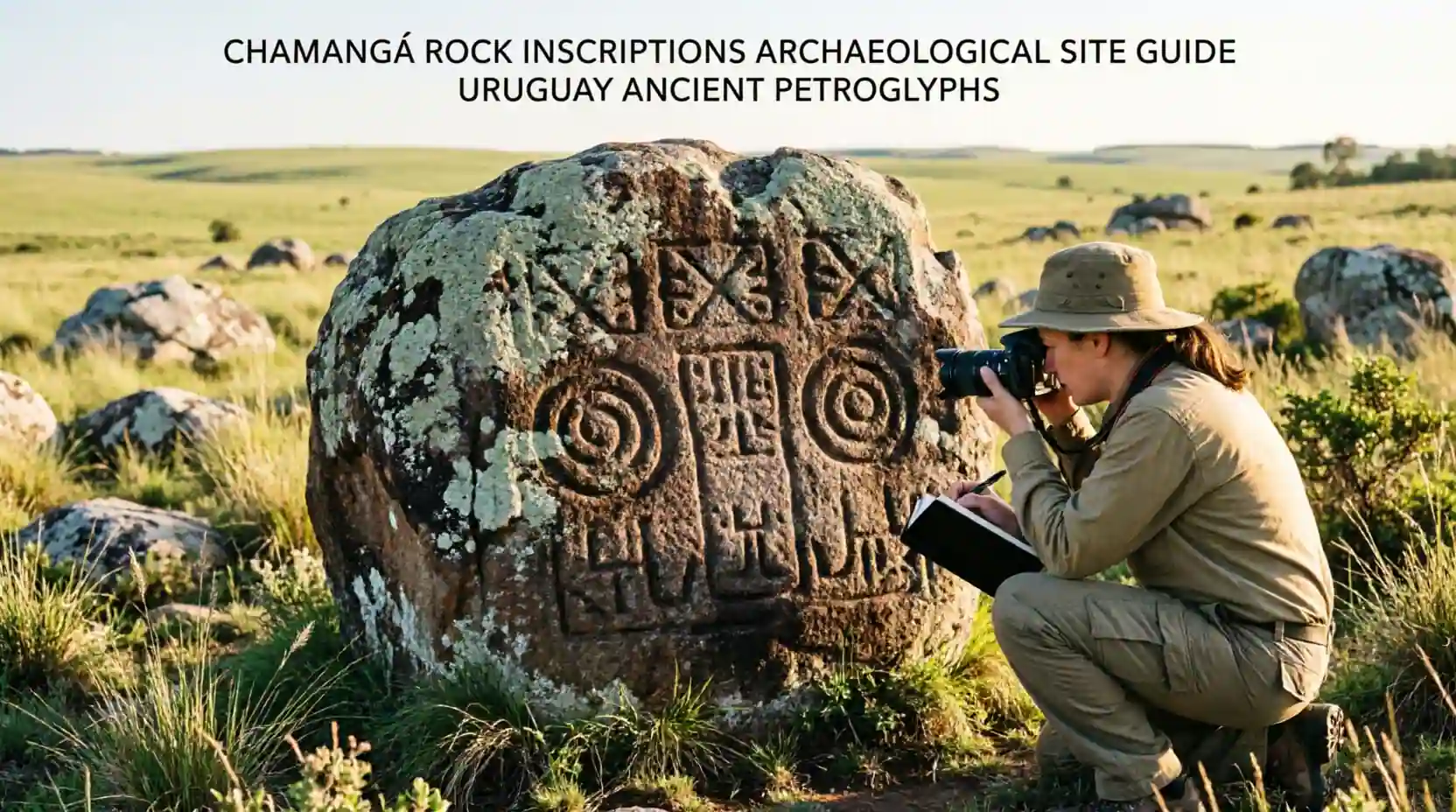
Discovering Chamangás Ancient Rock Art Heritage
The Chamangá region in Uruguay harbors one of South Americas most significant collections of pre-Columbian rock inscriptions. These ancient petroglyphs represent thousands of years of indigenous cultural expression and spiritual practice.
Located in the Florida Department the Chamangá archaeological site features extensive rock art created by native peoples who inhabited the region long before European contact. The inscriptions provide invaluable insights into pre-Columbian life beliefs and artistic traditions.
These weathered stone carvings display geometric patterns anthropomorphic figures zoomorphic designs and abstract symbols that continue to fascinate archaeologists and visitors alike. Each inscription tells a story connecting modern observers with ancient Uruguayan cultures.
The site remains relatively unknown to international tourists offering authentic archaeological exploration without crowds. This preservation status allows intimate encounters with Uruguays indigenous heritage in peaceful natural settings.
This comprehensive guide reveals everything needed to explore the Chamangá rock inscriptions including historical context access information cultural significance and responsible visitation practices for this remarkable archaeological treasure.
Historical Context and Archaeological Significance

The Chamangá rock inscriptions date back thousands of years created by indigenous groups who inhabited Uruguays interior regions. Archaeological evidence suggests multiple periods of human occupation and artistic production at the site.
Pre-Columbian peoples including ancestors of the Charrua and Guarani cultures likely created these petroglyphs using stone tools and carving techniques passed through generations. The inscriptions served ceremonial educational and territorial marking purposes.
Geometric motifs dominate the Chamangá collection including circles spirals concentric patterns and grid designs. These abstract elements may represent cosmological concepts astronomical observations or spiritual symbols central to indigenous belief systems.
Anthropomorphic figures depicting human forms appear throughout the site though less frequently than geometric designs. These representations provide rare glimpses into how ancient peoples viewed themselves and their place in the world.
Zoomorphic carvings showing animals particularly local fauna like deer birds and felines demonstrate indigenous peoples intimate knowledge of their environment. These depictions may relate to hunting practices totemic beliefs or mythological narratives.
Archaeological research at Chamangá continues revealing new insights about Uruguays pre-Columbian past. The sites preservation allows ongoing study while enabling respectful public access to this cultural heritage.
Location and Geographic Setting

The Chamangá archaeological site lies in Uruguays Florida Department approximately one hundred kilometers north of Montevideo. This interior location places the rock inscriptions within characteristic Uruguayan grassland landscape.
The site occupies terrain featuring exposed rock formations natural boulders and stone outcroppings ideal for petroglyph creation. These geological features provided ancient artists with suitable surfaces for their carvings.
Chamangá stream flows near the archaeological area providing water resources that likely attracted indigenous settlements. The proximity to water sources explains the concentration of rock art in this location.
The regions temperate climate with moderate rainfall and distinct seasons has preserved the inscriptions though natural weathering continues. Understanding environmental factors helps appreciate preservation challenges.
Surrounding countryside features typical Uruguayan pampas vegetation with grasslands scattered trees and native flora. This landscape context enhances understanding of how ancient peoples interacted with their environment.
Access and Transportation to Chamangá

Reaching the Chamangá rock inscriptions requires planning as the site lies in rural Uruguay with limited public transportation options. Most visitors arrive by private vehicle or organized tour.
From Montevideo travel north on Route five toward Florida city then continue toward Chamangá area. The journey takes approximately two hours depending on starting point and road conditions.
Local roads leading to the site include paved and unpaved sections requiring careful navigation. Four-wheel drive vehicles prove advantageous though standard cars can access the area in dry conditions.
GPS coordinates and detailed maps facilitate finding the archaeological site as signage remains limited. Downloading offline maps before departure prevents navigation difficulties in areas with poor cell coverage.
Organized tours from Montevideo or Florida occasionally include Chamangá visits though availability varies. Booking through archaeological tourism operators ensures proper guidance and site access permissions.
Local guides familiar with the area provide invaluable assistance locating inscription sites and understanding their significance. Engaging guides supports local knowledge preservation and enhances visitor experiences.
The Rock Inscription Collections

Chamangá features multiple rock art panels distributed across the archaeological area each displaying unique combinations of motifs and carving techniques. Exploring these collections reveals the diversity of indigenous artistic expression.
Cupules small circular depressions carved into rock surfaces appear frequently throughout Chamangá. These simple yet labor-intensive features may have served ritual purposes or functioned as counting systems.
Concentric circles radiating from central points create striking visual patterns that demonstrate sophisticated planning and execution. These designs may represent celestial bodies water sources or spiritual concepts.
Linear grooves and parallel lines form grids and maze-like patterns across some rock surfaces. The precision of these carvings indicates advanced tool use and artistic skill.
Abstract symbols including crosses stars and irregular geometric shapes populate many panels. Interpreting these motifs requires understanding indigenous cosmology though definitive meanings often remain elusive.
Some inscriptions show evidence of multiple carving periods with newer designs superimposed over older ones. This layering demonstrates the sites long-term cultural significance across generations.
Carving Techniques and Artistic Methods

Understanding how ancient peoples created the Chamangá inscriptions enhances appreciation for their skill and dedication. The carving techniques employed required considerable time effort and specialized knowledge.
Direct percussion using stone hammers to peck away rock surfaces created most Chamangá petroglyphs. This labor-intensive method produced characteristic pitted textures visible on many inscriptions.
Abrasion techniques involving grinding stones against rock surfaces generated smoother grooves and lines. Artists likely used quartz or other hard minerals as abrasive tools.
Incising with sharp stone flakes enabled finer detailed work though this technique appears less frequently at Chamangá. The harder granite and quartzite substrates favored percussion methods.
Carving depth varies across the site with some inscriptions barely visible while others penetrate several millimeters into rock. Depth differences may reflect tool types carving duration or symbolic intentions.
Weathering patterns help archaeologists estimate relative ages of different inscriptions though absolute dating remains challenging. More heavily weathered carvings likely represent earlier production periods.
Cultural and Spiritual Significance

The Chamangá rock inscriptions held profound meaning for the indigenous peoples who created them serving functions beyond mere artistic expression. Understanding this significance requires respecting indigenous perspectives.
Ceremonial and ritual uses likely motivated much of the rock art production. The inscriptions may have marked sacred spaces facilitated spiritual practices or commemorated important events.
Territorial marking represents another probable function with petroglyphs indicating group territories resource areas or travel routes. These visual markers communicated information across generations.
Educational purposes may have guided inscription creation with designs teaching cultural knowledge astronomical information or survival skills to younger generations. Rock art served as durable teaching tools.
Astronomical observations potentially influenced some geometric patterns with circles and alignments possibly tracking celestial movements seasonal changes or solstice events. Indigenous peoples possessed sophisticated astronomical knowledge.
Contemporary indigenous communities maintain connections to these ancestral sites though direct cultural continuity remains complex. Respecting this heritage requires sensitivity and collaboration with descendant communities.
Archaeological Research and Documentation

Ongoing archaeological work at Chamangá continues expanding knowledge about the sites inscriptions their creators and cultural contexts. Research efforts balance documentation preservation and public access.
Systematic surveys map inscription locations recording coordinates orientations and associated features. This spatial data reveals patterns in site selection and rock art distribution.
Detailed photography and tracing techniques document inscription details creating permanent records that monitor weathering and potential damage. Digital archiving ensures long-term preservation of information.
Comparative analysis with other Uruguayan and South American rock art sites identifies regional styles cultural connections and chronological relationships. Chamangá fits within broader patterns of indigenous artistic expression.
Community involvement in research increasingly recognized as essential with local residents and indigenous representatives participating in documentation and interpretation. Collaborative approaches produce more comprehensive understanding.
Publication of research findings though important for knowledge sharing must balance academic interests with site protection. Sensitive location details sometimes withheld to prevent vandalism or unauthorized access.
Preservation Challenges and Conservation Efforts

The Chamangá rock inscriptions face ongoing preservation challenges from natural weathering human activities and environmental changes. Conservation efforts aim to protect this irreplaceable heritage for future generations.
Natural erosion from wind rain temperature fluctuations and biological growth gradually degrades rock surfaces. These processes though slow continuously alter the inscriptions.
Vegetation growth including lichens mosses and plants can obscure or damage petroglyphs. Conservationists carefully manage vegetation while recognizing some biological growth proves inevitable.
Human impacts including vandalism unauthorized collecting and inappropriate visitation threaten the site. Education and controlled access help minimize these risks though enforcement proves difficult in remote areas.
Climate change may accelerate weathering through altered precipitation patterns increased temperatures and extreme weather events. Long-term preservation requires addressing these broader environmental challenges.
Conservation strategies include documentation monitoring controlled access and community stewardship. Local residents often serve as first line of defense protecting sites through vigilance and care.
Visitor Guidelines and Responsible Tourism

Visiting the Chamangá rock inscriptions requires commitment to responsible tourism practices that protect the site while enabling meaningful experiences. Following guidelines ensures preservation for future visitors.
Never touch rub or apply substances to rock inscriptions as oils from skin accelerate deterioration. Observing from appropriate distances protects the carvings while allowing clear viewing.
Avoid walking on or near inscribed surfaces as foot traffic causes erosion and damage. Staying on established paths minimizes impact on archaeological features.
Do not create new markings deface surfaces or remove any materials from the site. Such actions constitute vandalism and cultural heritage destruction with legal consequences.
Photography for personal use generally acceptable though flash may damage some surfaces. Commercial photography requires special permissions from heritage authorities.
Pack out all trash and leave no trace of your visit. Maintaining site cleanliness demonstrates respect for cultural heritage and protects the environment.
Best Times to Visit Chamangá

Timing visits to Chamangá affects both the quality of experience and impact on the site. Seasonal considerations influence accessibility visibility and comfort.
Spring September through November offers mild temperatures blooming vegetation and comfortable conditions for exploration. This season balances pleasant weather with manageable visitor numbers.
Summer December through February brings warmer temperatures though heat can prove intense during midday. Early morning or late afternoon visits avoid peak heat while providing good lighting for viewing inscriptions.
Autumn March through May features comfortable temperatures and changing foliage creating scenic backdrops. This season often provides optimal visiting conditions with stable weather.
Winter June through August brings cooler temperatures and occasional rain though the site remains accessible. Fewer visitors during winter enable more peaceful exploration despite less comfortable conditions.
Weekday visits typically encounter fewer people than weekends enhancing the experience. Planning trips during off-peak times reduces site pressure while improving personal enjoyment.
What to Bring for Your Visit

Proper preparation enhances Chamangá visits ensuring comfort safety and ability to appreciate the rock inscriptions fully. Packing appropriately for rural archaeological site exploration proves essential.
Sturdy walking shoes with good traction necessary for navigating uneven terrain and rocky surfaces. The archaeological area requires considerable walking over natural ground.
Sun protection including hats sunscreen and sunglasses essential given limited shade at the site. Uruguayan sun proves intense particularly during summer months.
Water and snacks sustain energy during exploration as facilities remain limited or absent. Carrying adequate supplies prevents dehydration and maintains comfort.
Camera equipment for documenting inscriptions though remember not to touch rocks for better angles. Binoculars help view details from appropriate distances.
Notebooks and pencils for sketching or recording observations though pens may prove problematic in dusty conditions. Documentation enhances learning and memory retention.
Connecting Chamangá to Broader Uruguay Travel

The Chamangá rock inscriptions integrate effectively into broader Uruguay itineraries combining archaeological exploration with other cultural natural and urban experiences.
Montevideo day trips enable visiting Chamangá while based in the capital though the distance requires early starts and full days. Combining with other Florida Department attractions maximizes travel efficiency.
Florida city offers accommodations dining and services for visitors exploring Chamangá. Using this urban center as base facilitates multi-day archaeological tourism in the region.
Other Uruguayan archaeological sites including those in Tacuarembo and Rivera departments provide comparative rock art experiences. Regional circuits reveal the diversity of indigenous heritage across Uruguay.
Natural attractions near Chamangá including streams grasslands and wildlife viewing complement cultural exploration. Combining nature and heritage creates well-rounded travel experiences.
Wine regions and rural estancias in central Uruguay offer additional activities balancing archaeological intensity with relaxation and culinary experiences. Diverse itineraries prevent travel fatigue.
Educational and Research Opportunities

Chamangá provides valuable educational opportunities for students researchers and anyone interested in Uruguays pre-Columbian past. The site serves as outdoor classroom and research laboratory.
School groups from Uruguay and neighboring countries occasionally visit Chamangá for field trips connecting classroom learning with tangible heritage. Educational programs enhance cultural awareness among youth.
University research projects study various aspects of the rock art from dating techniques to symbolic interpretation. Academic work advances knowledge while training future archaeologists.
Volunteer opportunities sometimes available for site maintenance documentation and visitor education. Contributing to preservation efforts provides meaningful engagement with cultural heritage.
Workshops and lectures about Chamangá and Uruguayan archaeology occur periodically in nearby communities. Participating in these events deepens understanding before or after site visits.
Photography and Documentation Ethics

Photographing the Chamangá rock inscriptions requires balancing documentation desires with preservation responsibilities. Ethical photography practices protect the site while creating lasting memories.
Avoid using flash photography which though unlikely to cause immediate damage may contribute to long-term deterioration over repeated exposures. Natural light proves sufficient for quality images.
Do not enhance visibility through wetting stones applying powders or other interventions. Such practices damage inscriptions and constitute archaeological vandalism.
Respect other visitors by not monopolizing prime photography positions or creating disturbances. Courteous behavior ensures everyone enjoys the site.
Sharing images on social media helps raise awareness about Chamangá though avoid posting precise GPS coordinates that might facilitate vandalism. General location information suffices for most purposes.
Consider how your photography might be perceived by descendant communities and heritage professionals. Respectful documentation honors the cultural significance of these ancient creations.
Understanding Indigenous Perspectives

Appreciating the Chamangá rock inscriptions requires acknowledging indigenous peoples as creators and cultural stakeholders. Contemporary perspectives inform respectful engagement with these sites.
Indigenous communities maintain spiritual and cultural connections to ancestral sites though direct lineage may be complex due to colonial disruption. Recognizing these connections proves important for ethical tourism.
Consultation with indigenous representatives increasingly recognized as essential for site management and interpretation. Collaborative approaches produce more accurate and respectful presentations.
Avoid romanticizing or appropriating indigenous cultures in interpretations or discussions. Acknowledge the diversity and complexity of native peoples past and present.
Support indigenous-led tourism initiatives when available as these provide authentic perspectives while ensuring communities benefit from cultural heritage tourism. Economic empowerment supports cultural preservation.
Cost Considerations for Visiting Chamangá

Visiting the Chamangá rock inscriptions involves various costs though the site itself typically remains free or low-cost. Budget planning enables accessible archaeological tourism.
Transportation represents the primary expense with fuel costs for private vehicles or tour fees for organized visits. The distance from Montevideo makes this the largest budget item.
Guide services if hired cost approximately thirty to sixty dollars depending on duration and expertise. Professional guidance significantly enhances understanding though independent exploration remains possible.
Accommodation in Florida city or nearby areas ranges from budget to mid-range options. Staying overnight enables more relaxed exploration and additional regional sightseeing.
Meals and supplies for the visit require modest budgets with local restaurants offering affordable Uruguayan cuisine. Packing picnics reduces costs though supporting local businesses benefits communities.
Overall day trips from Montevideo cost approximately fifty to one hundred dollars per person including transportation food and incidentals. Multi-day visits increase costs proportionally.
Safety Considerations for Rural Site Visits

Visiting Chamangá requires attention to safety given its rural location and natural environment. Precautionary measures ensure enjoyable experiences without incidents.
Inform someone of your travel plans including expected return times when visiting remote areas. This simple step enables assistance if difficulties arise.
Carry basic first aid supplies for treating minor injuries from cuts scrapes or insect bites. Rural locations mean limited immediate medical access.
Be aware of wildlife including snakes insects and larger animals though dangerous encounters remain rare. Maintaining awareness and giving animals space prevents problems.
Weather conditions can change rapidly in Uruguayan countryside with sudden storms or temperature shifts. Checking forecasts and preparing for variations prevents discomfort or danger.
Cell phone coverage may be spotty in rural areas limiting communication options. Downloading offline maps and having backup navigation proves wise.
Future of Chamangá Archaeological Heritage

The Chamangá rock inscriptions face an uncertain future requiring proactive management to ensure preservation for coming generations. Understanding challenges and opportunities informs responsible engagement.
Increased tourism interest though beneficial for awareness and funding potential also raises preservation concerns. Balancing access with protection requires thoughtful planning and resources.
Climate change impacts including altered precipitation patterns and increased extreme weather events threaten rock art preservation. Adaptation strategies must address these long-term challenges.
Technology offers new tools for documentation monitoring and virtual access reducing physical pressure on sites while expanding educational reach. Digital preservation complements physical conservation.
Community stewardship remains essential for long-term protection with local residents serving as guardians of cultural heritage. Supporting community involvement ensures sustainable preservation.
International recognition though Chamangá lacks World Heritage status could bring resources and attention. However such designation also increases visitor pressure requiring careful management.
Conclusion Honoring Ancient Voices in Stone

The Chamangá rock inscriptions represent irreplaceable windows into Uruguays pre-Columbian past preserving indigenous voices carved in stone thousands of years ago. These ancient artworks deserve respect protection and thoughtful engagement.
Visiting Chamangá offers more than archaeological tourism providing opportunities to connect with deep history appreciate indigenous creativity and reflect on human expression across time. The sites power lies in its authenticity and antiquity.
Responsible visitation following guidelines respecting the site and supporting preservation efforts ensures future generations can experience these remarkable inscriptions. Each visitor bears responsibility for protecting this heritage.
The Chamangá rock art reminds us that Uruguay possesses rich cultural depths beyond colonial history revealing sophisticated indigenous civilizations that shaped the landscape long before European arrival. Acknowledging this heritage enriches understanding of Uruguayan identity.
Your exploration of Chamangá connects you with ancient peoples through their enduring artistic legacy. Approach these sacred stones with humility curiosity and commitment to preservation honoring the hands that carved them millennia ago.
0 Comments