.webp)
.webp)
Exploring Pliva Watermills Jajce First-Time Travelers Guide Little Mills
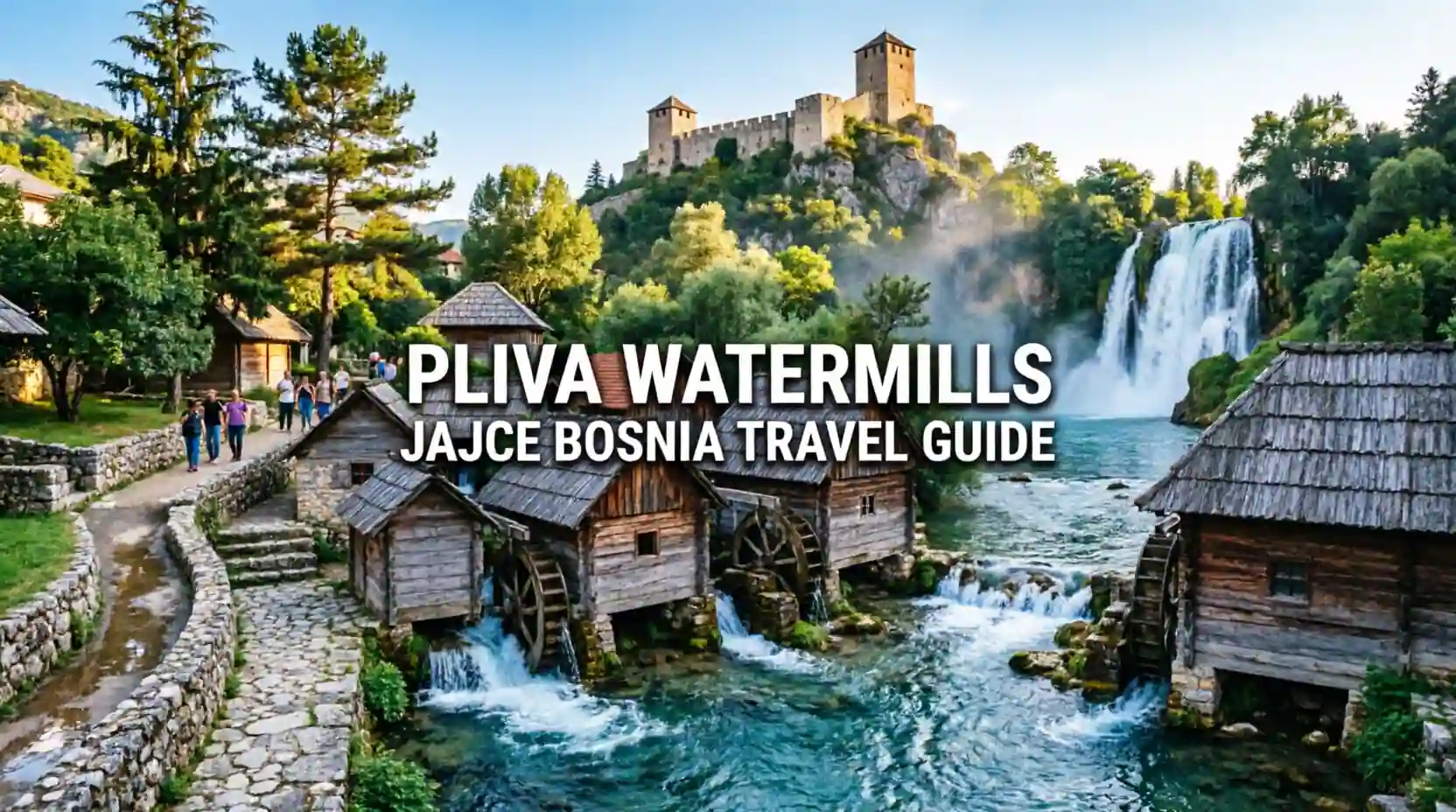
Discovering the Pliva Watermills of Jajce
The Pliva Watermills called Mlinčići or Little Mills represent one of Bosnia and Herzegovina's most charming historical attractions. These traditional wooden watermills cluster at the spectacular confluence of the Pliva and Vrbas rivers in the medieval town of Jajce.
This unique complex features dozens of small wooden mills with functioning water wheels that have operated for centuries. The site showcases traditional Bosnian craftsmanship and hydraulic engineering from the Ottoman period.
Jajce itself stands as one of Bosnia's most picturesque towns. The medieval fortress towering above the dramatic waterfall where the Pliva meets the Vrbas creates one of the country's most photographed scenes.
The watermills serve as both a museum and living heritage site. Visitors can observe traditional milling techniques and learn about the important role these structures played in local economy and daily life.
This guide provides first-time travelers with everything needed to explore the Pliva Watermills. You will discover history, access information, practical tips, and strategies for making the most of your visit to this remarkable heritage site.
Historical Significance of the Mlinčići Watermills

The Pliva Watermills date back to the Ottoman period in Bosnia. Historical records suggest milling activity at this location for over five centuries though the exact origins remain debated among historians.
These mills served as essential infrastructure for the local community. They ground grain into flour providing a vital service to Jajce's residents and surrounding villages.
The watermill complex demonstrates sophisticated hydraulic engineering. The system channels water from the Pliva River through multiple mills maximizing the energy from the river's flow.
Traditional construction methods used local materials. Wooden structures built from regional timber have survived centuries through careful maintenance and reconstruction.
The watermills represent Bosnia's industrial heritage. They illustrate pre-industrial technology and craftsmanship that sustained communities before modern machinery.
Architectural Features and Design
Each mill features a distinctive wooden construction with stone foundations. The combination provides stability while allowing the water wheel mechanisms to function effectively.
Traditional water wheels vary in size depending on the mill's purpose. Larger wheels generate more power for heavier grinding tasks.
Interior milling mechanisms preserve historical technology. Stone grinding wheels, wooden gears, and transmission systems demonstrate traditional engineering solutions.
The mills cluster in an organic layout following the river's contours. This arrangement maximizes water access while creating a picturesque ensemble.
Cultural and Economic Importance
The watermills supported Jajce's development as a regional center. Reliable flour production enabled population growth and economic activity.
Millers held important social positions in traditional Bosnian society. Their specialized skills and essential service earned respect within communities.
The watermills reflect Bosnia's multicultural heritage. Ottoman, Mediterranean, and Slavic influences blend in the architectural and technical features.
Modern preservation efforts recognize the site's cultural value. The watermills now function as a museum protecting this heritage for future generations.
Location and Geography of the Watermill Site

The Pliva Watermills occupy a spectacular location at the confluence of two rivers. The Pliva River flows into the Vrbas creating a dramatic natural setting enhanced by the nearby waterfall.
Jajce sits in central Bosnia approximately 200 kilometers northwest of Sarajevo. The town's elevation and river valleys create a unique microclimate and scenic landscape.
The watermill complex lies in the town's lower section near the river confluence. This position places it within easy walking distance of Jajce's old town and fortress.
The surrounding area features lush vegetation and natural beauty. River valleys, waterfalls, and medieval architecture combine to create one of Bosnia's most photogenic destinations.
Understanding the River System
The Pliva River originates from springs near Šipovo approximately 30 kilometers upstream. The river flows through canyons and valleys before reaching Jajce.
The Vrbas River represents one of Bosnia's major waterways. It flows northward eventually joining the Sava River which empties into the Danube.
The confluence creates unique hydrological conditions. The meeting of two rivers with different characteristics produces the energy that powers the watermills.
Jajce's famous waterfall occurs where the Pliva cascades into the Vrbas. This 22-meter waterfall ranks among Europe's most spectacular urban waterfalls.
Natural and Built Environment
The watermill site integrates natural and constructed elements. River channels, stone pathways, wooden structures, and vegetation create a harmonious ensemble.
Seasonal water level variations affect the mills' appearance. Spring snowmelt produces dramatic high water while summer brings calmer flows.
The surrounding medieval town provides historical context. Jajce's fortress, churches, and Ottoman architecture frame the watermill complex.
How to Reach the Pliva Watermills in Jajce

Reaching Jajce requires planning as the town sits in Bosnia's mountainous interior. Multiple transportation options connect Jajce to major cities and international entry points.
From Sarajevo to Jajce
Direct bus service operates between Sarajevo and Jajce. The journey takes approximately 3.5 to 4 hours covering roughly 200 kilometers through mountainous terrain.
Bus tickets cost 25 to 35 BAM for one-way travel. Multiple daily departures provide flexibility though schedules may vary by season.
Private car rental offers the most flexibility for exploring. The drive takes 3 to 3.5 hours via scenic routes through central Bosnia.
Organized tours from Sarajevo include Jajce in multi-day itineraries. These packages handle transportation and accommodation simplifying logistics.
From Banja Luka to Jajce
Banja Luka represents the closest major city to Jajce at approximately 60 kilometers distance. The journey takes about 1 hour by car or bus.
Regular bus connections operate between these cities. Tickets cost 10 to 15 BAM with multiple daily departures.
Private taxi service costs 80 to 120 BAM for the journey. This option provides door-to-door convenience for groups or families.
International Access Points
Sarajevo International Airport serves as the primary gateway. Direct flights connect to major European cities though connections may be required from North America or Asia.
Banja Luka Airport offers limited international service. This smaller airport provides an alternative though flight options remain restricted.
Zagreb Croatia represents another entry option. The drive from Zagreb to Jajce takes approximately 3 hours crossing into Bosnia.
Split Croatia provides seasonal access. The coastal city connects to Jajce via a 2.5 to 3 hour drive through mountainous terrain.
Local Transportation in Jajce
Jajce's compact size makes walking the preferred transportation method. The watermills lie within 10 to 15 minutes walking from the town center.
Local taxis operate within the town for short distances. Fares typically range from 5 to 10 BAM for trips within Jajce.
The watermill site requires no special transportation once in Jajce. Clear signage and pathways guide visitors from the old town to the mills.
Visiting Hours Admission and Costs 2026

The Pliva Watermills operate as an open-air museum with specific visiting hours and admission fees. Understanding these details helps plan your visit effectively.
Operating Hours
Summer season from May to September offers extended hours. The watermills typically open from 9 AM to 7 PM daily during peak tourist season.
Winter season from October to April features reduced hours. Operating times usually run from 10 AM to 4 PM with possible variations.
Holidays may affect opening hours. Check locally for Christmas Easter and Bosnian national holiday schedules.
Photography outside operating hours remains possible. The exterior site can be viewed from public areas though interior access requires official hours.
Admission Fees
Adult admission costs approximately 5 to 8 BAM. This modest fee supports site maintenance and preservation efforts.
Student and senior discounts reduce admission to 3 to 5 BAM. Valid identification required for discounted rates.
Children under 6 years typically enter free. Family rates may be available for groups with multiple children.
Guided tours may cost extra 10 to 15 BAM. Professional guides provide historical context and answer questions about the mills.
Additional Expenses
Photography permits generally included in admission. Commercial photography may require special permission and additional fees.
Souvenir purchases at the site gift shop range from 5 to 30 BAM. Traditional crafts and local products available.
Nearby cafes and restaurants charge 10 to 20 BAM for meals. Budget for refreshments during your visit.
What to See and Experience at the Watermills

The Pliva Watermill complex offers multiple attractions and experiences. Understanding what awaits helps visitors maximize their time at this heritage site.
The Watermill Structures
Over 20 individual mills comprise the complex. Each structure features unique characteristics though all follow traditional construction methods.
Functioning water wheels demonstrate hydraulic power. Visitors can observe how river flow turns the wheels generating mechanical energy.
Interior milling equipment remains preserved in several mills. Stone grinding wheels wooden gears and transmission systems illustrate traditional technology.
Interpretive signage explains milling processes. Information panels in multiple languages describe historical operations and significance.
Ethnographic Museum Elements
Some mills function as small museums displaying traditional tools. Agricultural implements household items and milling equipment provide cultural context.
Traditional Bosnian costumes appear in exhibits. These displays illustrate the dress and material culture of the region's historical inhabitants.
Photographs document the mills' history. Historical images show the complex through different periods and reconstruction phases.
Natural and Scenic Features
The river confluence provides spectacular viewing opportunities. The meeting point of the Pliva and Vrbas creates dramatic natural scenery.
Jajce's waterfall visible from the watermill area. The 22-meter cascade adds to the site's visual appeal and natural significance.
Walking paths along the rivers offer peaceful strolls. Well-maintained trails provide access to different viewpoints and photo opportunities.
Lush vegetation enhances the setting. Trees shrubs and riverside plants create a park-like atmosphere around the historical structures.
Photography Opportunities
The watermills rank among Bosnia's most photographed sites. Multiple angles and perspectives provide endless photographic possibilities.
Golden hour lighting creates magical atmosphere. Early morning and late afternoon light enhances the wooden structures and water features.
Seasonal variations offer different photographic subjects. Spring flowers summer greenery autumn colors and winter snow each provide unique imagery.
The medieval fortress backdrop adds compositional interest. Including Jajce's fortress in watermill photographs creates compelling historical narratives.
Best Time to Visit the Pliva Watermills

Timing your visit affects the experience significantly. Different seasons offer distinct advantages and considerations for exploring the watermills.
Seasonal Considerations
Spring from April to June brings high water levels and dramatic flows. Snowmelt from surrounding mountains creates powerful river currents making the water wheels particularly active.
Summer from July to September offers warm weather and extended daylight. This peak tourist season provides the most reliable weather though crowds increase.
Autumn from October to November features beautiful fall colors. Reduced crowds and pleasant temperatures create ideal conditions for photography and exploration.
Winter from December to March brings snow and quieter atmosphere. The watermills covered in snow create magical scenes though some facilities may have limited hours.
Daily Timing Strategies
Early morning visits avoid crowds and provide soft light. Arriving at opening time ensures peaceful exploration and optimal photography conditions.
Midday brings maximum light but also peak crowds. This time works for quick visits though patience required for photography.
Late afternoon offers golden hour lighting and thinning crowds. The warm light enhances the wooden structures creating beautiful photographs.
Evening visits possible from public viewpoints. Though the site closes exterior views remain accessible for sunset photography.
Weather Considerations
Clear days provide best photography conditions. Sunny weather illuminates the watermills and creates reflections in the rivers.
Overcast conditions offer soft even lighting. Cloud cover can actually benefit photography by reducing harsh shadows.
Rain creates dramatic atmosphere but limits exploration. The watermills appear moody in rain though pathways become slippery.
Practical Tips for First-Time Visitors

Successful watermill visits require some preparation and awareness. These practical tips help first-time travelers make the most of their experience.
What to Bring
Comfortable walking shoes essential for exploring. Cobblestone paths and uneven surfaces require sturdy footwear with good traction.
Camera equipment for capturing the scenery. The watermills offer exceptional photographic opportunities worth documenting.
Water and snacks for extended visits. While cafes exist nearby having refreshments ensures comfort during exploration.
Weather-appropriate clothing layers. Mountain weather changes quickly requiring preparation for varying conditions.
Cash in convertible marks for admission and purchases. Credit cards accepted at some locations but cash remains preferred.
Accessibility Considerations
The watermill site presents some accessibility challenges. Uneven terrain and historical structures limit wheelchair access in certain areas.
Main pathways accommodate strollers with effort. Parents with young children should be prepared for some difficult sections.
Rest areas and benches available throughout the site. These provide opportunities for rest during exploration.
Accessible facilities limited but improving. Check current accessibility features if specific accommodations required.
Time Allocation
Allow 1 to 2 hours for thorough exploration. This timeframe permits viewing all mills reading interpretive materials and taking photographs.
Photography enthusiasts may require 3 or more hours. The site's beauty encourages extended sessions capturing different angles and lighting.
Combine with other Jajce attractions for full day visits. The town's medieval fortress museums and waterfall merit additional time.
Combining Watermill Visits with Other Jajce Attractions

Jajce offers multiple attractions that complement watermill visits. Strategic planning enables efficient exploration of the town's highlights.
Jajce Fortress
The medieval fortress towers above Jajce offering panoramic views. This 14th-century stronghold represents one of Bosnia's most important historical monuments.
Fortress admission costs 5 to 8 BAM similar to the watermills. Combined tickets may be available providing better value for multiple attractions.
The climb to the fortress takes 20 to 30 minutes from town center. Moderate fitness required for the uphill walk though rewards include spectacular views.
Historical exhibits within the fortress provide context. Learn about Jajce's role in Bosnian history including the important 1943 AVNOJ session.
Jajce Waterfall
The town's famous waterfall occurs where the Pliva meets the Vrbas. This 22-meter cascade flows directly through Jajce's center creating a unique urban natural feature.
Multiple viewpoints provide different waterfall perspectives. The watermill area offers one vantage point while other locations provide alternative angles.
The waterfall remains spectacular year-round. Seasonal variations in water flow create different visual experiences.
Evening illumination enhances the waterfall's beauty. Artificial lighting creates dramatic nighttime photography opportunities.
Historical and Cultural Sites
Catacombs of Saint Luke date to the 14th century. These underground chambers contain medieval frescoes and historical significance.
Church of Saint Mary represents important religious heritage. The church's history spans centuries reflecting Jajce's diverse cultural influences.
Esnaf Museum showcases traditional crafts and guild history. This small museum provides insight into Jajce's artisan traditions.
AVNOJ Museum commemorates the 1943 anti-fascist council. This historical site marks an important moment in Yugoslav and Bosnian history.
Suggested Itineraries
Half-day itinerary focuses on watermills and waterfall. This condensed visit covers Jajce's most iconic attractions efficiently.
Full-day itinerary includes fortress museums and old town. Comprehensive exploration reveals the town's rich historical and cultural heritage.
Multi-day visits enable relaxed exploration and day trips. Extended stays permit visits to nearby attractions like Mrkonjić Grad or Šipovo.
Photography Guide for the Watermills

The Pliva Watermills offer exceptional photographic opportunities. Understanding techniques and optimal conditions helps capture stunning images.
Best Photography Locations
The main viewing platform provides classic watermill compositions. This elevated position captures multiple mills with the river and waterfall.
Riverside paths offer intimate perspectives. Walking along the water enables close-up shots of individual mills and water wheels.
Bridge crossings create framing opportunities. Using bridges as vantage points incorporates architectural elements into compositions.
Fortress viewpoints provide panoramic context. Elevated positions show the watermills within Jajce's broader landscape.
Technical Recommendations
Wide-angle lenses capture the full complex effectively. The 16-35mm range works well for expansive watermill scenes.
Polarizing filters enhance water reflections and reduce glare. These filters improve sky saturation and water clarity.
Tripods enable long exposures for silky water effects. Slow shutter speeds create artistic water movement though tripods essential for sharpness.
Fast lenses help in low light conditions. Early morning and evening photography benefits from wide apertures like f/2.8.
Composition Strategies
Include the waterfall for context and scale. The cascade adds visual interest and identifies the location.
Use leading lines from rivers and pathways. These elements guide viewers' eyes through compositions.
Capture reflections in calm water sections. Mirror-like surfaces double visual impact creating symmetrical compositions.
Frame mills with natural elements. Trees arches and stone structures add depth and context to photographs.
Dining and Accommodation Near the Watermills

Jajce offers dining and lodging options that enhance watermill visits. Strategic choices maximize convenience and cultural experiences.
Restaurants and Cafes
Traditional Bosnian restaurants serve local cuisine. Dishes like ćevapi burek and Bosnian pot provide authentic flavors.
Riverside cafes offer views of the watermills. These establishments combine refreshments with scenic atmospheres.
Prices range from 10 to 25 BAM for main courses. Jajce's dining costs remain reasonable compared to larger Bosnian cities.
Reservations recommended during peak season. Summer months bring increased tourism requiring advance planning for popular restaurants.
Accommodation Options
Hotels in Jajce range from budget to mid-range categories. Prices typically run 50 to 120 BAM per night depending on quality and season.
Guesthouses and bed-and-breakfasts offer personal service. These family-run establishments provide local knowledge and authentic hospitality.
Apartments available for longer stays. Self-catering options suit travelers planning extended Jajce exploration.
Booking in advance essential for summer visits. Limited accommodation inventory fills quickly during peak tourist season.
Staying Overnight Benefits
Overnight stays enable early morning photography. Access to the watermills at opening time avoids crowds and provides optimal light.
Evening exploration reveals different atmospheres. The watermills illuminated at dusk offer unique photographic opportunities.
Multiple days permit comprehensive Jajce exploration. Extended visits reveal the town's full historical and cultural richness.
Cultural Etiquette and Responsible Tourism
Respectful behavior ensures positive experiences and supports heritage preservation. Understanding cultural norms demonstrates appreciation for Bosnian traditions.
Respectful Behavior Guidelines
Speak quietly in the watermill area. The peaceful atmosphere deserves preservation for all visitors.
Do not climb on historical structures. Preservation requires protecting these centuries-old buildings from damage.
Follow posted rules and signage. Guidelines exist to protect the site and ensure visitor safety.
Ask permission before photographing individuals. Respect privacy especially when photographing local residents.
Supporting Local Communities
Purchase from local vendors and artisans. Your spending supports the community that maintains this heritage.
Use local guides when available. Professional guides provide deeper understanding while creating employment.
Respect local customs and traditions. Bosnia's multicultural society deserves sensitive and informed engagement.
Environmental Responsibility
Carry out all trash and litter. Protect the natural beauty that enhances the watermill experience.
Stay on designated pathways. Trampling vegetation damages the riverside ecosystem.
Conserve water and resources. Sustainable practices protect Jajce for future visitors.
Conclusion and Final Recommendations
The Pliva Watermills represent one of Bosnia and Herzegovina's most charming and historically significant attractions. These traditional mills offer visitors glimpses into pre-industrial technology and Bosnian cultural heritage.
Jajce's compact size and rich attractions make it ideal for multi-day visits. The watermills combine seamlessly with the medieval fortress dramatic waterfall and historical museums.
First-time visitors benefit from advance planning regarding transportation and accommodation. Jajce's mountainous location requires thoughtful logistics though rewards exceed efforts.
The best visiting times depend on personal preferences. Spring brings dramatic water flows while autumn offers peaceful exploration with beautiful colors.
Photography enthusiasts will find endless subjects at the watermills. The combination of historical architecture natural beauty and dramatic lighting creates exceptional photographic opportunities.
Respectful tourism supports preservation of this valuable heritage site. Your visit contributes to maintaining the watermills for future generations while supporting the local community.
The Pliva Watermills deserve recognition as one of Bosnia's must-see destinations. This unique complex reveals the ingenuity craftsmanship and cultural richness that define Bosnian heritage.
Plan your 2026 visit to experience these remarkable little mills. The Mlinčići await to share their stories and beauty with travelers who appreciate history culture and natural splendor.
0 Comments