.webp)
.webp)
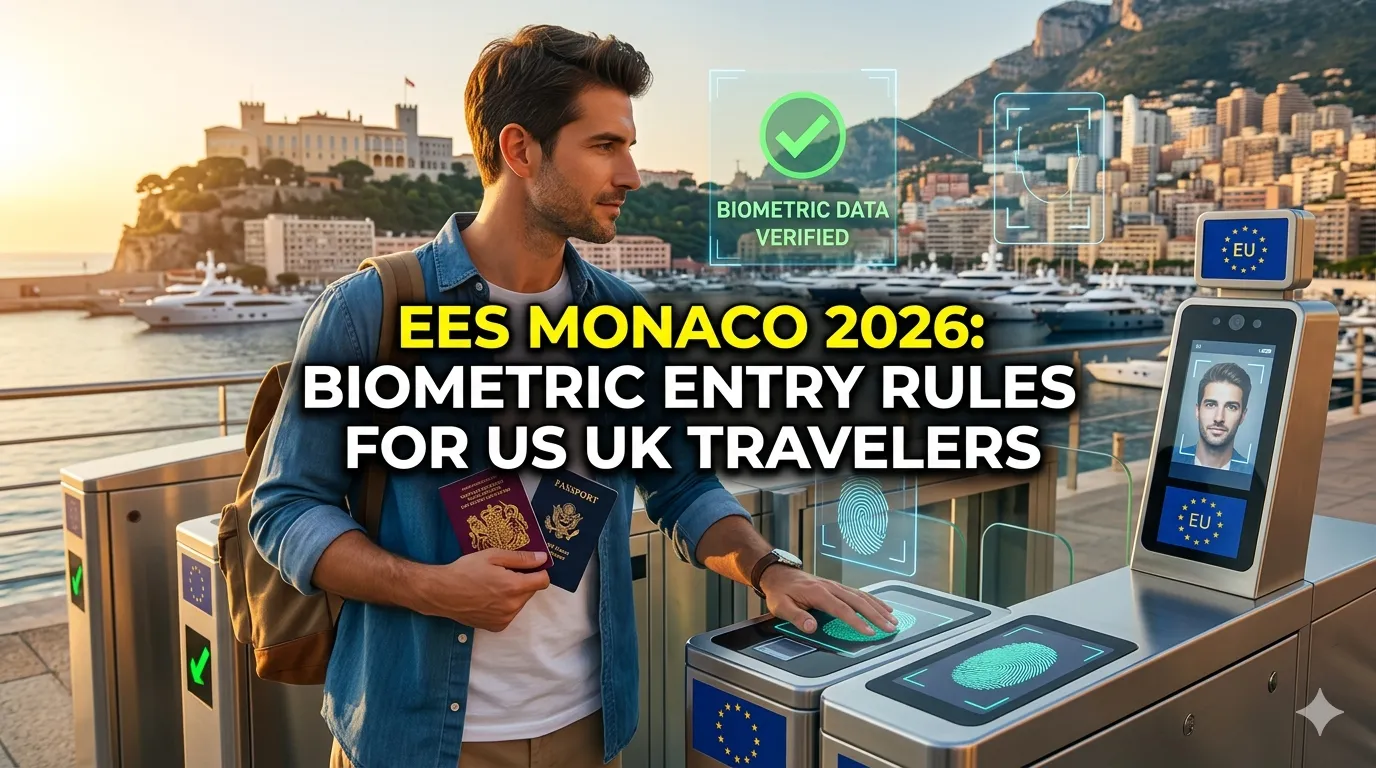
The 2026 EES Update: New mandatory biometric entry rules for US and UK citizens at Monaco's borders
Starting in 2026, US and UK citizens visiting Monaco will be required to comply with the European Union's Entry/Exit System (EES), a groundbreaking biometric border management system that mandates fingerprint scanning and facial recognition for all visa-exempt travelers entering the Schengen Area . This significant update affects Monaco despite the principality's unique status as a non-EU microstate, because Monaco maintains an open border with France and is de facto part of the Schengen Area for immigration purposes . The new rules require first-time entrants to provide biometric data at border checkpoints, with information stored in a centralized EU database for three years to enhance security, prevent irregular migration, and streamline future border crossings . For American and British travelers planning visits to Monaco's glamorous casinos, luxury hotels, and the famous Formula 1 Grand Prix circuit, understanding and preparing for EES requirements is essential for smooth entry in 2026 and beyond.
The EES represents the most substantial change to European border procedures in decades, replacing manual passport stamping with automated digital registration that tracks entry and exit dates, calculates remaining permitted stay under the 90/180-day rule, and flags potential overstays or security concerns . While the system aims to improve efficiency for frequent travelers after initial enrollment, first-time visitors should anticipate slightly longer processing times at border checkpoints during the initial rollout phase . This comprehensive guide explains everything US and UK citizens need to know about the EES update for Monaco travel, including biometric enrollment procedures, required documentation, practical tips for border crossings, and how Monaco's unique geographical and political situation affects implementation of these new European border rules.
What is the Entry/Exit System (EES) and Why Does It Apply to Monaco?
The Entry/Exit System (EES) is an automated IT system developed by the European Union to register and track non-EU nationals traveling to the Schengen Area for short stays (up to 90 days within any 180-day period) . Launched as part of the EU's Smart Borders initiative, EES replaces the traditional practice of stamping passports with a digital system that collects biometric and alphanumeric data to enhance border security and manage migration flows more effectively .
How EES Works: The Biometric Process
When US or UK citizens enter Monaco (or any Schengen country) under the EES framework, the following biometric enrollment process occurs:
- Passport Scan: Border officers or automated e-gates scan the machine-readable zone of your passport to extract personal data
- Facial Recognition: A digital photograph is captured using specialized cameras to create a biometric facial template
- Fingerprint Collection: Four fingerprints (typically from both index fingers and both middle fingers) are scanned electronically
- Data Storage: Your biometric and travel data are stored in a centralized EU database for three years or until passport expiration
- Entry Record: The system automatically logs your entry date, border crossing point, and permitted stay duration
- 👉 North Macedonia Entry Guide: US Travel Requirements 2026
- 👉 Atlas Festival 2026 Kyiv: Everything you need to know about the July 17-19 dates and lineup.
- 👉 Serbia EES Biometric Entry: US UK Requirements 2026
On subsequent entries within the three-year validity period, the system can verify your identity using facial recognition or fingerprints, potentially enabling faster processing through automated e-gates .
Why Monaco Is Included Despite Not Being an EU Member
Monaco's inclusion in the EES framework stems from its unique relationship with France and the Schengen Area:
- Open Border with France: Monaco shares a land border with France that has no routine immigration controls, effectively making Monaco part of the Schengen Area for practical purposes
- Customs Union: Monaco is part of the EU customs territory through its agreement with France
- Schengen Application: Although Monaco is not a formal Schengen member, it applies Schengen acquis (rules) through bilateral agreements with France
- Border Management: French border authorities manage immigration control for Monaco, meaning EES implementation occurs at French entry points used by Monaco-bound travelers
- 👉 North Macedonia Entry Guide: US Travel Requirements 2026
- 👉 Atlas Festival 2026 Kyiv: Everything you need to know about the July 17-19 dates and lineup.
- 👉 Serbia EES Biometric Entry: US UK Requirements 2026
Practical Implication: US and UK citizens traveling to Monaco will typically encounter EES procedures when entering France (by air at Nice Côte d'Azur Airport, by train at French stations, or by road at French border checkpoints), not at Monaco itself, since there are no routine immigration checks at the Monaco-France border .
EES vs. ETIAS: Understanding the Difference
Travelers often confuse EES with ETIAS (European Travel Information and Authorization System), but these are distinct programs:
EES (Entry/Exit System):
- Purpose: Tracks entry/exit of non-EU travelers at physical borders
- Requirement: Mandatory biometric enrollment at border checkpoints
- Cost: Free of charge
- Application: Completed in person at border (no pre-application)
- Validity: Data stored for 3 years or until passport expiration
- Who Needs It: All visa-exempt non-EU nationals (including US, UK citizens)
- 👉 North Macedonia Entry Guide: US Travel Requirements 2026
- 👉 Atlas Festival 2026 Kyiv: Everything you need to know about the July 17-19 dates and lineup.
- 👉 Serbia EES Biometric Entry: US UK Requirements 2026
ETIAS (Travel Authorization):
- Purpose: Pre-screening security check before travel authorization
- Requirement: Online application with security database checks
- Cost: €7 fee (free for under 18 and over 70)
- Application: Completed online before travel (takes minutes)
- Validity: Authorization valid for 3 years or until passport expiration
- Who Needs It: Visa-exempt non-EU nationals traveling to Schengen Area
- 👉 North Macedonia Entry Guide: US Travel Requirements 2026
- 👉 Atlas Festival 2026 Kyiv: Everything you need to know about the July 17-19 dates and lineup.
- 👉 Serbia EES Biometric Entry: US UK Requirements 2026
Key Point: US and UK citizens visiting Monaco in 2026 will need to comply with BOTH systems: obtain ETIAS authorization before travel AND complete EES biometric enrollment upon first entry to the Schengen Area .
Who Needs to Comply with EES at Monaco Borders?

Understanding whether you need to enroll in EES is crucial for travel planning. The requirements apply to specific categories of travelers based on nationality and visa status.
Citizens Required to Enroll in EES
EES biometric enrollment is mandatory for:
- United States Citizens: All US passport holders traveling to Monaco/Schengen for short stays (tourism, business, transit)
- United Kingdom Citizens: All UK passport holders post-Brexit traveling visa-free to Monaco/Schengen
- Other Visa-Exempt Nationals: Citizens of Canada, Australia, New Zealand, Japan, South Korea, and approximately 60 other countries with visa-waiver agreements
- First-Time Entrants: Anyone entering the Schengen Area for the first time under visa-exempt status
- 👉 North Macedonia Entry Guide: US Travel Requirements 2026
- 👉 Atlas Festival 2026 Kyiv: Everything you need to know about the July 17-19 dates and lineup.
- 👉 Serbia EES Biometric Entry: US UK Requirements 2026
Who Is Exempt from EES Enrollment?
You do NOT need to provide biometric data under EES if you:
- Are an EU/EEA/Swiss Citizen: European Union, European Economic Area, or Swiss nationals
- Hold a Valid Schengen Visa or Residence Permit: Travelers with long-stay visas or residence permits are registered under different systems
- Are Family Members of EU Citizens: With proper documentation proving family relationship
- Hold Diplomatic or Official Passports: Specific categories of diplomatic travelers may be exempt
- Are Under 12 Years Old: Children under 12 are exempt from fingerprint collection (facial image still required)
- 👉 North Macedonia Entry Guide: US Travel Requirements 2026
- 👉 Atlas Festival 2026 Kyiv: Everything you need to know about the July 17-19 dates and lineup.
- 👉 Serbia EES Biometric Entry: US UK Requirements 2026
Special Considerations for Monaco Travelers
Monaco's unique border situation creates specific scenarios for EES compliance:
Arriving by Air (Nice Côte d'Azur Airport):
- Most US/UK travelers fly into Nice, France (25 km from Monaco)
- EES enrollment occurs at French immigration control in Nice airport
- After clearing French border control, travel to Monaco by taxi, bus, train, or helicopter with no further immigration checks
- 👉 North Macedonia Entry Guide: US Travel Requirements 2026
- 👉 Atlas Festival 2026 Kyiv: Everything you need to know about the July 17-19 dates and lineup.
- 👉 Serbia EES Biometric Entry: US UK Requirements 2026
Arriving by Train:
- International trains to Monaco stop at French stations first
- Border control and EES enrollment typically occur at the first French station or onboard the train
- Monaco's train station (Gare de Monaco) has no routine immigration checks for Schengen arrivals
- 👉 North Macedonia Entry Guide: US Travel Requirements 2026
- 👉 Atlas Festival 2026 Kyiv: Everything you need to know about the July 17-19 dates and lineup.
- 👉 Serbia EES Biometric Entry: US UK Requirements 2026
Arriving by Road:
- Driving from France to Monaco involves no routine border checks
- EES enrollment would have occurred at your initial Schengen entry point (e.g., French airport, land border from non-Schengen country)
- Random police checks may occur but are not routine immigration control
- 👉 North Macedonia Entry Guide: US Travel Requirements 2026
- 👉 Atlas Festival 2026 Kyiv: Everything you need to know about the July 17-19 dates and lineup.
- 👉 Serbia EES Biometric Entry: US UK Requirements 2026
Arriving by Sea:
- Cruise ships docking in Monaco may have border control procedures
- Private yachts entering Monaco waters may encounter French maritime border checks
- EES enrollment would occur at the first Schengen port of entry
- 👉 North Macedonia Entry Guide: US Travel Requirements 2026
- 👉 Atlas Festival 2026 Kyiv: Everything you need to know about the July 17-19 dates and lineup.
- 👉 Serbia EES Biometric Entry: US UK Requirements 2026
Step-by-Step EES Enrollment Process for Monaco Travel

Understanding the biometric enrollment procedure helps travelers prepare for smooth border crossings. Here's what to expect when entering the Schengen Area en route to Monaco:
Step 1: Prepare Required Documents Before Travel
Before your trip, ensure you have:
- Valid Biometric Passport: Must be an e-passport with a digital chip containing biometric information. The passport must be valid for at least 3 months beyond your intended departure from the Schengen Area
- ETIAS Authorization: Complete the online ETIAS application before travel (required starting late 2026)
- Proof of Accommodation: Hotel reservation or address in Monaco/France
- Return or Onward Ticket: Evidence of planned departure from Schengen Area
- Proof of Sufficient Funds: Bank statements or credit cards demonstrating ability to support your stay
- Travel Insurance: Recommended (though not mandatory for visa-exempt travelers)
- 👉 North Macedonia Entry Guide: US Travel Requirements 2026
- 👉 Atlas Festival 2026 Kyiv: Everything you need to know about the July 17-19 dates and lineup.
- 👉 Serbia EES Biometric Entry: US UK Requirements 2026
Step 2: Arrival at Schengen Entry Point
When you arrive at your first Schengen entry point (typically Nice Airport for Monaco travelers):
- Proceed to the border control area designated for non-EU/visa-exempt travelers
- Join the appropriate queue (may be labeled "Non-EU Passports" or "All Passports")
- Have your passport and supporting documents ready for inspection
- 👉 North Macedonia Entry Guide: US Travel Requirements 2026
- 👉 Atlas Festival 2026 Kyiv: Everything you need to know about the July 17-19 dates and lineup.
- 👉 Serbia EES Biometric Entry: US UK Requirements 2026
Step 3: Biometric Data Collection
At the border checkpoint, a border officer or automated system will:
Passport Verification:
- Scan the machine-readable zone of your passport
- Verify passport authenticity and validity
- Extract personal data (name, date of birth, nationality, passport number)
- 👉 North Macedonia Entry Guide: US Travel Requirements 2026
- 👉 Atlas Festival 2026 Kyiv: Everything you need to know about the July 17-19 dates and lineup.
- 👉 Serbia EES Biometric Entry: US UK Requirements 2026
Facial Image Capture:
- Look directly at a specialized camera
- Remove glasses, hats, or face coverings if requested
- Maintain a neutral expression for accurate biometric template creation
- The system creates a digital facial template (not a photograph stored long-term)
- 👉 North Macedonia Entry Guide: US Travel Requirements 2026
- 👉 Atlas Festival 2026 Kyiv: Everything you need to know about the July 17-19 dates and lineup.
- 👉 Serbia EES Biometric Entry: US UK Requirements 2026
Fingerprint Enrollment (Ages 12+):
- Place four fingers (typically both index and middle fingers) on an electronic scanner
- Follow on-screen or officer instructions for proper finger placement
- The system captures high-resolution fingerprint images for biometric matching
- Process takes approximately 30-60 seconds total
- 👉 North Macedonia Entry Guide: US Travel Requirements 2026
- 👉 Atlas Festival 2026 Kyiv: Everything you need to know about the July 17-19 dates and lineup.
- 👉 Serbia EES Biometric Entry: US UK Requirements 2026
Step 4: Border Officer Interview (If Applicable)
After biometric collection, a border officer may ask standard questions:
- Purpose of your visit (tourism, business, transit)
- Intended duration of stay in Schengen Area
- Accommodation details in Monaco or France
- Proof of sufficient funds for your stay
- Return or onward travel plans
- 👉 North Macedonia Entry Guide: US Travel Requirements 2026
- 👉 Atlas Festival 2026 Kyiv: Everything you need to know about the July 17-19 dates and lineup.
- 👉 Serbia EES Biometric Entry: US UK Requirements 2026
Answer honestly and concisely. Having documentation readily available speeds the process.
Step 5: Entry Authorization and Record Creation
Once verification is complete:
- The EES system creates a digital entry record linked to your passport number
- Your entry date, border crossing point, and permitted stay duration are logged
- The system automatically calculates your remaining days under the 90/180-day rule
- Your passport may still receive a physical stamp (during transition period) or may be stamp-free (fully automated)
- You are cleared to proceed to Monaco or your Schengen destination
- 👉 North Macedonia Entry Guide: US Travel Requirements 2026
- 👉 Atlas Festival 2026 Kyiv: Everything you need to know about the July 17-19 dates and lineup.
- 👉 Serbia EES Biometric Entry: US UK Requirements 2026
Step 6: Subsequent Entries (Within 3-Year Validity)
For future entries within the three-year EES data retention period:
- Your biometric data is already in the system
- Border control may use facial recognition or fingerprint verification to confirm identity
- Processing may be faster, potentially through automated e-gates
- The system updates your entry record and recalculates permitted stay
- 👉 North Macedonia Entry Guide: US Travel Requirements 2026
- 👉 Atlas Festival 2026 Kyiv: Everything you need to know about the July 17-19 dates and lineup.
- 👉 Serbia EES Biometric Entry: US UK Requirements 2026
Where EES Enrollment Occurs for Monaco-Bound Travelers

Since Monaco has no routine immigration controls at its border with France, US and UK citizens will complete EES enrollment at French entry points. Here are the most common scenarios:
Nice Côte d'Azur Airport (Most Common Entry Point)
Location: Nice, France (approximately 25 km / 15 miles from Monaco)
Process:
- After deplaning, follow signs to "Arrivals" and "Border Control"
- Proceed to non-EU passport control queues
- Complete EES biometric enrollment as described above
- After clearing French immigration, collect baggage and exit to arrivals hall
- Travel to Monaco via: taxi (30 min, €80-100), bus (Line 110, 45 min, €22), train (25 min, €4-6), or helicopter (7 min, €150-200)
- 👉 North Macedonia Entry Guide: US Travel Requirements 2026
- 👉 Atlas Festival 2026 Kyiv: Everything you need to know about the July 17-19 dates and lineup.
- 👉 Serbia EES Biometric Entry: US UK Requirements 2026
Processing Time: Allow 30-60 minutes for border control during peak times; first-time EES enrollment may add 5-10 minutes
French Train Stations (International Rail Travel)
Common Routes:
- Paris to Monaco: TGV to Nice-Ville, then regional train to Monaco
- Lyon to Monaco: Direct or connecting services via Nice
- Italy to Monaco: Regional trains from Ventimiglia (Italian border)
- 👉 North Macedonia Entry Guide: US Travel Requirements 2026
- 👉 Atlas Festival 2026 Kyiv: Everything you need to know about the July 17-19 dates and lineup.
- 👉 Serbia EES Biometric Entry: US UK Requirements 2026
Border Control Location:
- For international trains, border checks and EES enrollment typically occur:
- Onboard the train by mobile border control teams, OR
- At the first French station after crossing from non-Schengen territory
- 👉 North Macedonia Entry Guide: US Travel Requirements 2026
- 👉 Atlas Festival 2026 Kyiv: Everything you need to know about the July 17-19 dates and lineup.
- 👉 Serbia EES Biometric Entry: US UK Requirements 2026
- Monaco's Gare de Monaco has no routine immigration checks for Schengen arrivals
- 👉 North Macedonia Entry Guide: US Travel Requirements 2026
- 👉 Atlas Festival 2026 Kyiv: Everything you need to know about the July 17-19 dates and lineup.
- 👉 Serbia EES Biometric Entry: US UK Requirements 2026
Tip: Have documents readily accessible during train travel; border officers may board to conduct checks
Road Borders from Non-Schengen Countries
Scenario: Driving to Monaco from outside the Schengen Area (e.g., UK via ferry to France)
Process:
- EES enrollment occurs at the first Schengen land border crossing
- For UK travelers: enrollment at French ports (Calais, Dunkirk) after ferry arrival
- After clearing French border control, drive to Monaco with no further immigration checks
- 👉 North Macedonia Entry Guide: US Travel Requirements 2026
- 👉 Atlas Festival 2026 Kyiv: Everything you need to know about the July 17-19 dates and lineup.
- 👉 Serbia EES Biometric Entry: US UK Requirements 2026
Cruise Ship Arrivals
Process:
- Cruise ships docking in Monaco may have border control procedures onboard or at the port
- French border authorities may conduct EES enrollment for first-time Schengen entrants
- Passengers should follow cruise line instructions regarding documentation and border procedures
- 👉 North Macedonia Entry Guide: US Travel Requirements 2026
- 👉 Atlas Festival 2026 Kyiv: Everything you need to know about the July 17-19 dates and lineup.
- 👉 Serbia EES Biometric Entry: US UK Requirements 2026
Practical Tips for Smooth EES Border Crossings

Preparing properly can minimize delays and ensure a stress-free border experience when traveling to Monaco:
Before Your Trip
- Check Passport Validity: Ensure your passport is valid for at least 3 months beyond your planned departure from Schengen Area and has at least 2 blank pages
- Apply for ETIAS Early: Complete the online ETIAS application at least 96 hours before travel (though approval is often instant)
- Prepare Supporting Documents: Have digital and physical copies of hotel reservations, return tickets, and proof of funds readily accessible
- Download Helpful Apps: EU Entry/Exit System app (when available), airline apps, and translation tools
- Allow Extra Time: Add 30-60 minutes to your expected border processing time, especially for first EES enrollment
- 👉 North Macedonia Entry Guide: US Travel Requirements 2026
- 👉 Atlas Festival 2026 Kyiv: Everything you need to know about the July 17-19 dates and lineup.
- 👉 Serbia EES Biometric Entry: US UK Requirements 2026
At the Border
- Have Documents Ready: Keep passport, ETIAS confirmation, and supporting documents easily accessible
- Follow Instructions: Listen carefully to border officers or automated system prompts
- Remove Accessories: Take off glasses, hats, or face coverings if requested for facial recognition
- Stay Calm and Patient: First-time enrollment takes longer; remain cooperative and courteous
- Ask Questions: If unsure about any step, politely ask the border officer for clarification
- 👉 North Macedonia Entry Guide: US Travel Requirements 2026
- 👉 Atlas Festival 2026 Kyiv: Everything you need to know about the July 17-19 dates and lineup.
- 👉 Serbia EES Biometric Entry: US UK Requirements 2026
After Enrollment
- Keep Passport Safe: Your EES record is linked to your specific passport number; losing your passport requires re-enrollment
- Track Your Stay: Use the 90/180-day rule calculator to ensure compliance with permitted stay limits
- Save Confirmation: While EES doesn't provide a physical receipt, note your entry date and border crossing point
- Plan Exit Strategy: Remember that exit will also be recorded; ensure you depart before your permitted stay expires
- 👉 North Macedonia Entry Guide: US Travel Requirements 2026
- 👉 Atlas Festival 2026 Kyiv: Everything you need to know about the July 17-19 dates and lineup.
- 👉 Serbia EES Biometric Entry: US UK Requirements 2026
Understanding the 90/180-Day Rule with EES

The EES system automatically tracks and enforces the Schengen Area's 90/180-day rule, which is critical for US and UK citizens visiting Monaco:
What Is the 90/180-Day Rule?
Visa-exempt travelers (including US and UK citizens) may stay in the Schengen Area for:
- Maximum 90 days: Within any rolling 180-day period
- Rolling Calculation: The 180-day period moves forward with each day; it's not a fixed calendar period
- Applies to Entire Schengen Area: Time spent in any Schengen country counts toward the 90-day limit
- Includes Monaco: Days spent in Monaco count toward your Schengen allowance
- 👉 North Macedonia Entry Guide: US Travel Requirements 2026
- 👉 Atlas Festival 2026 Kyiv: Everything you need to know about the July 17-19 dates and lineup.
- 👉 Serbia EES Biometric Entry: US UK Requirements 2026
How EES Tracks Your Stay
The EES system automatically:
- Records your entry date and border crossing point
- Calculates your remaining permitted days based on previous Schengen stays
- Flags potential overstays or violations of the 90/180-day rule
- Records your exit date when you leave the Schengen Area
- Maintains a three-year history of your Schengen travel
- 👉 North Macedonia Entry Guide: US Travel Requirements 2026
- 👉 Atlas Festival 2026 Kyiv: Everything you need to know about the July 17-19 dates and lineup.
- 👉 Serbia EES Biometric Entry: US UK Requirements 2026
Practical Example
Scenario: US citizen visits Monaco for 14 days in June 2026
- EES records entry date: June 1, 2026
- System calculates: 90 days permitted - 14 days used = 76 days remaining
- Rolling window: From June 1, the system looks back 180 days to count previous Schengen stays
- If traveler returns in September for 30 days: System updates record, now 46 days remaining
- Exit recorded: When traveler leaves Schengen Area, system logs departure date
- 👉 North Macedonia Entry Guide: US Travel Requirements 2026
- 👉 Atlas Festival 2026 Kyiv: Everything you need to know about the July 17-19 dates and lineup.
- 👉 Serbia EES Biometric Entry: US UK Requirements 2026
Tools for Compliance
- EU 90/180-Day Calculator: Online tools help track your permitted stay
- EES Traveler Portal: Future system may allow travelers to view their entry/exit history
- Personal Tracking: Keep a travel diary or spreadsheet of Schengen entry/exit dates
- 👉 North Macedonia Entry Guide: US Travel Requirements 2026
- 👉 Atlas Festival 2026 Kyiv: Everything you need to know about the July 17-19 dates and lineup.
- 👉 Serbia EES Biometric Entry: US UK Requirements 2026
Potential Challenges and How to Avoid Them

While EES aims to streamline border procedures, travelers may encounter challenges, especially during initial implementation. Here's how to prepare:
Longer Processing Times During Rollout
Challenge: First-time EES enrollment and system familiarization may cause delays
Solutions:
- Allow extra time at borders (add 30-60 minutes to expected processing)
- Travel during off-peak hours when possible (early morning, late evening)
- Have all documents organized and readily accessible
- Remain patient and cooperative with border staff
- 👉 North Macedonia Entry Guide: US Travel Requirements 2026
- 👉 Atlas Festival 2026 Kyiv: Everything you need to know about the July 17-19 dates and lineup.
- 👉 Serbia EES Biometric Entry: US UK Requirements 2026
Technical Issues or System Errors
Challenge: Biometric scanners or database connectivity problems may occur
Solutions:
- Carry physical copies of important documents as backup
- Save ETIAS confirmation and travel documents on your phone and in print
- If system fails, border officers can process manually using traditional methods
- Remain calm; technical issues are temporary and resolvable
- 👉 North Macedonia Entry Guide: US Travel Requirements 2026
- 👉 Atlas Festival 2026 Kyiv: Everything you need to know about the July 17-19 dates and lineup.
- 👉 Serbia EES Biometric Entry: US UK Requirements 2026
Biometric Enrollment Difficulties
Challenge: Some travelers may have difficulty with fingerprint or facial recognition
Solutions:
- Fingerprints: Ensure fingers are clean and dry; follow officer instructions carefully
- Facial Recognition: Remove glasses, hats, or heavy makeup if requested; maintain neutral expression
- Medical Conditions: If you have conditions affecting fingerprints or facial features, inform the border officer
- Children: Under-12s exempt from fingerprints; still need facial image
- 👉 North Macedonia Entry Guide: US Travel Requirements 2026
- 👉 Atlas Festival 2026 Kyiv: Everything you need to know about the July 17-19 dates and lineup.
- 👉 Serbia EES Biometric Entry: US UK Requirements 2026
Passport Issues
Challenge: Damaged, expired, or non-biometric passports may cause problems
Solutions:
- Verify your passport is a biometric e-passport (has chip symbol on cover)
- Ensure passport is valid for at least 3 months beyond planned Schengen departure
- Replace damaged passports before travel
- If passport expires during EES validity period, you'll need to re-enroll with new passport
- 👉 North Macedonia Entry Guide: US Travel Requirements 2026
- 👉 Atlas Festival 2026 Kyiv: Everything you need to know about the July 17-19 dates and lineup.
- 👉 Serbia EES Biometric Entry: US UK Requirements 2026
Frequently Asked Questions About EES and Monaco Travel

Do I need to enroll in EES every time I visit Monaco?
No. EES biometric enrollment is required only for your first entry to the Schengen Area under visa-exempt status. Your biometric data is stored for three years or until your passport expires. Subsequent entries within this period can use facial recognition or fingerprint verification for faster processing, potentially through automated e-gates.
Will EES affect my ability to visit Monaco multiple times in one year?
EES does not restrict the number of visits you can make to Monaco or the Schengen Area. However, it enforces the 90/180-day rule, meaning you cannot spend more than 90 days within any rolling 180-day period in the Schengen Area (including Monaco). The system automatically tracks your stays to ensure compliance.
What if I have a layover in France en route to Monaco?
If your flight connects through a French airport (like Nice) and you remain in the international transit area without passing through immigration, you may not need EES enrollment. However, if you exit the transit area or your journey requires entering the Schengen Area (which is typical for Monaco travel), you will need to complete EES procedures at your first Schengen entry point.
Does EES apply to children traveling to Monaco?
Yes, but with modifications. Children of all ages require EES enrollment, but those under 12 years old are exempt from fingerprint collection. They still need to provide a facial image. Parents or guardians should accompany children during the enrollment process.
Can I use automated e-gates with EES?
After initial biometric enrollment, eligible travelers may use automated e-gates at some Schengen border crossings. Eligibility typically requires: age 18+, biometric passport, and prior successful EES enrollment. However, availability varies by airport and border checkpoint; always be prepared to use staffed lanes if needed.
What happens if I overstay my permitted 90 days?
EES automatically flags overstays in its database. Consequences may include: fines, entry bans, difficulties obtaining future visas or ETIAS authorization, and complications with future Schengen travel. Always track your stay using the 90/180-day rule and depart before your permitted time expires.
Is my biometric data secure under EES?
EES incorporates strong data protection measures compliant with EU privacy regulations (GDPR). Biometric data is encrypted, stored in secure EU databases, accessible only to authorized border authorities, and automatically deleted after three years or upon passport expiration. Travelers have rights to access, correct, or request deletion of their data under EU law.
Preparing for EES Implementation: Action Steps for 2026 Travel

To ensure smooth travel to Monaco under the new EES framework, follow these preparation steps:
3-6 Months Before Travel
- Verify Passport: Check expiration date and ensure it's a biometric e-passport; renew if necessary
- Research Entry Requirements: Confirm current EES and ETIAS requirements on official EU and French government websites
- Plan Documentation: Organize hotel reservations, return tickets, and proof of funds
- Book Flexible Travel: Consider refundable tickets in case of unexpected delays during EES rollout
- 👉 North Macedonia Entry Guide: US Travel Requirements 2026
- 👉 Atlas Festival 2026 Kyiv: Everything you need to know about the July 17-19 dates and lineup.
- 👉 Serbia EES Biometric Entry: US UK Requirements 2026
1-2 Months Before Travel
- Apply for ETIAS: Complete the online application (once the system launches in late 2026)
- Confirm Accommodation: Finalize hotel or rental bookings in Monaco
- Download Apps: Install airline apps, translation tools, and any official EU travel apps
- Prepare Digital Copies: Scan passport, ETIAS confirmation, and travel documents to cloud storage
- 👉 North Macedonia Entry Guide: US Travel Requirements 2026
- 👉 Atlas Festival 2026 Kyiv: Everything you need to know about the July 17-19 dates and lineup.
- 👉 Serbia EES Biometric Entry: US UK Requirements 2026
1 Week Before Travel
- Print Documents: Have physical copies of passport, ETIAS, reservations, and insurance
- Check Flight/Transport Details: Confirm arrival times and border control procedures
- Pack Smart: Keep travel documents easily accessible in carry-on luggage
- Review EES Process: Familiarize yourself with biometric enrollment steps
- 👉 North Macedonia Entry Guide: US Travel Requirements 2026
- 👉 Atlas Festival 2026 Kyiv: Everything you need to know about the July 17-19 dates and lineup.
- 👉 Serbia EES Biometric Entry: US UK Requirements 2026
Day of Travel
- Arrive Early: Reach airport or border crossing with extra time for EES processing
- Have Documents Ready: Keep passport and supporting documents easily accessible
- Stay Informed: Check for any last-minute border procedure updates
- Remain Patient: Allow time for first-time enrollment procedures
- 👉 North Macedonia Entry Guide: US Travel Requirements 2026
- 👉 Atlas Festival 2026 Kyiv: Everything you need to know about the July 17-19 dates and lineup.
- 👉 Serbia EES Biometric Entry: US UK Requirements 2026
Conclusion: Navigating Monaco Travel in the EES Era

The implementation of the Entry/Exit System (EES) in 2026 represents a significant evolution in European border management, and US and UK citizens visiting Monaco must adapt to these new biometric requirements. While the initial enrollment process may add a few minutes to border crossings, the long-term benefits include faster processing for repeat travelers, enhanced security, and more accurate tracking of permitted stays under the 90/180-day rule.
Monaco's unique status as a microstate with an open border to France means that EES enrollment will typically occur at French entry points—most commonly Nice Côte d'Azur Airport—rather than within Monaco itself. Understanding this geographical reality helps travelers prepare appropriately and avoid confusion about where border procedures take place.
The key to a smooth experience lies in preparation: ensuring passport validity, obtaining ETIAS authorization before travel, organizing supporting documentation, and allowing extra time for first-time biometric enrollment. By following the practical guidance in this guide, US and UK citizens can confidently navigate the new EES requirements and enjoy all that Monaco has to offer—from the glamour of the Casino de Monte-Carlo to the thrill of the Formula 1 Grand Prix, the beauty of the Mediterranean coastline, and the principality's rich cultural heritage.
As with any significant change to travel procedures, the initial rollout of EES may involve adjustments and learning curves for both travelers and border authorities. Staying informed through official channels, maintaining flexibility in travel plans, and approaching border procedures with patience and cooperation will ensure that your Monaco visit in 2026 and beyond remains a memorable and hassle-free experience.
Start preparing for your 2026 Monaco adventure today, and embrace the new era of secure, efficient European travel with confidence!
0 Comments