.webp)
.webp)
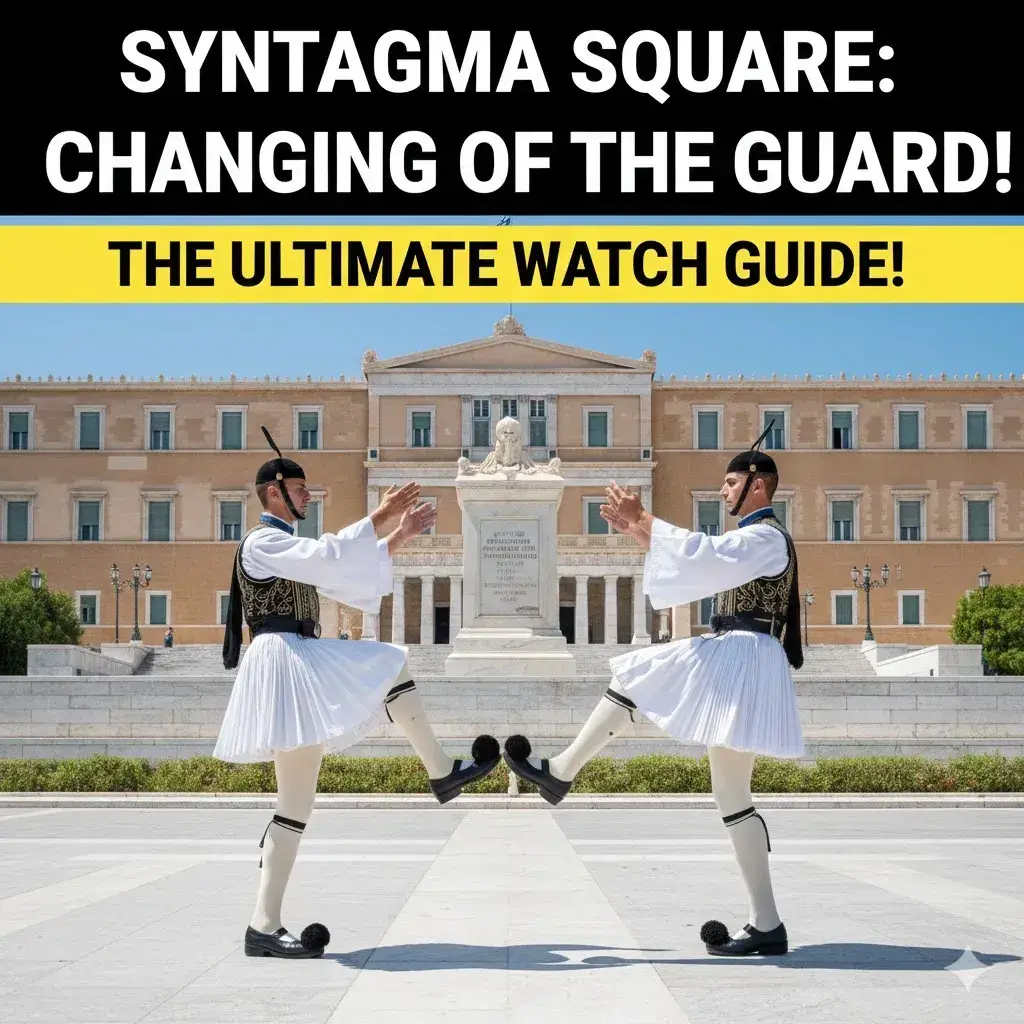
SYNTAGMA SQUARE: WITNESSING THE CHANGING OF THE GUARD AT PARLIAMENT
In the heart of Athens, where ancient history meets modern democracy, Syntagma Square stands as a powerful symbol of Greek national identity and civic life. This bustling public space, whose name means "Constitution Square" in Greek, has witnessed pivotal moments in Greek history from the proclamation of the constitution in 1843 to contemporary political demonstrations. But for many visitors, the square's most captivating attraction is the Changing of the Guard ceremony at the Tomb of the Unknown Soldier, where the elite Evzones guards perform their distinctive, slow-motion march in traditional uniforms that have remained unchanged for nearly two centuries. In 2026, as travelers seek meaningful connections to culture and history, witnessing this ceremony offers a unique opportunity to engage with Greek traditions, military heritage, and the enduring values of democratic governance.
This comprehensive guide invites you to experience the Changing of the Guard at Syntagma Square with deeper understanding and greater appreciation. We will examine the historical context that gave rise to this ceremony, decode the symbolism of the Evzones' distinctive uniforms and precise movements, provide practical information for visiting in 2026, and reflect on the cultural significance that continues to make this ceremony relevant today. Whether you are a history enthusiast, a military history buff, a photography lover, or simply a curious traveler, this guide will help you prepare for an encounter with one of Athens' most distinctive cultural experiences.
Understanding the Changing of the Guard requires more than watching a ceremonial performance; it demands engaging with the stories, values, and traditions that give this ritual its meaning. By approaching the ceremony with curiosity and respect, you will discover not just colorful uniforms and precise marching but a living dialogue between past and present, between military tradition and democratic ideals.
HISTORICAL CONTEXT: FROM CONSTITUTION TO CEREMONY
Syntagma Square was created in the mid-nineteenth century as part of Athens' transformation into the capital of the newly independent Greek state. The square's name commemorates the constitution (syntagma) that King Otto was forced to grant in 1843 after a popular uprising. This event marked a pivotal moment in Greek political history, establishing the principle that sovereignty resides with the people rather than the monarch.
The Hellenic Parliament building, which dominates the eastern side of Syntagma Square, was originally constructed as the royal palace for King Otto between 1836 and 1843. Designed by the Bavarian architect Friedrich von Gartner in neoclassical style, the building features a symmetrical facade, grand staircase, and imposing columns that reflect the architectural ideals of the period. After a fire in 1909 and political changes that abolished the monarchy, the building was repurposed as the seat of the Greek Parliament in 1934, a function it continues to serve today.
The Tomb of the Unknown Soldier, located in front of the Parliament building, was dedicated in 1932 to honor Greek soldiers who died in war. The tomb features a marble relief depicting a dying ancient Greek warrior, inspired by classical sculpture, with an inscription from Pericles' Funeral Oration: "And if indeed there be any who do not believe in the immortality of the soul, let them at least believe in the immortality of fame." This powerful statement connects ancient Greek values of honor and sacrifice to modern Greek patriotism.
The Evzones, the elite presidential guard who perform the Changing of the Guard ceremony, trace their origins to the light infantry units that fought in the Greek War of Independence against the Ottoman Empire in the 1820s. These mountain fighters, known for their courage, mobility, and distinctive traditional dress, became symbols of Greek resistance and national identity. In 1868, King George I formalized the Evzones as a ceremonial guard unit, preserving their traditional uniforms and customs as a link to Greece's revolutionary heritage.
The Changing of the Guard ceremony itself evolved over the twentieth century, incorporating elements of military precision, theatrical performance, and national symbolism. Today's ceremony, performed hourly by guards from the Presidential Guard Regiment, combines ancient traditions with modern military discipline, creating a unique spectacle that attracts visitors from around the world.
For visitors in 2026, understanding this historical context enriches the experience of watching the ceremony. The Evzones' uniforms, the tomb's classical imagery, and the Parliament building's neoclassical architecture all reflect Greece's ongoing dialogue with its past, using historical symbols to express contemporary values of democracy, sacrifice, and national pride.
THE EVZONES: UNIFORM, TRAINING, AND SYMBOLISM
The Evzones are among the most distinctive military units in the world, recognized instantly by their traditional uniforms that have remained largely unchanged since the nineteenth century. Understanding the elements of their dress and the significance of their ceremonial movements enhances appreciation of the Changing of the Guard ceremony.
The Traditional Uniform:
The Evzone uniform is a masterpiece of traditional craftsmanship and symbolic meaning. Each element carries historical significance:
- Fustanella: The pleated white kilt, with exactly four hundred pleats representing the years of Ottoman rule over Greece (1453-1853). The fustanella allows freedom of movement for mountain warfare and creates a striking visual effect during the ceremonial march.
- Tsarouchia: The red leather clogs with large black pom-poms, originally designed to conceal small daggers during the War of Independence. Today, the pom-poms serve a practical purpose by keeping the guards' feet dry in wet weather and adding visual drama to their precise marching steps.
- Fermeli: The embroidered woolen vest, often in dark blue or black, featuring intricate patterns that vary by region and unit. The embroidery reflects traditional Greek folk art and craftsmanship.
- Dumana: The white woolen stockings, worn with garters that were historically used to secure weapons and supplies.
- Phareki: The ceremonial hat with a long black silk tassel, originally designed to protect against sun and rain. The tassel's length and movement add visual interest to the guards' precise movements.
- Weapons: Evzones carry ceremonial rifles during the Changing of the Guard, though these are not functional weapons. The rifles are held in a distinctive manner that emphasizes the guards' discipline and precision.
The uniform's weight (approximately thirty kilograms) and complexity require extensive training to wear comfortably during ceremonial duties. Guards must maintain perfect posture and precise movements despite the uniform's constraints, demonstrating the discipline and dedication that define the Evzones.
Training and Selection:
Becoming an Evzone is a prestigious honor that requires rigorous selection and training. Candidates must meet strict physical and moral criteria, including height requirements (typically over 1.85 meters), excellent physical fitness, and exemplary conduct. Training includes:
- Military discipline: Evzones undergo the same basic training as other Greek soldiers, plus additional instruction in ceremonial protocol and precision marching.
- Uniform mastery: Guards must learn to move gracefully in the heavy, complex traditional uniform, mastering the distinctive slow-motion step that characterizes the Changing of the Guard.
- Historical education: Evzones study Greek history, particularly the War of Independence and the traditions of the light infantry units from which they descend.
- Public representation: As ambassadors of Greek culture, Evzones receive training in public interaction, photography etiquette, and representing Greece to international visitors.
Service as an Evzone typically lasts twelve to eighteen months, after which guards return to regular military duties or pursue civilian careers. The experience is considered a mark of distinction that enhances future opportunities in military or public service.
The Ceremonial March:
The Evzones' distinctive slow-motion march is one of the most recognizable elements of the Changing of the Guard ceremony. This highly stylized movement, which appears almost surreal in its deliberation, serves both practical and symbolic purposes:
- Practical function: The slow, high-stepping march allows guards to navigate the marble steps and uneven surfaces around the Tomb of the Unknown Soldier with precision and dignity.
- Symbolic meaning: The deliberate pace represents the weight of history and the solemnity of the guards' duty to honor fallen soldiers and defend democratic values.
- Visual impact: The high kicks, swinging tassels, and rhythmic precision create a mesmerizing spectacle that captures viewers' attention and conveys the ceremony's significance.
Mastering this march requires months of practice. Guards must coordinate their movements perfectly with their partners, maintain perfect posture despite the heavy uniform, and execute complex maneuvers with military precision. The result is a performance that appears effortless despite its extraordinary difficulty.
THE CHANGING OF THE GUARD CEREMONY: WHAT TO EXPECT
The Changing of the Guard ceremony at Syntagma Square is a carefully choreographed performance that combines military precision, theatrical spectacle, and national symbolism. Understanding what to expect enhances the visitor experience and ensures respectful observation.
Ceremony Schedule:
The Changing of the Guard occurs at regular intervals throughout the day:
- Hourly ceremony: A simplified version of the ceremony occurs every hour on the hour, featuring two guards who march from their barracks to the tomb, perform a brief ritual, and relieve the guards on duty. This ceremony lasts approximately ten minutes and is ideal for visitors with limited time.
- Sunday grand ceremony: At 11 AM every Sunday, a more elaborate ceremony takes place, featuring a full company of Evzones (approximately twenty guards), a military band, and a more complex sequence of movements. This ceremony lasts approximately forty minutes and attracts larger crowds.
- National holidays: On major Greek holidays such as Independence Day (March 25), Oxi Day (October 28), and other national commemorations, special ceremonies with expanded participation may occur.
For the best experience, arrive at least fifteen minutes before the scheduled ceremony to secure a good viewing position. For the Sunday grand ceremony, arrive thirty minutes early, as crowds can be substantial.
Ceremony Sequence:
The Changing of the Guard follows a precise sequence of movements:
1. Departure from barracks: Guards emerge from their barracks building adjacent to the Parliament, marching in perfect synchronization with their distinctive slow-motion step.
2. Approach to the tomb: Guards march along the designated path toward the Tomb of the Unknown Soldier, maintaining perfect posture and rhythm.
3. Ritual at the tomb: Guards perform a series of precise movements around the tomb, including salutes, rifle maneuvers, and symbolic gestures that honor the fallen.
4. Changing of duty: The incoming guards relieve the outgoing guards through a choreographed exchange that emphasizes continuity and tradition.
5. Return to barracks: Guards march back to their barracks in the same precise manner, completing the ceremony.
Throughout the ceremony, guards maintain absolute silence and focus, embodying the discipline and dedication that define their role. The only sounds are the rhythmic tapping of their tsarouchia on the marble pavement and the occasional command from the sergeant leading the ceremony.
Viewing Positions:
Syntagma Square offers several vantage points for watching the Changing of the Guard:
- Directly in front of the tomb: This position provides the closest view of the ceremony but fills up quickly, especially for the Sunday grand ceremony.
- Side angles: Positions to the left or right of the tomb offer good views with less crowding, though some movements may be partially obscured.
- Parliament steps: The steps of the Parliament building provide an elevated view that captures the full scope of the ceremony, though distance may limit detail.
- Nearby cafes: Several cafes around the square offer seating with views of the ceremony, though these may require purchases and can be crowded.
For photography, positions slightly to the side of the tomb often provide the best angles, capturing both the guards and the Parliament building in the frame. Avoid using flash photography, as it can distract the guards and disturb other viewers.
Visitor Etiquette:
To ensure a respectful and enjoyable experience for all:
- Maintain silence during the ceremony: The ceremony is a solemn occasion honoring fallen soldiers. Keep conversations to a minimum and silence mobile phones.
- Respect the guards: Do not touch the guards, their uniforms, or their weapons. Do not attempt to pose for photos with guards during the ceremony.
- Follow barriers and instructions: Stay behind designated viewing areas and follow directions from police or military personnel.
- Dress appropriately: While there is no formal dress code, modest dress is appreciated as the ceremony honors military sacrifice.
- Photography etiquette: Photography is permitted, but avoid flash and be mindful of other viewers. Do not block others' views while taking photos.
PRACTICAL VISITOR INFORMATION FOR 2026
Planning a visit to witness the Changing of the Guard at Syntagma Square in 2026 requires some preparation to ensure a smooth and rewarding experience.
Getting to Syntagma Square:
Syntagma Square is easily accessible from central Athens by foot, public transportation, or taxi.
By foot: If staying in central Athens, walking to Syntagma Square is often the most pleasant option, allowing you to discover the city's streets and atmosphere along the way.
By metro: Syntagma metro station (Lines 2 and 3, red and blue lines) is located directly beneath the square, providing the most convenient access. Exit signs clearly direct visitors to the square and Parliament building.
By bus or trolley: Numerous bus and trolley lines serve Syntagma Square, with stops on Amalias Avenue, Vasilissis Sofias Avenue, and surrounding streets.
By taxi or ride-hailing: Taxis and ride-hailing services like Uber and Beat are widely available in Athens. Specify "Syntagma Square" or "Parliament building" when requesting a ride.
Best Times to Visit:
To avoid crowds and enjoy optimal conditions for viewing and photography:
- Weekday mornings: Hourly ceremonies on weekday mornings (9 AM to 12 PM) typically attract smaller crowds than afternoons or weekends.
- Sunday grand ceremony: For the most elaborate ceremony, attend the 11 AM Sunday ceremony, but arrive early to secure a good viewing position.
- Avoid peak tourist season: July and August bring the largest crowds and hottest weather. Consider visiting in shoulder seasons (April-May, September-October) for pleasant conditions and fewer visitors.
- Weather considerations: The ceremony occurs rain or shine, but extreme heat or heavy rain can affect comfort. Bring water, sunscreen, and appropriate clothing for the season.
Accessibility:
Syntagma Square is generally accessible for visitors with mobility challenges, though some considerations apply:
- Paved surfaces: The square and areas around the Tomb of the Unknown Soldier feature paved surfaces suitable for wheelchairs and mobility devices.
- Viewing positions: Designated viewing areas include space for wheelchairs, though these may fill quickly during popular ceremonies.
- Restrooms: Public restrooms are available in nearby cafes and the metro station, though accessibility may vary.
- Assistance: Police and military personnel at the ceremony can provide assistance to visitors with special needs; don't hesitate to ask for help.
Combining with Other Attractions:
Syntagma Square's central location makes it easy to combine with other Athens attractions:
- Plaka District: The historic neighborhood below the Acropolis is a ten-minute walk from Syntagma, offering traditional tavernas, shops, and charming streets.
- National Garden: Adjacent to Syntagma Square, this peaceful park offers shaded paths, fountains, and archaeological remains, providing a pleasant contrast to the square's bustle.
- Panathenaic Stadium: A fifteen-minute walk or short metro ride, this marble stadium hosted the first modern Olympic Games in 1896 and offers tours and events.
- Acropolis: A twenty-minute walk or short metro ride, the ancient citadel is Athens' most iconic attraction and pairs well with a visit to Syntagma.
- Monastiraki: A ten-minute walk, this vibrant neighborhood offers a flea market, street life, and views of the Acropolis.
Photography Tips:
Syntagma Square offers exceptional photography opportunities, from the Evzones' colorful uniforms to the neoclassical Parliament building. To capture the ceremony's beauty:
- Timing: Arrive early to secure positions with good lighting. Morning light illuminates the Parliament facade, while afternoon light creates dramatic shadows.
- Equipment: A zoom lens (70-200mm) allows you to capture details of the guards' uniforms and movements without obstructing other viewers. A polarizing filter can reduce glare on marble surfaces.
- Composition: Include architectural elements like the Parliament building or Tomb of the Unknown Soldier to provide context for the ceremony. Capture both wide shots of the full ceremony and close-ups of uniform details.
- Movement: Use a fast shutter speed (1/500 or faster) to freeze the guards' precise movements, or experiment with slower speeds to convey the ceremony's rhythmic quality.
- Respect: Always prioritize respectful observation over photography. Never use flash during the ceremony, and avoid blocking others' views while taking photos.
CULTURAL SIGNIFICANCE: WHY THE CEREMONY MATTERS TODAY
The Changing of the Guard at Syntagma Square is more than a tourist attraction; it is a living expression of Greek national identity, military tradition, and democratic values. Understanding its cultural significance enriches the visitor experience by connecting spectacle to meaning.
Honoring Sacrifice:
At its core, the ceremony honors the Tomb of the Unknown Soldier, a memorial to Greek soldiers who died defending their country. The Evzones' precise movements, solemn demeanor, and traditional uniforms embody the values of courage, discipline, and sacrifice that define military service. For Greek citizens, the ceremony is a reminder of the costs of freedom and the ongoing responsibility to defend democratic values.
Connecting Past and Present:
The Evzones' traditional uniforms, unchanged since the nineteenth century, create a tangible link between modern Greece and its revolutionary heritage. By preserving these traditions, Greece honors the fighters who won independence from the Ottoman Empire and affirms the continuity of national identity across generations. For visitors, the ceremony offers a window into Greek history and the enduring power of cultural symbols.
Democratic Symbolism:
The ceremony's location in front of the Hellenic Parliament building is deeply symbolic. The guards who honor fallen soldiers also protect the seat of democratic governance, embodying the relationship between military service and civic responsibility. In a world where democracy faces challenges, the ceremony reminds viewers of the values that underpin self-government: sacrifice, discipline, and commitment to the common good.
Cultural Diplomacy:
For international visitors, the Changing of the Guard serves as an introduction to Greek culture and values. The ceremony's combination of military precision, theatrical spectacle, and historical symbolism creates a memorable experience that fosters cross-cultural understanding. By witnessing the ceremony, visitors gain insight into Greek traditions of honor, hospitality, and national pride.
COMMON QUESTIONS AND PRACTICAL TIPS
Visitors often have questions about the Changing of the Guard ceremony. Here are answers to common inquiries:
Q: How long does the ceremony last?
A: The hourly ceremony lasts approximately ten minutes. The Sunday grand ceremony at 11 AM lasts approximately forty minutes.
Q: Is there a cost to watch the ceremony?
A: No, viewing the Changing of the Guard is free and open to the public.
Q: Can I take photos or videos?
A: Yes, photography and videography are permitted, but flash photography is prohibited during the ceremony. Be respectful of other viewers and avoid blocking views while taking photos.
Q: What if it rains?
A: The ceremony occurs rain or shine. Bring appropriate clothing for the weather, and consider umbrellas for personal comfort (though these may obstruct views).
Q: Can I speak with the guards?
A: Guards maintain strict discipline during the ceremony and cannot interact with visitors. After the ceremony, guards may be available for photos in designated areas, but this is not guaranteed.
Q: Are there restrooms nearby?
A: Public restrooms are available in the Syntagma metro station and nearby cafes. Some cafes may require purchases for restroom access.
Q: Is the ceremony suitable for children?
A: Yes, the ceremony is family-friendly and often fascinates children with its colorful uniforms and precise movements. However, young children may find the slow pace and solemn atmosphere less engaging.
Q: What should I wear?
A: There is no formal dress code, but modest dress is appreciated as the ceremony honors military sacrifice. Comfortable walking shoes are recommended, as you may stand for extended periods.
Q: Can I bring food or drinks?
A: While not prohibited, consuming food or drinks during the ceremony is discouraged as a sign of respect. Consider enjoying refreshments before or after the ceremony at nearby cafes.
Q: What if I arrive late?
A: If you miss the beginning of the ceremony, you can still view the remainder from available positions. However, arriving early ensures the best viewing experience.
SUSTAINABLE AND RESPONSIBLE TOURISM
Visiting Syntagma Square and witnessing the Changing of the Guard carries responsibility to respect the site, the ceremony, and the local community. In 2026, sustainable tourism practices enhance the experience for all.
Respect the Ceremony:
The Changing of the Guard is a solemn occasion honoring fallen soldiers. Maintain silence during the ceremony, avoid disruptive behavior, and follow instructions from police or military personnel. Remember that you are a guest at a meaningful national ritual.
Support Local Businesses:
Syntagma Square is surrounded by cafes, shops, and restaurants that serve both locals and visitors. Support these establishments by purchasing refreshments, souvenirs, or meals. Choose locally-owned businesses to ensure tourism benefits reach the community.
Minimize Environmental Impact:
Athens faces challenges including air quality and waste management. Reduce your environmental footprint by carrying reusable water bottles, disposing of waste properly, and using public transportation when possible.
Engage with Cultural Context:
Take time to learn about the history and significance of the ceremony before or after watching. Visit nearby museums like the National Historical Museum or the Jewish Museum of Greece to deepen your understanding of Greek culture and history.
CONCLUSION: A MEANINGFUL ENCOUNTER WITH GREEK TRADITION
Witnessing the Changing of the Guard at Syntagma Square is an experience that transcends ordinary tourism. As the Evzones march in their distinctive slow-motion step, as their colorful uniforms contrast with the white marble of the Parliament building, and as the ceremony honors the sacrifice of fallen soldiers, visitors encounter something profound: the enduring power of tradition to connect us to history, values, and community.
In 2026, as the world grapples with challenges of polarization, misinformation, and civic disengagement, the ceremony at Syntagma Square offers not just a window into Greek culture but inspiration for universal values. The Evzones' discipline, the tomb's message of sacrifice, and the Parliament's role as a seat of democracy remind us of the responsibilities that come with freedom and the importance of honoring those who defend it.
As you plan your visit to Syntagma Square, approach this meaningful ceremony with curiosity, humility, and respect. Listen to the stories the uniforms tell, engage with the values the ceremony embodies, and allow the precision and solemnity of the guards to inspire your own appreciation for service, sacrifice, and civic responsibility. In doing so, you join the long line of visitors, scholars, and citizens who have found meaning in this distinctive Greek tradition.
May your encounter with the Changing of the Guard deepen your appreciation for the achievements of the past and inspire your contribution to the future. As the ancient Greeks understood, true greatness lies not in spectacle alone but in the ideas, values, and actions that give it meaning. May you carry that understanding forward, wherever your journey leads.
Useful resources include the Hellenic Parliament website for visitor information, the Greek National Tourism Organization at visitgreece.gr for travel planning, and the Syntagma Square information desk for current ceremony schedules. Emergency services in Greece can be reached at 112. Disclaimer: Information is accurate as of early 2026. Ceremony schedules, security policies, and access rules may change; verify details before travel. This guide is for informational purposes only and does not constitute professional travel advice.
0 Comments