.webp)
.webp)
Complete Guide to Exploring Torture Museum Dark History Itinerary 2026
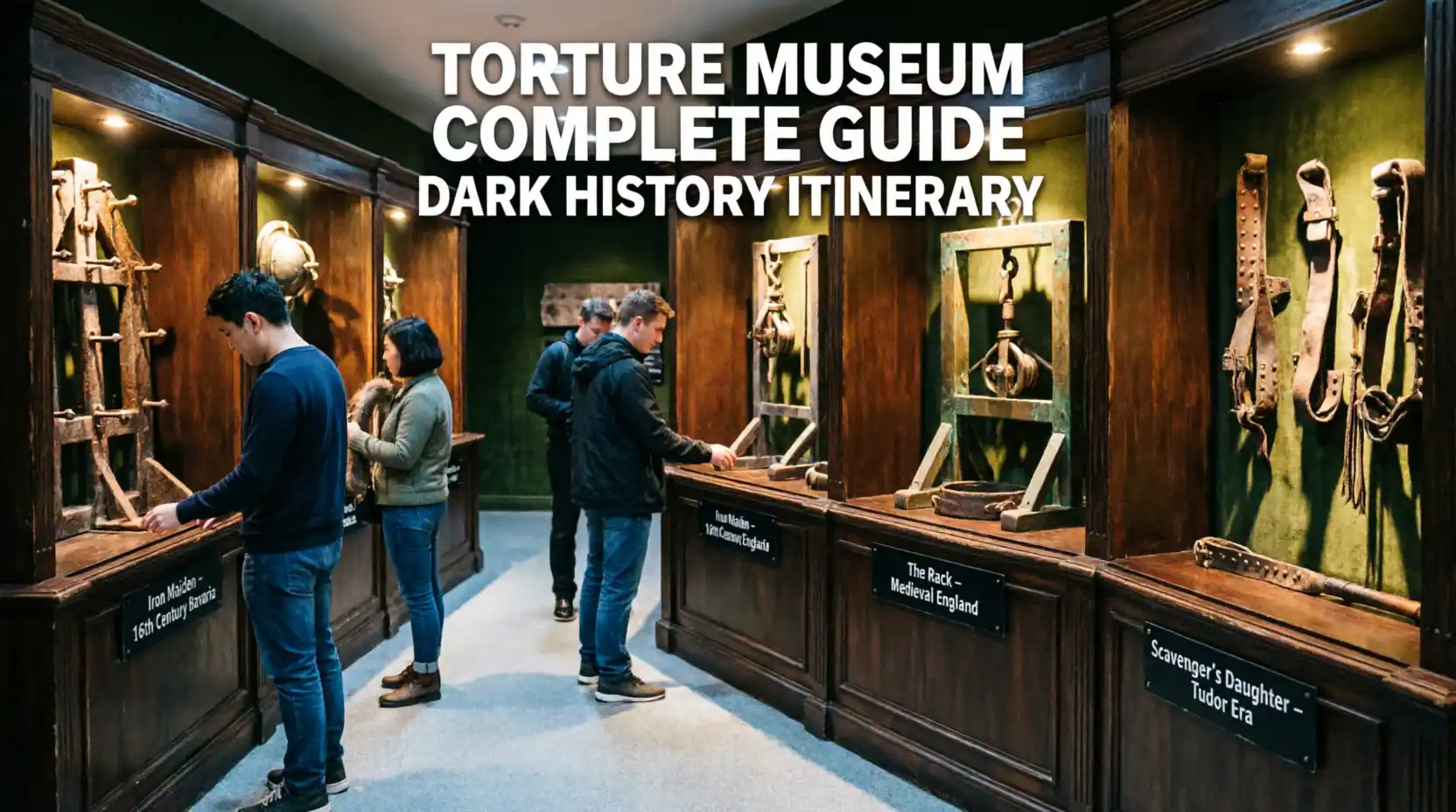
Complete Guide to Exploring Torture Museum Dark History Itinerary 2026
Torture museums around the world offer sobering glimpses into humanity's darkest chapters. These institutions preserve historical instruments and narratives that educate visitors about past human rights abuses and the evolution of justice systems.
Visiting a torture museum requires emotional preparation and respectful engagement. These spaces commemorate victims while teaching important lessons about human dignity, justice, and the consequences of unchecked power.
This comprehensive 2026 guide explores major torture museums worldwide, providing practical visiting information, historical context, and thoughtful itineraries for dark history tourism. You will discover how to approach these sensitive sites with appropriate respect while gaining valuable historical insights.
From Amsterdam's Medieval Torture Museum to Prague's historical exhibitions and beyond, understanding these institutions helps travelers engage meaningfully with difficult history while honoring those who suffered.
Understanding Dark Tourism and Torture Museums

Dark tourism involves visiting sites associated with death, suffering, and tragedy. Torture museums fall within this category, serving educational purposes while confronting visitors with uncomfortable historical realities.
These museums preserve authentic instruments and documentation that might otherwise be lost. Their existence ensures historical memory persists, preventing societies from forgetting past atrocities and human rights violations.
Educational value extends beyond morbid curiosity. Understanding historical torture methods illuminates the development of legal systems, human rights frameworks, and contemporary justice principles.
Responsible torture museums emphasize victim perspectives, historical context, and lessons for modern society. They avoid sensationalism while maintaining historical accuracy and educational integrity.
Educational Purpose and Historical Context
Torture museums document the evolution of punishment and interrogation methods across different historical periods and cultures. This documentation helps scholars and visitors understand how societies have treated accused individuals throughout history.
Exhibitions typically cover medieval European practices, colonial-era punishments, and more recent human rights violations. Chronological organization helps visitors trace the gradual development of legal protections.
Contextual information explains the political, religious, and social systems that enabled torture. Understanding these frameworks prevents simplistic judgments while illuminating systemic factors enabling abuse.
Modern human rights connections demonstrate how historical lessons inform contemporary protections. Museums often link past atrocities to current human rights challenges, encouraging ongoing vigilance.
Ethical Considerations for Visitors
Visiting torture museums requires balancing educational curiosity with respect for victims. Approaching these spaces with appropriate solemnity honors those who suffered while maximizing learning potential.
Photography policies often restrict images out of respect for victims and sensitivity to other visitors. Following these guidelines demonstrates consideration for the serious nature of exhibited content.
Emotional preparation proves essential as exhibits can be disturbing. Acknowledging potential psychological impacts helps visitors process difficult content appropriately.
Post-visit reflection allows integration of historical lessons into contemporary understanding. Processing emotional responses supports meaningful engagement rather than superficial tourism.
Major Torture Museums Worldwide
Several significant torture museums operate globally, each with distinct collections, perspectives, and educational approaches. Understanding these institutions helps travelers select sites matching their interests and educational goals.
European museums often focus on medieval and early modern periods, documenting judicial torture and punishment before modern legal reforms. These institutions preserve extensive collections of historical instruments.
Museums addressing more recent atrocities connect historical patterns to contemporary human rights concerns. These institutions often emphasize victim testimony and memorialization alongside historical documentation.
Regional variations reflect different historical experiences and cultural approaches to confronting difficult pasts. Understanding these contexts enhances appreciation for each institution's unique perspective.
Medieval Torture Museum Amsterdam
Amsterdam's Medieval Torture Museum houses one of Europe's most extensive collections of historical torture instruments. Located in the city center, the museum provides comprehensive documentation of medieval punishment methods.
The collection includes over 100 authentic and replica instruments used for interrogation, punishment, and execution. Detailed descriptions explain historical contexts and methods of use.
Exhibitions cover various categories including torture for confession, public punishment, and execution methods. Thematic organization helps visitors understand different purposes served by various instruments.
Educational materials emphasize the gradual abolition of torture and development of human rights principles. The museum connects historical practices to modern legal protections.
Prague Torture Museum and Medieval Instruments
Prague's torture museum occupies historic buildings in the city's old town, providing atmospheric settings for understanding medieval justice and punishment.
The collection features instruments used throughout Central Europe during medieval and early modern periods. Regional context illuminates specific historical experiences of Czech lands.
Interactive elements and detailed explanations help visitors understand historical contexts without sensationalism. Educational focus maintains respect for victims while providing comprehensive information.
Combined tickets often include access to related historical sites, creating comprehensive dark history itineraries within Prague's medieval center.
San Francisco Medieval Torture Museum
San Francisco's museum brings European torture history to American audiences, featuring extensive collections and educational programming about historical human rights abuses.
Exhibitions emphasize connections between historical torture and contemporary human rights issues. This approach encourages visitors to consider ongoing challenges to human dignity.
The museum provides age-appropriate educational materials and guided tours that maintain historical accuracy while considering visitor sensitivities.
Special programming includes lectures, workshops, and community discussions about human rights, justice, and historical memory.
Planning Your Visit: Practical Information
Visiting torture museums requires practical preparation to ensure meaningful, respectful experiences. Understanding logistics, timing, and expectations helps maximize educational value while minimizing potential distress.
Ticket purchasing options vary by institution, with some offering online reservations, combined passes, or guided tour packages. Advance planning often provides cost savings and ensures availability.
Accessibility considerations include physical access to historic buildings, content warnings for sensitive material, and accommodations for visitors with different needs.
Photography policies differ significantly between institutions. Understanding restrictions before visiting prevents conflicts and demonstrates respect for museum guidelines.
Ticket Prices and Booking Options
Admission prices typically range from 10 to 20 euros or dollars for adult visitors. Student, senior, and group discounts often available reduce costs for eligible visitors.
Online booking platforms provide convenient advance reservations, often with small discounts compared to walk-up prices. Digital tickets streamline entry processes.
Combined tickets including multiple museums or attractions offer value for visitors planning comprehensive dark history itineraries. Package deals may include guided tours or audio guides.
Peak season visits may require advance reservations due to capacity limits. Booking ahead ensures entry during high-demand periods like summer months or holidays.
Opening Hours and Best Visiting Times
Most torture museums operate daily with hours typically spanning 10 AM to 6 PM. Seasonal variations may affect schedules, particularly during winter months or holidays.
Weekday mornings generally offer quieter experiences with fewer crowds. This timing allows contemplative engagement with exhibits without pressure from other visitors.
Guided tours often scheduled at specific times provide additional context and expert interpretation. Joining these tours enhances understanding of historical contexts and instrument functions.
Allow 1-2 hours for comprehensive visits depending on museum size and personal interest levels. Rushing through exhibits diminishes educational value and emotional processing.
Historical Context: Understanding Medieval Justice
Torture museums document historical justice systems vastly different from modern legal frameworks. Understanding these contexts helps visitors comprehend why torture existed and how societies gradually abolished these practices.
Medieval justice operated on fundamentally different principles than contemporary legal systems. Confession often considered the "queen of proofs," making extraction through torture seem justified to authorities.
Religious and political authorities used torture to maintain control, suppress dissent, and enforce conformity. Understanding power dynamics illuminates why torture persisted for centuries.
Gradual abolition resulted from Enlightenment thinking, human rights development, and changing social values. This evolution demonstrates societies' capacity for moral progress.
The Role of Torture in Historical Legal Systems
Judicial torture served specific functions within medieval legal frameworks. Authorities used it to extract confessions, identify accomplices, and gather information about crimes.
Legal codes often specified when torture could be applied, though practice frequently exceeded legal limits. Regulations provided veneer of legitimacy while abuse remained common.
Social status affected torture application, with lower classes facing greater risks than elites. Class dynamics reveal how power structures enabled systematic abuse.
Religious persecution frequently employed torture to extract confessions of heresy or force conversion. Religious authorities used these methods to maintain doctrinal control.
Abolition Movements and Human Rights Development
Enlightenment philosophers challenged torture's legitimacy, arguing for human dignity and rational legal processes. Intellectual movements laid groundwork for eventual abolition.
Cesare Beccaria's 1764 work "On Crimes and Punishments" powerfully argued against torture and capital punishment. This influential text helped shift European thinking about justice.
Legal reforms gradually eliminated torture throughout the 18th and 19th centuries. Different countries abolished these practices at varying paces depending on political and social conditions.
Modern human rights frameworks explicitly prohibit torture under all circumstances. International treaties and national constitutions enshrine these protections, though violations continue.
Common Instruments and Their Uses
Torture museums display numerous instruments designed for various purposes including interrogation, punishment, humiliation, and execution. Understanding these devices provides insight into historical cruelty and human suffering.
Instruments range from simple tools causing pain to complex mechanical devices designed for prolonged torture. Each served specific functions within historical justice or punishment systems.
Public punishment devices emphasized humiliation and deterrence alongside physical suffering. These instruments reinforced social control through spectacle and shame.
Execution methods varied in brutality and duration, with some designed for prolonged suffering. Understanding these practices illuminates historical attitudes toward death and punishment.
Interrogation and Confession Devices
The rack stretched victims' bodies to extract confessions or information. This device caused extreme pain and often permanent injury or death.
Iron maidens, though their historical use remains debated, represent iconic torture instruments. These enclosed cabinets featured interior spikes designed to pierce victims without causing immediate death.
Thumbscrews and leg crushers applied pressure to extremities, causing intense pain. These relatively simple devices proved effective for coercion while leaving victims alive for further interrogation.
Water torture devices forced victims to consume large quantities of water, causing extreme discomfort and potential drowning. This method left few visible marks while causing severe suffering.
Public Punishment and Humiliation Instruments
Pillories and stocks restrained victims in public spaces for community ridicule and abuse. These devices emphasized social control through humiliation and communal participation in punishment.
Ducking stools submerged victims, typically women accused of being "scolds," in water. This punishment combined physical discomfort with public shaming.
Branding irons marked victims with permanent symbols indicating their crimes. These devices served both punishment and identification functions, permanently marking individuals as criminals.
Whipping posts and flogging devices inflicted painful lashing while crowds observed. Public corporal punishment reinforced authority through spectacle and pain.
Execution Methods and Devices
Guillotines provided relatively quick execution though the process remained brutal. These devices represented attempts to make execution more "humane" while maintaining capital punishment.
Burning stakes executed those convicted of heresy or witchcraft. This method caused prolonged, agonizing death while serving as public spectacle and warning.
Breaking wheels tortured victims before causing death through systematic bone destruction. This method maximized suffering while creating public spectacle.
Hanging, drawing, and quartering represented elaborate execution methods for treason. These complex procedures maximized suffering and humiliation before death.
Emotional Preparation and Visitor Wellness
Torture museum visits can provoke strong emotional responses including sadness, anger, anxiety, or nausea. Preparing for these reactions helps visitors process difficult content while maintaining psychological wellbeing.
Acknowledging potential emotional impacts before visiting allows appropriate preparation. Understanding that distress represents normal response to disturbing content reduces self-judgment.
Pacing visits and taking breaks when needed prevents emotional overwhelm. Museums typically allow visitors to step outside or take rest periods as needed.
Post-visit processing through discussion, journaling, or reflection helps integrate experiences. Sharing reactions with companions or processing privately supports emotional health.
Managing Difficult Content
Reading content warnings and exhibition descriptions before entering specific rooms allows informed choices about what to view. Some visitors may choose to skip particularly disturbing exhibits.
Focusing on educational aspects and historical lessons provides perspective that helps manage emotional responses. Understanding the purpose of remembering supports engagement with difficult material.
Practicing grounding techniques like deep breathing or focusing on present surroundings helps manage anxiety or distress during visits. These strategies maintain emotional equilibrium.
Traveling with companions provides emotional support and opportunities for processing difficult content together. Shared experiences facilitate mutual support and discussion.
Post-Visit Processing and Reflection
Allowing time after visits for emotional decompression prevents carrying distress into other activities. Planning lighter experiences following museum visits supports wellbeing.
Discussing reactions and insights with travel companions or friends helps process difficult content. Verbalizing responses facilitates understanding and integration.
Journaling about experiences, emotions, and lessons learned creates space for reflection and personal growth. Written processing supports deeper engagement with historical lessons.
Connecting historical lessons to contemporary human rights issues transforms difficult experiences into motivation for positive action. Channeling emotions into advocacy or education creates meaning from suffering.
Creating Dark History Itineraries
Torture museums often form part of broader dark tourism itineraries including other historical sites addressing suffering, injustice, and human rights. Thoughtful itinerary planning creates comprehensive educational experiences while managing emotional impacts.
Balancing intense sites with lighter experiences prevents emotional exhaustion. Alternating between difficult and more neutral attractions supports sustainable engagement with dark history.
Thematic connections between sites enhance educational value by revealing historical patterns and contexts. Coordinated itineraries illuminate broader historical narratives.
Geographic efficiency minimizes travel time while maximizing educational opportunities. Clustering related sites reduces logistical burdens and fatigue.
Amsterdam Dark History Itinerary
Amsterdam offers multiple dark history sites including the Medieval Torture Museum, Anne Frank House, and Resistance Museum. These institutions address different historical periods and forms of persecution.
Day one might include the Torture Museum in the morning followed by Anne Frank House in the afternoon. This pairing connects medieval persecution with 20th-century genocide.
Day two could feature the Resistance Museum and related World War II sites. This focus explores resistance to oppression and lessons about standing against injustice.
Spacing intense sites across multiple days with breaks prevents emotional overwhelm. Including lighter cultural experiences balances dark history engagement.
Prague Medieval and Dark Tourism Route
Prague's medieval center features the Torture Museum alongside historic prisons, execution sites, and Gothic architecture connected to medieval justice.
Visiting the Torture Museum, Old Town Hall, and nearby execution memorial creates coherent narrative about medieval punishment and justice.
Adding sites like the Jewish Quarter addresses persecution beyond criminal justice, illuminating broader patterns of discrimination and violence.
Prague's atmospheric medieval architecture enhances understanding of historical contexts. Walking historic streets connects museum learning to physical environments where history occurred.
European Dark History Grand Tour
Extended European travel can incorporate torture museums and dark history sites across multiple countries, creating comprehensive understanding of historical human rights abuses.
Amsterdam, Prague, Barcelona, and San Francisco each offer torture museums with different perspectives and collections. Visiting multiple institutions reveals regional variations and common patterns.
Incorporating Holocaust memorials, slavery museums, and colonial history sites creates broader understanding of systematic oppression across different contexts.
Allowing adequate time between intense sites supports emotional processing and prevents compassion fatigue. Sustainable dark tourism requires pacing and self-care.
Educational Resources and Further Learning
Torture museum visits often inspire deeper learning about human rights, justice systems, and historical patterns of abuse. Museums typically provide resources for continued education beyond the visit.
Recommended readings, documentaries, and online resources extend learning beyond museum walls. Engaging with these materials deepens understanding of historical contexts and contemporary relevance.
Human rights organizations often partner with museums to provide action opportunities. Connecting education to activism transforms knowledge into positive change.
Educational institutions may offer courses or programs addressing historical justice, human rights, and ethical questions raised by torture museum content.
Recommended Reading and Media
Historical texts about medieval justice, legal systems, and punishment provide scholarly context for museum exhibits. Academic works illuminate complexities beyond exhibition summaries.
Human rights literature including works by Amnesty International, Human Rights Watch, and UN agencies connects historical lessons to contemporary advocacy.
Survivor testimonies and memoirs provide personal perspectives on torture and persecution. These narratives humanize historical patterns and emphasize individual experiences.
Documentary films about historical and contemporary torture raise awareness and support advocacy. Visual media can powerfully convey realities of human rights abuses.
Human Rights Organizations and Advocacy
Organizations like Amnesty International work to prevent torture and protect human rights globally. Supporting these organizations transforms museum learning into concrete action.
Local human rights groups address contemporary justice issues in visitors' home communities. Engaging locally applies historical lessons to present circumstances.
Advocacy opportunities including letter-writing campaigns, donations, and volunteering support ongoing human rights work. Active participation honors victims by preventing future abuses.
Educational outreach sharing museum experiences and historical lessons raises awareness among broader audiences. Teaching others multiplies impact of individual learning.
Responsible Dark Tourism Practices
Visiting torture museums and other dark tourism sites requires ethical engagement that respects victims, supports education, and avoids exploitation. Responsible practices ensure these institutions fulfill their educational missions.
Approaching sites with genuine curiosity and respect rather than morbid fascination honors victims and supports meaningful learning. Intentions matter in how we engage with difficult history.
Following museum guidelines regarding photography, behavior, and interaction with exhibits demonstrates respect for institutions and their missions. Compliance supports educational environments.
Financial support through admission fees, donations, and gift shop purchases helps sustain these important educational institutions. Revenue supports preservation, education, and advocacy work.
Respectful Engagement Guidelines
Maintaining appropriate solemnity and quiet voices in exhibition spaces respects the serious nature of content. Behavioral consideration creates environments conducive to learning and reflection.
Avoiding jokes, flippant comments, or disrespectful behavior honors victims and demonstrates maturity. Treating difficult history with gravity supports meaningful engagement.
Asking thoughtful questions during guided tours or discussions enhances learning while showing respect for guides and institutions. Curiosity expressed respectfully deepens understanding.
Sharing experiences on social media with sensitivity to victims and educational purpose rather than sensationalism promotes responsible dark tourism. Thoughtful communication influences others' approaches.
Supporting Museum Missions
Providing feedback to museums about educational value and visitor experience helps institutions improve programming. Constructive input supports continuous enhancement of educational offerings.
Recommending museums to others interested in history and human rights expands audiences and support. Word-of-mouth promotion helps sustain these important institutions.
Participating in special events, lectures, and educational programs demonstrates engagement beyond basic tourism. Active participation supports museums' educational missions.
Advocating for human rights education in schools and communities extends museum impact beyond individual visits. Systemic change requires broad commitment to human rights education.
Final Thoughts on Torture Museum Visits
Torture museums serve vital educational functions preserving historical memory, honoring victims, and teaching lessons about human rights and justice. Visiting these institutions requires emotional preparation and respectful engagement.
Understanding historical torture illuminates the long struggle for human dignity and legal protections that we often take for granted today. These museums remind us that rights hard-won require constant vigilance to maintain.
Responsible dark tourism balances educational curiosity with respect for victims and sensitivity to difficult content. Approaching these sites thoughtfully maximizes learning while honoring those who suffered.
Transforming museum experiences into commitment to contemporary human rights creates meaning from historical tragedy. Learning from the past empowers us to build more just futures.
0 Comments