.webp)
.webp)
Entry Requirements for Global Travelers New 2026 Biometric Security Updates
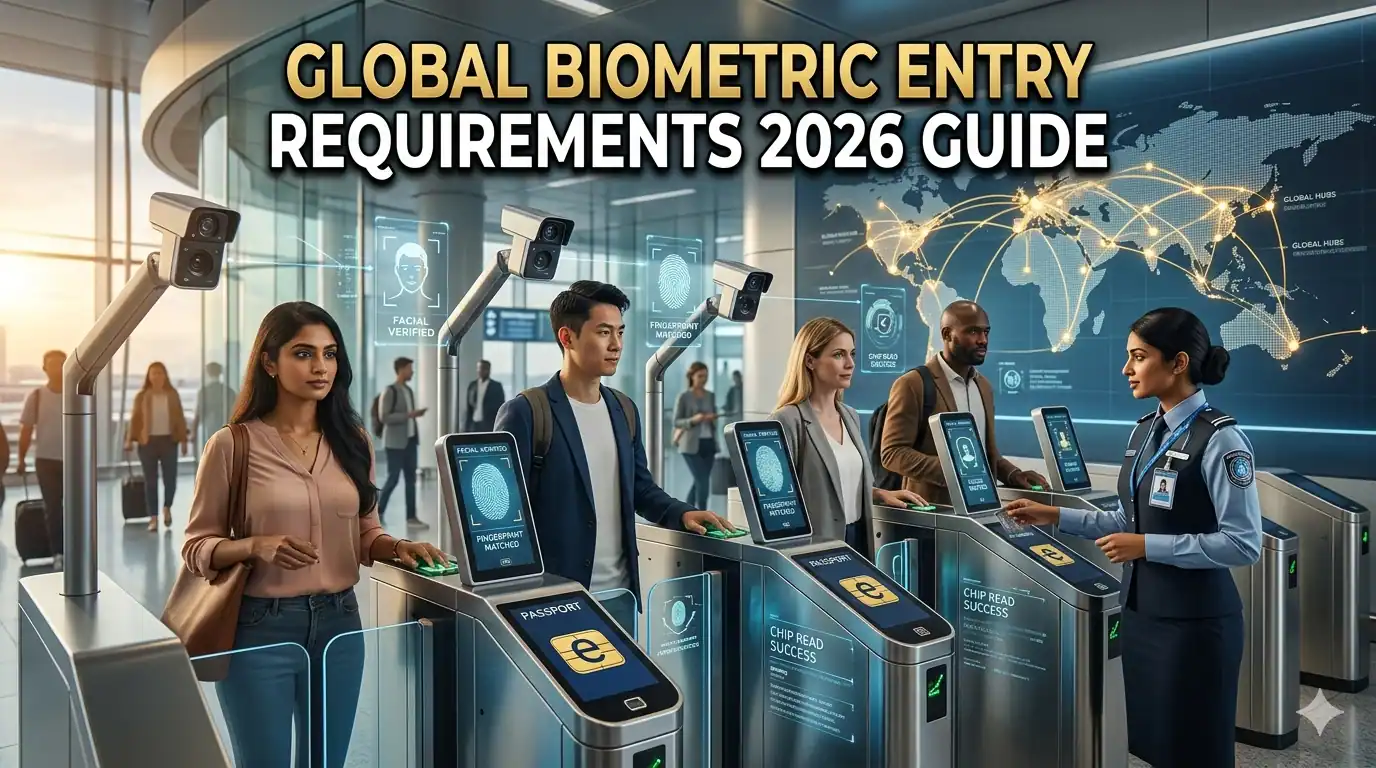
Introduction to 2026 Biometric Entry Requirements
Global travel is undergoing a significant transformation with new biometric security requirements taking effect in 2026.
Travelers worldwide must now navigate evolving entry procedures that incorporate facial recognition, fingerprint scanning, and digital identity verification.
These updates aim to enhance border security while streamlining processing for legitimate travelers.
Understanding these requirements before departure prevents delays, denied entry, and travel disruptions.
This comprehensive guide prepares global travelers for the new biometric landscape of international travel in 2026.
What Are Biometric Entry Requirements

Biometric entry requirements use unique physical characteristics to verify traveler identity at border control.
Common biometric data includes facial images, fingerprints, iris scans, and voice patterns.
These systems compare traveler biometrics against government databases to confirm identity and travel eligibility.
Biometric verification enhances security by reducing identity fraud and document forgery risks.
Understanding how these systems work helps travelers prepare for smoother border crossings.
Types of Biometric Data Collected
Facial recognition captures digital images of travelers faces for identity verification against passport photos.
Fingerprint scanning records unique ridge patterns from one or more fingers for database matching.
Iris scanning analyzes unique patterns in the colored part of the eye for high-accuracy identification.
Voice recognition may be used in some systems though less common for border control applications.
Some countries combine multiple biometric modalities for enhanced verification accuracy.
How Biometric Systems Work at Borders
Travelers present biometric passport or travel document at automated e-gate or staffed border checkpoint.
Biometric scanner captures facial image, fingerprints, or iris data depending on system configuration.
Captured data is instantly compared against stored biometrics in passport chip and government databases.
System verifies identity match and checks travel eligibility against watchlists and visa records.
Approved travelers receive entry stamp or digital clearance while mismatches trigger secondary screening.
Countries Implementing New Biometric Requirements in 2026

Multiple countries are expanding or introducing biometric entry systems throughout 2026.
Understanding which destinations require biometric verification helps travelers prepare appropriately.
Requirements vary by country with different data types, collection points, and processing procedures.
Some systems apply to all travelers while others target specific nationalities or visa categories.
Staying informed about destination requirements prevents surprises at border control.
Major Regions with Expanded Biometric Systems
European Union continues rolling out Entry/Exit System EES with facial and fingerprint collection for non-EU travelers.
United States expands biometric exit verification at major airports and land borders.
United Kingdom implements digital border system with facial recognition and e-visa integration.
Canada enhances Primary Inspection Kiosks with advanced biometric verification capabilities.
Australia and New Zealand strengthen SmartGate systems with improved facial recognition technology.
Emerging Markets Adopting Biometrics
United Arab Emirates expands smart gate systems at Dubai and Abu Dhabi airports for expedited processing.
Singapore enhances automated clearance lanes with multi-modal biometric verification.
Japan introduces facial recognition e-gates at major international airports for registered travelers.
South Korea expands biometric entry systems with integrated visa and immigration databases.
Many Southeast Asian and African nations are piloting biometric border systems with international support.
Preparing Your Travel Documents for Biometric Entry

Proper document preparation is essential for successful biometric verification at border control.
Biometric passports contain embedded chips storing facial image and fingerprint data for verification.
Non-biometric passports may still be accepted but could trigger additional screening procedures.
Ensuring documents meet technical specifications prevents processing delays and entry complications.
These preparation steps help travelers navigate biometric entry requirements smoothly.
Biometric Passport Requirements
Biometric passports feature embedded RFID chip storing facial image and fingerprint data securely.
Look for biometric symbol on passport cover indicating chip capability for automated processing.
Ensure passport chip is undamaged as physical damage can prevent data reading at border control.
Verify passport validity extends at least six months beyond intended travel dates as required by many countries.
Keep passport in protective sleeve to prevent chip damage from bending or electromagnetic interference.
Visa and Digital Authorization Integration
Many biometric systems link visa or travel authorization data to biometric verification processes.
Ensure electronic travel authorizations like ESTA, ETIAS, or e-Visas are approved before travel.
Verify visa data matches passport information exactly to prevent biometric verification failures.
Some countries require biometric enrollment during visa application process at consulates or application centers.
Keep digital and physical copies of visa approvals accessible during border processing.
Document Quality and Presentation
Ensure passport photo meets current standards with clear facial features and neutral expression.
Avoid wearing hats, sunglasses, or heavy makeup that could interfere with facial recognition matching.
Keep passport pages clean and undamaged to ensure machine readability at automated gates.
Present documents with chip side facing scanner as directed by border control signage or staff.
Follow border officer instructions for document handling to ensure successful biometric capture.
Navigating Biometric Border Control Procedures

Understanding border control procedures helps travelers move through biometric verification efficiently.
Automated e-gates and staffed checkpoints have different processes requiring traveler adaptation.
Knowing what to expect reduces anxiety and prevents procedural errors during verification.
These step-by-step guidelines prepare travelers for successful biometric border processing.
Patience and attention to instructions ensure smooth passage through enhanced security systems.
Using Automated E-Gates and Kiosks
Approach e-gate or kiosk and follow on-screen instructions for document and biometric submission.
Place passport on scanner with chip facing down or as directed by visual prompts.
Remove glasses, hats, and face coverings unless medically or religiously required.
Look directly at camera with neutral expression for facial recognition capture.
Place fingers on scanner as instructed for fingerprint verification when required.
Staffed Border Control Procedures
Present passport and travel documents to border officer when directed at staffed checkpoint.
Follow officer instructions for biometric capture which may include facial image or fingerprints.
Answer verification questions truthfully and concisely to facilitate identity confirmation.
Remain patient during secondary screening if biometric match requires additional verification.
Keep boarding pass and return ticket accessible as officers may request travel itinerary confirmation.
Troubleshooting Common Issues
If facial recognition fails, ensure adequate lighting and remove any facial obstructions before retry.
For fingerprint scanning issues, ensure fingers are clean, dry, and placed flat on scanner surface.
If passport chip cannot be read, present document to officer for manual verification processing.
Request assistance from border staff if automated systems malfunction or instructions are unclear.
Allow extra time for potential secondary screening if biometric verification encounters difficulties.
Special Considerations for Families and Vulnerable Travelers

Families with children, elderly travelers, and individuals with disabilities face unique biometric entry challenges.
Understanding accommodations and preparation strategies ensures smooth processing for all travelers.
Many border systems offer assistance though advance planning enhances the experience.
These considerations help families and vulnerable travelers navigate biometric requirements confidently.
Preparation and communication with border staff prevent unnecessary stress during verification.
Traveling with Children and Infants
Children under certain ages may be exempt from fingerprint collection though facial recognition often still required.
Ensure children's passport photos are recent and clearly show facial features for recognition matching.
Prepare children for border procedures by explaining process in age-appropriate terms beforehand.
Keep children close during biometric capture to prevent movement that could cause verification failures.
Request family lane or assistance if available at border control for streamlined processing with children.
Accommodations for Elderly and Disabled Travelers
Many border facilities provide accessible lanes and assistance for travelers with mobility challenges.
Request staff assistance if physical limitations affect ability to use automated biometric systems.
Medical documentation may help explain conditions affecting biometric capture like finger abnormalities.
Allow extra processing time for travelers requiring additional assistance or alternative verification methods.
Contact border agency in advance to arrange accommodations for specific accessibility needs.
Religious and Cultural Considerations
Many biometric systems accommodate religious head coverings though facial features must be visible for recognition.
Inform border staff of religious requirements before biometric capture to ensure respectful processing.
Some countries offer private screening areas for travelers with cultural privacy concerns.
Understand that security requirements may necessitate temporary removal of certain items during verification.
Carry documentation explaining religious or cultural practices if they affect standard biometric procedures.
Privacy and Data Protection Considerations

Biometric entry systems raise important questions about personal data privacy and protection.
Understanding how biometric data is collected, stored, and used helps travelers make informed decisions.
International agreements and national laws govern biometric data handling though standards vary.
These privacy considerations help travelers protect their rights while complying with entry requirements.
Balancing security needs with privacy rights remains an evolving global conversation.
How Biometric Data Is Protected
Biometric data is typically encrypted during transmission and storage to prevent unauthorized access.
Many countries limit biometric data retention periods deleting data after travelers depart or after set timeframe.
International agreements like GDPR in Europe establish standards for biometric data protection and traveler rights.
Travelers can often request information about how their biometric data is used and stored.
Understanding data protection laws in destination countries helps travelers advocate for their privacy rights.
Traveler Rights and Recourse
Travelers generally have right to know what biometric data is collected and how it will be used.
Many jurisdictions allow travelers to request correction of inaccurate biometric data in government systems.
Complaint mechanisms exist for travelers who believe their biometric data was mishandled or misused.
Some countries permit travelers to opt out of certain biometric collection though this may trigger additional screening.
Consult destination country embassy or consulate for specific information about biometric data rights and protections.
Minimizing Privacy Risks While Traveling
Use official government channels for visa and travel authorization applications to protect personal data.
Avoid sharing biometric passport images or personal data on unsecured websites or social media.
Keep digital copies of travel documents in encrypted storage rather than cloud services with uncertain privacy policies.
Monitor credit and identity protection services when traveling to countries with less robust data protection laws.
Stay informed about data breach notifications from airlines, hotels, or travel services that handle personal information.
Technology Requirements and Compatibility

Successful biometric verification depends on compatible technology and proper device functionality.
Travelers should understand technical requirements to prevent processing failures at border control.
Device compatibility, software updates, and connectivity affect biometric system performance.
These technical considerations help travelers ensure their documents and devices work with biometric systems.
Pre-travel technology checks prevent last-minute complications during border processing.
Passport Chip and Reader Compatibility
Biometric passport chips use international standards though reader compatibility can vary by country.
Ensure passport chip is not physically damaged as bends or cracks can prevent successful data reading.
Keep passport away from strong magnetic fields that could potentially corrupt chip data.
Test passport readability at airport self-service kiosks before reaching border control if possible.
Carry backup identification in case passport chip failure requires manual verification processing.
Mobile Apps and Digital Travel Credentials
Some countries offer mobile apps for pre-registration of biometric data to expedite border processing.
Digital travel credentials stored on smartphones may supplement or replace physical documents in some systems.
Ensure mobile devices are charged and apps updated before reaching border control for digital verification.
Understand that digital credentials may not be accepted at all border points or for all traveler categories.
Always carry physical passport as backup even when using digital travel credentials or mobile apps.
Connectivity and System Reliability
Biometric systems rely on network connectivity for database verification though offline modes exist for emergencies.
System outages or maintenance can cause delays though border staff have manual verification procedures.
Allow extra time for border processing during peak travel periods when system loads are highest.
Have backup plans for potential delays including flexible flight connections and accommodation arrangements.
Stay informed about border system status through official government travel advisories before departure.
Tips for Smooth Biometric Border Processing

Practical strategies help travelers navigate biometric entry requirements efficiently and confidently.
Small preparation steps significantly reduce stress and prevent common processing issues.
These tips draw from border agency guidance and experienced traveler recommendations.
Implementing these strategies enhances the border crossing experience for all travelers.
Smooth processing allows travelers to focus on their journey rather than procedural concerns.
Pre-Travel Preparation Checklist
Verify passport is biometric-enabled and chip is undamaged at least one month before travel.
Update passport photo if appearance has changed significantly since last issuance.
Complete all required electronic travel authorizations and visa applications well in advance.
Review destination country biometric entry requirements through official government sources.
Practice biometric procedures at home by taking passport-style photos and noting facial features.
At the Border: Best Practices
Arrive at border control with ample time allowing for potential biometric verification delays.
Follow posted instructions and border staff directions precisely for efficient processing.
Remove accessories like glasses, hats, or scarves that could interfere with facial recognition.
Keep hands clean and dry for optimal fingerprint scanning when required by the system.
Remain calm and patient during verification process as anxiety can affect biometric capture quality.
Post-Entry Considerations
Retain entry stamps or digital confirmations as proof of legal entry for duration of stay.
Understand exit biometric requirements which may differ from entry procedures in some countries.
Report any concerns about biometric data handling to appropriate border agency or privacy authority.
Provide feedback to border agencies about biometric system experience to help improve processes.
Share accurate information about biometric entry requirements with fellow travelers to promote preparedness.
Troubleshooting Common Biometric Entry Issues

Even with preparation, travelers may encounter challenges during biometric border processing.
Understanding common issues and solutions helps travelers respond effectively to verification problems.
Border staff are trained to assist with biometric difficulties though knowing solutions speeds resolution.
These troubleshooting strategies address frequent biometric entry challenges travelers face.
Proactive problem-solving minimizes delays and stress during border crossing experiences.
Facial Recognition Failures
Ensure adequate lighting and remove facial obstructions like glasses or heavy makeup before retry.
Adjust head position to align with camera guidance markers for optimal facial image capture.
If recognition fails repeatedly, request staff assistance for manual verification processing.
Significant appearance changes since passport photo may require secondary identity verification.
Carry additional identification documents to support identity confirmation if facial recognition encounters issues.
Fingerprint Scanning Problems
Clean and dry fingers thoroughly before placing on scanner to improve fingerprint capture quality.
Apply gentle, even pressure without sliding fingers across scanner surface for clear ridge pattern reading.
Try alternate fingers if primary fingerprints are worn, damaged, or difficult to scan.
Request assistance for travelers with finger conditions affecting fingerprint quality or capture.
Manual verification alternatives exist when fingerprint scanning cannot be completed successfully.
Passport Chip and Document Issues
If passport chip cannot be read, present document to border officer for manual data entry verification.
Physical passport damage like bent pages or water exposure may require replacement before travel.
Carry photocopies of passport biographical page to assist with manual verification if chip fails.
Contact nearest embassy or consulate if passport issues prevent successful border processing.
Allow extra processing time when traveling with older passports that may have compatibility limitations.
Future Trends in Biometric Travel Security

Biometric entry systems continue evolving with new technologies and international cooperation.
Understanding emerging trends helps travelers prepare for future border control requirements.
Global standardization efforts aim to create more seamless biometric verification across borders.
These trends shape the future of international travel security and traveler experience.
Staying informed about developments ensures travelers remain prepared for changing requirements.
Emerging Technologies and Integration
Multi-modal biometrics combining facial, fingerprint, and iris data enhance verification accuracy and security.
Artificial intelligence improves biometric matching speed and reduces false rejection rates at border control.
Contactless biometric capture using advanced cameras reduces physical contact and processing time.
Integration with airline and hotel systems may enable end-to-end biometric travel experiences.
Blockchain and decentralized identity technologies may offer travelers more control over biometric data sharing.
Global Standardization Efforts
International Civil Aviation Organization ICAO sets standards for biometric passport interoperability.
Regional agreements like EU Entry/Exit System promote consistent biometric procedures across member states.
Data sharing agreements between countries aim to streamline verification for frequent travelers.
Privacy frameworks seek to balance security needs with traveler data protection rights globally.
Standardization reduces confusion and enhances efficiency for international travelers navigating multiple border systems.
Preparing for Evolving Requirements
Monitor official government travel advisories for updates on biometric entry requirements.
Maintain current biometric passports and travel documents to ensure compatibility with new systems.
Enroll in trusted traveler programs that may offer expedited biometric processing at participating borders.
Stay informed about digital travel credential options that may supplement or replace physical documents.
Advocate for traveler-friendly biometric policies through appropriate channels and organizations.
Conclusion and Key Takeaways

Biometric entry requirements represent a significant evolution in global travel security for 2026 and beyond.
Understanding these requirements and preparing appropriately ensures smooth border crossings for international travelers.
Biometric systems enhance security while offering potential for faster processing when used correctly.
Preparation, patience, and attention to instructions are key to successful biometric border experiences.
Staying informed about evolving requirements helps travelers adapt to changing global travel landscape.
Verify destination country biometric requirements through official government sources before travel.
Ensure travel documents are current, undamaged, and compatible with biometric verification systems.
Allow extra time for border processing especially when traveling with children or during peak periods.
Understand your rights regarding biometric data collection, storage, and protection in destination countries.
With proper preparation, biometric entry requirements become a seamless part of your international travel experience.
0 Comments