.webp)
.webp)
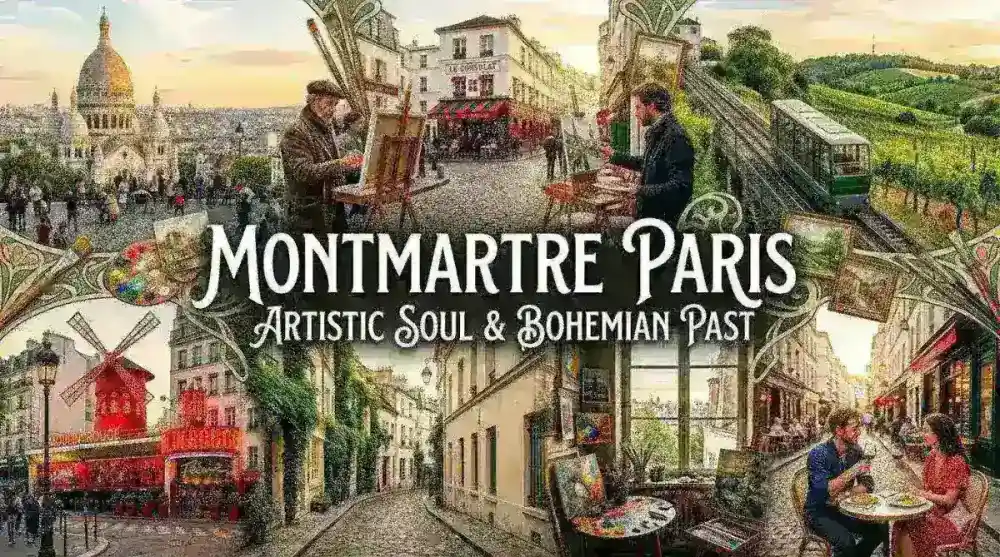
Introduction: Where Art and History Converge on a Parisian Hill
Perched atop the highest point in Paris, Montmartre stands as a testament to the enduring power of artistic expression and bohemian spirit. This historic neighborhood, with its winding cobblestone streets, charming cafés, and panoramic views of the City of Light, has captivated artists, writers, musicians, and dreamers for over a century. From the golden age of Impressionism to the avant-garde movements of the early 20th century, Montmartre has been the crucible where some of the most revolutionary art in history was born.
Walking through Montmartre today is like stepping into a living museum where every corner tells a story. The iconic white domes of Sacré-Cœur Basilica dominate the skyline, while below, the narrow streets echo with the footsteps of legendary figures like Pablo Picasso, Vincent van Gogh, Henri de Toulouse-Lautrec, and Édith Piaf. Place du Tertre buzzes with contemporary artists continuing the neighborhood's creative legacy, while hidden vineyards and historic cabarets preserve the area's unique character.
But Montmartre is more than just a collection of famous landmarks and artistic associations. It is a place where history and creativity intertwine, where the bohemian spirit of the past continues to inspire the present, and where visitors can experience an authentic slice of Parisian life that has remained remarkably intact despite the pressures of modernization and tourism.
This comprehensive guide explores the artistic soul and bohemian past of Montmartre, uncovering the stories, places, and people that have made this neighborhood one of the most beloved destinations in Paris. From the grand monuments to the hidden corners, from the famous artists' studios to the intimate cafés where revolutions were born, we'll journey through the streets that have inspired generations of creators and continue to enchant visitors from around the world.
The Rise of Montmartre: From Village to Artistic Epicenter

Understanding Montmartre's current character requires delving into its fascinating history. What began as a rural village on the outskirts of Paris gradually transformed into the world's most famous artistic quarter through a combination of geography, economics, and cultural forces.
Early History and Name Origins
Montmartre's name derives from the Latin "Mons Martis" (Mount of Mars) or possibly "Mons Martyrum" (Mount of Martyrs), referencing the legend that Saint Denis, Paris's patron saint, was martyred on this hill in the 3rd century. For centuries, Montmartre remained a separate village, known for its gypsum quarries (which provided the plaster that gave Paris the nickname "The White City"), windmills, and vineyards.
The area's elevation – 130 meters (427 feet) above sea level – made it strategically important but also isolated from central Paris. This relative isolation would prove crucial to its later development as an artistic haven.
Annexation and Transformation
In 1860, Paris expanded its boundaries, officially annexing Montmartre as the 18th arrondissement. This political change coincided with massive social and economic transformations. The construction of the Sacré-Cœur Basilica, begun in 1875 following the Franco-Prussian War, would permanently alter the neighborhood's skyline and character.
However, it was the combination of cheap rents, available studio space, and the area's village-like atmosphere that attracted artists in the late 19th century. As Haussmann's renovation of central Paris drove up rents and displaced working-class residents, many artists and bohemians found refuge in Montmartre's affordable accommodations.
The Golden Age: 1870s-1920s
The period from the 1870s through the 1920s represents Montmartre's golden age as an artistic center. During this time, the neighborhood became synonymous with artistic innovation and bohemian lifestyle. Key factors contributing to this emergence included:
- Affordable Living: Low rents allowed struggling artists to live and work in the area
- Community: Artists could live, work, and socialize in close proximity, fostering collaboration and competition
- Cabarets and Cafés: Venues like Le Chat Noir and Le Lapin Agile provided spaces for artistic exchange and performance
- Freedom from Convention: The neighborhood's distance from official art institutions allowed for experimentation
- Scenic Beauty: The hill's views, gardens, and rural character provided endless inspiration
- 👉 10 Things That Shock Americans in Tirana 2026
- 👉 10 Things I Wish I Knew Before Visiting Sarajevo: The 2026 Insider Guide
- 👉 The Louvre Museum: A Master Guide to the Mona Lisa and the World’s Ancient Treasures
Artistic Movements Born in Montmartre
Montmartre was the birthplace or nurturing ground for several revolutionary art movements:
Impressionism: While not exclusively a Montmartre movement, many Impressionists worked in the area, capturing its streets, cafés, and daily life.
Post-Impressionism: Artists like Van Gogh and Toulouse-Lautrec pushed beyond Impressionist techniques while based in Montmartre.
Fauvism: The bold color experiments of this movement had roots in Montmartre studios.
Cubism: Picasso and Braque developed Cubism while working in Montmartre studios, fundamentally changing the course of modern art.
Legendary Artists and Their Montmartre Studios

Montmartre's streets are paved with artistic history. Walking through the neighborhood today, you can trace the footsteps of some of history's greatest artists who lived, worked, and created masterpieces in this extraordinary place.
Pablo Picasso and the Bateau-Lavoir
Perhaps no address in Montmartre is more famous than the Bateau-Lavoir (Washboat), a dilapidated building at 13 Rue Ravignan that housed dozens of artists in the early 20th century. Picasso moved into this building in 1904, living in what he called his "warren of rabbits" – a cramped, cold studio that nevertheless became the birthplace of Cubism.
It was here, in 1907, that Picasso painted "Les Demoiselles d'Avignon," the revolutionary work that shattered traditional perspectives and launched the Cubist movement. The Bateau-Lavoir also hosted legendary gatherings where Picasso, Georges Braque, Juan Gris, and other artists would debate art late into the night, fueled by cheap wine and revolutionary ideas.
Though the original building burned down in 1970, a reconstruction stands on the site, and a plaque commemorates its extraordinary artistic legacy.
Vincent van Gogh: Montmartre Transformation
Vincent van Gogh lived in Montmartre from 1886 to 1888, staying with his brother Theo at 54 Rue Lepic. During his two years in the neighborhood, Van Gogh's style underwent a dramatic transformation. Arriving from the Netherlands with a dark, somber palette, he left for Arles with the bright, vibrant colors that would define his mature work.
Montmartre's influence is evident in paintings like "The Windmills of Montmartre," "View from Theo's Apartment," and "Self-Portrait with Grey Felt Hat." Van Gogh frequented the same cafés and streets as his contemporaries, absorbing the neighborhood's creative energy while developing his unique vision.
Henri de Toulouse-Lautrec: Chronicler of Montmartre Nightlife
Henri de Toulouse-Lautrec is inseparable from Montmartre's identity. Born into aristocracy but physically disabled, Toulouse-Lautrec found acceptance and inspiration in Montmartre's bohemian community. He became the quintessential chronicler of the neighborhood's nightlife, creating iconic posters and paintings of the Moulin Rouge, cabarets, dancers, and prostitutes.
His works, including "At the Moulin Rouge," "La Goulue at the Moulin Rouge," and countless posters, captured the energy, decadence, and humanity of Montmartre's entertainment world. Toulouse-Lautrec didn't just observe Montmartre – he was an integral part of its fabric, living and working among the performers, artists, and characters he depicted.
Amedeo Modigliani: The Tragic Poet
Italian artist Amedeo Modigliani arrived in Montmartre in 1906, bringing with him a distinctive style characterized by elongated faces and figures. Living in poverty but rich in artistic vision, Modigliani became a legendary figure in the neighborhood, known for his handsome looks, tragic lifestyle, and unforgettable portraits.
Modigliani's Montmartre period saw him create some of his most celebrated works, painting fellow artists, lovers, and neighborhood characters. His studio became a gathering place for the artistic community, though his life was marked by illness, poverty, and personal tragedy.
Other Notable Artists
Montmartre's artistic community included many other significant figures:
- Pierre-Auguste Renoir: Painted "Bal du moulin de la Galette" in Montmartre
- Edgar Degas: Captured the neighborhood's dancers and daily life
- Maurice Utrillo: Born in Montmartre, famous for his white-hued paintings of its streets
- Suzanne Valadon: One of the few prominent female artists of the era
- Georges Braque: Co-developed Cubism with Picasso
- André Derain: Fauvist painter who worked in the area
- 👉 10 Things That Shock Americans in Tirana 2026
- 👉 10 Things I Wish I Knew Before Visiting Sarajevo: The 2026 Insider Guide
- 👉 The Louvre Museum: A Master Guide to the Mona Lisa and the World’s Ancient Treasures
Iconic Landmarks: Where History Lives On

Montmartre's physical landscape is as rich in history as its artistic legacy. These iconic landmarks serve as anchors to the past while continuing to define the neighborhood's character.
Sacré-Cœur Basilica
Dominating the Paris skyline, the Sacré-Cœur Basilica is Montmartre's most visible landmark. Construction began in 1875, following France's defeat in the Franco-Prussian War, as a symbol of moral and spiritual renewal. The basilica's Romano-Byzantine architecture, with its distinctive white domes, was controversial when built but has become an beloved symbol of Paris.
Built from travertine stone that exudes calcite when wet, the basilica maintains its brilliant white appearance despite pollution and weather. Inside, visitors can admire one of the world's largest mosaics, "Christ in Majesty," covering the apse.
The basilica's steps offer one of Paris's most spectacular panoramic views, stretching across the city. For many visitors, climbing to Sacré-Cœur – whether by foot or the funicular – is a pilgrimage that connects them to Montmartre's spiritual and physical heights.
Place du Tertre
This charming square in the heart of Montmartre has been a gathering place for artists since the 1920s. Today, it buzzes with activity as painters, portrait artists, and caricaturists display their work and create art for visitors. While some criticize its touristy atmosphere, Place du Tertre maintains Montmartre's tradition as a place where art is created and shared publicly.
The square is surrounded by historic buildings, cafés, and restaurants, creating a vibrant focal point for the neighborhood. Early morning visits reveal a quieter, more authentic side before the crowds arrive.
Moulin Rouge
The iconic red windmill of the Moulin Rouge has symbolized Montmartre's entertainment world since 1889. Founded by Joseph Oller and Charles Zidler, the cabaret revolutionized entertainment with its can-can dancers, elaborate shows, and bohemian atmosphere. Toulouse-Lautrec's famous posters immortalized the venue and its performers.
Today, the Moulin Rouge continues to operate as a cabaret, offering spectacular shows that honor its legendary past while embracing modern production values. Even for those who don't attend a show, the building's exterior remains an essential Montmartre photo opportunity.
Le Lapin Agile
This historic cabaret at 22 Rue des Saules has been entertaining visitors since the 1860s. Originally called "Au Rendez-vous des Voleurs" (The Thieves' Rendezvous), it was renamed "Le Lapin Agile" (The Nimble Rabbit) in 1875. During Montmartre's golden age, it was a favorite gathering place for artists, writers, and musicians, including Picasso, Apollinaire, and many others.
Today, Le Lapin Agile continues to host intimate musical performances in the same spirit that made it famous. The interior retains its rustic charm, with walls covered in artwork and memorabilia from its illustrious past.
Montmartre Vineyard (Clos Montmartre)
One of Montmartre's most surprising features is its vineyard, the Clos Montmartre, located on Rue des Saules. This small vineyard, producing about 500 bottles annually, is a reminder of Montmartre's rural past when the hill was covered with vineyards and windmills.
The wine produced here is not commercially available but is auctioned annually for charity. The vineyard represents Montmartre's determination to preserve its village character and agricultural heritage despite urban development.
Wall of Love (Le Mur des Je t'aime)
Created in 2000, the Wall of Love in Square Jehan Rictus features "I love you" written 311 times in 250 languages. This romantic installation has become a popular spot for couples and photographers, adding a contemporary artistic element to Montmartre's historic landscape.
Montmartre Cemetery
While less famous than Père Lachaise, Montmartre Cemetery is the final resting place of many artists, writers, and performers who defined the neighborhood. Notable graves include:
- Edgar Degas (painter)
- Émile Zola (writer)
- Alexandre Dumas fils (writer)
- Théophile Gautier (writer)
- Nijinsky (dancer)
- Dalida (singer)
- François Truffaut (filmmaker)
- 👉 10 Things That Shock Americans in Tirana 2026
- 👉 10 Things I Wish I Knew Before Visiting Sarajevo: The 2026 Insider Guide
- 👉 The Louvre Museum: A Master Guide to the Mona Lisa and the World’s Ancient Treasures
Walking through this peaceful cemetery offers a poignant connection to Montmartre's artistic legacy.
Cafés, Cabarets, and Cultural Spaces

Montmartre's cafés and cabarets were more than just places to eat and drink – they were vital cultural spaces where ideas were exchanged, collaborations formed, and artistic movements born.
Historic Cafés
Le Consulat: This charming café at 18 Rue Norvins has been a Montmartre institution since 1903. Its terrace, adorned with flowers and vintage charm, has been painted by countless artists. Today, it remains a popular spot for visitors seeking an authentic Montmartre café experience.
Café des Deux Moulins: Made famous by the film "Amélie," this café at 15 Rue Lepic maintains its traditional character. It's where the fictional Amélie worked, and the café has embraced its cinematic fame while preserving its neighborhood atmosphere.
La Maison Rose: This pink-painted café at the corner of Rue de l'Abreuvoir and Rue des Saules has been a Montmartre landmark since 1905. Frequently painted by artists including Utrillo, it remains a beloved spot for refreshments and photography.
Le Chat Noir: Though the original cabaret closed in 1897, its legacy lives on. Founded by Rodolphe Salis, Le Chat Noir was the first modern cabaret, combining entertainment, art, and literature. Its shadow puppets and artistic performances influenced entertainment worldwide.
Modern Cultural Spaces
While honoring the past, Montmartre continues to evolve as a cultural destination:
Espace Dalí: This museum dedicated to Salvador Dalí showcases over 300 of his works, including sculptures, engravings, and surrealist objects. Though Dalí wasn't a Montmartre resident, the museum contributes to the neighborhood's artistic offerings.
Montmartre Museum: Housed in historic buildings once home to artists like Renoir and Utrillo, this museum presents the neighborhood's history through paintings, posters, and photographs.
Contemporary Galleries: Numerous small galleries throughout Montmartre showcase works by contemporary artists, maintaining the neighborhood's tradition as a place where art is created and sold.
Hidden Gems and Secret Corners

Beyond the famous landmarks, Montmartre rewards curious explorers with hidden gems that reveal the neighborhood's authentic character.
Rue de l'Abreuvoir
Often cited as one of Paris's most beautiful streets, Rue de l'Abreuvoir is a cobblestone lane lined with charming houses, including the famous Maison Rose. This street captures Montmartre's village atmosphere perfectly, with its quiet beauty and artistic heritage.
Passage des Abbesses
This covered passageway, one of the few remaining in Paris, offers a glimpse into 19th-century commercial architecture. Though small, it's a charming reminder of old Paris.
Square Louise Michel
The gardens surrounding Sacré-Cœur offer peaceful spots to rest and enjoy panoramic views. Less crowded than the basilica steps, these gardens provide a more contemplative Montmartre experience.
Rue Lepic
This long, winding street showcases Montmartre's diversity, from upscale shops to traditional markets. Van Gogh lived here, and the street maintains an authentic neighborhood feel despite tourism.
La Recyclerie
Located in a converted railway station, this eco-friendly café and cultural space represents Montmartre's contemporary creative spirit. It hosts workshops, markets, and events while promoting sustainability.
Walking Through Montmartre: A Suggested Itinerary

To experience Montmartre fully, plan at least half a day for exploration. Here's a suggested route that balances famous sites with hidden treasures:
Morning (9:00 AM - 12:00 PM)
- Start at Abbesses Metro: Admire the Art Nouveau entrance, one of only two remaining original Paris metro entrances designed by Hector Guimard
- Walk up Rue des Abbesses: Explore this lively street with its shops and cafés
- Visit Wall of Love: Start your journey with this romantic installation in Square Jehan Rictus
- Climb to Sacré-Cœur: Either walk up the steps or take the funicular for panoramic views
- Explore the Basilica: Spend time inside admiring the architecture and mosaic
- Enjoy the View: Take in the spectacular panorama from the basilica steps
Midday (12:00 PM - 2:00 PM)
- Lunch at Place du Tertre: Experience the artistic atmosphere while dining (though consider side streets for better value)
- Watch Artists at Work: Observe painters creating art in the square
Afternoon (2:00 PM - 6:00 PM)
- Visit Montmartre Museum: Learn about the neighborhood's rich history
- Walk Rue de l'Abreuvoir: Photograph this charming street and La Maison Rose
- See Clos Montmartre: Visit the historic vineyard
- Explore Le Lapin Agile: Step into this historic cabaret
- Walk Rue Lepic: Experience authentic neighborhood life
- Visit Café des Deux Moulins: Stop at this "Amélie" filming location
- Explore Side Streets: Get lost in Montmartre's charming lanes
Evening (6:00 PM onwards)
- Sunset at Sacré-Cœur: Return for golden hour views
- Dinner: Enjoy a traditional French meal at a neighborhood bistro
- Moulin Rouge Show: If interested, experience this legendary cabaret
- Night Photography: Capture Montmartre illuminated after dark
Practical Information for Visitors

Getting There
Metro: Lines 2 (Anvers, Blanche), 12 (Abbesses, Lamarck-Caulaincourt), 4 (Château Rouge)
Bus: Lines 30, 31, 54, 80, 85
Funicular: Included with metro tickets; connects Anvers to Sacré-Cœur
Best Time to Visit
- Early Morning: Fewer crowds, better photography light, authentic atmosphere
- Late Afternoon/Evening: Golden hour, romantic ambiance, illuminated views
- Weekdays: Less crowded than weekends
- Avoid: Midday crowds in summer, especially around Place du Tertre
- 👉 10 Things That Shock Americans in Tirana 2026
- 👉 10 Things I Wish I Knew Before Visiting Sarajevo: The 2026 Insider Guide
- 👉 The Louvre Museum: A Master Guide to the Mona Lisa and the World’s Ancient Treasures
What to Wear
- Comfortable walking shoes (cobblestones and hills)
- Layers for changing weather
- Modest clothing for entering Sacré-Cœur (shoulders and knees covered)
- 👉 10 Things That Shock Americans in Tirana 2026
- 👉 10 Things I Wish I Knew Before Visiting Sarajevo: The 2026 Insider Guide
- 👉 The Louvre Museum: A Master Guide to the Mona Lisa and the World’s Ancient Treasures
Budget Considerations
- Free: Sacré-Cœur exterior and views, street art, neighborhood exploration
- €5-15: Sacré-Cœur dome climb, Montmartre Museum
- €20-50: Meals at cafés and bistros
- €100+: Moulin Rouge show, guided tours
- 👉 10 Things That Shock Americans in Tirana 2026
- 👉 10 Things I Wish I Knew Before Visiting Sarajevo: The 2026 Insider Guide
- 👉 The Louvre Museum: A Master Guide to the Mona Lisa and the World’s Ancient Treasures
Safety Tips
- Beware of pickpockets in crowded areas
- Ignore street vendors selling bracelets or "petition" scams
- Keep valuables secure, especially at Place du Tertre
- Be cautious at night in less crowded areas
- 👉 10 Things That Shock Americans in Tirana 2026
- 👉 10 Things I Wish I Knew Before Visiting Sarajevo: The 2026 Insider Guide
- 👉 The Louvre Museum: A Master Guide to the Mona Lisa and the World’s Ancient Treasures
Conclusion: The Enduring Magic of Montmartre

Montmartre remains one of Paris's most enchanting neighborhoods, a place where history and creativity converge to create something truly magical. Its cobblestone streets have witnessed artistic revolutions, its cafés have hosted legendary figures, and its views have inspired countless masterpieces. Yet despite its fame and the pressures of tourism, Montmartre retains an authentic charm that continues to captivate visitors.
Walking through Montmartre is more than sightseeing – it's a journey through the history of modern art, a celebration of bohemian spirit, and an immersion in one of the world's most romantic neighborhoods. From the heights of Sacré-Cœur to the intimate corners of hidden streets, from the bustling Place du Tertre to the peaceful vineyard, Montmartre offers layers of discovery that reward every visitor.
The artists who made Montmartre famous sought something here: freedom to create, community to inspire, and beauty to capture. Today, that same spirit lives on, inviting you to explore, to dream, and to find your own inspiration on the streets where Picasso, Van Gogh, and countless others changed the course of art history.
Montmartre is not just a destination; it's an experience, a feeling, a reminder that creativity and beauty can flourish in the most unexpected places. As you wander its streets, climb its hills, and soak in its views, you become part of Montmartre's ongoing story – a story of art, passion, and the enduring power of place to inspire the human spirit.
Whether you're an artist seeking inspiration, a history buff tracing legendary footsteps, a romantic searching for Parisian magic, or simply a traveler eager to experience one of the world's great neighborhoods, Montmartre welcomes you. Come explore its artistic soul, discover its bohemian past, and create your own Montmartre memories.
0 Comments