.webp)
.webp)
Diving Chuuk Lagoon Shipwrecks: Complete First-Time Traveler Guide 2026
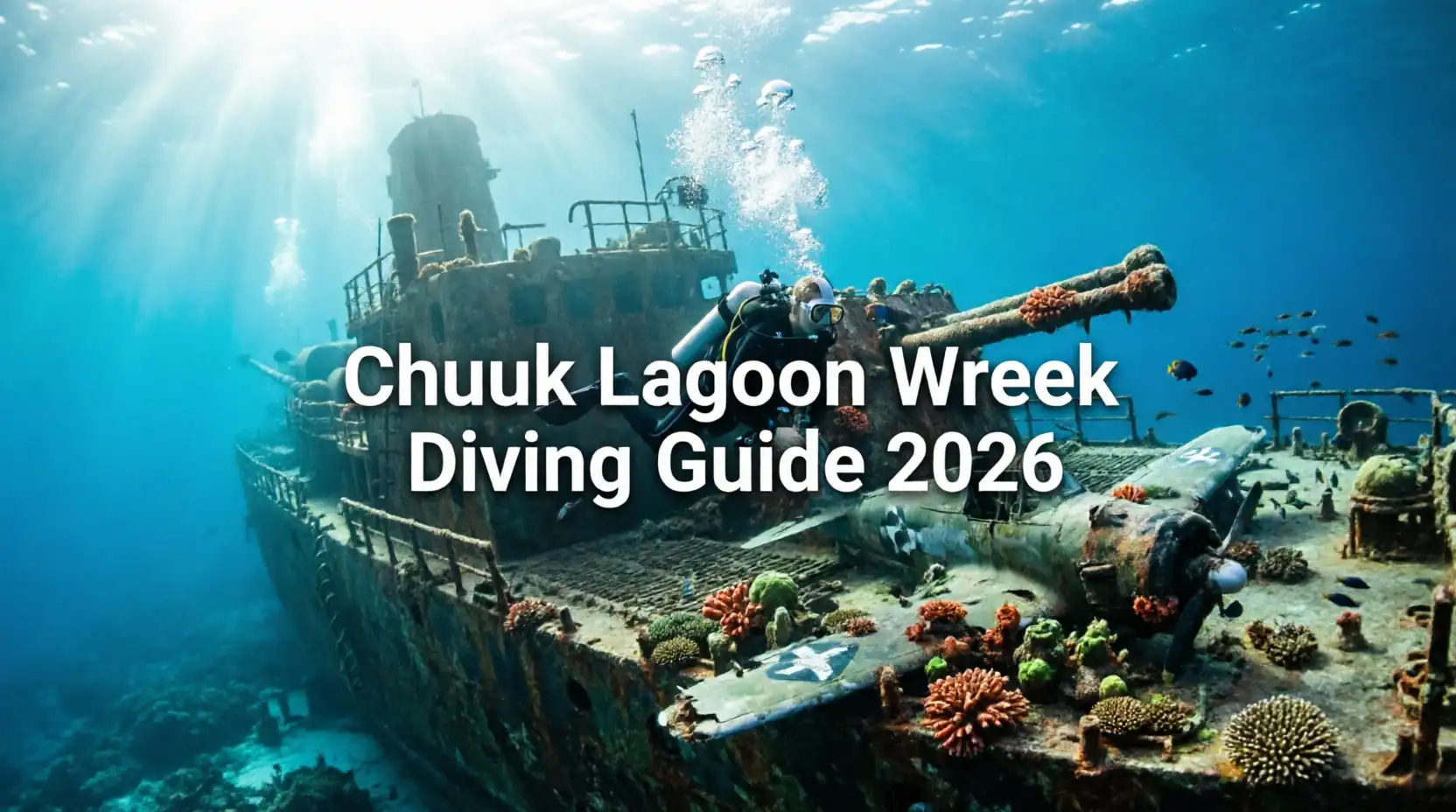
Diving the Chuuk Lagoon Shipwrecks: A Complete Guide for First-Time Travelers
Chuuk Lagoon, formerly known as Truk Lagoon, stands as the world's premier wreck diving destination—a haunting underwater museum containing over 60 Japanese warships, aircraft, and merchant vessels sunk during Operation Hailstone in February 1944. This remote Micronesian atoll offers divers an unparalleled opportunity to explore perfectly preserved World War II wrecks resting in crystal-clear tropical waters, from massive battleships and aircraft carriers to Zero fighters still positioned on flight decks.
For first-time visitors, diving Chuuk Lagoon represents both the adventure of a lifetime and a significant undertaking requiring careful planning, proper certification, and realistic expectations. The lagoon's wrecks range from shallow, accessible sites perfect for novice wreck divers to deep, technical dives requiring advanced training. Understanding what to expect, how to prepare, and which wrecks match your skill level ensures a safe, rewarding experience in one of the Pacific's most historically significant dive sites.
This comprehensive guide covers everything first-time travelers need to know: certification requirements, best time to visit, top wreck sites for beginners, liveaboard versus resort-based diving, costs, equipment needs, safety considerations, and how to respectfully explore these war graves that serve as both historical monuments and final resting places for thousands of Japanese sailors.
What makes Chuuk Lagoon special for wreck diving?
Chuuk Lagoon is the world's largest and most accessible collection of WWII shipwrecks, containing over 60 vessels and 250+ aircraft sunk in a single 1944 US attack (Operation Hailstone). The wrecks rest in warm, clear water (80-85°F) with excellent visibility (60-100 feet), making them accessible to divers of various skill levels. Unlike other wreck diving destinations, Chuuk offers incredible diversity—from massive battleships and aircraft carriers to submarines, destroyers, and Zero fighters—all within a protected lagoon environment with minimal currents.
Understanding Chuuk Lagoon's History and Significance

Before diving these wrecks, understanding their historical context enhances the experience and promotes respectful exploration.
Operation Hailstone (February 17-18, 1944):
• The Attack: US Navy launched massive carrier-based air strike against Japanese stronghold
- 500+ aircraft participated over two days
- Targeted Japan's primary naval base in Central Pacific
- Sank 12 warships, 32 merchant vessels, 270+ aircraft
- Destroyed infrastructure, fuel depots, supplies
- Casualties: Estimated 4,000+ Japanese personnel
• Strategic Impact:
- Effectively neutralized Chuuk as Japanese naval base
- Opened path for US advance through Central Pacific
- Considered "Japan's Pearl Harbor" in reverse
- Remained largely undisturbed since 1944
• Preservation:
- Wrecks remain remarkably intact after 80+ years
- Tropical waters slow corrosion compared to colder waters
- Minimal salvage operations preserve historical integrity
- Designated as war graves; exploration requires respect
Wreck Types and Distribution:
• Warships: Destroyers, patrol boats, submarine chasers, minelayers
• Merchant Vessels: Cargo ships, tankers, freighters carrying supplies
• Aircraft: Zero fighters, bombers, reconnaissance planes (many on decks)
• Submarines: Several I-class submarines in deeper water
• Locations: Wrecks scattered throughout lagoon; depths range 30-200+ feet
• Notable Wrecks:
- Fujikawa Maru: 436-foot freighter with Zero fighters on deck (60-110 feet)
- Shinkoku Maru: Fleet oiler with intact engine room (80-120 feet)
- San Francisco Maru: Deep dive with tanks on deck (130-200 feet)
- Hoki Maru: Minelayer with cargo holds full of supplies (80-130 feet)
- Heian Maru: Submarine tender, one of largest wrecks (100-160 feet)
Marine Life and Environment:
• Coral Growth: Wrecks heavily encrusted with soft and hard corals
• Fish Populations: Abundant tropical fish, barracuda, reef sharks, turtles
• Water Conditions: Year-round 80-85°F (27-29°C); visibility 60-100 feet
• Currents: Generally mild inside lagoon; some external wrecks have moderate current
• Depth Range: Shallow wrecks (30-60 feet) to deep technical dives (130-200+ feet)
Are the Chuuk Lagoon wrecks war graves?
Yes, the Chuuk Lagoon wrecks are war graves containing the remains of approximately 4,000 Japanese sailors and airmen killed during Operation Hailstone. Divers must treat all wrecks with respect: do not disturb human remains, avoid removing artifacts, maintain quiet demeanor inside wrecks, and remember these are final resting places. Many wrecks still contain skeletal remains, particularly in engine rooms and lower decks. The wrecks are protected under Micronesian law and international maritime heritage conventions.
Certification and Skill Requirements

Chuuk Lagoon offers dives for various skill levels, but proper certification and honest self-assessment are essential for safety.
Minimum Certification Requirements:
• Open Water Divers:
- Can dive shallow wrecks (30-60 feet) with guide
- Examples: Some aircraft, shallow cargo vessels
- Must have recent diving experience (within 6 months)
- Strongly recommended: Wreck Diver specialty certification
• Advanced Open Water:
- Required for most wreck dives (60-100 feet)
- Allows access to majority of lagoon wrecks
- Deep Diver specialty highly recommended
- Should have 25+ logged dives minimum
• Rescue Diver + Deep Diver:
- Recommended for deeper wrecks (100-130 feet)
- Better prepared for emergency situations
- Should have 50+ logged dives
- Nitrox certification beneficial for extended bottom time
• Technical Diving Certification:
- Required for deepest wrecks (130-200+ feet)
- Examples: San Francisco Maru (130-200 feet)
- Requires trimix/heliox certification for 150+ feet
- Extensive experience mandatory (100+ dives)
Recommended Specialty Certifications:
• Wreck Diver: Essential for safe penetration and navigation
- Teaches proper penetration techniques
- Line laying and reel usage
- Hazard identification
- Emergency procedures specific to wrecks
• Nitrox (Enriched Air): Highly recommended
- Extends no-decompression limits
- Reduces nitrogen absorption on repetitive dives
- Most Chuuk operators use nitrox as standard
- Cost: $150-250 for certification
• Deep Diver: Strongly recommended
- Training for dives 60-130 feet
- Gas management at depth
- Decompression theory and safety stops
- Equipment considerations for deep diving
• Digital Underwater Photographer: Optional but popular
- Wrecks offer incredible photography opportunities
- Proper techniques prevent damage to wrecks
- Buoyancy control critical around fragile structures
Honest Self-Assessment:
Before booking, honestly evaluate:
• Recent Experience: When was your last dive? Rusty skills are dangerous on wrecks
• Comfort Level: Are you comfortable in overhead environments? Low visibility? Deep water?
• Physical Fitness: Can you handle strong currents if encountered? Long swims?
• Emergency Skills: Can you assist a buddy in trouble at depth?
• Equipment Familiarity: Are you comfortable with your gear, or will you rent?
• Recommendation: If you haven't dived in 6+ months, do refresher dives before attempting wrecks. Many operators require checkout dives for rusty divers.
Liveaboard vs. Resort Diving Requirements:
• Liveaboards: Typically require Advanced Open Water minimum, 50+ logged dives
- More demanding due to remote location and multiple daily dives
- Must be self-sufficient and experienced
- Often require proof of recent deep dives
• Resort-Based Diving: More flexible; can accommodate Open Water divers
- Shallow wrecks available for less experienced divers
- More supervision and guidance available
- Better for first-time wreck divers
What certification do I need to dive Chuuk Lagoon?
Minimum certification is Advanced Open Water for most wreck dives (60-100 feet depth). Open Water divers can dive shallow wrecks (30-60 feet) with a guide. Wreck Diver specialty certification is highly recommended for safe penetration. Deep Diver and Nitrox certifications are strongly recommended. For deepest wrecks like San Francisco Maru (130-200 feet), technical diving certification with trimix is required. Most operators require 25-50+ logged dives and proof of recent diving experience. If your skills are rusty, complete a refresher course before arriving.
Best Time to Visit Chuuk Lagoon

Timing your visit affects water conditions, visibility, marine life, and cost.
Year-Round Diving Conditions:
• Water Temperature: Consistent 80-85°F (27-29°C) year-round
- 3mm wetsuit sufficient for most divers
- 5mm recommended for multiple daily dives or cold-sensitive divers
• Visibility: Generally excellent 60-100 feet
- Best: December-April (dry season)
- Good: May-November (wet season, brief showers)
- Rainfall rarely affects underwater visibility
• Currents: Generally mild inside lagoon
- Some external wrecks have moderate current
- Best conditions: Year-round manageable
- Avoid: Rare strong current days (operator will advise)
Peak Season (December-April):
• Advantages:
- Best weather: Less rainfall, calmer seas
- Optimal visibility: 80-100 feet common
- Best marine life activity
- All dive sites accessible
• Disadvantages:
- Highest prices: 20-40% premium
- Limited availability: Book 6-12 months ahead
- More divers: Popular wrecks can be crowded
- Liveaboards fill quickly
• Cost Impact: Liveaboards $3,500-5,500; resorts $250-400/day
Shoulder Season (May-June, October-November):
• Advantages:
- Good conditions: 70-90 feet visibility
- Lower prices: 15-25% discount from peak
- Fewer divers: More intimate wreck experiences
- Better availability: Easier to book preferred dates
• Disadvantages:
- Occasional rain showers (usually brief)
- Slightly less predictable weather
- Some days may have reduced visibility
• Cost Impact: Liveaboards $3,000-4,500; resorts $200-350/day
Low Season (July-September):
• Advantages:
- Lowest prices: 30-50% discount from peak
- Fewest divers: Private wreck experiences
- Best availability: Last-minute bookings possible
- Warm water: 84-85°F
• Disadvantages:
- More rainfall: Afternoon showers common
- Visibility can drop to 50-70 feet
- Occasional strong winds affect external wrecks
- Some liveaboards reduce schedule
• Cost Impact: Liveaboards $2,500-4,000; resorts $180-300/day
• Best For: Budget-conscious divers, photographers wanting wrecks to themselves, experienced divers comfortable with variable conditions
Marine Life Considerations:
• Year-Round: Abundant reef fish, turtles, reef sharks
• December-March: Best visibility for photography; manta rays possible
• April-June: Increased plankton attracts larger pelagics
• July-September: Warmer water; coral spawning possible
• October-November: Transition period; good all-around conditions
When is the best time to dive Chuuk Lagoon?
The best time to dive Chuuk Lagoon is December-April (dry season) for optimal visibility (80-100 feet) and calmest conditions, though this is peak season with highest prices. For best value, visit May-June or October-November (shoulder season) with good visibility (70-90 feet) and 15-25% lower prices. Budget travelers can visit July-September (low season) with 30-50% discounts, though visibility may drop to 50-70 feet with more rainfall. Water temperature remains 80-85°F year-round, making Chuuk diveable any month.
Choosing Between Liveaboard and Resort-Based Diving

One of the biggest decisions for first-time Chuuk divers is choosing between liveaboard and resort-based diving. Each has distinct advantages and trade-offs.
Liveaboard Diving:
• What to Expect:
- Live on dive boat for 7-14 days
- 3-4 dives daily plus night dives
- Access to remote external wrecks
- All meals, accommodation, diving included
- Typical capacity: 12-20 divers
- Cabins range from basic to luxury
• Advantages:
- Maximum diving: 20-30+ dives per week
- Access to best/remote wrecks unreachable from shore
- No daily boat commute; wake up at dive sites
- Dedicated dive-focused schedule
- Camaraderie with fellow wreck enthusiasts
- All logistics handled; just dive
- Night dives on wrecks (incredible experience)
• Disadvantages:
- Higher cost: $3,500-7,000 for 7-10 days
- Confined space; limited privacy
- Must be comfortable on boats (seasickness risk)
- Less flexibility; fixed dive schedule
- Requires advanced certification and experience
- Limited or no land time
- Must be self-sufficient diver
• Best For: Experienced wreck divers (50+ dives), those prioritizing maximum diving, photographers wanting remote wrecks, divers comfortable with boat life, those with 10+ days available
• Popular Liveaboards:
- Truk Master: Luxury option; 16 divers; $5,000-7,000/week
- Pacific Master: High-end; 16 divers; $4,500-6,500/week
- Febrina: Mid-range; 12 divers; $3,500-5,000/week
- Truk Odyssey: Budget-friendly; 14 divers; $3,000-4,500/week
Resort-Based Diving:
• What to Expect:
- Stay in hotel/resort on Weno Island
- Daily boat trips to wrecks (2-3 dives/day)
- Return to hotel each evening
- Mix of diving and land activities
- More flexibility in schedule
• Advantages:
- Lower cost: $2,500-4,500 for week including hotel
- More space and privacy in hotel room
- Flexibility to skip dives or explore island
- Access to restaurants, bars, local culture
- More comfortable beds and amenities
- Better for less experienced divers
- Can combine with non-diving partner
- Easier to extend stay or change plans
• Disadvantages:
- Fewer dives: 10-15 dives per week vs. 20-30
- Daily boat commute (30-60 minutes each way)
- Limited to wrecks within boat range
- Less time underwater overall
- Must arrange meals/activities separately
- Less immersive wreck diving experience
• Best For: First-time Chuuk divers, Open Water/Advanced divers (25-50 dives), those wanting land time, budget-conscious divers, non-diving partners, photographers wanting flexibility
• Popular Resorts:
- Blue Lagoon Resort: Dive-focused; $150-250/night; on-site dive shop
- Truk Stop Hotel: Budget option; $80-150/night; basic but clean
- Island Queen Hotel: Mid-range; $120-200/night; central location
- Manta Ray Bay Hotel: Higher-end; $180-280/night; best amenities
Hybrid Approach:
Some divers combine both:
• Spend 3-4 days resort diving to assess skills
• Join shorter 3-4 day liveaboard for remote wrecks
• Best of both worlds but higher total cost
• Requires more total trip days (10-14 days)
Cost Comparison (7 Days):
• Liveaboard: $3,500-7,000 all-inclusive
- Includes: All diving, meals, accommodation, transfers
- Excludes: Flights, alcohol, nitrox fills, gear rental, tips
• Resort-Based: $2,500-4,500 total
- Hotel: $800-1,800 (7 nights)
- Diving: $1,200-2,000 (10-15 dives)
- Meals: $300-500
- Excludes: Flights, gear rental, nitrox, tips
• Bottom Line: Liveaboards cost more but provide 2x the diving and access to best wrecks. Resorts offer better value for casual divers or those wanting land time.
Should I choose a liveaboard or resort for Chuuk Lagoon diving?
Choose a liveaboard if you're an experienced diver (50+ logged dives) prioritizing maximum diving (20-30 dives/week), want access to remote wrecks, and are comfortable with confined boat life. Cost: $3,500-7,000/week. Choose resort-based diving if you're less experienced (25-50 dives), want flexibility and land time, prefer privacy and comfort, or are budget-conscious. Cost: $2,500-4,500/week. First-time Chuuk divers often benefit from resort-based diving to assess skills before committing to a liveaboard.
Top Wreck Sites for First-Time Visitors

Chuuk Lagoon contains over 60 wrecks, but first-time visitors should focus on the most accessible, historically significant, and visually impressive sites.
MUST-DIVE WRECKS (All Skill Levels):
1. Fujikawa Maru (The Zero Fighter Wreck)
• Depth: 60-110 feet
• Type: 436-foot freighter/cargo ship
• Sunk: February 17, 1944
• Highlights:
- Two Zero fighters on forward deck (iconic photo)
- Intact bridge with controls visible
- Cargo holds full of supplies (sake, bombs, vehicles)
- Engine room accessible (advanced divers)
- Abundant marine life
• Skill Level: Advanced Open Water recommended
• Penetration: Possible but not required; swim-throughs available
• Why Dive It: Most photographed wreck in Chuuk; perfect introduction to lagoon diving
• Best Features: Zero fighters, visibility, accessibility, marine life
• Time Needed: 1-2 dives to explore thoroughly
2. Shinkoku Maru (The Fleet Oiler)
• Depth: 80-120 feet
• Type: 500-foot fleet oiler/tanker
• Sunk: February 17, 1944
• Highlights:
- Remarkably intact engine room with telegraph
- Massive propeller visible
- Cargo holds with aviation fuel drums
- Anti-aircraft guns on deck
- School of barracuda often present
• Skill Level: Advanced Open Water + Deep Diver recommended
• Penetration: Engine room penetration possible (wreck certified)
• Why Dive It: Best-preserved engine room in lagoon; incredible detail
• Best Features: Engine room, size, accessibility, fish life
• Time Needed: 1-2 dives
3. Hoki Maru (The Minelayer)
• Depth: 80-130 feet
• Type: 370-foot minelayer/cargo ship
• Sunk: February 17, 1944
• Highlights:
- Cargo holds packed with supplies (rice, sake, bombs)
- Intact bridge with steering wheel
- Depth charges on stern
- Beautiful coral growth
- Large schools of fish
• Skill Level: Advanced Open Water
• Penetration: Multiple cargo holds accessible
• Why Dive It: Best cargo holds; incredible preservation of supplies
• Best Features: Cargo holds, accessibility, photography opportunities
• Time Needed: 1-2 dives
ADVANCED/TECHNICAL WRECKS:
4. San Francisco Maru (The Deep Challenge)
• Depth: 130-200 feet (DEEP DIVE)
• Type: 440-foot cargo ship
• Sunk: February 17, 1944
• Highlights:
- Three Type 95 Ha-Go tanks on deck
- Intact mines and depth charges
- Massive propeller
- One of deepest accessible wrecks
• Skill Level: Technical diving certification required (trimix for 150+ feet)
• Penetration: Not recommended due to depth
• Why Dive It: Tanks on deck; ultimate deep wreck challenge
• Warning: Serious deep dive; not for recreational divers
• Time Needed: 1 dive (decompression required)
5. Heian Maru (The Submarine Tender)
• Depth: 100-160 feet
• Type: 460-foot submarine tender (one of largest)
• Sunk: February 17, 1944
• Highlights:
- Massive size; multiple decks to explore
- Aircraft crane still visible
- Submarine parts and torpedoes
- Extensive coral coverage
• Skill Level: Advanced + Deep Diver; 50+ dives recommended
• Penetration: Possible for experienced wreck divers
• Why Dive It: One of largest wrecks; impressive scale
• Time Needed: 2 dives to explore properly
AIRCRAFT WRECKS:
6. Dublon Island Aircraft Wrecks
• Depth: 30-60 feet (shallow)
• Type: Multiple Zero fighters and bombers
• Highlights:
- Several aircraft on reef and beach
- Shallow enough for Open Water divers
- Great for photography
- Can combine with shore dive
• Skill Level: Open Water acceptable
• Why Dive It: Accessible aircraft wrecks; shallow depth
• Best For: Less experienced divers, photographers, warm-up dives
First-Timer Recommended Itinerary (7 Days):
• Day 1: Fujikawa Maru (warm-up dive)
• Day 2: Shinkoku Maru + shallow aircraft wreck
• Day 3: Hoki Maru + Dublon Island wrecks
• Day 4: Return to favorite wreck or explore new site
• Day 5: Heian Maru (if certified) or repeat favorite
• Day 6: Choice of advanced wreck or shallow sites
• Day 7: Final dive on favorite wreck
• Total Dives: 10-15 dives
• Focus: Quality over quantity; thoroughly explore best wrecks
What is the best wreck to dive in Chuuk Lagoon for beginners?
The Fujikawa Maru is the best wreck for first-time Chuuk divers. At 60-110 feet depth, it's accessible to Advanced Open Water divers and features the iconic Zero fighters on deck, intact bridge, and cargo holds. The wreck offers excellent visibility, abundant marine life, and optional penetration for certified wreck divers. It's the most photographed wreck in the lagoon and provides a perfect introduction to Chuuk's world-class wreck diving. Shallow aircraft wrecks near Dublon Island (30-60 feet) are also excellent for Open Water divers.
Equipment and Gear Requirements

Proper equipment is critical for safe, comfortable wreck diving in Chuuk Lagoon.
Essential Personal Gear:
• Exposure Protection:
- 3mm wetsuit minimum (water 80-85°F)
- 5mm recommended for multiple daily dives
- Hood optional but recommended for deep dives
- Gloves recommended (protect from sharp metal/coral)
• Regulator:
- High-quality primary regulator
- Octopus (alternate air source) required
- Regulator must be serviced within 12 months
- Cold-water kits not necessary (warm water)
• BCD (Buoyancy Control Device):
- Properly fitting BCD with adequate lift
- Integrated weights preferred
- Must have working inflator/deflator
• Dive Computer:
- Required by all operators
- Must be capable of tracking multiple dives
- Nitrox-capable if diving enriched air
- Backup computer or tables recommended
• Surface Marker Buoy (SMB):
- Required for safety
- Deploy on ascent from deep wrecks
- Signals boat to your position
• Dive Light:
- Primary light essential for wreck penetration
- Backup light strongly recommended
- Even shallow wrecks are dark inside
- Video light optional for photography
Wreck Diving Specific Gear:
• Reel/Spool:
- Required for any wreck penetration
- 100-200 feet of line recommended
- Practice line laying before trip
- Essential for safe navigation inside wrecks
• Cutting Tool:
- Required for wreck diving
- Knife, shears, or line cutter
- Must be easily accessible
- Fishing line and nets common on wrecks
• Slates/Wet Notes:
- For communication inside wrecks
- Note-taking for photography locations
- Emergency information
• Compass:
- Required for navigation
- Wrecks can be disorienting
- Helps locate exit points
Rental Equipment:
Most Chuuk dive operators offer rental gear:
• Availability:
- BCD, regulator, computer, wetsuit available
- Quality varies; inspect before diving
- Reserve in advance during peak season
• Costs:
- Full gear package: $150-250/week
- Individual items: $10-20/day
- Computer rental: $10-15/day
- Wetsuit rental: $10-15/day
• Recommendation:
- Bring your own mask, fins, computer if possible
- Familiar gear increases safety and comfort
- Rent bulky items (BCD, regulator) if needed
- Test all rental gear on first shallow dive
Photography Equipment:
Chuuk's wrecks offer incredible photo opportunities:
• Camera:
- Action camera (GoPro) sufficient for beginners
- DSLR/mirrorless with housing for serious photographers
- Compact cameras good middle ground
• Lights:
- Video light essential for wrecks (dark interiors)
- Strobes for color restoration at depth
- Minimum 1,000-2,000 lumens recommended
• Accessories:
- Wide-angle lens for large wrecks
- Red filter for action cameras (restores color)
- Extra batteries and memory cards
- Dry bag for surface intervals
• Tip: Practice buoyancy before bringing expensive camera gear; wrecks are fragile
Packing List:
☐ Mask (plus backup)
☐ Fins (open-heel recommended)
☐ Exposure suit (3-5mm wetsuit)
☐ Regulator with octopus
☐ BCD
☐ Dive computer
☐ SMB/delayed surface marker buoy
☐ Dive light + backup
☐ Reel/spool (for penetration)
☐ Cutting tool
☐ Compass
☐ Logbook
☐ Certification cards
☐ Medical insurance card
☐ Sunscreen (reef-safe)
☐ Seasickness medication
☐ Underwater camera (optional)
☐ Gear bag
☐ Mesh bag for wet gear
What equipment do I need to bring for Chuuk Lagoon diving?
Essential gear includes: 3-5mm wetsuit, mask, fins, BCD, regulator with octopus, dive computer, SMB, dive light, cutting tool, and reel/spool for wreck penetration. Most operators rent equipment ($150-250/week for full package), but bringing your own mask, computer, and regulator is recommended for comfort and safety. Wreck diving specifically requires a light (even for shallow dives), cutting tool, and reel. Photography equipment is optional but highly recommended—Chuuk's wrecks are incredibly photogenic.
Costs and Budget Planning

Chuuk Lagoon diving is a significant investment. Understanding all costs helps you budget appropriately.
Liveaboard Costs (7-10 Days):
• Budget Liveaboards: $2,500-3,500
- Example: Truk Odyssey, Febrina
- Basic cabins, shared facilities
- 3 meals daily, 3 dives/day
- Nitrox extra ($100-150)
• Mid-Range Liveaboards: $3,500-5,500
- Example: Pacific Master, Febrina (upper)
- Private cabins, ensuite bathrooms
- 3-4 meals daily, 3-4 dives/day
- Nitrox often included
• Luxury Liveaboards: $5,500-7,500+
- Example: Truk Master
- Spacious cabins, premium amenities
- Gourmet meals, 4 dives/day
- Nitrox, gear storage included
• What's Included:
- All accommodation and meals
- All diving (tanks, weights)
- Airport transfers
- Dive guide/instructor
• What's Extra:
- International flights: $1,500-3,000
- Nitrox fills: $100-200 (if not included)
- Gear rental: $150-250
- Alcoholic beverages: $5-10/drink
- Crew tips: 10-15% of trip cost
- Travel insurance: $200-500
- Chuuk State dive permit: $50-100
Resort-Based Diving Costs (7 Days):
• Accommodation:
- Budget hotel: $80-150/night ($560-1,050/week)
- Mid-range resort: $120-200/night ($840-1,400/week)
- Dive resort: $150-280/night ($1,050-1,960/week)
• Diving Costs:
- Single dive: $80-120
- 2-tank boat dive: $140-200
- 10-dive package: $1,200-1,800
- 15-dive package: $1,700-2,500
- Nitrox fills: $10-15/tank
• Meals:
- Budget: $15-25/day ($105-175/week)
- Mid-range: $30-50/day ($210-350/week)
- Resort dining: $50-80/day ($350-560/week)
• Additional Costs:
- Gear rental: $150-250/week
- Airport transfers: $30-50 each way
- Chuuk dive permit: $50-100
- Tips for dive guides: $5-10/dive
- Travel insurance: $200-500
• Total Resort Week (excluding flights):
- Budget: $2,200-3,200
- Mid-range: $3,200-4,800
- Higher-end: $4,500-6,500
International Flights:
• From US West Coast: $1,500-2,800 round-trip
- United Airlines via Guam
- 15-20 hours total travel time
• From US East Coast: $2,000-3,500 round-trip
- Via West Coast or Asia
- 20-30 hours total travel time
• From Asia/Australia: $800-1,800 round-trip
- Closer proximity reduces cost
- Nauru Airlines, United, regional carriers
• Booking Tips:
- Book 3-6 months ahead for best prices
- Flexible dates save 20-30%
- Consider multi-city tickets (Guam + Chuuk)
Total Trip Cost Examples:
• Budget 7-Day Trip (Resort):
- Flights: $2,000
- Hotel: $700
- Diving (10 dives): $1,400
- Meals: $150
- Misc: $300
- Total: $4,550
• Mid-Range 7-Day Trip (Liveaboard):
- Flights: $2,200
- Liveaboard: $4,500
- Nitrox/gear: $300
- Tips/extra: $500
- Total: $7,500
• Higher-End 10-Day Trip (Luxury Liveaboard):
- Flights: $2,500
- Liveaboard: $7,000
- Gear/extra: $500
- Tips: $800
- Total: $10,800
Money-Saving Tips:
• Travel Off-Peak: July-September saves 30-50%
• Book Early: 6-12 months ahead for liveaboards
• Group Discounts: 4+ divers often get 10-15% off
• Longer Stays: 10+ day trips reduce per-day cost
• Bring Your Gear: Save $150-250 on rentals
• Resort vs. Liveaboard: Resorts cheaper for casual divers
• Package Deals: Some operators offer flight+dive packages
How much does a week of diving in Chuuk Lagoon cost?
A 7-day Chuuk Lagoon diving trip costs $4,500-7,500 for resort-based diving or $6,500-10,000 for liveaboards, excluding international flights ($1,500-3,000). Budget travelers can manage $4,000-5,000 total with budget hotels and dive packages. Mid-range liveaboards run $7,000-9,000 all-in. Luxury liveaboards cost $9,000-12,000+. Total cost depends on diving intensity, accommodation style, and whether you bring your own gear. Budget an additional $500-1,000 for tips, nitrox, gear rental, and incidentals.
Safety Considerations and Emergency Procedures

Wreck diving carries inherent risks. Understanding and respecting these dangers is essential for safe diving in Chuuk Lagoon.
Primary Safety Risks:
• Depth-Related Risks:
- Many wrecks exceed 100 feet
- Nitrogen narcosis impairs judgment below 100 feet
- Increased air consumption at depth
- Decompression obligations on deep dives
- Mitigation: Stay within certification limits; use nitrox; monitor depth/time
• Overhead Environment:
- Wreck penetration creates overhead environment
- No direct vertical access to surface
- Disorientation risk in dark, silted conditions
- Entrapment hazards (cables, debris)
- Mitigation: Wreck Diver certification; reel/line; never dive alone; proper training
• Sharp Hazards:
- Rusted metal edges extremely sharp
- Fishing line and nets common
- Unexploded ordnance (rare but possible)
- Coral cuts can become infected
- Mitigation: Wear gloves; carry cutting tool; maintain buoyancy; don't touch
• Distance from Medical Care:
- Chuuk has basic medical facility
- Serious injuries require evacuation to Guam
- Evacuation can take 12-24 hours
- Hyperbaric chamber not available in Chuuk
- Mitigation: Comprehensive dive insurance; conservative diving; know emergency procedures
Emergency Procedures:
• Dive Boat Emergencies:
- Listen to captain's safety briefing
- Locate life jackets, life raft, emergency equipment
- Know emergency signals and procedures
- Stay with boat if problem occurs
• Lost Diver Procedures:
- Search underwater for 1 minute
- Surface and deploy SMB
- Boat will initiate search protocol
- Stay at surface; conserve air
• Out-of-Air Emergency:
- Signal buddy immediately
- Use buddy's octopus
- Make controlled ascent together
- Safety stop if air permits
• Decompression Sickness (DCS):
- Symptoms: Joint pain, fatigue, dizziness, numbness
- Immediate action: 100% oxygen, fluids, rest
- Contact dive boat captain immediately
- Evacuation to Guam hyperbaric chamber
- Prevention: Conservative diving; safety stops; proper surface intervals
• Nitrogen Narcosis:
- Symptoms: Impaired judgment, euphoria, confusion
- Action: Ascend to shallower depth
- Symptoms resolve with ascent
- Prevention: Stay within depth limits; use nitrox
Medical Facilities:
• Chuuk State Hospital:
- Location: Weno Island
- Capabilities: Basic emergency care
- Limitations: No hyperbaric chamber; limited surgical capability
- Contact: +691 330-2345
• Guam Memorial Hospital:
- Location: Hagåtña, Guam
- Capabilities: Full hospital with hyperbaric chamber
- Evacuation time: 1-2 hours by air
- Contact: +1 671 646-5100
• DAN (Divers Alert Network):
- Emergency hotline: +1-919-684-9111
- 24/7 dive emergency support
- Evacuation coordination
- Essential: Save number in phone before trip
Insurance Requirements:
• Essential Coverage:
- Dive accident coverage (DAN or equivalent)
- Emergency medical evacuation ($100,000+ minimum)
- Repatriation coverage
- Trip cancellation/interruption
• Recommended Providers:
- DAN (Divers Alert Network): $40-150/year
- DiveAssure: Specialized dive coverage
- Global Rescue: Premium evacuation coverage
- Allianz Travel: Comprehensive travel insurance
• Cost: $100-400 for 2-week trip
• Verify: Policy covers Chuuk/Micronesia specifically
• Carry: Insurance card and policy number on every dive
Safety Best Practices:
✓ Never dive alone—always use buddy system
✓ Stay within certification and experience limits
✓ Plan dives and dive the plan
✓ Monitor air supply constantly
✓ Maintain neutral buoyancy (protect wrecks and yourself)
✓ Use proper penetration techniques (reel, light, training)
✓ Make safety stops on all dives
✓ Stay hydrated; avoid alcohol before diving
✓ Know your limits; don't succumb to peer pressure
✓ Carry SMB on every dive
✓ Respect wrecks as war graves
✓ Get proper training before attempting penetration
Is Chuuk Lagoon wreck diving safe?
Chuuk Lagoon wreck diving is safe for properly trained, certified divers who follow safety protocols. The main risks are depth-related (many wrecks exceed 100 feet), overhead environments during penetration, sharp metal and fishing line, and distance from advanced medical care (evacuation to Guam required for serious injuries). Mitigate risks by: staying within certification limits, getting Wreck Diver certification before penetration, diving with reputable operators, carrying proper safety equipment (SMB, cutting tool, light), and having comprehensive dive insurance with evacuation coverage. Chuuk has an excellent safety record when divers respect their limits and the wrecks.
Travel Logistics and Getting to Chuuk

Reaching Chuuk Lagoon requires planning due to its remote location in the Western Pacific.
Flying to Chuuk:
• Primary Route (from US):
- United Airlines: US West Coast → Guam → Chuuk (TKK)
- Flight time: 15-20 hours total (including layover)
- Frequency: 3-4 flights weekly via Guam
- Cost: $1,500-3,000 round-trip
• From Asia:
- Nauru Airlines: Brisbane → Nauru → Chuuk
- United: Tokyo/Guam → Chuuk
- Cost: $800-1,800 round-trip
• From Australia:
- Nauru Airlines: Brisbane → Chuuk (via Nauru)
- Flight time: 8-12 hours
- Cost: $1,000-2,000 round-trip
• Booking Tips:
- Book 3-6 months ahead for best prices
- Flexible dates save 20-30%
- Consider multi-city tickets
- Check baggage allowances (gear can be heavy)
Visa Requirements:
• US Citizens:
- No visa required for stays up to 30 days
- Valid passport (6+ months validity)
- Proof of onward travel required
- Proof of sufficient funds
• Other Nationalities:
- Check FSM (Federated States of Micronesia) requirements
- Many nationalities receive 30-day visa-free entry
- Some require advance visa
- Verify with FSM embassy before travel
• Extension:
- Can extend up to 90 days through FSM Immigration
- Fee: $50-100
- Apply before initial 30 days expire
Arrival in Chuuk:
• Chuuk International Airport (TKK):
- Small airport on Weno Island
- Immigration/customs typically efficient
- Allow 30-60 minutes for processing
• Airport Transfers:
- Liveaboards: Usually included in package
- Resorts: Arrange in advance ($30-50)
- Taxi: Available at airport ($20-30 to hotels)
- Pre-arrange pickup; limited taxi availability
• Currency:
- US Dollar (USD) is official currency
- Bring sufficient cash; ATMs limited
- Credit cards accepted at some hotels/restaurants
- Notify bank of travel to prevent card blocks
Time Zone:
• Chuuk Time: GMT+10
• 15-18 hours ahead of US East Coast
• 18-21 hours ahead of US West Coast
• Plan for jet lag on arrival
Connectivity:
• Internet:
- Limited and slow in Chuuk
- Hotels offer WiFi ($10-20/day)
- Not reliable for video calls/streaming
- Download entertainment before trip
• Cell Service:
- FSM Telecom provides service
- SIM cards available at airport
- Coverage mainly on Weno Island
- Expensive international roaming
- Consider satellite communicator for emergencies
Packing for Chuuk:
• Diving Gear:
- Bring essential personal gear
- Rent bulky items if needed
- Pack gear in sturdy, waterproof bags
- Label everything clearly
• Clothing:
- Lightweight, breathable fabrics
- Swimwear (multiple sets)
- Casual resort wear
- Light jacket for air conditioning
- Respectful attire for town (no revealing clothing)
• Other Essentials:
- Sunscreen (reef-safe)
- Insect repellent
- Medications (bring full supply)
- Power adapter (US plugs standard)
- Waterproof camera
- Seasickness medication
- Cash (USD)
How do I get to Chuuk Lagoon?
Fly to Chuuk International Airport (TKK) via United Airlines from US West Coast through Guam (15-20 hours total, $1,500-3,000), or via Nauru Airlines from Brisbane, Australia (8-12 hours, $1,000-2,000). US citizens don't need a visa for stays up to 30 days. Arrange airport transfers in advance ($30-50) as taxis are limited. Bring sufficient US cash as ATMs are limited and credit cards aren't widely accepted outside major hotels.
Final Checklist for First-Time Chuuk Divers

Use this comprehensive checklist to ensure you're fully prepared for your Chuuk Lagoon wreck diving adventure.
Pre-Trip Preparation (3-6 Months Before):
☐ Verify diving certification is current
☐ Complete Advanced Open Water certification (if not already)
☐ Obtain Wreck Diver specialty certification
☐ Get Nitrox certification
☐ Book liveaboard or resort (6-12 months ahead for peak season)
☐ Book international flights
☐ Purchase comprehensive dive insurance with evacuation
☐ Schedule medical exam if required
☐ Service diving equipment
☐ Research and reserve rental gear if needed
☐ Check passport validity (6+ months)
☐ Verify visa requirements for your nationality
Pre-Trip Preparation (1-2 Months Before):
☐ Confirm all bookings (flights, accommodation, diving)
☐ Purchase travel insurance
☐ Get vaccinations if needed
☐ Fill prescriptions; bring extra supply
☐ Buy or rent missing equipment
☐ Practice wreck diving skills (reel use, navigation)
☐ Do refresher dives if rusty
☐ Download offline maps and entertainment
☐ Notify bank of travel dates
☐ Arrange pet/house sitting
☐ Pack dive gear and luggage
Essential Documents:
☐ Passport (valid 6+ months)
☐ Dive certification cards (C-card)
☐ Dive logbook
☐ Travel insurance policy and emergency numbers
☐ DAN or dive accident insurance card
☐ Flight confirmations
☐ Hotel/liveaboard confirmations
☐ Credit cards and USD cash
☐ Emergency contact information
☐ Medical information/allergies
Dive Equipment Checklist:
☐ Mask (+ backup)
☐ Fins
☐ Exposure suit (3-5mm wetsuit)
☐ BCD
☐ Regulator with octopus
☐ Dive computer
☐ Dive light + backup
☐ SMB/delayed surface marker buoy
☐ Reel/spool (for penetration)
☐ Cutting tool
☐ Compass
☐ Underwater camera (optional)
☐ Gear bag
☐ Mesh bag for wet gear
☐ Logbook
Personal Items:
☐ Casual clothing
☐ Swimwear
☐ Sunscreen (reef-safe)
☐ Insect repellent
☐ Medications
☐ Toiletries
☐ Sunglasses
☐ Hat
☐ Seasickness medication
☐ Power adapter/charger
☐ Waterproof bag
☐ Books/entertainment
☐ Cash (USD)
On Arrival in Chuuk:
☐ Clear immigration/customs
☐ Confirm airport transfer
☐ Check into accommodation
☐ Verify dive schedule and requirements
☐ Test rental equipment on shallow dive
☐ Review emergency procedures with operator
☐ Save emergency numbers in phone
☐ Exchange currency if needed
☐ Purchase local SIM if desired
☐ Attend dive briefing
☐ Get Chuuk dive permit
Safety Reminders:
✓ Never exceed certification limits
✓ Always dive with buddy
✓ Plan dives and dive the plan
✓ Monitor air supply constantly
✓ Maintain proper buoyancy
✓ Respect wrecks as war graves
✓ Stay hydrated
✓ Know emergency procedures
✓ Carry SMB on every dive
✓ Don't touch marine life or wrecks
✓ Enjoy responsibly!
Final Thoughts: Your Chuuk Lagoon Adventure Awaits

Diving the shipwrecks of Chuuk Lagoon is more than just a dive trip—it's a pilgrimage to one of the most significant underwater historical sites on Earth. These wrecks tell the story of World War II's Pacific theater, preserve the memory of those who served, and offer divers an unparalleled opportunity to explore a frozen moment in history.
For first-time visitors, success requires proper preparation, honest self-assessment of skills, respect for the environment and history, and commitment to safety. Whether you choose a liveaboard for maximum diving or resort-based diving for flexibility, Chuuk Lagoon delivers experiences that will stay with you forever.
The wrecks are not just dive sites; they are war graves, historical monuments, and artificial reefs teeming with life. Approach them with the reverence they deserve, and you'll be rewarded with an adventure that combines history, marine beauty, and the thrill of exploration.
Chuuk Lagoon awaits. Prepare well, dive safely, and discover why divers around the world consider this the ultimate wreck diving destination.
Safe diving and see you in Chuuk!
0 Comments