.webp)
.webp)
Saltwater Hippos of Orango 2026: Complete Wildlife Guide
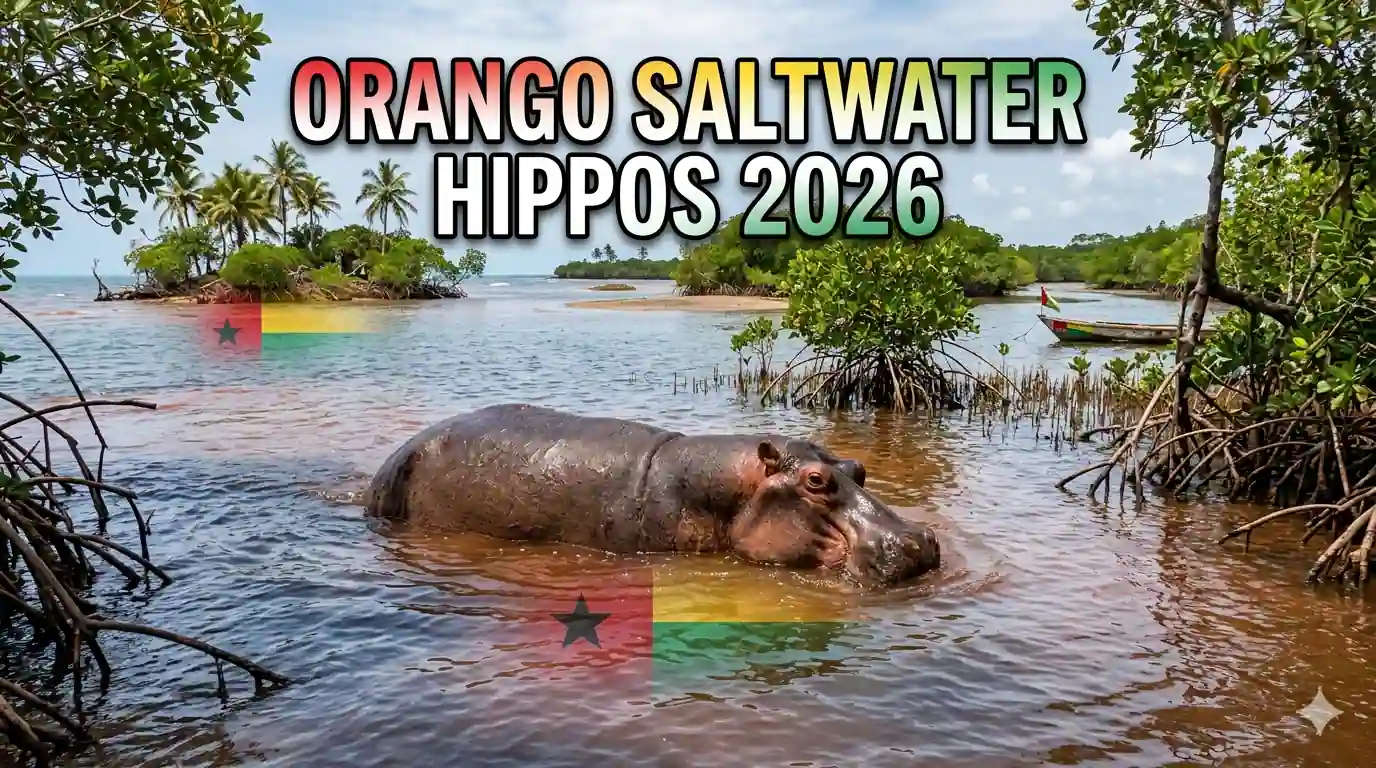
Saltwater Hippos of Orango: 2026 Guide to Seeing the World's Only Marine Hippos
In the remote archipelago of the Bijagós Islands off the coast of Guinea-Bissau lies one of nature's most extraordinary anomalies: a population of hippos that have adapted to live in saltwater. The Orango Islands, part of Guinea-Bissau's Bijagós Archipelago, are home to the world's only known population of saltwater hippos—a remarkable adaptation that has fascinated scientists, conservationists, and wildlife enthusiasts for decades. Unlike their freshwater relatives found throughout sub-Saharan Africa, these remarkable hippos have evolved to thrive in the brackish tidal waters, mangrove forests, and marine environments of the Orango Islands.
For wildlife photographers, conservation biologists, and adventurous travelers seeking truly unique wildlife encounters, the saltwater hippos of Orango represent one of the planet's most extraordinary natural phenomena. These hippos navigate tidal channels, rest on sandy beaches, and move between islands in ways that challenge everything we thought we knew about hippopotamus behavior and habitat requirements. The Orango Islands, part of a UNESCO Biosphere Reserve, offer not just this unique hippo population but also pristine mangrove ecosystems, rich birdlife, sea turtles, and the vibrant culture of the Bijagós people—one of West Africa's most distinctive and traditional societies.
This comprehensive 2026 guide provides everything you need to know about visiting the Orango Islands to witness these remarkable saltwater hippos: understanding this unique adaptation, planning your journey to this remote archipelago, best times for viewing, tour operators and guides, accommodation options, conservation efforts, cultural considerations, and practical travel information for visiting one of West Africa's most remote and extraordinary wildlife destinations.
Understanding the Saltwater Hippos: A Unique Adaptation

The Orango Islands Population
The saltwater hippos of Orango represent one of the most remarkable examples of animal adaptation in West Africa:
- Location: Orango Islands, part of the Bijagós Archipelago, Guinea-Bissau
- Population: Estimated 20-30 individuals (numbers fluctuate; population monitoring ongoing)
- Unique status: World's only known population of hippos adapted to saltwater/brackish water environments
- Habitat: Tidal channels, mangrove forests, saltwater lagoons, and intertidal zones
- Behavior: Navigate between islands using tidal currents; rest on beaches and in shallow brackish waters
- 👉 Ducor Palace Hotel 2026: Why the $100M Restoration Is Making Global Headlines
- 👉 Gaborone Cable Car 2026: Full guide to the new Kgale Hill ride and panoramic city views.
- 👉 Kruger National Park 100th Anniversary 2026: Full guide to centenary events and safari deals.
How Hippos Adapted to Saltwater
The adaptation of hippos to saltwater in Orango is a fascinating example of evolutionary flexibility:
- Historical isolation: Population became isolated on islands thousands of years ago as sea levels rose
- Physiological adaptation: Developed ability to tolerate saltwater, though they still require access to freshwater for drinking
- Behavioral changes: Modified movement patterns to navigate tidal cycles and saltwater environments
- Diet adaptation: Feed on coastal vegetation, mangrove plants, and grasses found on islands
- Genetic uniqueness: Potentially distinct genetic lineage due to long-term isolation
- 👉 Ducor Palace Hotel 2026: Why the $100M Restoration Is Making Global Headlines
- 👉 Gaborone Cable Car 2026: Full guide to the new Kgale Hill ride and panoramic city views.
- 👉 Kruger National Park 100th Anniversary 2026: Full guide to centenary events and safari deals.
Conservation Status and Importance
The saltwater hippos of Orango are critically important from both conservation and scientific perspectives:
- Critically endangered: Small population size makes them extremely vulnerable
- UNESCO Biosphere Reserve: Part of the Bijagós Biosphere Reserve designated in 1996
- Scientific value: Unique opportunity to study hippo adaptation and evolution
- Cultural significance: Sacred to the Bijagós people; integrated into local spiritual beliefs
- Tourism potential: Unique wildlife attraction supporting sustainable tourism development
- 👉 Ducor Palace Hotel 2026: Why the $100M Restoration Is Making Global Headlines
- 👉 Gaborone Cable Car 2026: Full guide to the new Kgale Hill ride and panoramic city views.
- 👉 Kruger National Park 100th Anniversary 2026: Full guide to centenary events and safari deals.
Planning Your Visit to Orango Islands

Best Time to Visit
Timing your visit is crucial for both hippo viewing and overall travel conditions:
Dry Season (November-May):
- Best for viewing: Hippos concentrate around remaining water sources
- Weather: Sunny days, lower humidity, minimal rainfall
- Temperatures: 25-30°C (77-86°F), comfortable for wildlife viewing
- Accessibility: Better road and boat conditions
- Recommended months: December-April optimal for hippo viewing
- 👉 Ducor Palace Hotel 2026: Why the $100M Restoration Is Making Global Headlines
- 👉 Gaborone Cable Car 2026: Full guide to the new Kgale Hill ride and panoramic city views.
- 👉 Kruger National Park 100th Anniversary 2026: Full guide to centenary events and safari deals.
Rainy Season (June-October):
- Challenges: Heavy rainfall, difficult travel conditions, some areas inaccessible
- Hippo behavior: More dispersed with abundant water sources
- Landscape: Lush, green vegetation; dramatic skies
- Considerations: Only recommended for experienced travelers; limited services
- 👉 Ducor Palace Hotel 2026: Why the $100M Restoration Is Making Global Headlines
- 👉 Gaborone Cable Car 2026: Full guide to the new Kgale Hill ride and panoramic city views.
- 👉 Kruger National Park 100th Anniversary 2026: Full guide to centenary events and safari deals.
Getting to Orango Islands
Reaching the Orango Islands requires planning and patience:
Step 1: Fly to Guinea-Bissau
- International airport: Osvaldo Vieira International Airport (OXB) in Bissau
- Airlines: TAP Air Portugal, Air Senegal, Brussels Airlines, and regional carriers
- Visa requirements: Most nationalities require a visa; obtain in advance or on arrival (verify current requirements)
- 👉 Ducor Palace Hotel 2026: Why the $100M Restoration Is Making Global Headlines
- 👉 Gaborone Cable Car 2026: Full guide to the new Kgale Hill ride and panoramic city views.
- 👉 Kruger National Park 100th Anniversary 2026: Full guide to centenary events and safari deals.
Step 2: Bissau to Bubaque
- Boat transfer: Regular ferry service from Bissau to Bubaque (main island of Bijagós Archipelago)
- Duration: 3-4 hours by ferry
- Schedule: Typically 2-3 times per week; verify current schedule
- Alternative: Private boat charter (more expensive but flexible)
- 👉 Ducor Palace Hotel 2026: Why the $100M Restoration Is Making Global Headlines
- 👉 Gaborone Cable Car 2026: Full guide to the new Kgale Hill ride and panoramic city views.
- 👉 Kruger National Park 100th Anniversary 2026: Full guide to centenary events and safari deals.
Step 3: Bubaque to Orango
- Local boat: Arrange boat transfer from Bubaque to Orango Islands
- Duration: 1-2 hours depending on tides and weather
- Guides: Essential to hire local guide who knows the waters and hippo locations
- Tide considerations: Travel timing depends on tidal cycles
- 👉 Ducor Palace Hotel 2026: Why the $100M Restoration Is Making Global Headlines
- 👉 Gaborone Cable Car 2026: Full guide to the new Kgale Hill ride and panoramic city views.
- 👉 Kruger National Park 100th Anniversary 2026: Full guide to centenary events and safari deals.
Tour Operators and Guides
Working with experienced operators is essential for a successful and responsible visit:
- Local operators: Several Bijagós-based operators specialize in Orango hippo tours
- Guide expertise: Local Bijagós guides have intimate knowledge of hippo behavior and locations
- Boat requirements: Specialized boats for navigating shallow tidal channels safely
- Permits: Guides assist with obtaining necessary park permits and permissions
- Recommended booking: Book 2-3 months in advance, especially for dry season visits
- 👉 Ducor Palace Hotel 2026: Why the $100M Restoration Is Making Global Headlines
- 👉 Gaborone Cable Car 2026: Full guide to the new Kgale Hill ride and panoramic city views.
- 👉 Kruger National Park 100th Anniversary 2026: Full guide to centenary events and safari deals.
Hippo Viewing: What to Expect

Where to See the Hippos
The saltwater hippos inhabit specific areas of the Orango Islands:
- Tidal channels: Primary habitat where hippos navigate between islands
- Mangrove forests: Hippos rest in shallow waters among mangrove roots
- Sandy beaches: Hippos haul out on beaches to rest and thermoregulate
- Brackish lagoons: Protected lagoons where hippos congregate
- Best viewing spots: Local guides know current hippo locations which vary with tides and seasons
- 👉 Ducor Palace Hotel 2026: Why the $100M Restoration Is Making Global Headlines
- 👉 Gaborone Cable Car 2026: Full guide to the new Kgale Hill ride and panoramic city views.
- 👉 Kruger National Park 100th Anniversary 2026: Full guide to centenary events and safari deals.
Hippo Behavior in Saltwater
Observing these unique hippos reveals fascinating adaptations:
- Tidal movements: Hippos move with tidal cycles, using channels to travel between islands
- Beach resting: Unlike freshwater hippos, Orango hippos regularly rest on sandy beaches
- Island hopping: Swim between islands, sometimes covering several kilometers
- Freshwater needs: Still require access to freshwater pools or rainwater for drinking
- Social structure: Smaller groups than typical freshwater hippo pods
- 👉 Ducor Palace Hotel 2026: Why the $100M Restoration Is Making Global Headlines
- 👉 Gaborone Cable Car 2026: Full guide to the new Kgale Hill ride and panoramic city views.
- 👉 Kruger National Park 100th Anniversary 2026: Full guide to centenary events and safari deals.
Best Practices for Hippo Viewing
Responsible viewing is critical for both safety and conservation:
- Maintain distance: Stay at least 50-100 meters from hippos; they can be unpredictable
- Quiet approach: Minimize noise to avoid stressing the animals
- Follow guide instructions: Local guides know hippo behavior and safe viewing distances
- No feeding: Never feed or attempt to interact with hippos
- Respect habitat: Do not disturb mangrove forests or other sensitive habitats
- Limited group size: Small groups (4-6 people) minimize impact
- 👉 Ducor Palace Hotel 2026: Why the $100M Restoration Is Making Global Headlines
- 👉 Gaborone Cable Car 2026: Full guide to the new Kgale Hill ride and panoramic city views.
- 👉 Kruger National Park 100th Anniversary 2026: Full guide to centenary events and safari deals.
Accommodation and Logistics

Where to Stay
Accommodation options in the Bijagós Archipelago are basic but authentic:
On Orango Islands:
- Basic guesthouses: Simple local accommodations; limited facilities
- Community lodges: Some community-run lodges support local development
- Camping: Possible with guide arrangement; bring all necessary equipment
- Expectations: Very basic facilities; limited electricity and running water
- 👉 Ducor Palace Hotel 2026: Why the $100M Restoration Is Making Global Headlines
- 👉 Gaborone Cable Car 2026: Full guide to the new Kgale Hill ride and panoramic city views.
- 👉 Kruger National Park 100th Anniversary 2026: Full guide to centenary events and safari deals.
On Bubaque Island:
- Small hotels: More comfortable options on Bubaque (main archipelago hub)
- Guesthouses: Range of basic to mid-range accommodations
- Base for day trips: Stay on Bubaque and take day trips to Orango
- 👉 Ducor Palace Hotel 2026: Why the $100M Restoration Is Making Global Headlines
- 👉 Gaborone Cable Car 2026: Full guide to the new Kgale Hill ride and panoramic city views.
- 👉 Kruger National Park 100th Anniversary 2026: Full guide to centenary events and safari deals.
What to Bring
Packing appropriately is essential for this remote destination:
- Clothing: Lightweight, breathable clothing; long sleeves for sun and insect protection
- Footwear: Sturdy water shoes or sandals for boat travel; hiking shoes for island exploration
- Sun protection: High SPF sunscreen, wide-brimmed hat, sunglasses
- Insect protection: DEET-based repellent; malaria prophylaxis essential
- Water: Reusable water bottles; water purification tablets
- Camera equipment: Telephoto lens for wildlife photography; waterproof bags
- Medications: Personal medications, first aid kit, anti-diarrheal medication
- Cash: Guinean francs or West African CFA francs; limited banking facilities
- 👉 Ducor Palace Hotel 2026: Why the $100M Restoration Is Making Global Headlines
- 👉 Gaborone Cable Car 2026: Full guide to the new Kgale Hill ride and panoramic city views.
- 👉 Kruger National Park 100th Anniversary 2026: Full guide to centenary events and safari deals.
Conservation and Community

Conservation Efforts
The saltwater hippos face significant conservation challenges:
- Population monitoring: Ongoing research to track population numbers and health
- Habitat protection: Mangrove forest conservation critical for hippo survival
- Community involvement: Bijagós people play crucial role in hippo protection
- Threats: Small population size, habitat degradation, potential human-wildlife conflict
- Tourism revenue: Responsible tourism provides economic incentive for conservation
- 👉 Ducor Palace Hotel 2026: Why the $100M Restoration Is Making Global Headlines
- 👉 Gaborone Cable Car 2026: Full guide to the new Kgale Hill ride and panoramic city views.
- 👉 Kruger National Park 100th Anniversary 2026: Full guide to centenary events and safari deals.
Cultural Significance
The Bijagós people have a unique relationship with the hippos:
- Sacred animals: Hippos hold spiritual significance in Bijagós culture
- Traditional protection: Cultural beliefs have historically protected hippos
- Community stewardship: Local communities actively participate in conservation
- Cultural tourism: Opportunities to learn about Bijagós culture and traditions
- Respectful engagement: Visitors should respect local customs and traditions
- 👉 Ducor Palace Hotel 2026: Why the $100M Restoration Is Making Global Headlines
- 👉 Gaborone Cable Car 2026: Full guide to the new Kgale Hill ride and panoramic city views.
- 👉 Kruger National Park 100th Anniversary 2026: Full guide to centenary events and safari deals.
Supporting Conservation Through Tourism
Your visit can contribute to conservation efforts:
- Hire local guides: Supports local economy and provides conservation incentive
- Pay park fees: Fees contribute to conservation management
- Choose responsible operators: Select operators committed to conservation and community benefit
- Respect wildlife: Follow viewing guidelines to minimize stress on hippos
- Support local businesses: Purchase crafts and services from local communities
- 👉 Ducor Palace Hotel 2026: Why the $100M Restoration Is Making Global Headlines
- 👉 Gaborone Cable Car 2026: Full guide to the new Kgale Hill ride and panoramic city views.
- 👉 Kruger National Park 100th Anniversary 2026: Full guide to centenary events and safari deals.
Practical Travel Information

Visa and Entry Requirements
Planning documentation is essential:
- Visa: Most nationalities require visa for Guinea-Bissau
- Application: Can often obtain on arrival or apply in advance at embassy
- Yellow fever: Yellow fever vaccination certificate required
- Passport: Must be valid for at least 6 months beyond entry date
- Verify requirements: Check current requirements before travel as policies can change
- 👉 Ducor Palace Hotel 2026: Why the $100M Restoration Is Making Global Headlines
- 👉 Gaborone Cable Car 2026: Full guide to the new Kgale Hill ride and panoramic city views.
- 👉 Kruger National Park 100th Anniversary 2026: Full guide to centenary events and safari deals.
Health Considerations
Health preparation is critical for this remote destination:
- Malaria: High-risk area; prophylaxis essential
- Vaccinations: Yellow fever (required), hepatitis A/B, typhoid, meningitis recommended
- Medical facilities: Very limited in Bijagós; serious issues require evacuation to Bissau
- Travel insurance: Essential; must include medical evacuation coverage
- Water safety: Drink only bottled or purified water
- Food safety: Eat well-cooked food; avoid raw vegetables and unpeeled fruit
- 👉 Ducor Palace Hotel 2026: Why the $100M Restoration Is Making Global Headlines
- 👉 Gaborone Cable Car 2026: Full guide to the new Kgale Hill ride and panoramic city views.
- 👉 Kruger National Park 100th Anniversary 2026: Full guide to centenary events and safari deals.
Safety Considerations
While generally safe, certain precautions are necessary:
- Hippo safety: Maintain safe distance; hippos can be dangerous if threatened
- Water safety: Strong tides and currents; always travel with experienced guides
- Remote location: Limited communication and emergency services
- Travel with guides: Never attempt to visit Orango independently
- Weather awareness: Monitor weather conditions; boat travel can be dangerous in rough seas
- Register with embassy: Inform your embassy of travel to remote areas
- 👉 Ducor Palace Hotel 2026: Why the $100M Restoration Is Making Global Headlines
- 👉 Gaborone Cable Car 2026: Full guide to the new Kgale Hill ride and panoramic city views.
- 👉 Kruger National Park 100th Anniversary 2026: Full guide to centenary events and safari deals.
Photography and Documentation

Photographing Saltwater Hippos
Capturing these unique animals requires skill and patience:
- Telephoto lens: 200-400mm lens recommended for safe distance photography
- Early morning/late afternoon: Best light and most active hippo behavior
- Tide timing: Plan shoots around tidal cycles when hippos are most active
- Patience: Hippos may be elusive; allow time for encounters
- Respect wildlife: Never stress animals for photography
- Waterproof equipment: Protect gear from saltwater and humidity
- 👉 Ducor Palace Hotel 2026: Why the $100M Restoration Is Making Global Headlines
- 👉 Gaborone Cable Car 2026: Full guide to the new Kgale Hill ride and panoramic city views.
- 👉 Kruger National Park 100th Anniversary 2026: Full guide to centenary events and safari deals.
Documenting Your Visit
Responsible documentation supports conservation:
- Share responsibly: Use social media to raise awareness about conservation
- Accurate information: Share facts about saltwater hippos and their uniqueness
- Support conservation: Highlight conservation efforts and community involvement
- Respect privacy: Ask permission before photographing local people
- Educational value: Use your experience to educate others about this unique ecosystem
- 👉 Ducor Palace Hotel 2026: Why the $100M Restoration Is Making Global Headlines
- 👉 Gaborone Cable Car 2026: Full guide to the new Kgale Hill ride and panoramic city views.
- 👉 Kruger National Park 100th Anniversary 2026: Full guide to centenary events and safari deals.
Sample Itineraries

3-Day Orango Hippo Expedition
- Day 1: Arrive Bubaque from Bissau; orientation; meet local guide; overnight Bubaque
- Day 2: Early boat to Orango; morning hippo viewing; afternoon exploration; overnight Orango or return to Bubaque
- Day 3: Additional hippo viewing if time permits; return to Bissau
- 👉 Ducor Palace Hotel 2026: Why the $100M Restoration Is Making Global Headlines
- 👉 Gaborone Cable Car 2026: Full guide to the new Kgale Hill ride and panoramic city views.
- 👉 Kruger National Park 100th Anniversary 2026: Full guide to centenary events and safari deals.
5-Day Bijagós Archipelago Experience
- Days 1-2: Explore Bubaque Island; cultural experiences; prepare for Orango
- Days 3-4: Orango Islands expedition; hippo viewing; mangrove exploration
- Day 5: Return to Bissau; departure or extension
- 👉 Ducor Palace Hotel 2026: Why the $100M Restoration Is Making Global Headlines
- 👉 Gaborone Cable Car 2026: Full guide to the new Kgale Hill ride and panoramic city views.
- 👉 Kruger National Park 100th Anniversary 2026: Full guide to centenary events and safari deals.
7-Day Comprehensive Bijagós Adventure
- Days 1-2: Bissau arrival; cultural orientation; travel to Bubaque
- Days 3-5: Orango Islands; extended hippo viewing; multiple excursions
- Day 6: Explore other Bijagós islands; birdwatching; cultural visits
- Day 7: Return to Bissau; departure
- 👉 Ducor Palace Hotel 2026: Why the $100M Restoration Is Making Global Headlines
- 👉 Gaborone Cable Car 2026: Full guide to the new Kgale Hill ride and panoramic city views.
- 👉 Kruger National Park 100th Anniversary 2026: Full guide to centenary events and safari deals.
Frequently Asked Questions

Are the saltwater hippos dangerous?
Hippos can be dangerous if threatened or surprised, regardless of whether they live in freshwater or saltwater. Always maintain a safe distance (50-100 meters minimum), follow your guide's instructions, never approach hippos on foot, and never position yourself between a hippo and water. With proper precautions and experienced guides, viewing can be done safely.
How many saltwater hippos are left in Orango?
The population is estimated at 20-30 individuals, though numbers fluctuate. The small population size makes them critically vulnerable. Ongoing monitoring and conservation efforts are essential for their survival. Exact numbers are difficult to determine due to the remote habitat and tidal movements.
Can I swim with the saltwater hippos?
Absolutely not. Swimming with hippos is extremely dangerous and strictly prohibited. Hippos are territorial and can be aggressive, especially in water. Always view from a safe distance in a boat with an experienced guide.
What makes these hippos different from regular hippos?
The Orango hippos have adapted to survive in saltwater/brackish environments, which is unique among hippopotamus populations. They navigate tidal channels, rest on beaches, and move between islands—behaviors not seen in freshwater hippos. They still require access to freshwater for drinking but have developed physiological and behavioral adaptations for saltwater living.
Is it ethical to visit the saltwater hippos?
Yes, when done responsibly. Tourism revenue provides economic incentive for conservation and supports local communities who protect the hippos. However, it's essential to: hire local guides, maintain safe distances, follow all viewing guidelines, support community-based tourism, and minimize environmental impact.
How difficult is it to reach Orango Islands?
Reaching Orango requires effort and planning. The journey involves international flight to Bissau, ferry to Bubaque (3-4 hours), then local boat to Orango (1-2 hours). Travel can be challenging due to tides, weather, and limited infrastructure. However, the unique wildlife experience makes it worthwhile for adventurous travelers.
Conclusion: A Once-in-a-Lifetime Wildlife Experience
The saltwater hippos of Orango represent one of the most extraordinary wildlife encounters on Earth. These remarkable animals, uniquely adapted to life in marine environments, offer a glimpse into the incredible adaptability of nature and the importance of conservation. For travelers willing to make the journey to this remote corner of West Africa, the reward is an encounter with one of nature's rarest phenomena—a population of hippos that defies everything we thought we knew about their habitat requirements.
Visiting Orango is not just about seeing unique wildlife; it's about supporting conservation efforts, engaging with the rich culture of the Bijagós people, and contributing to the preservation of one of West Africa's most unique ecosystems. As climate change and habitat loss threaten wildlife worldwide, destinations like Orango remind us of the importance of protecting biodiversity and supporting communities that serve as stewards of these precious natural resources.
In 2026, as sustainable and responsible tourism becomes increasingly important, the saltwater hippos of Orango stand as a testament to what can be achieved when conservation, community, and responsible tourism work together. For the adventurous traveler seeking a truly unique wildlife experience, there are few destinations that offer such a rare combination of natural wonder, cultural richness, and conservation significance.
The saltwater hippos of Orango await—rare, remarkable, and ready to inspire those who make the journey to their tidal home.
0 Comments