.webp)
.webp)
A Guide to Traditional Garifuna Drumming and Dance Workshops: Experiencing Afro-Caribbean Culture in Central America
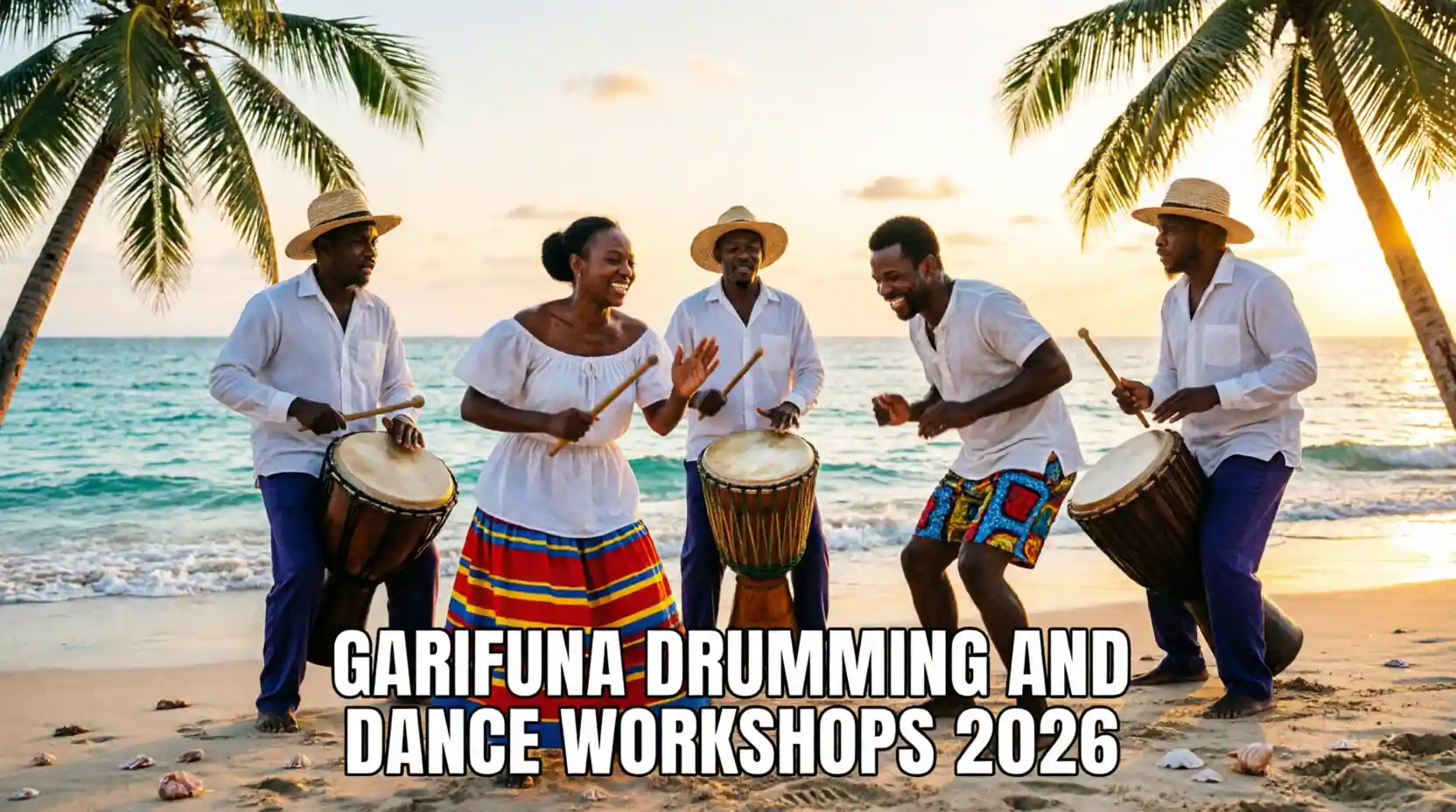
Introduction to Garifuna Culture and Musical Heritage
The Garifuna people represent one of the most vibrant and resilient Afro-Caribbean cultures in Central America, with a rich musical tradition centered around distinctive drumming and dance that has been recognized by UNESCO as a Masterpiece of the Oral and Intangible Heritage of Humanity. While the Garifuna have historical roots in St. Vincent (affectionately called "Vincy"), where African and Arawak/Carib peoples merged in the 17th and 18th centuries, their cultural traditions today thrive primarily along the Caribbean coasts of Belize, Guatemala, Honduras, and Nicaragua following their exile from St. Vincent by the British in 1797.
Garifuna music and dance are inseparable from the community's spiritual life, history, and identity. The rhythmic patterns of Garifuna drums tell stories of ancestry, resistance, celebration, and daily life. Punta, the most widely known Garifuna dance, features hypnotic drumming and energetic hip movements that have captivated audiences worldwide. Beyond punta, Garifuna culture includes hungu-hungu, wanaragua, and other traditional dances, each with specific rhythms, movements, and cultural significance.
For travelers seeking authentic cultural immersion, Garifuna drumming and dance workshops offer unique opportunities to learn directly from master drummers and dancers, understand the historical and spiritual context of the music, and participate in preserving this remarkable cultural tradition. This comprehensive guide explores where to find authentic Garifuna workshops, what to expect from the experience, and how to engage respectfully with this living cultural heritage.
Historical Context: From St. Vincent to Central America

Understanding Garifuna culture requires acknowledging its complex and often painful history. The Garifuna people emerged on the island of St. Vincent (Yurumein in Garifuna) from the mixing of West African people (primarily from Nigeria and Ghana) with indigenous Arawak and Carib populations. This fusion occurred after shipwrecked or escaped enslaved Africans found refuge with the island's indigenous communities in the 1600s.
The Garifuna resisted both French and British colonial control of St. Vincent, leading to decades of conflict. After the Second Carib War, the British defeated the Garifuna in 1796 and forcibly exiled over 5,000 people to Roatán, an island off the coast of Honduras, in 1797. This traumatic event, known as the Garifuna Exile or "Gurubada," became a defining moment in Garifuna history and is commemorated annually on November 19th as Garifuna Settlement Day in Belize and other Garifuna communities.
Cultural Preservation Through Music
From Roatán, the Garifuna migrated along the Caribbean coast of Central America, establishing communities in Honduras, Guatemala, Belize, and Nicaragua. Despite displacement, discrimination, and pressure to assimilate, the Garifuna preserved their language, music, dance, and spiritual practices. Drumming and dance became crucial vehicles for transmitting history, values, and cultural identity across generations.
Today, Garifuna communities maintain strong cultural ties while facing modern challenges including globalization, migration, and cultural erosion. Workshops and cultural tourism initiatives provide economic opportunities for Garifuna communities while creating incentives for younger generations to learn traditional arts from elders.
Understanding Garifuna Drumming: Instruments and Rhythms

Garifuna drumming features three distinct drums played together to create complex, polyrhythmic patterns. Each drum has a specific role and sound, and mastering their interplay is essential to authentic Garifuna music.
The Primera (or Requinto) is the lead drum, smallest in size, played with two sticks. It carries the melody and improvises over the foundational rhythms. The Segunda provides the mid-range rhythm and response patterns, also played with sticks. The Tercera (or Bass) is the largest drum, played with one stick and one hand, providing the deep foundational beat that drives the music.
Drum Construction and Materials
Traditional Garifuna drums are handcrafted from locally sourced materials, primarily hardwood logs hollowed out and covered with animal hide (traditionally deer or peccary skin, though modern drums may use other materials). The drums are tuned using heat from fire, which tightens the skin to achieve the desired pitch. This traditional construction method is part of the cultural knowledge transmitted through drumming workshops.
Learning to make drums is often included in comprehensive workshops, teaching participants about selecting appropriate wood, hollowing techniques, hide preparation, and tuning methods. This knowledge represents generations of accumulated expertise about local ecology and craftsmanship.
Key Garifuna Rhythms and Their Meanings
Punta is the most famous Garifuna rhythm, characterized by fast, energetic drumming and dance. Historically, punta was played at wakes and spiritual ceremonies, though today it's also performed at celebrations and festivals. The rhythm mimics the movements of a bird and features call-and-response vocals.
Hungu-Hungu is a slower, more ceremonial rhythm used in traditional Garifuna spirituality and ancestor veneration. This rhythm accompanies specific dances and rituals that honor the deceased and maintain connection with ancestors.
Wanaragua (also called Jonkanu) features distinctive rhythms associated with a masquerade dance that originated during slavery times. The dance involves elaborate costumes and masks, with rhythms that reflect both African heritage and the historical experience of enslavement.
Paranda is a slower, guitar-based rhythm with drum accompaniment, often used for storytelling and social commentary. This style allows for lyrical expression about community issues, history, and daily life.
Garifuna Dance Traditions: Movement as Cultural Expression

Garifuna dance is inseparable from the drumming, with specific movements corresponding to different rhythms and cultural contexts. The dances tell stories, honor ancestors, celebrate life events, and maintain spiritual connections.
Punta dance is characterized by rapid hip and waist movements while the upper body remains relatively still. Dancers compete in friendly contests, with judges evaluating speed, rhythm, creativity, and stamina. The dance traditionally represents communication with ancestors, with the rapid movements symbolizing the spirit's presence.
Wanaragua dance features masked performers in elaborate costumes with mirrors, ribbons, and bells. The dance includes acrobatic movements and mock combat, reflecting its origins in resistance and cultural preservation during colonial times.
Dance as Spiritual Practice
Many Garifuna dances have spiritual dimensions, connecting participants to ancestors and the divine. The Dugu ceremony, a major Garifuna spiritual ritual, involves specific dances and drumming patterns to communicate with ancestors and seek their guidance. While tourists generally cannot participate in sacred ceremonies like Dugu, understanding their significance provides context for the cultural importance of drumming and dance.
Workshops typically focus on secular dances and rhythms that can be shared publicly while respecting the boundaries around sacred practices. Instructors explain which elements are appropriate for public performance and which remain reserved for community spiritual life.
Learning Garifuna Dance
Garifuna dance workshops teach proper technique, cultural context, and appropriate performance etiquette. Beginners learn basic steps and gradually progress to more complex movements. Instructors emphasize that dance is not just physical movement but embodied cultural knowledge requiring understanding of history, values, and community significance.
Traditional Garifuna clothing may be provided or recommended for workshops, with white being the predominant color for many dances, accented with colorful headwraps, sashes, and accessories. The clothing itself carries cultural meaning and wearing it appropriately is part of the learning experience.
Where to Experience Authentic Garifuna Workshops

Garifuna communities across Central America offer drumming and dance workshops, each with distinct characteristics and teaching styles. Choosing the right location depends on your interests, schedule, and desire for cultural immersion.
Belize: Garifuna Settlement Day and Year-Round Workshops
Belize has the most developed Garifuna cultural tourism infrastructure, with November 19th (Garifuna Settlement Day) being a national holiday featuring celebrations in Dangriga, Hopkins, and other Garifuna communities. During this time, workshops, performances, and cultural events abound.
Hopkins Village, a coastal Garifuna community in southern Belize, offers year-round workshops through local cultural centers and individual instructors. The village maintains strong cultural traditions while welcoming respectful visitors. Workshops typically include drumming lessons, dance instruction, and cooking classes featuring traditional Garifuna cuisine like hudut (fish cooked in coconut broth with mashed plantains).
Dangriga, known as the cultural capital of Belize's Garifuna people, hosts the Gulisi Garifuna Museum which offers educational programs and workshops. The town comes alive during Settlement Day with drumming competitions, dance performances, and community celebrations.
Honduras: Roatán and the North Coast
Roatán, where the Garifuna first landed after exile from St. Vincent, maintains Garifuna communities offering cultural experiences. While tourism development has transformed much of the island, villages like Punta Gorda (the oldest Garifuna settlement in Honduras) preserve traditional culture and offer workshops.
The north coast of Honduras, particularly around La Ceiba, Triunfo de la Cruz, and other Garifuna villages, provides authentic cultural experiences with fewer tourists than Belize. These communities maintain strong traditions and welcome visitors interested in learning about Garifuna culture.
Guatemala: Livingston and the Dulce River
Livingston, Guatemala, accessible only by boat, is a predominantly Garifuna town with a unique cultural atmosphere blending Garifuna, Maya, and Ladino influences. The town's isolation has helped preserve Garifuna traditions, and several cultural centers offer drumming and dance workshops.
Livingston's Garifuna community celebrates Settlement Day with particular fervor, and the town's vibrant music scene includes punta rock, a modern fusion of traditional Garifuna music with contemporary influences.
Nicaragua: Orinoco and Bluefields
Nicaragua's Caribbean coast, particularly around Bluefields and the village of Orinoco, has Garifuna communities that maintain cultural traditions. While less developed for tourism than Belize or Guatemala, these communities offer authentic experiences for travelers willing to venture off the beaten path.
What to Expect from a Garifuna Workshop

Garifuna drumming and dance workshops vary in format, duration, and intensity, but most share common elements designed to provide both technical instruction and cultural context.
Typical Workshop Structure
Most workshops begin with cultural orientation, where instructors share Garifuna history, the significance of drumming and dance in community life, and protocols for respectful engagement. This context is considered essential, not optional, as the music and dance cannot be separated from their cultural meaning.
Drumming instruction typically starts with basic rhythms and hand techniques, progressing to more complex patterns as participants develop skills. Instructors emphasize listening and feeling the rhythm as much as technical execution. Participants may start on practice drums or makeshift instruments before progressing to traditional drums.
Dance instruction focuses on proper posture, basic steps, and gradually building to more complex movements. Instructors demonstrate and break down movements, providing individual feedback and encouragement. The emphasis is on understanding the cultural significance of movements, not just physical execution.
Workshop Duration and Intensity
Workshops range from introductory sessions lasting 1-2 hours to multi-day immersive programs. Half-day workshops (3-4 hours) provide a solid introduction to both drumming and dance. Full-day workshops allow deeper exploration and practice. Multi-day programs (2-7 days) offer comprehensive immersion including drum making, advanced techniques, cultural ceremonies, and community interaction.
Physical demands vary by workshop. Punta dance is particularly energetic and requires stamina. Participants should be prepared for active participation and bring appropriate clothing, water, and sun protection for outdoor sessions.
Group Size and Individual Attention
Workshop sizes range from private one-on-one instruction to groups of 20+ participants. Smaller groups (5-10 people) allow more individualized attention and faster skill development. Larger groups create community energy but may limit individual instruction time.
Many instructors offer private or semi-private lessons for travelers seeking personalized instruction or those with specific learning goals. Private lessons typically cost more but provide flexibility in scheduling and curriculum.
Cost Considerations and Supporting Garifuna Communities

Garifuna workshop costs vary by location, duration, instructor expertise, and whether meals or materials are included. Understanding typical pricing helps with budget planning while ensuring fair compensation for cultural knowledge holders.
Typical Workshop Costs
Introductory 1-2 hour workshops typically cost $25-50 USD per person. Half-day workshops (3-4 hours) range from $50-100 USD. Full-day workshops cost $100-200 USD. Multi-day immersive programs range from $300-800+ USD depending on duration, accommodations, and meals included.
Private lessons typically cost 50-100% more than group rates. Drum making workshops, which require materials and extensive instruction, cost $150-400 USD depending on drum size and complexity.
What's Included
Some workshops include meals featuring traditional Garifuna food, which adds significant value and cultural immersion. Others provide drums and dance attire for use during the workshop. Multi-day programs may include accommodations, all meals, cultural excursions, and materials.
Always clarify what is included when booking. Some workshops require participants to bring their own water, snacks, or specific clothing. Understanding inclusions helps avoid unexpected expenses.
Supporting Communities Ethically
When choosing workshops, prioritize those owned and operated by Garifuna community members rather than external tour companies. Direct payment to Garifuna instructors and cultural centers ensures that economic benefits remain within the community.
Look for workshops that contribute to cultural preservation, youth education, or community development. Some cultural centers reinvest workshop revenues into programs teaching Garifuna language, music, and dance to local youth, helping ensure cultural continuity.
Fair compensation is essential. Garifuna drumming and dance represent generations of cultural knowledge and skill. While budget travel is understandable, paying fair prices for workshops acknowledges the value of this cultural heritage and supports its preservation.
Cultural Sensitivity and Respectful Engagement

Engaging with Garifuna culture through workshops requires cultural sensitivity, respect for community protocols, and understanding that some aspects of Garifuna spirituality and culture are not for public consumption.
Understanding Cultural Boundaries
Garifuna culture includes both public and private elements. While drumming and dance can be shared with outsiders, certain ceremonies, rituals, and spiritual practices are reserved for community members. Respectful instructors will clearly communicate these boundaries, and participants should honor them without question.
The Dugu ceremony, the most important Garifuna spiritual ritual, is not a tourist attraction and should not be treated as such. While some communities may allow respectful observation of certain public cultural events, sacred ceremonies remain private.
Appropriate Behavior and Dress
Follow instructor guidance regarding appropriate dress for workshops and cultural events. While casual clothing is acceptable for learning, some ceremonies or performances may require specific attire or modest dress standards.
Ask permission before photographing or recording. Some community members may not wish to be photographed, and certain ceremonies may prohibit photography entirely. Respect these wishes without argument.
Approach learning with humility and openness. You are a guest in Garifuna communities, and your presence should honor, not exploit, cultural traditions. Listen more than you speak, follow instructions carefully, and express gratitude for the opportunity to learn.
Language and Communication
While many Garifuna instructors speak English (particularly in Belize), learning basic Garifuna greetings and phrases demonstrates respect and enhances the experience. Simple words like "Buiti binafi" (Good day), "Seremein" (Thank you), and "Idi walagabey" (I am happy) are appreciated.
The Garifuna language itself is an important part of cultural heritage, combining Arawak, Carib, French, Spanish, and West African languages. Some workshops include basic language instruction as part of cultural orientation.
Planning Your Garifuna Cultural Experience

Maximizing your Garifuna workshop experience requires thoughtful planning regarding timing, location, and expectations.
Best Times to Visit
November 19th (Garifuna Settlement Day) offers the most vibrant cultural experiences, with communities celebrating through drumming, dance, food, and ceremonies. However, this is also the busiest time, and workshops may be harder to schedule. Booking well in advance is essential for Settlement Day visits.
The dry season (February-May in most Garifuna communities) offers more predictable weather for outdoor workshops and cultural activities. The rainy season (June-November, with variation by location) can disrupt outdoor activities but also brings fewer tourists and more intimate cultural experiences.
Combining Workshops with Other Experiences
Many travelers combine drumming and dance workshops with other cultural activities including Garifuna cooking classes (learning to make hudut, cassava bread, and other traditional foods), language lessons, visits to Garifuna museums and cultural centers, attendance at community events and church services (with permission), and exploring Garifuna villages and historical sites.
Multi-day cultural immersion programs often include these complementary activities, providing comprehensive understanding of Garifuna life beyond music and dance.
Accommodation and Logistics
Garifuna villages offer varying levels of tourist infrastructure. Hopkins and Dangriga in Belize have guesthouses, small hotels, and restaurants catering to visitors. More remote communities may have limited accommodation options, requiring advance planning.
Some cultural centers offer homestay opportunities, allowing deeper immersion in Garifuna family life and daily routines. Homestays require flexibility and cultural adaptability but provide unparalleled cultural exchange.
Transportation to Garifuna communities varies. Some villages are accessible by road, while others (like Livingston, Guatemala) require boat travel. Research transportation options in advance and build in buffer time for delays.
The Impact of Cultural Tourism on Garifuna Communities

Understanding the complex relationship between cultural tourism and Garifuna communities helps travelers make informed decisions that support positive outcomes.
Economic Benefits and Challenges
Cultural tourism provides important income for Garifuna communities where economic opportunities may be limited. Workshop fees, homestay payments, and purchases of crafts and food directly support families and cultural preservation efforts.
However, tourism also brings challenges including pressure to commercialize sacred traditions, generational shifts as young people pursue tourism jobs rather than traditional livelihoods, and potential cultural dilution as traditions are adapted for tourist consumption.
Community-Controlled Tourism
The most positive outcomes occur when Garifuna communities control their own tourism initiatives, setting boundaries, determining what to share, and managing economic benefits. Look for workshops and experiences that are community-owned and operated rather than externally controlled.
Some communities have developed cultural tourism codes of conduct or guidelines for visitors. Following these guidelines demonstrates respect and supports community autonomy.
Preserving Culture for Future Generations
Workshop revenues often support youth education programs teaching Garifuna language, music, and dance to the next generation. By participating in workshops, travelers contribute to cultural continuity and help ensure that Garifuna traditions survive and thrive.
However, cultural preservation must be driven by community needs and values, not tourist expectations. Respectful engagement means supporting community-defined preservation priorities rather than imposing external ideas about what should be preserved or how.
Conclusion: Embracing Garifuna Cultural Heritage

Traditional Garifuna drumming and dance workshops offer profound opportunities to connect with a resilient Afro-Caribbean culture that has survived centuries of displacement, discrimination, and pressure to assimilate. The rhythms of Garifuna drums carry stories of ancestry, resistance, joy, and spiritual connection that transcend language and cultural boundaries.
Participating in these workshops is not merely about learning musical techniques or dance steps; it is about bearing witness to living cultural heritage, supporting community-led preservation efforts, and engaging in meaningful cross-cultural exchange. When approached with respect, humility, and genuine interest, these experiences create lasting connections between visitors and Garifuna communities.
As you plan your Garifuna cultural journey, remember that you are not just a consumer of experiences but a guest in communities working to preserve their heritage while navigating modern challenges. Your choices—where you take workshops, how much you pay, how you behave, and how you share your experiences—have real impacts on Garifuna communities and their cultural continuity.
By choosing community-controlled workshops, paying fair prices, respecting cultural boundaries, and approaching learning with openness and humility, you can ensure that your Garifuna cultural experience contributes positively to the preservation and celebration of this remarkable heritage. The drums are calling, inviting you to listen, learn, and honor a culture that has much to teach about resilience, community, and the enduring power of music and dance to sustain identity across generations.
0 Comments