.webp)
.webp)
Introduction: When Cash Isn't King in Malaysia
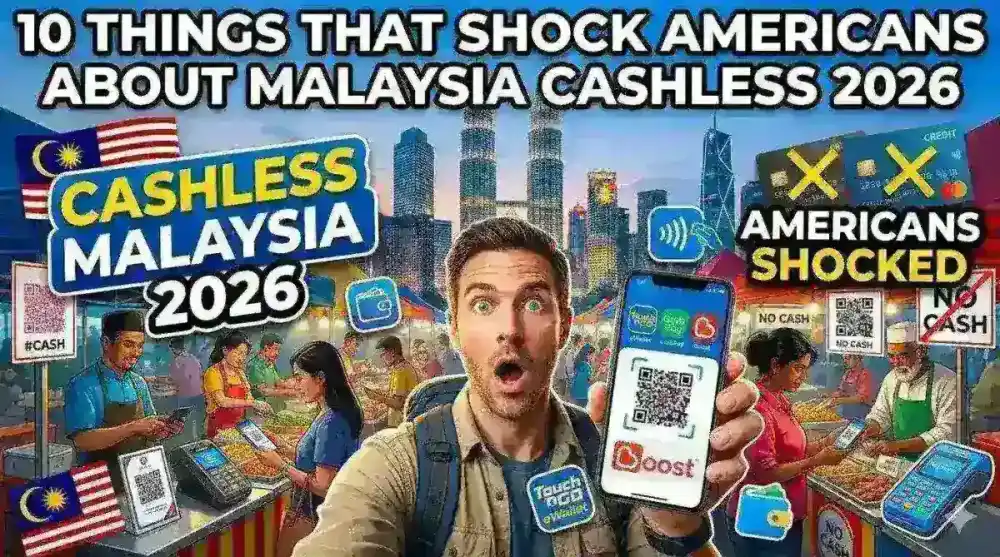
For American travelers arriving in Malaysia in 2026, one of the most immediate and surprising cultural adjustments isn't the food, the weather, or even the language—it's the stunning reality of Malaysia's cashless economy. In a country where digital payments have become so deeply embedded in daily life that many vendors no longer accept physical cash, Americans accustomed to swiping credit cards or pulling out dollar bills often find themselves genuinely shocked by how seamlessly—and ubiquitously—Malaysians conduct transactions digitally.
Malaysia's rapid transformation into one of Asia's most advanced cashless societies has been nothing short of remarkable. Driven by government initiatives, private sector innovation, and widespread consumer adoption, the country has leapfrogged traditional payment infrastructure to embrace mobile wallets, QR code payments, and instant digital transfers at a pace that even many developed nations struggle to match. For visitors from the United States—where cash usage remains common and digital payment adoption varies widely by region and demographic—this reality can be both impressive and disorienting.
This article explores 10 specific aspects of Malaysia's cashless economy that consistently surprise American travelers in 2026. From the dominance of homegrown e-wallets to the near-disappearance of cash in urban centers, these insights will help US visitors prepare for a payment experience unlike anything they've encountered at home. Whether you're planning a business trip to Kuala Lumpur, a beach vacation in Langkawi, or a cultural exploration of Penang, understanding Malaysia's digital payment landscape is essential for a smooth, stress-free visit.
1. Touch 'n Go eWallet Is Everywhere—And You've Probably Never Heard of It

For Americans, the concept of a dominant payment app is familiar: Apple Pay, Google Pay, or perhaps PayPal. But in Malaysia, the undisputed king of digital payments is Touch 'n Go eWallet—a homegrown platform that originated as a simple toll payment card and has evolved into a comprehensive financial ecosystem.
What Shocks Americans:
- Ubiquity: Touch 'n Go is accepted virtually everywhere—from luxury malls to roadside noodle stalls, from Grab rides to public transportation
- Multi-functionality: It's not just for payments; users can pay tolls, park cars, buy insurance, invest, and even access microloans
- Brand recognition: Unlike in the US where multiple payment apps compete, most Malaysians default to Touch 'n Go without considering alternatives
- Physical card integration: The original Touch 'n Go RFID card still works alongside the app, creating a hybrid system unfamiliar to Americans
- 👉 Sidon Traditional Soap Making Workshops Olive Oil Souvenirs Guide 2026
- 👉 10 Sri Lanka Road Shocks That Surprise Americans
- 👉 Traveling to Qatar During Ramadan: Pros and Cons and Respectful Tourist Guidelines
Why This Matters for US Travelers:
Americans arriving in Malaysia often assume their credit cards or Apple Pay will work everywhere. While major hotels and international chains accept Visa and Mastercard, the vast majority of local businesses prefer or exclusively accept Touch 'n Go eWallet. Street food vendors, local markets, small cafes, and even some taxis may not have card terminals—but they almost certainly have a QR code for Touch 'n Go.
Practical Tip: Download and register for Touch 'n Go eWallet before arriving in Malaysia. Link a foreign credit card for top-ups, and carry a small amount of cash as backup for the rare vendor who hasn't adopted digital payments.
2. QR Code Payments Are the Default—Not the Exception

In the United States, QR code payments exist but remain niche: some restaurants use them for menus, and a few retailers accept them. In Malaysia in 2026, QR code payments are the standard method of transaction for millions of daily purchases.
What Shocks Americans:
- Everywhere you look: QR codes are displayed at checkout counters, on restaurant tables, on delivery bags, and even on street vendor carts
- Multiple compatible apps: While Touch 'n Go dominates, other apps like GrabPay, Boost, and ShopeePay can scan the same standardized QR codes via Malaysia's DuitNow QR system
- Speed and simplicity: Transactions take seconds: scan, confirm amount, authenticate with fingerprint or PIN, done
- No special hardware needed: Vendors don't need expensive card terminals—just a printed QR code and a smartphone
- 👉 Sidon Traditional Soap Making Workshops Olive Oil Souvenirs Guide 2026
- 👉 10 Sri Lanka Road Shocks That Surprise Americans
- 👉 Traveling to Qatar During Ramadan: Pros and Cons and Respectful Tourist Guidelines
The DuitNow QR Standard:
Malaysia's central bank, Bank Negara Malaysia, introduced DuitNow QR as a national standard that allows interoperability between different e-wallets and banking apps. This means:
- A vendor displays one QR code
- Customers can pay using any participating app (Touch 'n Go, GrabPay, Boost, bank apps, etc.)
- Transactions settle instantly between financial institutions
- No need for vendors to manage multiple payment systems
- 👉 Sidon Traditional Soap Making Workshops Olive Oil Souvenirs Guide 2026
- 👉 10 Sri Lanka Road Shocks That Surprise Americans
- 👉 Traveling to Qatar During Ramadan: Pros and Cons and Respectful Tourist Guidelines
Contrast with the US:
In America, payment fragmentation is common: some stores accept only Apple Pay, others only Google Pay, and many still rely on physical cards. Malaysia's unified QR standard eliminates this confusion, creating a seamless experience that Americans find both impressive and slightly unnerving when they realize how behind their home country feels.
Practical Tip: Install multiple Malaysian e-wallet apps before travel. Even if you primarily use Touch 'n Go, having GrabPay (integrated with the Grab ride-hailing app) provides backup options and access to Grab-specific promotions.
3. Instant Bank Transfers via DuitNow Feel Like Magic

For Americans accustomed to ACH transfers that take 1-3 business days or wire transfers with hefty fees, Malaysia's DuitNow instant transfer system is a revelation.
What Shocks Americans:
- Real-time settlement: Money moves between bank accounts in seconds, 24/7, including weekends and holidays
- No fees: Most DuitNow transfers are free for consumers, regardless of amount or bank
- Simple identifiers: Send money using just a phone number, ID number, or business registration number—no need for lengthy account details
- Universal adoption: Nearly all Malaysian banks participate, making it truly nationwide
- 👉 Sidon Traditional Soap Making Workshops Olive Oil Souvenirs Guide 2026
- 👉 10 Sri Lanka Road Shocks That Surprise Americans
- 👉 Traveling to Qatar During Ramadan: Pros and Cons and Respectful Tourist Guidelines
How DuitNow Works:
- User opens their banking app or e-wallet
- Selects "DuitNow Transfer" or similar option
- Enters recipient's phone number, ID, or business number
- Confirms amount and authenticates
- Money arrives in recipient's account instantly
Use Cases That Surprise Americans:
- Splitting bills: Friends instantly transfer their share of a restaurant check
- Paying vendors: Small businesses receive payment immediately without waiting for card settlement
- Remittances: Migrant workers send money home within Malaysia instantly and free
- E-commerce: Online purchases settle immediately, enabling faster order processing
- 👉 Sidon Traditional Soap Making Workshops Olive Oil Souvenirs Guide 2026
- 👉 10 Sri Lanka Road Shocks That Surprise Americans
- 👉 Traveling to Qatar During Ramadan: Pros and Cons and Respectful Tourist Guidelines
Why Americans Are Impressed:
The US has been working toward real-time payments for years, with systems like RTP (Real-Time Payments) and FedNow launching recently but still limited in adoption. Malaysia's DuitNow, operational since 2019 and now universally adopted, demonstrates what's possible when government, banks, and fintech companies collaborate effectively.
Practical Tip: While foreigners can't typically open Malaysian bank accounts without residency, you can receive DuitNow transfers if someone has your international phone number registered with certain services. More importantly, understand that when Malaysians offer to "just transfer it to you," they mean instantly and seamlessly.
4. Many Urban Businesses Simply Don't Accept Cash Anymore

Perhaps the most jarring realization for American visitors is that some businesses in Malaysia no longer accept physical cash. This isn't limited to tech startups or trendy cafes—it includes established restaurants, retail stores, and service providers.
What Shocks Americans:
- "Cashless Only" signs: Displayed prominently at entrances, sometimes with polite but firm explanations
- No exceptions: Even if you offer exact change, some vendors genuinely cannot process cash transactions
- Urban prevalence: This trend is strongest in Kuala Lumpur, Penang, and Johor Bahru, but spreading nationwide
- Generational divide: Younger business owners are most likely to go fully cashless
- 👉 Sidon Traditional Soap Making Workshops Olive Oil Souvenirs Guide 2026
- 👉 10 Sri Lanka Road Shocks That Surprise Americans
- 👉 Traveling to Qatar During Ramadan: Pros and Cons and Respectful Tourist Guidelines
Why Businesses Go Cashless:
- Security: No cash on premises reduces robbery risk
- Efficiency: Faster transactions, no need to count change or make bank deposits
- Cost savings: Avoid cash handling fees, armored transport, and reconciliation labor
- Data insights: Digital transactions provide valuable customer behavior analytics
- Government incentives: Tax benefits and support for cashless adoption
- 👉 Sidon Traditional Soap Making Workshops Olive Oil Souvenirs Guide 2026
- 👉 10 Sri Lanka Road Shocks That Surprise Americans
- 👉 Traveling to Qatar During Ramadan: Pros and Cons and Respectful Tourist Guidelines
The American Contrast:
In the United States, "cashless" businesses exist but face legal restrictions in some cities and states, plus significant consumer pushback. Many Americans still prefer cash for small purchases, tipping, or privacy reasons. The idea that a business would refuse cash entirely feels foreign—and sometimes frustrating—to US visitors.
Practical Tip: Always carry a small amount of Malaysian Ringgit (RM 50-100) as backup, but prioritize setting up digital payment methods. If a vendor doesn't accept cash, ask if they can direct you to a nearby ATM or suggest an alternative payment method.
5. Foreign Credit Cards Work—But Not as Seamlessly as You'd Expect

Americans traveling abroad often assume their Visa or Mastercard will work everywhere. In Malaysia, international cards are accepted at major establishments but face limitations elsewhere.
What Shocks Americans:
- Terminal compatibility: Some Malaysian card terminals don't recognize foreign-issued cards, especially those without chip-and-PIN
- Dynamic currency conversion traps: Vendors may offer to charge in USD, but at poor exchange rates with hidden fees
- Transaction declines: US banks sometimes flag Malaysian transactions as suspicious, requiring pre-travel notifications
- Contactless limits: Some terminals have lower contactless limits for foreign cards than domestic ones
- 👉 Sidon Traditional Soap Making Workshops Olive Oil Souvenirs Guide 2026
- 👉 10 Sri Lanka Road Shocks That Surprise Americans
- 👉 Traveling to Qatar During Ramadan: Pros and Cons and Respectful Tourist Guidelines
Where Foreign Cards Work Well:
- International hotels and resorts
- Major shopping malls and department stores
- Chain restaurants and cafes
- Airports and tourist attractions
- Ride-hailing apps (Grab, AirAsia Ride) when linked to card
- 👉 Sidon Traditional Soap Making Workshops Olive Oil Souvenirs Guide 2026
- 👉 10 Sri Lanka Road Shocks That Surprise Americans
- 👉 Traveling to Qatar During Ramadan: Pros and Cons and Respectful Tourist Guidelines
Where Foreign Cards Struggle:
- Local markets and street vendors
- Small family-run restaurants
- Rural areas and smaller towns
- Public transportation (buses, some trains)
- Traditional shops and services
- 👉 Sidon Traditional Soap Making Workshops Olive Oil Souvenirs Guide 2026
- 👉 10 Sri Lanka Road Shocks That Surprise Americans
- 👉 Traveling to Qatar During Ramadan: Pros and Cons and Respectful Tourist Guidelines
Practical Tip: Notify your US bank of travel plans to Malaysia to avoid fraud alerts. Carry at least two cards from different issuers as backup. Always choose to be charged in Malaysian Ringgit (MYR) rather than USD to avoid dynamic currency conversion fees.
6. Digital Banking Apps Are More Advanced Than Most US Bank Apps

Americans accustomed to basic mobile banking—checking balances, transferring between accounts, maybe depositing checks via photo—may be surprised by the sophistication of Malaysian digital banking apps.
What Shocks Americans:
- All-in-one platforms: Apps like Maybank2u, CIMB Clicks, and Public Bank combine banking, investments, insurance, loans, and lifestyle services
- Biometric authentication: Fingerprint and facial recognition are standard, not optional
- Real-time features: Instant notifications, spending analytics, and budgeting tools built-in
- Seamless integration: Banking apps connect directly to e-wallets, payment gateways, and government services
- 👉 Sidon Traditional Soap Making Workshops Olive Oil Souvenirs Guide 2026
- 👉 10 Sri Lanka Road Shocks That Surprise Americans
- 👉 Traveling to Qatar During Ramadan: Pros and Cons and Respectful Tourist Guidelines
Standout Features:
- Goal-based savings: Automatically set aside money for specific objectives
- Micro-investing: Round up purchases to invest spare change
- Bill splitting: Built-in tools to divide expenses with friends
- Merchant rewards: Cashback and discounts integrated directly into payment flow
- Financial literacy: Educational content and personalized tips within the app
- 👉 Sidon Traditional Soap Making Workshops Olive Oil Souvenirs Guide 2026
- 👉 10 Sri Lanka Road Shocks That Surprise Americans
- 👉 Traveling to Qatar During Ramadan: Pros and Cons and Respectful Tourist Guidelines
Why Malaysian Apps Excel:
- Regulatory support: Bank Negara Malaysia encourages innovation while maintaining security
- Competitive landscape: Banks compete fiercely on digital experience
- Consumer expectations: Malaysians demand sophisticated features, driving continuous improvement
- Mobile-first culture: Many users access banking primarily via smartphone, not desktop
- 👉 Sidon Traditional Soap Making Workshops Olive Oil Souvenirs Guide 2026
- 👉 10 Sri Lanka Road Shocks That Surprise Americans
- 👉 Traveling to Qatar During Ramadan: Pros and Cons and Respectful Tourist Guidelines
Practical Tip: While foreigners typically can't open Malaysian bank accounts without residency, you can still benefit from observing how these apps work. Consider adopting similar practices with your US banking apps, like enabling biometric login and setting up spending alerts.
7. Government Incentives Make Going Cashless a No-Brainer

Malaysia's cashless transformation hasn't happened by accident. Strategic government policies and incentives have accelerated adoption in ways that surprise Americans accustomed to more laissez-faire approaches.
What Shocks Americans:
- Cashback programs: Government-funded rebates for using digital payments on certain categories
- Tax incentives: Businesses receive tax benefits for adopting cashless systems
- Infrastructure investment: Public funding for payment terminals, internet connectivity, and digital literacy programs
- Public sector leadership: Government services, from parking to utilities, lead by example in going cashless
- 👉 Sidon Traditional Soap Making Workshops Olive Oil Souvenirs Guide 2026
- 👉 10 Sri Lanka Road Shocks That Surprise Americans
- 👉 Traveling to Qatar During Ramadan: Pros and Cons and Respectful Tourist Guidelines
Key Initiatives:
- e-Tunai Rakyat: Direct cash credits to citizens' e-wallets to encourage adoption
- Merchant acquisition programs: Subsidies for small businesses to obtain QR code terminals
- Digital literacy campaigns: Nationwide education on using digital payments safely
- Regulatory sandboxes: Safe spaces for fintech innovation under regulatory supervision
- 👉 Sidon Traditional Soap Making Workshops Olive Oil Souvenirs Guide 2026
- 👉 10 Sri Lanka Road Shocks That Surprise Americans
- 👉 Traveling to Qatar During Ramadan: Pros and Cons and Respectful Tourist Guidelines
The American Contrast:
In the United States, payment innovation is largely driven by private sector competition, with limited government coordination. While this has produced excellent products, it has also led to fragmentation, slower adoption in certain demographics, and persistent cash usage. Malaysia's coordinated approach demonstrates the potential of public-private partnership in driving systemic change.
Practical Tip: Take advantage of any promotional cashback or discounts offered for using Malaysian e-wallets. Even as a tourist, you may qualify for certain promotions, especially through apps like Grab or Shopee that cater to international users.
8. Street Vendors and Hawkers Accept Digital Payments—With No Terminal

One of the most delightful surprises for American visitors is discovering that Malaysia's famous street food culture has fully embraced digital payments. The iconic nasi lemak stall, the bustling night market vendor, the roadside durian seller—many now accept e-wallet payments without any special equipment.
What Shocks Americans:
- No hardware needed: Vendors display a printed QR code; customers scan with their phones
- Instant confirmation: Both parties receive immediate notification of successful payment
- Trust and transparency: Digital records reduce disputes over amounts paid
- Inclusivity: Even elderly vendors have adopted the technology, often with help from family
- 👉 Sidon Traditional Soap Making Workshops Olive Oil Souvenirs Guide 2026
- 👉 10 Sri Lanka Road Shocks That Surprise Americans
- 👉 Traveling to Qatar During Ramadan: Pros and Cons and Respectful Tourist Guidelines
How It Works in Practice:
- Customer orders food or goods
- Vendor states the amount due
- Customer opens e-wallet app and scans vendor's QR code
- Customer enters amount and confirms payment
- Both phone and vendor's device (or printed receipt) show confirmation
- Transaction complete—no cash exchanged
Why This Matters:
For Americans, street food often means cash-only transactions, with concerns about having small bills or making change. In Malaysia, digital payments eliminate these frictions, making street food more accessible to everyone—including tourists who may not have local currency immediately upon arrival.
Practical Tip: Don't hesitate to use e-wallets at street vendors. It's widely accepted, secure, and often appreciated by sellers who prefer not to handle cash. Just ensure your phone is charged and you have mobile data or WiFi access.
9. Public Transportation Is Almost Entirely Cashless

For Americans used to buying metro cards with cash or tapping credit cards at transit gates, Malaysia's fully integrated cashless transportation system offers both convenience and a learning curve.
What Shocks Americans:
- One card for everything: Touch 'n Go cards work on trains, buses, tolls, parking, and even some retail purchases
- Auto-reload features: Cards can automatically top up when balance runs low
- Mobile integration: The Touch 'n Go app allows card management, trip history, and remote top-ups
- Seamless transfers: Switching between different transit modes doesn't require new tickets or payments
- 👉 Sidon Traditional Soap Making Workshops Olive Oil Souvenirs Guide 2026
- 👉 10 Sri Lanka Road Shocks That Surprise Americans
- 👉 Traveling to Qatar During Ramadan: Pros and Cons and Respectful Tourist Guidelines
Transportation Payment Options:
- Physical Touch 'n Go card: RFID card tapped at gates and readers
- Touch 'n Go eWallet: Mobile app with QR code or NFC payment
- Bank card integration: Some banks offer co-branded transit cards
- Ride-hailing apps: Grab, AirAsia Ride integrated with e-wallets
- 👉 Sidon Traditional Soap Making Workshops Olive Oil Souvenirs Guide 2026
- 👉 10 Sri Lanka Road Shocks That Surprise Americans
- 👉 Traveling to Qatar During Ramadan: Pros and Cons and Respectful Tourist Guidelines
The American Contrast:
US public transportation payment systems vary wildly by city: some accept contactless credit cards, others require proprietary cards, and many still rely on cash or tokens. Malaysia's unified approach—where one payment method works across multiple transit operators and even extends to retail—feels remarkably efficient to American visitors.
Practical Tip: Purchase a Touch 'n Go card at the airport upon arrival. Load it with sufficient balance for your stay, and use it for all transportation needs. Download the app to monitor balance and top up remotely if needed.
10. The Cultural Shift Away from Cash Is Deep and Generational

Beyond the technology and infrastructure, what truly surprises Americans is the cultural mindset shift that has made cashless payments not just convenient, but preferred.
What Shocks Americans:
- Younger generations rarely carry cash: Many Malaysians under 40 go days or weeks without touching physical currency
- Social norms: Offering to split a bill via instant transfer is more common than calculating cash shares
- Gift-giving evolution: Digital red packets (e-ang pow) during festivals are now standard
- Trust in digital systems: High confidence in payment security and dispute resolution
- 👉 Sidon Traditional Soap Making Workshops Olive Oil Souvenirs Guide 2026
- 👉 10 Sri Lanka Road Shocks That Surprise Americans
- 👉 Traveling to Qatar During Ramadan: Pros and Cons and Respectful Tourist Guidelines
Drivers of Cultural Change:
- Early adoption: Touch 'n Go's toll payment origins created familiarity with digital transactions
- Mobile penetration: High smartphone usage enabled app-based payments
- Government messaging: Consistent promotion of cashless benefits
- Peer influence: Social normalization as more people adopt digital payments
- 👉 Sidon Traditional Soap Making Workshops Olive Oil Souvenirs Guide 2026
- 👉 10 Sri Lanka Road Shocks That Surprise Americans
- 👉 Traveling to Qatar During Ramadan: Pros and Cons and Respectful Tourist Guidelines
The American Parallel:
While the US is also moving toward cashless transactions, adoption is uneven: urban areas and younger demographics lead, while rural regions and older generations often prefer cash. Malaysia's more uniform adoption—across urban and rural, young and old—demonstrates what's possible with coordinated effort and cultural buy-in.
Practical Tip: Embrace the local mindset. Try using digital payments even for small purchases. You'll not only have a smoother experience but also gain insight into how Malaysians live and transact in 2026.
Preparing for Malaysia's Cashless Reality: A Practical Guide for Americans

Before You Travel
Essential Apps to Download:
- Touch 'n Go eWallet: Primary payment method for most transactions
- Grab: Ride-hailing, food delivery, and payments via GrabPay
- Boost or ShopeePay: Backup e-wallet options with occasional promotions
- Google Maps or Waze: Navigation with integrated business information
- Google Translate: For menus or signs in Malay, Chinese, or Tamil
- 👉 Sidon Traditional Soap Making Workshops Olive Oil Souvenirs Guide 2026
- 👉 10 Sri Lanka Road Shocks That Surprise Americans
- 👉 Traveling to Qatar During Ramadan: Pros and Cons and Respectful Tourist Guidelines
Account Setup Checklist:
- Register for Touch 'n Go eWallet using your international phone number
- Link a US credit card for top-ups (Visa/Mastercard preferred)
- Verify your identity within the app (may require passport photo)
- Add funds to your e-wallet before departure or upon arrival
- Enable biometric authentication for security and convenience
- Download offline maps of your destination cities
Financial Preparation:
- Notify your US bank of travel dates and destination
- Confirm your cards have no foreign transaction fees
- Carry a small amount of USD cash as emergency backup
- Research current MYR exchange rates and set rate alerts
- Consider a travel-friendly credit card with good international acceptance
- 👉 Sidon Traditional Soap Making Workshops Olive Oil Souvenirs Guide 2026
- 👉 10 Sri Lanka Road Shocks That Surprise Americans
- 👉 Traveling to Qatar During Ramadan: Pros and Cons and Respectful Tourist Guidelines
Upon Arrival in Malaysia
Immediate Actions:
- Get local SIM or enable roaming: Mobile data is essential for digital payments
- Exchange small amount of cash: RM 100-200 for emergencies or cash-only vendors
- Test your e-wallet: Make a small purchase to confirm everything works
- Save important contacts: Hotel, embassy, emergency services
- Download offline content: Maps, translation phrases, travel guides
Payment Strategy:
- Use Touch 'n Go eWallet for 90% of transactions
- Keep GrabPay as backup for ride-hailing and food delivery
- Use credit card at major establishments when e-wallet isn't accepted
- Reserve cash for rare vendors, tips, or emergencies
- Always choose MYR over USD when given currency conversion option
- 👉 Sidon Traditional Soap Making Workshops Olive Oil Souvenirs Guide 2026
- 👉 10 Sri Lanka Road Shocks That Surprise Americans
- 👉 Traveling to Qatar During Ramadan: Pros and Cons and Respectful Tourist Guidelines
Troubleshooting Common Issues
Problem: E-wallet won't accept my foreign card
- Try a different US credit card (some issuers work better than others)
- Ensure your card is enabled for international transactions
- Contact your bank to authorize the top-up attempt
- As fallback, top up at Touch 'n Go kiosks using cash
- 👉 Sidon Traditional Soap Making Workshops Olive Oil Souvenirs Guide 2026
- 👉 10 Sri Lanka Road Shocks That Surprise Americans
- 👉 Traveling to Qatar During Ramadan: Pros and Cons and Respectful Tourist Guidelines
Problem: QR code won't scan
- Ensure good lighting and steady phone position
- Try zooming in or adjusting camera angle
- Ask vendor if they have an alternative QR code or payment method
- Use manual entry option if available in your e-wallet
- 👉 Sidon Traditional Soap Making Workshops Olive Oil Souvenirs Guide 2026
- 👉 10 Sri Lanka Road Shocks That Surprise Americans
- 👉 Traveling to Qatar During Ramadan: Pros and Cons and Respectful Tourist Guidelines
Problem: Transaction declined
- Check e-wallet balance and top up if needed
- Verify your linked card hasn't expired or been blocked
- Try a different payment method (another e-wallet or card)
- Contact your bank if multiple declines occur
- 👉 Sidon Traditional Soap Making Workshops Olive Oil Souvenirs Guide 2026
- 👉 10 Sri Lanka Road Shocks That Surprise Americans
- 👉 Traveling to Qatar During Ramadan: Pros and Cons and Respectful Tourist Guidelines
Conclusion: Embracing Malaysia's Digital Future

Malaysia's cashless economy in 2026 represents more than just technological advancement—it's a cultural transformation that has redefined how people live, work, and transact. For American visitors, the experience can be simultaneously impressive, challenging, and enlightening.
The 10 shocks outlined in this article—from the ubiquity of Touch 'n Go eWallet to the cultural preference for digital over cash—highlight both the opportunities and adjustments that come with visiting a society that has embraced digital payments more fully than the United States. While the learning curve may feel steep initially, the convenience, security, and efficiency of Malaysia's cashless systems quickly become apparent.
Key Takeaways for American Travelers:
- Prepare digitally: Download and set up Malaysian e-wallets before arrival
- Embrace QR codes: They're the backbone of everyday transactions
- Carry minimal cash: Keep small amounts for emergencies, not daily use
- Notify your bank: Avoid card declines by pre-authorizing international travel
- Stay connected: Mobile data is essential for digital payments
- Be patient: Learning a new payment system takes time—ask for help when needed
- 👉 Sidon Traditional Soap Making Workshops Olive Oil Souvenirs Guide 2026
- 👉 10 Sri Lanka Road Shocks That Surprise Americans
- 👉 Traveling to Qatar During Ramadan: Pros and Cons and Respectful Tourist Guidelines
Beyond practical preparation, Malaysia's cashless economy offers Americans a glimpse into a possible future—one where transactions are seamless, inclusive, and secure. As the United States continues its own journey toward digital payments, the Malaysian experience provides valuable lessons in coordination, adoption, and user experience.
So when you arrive in Malaysia in 2026, don't be shocked by the absence of cash. Instead, see it as an invitation to participate in a more efficient, modern way of living. Download the apps, scan the QR codes, and discover how digital payments can enhance—not complicate—your travel experience.
Welcome to Malaysia's cashless future. Your smartphone is your wallet.
Disclaimer: Payment systems and policies can change. Verify current requirements through official Malaysian sources before traveling.
0 Comments