.webp)
.webp)
10 Things That Shock Americans About Guinea-Bissau's Portuguese-Creole Soul
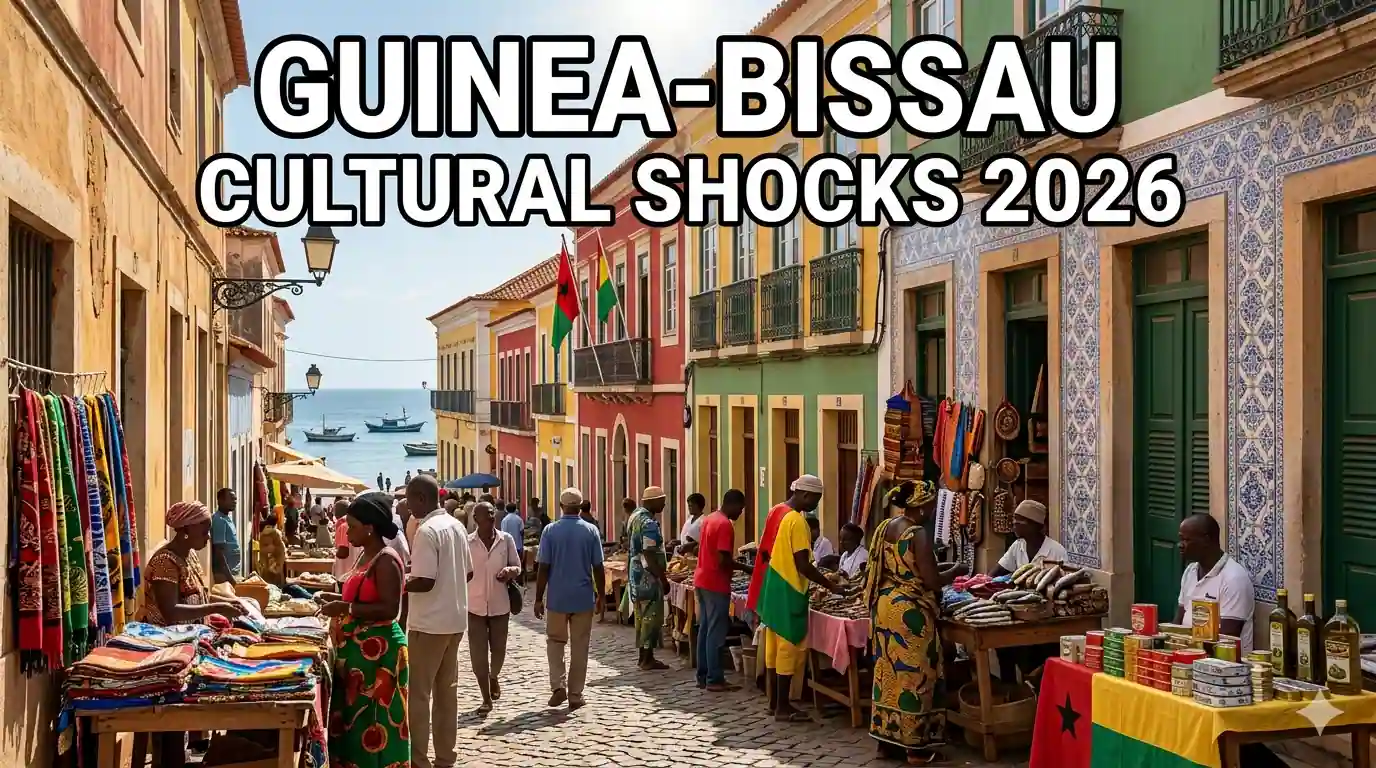
10 Things That Shock Americans About Guinea-Bissau's "Portuguese-Creole" Soul in 2026
For American travelers accustomed to the fast-paced, English-speaking, consumer-driven culture of the United States, stepping into Guinea-Bissau can feel like entering a parallel universe—one where Portuguese colonial heritage blends seamlessly with West African traditions, where time moves to a different rhythm, and where cultural norms challenge deeply held assumptions about how society "should" function. This small West African nation, often overlooked by mainstream tourism, possesses a unique cultural identity shaped by centuries of Portuguese colonization, African resilience, and Creole innovation that creates a fascinating, sometimes bewildering, experience for first-time American visitors.
Guinea-Bissau's "Portuguese-Creole soul" isn't just a historical footnote; it's a living, breathing reality that permeates daily life, from the language spoken in bustling Bissau markets to the architecture of colonial buildings, from the fusion cuisine that blends Portuguese techniques with African ingredients to the social customs that prioritize community over individualism. For Americans visiting in 2026, this cultural fusion can be both enchanting and disorienting—a source of profound learning and occasional culture shock.
This guide explores ten specific aspects of Guinea-Bissau's Portuguese-Creole culture that most commonly surprise, challenge, or delight American travelers. From language barriers and time perception to food customs and social etiquette, understanding these cultural differences isn't just about avoiding awkward moments; it's about opening yourself to a richer, more meaningful travel experience. Whether you're planning your first trip to Guinea-Bissau or simply curious about this unique corner of West Africa, these insights will help you navigate the cultural landscape with greater awareness, respect, and appreciation.
1. The Language Landscape: Portuguese, Creole, and 20+ Local Languages

The Shock: Americans often arrive expecting to communicate in English or French (common in West Africa), only to discover that Guinea-Bissau's official language is Portuguese—a language few Americans speak—and that the lingua franca is Guinea-Bissau Creole (Kriol), a Portuguese-based creole language with African grammatical structures and vocabulary. Adding to the complexity, over 20 indigenous languages are spoken across the country, including Balanta, Fula, Mandinka, and Bijagós.
Why It's Surprising: Most Americans associate West Africa with English or French due to colonial histories of neighboring countries. Guinea-Bissau's Portuguese heritage—shared only with Brazil, Portugal, and a few other nations—creates a linguistic island in the region. For Americans, even basic phrases like "hello" (olá in Portuguese, ôi in Creole) or "thank you" (obrigado/obrigada) require new learning.
Cultural Context: The Portuguese language arrived with colonizers in the 15th century, but Creole emerged as a practical communication tool between Portuguese traders and diverse African ethnic groups. Today, Creole serves as a unifying language across ethnic divisions, while Portuguese remains the language of government, education, and formal business. This linguistic layering reflects Guinea-Bissau's complex history of colonization, resistance, and cultural synthesis.
Practical Tips for Americans:
- Learn basic Creole phrases: Simple greetings like "Kuma ku bo?" (How are you?) or "Obrigado/a" (Thank you) go a long way in building rapport
- Use translation apps: Download offline Portuguese and Creole translation packs; Google Translate works reasonably well for basic communication
- Embrace non-verbal communication: Smiles, gestures, and patience often bridge language gaps more effectively than perfect pronunciation
- Hire local guides: Guides who speak English, Portuguese, and Creole can facilitate deeper cultural understanding
- Be patient with yourself: Language learning is a journey; locals appreciate the effort even if your pronunciation isn't perfect
- 👉 Mali Travel Cost Breakdown 2026: Real Trip Budget Guide
- 👉 Maseru Regional Hospital 2026: New Era for Medical Tourism in Lesotho's Capital
- 👉 Complete Guide to 2026 Auto de Floripes Festival Dates and Cultural Logistics
2. The Pace of Life: "Amanhã" and the Fluidity of Time
The Shock: Americans accustomed to punctuality, strict schedules, and the "time is money" ethos often find Guinea-Bissau's approach to time bewildering. The word "amanhã" (tomorrow in Portuguese) can mean "sometime in the indefinite future," and appointments may start hours late or be rescheduled without notice.
Why It's Surprising: American culture emphasizes efficiency, deadlines, and precise scheduling. In Guinea-Bissau, time is more fluid, relational, and event-based. A meeting might start when everyone arrives rather than at a predetermined hour, and priorities shift based on community needs rather than individual agendas.
Cultural Context: This flexible approach to time reflects broader African cultural values that prioritize relationships, community harmony, and adaptability over rigid schedules. It's not about disrespect or inefficiency; it's about a different worldview where human connections take precedence over clock-watching. The Portuguese colonial influence added layers of bureaucratic complexity that can further slow processes.
Practical Tips for Americans:
- Build buffer time: Schedule extra time for appointments, transportation, and activities; don't pack your itinerary too tightly
- Confirm plans repeatedly: Gentle reminders the day before and morning of appointments help ensure things happen
- Embrace the wait: Use unexpected delays as opportunities to observe daily life, chat with locals, or simply relax
- Focus on relationships: Building trust and rapport often matters more than sticking to a schedule
- Stay flexible: Have backup plans and maintain a patient, adaptable mindset
- 👉 Mali Travel Cost Breakdown 2026: Real Trip Budget Guide
- 👉 Maseru Regional Hospital 2026: New Era for Medical Tourism in Lesotho's Capital
- 👉 Complete Guide to 2026 Auto de Floripes Festival Dates and Cultural Logistics
3. Food Culture: Portuguese Techniques Meet African Ingredients
The Shock: American travelers expecting familiar West African dishes or Portuguese cuisine may be surprised by Guinea-Bissau's unique culinary fusion: dishes like cachupa (a slow-cooked stew with Portuguese origins but African ingredients), caldú (a fish stew with Creole spices), and pastéis de nata (Portuguese custard tarts) adapted with local flavors.
Why It's Surprising: American palates are often accustomed to distinct culinary traditions—Italian, Mexican, Chinese, etc. Guinea-Bissau's food culture blends Portuguese cooking methods (slow stewing, baking, use of olive oil) with African ingredients (palm oil, cassava, okra, local fish) and Creole spice blends, creating flavors that defy easy categorization.
Cultural Context: This culinary fusion mirrors Guinea-Bissau's broader cultural synthesis. Portuguese colonizers introduced ingredients like rice, wheat, and certain cooking techniques, while African communities contributed native ingredients, spices, and culinary knowledge. The result is a cuisine that tells the story of cultural encounter, adaptation, and creativity.
Practical Tips for Americans:
- Try everything: Approach new foods with curiosity; even unfamiliar dishes may become favorites
- Ask about ingredients: If you have dietary restrictions, politely ask about ingredients; most locals are happy to explain
- Embrace communal dining: Meals are often shared from common plates; this is a sign of hospitality, not poor hygiene
- Learn food etiquette: In many settings, eating with your right hand is customary; follow your host's lead
- Stay hydrated: Tropical spices and new ingredients can affect digestion; drink plenty of safe water
- 👉 Mali Travel Cost Breakdown 2026: Real Trip Budget Guide
- 👉 Maseru Regional Hospital 2026: New Era for Medical Tourism in Lesotho's Capital
- 👉 Complete Guide to 2026 Auto de Floripes Festival Dates and Cultural Logistics
4. Religious Syncretism: Catholic Saints and African Spirits
The Shock: Americans accustomed to clear religious boundaries may be surprised to discover that many Guinea-Bissauans practice a form of religious syncretism, blending Catholicism (introduced by Portuguese colonizers) with traditional African spiritual beliefs and practices.
Why It's Surprising: American religious culture often emphasizes distinct denominations and clear theological boundaries. In Guinea-Bissau, it's common for someone to attend Catholic mass while also consulting traditional healers, honoring ancestral spirits, or participating in indigenous ceremonies. This isn't seen as contradictory but as complementary.
Cultural Context: This syncretism emerged during colonialism as a strategy of cultural preservation. Enslaved and colonized Africans often outwardly adopted Catholic practices while maintaining traditional beliefs in private. Over centuries, these traditions merged, creating a unique spiritual landscape where Catholic saints may be associated with African deities, and Christian rituals incorporate traditional elements.
Practical Tips for Americans:
- Respect all practices: Avoid judging or questioning spiritual beliefs; approach with openness and curiosity
- Ask permission: If invited to observe a ceremony, ask about appropriate behavior, dress, and photography
- Learn basic etiquette: Remove shoes when entering sacred spaces; dress modestly in religious settings
- Listen more than you speak: Spiritual topics are deeply personal; let locals share at their own pace
- Recognize diversity: Not everyone practices syncretism; some are devout Catholics, Muslims, or traditional believers
- 👉 Mali Travel Cost Breakdown 2026: Real Trip Budget Guide
- 👉 Maseru Regional Hospital 2026: New Era for Medical Tourism in Lesotho's Capital
- 👉 Complete Guide to 2026 Auto de Floripes Festival Dates and Cultural Logistics
5. Music and Dance: The Rhythms of Cultural Fusion
The Shock: American travelers expecting familiar African or Portuguese music may be surprised by Guinea-Bissau's unique musical styles like gumbe—a genre that blends Portuguese guitar techniques with African rhythms, Creole lyrics, and social commentary.
Why It's Surprising: American music culture often categorizes genres clearly: jazz, rock, hip-hop, country, etc. Guinea-Bissau's gumbe, along with other styles like tinga and kussundé, defies easy classification, mixing Portuguese fado melancholy with African percussion, Creole poetry, and contemporary influences.
Cultural Context: Music in Guinea-Bissau has always been a tool of cultural expression, resistance, and unity. During colonialism, gumbe emerged as a voice for the oppressed, using Portuguese instruments and African rhythms to critique social conditions. Today, it remains a vibrant expression of national identity and cultural pride.
Practical Tips for Americans:
- Attend live performances: Seek out local music venues, festivals, or cultural centers to experience gumbe firsthand
- Learn basic dance steps: Even simple participation shows respect and builds connection
- Support local artists: Purchase music, attend concerts, and share artists' work to support the cultural ecosystem
- Ask about lyrics: If you don't understand Creole or Portuguese, ask guides or locals about song meanings
- Respect performance contexts: Some music is for celebration, some for ceremony; follow local cues about appropriate behavior
- 👉 Mali Travel Cost Breakdown 2026: Real Trip Budget Guide
- 👉 Maseru Regional Hospital 2026: New Era for Medical Tourism in Lesotho's Capital
- 👉 Complete Guide to 2026 Auto de Floripes Festival Dates and Cultural Logistics
6. Social Greetings and Physical Contact
The Shock: Americans accustomed to brief handshakes, minimal physical contact, and quick greetings may be surprised by Guinea-Bissau's elaborate greeting rituals, which often involve multiple handshakes, inquiries about family, and extended conversation before "getting to the point."
Why It's Surprising: American culture often values efficiency and directness in communication. In Guinea-Bissau, greetings are a crucial social ritual that establishes respect, builds relationships, and sets the tone for all subsequent interaction. Skipping or rushing greetings can be perceived as rude or dismissive.
Cultural Context: These elaborate greetings reflect broader cultural values that prioritize community, respect for elders, and relationship-building. The Portuguese influence added formal titles and courtesy phrases, while African traditions contributed the emphasis on family inquiries and extended social ritual. Together, they create a greeting culture that is both formal and warm.
Practical Tips for Americans:
- Master the greeting sequence: Learn basic Portuguese/Creole greetings and practice the handshake pattern (often multiple shakes with eye contact)
- Ask about family: Inquiries about health, family, and well-being are expected and appreciated
- Be patient: Allow time for greetings before discussing business or making requests
- Use appropriate titles: "Senhor" (Mr.) and "Senhora" (Mrs.) show respect, especially with elders
- Observe and adapt: Watch how locals greet each other and follow their lead
- 👉 Mali Travel Cost Breakdown 2026: Real Trip Budget Guide
- 👉 Maseru Regional Hospital 2026: New Era for Medical Tourism in Lesotho's Capital
- 👉 Complete Guide to 2026 Auto de Floripes Festival Dates and Cultural Logistics
7. Currency and Economic Realities: The West African CFA Franc
The Shock: Americans used to the US dollar's global dominance may be surprised to learn that Guinea-Bissau uses the West African CFA franc (XOF), a currency shared with seven other West African nations and pegged to the Euro, not the dollar.
Why It's Surprising: The CFA franc's complex history—created during French colonialism, maintained post-independence, and now managed by a regional central bank—reflects Guinea-Bissau's unique position as a Portuguese-speaking nation in a predominantly French-speaking economic zone. For Americans, this means unfamiliar currency, exchange rate calculations, and limited USD acceptance.
Cultural Context: The CFA franc represents both economic pragmatism and post-colonial complexity. Guinea-Bissau adopted the currency to facilitate regional trade and access to French-speaking markets, despite its Portuguese linguistic heritage. This economic choice reflects the practical realities of post-colonial Africa, where political and economic boundaries don't always align with cultural or linguistic ones.
Practical Tips for Americans:
- Exchange currency wisely: Exchange USD or EUR for CFA francs at banks or official exchange offices; avoid street changers
- Carry small bills: Small denominations (500, 1000, 2000 XOF) are essential for markets, transportation, and small purchases
- Understand pricing: Prices are often negotiable in markets; learn basic bargaining etiquette
- Keep receipts: Some establishments require receipts for currency exchange or large purchases
- Use cards sparingly: Credit/debit cards are rarely accepted outside major hotels; rely on cash
- 👉 Mali Travel Cost Breakdown 2026: Real Trip Budget Guide
- 👉 Maseru Regional Hospital 2026: New Era for Medical Tourism in Lesotho's Capital
- 👉 Complete Guide to 2026 Auto de Floripes Festival Dates and Cultural Logistics
8. Colonial Architecture: Portuguese Tiles and African Adaptation
The Shock: Americans expecting typical African architecture may be surprised by Guinea-Bissau's distinctive colonial buildings featuring Portuguese-style azulejo tiles, wrought-iron balconies, and pastel-colored facades—often in various states of preservation or adaptive reuse.
Why It's Surprising: American architectural expectations in Africa often lean toward traditional thatched structures or modern concrete buildings. Guinea-Bissau's urban centers, particularly Bissau, showcase a unique blend of Portuguese colonial architecture adapted to tropical climates, with features like high ceilings, large windows, and interior courtyards that reflect both European design and African environmental needs.
Cultural Context: These buildings tell the story of colonial encounter, adaptation, and resilience. Many were built by Portuguese colonizers using local materials and labor, incorporating African design elements to suit the climate. Today, they serve as government offices, hotels, restaurants, and homes—physical manifestations of cultural fusion and historical continuity.
Practical Tips for Americans:
- Explore historic neighborhoods: Bissau's Plateau district offers the best-preserved colonial architecture
- Photograph respectfully: Ask permission before photographing buildings, especially if they're private residences
- Learn architectural terms: Basic Portuguese terms like "azulejo" (tile) or "varanda" (balcony) enhance appreciation
- Support preservation: Visit businesses in historic buildings to support adaptive reuse and preservation efforts
- Understand context: Colonial architecture represents both beauty and painful history; approach with nuance
- 👉 Mali Travel Cost Breakdown 2026: Real Trip Budget Guide
- 👉 Maseru Regional Hospital 2026: New Era for Medical Tourism in Lesotho's Capital
- 👉 Complete Guide to 2026 Auto de Floripes Festival Dates and Cultural Logistics
9. Social Hierarchy and Respect for Elders
The Shock: Americans accustomed to relatively egalitarian social interactions may be surprised by Guinea-Bissau's emphasis on age-based hierarchy, formal titles, and deference to elders in both family and community settings.
Why It's Surprising: American culture often emphasizes youth, innovation, and individual achievement. In Guinea-Bissau, age commands respect, elders hold significant social authority, and formal titles (Senhor, Senhora, Doutor) are used consistently. This can feel formal or hierarchical to Americans used to first-name basis interactions.
Cultural Context: This respect for elders reflects both African cultural values that venerate age and wisdom, and Portuguese colonial influences that emphasized formal social hierarchies. Together, they create a social fabric where age, experience, and community role shape interactions in ways that may feel unfamiliar to Americans.
Practical Tips for Americans:
- Use formal titles: Address people as "Senhor" or "Senhora" followed by surname until invited to use first names
- Defer to elders: Allow elders to speak first, offer them seats, and show respect in group settings
- Observe protocols: In meetings or gatherings, follow the lead of local hosts regarding seating, speaking order, and decision-making
- Be patient with formality: What may feel like bureaucracy is often respect for social order and experience
- Learn from elders: Older community members often hold valuable knowledge about culture, history, and local customs
- 👉 Mali Travel Cost Breakdown 2026: Real Trip Budget Guide
- 👉 Maseru Regional Hospital 2026: New Era for Medical Tourism in Lesotho's Capital
- 👉 Complete Guide to 2026 Auto de Floripes Festival Dates and Cultural Logistics
10. Cultural Attitudes Toward Visitors: Warmth, Curiosity, and Expectations
The Shock: Americans may be surprised by the intensity of local curiosity about foreigners, the warmth of hospitality, and sometimes the expectation of material assistance that can accompany interactions with visitors.
Why It's Surprising: American culture often values privacy, personal space, and transactional relationships. In Guinea-Bissau, visitors may experience immediate warmth, invitations to homes or meals, and questions about their lives that can feel intrusive to Americans. Conversely, requests for small gifts, money, or assistance—while often well-intentioned—can create awkwardness for visitors unprepared for this dynamic.
Cultural Context: This warmth reflects genuine hospitality traditions in both African and Portuguese cultures, where guests are honored and sharing is valued. The expectation of assistance often stems from economic realities and the perception that foreigners have greater resources. Navigating these interactions requires cultural sensitivity and clear boundaries.
Practical Tips for Americans:
- Embrace hospitality: Accept invitations when possible; they're often genuine gestures of welcome
- Set gentle boundaries: If asked for money or gifts, respond kindly but firmly; consider supporting community projects instead
- Bring small gifts: Pens, school supplies, or small items from home can be appropriate gifts for new friends
- Be prepared for curiosity: Questions about your life, family, and country are often signs of interest, not intrusion
- Give back respectfully: Support local businesses, hire local guides, and contribute to community initiatives
- 👉 Mali Travel Cost Breakdown 2026: Real Trip Budget Guide
- 👉 Maseru Regional Hospital 2026: New Era for Medical Tourism in Lesotho's Capital
- 👉 Complete Guide to 2026 Auto de Floripes Festival Dates and Cultural Logistics
Embracing the Portuguese-Creole Soul: A Mindset for American Travelers
Understanding these cultural differences isn't about judging one culture as better or worse than another; it's about recognizing that Guinea-Bissau's Portuguese-Creole soul represents a unique, valid, and enriching way of being in the world. For American travelers, the initial shock of cultural difference can transform into profound appreciation when approached with curiosity, humility, and openness.
The key to navigating Guinea-Bissau's cultural landscape lies in embracing what anthropologists call "cultural relativism"—the practice of understanding beliefs and practices within their own cultural context rather than judging them by the standards of one's own culture. This doesn't mean abandoning your own values; it means expanding your perspective to appreciate the logic, beauty, and wisdom in different ways of living.
As you prepare for your 2026 journey to Guinea-Bissau, remember that culture shock is not a barrier but a bridge. Each moment of surprise, confusion, or delight is an opportunity to learn, grow, and connect more deeply with the people and places you encounter. The Portuguese-Creole soul of Guinea-Bissau—with its linguistic richness, culinary fusion, spiritual syncretism, and social warmth—offers American travelers a chance to experience Africa through a unique cultural lens, one that challenges assumptions and expands understanding.
So pack your curiosity along with your luggage. Learn a few words of Creole. Embrace the fluidity of time. Savor the fusion flavors. And allow yourself to be surprised, challenged, and transformed by the extraordinary cultural tapestry that is Guinea-Bissau.
Your journey into the Portuguese-Creole soul of West Africa awaits. May it be as enlightening as it is unforgettable.
0 Comments