.webp)
.webp)
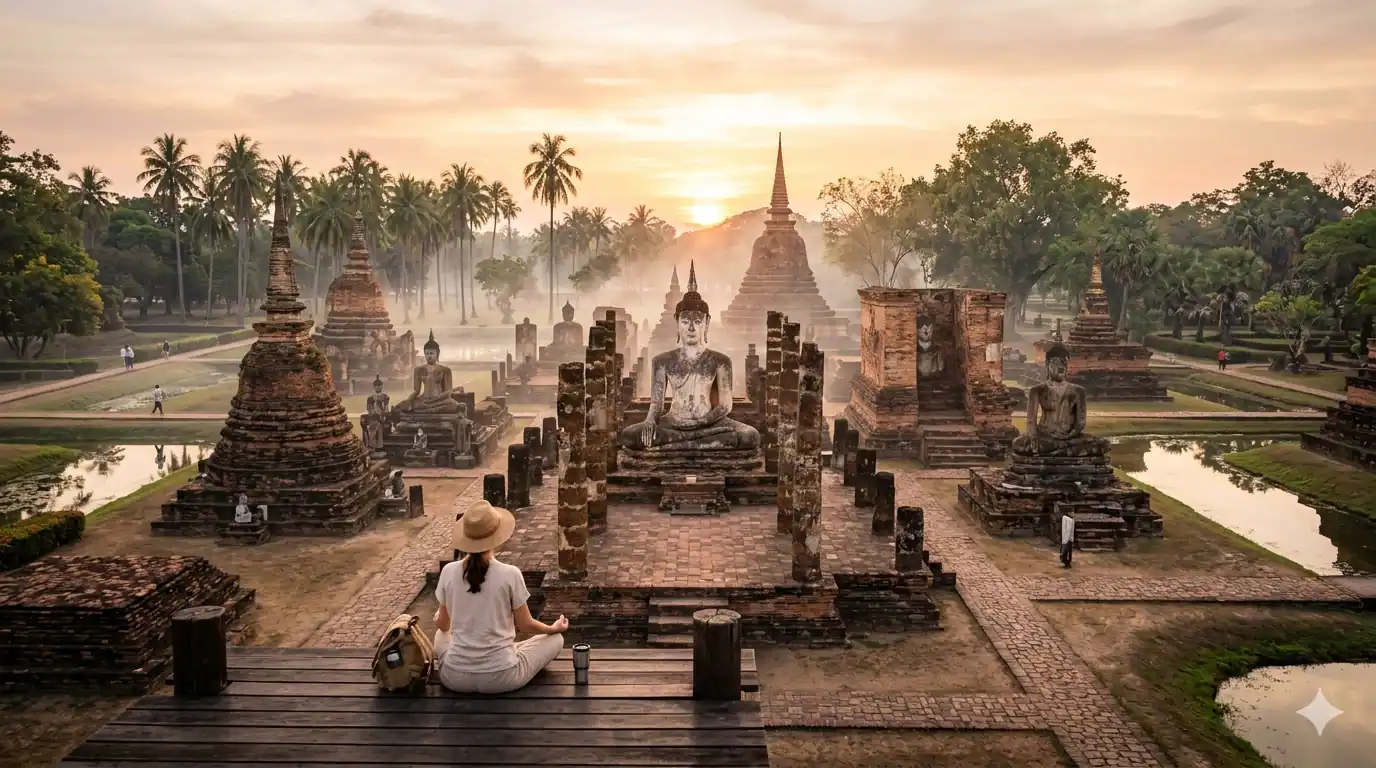
Discovering Thailand's Most Peaceful UNESCO World Heritage Site
In the heart of northern Thailand, approximately 430 kilometers north of Bangkok and 300 kilometers south of Chiang Mai, lies Sukhothai Historical Park—a sanctuary of serenity that stands in stark contrast to the bustling crowds of Ayutthaya. For mindful travelers seeking authentic spiritual experiences in 2026, Sukhothai offers something increasingly rare: the space to breathe, reflect, and connect with Thailand's ancient heritage without the pressure of tour groups and selfie sticks.
While Ayutthaya has become a popular day-trip destination attracting over 2 million visitors annually, Sukhothai remains a hidden gem receiving approximately 400,000-500,000 visitors per year. This five-fold difference in tourist density creates fundamentally different experiences. At Sukhothai, you can sit in meditation before a 700-year-old Buddha statue at sunrise without another soul in sight. At Ayutthaya, you'll likely be jostling for position with dozens of other tourists.
This comprehensive guide explores why Sukhothai Historical Park has emerged as Thailand's premier destination for mindful travel in 2026, offering practical insights into costs, accommodations, transportation, and the best practices for experiencing this UNESCO World Heritage Site in a way that honors both your spiritual journey and the ancient legacy of Thailand's first kingdom.
The Essence of Mindful Travel in 2026
Mindful travel in 2026 isn't just a trend—it's a necessary response to overtourism and the commodification of cultural heritage. It means traveling with intention, respecting local communities, minimizing environmental impact, and seeking experiences that foster personal growth rather than just collecting Instagram photos.
Sukhothai embodies these principles naturally. The park's vast expanse of 70 square kilometers (with the central zone covering approximately 11.6 square kilometers) provides ample space for solitude. The archaeological site contains over 193 ancient ruins spread across five zones, meaning even during peak season, you can find quiet corners for reflection and meditation.
For travelers planning their Thailand itinerary, understanding the complete Thailand travel landscape helps position Sukhothai as a meaningful stop between Bangkok and Chiang Mai. Unlike the rushed day-trip mentality that dominates Ayutthaya visits, Sukhothai rewards those who stay overnight, allowing for sunrise and sunset experiences that transform a simple historical tour into a spiritual journey.
Sukhothai vs Ayutthaya: A Data-Driven Comparison
To understand why Sukhothai surpasses Ayutthaya for mindful travel, let's examine the concrete differences:
| Feature | Sukhothai Historical Park | Ayutthaya Historical Park |
| Distance from Bangkok | 430 km (6-7 hours by bus) | 80 km (1.5-2 hours by train/bus) |
| Annual Visitors (2025) | 400,000-500,000 | 2+ million |
| Peak Season Crowds | Moderate (manageable) | Heavy (overwhelming) |
| Average Visit Duration | 2-3 days recommended | 1 day (day trip) |
| Entry Fee (Foreign Adults) | 100 THB (~$3 USD) per zone or 350 THB (~$10 USD) all zones | 50 THB (~$1.50 USD) per temple or 220 THB (~$6.50 USD) combined ticket |
| Bicycle Rental (per day) | 50-100 THB (~$1.50-$3 USD) | 50-100 THB (~$1.50-$3 USD) |
| Budget Accommodation | 400-800 THB (~$12-$24 USD) | 500-1,000 THB (~$15-$30 USD) |
| Mid-Range Hotels | 1,200-2,500 THB (~$36-$75 USD) | 1,500-3,000 THB (~$45-$90 USD) |
| Atmosphere | Peaceful, contemplative, rural | Busy, touristy, urban |
| Best For | Meditation, photography, slow travel | Quick historical overview, day trips |
The numbers tell a clear story. While Ayutthaya's proximity to Bangkok makes it convenient for day-trippers, this accessibility has transformed it into a crowded tourist attraction. Sukhothai's relative remoteness acts as a natural filter, attracting travelers who are willing to invest time and effort—typically those seeking deeper, more meaningful experiences.
For those interested in escaping Thailand's tourist crowds, Sukhothai represents the perfect "quietcation" destination, offering the historical significance of a UNESCO site without the mass tourism infrastructure.
The Spiritual Significance of Sukhothai
Sukhothai, which translates to "Dawn of Happiness," was the capital of the first Kingdom of Siam from 1238 to 1438. This wasn't just a political center—it was the birthplace of Thai culture, language, and Theravada Buddhism as practiced in Thailand today.
The park's spiritual power comes from several sources:
1. The Walking Buddha Legacy
Sukhothai developed a unique artistic style, most famously the "Walking Buddha" pose that depicts the Buddha in graceful motion. This representation emphasizes mindfulness in movement—a perfect metaphor for mindful travel. At Wat Mahathat, the central temple, you'll find one of the most photographed Buddha images in Thailand, seated in the "subduing Mara" pose, surrounded by laterite columns that create natural frames for meditation and photography.
2. Lotus Pond Meditation Spaces
Unlike Ayutthaya's more fortress-like temples, Sukhothai's design incorporates natural elements—lotus ponds, tropical trees, and open spaces—that create a harmonious balance between architecture and nature. These lotus ponds aren't just decorative; they're functional meditation spaces where visitors can sit and practice mindfulness while observing the interplay of light, water, and ancient stone.
3. The Five-Zone Layout
Sukhothai Historical Park is divided into five zones:
- Central Zone: The main archaeological area with the most significant temples (Wat Mahathat, Wat Si Sawai, Wat Sa Si)
- North Zone: Wat Si Chum (home to the massive seated Buddha "Phra Achana") and Wat Phra Phai Luang
- South Zone: Wat Chedi Si Hong and Wat Chang Lom with its distinctive elephant-supported chedi
- East Zone: Wat Chedi Ngam and Wat Mae Chon
- West Zone: Wat Saphan Hin (perched on a hill with panoramic views) and Wat Aranyik
This distribution means you can explore at your own pace, choosing quieter zones for deeper meditation. The West Zone, particularly Wat Saphan Hin at sunset, offers one of Thailand's most contemplative experiences—watching the sun dip below the horizon from a 200-meter-high laterite hill, surrounded by ancient ruins and the calls of tropical birds.
Planning Your Mindful Journey to Sukhothai
Getting There: The Journey Is Part of the Practice
Reaching Sukhothai requires intention. Unlike Ayutthaya, which you can visit on a whim from Bangkok, Sukhothai demands planning—making the journey itself a mindful practice.
From Bangkok (430 km):
- Bus: VIP or first-class buses depart from Mo Chit (Northern) Bus Terminal. Journey time: 6-7 hours. Cost: 500-800 THB (~$15-$24 USD). Buses typically depart in the evening (8-10 PM) and arrive early morning (5-7 AM), allowing you to witness sunrise at the park.
- Private Transfer: For those prioritizing comfort, private car services cost 4,000-6,000 THB (~$120-$180 USD) one-way. This option allows stops at interesting sites along the way.
- Domestic Flight: Fly Bangkok to Phitsanulok (1 hour, 1,500-3,000 THB/~$45-$90 USD), then take a 1-hour bus or taxi to Sukhothai (60 km).
From Chiang Mai (300 km):
- Bus: Direct buses from Chiang Mai's Arcade Bus Terminal take 5-6 hours. Cost: 300-500 THB (~$9-$15 USD).
- Minivan: Faster but less comfortable, 4-5 hours, 400-600 THB (~$12-$18 USD).
For travelers unfamiliar with Thai transportation systems, reviewing essential Thailand travel tips ensures smooth logistics.
Best Time to Visit for Mindful Travel
Timing your visit significantly impacts the quality of your experience:
Peak Season (November-February):
- Weather: Cool and dry, 20-32°C (68-90°F)
- Crowds: Moderate; weekends busier than weekdays
- Best for: Comfortable exploration, clear photography
- Strategy: Visit temples at sunrise (6:00-7:30 AM) or late afternoon (4:00-6:00 PM) to avoid tour groups
Shoulder Season (March-May):
- Weather: Hot, 28-38°C (82-100°F)
- Crowds: Light; fewer tourists
- Best for: Solitude, lower accommodation prices
- Strategy: Early morning and evening visits only; rest during midday heat
Green Season (June-October):
- Weather: Rainy, 24-33°C (75-91°F)
- Crowds: Very light; mostly domestic tourists on weekends
- Best for: Lush photography, deep solitude, budget travel
- Strategy: Embrace the rain; lotus ponds are full, vegetation is vibrant
Understanding Thailand's seasonal patterns helps you choose the optimal time for your mindful journey.
Visa Requirements and Entry Procedures
Before traveling to Thailand, ensure you understand current entry requirements. As of 2026, many nationalities receive visa-free entry for 30-60 days, while others need to apply for a tourist visa or e-visa in advance.
Digital nomads considering extended stays should explore the Destination Thailand Visa (DTV), which allows stays up to 180 days and could provide time for deep cultural immersion in Sukhothai.
Where to Stay: Accommodations That Enhance Mindfulness
Your choice of accommodation in Sukhothai can either support or detract from your mindful travel goals. Unlike Ayutthaya, where hotels cater primarily to day-trippers, Sukhothai offers properties designed for longer, more contemplative stays.
Budget-Friendly Options ($12-$24 USD/night)
Sukhothai Treasure Resort & Spa Area:
- Sukhothai Sabai Place: Simple, clean rooms 2 km from the park. 400-600 THB/night. Offers bicycle rental and peaceful garden areas.
- Pai Guesthouse: Family-run establishment with traditional Thai architecture. 500-700 THB/night. Owners provide excellent local knowledge and can arrange guided meditation sessions.
Mid-Range Properties ($36-$75 USD/night)
Le Charme Sukhothai Historical Park:
- Location: Adjacent to the Central Zone entrance
- Price: 1,500-2,200 THB/night
- Features: Traditional Lanna-style architecture, swimming pool, on-site restaurant, complimentary bicycles
- Mindful Travel Bonus: Rooms face away from the road, offering views of rice fields and temples. Perfect for morning meditation.
Sukhothai Heritage Resort:
- Location: 1 km from Central Zone
- Price: 1,800-2,500 THB/night
- Features: Boutique property with only 12 rooms, personalized service, organic breakfast, yoga deck
- Mindful Travel Bonus: Offers sunrise yoga sessions and can arrange private meditation instruction with local monks.
Luxury Retreats ($90-$200+ USD/night)
Sukhothai Treasure Resort & Spa:
- Location: 3 km from the park, set in tropical gardens
- Price: 3,000-6,000 THB/night
- Features: 5-star amenities, full-service spa, multiple pools, fine dining
- Mindful Travel Bonus: Offers meditation retreats, Thai massage, and wellness programs. The property's design incorporates traditional Sukhothai architectural elements, creating a seamless connection between ancient heritage and modern comfort.
For travelers seeking luxury accommodations throughout Thailand, Sukhothai's boutique properties offer better value and more authentic experiences than comparable properties in Bangkok or Phuket.
Exploring the Park: A Mindful Itinerary
To truly experience Sukhothai as a mindful traveler, plan for minimum 2 full days, though 3 days allows for a more relaxed pace. Here's a suggested itinerary:
Day 1: Arrival and Central Zone Exploration
Morning (6:00-9:00 AM):
- Arrive at the park gates when they open at 6:00 AM
- Rent a bicycle (50-100 THB/day)
- Begin at Wat Mahathat (Central Zone's main temple) during golden hour
- Sit in meditation before the principal Buddha image for 20-30 minutes
- Photograph the temple in soft morning light without crowds
Late Morning (9:00-11:30 AM):
- Explore Wat Si Sawai (Khmer-style prangs)
- Visit Wat Sa Si (beautiful lotus pond setting)
- Rest at a café in New Sukhothai town
Afternoon (2:00-5:00 PM):
- Explore North Zone: Wat Si Chum (massive seated Buddha) and Wat Phra Phai Luang
- Practice walking meditation among the ruins
- Journal about your observations and feelings
Evening (5:00-7:00 PM):
- Return to Central Zone for sunset
- Watch light change on ancient stones
- Dinner at your accommodation or local restaurant
Day 2: South, East, and West Zones
Sunrise (6:00-8:00 AM):
- Head to Wat Saphan Hin (West Zone) for sunrise from the hilltop
- 360-degree views of the entire archaeological site
- Meditation as the sun rises over the plains
Morning (8:30-11:30 AM):
- Explore West Zone temples: Wat Aranyik, Wat Chedi Ngam
- Visit South Zone: Wat Chedi Si Hong, Wat Chang Lom
- Observe the elephant-supported chedi architecture
Afternoon (1:00-4:00 PM):
- Explore East Zone (least visited, most peaceful)
- Visit Ramkhamhaeng National Museum (100 THB entry, closed Mondays)
- Rest and reflection time
Late Afternoon (4:00-6:30 PM):
- Return to favorite temples for sunset photography
- Evening meditation session
Day 3 (Optional): Deep Dive and Local Culture
Morning:
- Visit local markets in New Sukhothai
- Participate in a traditional craft workshop (pottery, weaving)
- Meet local monks for Dhamma conversation (arrange through your accommodation)
Afternoon:
- Day trip to Si Satchanalai Historical Park (50 km north, another UNESCO site, even quieter than Sukhothai)
- Or simply rest and integrate your experiences
For travelers new to Thailand, understanding what to pack ensures comfort during temple exploration—lightweight, modest clothing, comfortable walking shoes, sun protection, and a reusable water bottle are essential.
Budget Breakdown: Mindful Travel Doesn't Mean Expensive
One of Sukhothai's advantages is that mindful travel here is accessible across budget ranges. Here's a realistic cost breakdown for a 3-day, 2-night visit:
Budget Traveler ($50-80 USD total)
| Expense | Cost (THB) | Cost (USD) |
| Accommodation (2 nights, guesthouse) | 800-1,200 | $24-$36 |
| Park entry (all zones) | 350 | $10 |
| Bicycle rental (3 days) | 150 | $4.50 |
| Meals (street food, local restaurants) | 600-900 | $18-$27 |
| Transportation (bus from Bangkok, round-trip) | 1,000-1,600 | $30-$48 |
| Miscellaneous (water, snacks, donations) | 200-300 | $6-$9 |
| Total | 3,100-4,350 THB | $92-$134 USD |
Mid-Range Traveler ($150-250 USD total)
| Expense | Cost (THB) | Cost (USD) |
| Accommodation (2 nights, boutique hotel) | 3,000-5,000 | $90-$150 |
| Park entry (all zones) | 350 | $10 |
| Bicycle rental (3 days) | 150 | $4.50 |
| Meals (mix of local and hotel restaurants) | 1,500-2,000 | $45-$60 |
| Transportation (private transfer or flight + bus) | 2,000-4,000 | $60-$120 |
| Activities (massage, workshop, museum) | 500-1,000 | $15-$30 |
| Total | 7,500-12,500 THB | $224-$374 USD |
Luxury Traveler ($400-700+ USD total)
| Expense | Cost (THB) | Cost (USD) |
| Accommodation (2 nights, 5-star resort) | 6,000-12,000 | $180-$360 |
| Park entry (all zones) | 350 | $10 |
| Private guide + bicycle or scooter | 1,500-2,500 | $45-$75 |
| Meals (fine dining, resort restaurants) | 3,000-5,000 | $90-$150 |
| Transportation (private car, round-trip) | 8,000-12,000 | $240-$360 |
| Spa, meditation retreat, activities | 2,000-4,000 | $60-$120 |
| Total | 20,850-35,850 THB | $625-$1,075 USD |
These costs demonstrate that budget travel in Thailand remains viable even at UNESCO World Heritage Sites, while those seeking comfort won't face the premium prices of Bangkok or island destinations.
Mindful Travel Practices at Sukhothai
Visiting Sukhothai mindfully means more than just moving slowly—it requires intentional engagement with the site's spiritual and cultural significance.
Respectful Temple Etiquette
- Dress Code: Shoulders and knees must be covered. Bring a sarong or scarf if wearing sleeveless tops.
- Remove Shoes: Always remove shoes before entering temple buildings or climbing onto platforms.
- Quiet Voices: Speak softly; this is an active religious site, not just a tourist attraction.
- Respect Buddha Images: Never climb on Buddha statues or turn your back to them for photos. Sit with feet pointed away from Buddha images.
- Monk Interaction: Women should never touch monks or hand objects directly to them. Place items on a cloth or table for monks to pick up.
Meditation Practices
Sukhothai offers unique opportunities for meditation:
Sitting Meditation: Find a quiet spot near a Buddha image (Wat Mahathat's central prang or Wat Si Chum's massive seated Buddha are ideal). Sit for 20-30 minutes, focusing on breath while contemplating the impermanence represented by the ruins around you.
Walking Meditation: The park's pathways are perfect for mindful walking. Move slowly between temples, paying attention to each step, the texture of the ground beneath your feet, and the sensations in your body.
Loving-Kindness (Metta) Meditation: Sitting by a lotus pond, practice sending goodwill to all beings—ancient kings who built these temples, modern visitors, local residents, and yourself.
Photography with Intention
Rather than rapid-fire shooting, practice mindful photography:
- Spend 5-10 minutes observing a single temple before taking any photos
- Consider the interplay of light, shadow, and texture
- Capture details (weathered stone, moss-covered carvings) as well as wide shots
- Put the camera down periodically and simply experience the moment without documenting it
Supporting Local Communities
Mindful travel includes economic mindfulness:
- Eat at local restaurants in New Sukhothai town, not just hotel restaurants
- Buy souvenirs from local artisans, not mass-produced imports
- Hire local guides (300-500 THB/half-day) who can share deeper historical and cultural context
- Stay at locally-owned accommodations rather than international chains
- Make donations at temples (20-100 THB is appropriate)
Solo Female Travel in Sukhothai
Sukhothai is exceptionally safe for solo female travelers. The town is small, the people are friendly, and the pace is relaxed. Key considerations:
Safety Tips
- Accommodation: Choose well-reviewed guesthouses or hotels with 24-hour reception
- Transportation: Bicycle during daylight hours; use hotel-arranged transport after dark
- Cultural Sensitivity: Dress modestly, especially at temples
- Connectivity: Purchase a Thai SIM card for emergency communication
- Trust Your Instincts: Sukhothai is safe, but standard travel precautions apply
For comprehensive guidance, review solo female travel safety tips for Thailand.
Common Mistakes to Avoid
Even mindful travelers can make missteps. Here's what to avoid:
1. Treating It as a Day Trip
Many visitors arrive from Phitsanulok or Chiang Mai for a quick 4-hour visit, missing sunrise, sunset, and the peaceful evening atmosphere. Solution: Stay minimum 2 nights.
2. Visiting Only the Central Zone
The Central Zone gets the most visitors. The North, South, East, and West zones are equally beautiful and far quieter. Solution: Allocate time for all five zones.
3. Rushing Through Temples
Checking temples off a list defeats the purpose of mindful travel. Solution: Choose 3-4 temples per day and spend quality time at each.
4. Ignoring the Modern Town
New Sukhothai town (2 km from the park) offers authentic local life, markets, and restaurants. Solution: Explore the town, interact with residents, support local businesses.
5. Not Preparing for Heat
Exploring ruins involves significant walking in open sun. Solution: Start early, rest midday, stay hydrated, wear sun protection.
Extending Your Mindful Journey
If Sukhothai resonates with you, consider these nearby destinations for continued mindful travel:
Si Satchanalai Historical Park (50 km north)
Another UNESCO World Heritage Site, Si Satchanalai was Sukhothai's satellite city and receives even fewer visitors. The park features similar temple architecture but in a more forested, jungle-like setting. Entry: 100 THB (~$3 USD). Recommended stay: 1-2 days.
Kamphaeng Phet Historical Park (100 km south)
The third member of the Sukhothai UNESCO cluster, Kamphaeng Phet offers well-preserved ruins along the Ping River. Less developed for tourism than Sukhothai, it provides authentic solitude. Entry: 100 THB (~$3 USD). Recommended stay: 1 day.
Phitsanulok (60 km east)
A larger city with Wat Phra Si Rattana Mahathat (housing one of Thailand's most revered Buddha images) and access to Phu Hin Rong Kla National Park. Good transportation hub. Recommended stay: 1-2 days.
For travelers planning broader Thailand itineraries, understanding Thailand's tourism value shift helps prioritize destinations that align with mindful travel principles.
The Transformative Power of Sukhothai
What makes Sukhothai truly special for mindful travelers isn't just the absence of crowds—it's the site's inherent spiritual energy. Standing before a 700-year-old Buddha image at sunrise, with mist rising from lotus ponds and the only sound being tropical birdsong, creates a profound sense of connection to something greater than yourself.
In 2026, as overtourism threatens heritage sites worldwide and "quiet quitting" extends to travel choices, Sukhothai represents an alternative path. It proves that you don't need to sacrifice cultural richness for tranquility. You can experience world-class historical significance while maintaining the space for personal reflection and spiritual growth.
The park's relative obscurity compared to Ayutthaya isn't a drawback—it's a gift. It means your visit contributes to sustainable tourism, supporting local communities without overwhelming infrastructure. It means you can sit in meditation without being photographed by strangers. It means you can hear your own thoughts amidst ancient stones.
Practical Resources for Your Journey
Essential Contacts
- Sukhothai Historical Park Office: +66 55 697 241
- Tourism Authority of Thailand (Sukhothai): +66 55 616 520
- Emergency (Tourist Police): 1155
- Medical: Sukhothai Hospital, +66 55 611 401
Digital Resources
- Download offline Google Maps of Sukhothai before arrival
- Install translation apps (Google Translate with Thai language pack)
- Consider meditation apps (Insight Timer, Headspace) for guided sessions at the park
Recommended Reading
- "The Kingdom of Sukhothai" by Betty Gosling (historical context)
- "A History of Thailand" by Chris Baker & Pasuk Phongpaichit (broader understanding)
- "The Miracle of Mindfulness" by Thich Nhat Hanh (meditation practice)
Conclusion: Your Invitation to Dawn of Happiness
Sukhothai Historical Park isn't just a destination—it's an invitation to travel differently. In choosing Sukhothai over Ayutthaya, you're choosing depth over breadth, contemplation over consumption, and connection over checklist tourism.
The park's name, "Dawn of Happiness," perfectly captures what awaits mindful travelers in 2026. Whether you're seeking spiritual renewal, photographic inspiration, historical understanding, or simply a break from the frenetic pace of modern travel, Sukhothai offers a sanctuary where ancient wisdom meets contemporary mindfulness.
As you plan your Thailand journey, remember that the most memorable travel experiences often come not from the most famous destinations, but from places that allow you to slow down, breathe deeply, and truly be present. Sukhothai Historical Park is such a place—a gift to mindful travelers willing to venture beyond the beaten path.
Your journey to the Dawn of Happiness begins with a single step. May your path be peaceful, your heart open, and your experience transformative.
0 Comments