.webp)
.webp)
Why "Sompur Mahavihara" is the most important Buddhist archaeological site in South Asia.
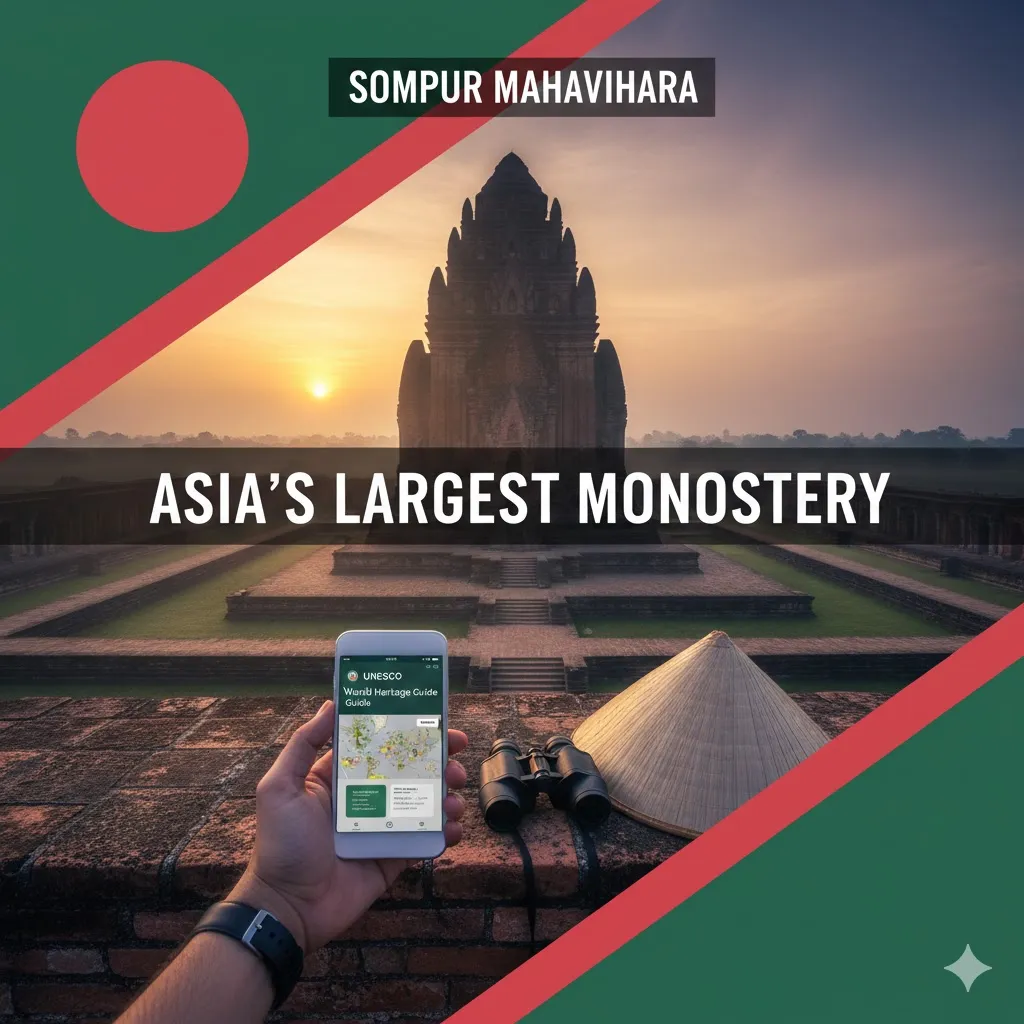
Unveiling the Magnificent Legacy of Sompur Mahavihara: South Asia's Premier Buddhist Monument
In the heart of Bangladesh's Rajshahi division, near the modern village of Paharpur in Naogaon District, stands one of the most significant archaeological treasures not just of Bangladesh, but of all South Asia. Sompur Mahavihara, also known as Somapura Mahavihara, represents the zenith of Buddhist monastic architecture and learning in the Indian subcontinent. This magnificent vihara (monastery), built in the 8th century CE by the great Pala emperor Dharmapala, is more than just ancient ruins – it is a testament to a golden age of Buddhist scholarship, artistic achievement, and architectural innovation that influenced civilizations across Asia.
Designated as a UNESCO World Heritage Site in 1985, Sompur Mahavihara holds a distinction that sets it apart from other Buddhist archaeological sites in the region. While India boasts famous sites like Nalanda, Vikramshila, and Bodh Gaya, and Sri Lanka preserves ancient monastic complexes at Anuradhapura and Polonnaruwa, Sompur Mahavihara occupies a unique position in the Buddhist architectural landscape. Its massive cruciform central temple, sophisticated urban planning, exquisite terracotta art, and profound influence on Buddhist architecture from Myanmar to Java make it an irreplaceable monument to human civilization.
This comprehensive guide explores why Sompur Mahavihara deserves recognition as the most important Buddhist archaeological site in South Asia, examining its historical significance, architectural innovations, cultural impact, archaeological value, and enduring legacy that continues to shape our understanding of ancient Buddhist civilization.
Historical Significance: The Pala Empire's Greatest Achievement

To understand Sompur Mahavihara's importance, we must first appreciate the historical context of its creation and the dynasty that brought it into existence.
The Pala Dynasty and Buddhist Renaissance
The Pala Empire (750-1174 CE) represented the last major Buddhist imperial power in the Indian subcontinent. Founded by Gopala I in 750 CE, the dynasty ruled over Bengal and Bihar for over four centuries, presiding over a remarkable renaissance of Buddhist learning, art, and culture. The Palas were great patrons of Buddhism during a period when the religion was facing challenges in other parts of India, and their support ensured Buddhism's survival and flourishing in eastern India.
Dharmapala (770-810 CE), the second Pala emperor, was the visionary behind Sompur Mahavihara. His reign marked the empire's zenith, with territorial expansion and unprecedented cultural achievement. Dharmapala was not merely a conqueror but a scholar-king deeply committed to Buddhist philosophy and monastic education. His decision to construct Sompur Mahavihara was both a political statement of imperial power and a genuine act of religious devotion.
Scale and Ambition
Sompur Mahavihara was no ordinary monastery. It was one of the largest Buddhist viharas ever constructed in the Indian subcontinent, covering an area of approximately 27 acres (11 hectares). The sheer scale of the complex reflects the Pala Empire's resources, organizational capacity, and commitment to Buddhist scholarship. At its peak, the monastery housed hundreds, possibly thousands, of monks, scholars, and students from across Asia.
The construction itself was a massive undertaking requiring:
- Labor force: Thousands of skilled workers, artisans, and laborers
- Materials: Millions of bricks, terracotta plaques, and other building materials
- Time: Likely decades of continuous construction
- Financial resources: Substantial imperial treasury allocation
- Technical expertise: Master architects, engineers, and craftsmen
- 👉 Khiva Romantic Rooftop Dining Best Restaurants for Couples 2026
- 👉 আর্মেনিয়া ভিসা ২০২৬: বাংলাদেশী নাগরিকদের জন্য ই-ভিসা ও আবেদন নিয়ম
- 👉 Doha Named GCC Tourism Capital for 2026: What this means for international travelers.
This level of investment demonstrates that Sompur Mahavihara was not merely a religious institution but a statement of imperial ideology and cultural sophistication.
Center of Learning
Sompur Mahavihara functioned as one of the great universities of the ancient world, comparable to Nalanda and Vikramshila. The monastery attracted scholars and students from across Asia, including:
- Tibet: Tibetan monks came to study and translate texts
- China: Chinese pilgrims and scholars visited the monastery
- Southeast Asia: Students from Srivijaya, Java, and other kingdoms
- Central Asia: Scholars from Silk Road regions
- 👉 Khiva Romantic Rooftop Dining Best Restaurants for Couples 2026
- 👉 আর্মেনিয়া ভিসা ২০২৬: বাংলাদেশী নাগরিকদের জন্য ই-ভিসা ও আবেদন নিয়ম
- 👉 Doha Named GCC Tourism Capital for 2026: What this means for international travelers.
The curriculum included Buddhist philosophy (Mahayana and Vajrayana traditions), logic, grammar, medicine, astronomy, and various arts. The monastery's library contained thousands of palm-leaf manuscripts, making it a repository of knowledge that preserved and transmitted Buddhist learning across generations.
Architectural Innovation: A Masterpiece of Buddhist Design

Sompur Mahavihara's architectural significance cannot be overstated. The complex represents a quantum leap in Buddhist monastic architecture and introduced design elements that would influence temple construction across Asia for centuries.
The Cruciform Central Temple
The most striking feature of Sompur Mahavihara is its massive central temple, which rises from the center of a vast quadrangular courtyard. This temple is cruciform (cross-shaped) in plan, a design that was revolutionary for its time. The structure features:
Massive scale: The central temple originally rose to a height of approximately 70-100 feet (21-30 meters), making it visible from miles around
Cruciform design: The cross-shaped plan with four projecting arms created a dynamic architectural form that symbolized the Buddhist cosmos
Terraced construction: The temple was built in receding terraces, creating a pyramidal effect that anticipated later Southeast Asian temple architecture
Elaborate decoration: Thousands of terracotta plaques adorned the exterior walls, depicting Buddhist deities, mythological scenes, and everyday life
This cruciform design was not merely aesthetic but deeply symbolic, representing the Buddhist mandala and the path to enlightenment. The four arms of the cross aligned with cardinal directions, creating a cosmic diagram in brick and terracotta.
Monastic Complex Layout
Surrounding the central temple is a massive quadrangular courtyard enclosed by a continuous range of monastic cells. The layout demonstrates sophisticated urban planning:
- 177 individual cells: Each cell provided living quarters for monks
- Colonnaded verandahs: Covered walkways connected the cells and provided spaces for meditation and study
- Multiple entrances: Gateway complexes controlled access to the monastery
- Service areas: Kitchens, dining halls, and storage facilities supported the monastic community
- Water management: Wells, tanks, and drainage systems ensured water supply and sanitation
- 👉 Khiva Romantic Rooftop Dining Best Restaurants for Couples 2026
- 👉 আর্মেনিয়া ভিসা ২০২৬: বাংলাদেশী নাগরিকদের জন্য ই-ভিসা ও আবেদন নিয়ম
- 👉 Doha Named GCC Tourism Capital for 2026: What this means for international travelers.
The geometric precision of the layout, with the central temple perfectly positioned within the courtyard, reflects advanced mathematical and architectural knowledge.
Terracotta Art: A Gallery in Clay
Sompur Mahavihara is renowned for its extensive collection of terracotta plaques, which represent one of the finest achievements of Pala art. Over 2,000 terracotta plaques have been recovered from the site, though originally there were likely many more.
Artistic qualities:
- Intricate detail: Despite small size (typically 9-12 inches), the plaques display remarkable detail and craftsmanship
- Iconographic richness: Depictions of Buddhist deities, bodhisattvas, celestial beings, and mythological scenes
- Narrative panels: Scenes from Jataka tales (stories of Buddha's previous lives) and Buddhist cosmology
- Secular subjects: Images of daily life, musicians, dancers, animals, and floral motifs
- Stylistic sophistication: Graceful figures, flowing drapery, and expressive faces
- 👉 Khiva Romantic Rooftop Dining Best Restaurants for Couples 2026
- 👉 আর্মেনিয়া ভিসা ২০২৬: বাংলাদেশী নাগরিকদের জন্য ই-ভিসা ও আবেদন নিয়ম
- 👉 Doha Named GCC Tourism Capital for 2026: What this means for international travelers.
These terracotta plaques are not merely decorative but serve as invaluable historical documents, providing insights into Pala society, religious beliefs, artistic conventions, and cultural practices.
Construction Techniques
The construction of Sompur Mahavihara employed sophisticated engineering techniques:
- Brick technology: Standardized brick sizes and high-quality firing ensured structural stability
- Mortar composition: Lime mortar mixed with organic materials provided strong bonding
- Foundation engineering: Deep foundations prevented settling in the alluvial soil
- Waterproofing: Terracotta tiles and drainage systems protected structures from monsoon rains
- Seismic considerations: Flexible construction techniques may have provided earthquake resistance
- 👉 Khiva Romantic Rooftop Dining Best Restaurants for Couples 2026
- 👉 আর্মেনিয়া ভিসা ২০২৬: বাংলাদেশী নাগরিকদের জন্য ই-ভিসা ও আবেদন নিয়ম
- 👉 Doha Named GCC Tourism Capital for 2026: What this means for international travelers.
These techniques allowed the monastery to stand for centuries and continue to inform modern conservation efforts.
Pan-Asian Influence: Shaping Buddhist Architecture Across the Continent

Perhaps the most compelling argument for Sompur Mahavihara's importance is its profound influence on Buddhist architecture across Asia. The monastery's design elements traveled along trade and pilgrimage routes, shaping temple construction from Myanmar to Java.
Influence on Southeast Asian Architecture
Borobudur, Java (Indonesia):
The most striking example of Sompur Mahavihara's influence is visible in Borobudur, the massive 9th-century Buddhist monument in Central Java. Scholars have identified remarkable similarities:
- Cruciform ground plan
- Terraced pyramidal structure
- Central stupa surrounded by concentric galleries
- Syncretic Buddhist iconography
- Similar decorative motifs
- 👉 Khiva Romantic Rooftop Dining Best Restaurants for Couples 2026
- 👉 আর্মেনিয়া ভিসা ২০২৬: বাংলাদেশী নাগরিকদের জন্য ই-ভিসা ও আবেদন নিয়ম
- 👉 Doha Named GCC Tourism Capital for 2026: What this means for international travelers.
The architectural connection suggests that the Sailendra dynasty, which built Borobudur, had direct contact with the Pala Empire and consciously adopted Sompur Mahavihara's design principles.
Myanmar (Burma):
Temples at Pagan (Bagan) show clear influence from Sompur Mahavihara, particularly in:
- Cruciform temple plans
- Terraced construction
- Use of terracotta decoration
- Monastic complex layouts
- 👉 Khiva Romantic Rooftop Dining Best Restaurants for Couples 2026
- 👉 আর্মেনিয়া ভিসা ২০২৬: বাংলাদেশী নাগরিকদের জন্য ই-ভিসা ও আবেদন নিয়ম
- 👉 Doha Named GCC Tourism Capital for 2026: What this means for international travelers.
Thailand and Cambodia:
Elements of Pala architecture, transmitted through Sompur Mahavihara, influenced temple construction in these regions, particularly in the treatment of mandala-based plans and decorative programs.
Transmission to Tibet and the Himalayas
Tibetan Buddhism maintained close connections with the Pala Empire, and Sompur Mahavihara played a crucial role in this exchange:
- Scholarly exchange: Tibetan monks like Atisha studied at Sompur Mahavihara and brought architectural and iconographic knowledge to Tibet
- Monastic design: Tibetan monasteries incorporated elements of Pala monastic planning
- Iconography: Buddhist art in Tibet reflects Pala stylistic conventions developed at sites like Sompur Mahavihara
- Textual transmission: Manuscripts copied at Sompur Mahavihara were carried to Tibet and translated
- 👉 Khiva Romantic Rooftop Dining Best Restaurants for Couples 2026
- 👉 আর্মেনিয়া ভিসা ২০২৬: বাংলাদেশী নাগরিকদের জন্য ই-ভিসা ও আবেদন নিয়ম
- 👉 Doha Named GCC Tourism Capital for 2026: What this means for international travelers.
Influence on Eastern India
Within the Indian subcontinent, Sompur Mahavihara set the standard for Buddhist architecture:
- Mainamati, Bangladesh: Later monasteries in the Comilla region followed Sompur's model
- Odisha: Buddhist sites show Pala architectural influence
- Bihar: Contemporary and later monasteries adopted design elements
- 👉 Khiva Romantic Rooftop Dining Best Restaurants for Couples 2026
- 👉 আর্মেনিয়া ভিসা ২০২৬: বাংলাদেশী নাগরিকদের জন্য ই-ভিসা ও আবেদন নিয়ম
- 👉 Doha Named GCC Tourism Capital for 2026: What this means for international travelers.
Architectural Legacy
The transmission of Sompur Mahavihara's architectural principles demonstrates the monastery's role as a cultural exporter. Just as Greek architecture influenced Rome and Renaissance Europe, Sompur Mahavihara's design language shaped Buddhist architecture across half the continent. This makes it not just a Bangladeshi or Indian monument, but a pan-Asian heritage site of global significance.
Archaeological Importance: A Window into Ancient Buddhist Civilization

Sompur Mahavihara's value extends beyond its architectural and artistic achievements. As an archaeological site, it provides invaluable information about ancient Buddhist civilization, monastic life, and the Pala Empire.
Excavation History
The site has been excavated multiple times, each campaign revealing new insights:
Early excavations (1873-1876): Sir Alexander Cunningham of the Archaeological Survey of India conducted the first systematic excavations, identifying the site as a major Buddhist monastery.
Major excavations (1923-1934): K.N. Dikshit led extensive excavations that revealed much of the current structure and recovered thousands of artifacts.
Recent work (1980s-present): Ongoing excavations by the Department of Archaeology, Bangladesh, continue to uncover new areas and refine our understanding of the site.
Artifacts and Inscriptions
Excavations have yielded a treasure trove of artifacts:
- Sculptures: Stone and bronze images of Buddha, bodhisattvas, and Hindu deities
- Terracotta plaques: Over 2,000 decorative and narrative panels
- Inscriptions: Sealings and inscriptions providing historical information
- Ceramics: Pottery revealing daily life and trade connections
- Ornaments: Jewelry and personal items
- Coins: Pala dynasty coins and those from other regions indicating trade
- 👉 Khiva Romantic Rooftop Dining Best Restaurants for Couples 2026
- 👉 আর্মেনিয়া ভিসা ২০২৬: বাংলাদেশী নাগরিকদের জন্য ই-ভিসা ও আবেদন নিয়ম
- 👉 Doha Named GCC Tourism Capital for 2026: What this means for international travelers.
These artifacts provide concrete evidence of the monastery's wealth, artistic sophistication, and connections across Asia.
Understanding Monastic Life
The archaeological remains illuminate various aspects of monastic life:
Living arrangements: Individual cells show how monks lived, with spaces for sleeping, studying, and meditation
Communal spaces: Large halls indicate areas for collective worship, teaching, and dining
Economic activities: Evidence of agriculture, craft production, and trade shows how the monastery sustained itself
Educational facilities: Spaces for teaching and manuscript production reveal the monastery's role as a university
Healthcare: Remains suggest medical facilities for monks and possibly the local community
Chronological Understanding
Archaeological evidence helps establish the site's chronology:
- Construction phase: Late 8th century under Dharmapala
- Flourishing period: 9th-11th centuries
- Decline: 12th century with the fall of the Pala Empire
- Abandonment: Likely early 13th century
- 👉 Khiva Romantic Rooftop Dining Best Restaurants for Couples 2026
- 👉 আর্মেনিয়া ভিসা ২০২৬: বাংলাদেশী নাগরিকদের জন্য ই-ভিসা ও আবেদন নিয়ম
- 👉 Doha Named GCC Tourism Capital for 2026: What this means for international travelers.
Understanding this timeline helps place Sompur Mahavihara within broader historical processes affecting Buddhism in South Asia.
Religious and Cultural Significance: Beyond Architecture

Sompur Mahavihara's importance transcends its physical remains. The monastery played a crucial role in the development and transmission of Buddhist thought, practice, and culture.
Center of Mahayana and Vajrayana Buddhism
Sompur Mahavihara was a major center for Mahayana and Vajrayana (Tantric) Buddhism. These traditions, which emphasize the bodhisattva path and esoteric practices, flourished at the monastery and were transmitted to Tibet, China, and Southeast Asia.
Scholarly achievements:
- Development of Buddhist philosophy and logic
- Composition of commentaries on Buddhist texts
- Integration of Buddhist and Hindu philosophical concepts
- Advancement of tantric practices and rituals
- 👉 Khiva Romantic Rooftop Dining Best Restaurants for Couples 2026
- 👉 আর্মেনিয়া ভিসা ২০২৬: বাংলাদেশী নাগরিকদের জন্য ই-ভিসা ও আবেদন নিয়ম
- 👉 Doha Named GCC Tourism Capital for 2026: What this means for international travelers.
Many important Buddhist texts were likely composed, copied, and studied at Sompur Mahavihara, though many manuscripts have not survived.
Syncretism and Religious Tolerance
Archaeological evidence suggests that Sompur Mahavihara existed in a religiously pluralistic environment:
- Hindu deities appear alongside Buddhist figures in terracotta plaques
- The monastery received patronage from rulers who supported multiple religions
- Evidence suggests peaceful coexistence with nearby Hindu and Jain communities
- 👉 Khiva Romantic Rooftop Dining Best Restaurants for Couples 2026
- 👉 আর্মেনিয়া ভিসা ২০২৬: বাংলাদেশী নাগরিকদের জন্য ই-ভিসা ও আবেদন নিয়ম
- 👉 Doha Named GCC Tourism Capital for 2026: What this means for international travelers.
This syncretism reflects the broader religious culture of the Pala Empire, which, while Buddhist, was tolerant of other faiths.
Cultural Exchange Hub
As a major monastic university, Sompur Mahavihara facilitated cultural exchange:
- International students: Monks from across Asia brought their own traditions and took back new knowledge
- Trade connections: The monastery's location facilitated interaction with trade routes
- Artistic synthesis: Pala art incorporated influences from other regions while influencing them in turn
- Linguistic diversity: Sanskrit, Pali, and local languages were used
- 👉 Khiva Romantic Rooftop Dining Best Restaurants for Couples 2026
- 👉 আর্মেনিয়া ভিসা ২০২৬: বাংলাদেশী নাগরিকদের জন্য ই-ভিসা ও আবেদন নিয়ম
- 👉 Doha Named GCC Tourism Capital for 2026: What this means for international travelers.
Decline and Abandonment
The monastery's decline in the 12th century reflects broader historical processes:
- Political changes: The fall of the Pala Empire removed imperial patronage
- Islamic conquest: The expansion of Islamic rule in Bengal affected Buddhist institutions
- Economic shifts: Changes in trade patterns may have reduced resources
- Religious transformation: The gradual decline of Buddhism in India
- 👉 Khiva Romantic Rooftop Dining Best Restaurants for Couples 2026
- 👉 আর্মেনিয়া ভিসা ২০২৬: বাংলাদেশী নাগরিকদের জন্য ই-ভিসা ও আবেদন নিয়ম
- 👉 Doha Named GCC Tourism Capital for 2026: What this means for international travelers.
Understanding this decline helps explain why such a magnificent site was eventually abandoned and forgotten until its rediscovery in the 19th century.
UNESCO World Heritage Status: Global Recognition

Sompur Mahavihara's inscription as a UNESCO World Heritage Site in 1985 recognizes its outstanding universal value and ensures international efforts to protect and preserve it.
Criteria for Inscription
Sompur Mahavihara was inscribed under UNESCO criteria:
Criterion (i): "Represent a masterpiece of human creative genius" – The monastery's architectural innovation and artistic achievement
Criterion (ii): "Exhibit an important interchange of human values, over a span of time or within a cultural area of the world, on developments in architecture or technology, monumental arts, town-planning or landscape design" – Its profound influence on Buddhist architecture across Asia
Criterion (vi): "Be directly or tangibly associated with events or living traditions, with ideas, or with beliefs, with artistic and literary works of outstanding universal significance" – Its role in the development and spread of Buddhism
Conservation Challenges
Despite its protected status, Sompur Mahavihara faces significant conservation challenges:
- Weathering: Monsoon rains, humidity, and temperature fluctuations damage brick and terracotta
- Vegetation: Plant growth can damage structures
- Water table: Rising groundwater threatens foundations
- Human pressure: Tourism and development in the surrounding area
- Limited resources: Insufficient funding for comprehensive conservation
- Technical expertise: Need for specialized conservation skills
- 👉 Khiva Romantic Rooftop Dining Best Restaurants for Couples 2026
- 👉 আর্মেনিয়া ভিসা ২০২৬: বাংলাদেশী নাগরিকদের জন্য ই-ভিসা ও আবেদন নিয়ম
- 👉 Doha Named GCC Tourism Capital for 2026: What this means for international travelers.
Conservation Efforts
Various initiatives aim to preserve the site:
- Department of Archaeology, Bangladesh: Primary responsibility for site management
- UNESCO support: Technical assistance and international expertise
- Site museum: Displays artifacts and educates visitors
- Protective measures: Drainage systems, vegetation control, structural stabilization
- Documentation: Detailed recording of the site for future reference
- Community involvement: Engaging local communities in preservation
- 👉 Khiva Romantic Rooftop Dining Best Restaurants for Couples 2026
- 👉 আর্মেনিয়া ভিসা ২০২৬: বাংলাদেশী নাগরিকদের জন্য ই-ভিসা ও আবেদন নিয়ম
- 👉 Doha Named GCC Tourism Capital for 2026: What this means for international travelers.
Comparative Analysis: Sompur Mahavihara vs. Other Major Buddhist Sites

To fully appreciate Sompur Mahavihara's importance, it helps to compare it with other major Buddhist archaeological sites in South Asia.
Sompur Mahavihara vs. Nalanda
Nalanda advantages:
- Longer history (5th-12th centuries)
- More famous in historical records
- Larger library
- 👉 Khiva Romantic Rooftop Dining Best Restaurants for Couples 2026
- 👉 আর্মেনিয়া ভিসা ২০২৬: বাংলাদেশী নাগরিকদের জন্য ই-ভিসা ও আবেদন নিয়ম
- 👉 Doha Named GCC Tourism Capital for 2026: What this means for international travelers.
Sompur Mahavihara advantages:
- Better preserved central temple structure
- More extensive terracotta decoration
- Greater architectural influence on Southeast Asia
- More complete monastic complex layout visible
- Unique cruciform design
- 👉 Khiva Romantic Rooftop Dining Best Restaurants for Couples 2026
- 👉 আর্মেনিয়া ভিসা ২০২৬: বাংলাদেশী নাগরিকদের জন্য ই-ভিসা ও আবেদন নিয়ম
- 👉 Doha Named GCC Tourism Capital for 2026: What this means for international travelers.
Sompur Mahavihara vs. Vikramshila
Vikramshila: Another great Pala monastery, but less well-preserved and less influential on Southeast Asian architecture.
Sompur Mahavihara vs. Anuradhapura (Sri Lanka)
Anuradhapura advantages:
- Longer continuous history
- Larger urban complex
- More stupas
- 👉 Khiva Romantic Rooftop Dining Best Restaurants for Couples 2026
- 👉 আর্মেনিয়া ভিসা ২০২৬: বাংলাদেশী নাগরিকদের জন্য ই-ভিসা ও আবেদন নিয়ম
- 👉 Doha Named GCC Tourism Capital for 2026: What this means for international travelers.
Sompur Mahavihara advantages:
- More innovative architecture
- Greater influence beyond South Asia
- Better example of monastic university layout
- 👉 Khiva Romantic Rooftop Dining Best Restaurants for Couples 2026
- 👉 আর্মেনিয়া ভিসা ২০২৬: বাংলাদেশী নাগরিকদের জন্য ই-ভিসা ও আবেদন নিয়ম
- 👉 Doha Named GCC Tourism Capital for 2026: What this means for international travelers.
What Makes Sompur Unique
Sompur Mahavihara's unique combination of features sets it apart:
- Cruciform central temple design
- Extensive terracotta artistic program
- Clear influence on Southeast Asian architecture
- Well-preserved monastic complex
- Complete integration of architecture, art, and religious function
- 👉 Khiva Romantic Rooftop Dining Best Restaurants for Couples 2026
- 👉 আর্মেনিয়া ভিসা ২০২৬: বাংলাদেশী নাগরিকদের জন্য ই-ভিসা ও আবেদন নিয়ম
- 👉 Doha Named GCC Tourism Capital for 2026: What this means for international travelers.
Visiting Sompur Mahavihara: Practical Information

For those wishing to experience this remarkable site firsthand, here is essential information:
Location and Access
Location: Paharpur, Naogaon District, Rajshahi Division, Bangladesh
From Dhaka:
- Distance: Approximately 270 km
- By road: 6-7 hours via Rajshahi
- By train: Dhaka to Rajshahi, then road to Paharpur
- 👉 Khiva Romantic Rooftop Dining Best Restaurants for Couples 2026
- 👉 আর্মেনিয়া ভিসা ২০২৬: বাংলাদেশী নাগরিকদের জন্য ই-ভিসা ও আবেদন নিয়ম
- 👉 Doha Named GCC Tourism Capital for 2026: What this means for international travelers.
From Rajshahi:
- Distance: Approximately 90 km
- By road: 2-3 hours
- Regular bus and CNG service available
- 👉 Khiva Romantic Rooftop Dining Best Restaurants for Couples 2026
- 👉 আর্মেনিয়া ভিসা ২০২৬: বাংলাদেশী নাগরিকদের জন্য ই-ভিসা ও আবেদন নিয়ম
- 👉 Doha Named GCC Tourism Capital for 2026: What this means for international travelers.
Best Time to Visit
Optimal season: November to March (winter)
- Pleasant temperatures (15-25°C)
- Dry weather for exploration
- Clear skies for photography
- 👉 Khiva Romantic Rooftop Dining Best Restaurants for Couples 2026
- 👉 আর্মেনিয়া ভিসা ২০২৬: বাংলাদেশী নাগরিকদের জন্য ই-ভিসা ও আবেদন নিয়ম
- 👉 Doha Named GCC Tourism Capital for 2026: What this means for international travelers.
Avoid: June to September (monsoon season)
- Heavy rainfall
- Difficult travel conditions
- High humidity
- 👉 Khiva Romantic Rooftop Dining Best Restaurants for Couples 2026
- 👉 আর্মেনিয়া ভিসা ২০২৬: বাংলাদেশী নাগরিকদের জন্য ই-ভিসা ও আবেদন নিয়ম
- 👉 Doha Named GCC Tourism Capital for 2026: What this means for international travelers.
Site Information
Opening hours: 9:00 AM - 5:00 PM daily
Entry fees (2026):
- Foreign tourists: BDT 200-300
- SAARC nationals: BDT 100-150
- Bangladeshi citizens: BDT 20-50
- 👉 Khiva Romantic Rooftop Dining Best Restaurants for Couples 2026
- 👉 আর্মেনিয়া ভিসা ২০২৬: বাংলাদেশী নাগরিকদের জন্য ই-ভিসা ও আবেদন নিয়ম
- 👉 Doha Named GCC Tourism Capital for 2026: What this means for international travelers.
Facilities:
- Site museum with artifacts
- Restrooms
- Limited food vendors
- Parking area
- Information boards
- 👉 Khiva Romantic Rooftop Dining Best Restaurants for Couples 2026
- 👉 আর্মেনিয়া ভিসা ২০২৬: বাংলাদেশী নাগরিকদের জন্য ই-ভিসা ও আবেদন নিয়ম
- 👉 Doha Named GCC Tourism Capital for 2026: What this means for international travelers.
What to Bring
- Comfortable walking shoes
- Water and snacks
- Sun protection (hat, sunscreen)
- Camera
- Cash for entry fees and purchases
- 👉 Khiva Romantic Rooftop Dining Best Restaurants for Couples 2026
- 👉 আর্মেনিয়া ভিসা ২০২৬: বাংলাদেশী নাগরিকদের জন্য ই-ভিসা ও আবেদন নিয়ম
- 👉 Doha Named GCC Tourism Capital for 2026: What this means for international travelers.
Guided Tours
Local guides are available and recommended for understanding the site's history and significance. Cost: BDT 300-500.
Conclusion: An Irreplaceable Heritage for All Humanity

Sompur Mahavihara stands as a monument to human achievement on multiple levels. Architecturally, it represents the pinnacle of Buddhist monastic design, introducing innovations that would shape temple construction across Asia. Artistically, its terracotta plaques constitute one of the finest achievements of Pala art, providing a visual encyclopedia of Buddhist iconography and contemporary life. Historically, it served as a center of learning that attracted scholars from across the continent and played a crucial role in the development and transmission of Buddhist thought.
But Sompur Mahavihara's importance extends beyond these achievements. It is a testament to a period when the Indian subcontinent was a center of intellectual and cultural innovation, when Buddhism flourished as a major world religion, and when ideas, art, and architecture flowed freely across political and geographical boundaries. The monastery's influence on Borobudur, on Pagan, on Tibetan monasticism, and on countless other sites demonstrates that its significance is not confined to Bangladesh or even South Asia – it is truly a pan-Asian heritage.
Today, as we walk among the ruins of Sompur Mahavihara, we are not merely observing ancient bricks and terracotta. We are standing in a place where great minds contemplated the nature of existence, where artists created works of enduring beauty, where students from distant lands came to learn, and where a vision of Buddhist civilization reached its fullest expression. The monastery may have fallen silent centuries ago, but its legacy continues to speak to us, reminding us of the heights human civilization can achieve when dedicated to the pursuit of knowledge, beauty, and spiritual understanding.
This is why Sompur Mahavihara deserves recognition as the most important Buddhist archaeological site in South Asia. It is not just a relic of the past but a living testament to our shared human heritage, a source of inspiration for present and future generations, and a reminder of the profound cultural connections that have always linked the peoples of Asia. To preserve Sompur Mahavihara is to preserve a crucial chapter in the story of human civilization – a story that belongs not just to Bangladesh, but to all of humanity.
0 Comments