.webp)
.webp)
Traveling to San Marino in Shoulder Season Pros Cons and Discounts 2026
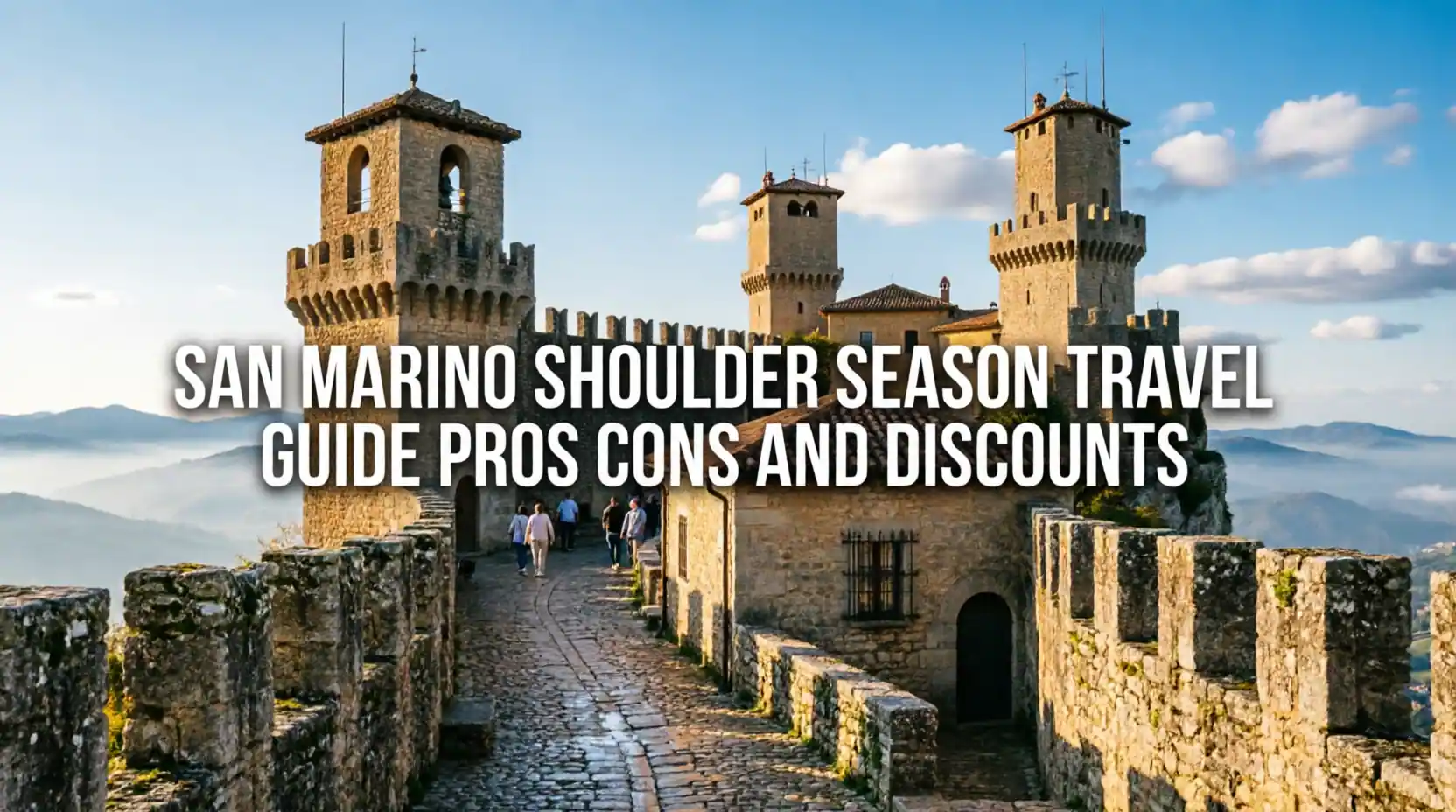
Traveling to San Marino in Shoulder Season Pros Cons and Discounts 2026
San Marino, the world's oldest republic perched atop Mount Titano in Italy, offers visitors a unique medieval experience with stunning architecture, rich history, and breathtaking views. While summer attracts the largest crowds, traveling during shoulder season presents compelling advantages for savvy travelers.
Shoulder season in San Marino typically spans April to May in spring and September to October in autumn. These periods bridge the gap between peak summer tourism and quieter winter months, offering a sweet spot for visitors seeking balance between weather, crowds, and costs.
Understanding the pros and cons of shoulder season travel helps you make informed decisions about timing your visit. This comprehensive 2026 guide examines weather patterns, pricing advantages, crowd levels, and seasonal considerations to help you plan the perfect San Marino adventure.
Whether you are a budget-conscious backpacker, a photography enthusiast seeking optimal lighting conditions, or a history buff preferring intimate museum experiences, shoulder season travel offers distinct benefits worth considering.
Understanding Shoulder Season in San Marino

San Marino's tourism calendar follows predictable patterns influenced by weather, school holidays, and European vacation schedules. Recognizing these patterns helps travelers identify optimal visiting windows.
Peak season runs from June through August when temperatures are warmest and daylight hours longest. During these months, the tiny republic experiences maximum visitor numbers, with cruise ship excursions and tour groups filling the historic center daily.
Shoulder season encompasses April to May and September to October. These months offer moderate temperatures, reduced crowds compared to summer, and often lower prices while maintaining favorable conditions for sightseeing and outdoor activities.
Winter months from November through March represent low season with minimal tourism, cooler temperatures, and occasional closures. While offering maximum solitude and lowest prices, winter travel presents weather-related challenges.
Defining Spring Shoulder Season (April-May)
Spring shoulder season brings San Marino back to life after winter's quiet period. April sees nature awakening with blooming flowers and greening landscapes while temperatures gradually warm from cool to comfortable.
May typically offers ideal conditions with pleasant temperatures averaging 18-24 degrees Celsius, longer daylight hours, and vibrant natural scenery. The landscape displays lush vegetation and colorful wildflowers creating picturesque settings for photography.
Spring shoulder season avoids the intense heat and humidity of summer while providing sufficient warmth for comfortable exploration of outdoor sites including the three towers, city walls, and panoramic viewpoints.
Easter period can bring temporary crowds, so travelers seeking maximum tranquility should target late April or May excluding holiday weekends. Understanding these nuances helps optimize timing within shoulder season.
Defining Autumn Shoulder Season (September-October)
Autumn shoulder season offers warm, stable weather in September gradually cooling to crisp, comfortable conditions in October. Many travelers consider this the optimal time to visit San Marino.
September retains summer's warmth without peak season crowds as families return home for school year beginnings. Temperatures average 20-26 degrees Celsius with abundant sunshine and minimal rainfall.
October brings cooler temperatures averaging 14-20 degrees Celsius, stunning fall foliage, and atmospheric misty mornings that create magical photography conditions. The changing leaves provide beautiful backdrops for the medieval stone architecture.
Harvest season in surrounding Italian regions offers culinary opportunities with fresh local produce, wines, and traditional foods. Food enthusiasts particularly appreciate autumn's gastronomic offerings.
Advantages of Shoulder Season Travel

Shoulder season travel to San Marino delivers multiple benefits that enhance visitor experiences while reducing costs and stress. Understanding these advantages helps justify timing your visit outside peak summer months.
Reduced crowds represent the most significant benefit, transforming San Marino from a bustling tourist destination into an intimate medieval village where you can appreciate architecture, history, and atmosphere without constant jostling for space.
Lower costs across accommodation, dining, and sometimes attractions provide substantial savings, particularly important for budget travelers or those planning extended stays in the region.
Moderate weather conditions prove more comfortable for extensive walking and outdoor exploration than summer's heat or winter's chill, making shoulder season ideal for active sightseeing.
Reduced Crowds and Enhanced Experiences
San Marino's compact historic center becomes overwhelmingly crowded during peak summer months with tour groups, cruise ship passengers, and day-trippers filling narrow medieval streets. Shoulder season dramatically reduces these numbers.
Visiting the three towers, museums, and basilica becomes genuinely enjoyable rather than a test of patience when you can actually see exhibits, take photographs without strangers in every frame, and absorb historical information without rushing.
Restaurants and cafes offer more attentive service when not overwhelmed by peak season volume. You can savor meals at a leisurely pace rather than feeling pressured to finish quickly for the next group.
Photography enthusiasts particularly benefit from reduced crowds, enabling clean shots of iconic landmarks without crowds of tourists obstructing views. Golden hour photography becomes feasible when locations aren't packed.
Accommodation availability increases significantly, providing more options and flexibility. You can choose preferred locations, room types, and amenities rather than accepting whatever remains available.
Cost Savings and Better Value
Accommodation prices drop 20-40 percent during shoulder season compared to peak summer rates. Hotels, guesthouses, and vacation rentals adjust pricing to attract visitors during slower periods.
Flight and transportation costs to nearby Italian cities like Rimini or Bologna often decrease during shoulder season, particularly outside European school holiday periods.
Some restaurants and shops offer seasonal promotions or discounts to maintain business during slower periods. While not universal, savvy travelers can find value opportunities.
Overall daily budgets stretch further when accommodation represents the largest expense category. Savings on lodging can fund better dining experiences, additional activities, or extended stays.
Package deals combining accommodation with tours or museum passes sometimes appear during shoulder season as businesses seek to attract visitors.
Comfortable Weather for Exploration
Spring and autumn temperatures prove ideal for San Marino's primary activity: walking. The historic center requires extensive pedestrian exploration with steep, cobbled streets and numerous stairs.
Moderate temperatures between 15-25 degrees Celsius prevent the exhaustion and discomfort of summer heat while avoiding winter's chill that can make outdoor sightseeing unpleasant.
Lower humidity levels compared to summer enhance comfort, particularly important for those unaccustomed to Mediterranean climate conditions.
Stable weather patterns in shoulder season typically provide sufficient sunshine and limited rainfall, though packing layers and rain protection remains prudent.
Comfortable conditions encourage longer exploration days, enabling comprehensive sightseeing without frequent rest breaks necessitated by extreme temperatures.
Potential Drawbacks to Consider

While shoulder season offers numerous advantages, honest assessment requires acknowledging potential disadvantages. Understanding these drawbacks enables informed decision-making and appropriate expectations.
Weather variability increases during shoulder months compared to summer's predictability. Rain becomes more likely, temperatures fluctuate more dramatically, and occasional cold snaps or unseasonable warmth can occur.
Some seasonal businesses, particularly those dependent on summer tourism volume, may reduce hours or close entirely during shoulder season, particularly in late October or early April.
Certain events and festivals scheduled specifically for summer months won't be available during shoulder season, though autumn and spring offer their own cultural programming.
Daylight hours decrease in autumn shoulder season compared to summer, reducing available sightseeing time, though spring sees increasing daylight.
Weather Uncertainty and Variability
Shoulder season weather proves less predictable than summer's consistent sunshine. Rain showers become more frequent, particularly in April and October, requiring flexible planning and appropriate gear.
Temperature swings between day and night increase during shoulder months. Mornings and evenings can feel quite cool even when midday temperatures prove pleasant, necessitating layered clothing.
Occasional cold fronts can bring unexpectedly chilly weather, particularly in late October or early April. While rare, these disruptions can affect outdoor plans.
Mountain weather on Mount Titano can change rapidly regardless of season. Fog, wind, or rain can reduce visibility and affect tower visits or panoramic photography.
Packing requires more consideration during shoulder season, bringing clothing suitable for variable conditions rather than the straightforward warm-weather packing of summer.
Reduced Services and Closures
Some hotels, restaurants, and shops operate reduced hours or close entirely during shoulder season, particularly in late October and early April when tourist numbers drop significantly.
Family-run establishments may take vacation periods during shoulder season when business slows, unlike larger operations that maintain year-round staffing.
Tour frequencies may decrease with fewer scheduled departures for guided tours, cooking classes, or specialized experiences that operate daily during peak season.
Public transportation between San Marino and Italian cities might operate on reduced schedules, requiring advance planning and verification of timetables.
Some seasonal attractions or outdoor activities may not operate during shoulder season, though San Marino's primary historical sites remain accessible year-round.
Limited Event Availability
Summer-specific events including certain festivals, concerts, or cultural celebrations won't occur during shoulder season. Research event calendars if specific programming motivates your visit.
Medieval festivals and historical reenactments often scheduled for summer months provide entertainment and cultural immersion unavailable during other seasons.
Outdoor concerts and performances in historic venues typically occur during warm summer evenings rather than cooler shoulder season periods.
However, shoulder season offers its own events including harvest festivals in autumn, spring celebrations, and religious observances that provide unique cultural experiences.
Verify event calendars when planning to ensure your visit aligns with desired activities or accept that different seasons offer different experiences.
Accommodation Discounts and Deals

Accommodation represents the largest travel expense category for most visitors, making shoulder season savings particularly significant. Understanding discount patterns helps maximize value.
Hotels in San Marino and nearby Italian cities reduce rates 20-40 percent during shoulder season compared to peak summer pricing. These savings compound for multi-night stays.
Booking flexibility increases dramatically with more available rooms across all categories from budget guesthouses to luxury hotels. Last-minute bookings become feasible rather than risky.
Package deals combining accommodation with breakfast, tours, or museum passes sometimes appear during shoulder season as properties seek to attract visitors.
Extended stay discounts become more readily negotiable when properties have availability. Week-long stays might secure additional reductions beyond published shoulder season rates.
Hotel and Guesthouse Pricing
San Marino's limited hotel inventory means properties adjust pricing strategically to maintain occupancy during slower periods. Three-star hotels might drop from 120-150 euros per night in summer to 80-100 euros during shoulder season.
Boutique properties and historic hotels offer particularly attractive shoulder season value, providing luxury experiences at moderate prices unavailable during peak periods.
Guesthouses and bed-and-breakfasts often maintain more consistent pricing year-round but may include additional amenities or upgrades during shoulder season to attract guests.
Booking directly with properties rather than through third-party platforms sometimes secures additional discounts or perks during shoulder season when owners have more time for personalized service.
Midweek stays often cost less than weekends even during shoulder season, providing additional savings opportunities for flexible travelers.
Nearby Italian Accommodation Options
Staying in nearby Italian cities like Rimini, Riccione, or Bologna and day-tripping to San Marino provides additional accommodation options and potentially lower costs.
Coastal Italian resorts experience dramatic shoulder season price reductions as beach tourism declines. Luxury beachfront properties might offer off-season rates 50 percent below summer prices.
Base yourself in Rimini for beach relaxation combined with San Marino cultural visits, enjoying dual experiences at reduced costs.
Italian cities offer broader dining, entertainment, and accommodation selections than tiny San Marino, providing more options for budget management.
Transportation between Italian cities and San Marino remains affordable and frequent, making this strategy practical for cost-conscious travelers.
Booking Strategies for Best Rates
Book 2-3 months in advance for shoulder season travel to secure best rates and availability without the pressure of peak season's immediate booking requirements.
Monitor prices after booking as some properties offer price-match guarantees or will honor lower rates if prices drop before your stay.
Consider flexible date searches to identify cheapest days within shoulder season. Midweek arrivals often cost less than weekend check-ins.
Loyalty programs and repeat guest discounts may provide additional savings, particularly at hotel chains with properties in the region.
Negotiate directly for extended stays of one week or more, as properties often have flexibility to offer unpublished discounts for guaranteed occupancy.
Dining and Restaurant Considerations

San Marino's dining scene adjusts to seasonal tourism patterns, affecting availability, pricing, and menu offerings. Understanding these dynamics helps plan satisfying culinary experiences.
Most restaurants remain open during shoulder season, particularly in San Marino's historic center where tourism provides year-round business. However, hours may reduce slightly compared to summer's extended service.
Menu offerings shift to feature seasonal ingredients, with autumn showcasing game, mushrooms, and harvest produce while spring highlights fresh vegetables and lighter preparations.
Service quality often improves during shoulder season as staff have more time for attentive service rather than the rushed efficiency necessitated by peak season volume.
Reservation requirements relax significantly, allowing spontaneous dining decisions rather than requiring advance bookings for popular establishments.
Seasonal Menu Variations
Autumn menus feature hearty dishes including wild boar, venison, porcini mushrooms, truffles, and roasted vegetables that showcase regional harvest abundance.
Spring offerings emphasize fresh asparagus, artichokes, lamb, and lighter preparations that reflect the season's renewal and agricultural cycles.
Traditional Sammarinese cuisine remains available year-round including piadina (flatbread), pasta dishes, and local wines, though seasonal specials rotate with agricultural availability.
Wine selections highlight new releases and seasonal pairings, with sommeliers often more available for consultations during slower periods.
Chef's tasting menus or special dining experiences may be offered during shoulder season to attract food enthusiasts when regular tourist volume decreases.
Restaurant Availability and Hours
Most San Marino restaurants operate year-round given the republic's status as a tourist destination, though some may reduce from seven-day to six-day operation during shoulder season.
Lunch service hours might shorten slightly with kitchens closing at 2:30 or 3 PM rather than 3:30 PM as in summer, reflecting earlier dining patterns.
Dinner service typically begins around 7:30 PM year-round, though summer might see service extending past midnight while shoulder season concludes closer to 10:30 or 11 PM.
Family-run trattorias may take vacation periods during shoulder season, particularly in late October or early April, so verify opening status for specific establishments.
Popular restaurants that require reservations weeks in advance during summer often accommodate same-day or next-day bookings during shoulder season.
Dining Cost Considerations
Restaurant prices generally remain consistent year-round in San Marino, though some establishments offer shoulder season promotions or fixed-price menus to attract diners.
Lunch specials and early bird discounts may appear during shoulder season as restaurants seek to maintain volume during slower periods.
Wine pricing might feature promotions on local selections, encouraging exploration of Sammarinese and regional Italian wines.
Overall dining budgets stretch further when accommodation savings free up funds for culinary experiences, enabling higher-quality restaurant choices.
Consider lunch as your primary meal with lighter dinner options, as many restaurants offer excellent value lunch menus that showcase quality at accessible prices.
Weather Patterns and What to Expect

Understanding shoulder season weather patterns enables appropriate packing and realistic activity planning. San Marino's mountain location creates conditions distinct from nearby coastal areas.
Spring weather transitions from cool and unpredictable in April to reliably pleasant in May. Temperature ranges expand as the season progresses with warmer days and gradually warming nights.
Autumn weather shifts from summer-like warmth in September to crisp, cool conditions in October. Temperature ranges contract with cooler nights becoming more pronounced.
Rainfall increases during shoulder months compared to summer's relative dryness, though precipitation typically arrives as passing showers rather than prolonged storms.
Mountain weather on Mount Titano proves more variable than lowland areas, with fog, wind, or sudden temperature changes possible regardless of broader seasonal patterns.
Spring Weather Details (April-May)
April temperatures average 8-16 degrees Celsius with considerable variability. Cool mornings around 8 degrees can warm to pleasant 16-degree afternoons, though occasional colder or warmer days occur.
Rainfall averages 60-80mm during April with 8-10 rainy days typical. Showers usually prove brief though occasionally persistent rain can occur.
May brings more stable conditions with temperatures averaging 12-22 degrees Celsius. Warm afternoons become common though mornings and evenings retain coolness requiring layers.
May rainfall decreases slightly to 50-70mm with 7-9 rainy days. Sunshine increases significantly compared to April, creating generally favorable conditions.
Snow becomes extremely rare after March though late cold snaps can theoretically bring flurries in early April, particularly at higher elevations on Mount Titano.
Autumn Weather Details (September-October)
September retains considerable warmth with temperatures averaging 16-25 degrees Celsius. Many days feel summery though nights begin cooling noticeably compared to July and August.
Rainfall remains moderate at 60-80mm with 6-8 rainy days typical. September often proves the driest shoulder season month with stable, pleasant conditions.
October temperatures drop to 10-18 degrees Celsius average with increasing variability. Warm sunny days alternate with cooler, cloudier periods as winter approaches.
October rainfall increases to 80-100mm with 8-10 rainy days. Showers become more frequent though often interspersed with beautiful clear, crisp days.
Fog becomes more common in October mornings, particularly in valleys, though mountain locations like San Marino often rise above fog layers creating dramatic atmospheric conditions.
Packing Recommendations
Layered clothing proves essential for shoulder season travel. Bring lightweight sweaters, cardigans, or fleeces that add warmth without bulk for temperature fluctuations.
Waterproof jacket or umbrella necessary for rain protection. Compact, packable options work well for variable conditions without consuming excessive luggage space.
Comfortable walking shoes with good traction essential for San Marino's cobbled, often steep streets. Water-resistant footwear proves advantageous during rainy periods.
Light scarf or pashmina adds warmth during cool mornings and evenings while remaining easy to pack and versatile for different outfits.
Sunglasses and sun protection remain necessary as UV levels stay significant during shoulder season despite cooler temperatures.
Attractions and Activities During Shoulder Season

San Marino's primary attractions remain accessible year-round, though experiences differ based on seasonal conditions and visitor numbers. Understanding these variations helps optimize your itinerary.
The three towers, museums, and basilica operate on consistent schedules throughout shoulder season with minimal hour reductions compared to summer's extended operations.
Outdoor activities including hiking, photography, and panoramic viewing prove particularly enjoyable during shoulder season's comfortable temperatures and reduced crowds.
Indoor attractions like museums provide excellent alternatives during occasional rainy days, with shorter lines and more leisurely exploration possible without summer crowds.
Day trip opportunities to nearby Italian cities and coastal areas remain excellent during shoulder season with easier transportation and more pleasant conditions than summer's heat.
Historic Sites and Museums
Guaita, Cesta, and Montale towers remain open year-round with only minor hour adjustments. First Tower (Guaita) typically operates 9 AM to 6 PM during shoulder season.
Museum crowds decrease dramatically, enabling contemplative viewing of exhibits without jostling for space or rushing through galleries. Audio guides and informational displays become genuinely useful rather than impossible to access.
Photography improves significantly without crowds of tourists in every frame. You can capture clean images of architecture, artifacts, and panoramic views.
Guided tours operate with reduced frequency but often provide more personalized experiences with smaller groups and more guide attention per visitor.
Combined museum passes remain available offering cost savings for visitors planning to explore multiple sites during their stay.
Outdoor Activities and Hiking
Hiking Mount Titano's trails proves particularly pleasant during shoulder season with comfortable temperatures preventing summer's heat exhaustion risks.
The 3-kilometer path connecting the three towers offers stunning views and manageable difficulty ideal for shoulder season exploration when weather cooperates.
Photography conditions excel during shoulder season with softer light, atmospheric conditions, and absence of crowds obstructing compositions.
Wildlife viewing opportunities increase with fewer human disturbances, though San Marino's small size limits extensive wildlife encounters.
Picnic opportunities abound in scenic locations when weather permits, though shoulder season's variability requires flexible planning and backup indoor options.
Day Trip Opportunities
Nearby Italian cities including Rimini, Ravenna, Bologna, and Florence remain excellent day trip destinations during shoulder season with easier access and more pleasant conditions.
Adriatic coast beaches prove less crowded though swimming becomes less appealing as water temperatures cool, particularly in October.
Cultural sites in Italian cities experience reduced crowds during shoulder season, enhancing experiences at popular attractions like Ravenna's mosaics or Bologna's medieval center.
Transportation between San Marino and Italian destinations operates reliably during shoulder season though verifying schedules remains prudent as frequencies may reduce slightly.
Wine tours and culinary experiences in surrounding Emilia-Romagna region prove particularly appealing during autumn harvest season with special events and tastings.
Transportation and Accessibility

Reaching and navigating San Marino during shoulder season requires understanding transportation options and any seasonal adjustments to services.
The republic's mountaintop location necessitates specific transportation planning whether arriving by car, public transit, or tour from Italian cities.
Parking availability improves dramatically during shoulder season compared to summer's frequent saturation of limited spaces in the historic center.
Public transportation between San Marino and Italian cities continues operating during shoulder season though frequencies may reduce slightly from peak summer schedules.
Walking remains the primary mode of transportation within San Marino's compact historic center regardless of season, making comfortable footwear essential year-round.
Getting to San Marino
Flying into Bologna or Rimini airports provides convenient access with rental car or public transportation options to reach San Marino during shoulder season.
Rental car availability remains good during shoulder season with better rates and selection compared to summer's high demand. Book in advance for best options.
Bus service from Rimini to San Marino operates year-round with approximately hourly departures during shoulder season, slightly reduced from summer's frequency.
Train travel to Rimini combined with bus connection to San Marino remains viable during shoulder season with reliable service though verifying current schedules proves prudent.
Tour operators continue offering day trips to San Marino from Italian cities during shoulder season, though frequencies may reduce from daily to several times weekly.
Parking and Local Transportation
Parking in San Marino proves much easier during shoulder season with available spaces in both paid lots and some free areas that fill completely during summer.
Parking fees remain consistent year-round though some facilities might offer promotional rates during slower periods to attract visitors.
Free parking areas on the mountain's periphery require 15-20 minute walks to the historic center but prove viable options when weather cooperates.
Electric shuttle buses circulate within San Marino connecting parking areas to the historic center, operating on reduced but adequate schedules during shoulder season.
Taxi services remain available though advance booking proves advisable for specific pickup times during slower periods when fewer vehicles circulate.
Budget Planning and Cost Comparisons

Shoulder season travel to San Marino offers significant cost savings compared to peak summer, though understanding where savings occur helps realistic budget planning.
Accommodation represents the largest savings category with 20-40 percent reductions common. A week-long stay might save 200-400 euros compared to summer rates.
Transportation costs to the region may decrease slightly with lower airfare and rental car rates during shoulder season, though savings prove less dramatic than accommodation.
Dining costs remain relatively consistent year-round, though better value emerges through improved service, more attentive experiences, and occasional promotions.
Attraction entry fees stay constant regardless of season, though combined passes and promotions sometimes appear during shoulder season to attract visitors.
Daily Budget Estimates
Budget travelers might spend 80-120 euros daily during shoulder season including budget accommodation (40-60 euros), meals (25-35 euros), attractions (10-15 euros), and miscellaneous expenses (5-10 euros).
Mid-range travelers can expect 150-250 euros daily with comfortable accommodation (80-120 euros), dining at varied restaurants (50-80 euros), attractions and activities (15-30 euros), and incidentals (5-20 euros).
Luxury travelers might spend 300-500+ euros daily with premium accommodation (150-300 euros), fine dining (100-150 euros), private tours and exclusive experiences (50-100 euros), and premium services.
Shoulder season savings primarily benefit accommodation budgets, enabling upgrades to better properties or extended stays within the same overall budget.
Multi-day visits prove more affordable during shoulder season, with per-day costs decreasing as fixed expenses like transportation spread across more days.
Where to Save and Where to Splurge
Save on accommodation by booking shoulder season rates, then splurge on a special dinner or experience that summer budgets might not allow.
Save on transportation by visiting during shoulder season when rental cars and flights cost less, allocating savings to guided tours or unique activities.
Save on dining by enjoying lunch specials and lighter dinners, then splurge on one exceptional meal showcasing local cuisine and wines.
Save on attractions by purchasing combined passes or visiting during promotional periods, then splurge on private guided tours for deeper historical understanding.
Consider splurging on accommodation with views or historic character, as shoulder season rates make premium properties more accessible while you'll spend most time exploring outside the room.
Final Thoughts on Shoulder Season Travel
Shoulder season travel to San Marino offers compelling advantages for visitors seeking authentic experiences, cost savings, and comfortable conditions without peak season crowds.
The balance between favorable weather, reduced tourism pressure, and lower costs makes April-May and September-October optimal for many travelers prioritizing experience quality over guaranteed perfect weather.
Accepting some weather variability in exchange for dramatically improved visitor experiences proves worthwhile for most travelers, particularly those interested in photography, history, and cultural immersion.
Proper preparation including layered clothing, flexible planning, and realistic expectations ensures rewarding shoulder season visits that create lasting memories of this remarkable microstate.
Whether you choose spring's renewal and blooming landscapes or autumn's harvest abundance and golden light, shoulder season reveals San Marino's timeless beauty in intimate, unhurried ways that summer's crowds simply cannot match.
0 Comments