.webp)
.webp)
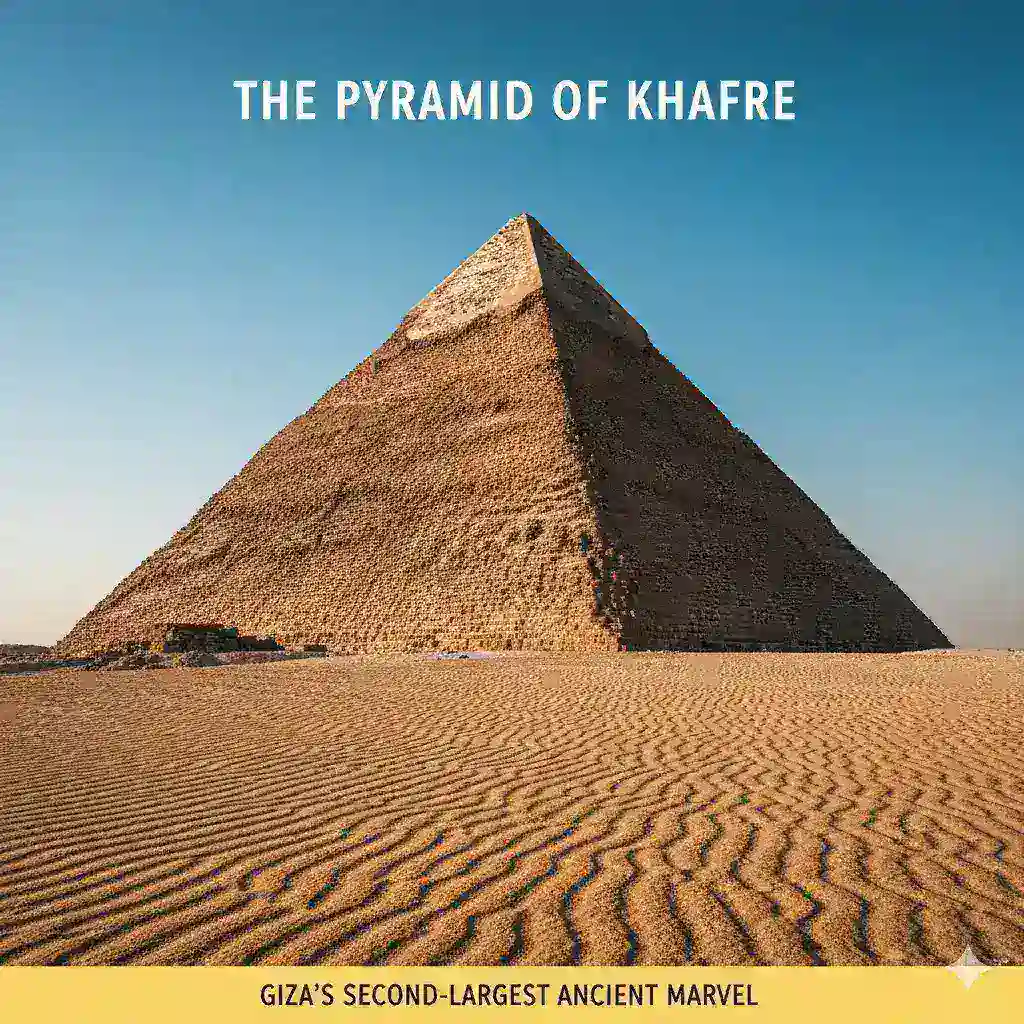
THE PYRAMID OF KHAFRE: DISCOVERING GIZA'S SECOND-LARGEST ANCIENT MARVEL
Rising majestically on the Giza Plateau, the Pyramid of Khafre stands as the second-largest of the three great pyramids and one of the most visually striking monuments of ancient Egypt. Built during the Fourth Dynasty of the Old Kingdom around 2558-2532 BCE, this remarkable structure appears taller than its neighbor, the Great Pyramid of Khufu, due to its elevated position on the plateau and the remaining limestone casing stones that still crown its apex. As the eternal resting place of Pharaoh Khafre (also known as Chephren), this pyramid complex represents a masterpiece of ancient engineering, architectural sophistication, and royal ambition. In 2026, as travelers seek connections to humanity's greatest achievements, the Pyramid of Khafre offers an unparalleled opportunity to explore a monument that has witnessed over 4,500 years of history while preserving elements lost from its more famous neighbor.
This comprehensive guide invites you to explore the Pyramid of Khafre with deeper understanding and greater appreciation. We will examine the historical context that gave rise to this extraordinary building, decode the architectural innovations that distinguish it from other Giza pyramids, explore the remarkably preserved valley temple and Sphinx connection, and provide practical information for visiting in 2026. Whether you are a history enthusiast drawn by pharaonic mysteries, an architecture lover fascinated by ancient engineering, a photography enthusiast chasing golden hour light on ancient stone, or simply a curious traveler inspired by the pyramid's unique character, this guide will help you prepare for an unforgettable encounter with Giza's second-greatest pyramid.
Understanding the Pyramid of Khafre requires more than admiring its impressive scale; it demands engaging with the beliefs that inspired its construction, the sophisticated planning that created an integrated complex of pyramid, temples, and causeway, and the ongoing conservation efforts that protect this irreplaceable heritage. By approaching the pyramid with curiosity and respect, you will discover not just ancient stone but a living dialogue between past and present, between royal ambition and eternal legacy.
HISTORICAL CONTEXT: THE REIGN OF KHAFRE AND THE FOURTH DYNASTY
The Pyramid of Khafre was constructed during the reign of Pharaoh Khafre (Chephren in Greek), who ruled Egypt during the Fourth Dynasty of the Old Kingdom, approximately 2558-2532 BCE. Khafre was the son of Khufu (builder of the Great Pyramid) and the father of Menkaure (builder of the third Giza pyramid), making him a central figure in the dynasty that created the most iconic monuments of ancient Egypt.
Khafre's reign marked a period of continued prosperity and centralized power in Old Kingdom Egypt. While his father Khufu had established the precedent for massive pyramid construction at Giza, Khafre refined and expanded the pyramid complex concept, creating a more integrated and sophisticated funerary landscape that included not just the pyramid itself but also the enigmatic Sphinx, a remarkably preserved valley temple, and a grand causeway connecting all elements.
The choice to build at Giza, adjacent to his father's pyramid, was both practical and symbolic. Practically, the site offered excellent limestone bedrock for construction and proximity to the Nile for transporting materials. Symbolically, building next to Khufu's pyramid reinforced dynastic continuity and royal legitimacy, creating a monumental statement of the Fourth Dynasty's enduring power.
Khafre's pyramid complex represents an evolution in pyramid construction. While slightly smaller than his father's Great Pyramid in absolute dimensions, Khafre's pyramid appears more impressive due to several factors: its position on higher ground on the plateau, the steeper angle of inclination (53°13' compared to Khufu's 51°50'), and crucially, the preservation of the original smooth limestone casing stones at the pyramid's apex. These casing stones, which once covered the entire pyramid, give us a rare glimpse of how all the Giza pyramids would have appeared in their original glory—gleaming white monuments visible for miles across the desert.
The pyramid served as Khafre's eternal resting place and a machine for resurrection, designed to facilitate the pharaoh's transformation into an akh (effective spirit) and his union with the sun god Ra. The complex's integrated design—pyramid, mortuary temple, causeway, valley temple, and Sphinx—created a comprehensive ritual landscape that supported the pharaoh's journey from death to eternal life.
ARCHITECTURAL FEATURES: ENGINEERING SOPHISTICATION AND ROYAL GRANDeur
The Pyramid of Khafre demonstrates remarkable architectural sophistication and represents a high point in Old Kingdom pyramid construction. Understanding its features enhances appreciation for the skill and vision of ancient Egyptian architects and engineers.
Dimensions and Structure:
The Pyramid of Khafre stands at an original height of approximately 143.5 meters (471 feet), though it now stands at about 136.4 meters (448 feet) due to the loss of its capstone and some casing stones. Its base measures approximately 215.5 meters (707 feet) on each side, covering an area of about 4.6 hectares (11.4 acres). While these dimensions make it slightly smaller than the Great Pyramid of Khufu, its elevated position on the plateau and steeper angle create a more imposing visual presence.
The pyramid's angle of inclination—53°13'—is steeper than Khufu's pyramid, giving it a more dramatic profile against the sky. This steeper angle, combined with the elevated position, creates the optical illusion that makes Khafre's pyramid appear taller than Khufu's, a visual effect that has fascinated visitors for millennia.
The Remaining Casing Stones:
One of the Pyramid of Khafre's most distinctive features is the preservation of original casing stones at its apex. These smooth, white Tura limestone blocks once covered the entire pyramid, creating a gleaming surface that reflected sunlight and made the monument visible for miles. While most of the casing was removed over the centuries for use in other construction projects (particularly in medieval Cairo), a significant section remains at the pyramid's peak, providing a rare glimpse of the pyramid's original appearance.
These casing stones were precisely cut and fitted, with joints so tight that a knife blade could not be inserted between them. The stones were polished to a smooth finish, creating a surface that would have shimmered in the desert sun. This remaining cap serves as both a conservation priority and an educational resource, helping visitors understand the full splendor of the original monument.
Internal Structure:
The pyramid's interior is simpler than Khufu's pyramid but no less sophisticated:
- Two Entrances: Unlike most pyramids, Khafre's pyramid has two entrances on the north face—one at ground level (now the main visitor entrance) and one 11.5 meters (38 feet) above the base. Both lead to the same descending passage.
- Descending Passage: A corridor carved into the bedrock descends at an angle of 21°40' for approximately 105 meters (344 feet) before leveling out.
- Burial Chamber: A simple, undecorated chamber carved from the bedrock contains a granite sarcophagus. Unlike Khufu's pyramid, there is no evidence of relieving chambers above the burial chamber.
- Ascending Passage: A short ascending passage connects to the main descending corridor near the burial chamber.
The simplicity of the interior contrasts with the complexity of the exterior complex, suggesting that Khafre's architects focused their innovation on the overall complex design rather than internal chambers.
Construction Techniques:
The construction of Khafre's pyramid required extraordinary organization and technical skill:
- Quarrying: Limestone blocks were quarried from the Giza plateau itself, with finer Tura limestone brought from across the Nile for casing stones, and granite transported from Aswan for interior elements.
- Transportation: Blocks were moved on sledges, likely lubricated with water or oil, and transported via ramps and causeways. The proximity of quarries to the construction site reduced transportation challenges.
- Precision Placement: The pyramid's precise alignment with cardinal points (deviating less than 0.1 degrees from true north) demonstrates sophisticated surveying techniques, possibly using stellar observations.
- Workforce Organization: Evidence suggests a skilled, paid workforce rather than slave labor, with workers organized into specialized teams and provided with housing, food, and medical care.
THE KHAFRE PYRAMID COMPLEX: AN INTEGRATED RITUAL LANDSCAPE
What distinguishes the Pyramid of Khafre from other Giza pyramids is the remarkable preservation and sophistication of its entire complex, which includes the pyramid, mortuary temple, causeway, valley temple, and the Great Sphinx. This integrated design represents a high point in Old Kingdom funerary architecture.
The Valley Temple:
Khafre's valley temple is one of the best-preserved structures from the Old Kingdom and provides crucial insights into ancient Egyptian architecture and ritual practice. Built from massive limestone blocks faced with red granite from Aswan, the temple demonstrates the sophistication of Fourth Dynasty construction.
Key Features:
- Massive Granite Blocks: Some blocks weigh over 100 tons, transported from Aswan over 800 kilometers (500 miles) away.
- Polished Granite Interior: The interior walls were once faced with polished red granite, creating a dramatic, reflective surface.
- Statuary: The temple originally contained numerous statues of Khafre, including the famous diorite statue now in the Egyptian Museum, which shows the pharaoh seated with the falcon god Horus protecting him.
- Ritual Function: The temple served as the entry point for the funerary complex, where the pharaoh's body was received and initial purification rituals were performed.
The Causeway:
Connecting the valley temple to the mortuary temple was a covered causeway approximately 494 meters (1,621 feet) long. This elevated corridor served both practical and symbolic functions:
- Practical: Protected funeral processions from the elements and provided a controlled route for rituals.
- Symbolic: Represented the pharaoh's journey from the world of the living (valley temple) to the realm of the dead (pyramid).
- Decoration: The causeway was likely decorated with reliefs depicting the pharaoh's achievements and divine associations, though little decoration survives today.
The Mortuary Temple:
Located at the base of the pyramid's east face, the mortuary temple was the focal point of the cult of Khafre, where priests performed daily rituals to sustain the pharaoh's spirit in the afterlife.
Features:
- Five Chapels: Dedicated to the pharaoh and various deities.
- Offering Hall: Where food and drink offerings were presented to sustain the pharaoh's ka (life force).
- Storage Magazines: Rooms for storing offerings, ritual equipment, and temple treasures.
- Courtyard: An open court surrounded by columns, used for public ceremonies.
Though heavily ruined, the mortuary temple's layout and remaining elements reveal the complexity of Old Kingdom funerary ritual and the resources dedicated to maintaining the pharaoh's cult.
The Great Sphinx Connection:
The Great Sphinx, positioned directly in front of Khafre's valley temple, is integrally connected to the Khafre pyramid complex. Most Egyptologists believe the Sphinx was carved during Khafre's reign, using limestone blocks quarried from the ditch created when the Sphinx was carved—blocks that were likely used in the construction of the valley temple and other complex elements.
The Sphinx's alignment with the pyramid complex, its proximity to the valley temple, and stylistic similarities between the Sphinx's face and statues of Khafre all support the connection. The Sphinx likely served as a guardian of the entire complex, embodying the pharaoh's power and protecting the sacred necropolis.
CULTURAL AND RELIGIOUS SIGNIFICANCE: ETERNAL KINGSHP AND SOLAR SYMBOLISM
The Pyramid of Khafre and its associated complex served multiple religious and cultural functions in ancient Egyptian society, reflecting the sophisticated theology of the Old Kingdom.
Solar Symbolism:
The pyramid's form and orientation carried profound solar significance:
- The pyramid's shape represented the benben, the primordial mound that emerged from the waters of chaos at creation, and the rays of the sun descending to earth.
- The smooth, white casing stones reflected sunlight, making the pyramid a beacon of solar power visible across the landscape.
- The east-west alignment connected the pharaoh to the sun god Ra's daily journey across the sky, from birth in the east to rebirth in the west.
Royal Divinity:
The pyramid complex reinforced the pharaoh's divine status:
- As the son of Ra, the pharaoh's eternal existence was essential to maintaining cosmic order (ma'at).
- The pyramid served as a resurrection machine, facilitating the pharaoh's transformation into an akh (effective spirit) who could join the gods.
- The integrated complex—valley temple, causeway, mortuary temple, pyramid, and Sphinx—created a comprehensive ritual landscape supporting the pharaoh's journey from death to eternal life.
The Cult of Khafre:
After Khafre's death, a mortuary cult was established to maintain his spirit:
- Priests performed daily rituals, offering food, drink, and incense to sustain the pharaoh's ka.
- The cult continued for generations, though it eventually declined as political power shifted.
- During the New Kingdom, the Sphinx (and by extension the Khafre complex) was venerated as a form of the sun god Harmakhtis (Horus of the Horizon), as evidenced by Thutmose IV's Dream Stele.
Legacy and Influence:
The Khafre pyramid complex influenced subsequent pyramid construction:
- The integrated design of pyramid, temples, causeway, and sphinx became the standard for royal funerary complexes.
- The architectural sophistication and precision set benchmarks for subsequent builders.
- The complex's preservation (particularly the valley temple) provides invaluable insights into Old Kingdom architecture and ritual practice.
VISITOR EXPERIENCE: EXPLORING THE KHAFRE COMPLEX
Visiting the Pyramid of Khafre in 2026 offers multiple ways to engage with this ancient monument, from exploring the pyramid's interior to appreciating the integrated complex and its relationship to the Sphinx and other Giza monuments.
Pyramid Interior Access:
Visitors can enter the Pyramid of Khafre through the lower entrance on the north face:
The Experience:
- Descending Passage: A narrow corridor descends into the bedrock, requiring visitors to bend and navigate carefully. The passage can be warm and confined.
- Burial Chamber: The passage leads to a simple, undecorated chamber carved from the bedrock. The granite sarcophagus remains in place, though it is empty.
- Atmosphere: The interior is stark and unadorned, contrasting with the elaborate decoration of later tombs. This simplicity emphasizes the pyramid's primary function as a resurrection machine rather than a decorated memorial.
Practical Considerations:
- Interior access requires a separate ticket (approximately 100-200 EGP / $3-6 USD)
- The interior can be hot, humid, and claustrophobic; not recommended for those with mobility issues or claustrophobia
- Photography inside the pyramid is prohibited
- Allow 20-30 minutes for the interior visit
- Limited number of visitors allowed inside at one time; expect queues during peak hours
Exterior Exploration:
For many visitors, the pyramid's exterior and surrounding complex offer the most rewarding experience:
Viewing Angles:
- Base Level: Walking around the pyramid's base allows appreciation of its massive scale and the precision of construction. The remaining casing stones at the apex are clearly visible.
- Elevated Viewpoints: The plateau offers various vantage points for photographing the pyramid, particularly from near the Sphinx or from the panoramic viewpoint south of Khufu's pyramid.
- Relationship to Complex: Walking the causeway route (now largely ruined but traceable) helps visualize the integrated design of valley temple, causeway, and pyramid.
The Valley Temple Visit:
Khafre's valley temple is a highlight of the Giza complex and should not be missed:
What to See:
- Massive Granite Blocks: Marvel at the engineering feat of transporting and positioning blocks weighing over 100 tons.
- Architectural Precision: Observe the precise fitting of stones and the sophisticated design.
- Statuary Fragments: Remnants of the statues that once lined the temple halls.
- Connection to Sphinx: The temple's proximity to the Sphinx is clearly visible, emphasizing their connection.
Visitor Tips:
- The valley temple is included with general Giza admission
- Allow 30-45 minutes to explore the temple thoroughly
- Early morning or late afternoon light enhances the granite's dramatic appearance
- A knowledgeable guide can greatly enhance understanding of the temple's function and significance
The Sphinx Connection:
No visit to the Khafre pyramid complex is complete without experiencing the Great Sphinx:
Integrated Experience:
- The Sphinx's position directly in front of the valley temple emphasizes their connection
- Viewing the Sphinx with Khafre's pyramid in the background creates a powerful visual statement of the complex's integrated design
- The Sphinx Temple, though heavily ruined, sits between the Sphinx and the valley temple, completing the ritual landscape
PRACTICAL VISITOR INFORMATION FOR 2026
Planning a visit to the Pyramid of Khafre requires consideration of logistics, timing, and cultural norms. This section provides essential information for traveling responsibly to the Giza Plateau in 2026.
Getting to the Giza Plateau:
The Giza Plateau is located approximately 20 kilometers (12 miles) southwest of central Cairo.
By Taxi or Ride-Hailing:
- Uber and Careem operate reliably in Cairo and can drop visitors at the Giza Plateau entrance
- Agree on fares in advance or use app pricing to avoid confusion
- Allow 30-60 minutes for the journey from central Cairo, depending on traffic
- Cost: Approximately 150-300 EGP ($5-10 USD) each way
By Organized Tour:
- Many tour operators offer half-day or full-day Giza tours with transportation, guides, and sometimes meals included
- Ideal for first-time visitors or those preferring structured experiences
- Book through reputable companies with good reviews
- Cost: Varies widely from $30-150 USD depending on inclusions and group size
By Public Transportation:
- Metro Line 2 to Giza Station, then taxi or bus to the plateau
- Budget-friendly but requires navigation and local knowledge
- Allow extra time for transfers and potential delays
- Cost: Approximately 20-50 EGP ($0.60-1.50 USD)
Opening Hours and Ticketing:
The Giza Plateau, including the Pyramid of Khafre, is generally open daily from 8 AM to 5 PM, though hours may vary seasonally.
Ticket Information (subject to change):
- General Giza Plateau admission: 200-400 EGP ($6-12 USD) for foreigners
- Khafre Pyramid interior: Additional 100-200 EGP ($3-6 USD)
- Sphinx enclosure: Included with general admission
- Valley Temple: Included with general admission
- Combination tickets: May offer savings; inquire at ticket offices
Booking Tips:
- Purchase tickets at the official ticket office to avoid scams
- Keep tickets accessible; they may be checked at multiple points
- Interior tickets for the pyramid are limited; arrive early if you want to enter
- Consider hiring a licensed Egyptologist guide at the entrance (approximately 200-500 EGP / $6-15 USD)
Best Times to Visit:
To avoid crowds and enjoy optimal conditions:
Sunrise/Early Morning (8-10 AM):
- Smallest crowds
- Soft morning light ideal for photography
- Cooler temperatures
- Best time for pyramid interior visits (shorter queues)
Late Afternoon (3-5 PM):
- Golden hour lighting creates dramatic shadows
- Warm tones enhance the limestone and granite
- Crowds begin to thin
- Good for exterior photography
Avoid Midday (11 AM - 2 PM):
- Heat peaks (especially in summer)
- Crowds are largest
- Harsh overhead light is poor for photography
- Interior visits can be uncomfortably hot
Seasonal Considerations:
October to April (Peak Season):
- Pleasant temperatures (15-25°C / 59-77°F)
- Largest crowds, especially December-January
- Book accommodations and tours well in advance
- Ideal weather for extended exploration
May to September (Off-Peak):
- Extreme heat (often exceeding 35°C / 95°F)
- Fewer tourists
- Lower accommodation prices
- Plan activities for early morning and late afternoon
- Stay hydrated and seek shade during midday
Weather Considerations:
Giza has a desert climate:
- Summer: Extremely hot and dry; bring sun protection, water, and light clothing
- Winter: Pleasant days, cool evenings; bring layers
- Sandstorms: Occasional khamsin winds can bring sand and dust; check forecasts
- Rain: Extremely rare; no need for rain gear typically
Accessibility:
The Giza Plateau presents challenges for visitors with mobility limitations:
- Pathways: Main paths are paved but can be uneven or sandy
- Pyramid Interior: Not wheelchair accessible; involves narrow, sloping passages and steps
- Valley Temple: Partially accessible; some areas have steps
- Sphinx Enclosure: Relatively accessible with paved pathways
- Assistance: Staff can provide guidance on accessible routes; contact in advance for specific needs
- Wheelchair Rental: Limited availability; arrange in advance if needed
Photography Tips:
The Pyramid of Khafre offers exceptional photography opportunities:
Best Times for Photography:
Golden Hour (Sunrise/Sunset):
- Warm, directional light enhances texture and creates dramatic shadows
- The remaining casing stones at the apex catch the light beautifully
- Sunrise offers fewer crowds; sunset offers warmer tones
Blue Hour:
- The period just after sunset offers soft, even light
- If monuments are illuminated, this creates dramatic opportunities
- Use a tripod for long exposures
Composition Techniques:
Include Scale:
- Position people in your frame to convey the pyramid's massive size
- The contrast between human scale and monumental architecture is powerful
Pyramid Relationships:
- Frame Khafre's pyramid with the Sphinx in the foreground
- Capture all three Giza pyramids in a single composition from the panoramic viewpoint
- Show the relationship between pyramid, valley temple, and Sphinx
Details:
- Focus on the remaining casing stones at the apex
- Capture the precision of the granite blocks in the valley temple
- Document erosion patterns and conservation work
Technical Considerations:
- Wide-Angle Lens (16-35mm): Captures the full pyramid and complex
- Telephoto Lens (70-200mm): Compresses perspective, isolates details
- Polarizing Filter: Reduces glare on stone, enhances sky contrast
- Tripod: Useful for low light; may require special permission
Respect Restrictions:
- Flash photography may be prohibited in certain areas
- Commercial photography requires special permits
- Drones are generally prohibited without special authorization
- Always respect signs and staff instructions
Health and Safety:
The Giza Plateau is generally safe for visitors who take standard precautions:
Sun Protection:
- Egypt's UV levels are extreme; use SPF 50+ sunscreen
- Wear a wide-brimmed hat and UV-protection sunglasses
- Seek shade during peak sun hours (10 AM - 3 PM)
- Wear lightweight, long-sleeved clothing for sun protection
Hydration:
- Bring at least 2-3 liters of water per person
- Dehydration occurs quickly in desert conditions
- Vendors sell water on-site, but prices are higher
- Avoid tap water; drink only bottled or treated water
Footwear:
- Wear sturdy, comfortable walking shoes with good traction
- Sand and limestone can be slippery
- Avoid sandals or flip-flops for extended exploration
Personal Belongings:
- Keep valuables secure; use hotel safes for passports and excess cash
- Be aware of your surroundings in crowded areas
- Use a money belt or hidden pouch for important documents
- Beware of pickpockets in crowded areas
Guidance:
- Follow instructions from site staff and licensed guides
- Avoid climbing on monuments or entering restricted areas
- Stay on designated paths to protect archaeological features
- Be cautious of unsolicited "guides" or vendors
Scams to Avoid:
- "Closed" monuments: Some vendors claim monuments are closed to sell alternative tours; verify at official ticket office
- "Free" gifts: Vendors may offer "free" items then demand payment; politely decline
- Camel/horse rides: Negotiate price clearly before mounting; be aware of common overcharging
- Photo opportunities: Some vendors dress in "traditional" costume and demand payment for photos; clarify before photographing
Cultural Etiquette:
Egypt is a predominantly Muslim country with conservative social norms:
Dress Modestly:
- Cover shoulders and knees at minimum
- Lightweight, breathable fabrics are ideal for the climate while maintaining modesty
- Women may feel more comfortable with a scarf for covering hair in conservative areas
Respect Local Customs:
- Ask permission before photographing people, particularly women and children
- A smile and gesture with your camera usually suffices
- Respect refusals gracefully
Tipping (Baksheesh):
- Small tips are customary for services
- Guards, restroom attendants, guides all expect tips
- Carry small denominations (5, 10, 20 EGP notes)
- Typical tips: 10-20 EGP for small services, 50-100 EGP for guides
Language:
- Learning basic Arabic phrases is appreciated:
- "Salam alaykum" (Peace be upon you / Hello)
- "Shukran" (Thank you)
- "Min fadlak" (Please)
- "Kam al-thaman?" (How much?)
Bargaining:
- Polite negotiation is expected in markets and with vendors
- Start at 30-50% of the asking price
- Maintain a friendly, respectful demeanor
- If you agree on a price, complete the purchase; walking away after agreeing is rude
SUSTAINABLE AND RESPONSIBLE TOURISM
Visiting the Pyramid of Khafre carries responsibility to protect this irreplaceable monument for future generations. In 2026, sustainable tourism practices are essential for preserving Egypt's heritage.
Conservation Challenges:
The Pyramid of Khafre faces ongoing threats:
- Erosion: Wind, sand, and pollution continue to wear away the limestone
- Climate Change: Increasing temperatures and extreme weather events accelerate deterioration
- Pollution: Cairo's air pollution accelerates stone deterioration
- Visitor Impact: Millions of visitors annually contribute to wear and environmental stress
- Groundwater: Rising water tables threaten the foundation
How You Can Help:
Protect the Monument:
- Stay on designated paths; do not climb on the pyramid or touch the casing stones
- Oils from skin accelerate stone deterioration
- Follow all conservation guidelines and respect barriers
- Report any damage or concerning behavior to site staff
Minimize Environmental Impact:
- Reduce Waste: Carry a reusable water bottle; avoid single-use plastics. Egypt faces significant waste management challenges.
- Proper Disposal: Use designated bins; if bins are full, carry your trash until you find appropriate disposal.
- Choose Sustainable Operators: Select tour companies committed to environmental responsibility and fair labor practices.
- Conserve Resources: Egypt faces water scarcity; use water and energy mindfully.
Support Local Communities:
- Choose Local Guides: Hire licensed Egyptian guides who provide authentic perspectives and support the local economy.
- Purchase Responsibly: Buy crafts from reputable sources that fairly compensate artisans. Avoid mass-produced souvenirs.
- Respect Workers: Treat guards, vendors, and service workers with dignity and fairness. Tip appropriately.
- Choose Local Accommodations: Stay in locally-owned hotels and eateries when possible.
Engage with Cultural Heritage Respectfully:
- Educate Yourself: Learn about the pyramid's history and significance before visiting; understanding deepens appreciation.
- Listen to Egyptian Voices: Prioritize Egyptian guides, scholars, and conservationists who interpret their own heritage.
- Avoid Pseudoscience: Be skeptical of claims about Atlantis, aliens, or lost civilizations; these theories often disrespect Egyptian culture and history.
- Share Responsibly: When sharing your experience on social media, promote accurate information and cultural respect rather than sensationalism.
Support Conservation Organizations:
- Consider donating to organizations working to preserve Egyptian monuments:
- Egyptian Ministry of Tourism and Antiquities conservation programs
- UNESCO World Heritage Centre
- American Research Center in Egypt (ARCE)
- The Giza Plateau Mapping Project
CONCLUSION: A MONUMENT TO ETERNAL AMBITION
The Pyramid of Khafre stands as a testament to human ambition, engineering ingenuity, and the enduring quest for eternity. As you stand before this massive structure, gazing at the remaining casing stones that crown its apex and contemplating the integrated complex of pyramid, temples, causeway, and Sphinx, you encounter something profound: the power of human creativity to shape stone into meaning, to reach for immortality, and to leave a legacy that outlasts empires.
Khafre's pyramid may be the second-largest at Giza, but in many ways, it is the most complete. The preserved valley temple, the visible casing stones, the connection to the Sphinx—all these elements provide a more comprehensive understanding of Old Kingdom funerary architecture than any other Giza pyramid. For the thoughtful visitor, Khafre's pyramid offers not just a monument to explore but a window into the sophisticated planning, religious beliefs, and technical capabilities of ancient Egypt at its zenith.
In 2026, as travelers seek meaningful connections to history, culture, and human achievement, the Pyramid of Khafre offers an unparalleled opportunity to engage with one of humanity's greatest accomplishments. Whether you photograph the remaining casing stones at sunrise, trace the route of the ancient causeway, explore the valley temple's massive granite blocks, or simply sit in contemplative silence before the pyramid's timeless presence, this monument invites reflection on questions that have animated human existence across the ages: What endures? How do we balance preservation with the inevitable passage of time? What legacy do we wish to leave?
As you plan your visit to the Pyramid of Khafre, approach this extraordinary monument with curiosity, humility, and respect. Listen to the stories told by Egyptologists and conservationists, engage with the scholarship that continues to reveal its secrets, and allow its grandeur to inspire your own appreciation for human potential and enduring questions. By traveling responsibly and supporting conservation efforts, you can contribute to the preservation of this remarkable monument while creating memories that will last a lifetime.
May your encounter with the Pyramid of Khafre deepen your appreciation for the achievements of ancient civilizations and inspire your commitment to protecting the cultural treasures that make our world extraordinary. As Khafre and his architects understood, true legacy lies not just in stones that endure but in the knowledge, values, and stories that inspire future generations. May you carry that understanding forward, wherever your journey leads.
Useful resources include the Egyptian Ministry of Tourism and Antiquities for official site information, the Giza Plateau Mapping Project for archaeological research, and your country's travel advisory service for safety updates. Emergency services in Egypt can be reached at 122 for police, 123 for ambulance, and 180 for fire. Disclaimer: Information is accurate as of early 2026. Site hours, ticket prices, and conservation policies may change; verify details before travel. This guide is for informational purposes only and does not constitute professional travel advice.
0 Comments