.webp)
.webp)
The National Palace: Viewing Diego Rivera’s Famous Murals
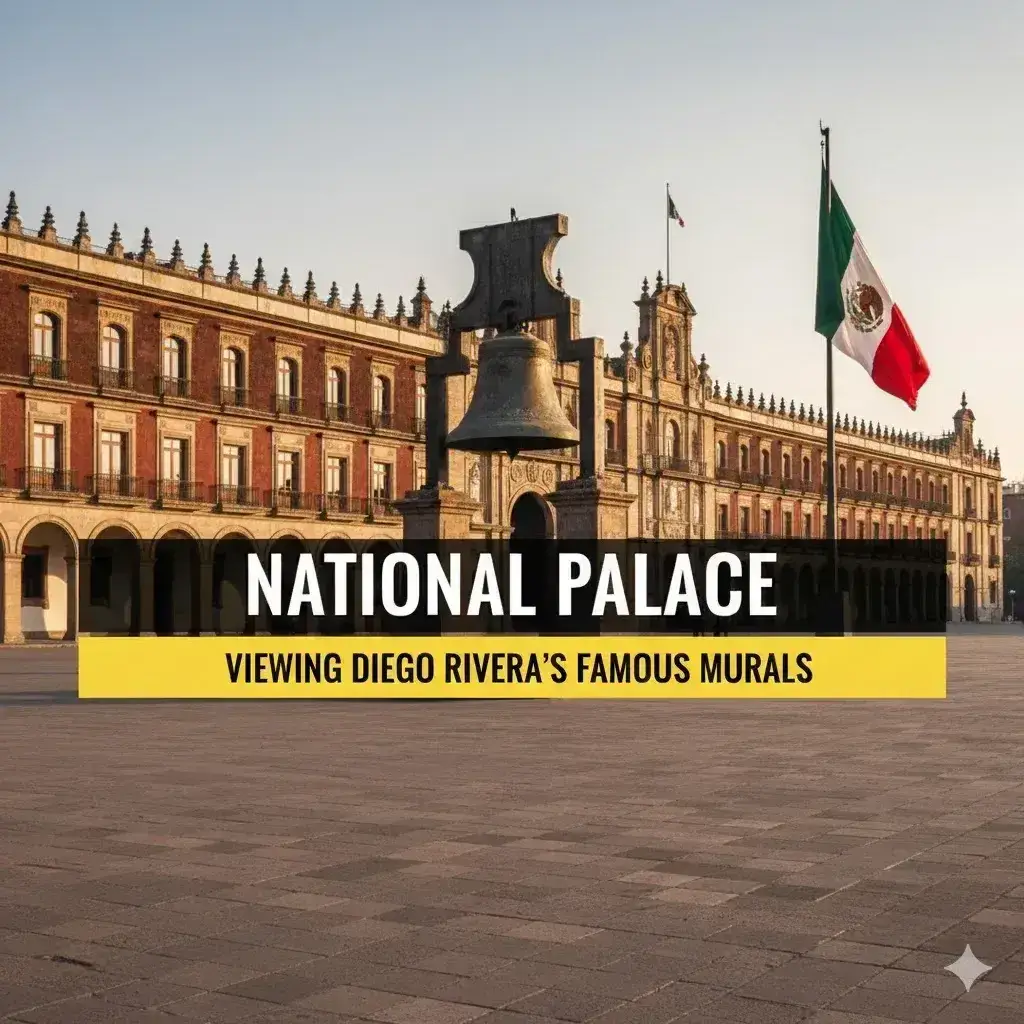
The National Palace: Viewing Diego Rivera's Famous Murals
The National Palace (Palacio Nacional) in Mexico City stands as one of the most politically and culturally significant buildings in Latin America. As the seat of Mexico's federal executive branch and the historic center of power since Aztec times, this monumental complex holds profound importance for Mexican identity and governance. Yet for most visitors, the palace's greatest treasure lies not in its political function but in its artistic splendor: the breathtaking series of monumental murals by Diego Rivera that adorn its walls, staircases, and corridors.
Painted between 1929 and 1935, Rivera's frescoes in the National Palace represent one of the most ambitious and powerful artistic projects of the 20th century. Titled "Epopeya del Pueblo Mexicano" (The Epic of the Mexican People) or more commonly "The History of Mexico", these murals sweep across more than 450 square meters of wall space, depicting the entire sweep of Mexican history from pre-Columbian civilizations through the Spanish conquest, colonial oppression, the War of Independence, the Reform era, the Mexican Revolution, and the promise of a socialist future.
This comprehensive guide explores everything you need to know about visiting the National Palace to experience Diego Rivera's legendary murals: the historical context of the building and the artwork, detailed analysis of the murals' themes and symbolism, practical visiting information, photography guidelines, nearby attractions, and insider tips to help you make the most of this unforgettable cultural encounter in the heart of Mexico City.
A Palace Built on Layers of Power

From Aztec Palace to Colonial Seat
The National Palace occupies a site of immense historical significance. Before Spanish conquest, this location was home to the palace of Moctezuma II, the last independent Aztec emperor. The original structure was a sprawling complex of courtyards, temples, administrative buildings, and residential quarters that served as the political and ceremonial heart of the Aztec empire.
After the fall of Tenochtitlan in 1521, Hernán Cortés ordered the demolition of Moctezuma's palace and built a new structure using stones from the demolished indigenous buildings. This colonial palace became the residence of the Spanish viceroys who ruled New Spain for nearly 300 years. The building was expanded, modified, and embellished throughout the colonial period, acquiring the grand scale and architectural character visible today.
Independent Mexico and the Modern Palace
Following Mexican independence in 1821, the palace became the seat of the new nation's government. It has housed:
- Presidential Offices: The official workplace of Mexico's presidents
- Federal Ministries: Various government departments and administrative offices
- Ceremonial Spaces: Sites for state functions, diplomatic receptions, and national celebrations
- Historical Archives: Important documents and records of Mexican history
- 👉 Montreal Travel Guide 2026: Second Largest French-Speaking City
- 👉 Why Skyscanner Named Limón, Costa Rica the #1 Global Trending Destination for 2026.
- 👉 Mexico Travel Requirements for US Citizens (2026 Updated)
Despite its ongoing governmental function, the palace has been partially open to the public for decades, allowing visitors to experience both its political significance and its extraordinary artistic heritage.
Architectural Features
The National Palace showcases a blend of architectural styles reflecting its long history:
- Facade: Distinctive pink tezontle volcanic stone with white chiluca stone trim
- Central Courtyard: Beautiful arcaded patio with fountain, typical of Spanish colonial design
- Portal: Grand entrance with ornate ironwork and stone detailing
- Interior Spaces: High ceilings, arched corridors, and monumental staircases designed for grandeur
- Dimensions: Approximately 200 meters long, occupying the entire eastern side of the Zócalo
- 👉 Montreal Travel Guide 2026: Second Largest French-Speaking City
- 👉 Why Skyscanner Named Limón, Costa Rica the #1 Global Trending Destination for 2026.
- 👉 Mexico Travel Requirements for US Citizens (2026 Updated)
Diego Rivera and the Mexican Muralism Movement

The Artist: Diego Rivera (1886-1957)
Diego Rivera was one of the most important and influential artists of the 20th century. Born in Guanajuato, Mexico, Rivera studied art in Europe before returning to Mexico after the Revolution to help build a new national cultural identity. Along with David Alfaro Siqueiros and José Clemente Orozco, Rivera was a leader of the Mexican Muralism movement, which used public art to educate, inspire, and provoke social change.
Rivera's artistic philosophy centered on:
- Art for the People: Creating accessible public art rather than elite gallery pieces
- Social Justice: Highlighting the struggles and dignity of workers, indigenous peoples, and the oppressed
- Historical Narrative: Using art to tell the story of Mexico from indigenous perspectives
- Political Engagement: Expressing Marxist and socialist ideals through visual storytelling
- 👉 Montreal Travel Guide 2026: Second Largest French-Speaking City
- 👉 Why Skyscanner Named Limón, Costa Rica the #1 Global Trending Destination for 2026.
- 👉 Mexico Travel Requirements for US Citizens (2026 Updated)
The Muralism Movement
The Mexican Muralism movement emerged in the 1920s as part of the post-revolutionary cultural renaissance. Supported by the government, muralists were commissioned to decorate public buildings with works that would:
- Educate a largely illiterate population about Mexican history and values
- Promote national unity and pride after the divisive Revolution
- Celebrate indigenous heritage and critique colonial oppression
- Advance progressive social and political ideals
- 👉 Montreal Travel Guide 2026: Second Largest French-Speaking City
- 👉 Why Skyscanner Named Limón, Costa Rica the #1 Global Trending Destination for 2026.
- 👉 Mexico Travel Requirements for US Citizens (2026 Updated)
Rivera's National Palace murals represent the movement's most ambitious and enduring achievement.
Commission and Creation
In 1929, the Mexican government commissioned Rivera to paint murals in the National Palace. The project unfolded in phases:
- 1929-1930: Murals on the main staircase depicting pre-Columbian life and the Spanish conquest
- 1931-1932: Murals in the north corridor covering colonial period and Independence
- 1934-1935: Murals in the south corridor depicting the Reform era, Revolution, and future vision
- 👉 Montreal Travel Guide 2026: Second Largest French-Speaking City
- 👉 Why Skyscanner Named Limón, Costa Rica the #1 Global Trending Destination for 2026.
- 👉 Mexico Travel Requirements for US Citizens (2026 Updated)
Rivera worked using the traditional fresco technique, painting on wet plaster so pigments became part of the wall surface. This method requires speed, precision, and cannot be easily corrected—making the scale and complexity of Rivera's achievement even more remarkable.
The Murals: A Visual Epic of Mexican History

Overview of the Cycle
Rivera's National Palace murals form a continuous narrative cycle titled "The History of Mexico". The murals are organized chronologically and thematically across three main areas:
- Main Staircase: Pre-Columbian civilizations and Spanish conquest
- North Corridor (second floor): Colonial period and War of Independence
- South Corridor (second floor): Reform era, Mexican Revolution, and vision of the future
Together, these murals create a sweeping visual epic that celebrates indigenous culture, condemns oppression, honors revolutionary heroes, and imagines a just socialist future.
Main Staircase: Ancient Mexico and the Conquest
Pre-Columbian Glory
The lower sections of the staircase murals depict the richness and sophistication of pre-Columbian civilizations:
- Aztec Market at Tlatelolco: Bustling scene of trade, craftsmanship, and daily life
- Religious Ceremonies: Rituals honoring gods like Quetzalcoatl and Huitzilopochtli
- Agricultural Innovation: Chinampas (floating gardens), irrigation systems, and sustainable farming
- Artistic Achievement: Featherwork, pottery, sculpture, and architecture
- Social Organization: Depictions of nobles, priests, warriors, merchants, and commoners
- 👉 Montreal Travel Guide 2026: Second Largest French-Speaking City
- 👉 Why Skyscanner Named Limón, Costa Rica the #1 Global Trending Destination for 2026.
- 👉 Mexico Travel Requirements for US Citizens (2026 Updated)
Rivera portrays indigenous Mexico as a complex, advanced civilization—not a "primitive" society awaiting European "civilization."
The Spanish Conquest
The upper sections depict the traumatic arrival of the Spanish and the fall of Tenochtitlan:
- Cortés and La Malinche: The conquistador and his indigenous interpreter/consort, symbolizing the complex dynamics of conquest
- Battle Scenes: Violent clashes between Spanish forces and Aztec warriors
- Destruction of Temples: Demolition of indigenous religious sites and imposition of Christianity
- Suffering and Resistance: Indigenous peoples subjected to disease, enslavement, and cultural erasure
- 👉 Montreal Travel Guide 2026: Second Largest French-Speaking City
- 👉 Why Skyscanner Named Limón, Costa Rica the #1 Global Trending Destination for 2026.
- 👉 Mexico Travel Requirements for US Citizens (2026 Updated)
Rivera's depiction is unflinching in showing the brutality of conquest while also acknowledging the complexity of indigenous responses, including collaboration, adaptation, and resistance.
Symbolic Elements
- Eagle and Serpent: Aztec symbol of Tenochtitlan's founding, recurring throughout the murals
- Cross and Sword: Symbols of religious and military conquest
- Broken Idols: Destruction of indigenous religion and culture
- Chains and Whips: Enslavement and exploitation under colonial rule
- 👉 Montreal Travel Guide 2026: Second Largest French-Speaking City
- 👉 Why Skyscanner Named Limón, Costa Rica the #1 Global Trending Destination for 2026.
- 👉 Mexico Travel Requirements for US Citizens (2026 Updated)
North Corridor: Colonial Oppression and the Struggle for Independence
The Colonial Period
The north corridor murals depict three centuries of Spanish rule:
- Encomienda System: Forced labor of indigenous peoples for Spanish landowners
- Missionary Activity: Conversion efforts, both coercive and sincere
- Racial Hierarchy: Complex caste system based on race and birthplace
- Economic Exploitation: Extraction of silver, agricultural products, and labor for Spanish benefit
- Cultural Syncretism: Blending of indigenous and Spanish traditions in religion, art, and daily life
- 👉 Montreal Travel Guide 2026: Second Largest French-Speaking City
- 👉 Why Skyscanner Named Limón, Costa Rica the #1 Global Trending Destination for 2026.
- 👉 Mexico Travel Requirements for US Citizens (2026 Updated)
Rivera emphasizes the suffering of indigenous and mestizo populations while also showing moments of cultural creativity and resilience.
The War of Independence (1810-1821)
Rivera celebrates the heroes and ideals of Mexico's independence movement:
- Father Miguel Hidalgo: The priest who initiated the rebellion with the "Grito de Dolores"
- José María Morelos: Military and political leader who advanced the revolutionary cause
- Popular Participation: Indigenous peasants, mestizo workers, and urban poor joining the struggle
- Symbolic Imagery: Broken chains, rising sun, and the Virgin of Guadalupe as symbols of liberation
- 👉 Montreal Travel Guide 2026: Second Largest French-Speaking City
- 👉 Why Skyscanner Named Limón, Costa Rica the #1 Global Trending Destination for 2026.
- 👉 Mexico Travel Requirements for US Citizens (2026 Updated)
Rivera portrays independence not just as a political event but as a popular uprising against oppression, emphasizing the role of ordinary people in shaping history.
South Corridor: Reform, Revolution, and the Future
The Reform Era (1850s-1870s)
This section depicts the liberal reforms that sought to modernize Mexico:
- Benito Juárez: Indigenous president who championed separation of church and state, land reform, and civil rights
- Constitution of 1857: Progressive document establishing individual rights and limiting corporate power
- Conflict with Conservatives: Struggle between liberal reformers and conservative forces allied with church and landowners
- French Intervention: Resistance to European imperialism and defense of Mexican sovereignty
- 👉 Montreal Travel Guide 2026: Second Largest French-Speaking City
- 👉 Why Skyscanner Named Limón, Costa Rica the #1 Global Trending Destination for 2026.
- 👉 Mexico Travel Requirements for US Citizens (2026 Updated)
Rivera presents Juárez as a heroic figure embodying the ideals of justice, equality, and national sovereignty.
The Mexican Revolution (1910-1920)
The Revolution receives extensive treatment as the culmination of centuries of struggle:
- Francisco Madero: Democratic reformer who initiated the revolutionary movement
- Emiliano Zapata: Champion of land reform and indigenous rights with the cry "Tierra y Libertad" (Land and Liberty)
- Pancho Villa: Popular military leader from the north fighting for social justice
- Popular Mobilization: Peasants, workers, and soldiers rising against dictatorship and inequality
- Constitution of 1917: Progressive constitution establishing labor rights, land reform, and national control of resources
- 👉 Montreal Travel Guide 2026: Second Largest French-Speaking City
- 👉 Why Skyscanner Named Limón, Costa Rica the #1 Global Trending Destination for 2026.
- 👉 Mexico Travel Requirements for US Citizens (2026 Updated)
Rivera's revolutionary murals are dynamic and emotionally charged, capturing the energy, hope, and violence of this transformative period.
Vision of the Future
The murals conclude with Rivera's vision of Mexico's socialist future:
- Worker Solidarity: United laborers building a just society
- Industrial Progress: Factories, technology, and infrastructure serving the people
- Education and Culture: Schools, arts, and intellectual life accessible to all
- International Solidarity: Connection to global workers' movements and anti-imperialist struggles
- Karl Marx: Portrait of the philosopher with the inscription "Workers of the world, unite!"
- 👉 Montreal Travel Guide 2026: Second Largest French-Speaking City
- 👉 Why Skyscanner Named Limón, Costa Rica the #1 Global Trending Destination for 2026.
- 👉 Mexico Travel Requirements for US Citizens (2026 Updated)
Rivera's Marxist beliefs are explicit in these final panels, presenting socialism as the logical conclusion of Mexico's historical struggle for justice.
Artistic Techniques and Symbolism

Fresco Technique
Rivera painted the National Palace murals using buon fresco, a demanding traditional method:
- Process: Pigments mixed with water are applied to wet lime plaster; as the plaster dries, pigments become chemically bonded to the wall
- Advantages: Extraordinary durability; colors remain vibrant for centuries
- Challenges: Artist must work quickly before plaster dries; corrections are difficult or impossible
- Scale: Rivera and his assistants covered over 450 square meters using this labor-intensive technique
- 👉 Montreal Travel Guide 2026: Second Largest French-Speaking City
- 👉 Why Skyscanner Named Limón, Costa Rica the #1 Global Trending Destination for 2026.
- 👉 Mexico Travel Requirements for US Citizens (2026 Updated)
Visual Style
Rivera's distinctive artistic approach combines multiple influences:
- Pre-Columbian Aesthetics: Bold outlines, flat planes of color, and symbolic imagery inspired by indigenous art
- European Modernism: Lessons from Cubism, Futurism, and Renaissance fresco painting
- Socialist Realism: Clear narrative, heroic figures, and accessible imagery to communicate political messages
- Mexican Folk Art: Vibrant colors, decorative patterns, and popular artistic traditions
- 👉 Montreal Travel Guide 2026: Second Largest French-Speaking City
- 👉 Why Skyscanner Named Limón, Costa Rica the #1 Global Trending Destination for 2026.
- 👉 Mexico Travel Requirements for US Citizens (2026 Updated)
Symbolic Language
Rivera employed a rich symbolic vocabulary throughout the murals:
- Colors: Red for revolution and struggle; blue for hope and the future; earth tones for indigenous connection to land
- Figures: Heroic scale for revolutionary leaders; grotesque caricature for oppressors and exploiters
- Objects: Tools and machinery for labor; weapons for struggle; books and schools for education
- Nature: Corn and maize as symbols of indigenous civilization; eagles and serpents as national emblems
- 👉 Montreal Travel Guide 2026: Second Largest French-Speaking City
- 👉 Why Skyscanner Named Limón, Costa Rica the #1 Global Trending Destination for 2026.
- 👉 Mexico Travel Requirements for US Citizens (2026 Updated)
Narrative Structure
Rivera organized the murals to guide viewers through Mexican history:
- Chronological Flow: Murals progress from ancient times (bottom of staircase) to future vision (top of corridors)
- Thematic Grouping: Related events and ideas clustered together for clarity
- Visual Hierarchy: Central figures and key moments given prominence through size and placement
- Recurring Motifs: Symbols like the eagle, corn, and broken chains reappear to create visual continuity
- 👉 Montreal Travel Guide 2026: Second Largest French-Speaking City
- 👉 Why Skyscanner Named Limón, Costa Rica the #1 Global Trending Destination for 2026.
- 👉 Mexico Travel Requirements for US Citizens (2026 Updated)
Visiting the National Palace: Practical Information

Location and Access
Address: Palacio Nacional, Plaza de la Constitución S/N, Centro Histórico, Mexico City
Location: Eastern side of the Zócalo (main square), directly facing the Metropolitan Cathedral
Getting There
- Metro: Zócalo/Tenochtitlan station (Line 2, blue line); exit follows signs to "Palacio Nacional"
- Metrobús: Zócalo station (Line 4)
- Ride-Hailing: Uber or DiDi; request drop-off at nearby streets (plaza often closed to vehicles)
- Walking: From most Historic Center locations, 5-10 minute walk
- 👉 Montreal Travel Guide 2026: Second Largest French-Speaking City
- 👉 Why Skyscanner Named Limón, Costa Rica the #1 Global Trending Destination for 2026.
- 👉 Mexico Travel Requirements for US Citizens (2026 Updated)
Opening Hours and Admission
- Hours: Tuesday-Sunday, 9:00 AM - 5:00 PM (closed Mondays)
- Admission: FREE for all visitors
- ID Requirement: Valid government-issued photo ID required for entry (passport, driver's license, national ID)
- Last Entry: Typically 4:30 PM; allow at least 1.5-2 hours for visit
- Holiday Closures: Closed on major Mexican holidays; check ahead for special closures
- 👉 Montreal Travel Guide 2026: Second Largest French-Speaking City
- 👉 Why Skyscanner Named Limón, Costa Rica the #1 Global Trending Destination for 2026.
- 👉 Mexico Travel Requirements for US Citizens (2026 Updated)
Security and Entry Procedures
As an active government building, the National Palace has security measures:
- ID Check: Present valid photo ID at entrance; name may be recorded
- Bag Screening: Airport-style security screening of bags and personal items
- Prohibited Items: Large bags, backpacks, weapons, sharp objects, food and drinks
- Dress Code: Modest attire recommended; no beachwear or overly casual clothing
- Behavior: Respectful conduct required; this is a working government building
Tip: Arrive early (9-10 AM) to avoid queues, especially on weekends and holidays.
What to Expect Inside
The Route
Visitors typically follow this path:
- Entrance: Security screening and ID check at main portal
- Central Courtyard: Beautiful arcaded patio; orientation point for the building
- Main Staircase: Ascend to view Rivera's conquest murals
- Second Floor Corridors: North corridor (colonial/Independence) and south corridor (Reform/Revolution/future)
- Additional Spaces: Other historic rooms and exhibitions (may vary)
- Exit: Return via courtyard or designated exit
Viewing the Murals
- Lighting: Natural light from windows; some areas may be dim—bring eyes adjusted to lower light
- Viewing Distance: Step back to appreciate full compositions; move closer for details
- Reading the Narrative: Murals are designed to be "read" chronologically; follow the flow
- Time Needed: Allow 1.5-2 hours minimum to view murals thoughtfully; art enthusiasts may want 3+ hours
- 👉 Montreal Travel Guide 2026: Second Largest French-Speaking City
- 👉 Why Skyscanner Named Limón, Costa Rica the #1 Global Trending Destination for 2026.
- 👉 Mexico Travel Requirements for US Citizens (2026 Updated)
Guided Tours and Audio Guides
Official Guided Tours
- Availability: Free guided tours in Spanish at scheduled times (typically 10 AM, 12 PM, 2 PM)
- English Tours: May be available on request or at specific times; inquire at entrance
- Duration: Approximately 45-60 minutes
- Benefit: Expert interpretation of murals' historical context and symbolism
- 👉 Montreal Travel Guide 2026: Second Largest French-Speaking City
- 👉 Why Skyscanner Named Limón, Costa Rica the #1 Global Trending Destination for 2026.
- 👉 Mexico Travel Requirements for US Citizens (2026 Updated)
Audio Guides and Apps
- Official Audio Guide: May be available for rent; check at entrance
- Mobile Apps: Some third-party apps offer self-guided tours with mural explanations
- Preparation: Research murals beforehand to enhance understanding
- 👉 Montreal Travel Guide 2026: Second Largest French-Speaking City
- 👉 Why Skyscanner Named Limón, Costa Rica the #1 Global Trending Destination for 2026.
- 👉 Mexico Travel Requirements for US Citizens (2026 Updated)
Independent Exploration
- Information Panels: Some murals have explanatory plaques (primarily in Spanish)
- Guidebooks: Purchase or download guides focused on Rivera's murals
- Online Resources: Review mural analyses before your visit for deeper appreciation
- 👉 Montreal Travel Guide 2026: Second Largest French-Speaking City
- 👉 Why Skyscanner Named Limón, Costa Rica the #1 Global Trending Destination for 2026.
- 👉 Mexico Travel Requirements for US Citizens (2026 Updated)
Photography Guidelines

What's Allowed
- Photography: Generally permitted without flash
- Video: Usually allowed for personal use without flash or tripod
- Personal Use: Photos for personal memories and social media typically fine
- 👉 Montreal Travel Guide 2026: Second Largest French-Speaking City
- 👉 Why Skyscanner Named Limón, Costa Rica the #1 Global Trending Destination for 2026.
- 👉 Mexico Travel Requirements for US Citizens (2026 Updated)
Restrictions
- No Flash: Flash photography prohibited to protect the frescoes
- No Tripods: Tripods and monopods generally not allowed (crowded spaces, security concerns)
- No Commercial Use: Professional photography or filming requires special permission
- Respectful Conduct: Don't block pathways or disturb other visitors while photographing
- 👉 Montreal Travel Guide 2026: Second Largest French-Speaking City
- 👉 Why Skyscanner Named Limón, Costa Rica the #1 Global Trending Destination for 2026.
- 👉 Mexico Travel Requirements for US Citizens (2026 Updated)
Photography Tips
Equipment Recommendations
- Lens: Wide-angle (16-35mm) for full mural compositions; standard zoom (24-70mm) for details
- Low-Light Capability: Murals may be in dimmer areas; lens with wide aperture (f/2.8 or wider) helpful
- Image Stabilization: Helpful for handheld shooting in lower light
- Extra Batteries: Full visit with photography drains batteries
- 👉 Montreal Travel Guide 2026: Second Largest French-Speaking City
- 👉 Why Skyscanner Named Limón, Costa Rica the #1 Global Trending Destination for 2026.
- 👉 Mexico Travel Requirements for US Citizens (2026 Updated)
Camera Settings
For Full Mural Shots
- Aperture: f/5.6 - f/8 for good depth of field
- Shutter Speed: 1/60 sec or faster to avoid blur
- ISO: 400-1600 depending on lighting conditions
- White Balance: Auto or adjust for indoor lighting
- 👉 Montreal Travel Guide 2026: Second Largest French-Speaking City
- 👉 Why Skyscanner Named Limón, Costa Rica the #1 Global Trending Destination for 2026.
- 👉 Mexico Travel Requirements for US Citizens (2026 Updated)
For Detail Shots
- Aperture: f/2.8 - f/4 to isolate details
- Focus: Single-point autofocus on key elements
- Composition: Look for symbolic details, faces, hands, and symbolic objects
- 👉 Montreal Travel Guide 2026: Second Largest French-Speaking City
- 👉 Why Skyscanner Named Limón, Costa Rica the #1 Global Trending Destination for 2026.
- 👉 Mexico Travel Requirements for US Citizens (2026 Updated)
Best Angles and Locations
- Main Staircase: Step back to capture full height of conquest murals
- Corridor Perspectives: Shoot down the length of corridors to show narrative flow
- Detail Close-Ups: Focus on expressive faces, symbolic objects, and Rivera's distinctive brushwork
- Architectural Context: Include palace architecture to show murals in their historic setting
- 👉 Montreal Travel Guide 2026: Second Largest French-Speaking City
- 👉 Why Skyscanner Named Limón, Costa Rica the #1 Global Trending Destination for 2026.
- 👉 Mexico Travel Requirements for US Citizens (2026 Updated)
Understanding the Murals: Key Themes and Interpretation

Indigenous Civilization and Identity
Rivera's murals celebrate pre-Columbian Mexico as a sophisticated, advanced civilization:
- Cultural Achievement: Depictions of art, architecture, agriculture, and social organization
- Spiritual Depth: Complex religious beliefs and rituals portrayed with respect
- Resistance and Survival: Indigenous peoples shown as active agents, not passive victims
- Contemporary Relevance: Murals affirm the ongoing importance of indigenous identity in modern Mexico
- 👉 Montreal Travel Guide 2026: Second Largest French-Speaking City
- 👉 Why Skyscanner Named Limón, Costa Rica the #1 Global Trending Destination for 2026.
- 👉 Mexico Travel Requirements for US Citizens (2026 Updated)
Conquest and Colonial Oppression
Rivera does not shy away from depicting the violence and exploitation of Spanish rule:
- Brutality: Scenes of battle, enslavement, and cultural destruction
- Economic Exploitation: Extraction of wealth and labor for Spanish benefit
- Racial Hierarchy: Visual representation of caste system and discrimination
- Cultural Syncretism: Also shows blending of traditions and resilience of indigenous culture
- 👉 Montreal Travel Guide 2026: Second Largest French-Speaking City
- 👉 Why Skyscanner Named Limón, Costa Rica the #1 Global Trending Destination for 2026.
- 👉 Mexico Travel Requirements for US Citizens (2026 Updated)
Revolution and Social Justice
The Mexican Revolution is portrayed as the culmination of centuries of struggle:
- Popular Heroism: Ordinary people—peasants, workers, soldiers—as agents of historical change
- Land and Liberty: Zapata's cry "Tierra y Libertad" as central revolutionary demand
- Social Reform: Constitution of 1917 establishing labor rights, land reform, and education
- Ongoing Struggle: Murals suggest the revolution's ideals remain unfinished
- 👉 Montreal Travel Guide 2026: Second Largest French-Speaking City
- 👉 Why Skyscanner Named Limón, Costa Rica the #1 Global Trending Destination for 2026.
- 👉 Mexico Travel Requirements for US Citizens (2026 Updated)
Vision of a Socialist Future
Rivera's Marxist beliefs shape the murals' conclusion:
- Worker Solidarity: United laborers building a just society
- Industrial Progress: Technology and industry serving the people, not exploiting them
- International Connection: Mexico's struggle linked to global workers' movements
- Hope and Determination: Murals end on a note of optimism tempered by awareness of ongoing challenges
- 👉 Montreal Travel Guide 2026: Second Largest French-Speaking City
- 👉 Why Skyscanner Named Limón, Costa Rica the #1 Global Trending Destination for 2026.
- 👉 Mexico Travel Requirements for US Citizens (2026 Updated)
Nearby Attractions in the Historic Center

Within the Zócalo Complex
Metropolitan Cathedral
- Distance: Directly across the Zócalo from National Palace
- Highlights: Stunning architecture, ornate interior, historic religious art
- Time Needed: 45-60 minutes
- Admission: Free
- 👉 Montreal Travel Guide 2026: Second Largest French-Speaking City
- 👉 Why Skyscanner Named Limón, Costa Rica the #1 Global Trending Destination for 2026.
- 👉 Mexico Travel Requirements for US Citizens (2026 Updated)
Templo Mayor Museum
- Distance: Northeast corner of Zócalo, adjacent to National Palace
- Highlights: Aztec archaeological site and museum with ritual objects
- Time Needed: 1.5-2 hours
- Admission: Approximately 85 MXN (approximately $5 USD)
- 👉 Montreal Travel Guide 2026: Second Largest French-Speaking City
- 👉 Why Skyscanner Named Limón, Costa Rica the #1 Global Trending Destination for 2026.
- 👉 Mexico Travel Requirements for US Citizens (2026 Updated)
Short Walk from National Palace
Palacio de Bellas Artes
- Distance: 10-minute walk west
- Highlights: Stunning Art Nouveau architecture, additional Rivera murals, cultural performances
- Time Needed: 1-2 hours
- Admission: Varies by exhibition; courtyard free
- 👉 Montreal Travel Guide 2026: Second Largest French-Speaking City
- 👉 Why Skyscanner Named Limón, Costa Rica the #1 Global Trending Destination for 2026.
- 👉 Mexico Travel Requirements for US Citizens (2026 Updated)
Calle Madero
- Distance: Pedestrian street leading west from Zócalo
- Highlights: Historic buildings, shopping, street performers, Casa de los Azulejos
- Time Needed: 30-60 minutes for stroll
- 👉 Montreal Travel Guide 2026: Second Largest French-Speaking City
- 👉 Why Skyscanner Named Limón, Costa Rica the #1 Global Trending Destination for 2026.
- 👉 Mexico Travel Requirements for US Citizens (2026 Updated)
Mercado de San Juan
- Distance: 10-minute walk southwest
- Highlights: Gourmet market with exotic ingredients and food stalls
- Time Needed: 1 hour for exploration and tasting
- 👉 Montreal Travel Guide 2026: Second Largest French-Speaking City
- 👉 Why Skyscanner Named Limón, Costa Rica the #1 Global Trending Destination for 2026.
- 👉 Mexico Travel Requirements for US Citizens (2026 Updated)
Extended Historic Center Route
For a full day exploring the Historic Center:
- Morning: National Palace murals (1.5-2 hours)
- Late Morning: Templo Mayor Museum (1.5 hours)
- Lunch: Traditional meal at nearby restaurant or market
- Afternoon: Metropolitan Cathedral and walk Calle Madero to Bellas Artes (2-3 hours)
- Late Afternoon: Explore Alameda Central or additional museums
- Evening: Dinner in Historic Center or nearby Roma/Condesa
Practical Tips for Your Visit

Before You Go
- Bring Valid ID: Passport or government-issued photo ID required for entry
- Check Hours: Verify current opening times; palace may close for official events
- Research Murals: Read about Rivera's work beforehand to enhance understanding
- Dress Appropriately: Modest attire recommended; comfortable shoes for walking
- Plan Time: Allow at least 1.5-2 hours; more if you want to study murals closely
During Your Visit
- Arrive Early: Beat crowds by arriving at opening (9 AM)
- Follow the Narrative: View murals in chronological order for full impact
- Take Your Time: Rivera's murals reward close looking and reflection
- Respect the Space: Speak quietly; this is a working government building
- Ask Questions: Staff and guides can provide helpful context
After Your Visit
- Reflect: Consider how Rivera's vision of Mexican history resonates today
- Explore Further: Visit other Rivera murals in Mexico City (Ministry of Education, etc.)
- Share Respectfully: If posting photos online, provide context about the murals' significance
- Support Preservation: Consider donating to organizations that protect Mexico's cultural heritage
- 👉 Montreal Travel Guide 2026: Second Largest French-Speaking City
- 👉 Why Skyscanner Named Limón, Costa Rica the #1 Global Trending Destination for 2026.
- 👉 Mexico Travel Requirements for US Citizens (2026 Updated)
Frequently Asked Questions
Q: Is the National Palace free to visit?
A: Yes, admission to the National Palace is completely free. However, you must present valid government-issued photo ID for entry.
Q: Do I need to book tickets in advance?
A: No advance booking is required. Entry is first-come, first-served. Arrive early to avoid queues, especially on weekends.
Q: Can I take photos of the murals?
A: Yes, photography is generally permitted without flash. Tripods and commercial photography require special permission.
Q: Are guided tours available?
A: Free guided tours in Spanish are offered at scheduled times. English tours may be available; inquire at the entrance. Self-guided exploration is also rewarding with prior research.
Q: How long should I spend at the National Palace?
A: Allow at least 1.5-2 hours to view the murals thoughtfully. Art enthusiasts or those wanting to study details may want 3+ hours.
Q: Is the National Palace accessible for wheelchairs?
A: The palace has some accessibility features, but the historic building has stairs and uneven surfaces. Contact the palace in advance to discuss specific accessibility needs.
Q: Can I visit the murals if the palace is hosting an official event?
A: The palace may close to the public for official government functions. Check the official website or call ahead if visiting on a weekday.
Q: What other Rivera murals can I see in Mexico City?
A: Additional Rivera murals are located at: - Ministry of Education (two courtyards of murals) - National Preparatory School (early murals) - Hotel del Prado (fragment of "Dream of a Sunday Afternoon," now at Museo Mural Diego Rivera) - Palacio de Bellas Archives (smaller works)
Conclusion: Art, History, and National Identity
Visiting the National Palace to view Diego Rivera's murals is more than a cultural excursion—it is an encounter with the visual epic of a nation's soul. Rivera's monumental frescoes invite viewers to walk through Mexican history, to witness the glory of indigenous civilizations, to feel the trauma of conquest, to celebrate the struggle for independence and revolution, and to imagine a future of justice and equality.
Standing before these murals, you engage with art that is simultaneously beautiful and provocative, historical and contemporary, Mexican and universal. Rivera's vision challenges viewers to consider questions of power, identity, justice, and hope—questions as relevant today as when the murals were painted nearly a century ago.
The National Palace itself embodies the layered complexity of Mexican history: an Aztec palace site, a colonial viceregal seat, and a modern democratic government building. Within its walls, art and politics, past and present, indigenous and European traditions converge in a powerful dialogue that continues to shape Mexican identity.
Key Takeaways:
- ✓ The National Palace houses Diego Rivera's most ambitious mural cycle, "The History of Mexico"
- ✓ Murals depict Mexican history from pre-Columbian times through revolution to socialist future
- ✓ Admission is free; valid photo ID required for entry
- ✓ Allow 1.5-2 hours minimum to view murals thoughtfully
- ✓ Photography permitted without flash; no tripods
- ✓ Guided tours available in Spanish; research beforehand for deeper understanding
- ✓ Combine visit with nearby Historic Center attractions for full cultural experience
- ✓ Murals reward close looking—take time to appreciate details and symbolism
- ✓ Rivera's work remains politically and artistically relevant today
- 👉 Montreal Travel Guide 2026: Second Largest French-Speaking City
- 👉 Why Skyscanner Named Limón, Costa Rica the #1 Global Trending Destination for 2026.
- 👉 Mexico Travel Requirements for US Citizens (2026 Updated)
Whether you're an art lover, history enthusiast, political thinker, or simply a curious traveler, the National Palace murals offer a profound and unforgettable experience. As you stand before Rivera's sweeping visions of Mexican history, you participate in a continuum of artistic and political expression that continues to inspire, challenge, and illuminate.
¡Bienvenido al Palacio Nacional! (Welcome to the National Palace!)
Remember to view the murals with respect for their artistic and historical significance, and to support the preservation of Mexico's extraordinary cultural heritage.
0 Comments