.webp)
.webp)
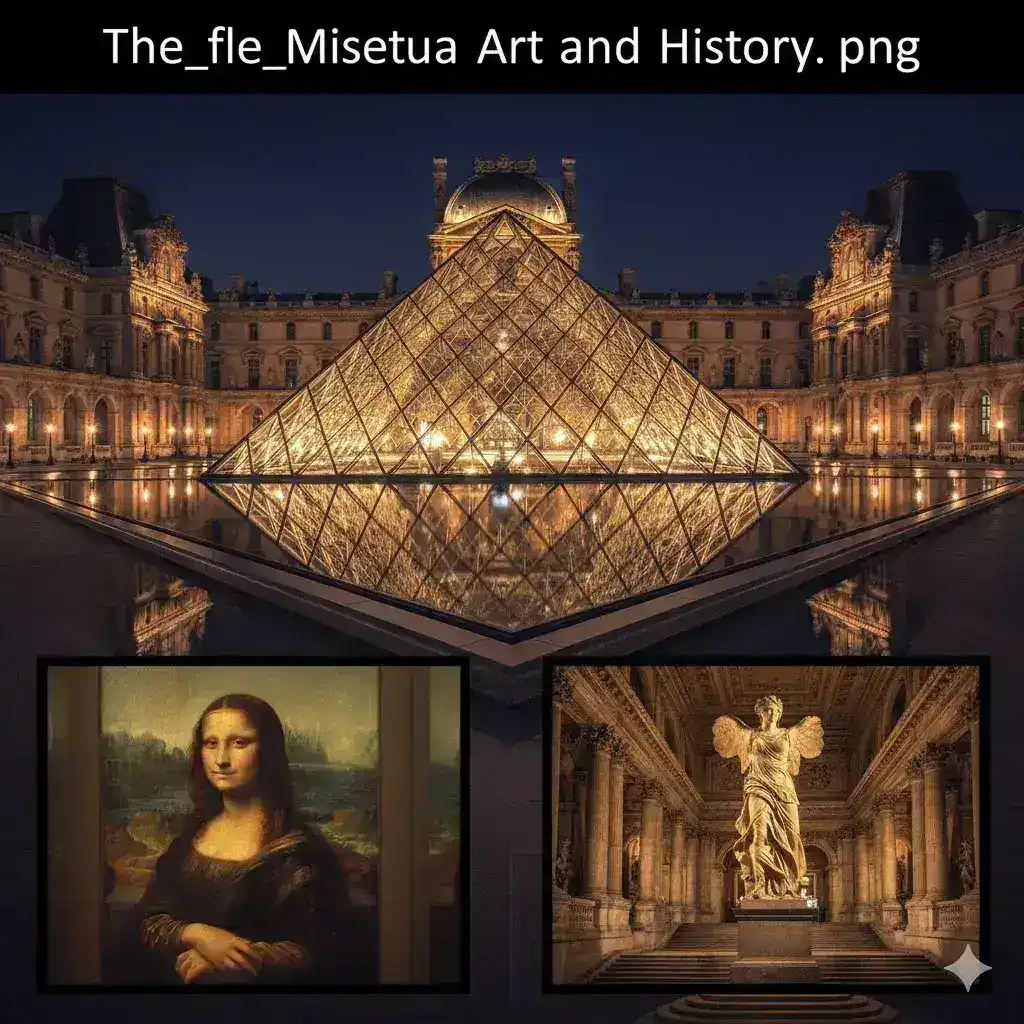
The Louvre Museum: A Master Guide to the Mona Lisa and the World's Ancient Treasures
Nestled in the heart of Paris, on the Right Bank of the Seine, stands the Louvre Museum—the world's largest art museum and a historic monument that houses an unparalleled collection of human creativity spanning millennia. As we explore this magnificent institution in 2026, the Louvre continues to captivate millions of visitors annually, drawing art lovers, history enthusiasts, and curious travelers from every corner of the globe to witness its priceless treasures, including the enigmatic Mona Lisa and some of humanity's most significant ancient artifacts.
With over 380,000 objects in its collection and approximately 35,000 works of art on display across eight curatorial departments, the Louvre represents an encyclopedic journey through human civilization. From ancient Mesopotamian sculptures and Egyptian mummies to Renaissance masterpieces and Islamic art, the museum's vast holdings tell the story of human achievement, belief, beauty, and innovation across cultures and centuries. The iconic glass pyramid, designed by I.M. Pei and completed in 1989, serves as a striking modern entrance to this historic palace, symbolizing the Louvre's unique blend of ancient heritage and contemporary vision.
This comprehensive master guide delves deep into the Louvre's most celebrated treasures, with special focus on Leonardo da Vinci's Mona Lisa—arguably the world's most famous painting—and the museum's extraordinary collections of ancient artifacts from Egypt, Greece, Rome, and the Near East. Whether you're planning your first visit to Paris or seeking to understand the profound cultural significance of these masterpieces, this exploration reveals why the Louvre remains not just a museum, but a temple of human heritage and a testament to our shared history.
The Louvre's Remarkable History: From Fortress to Global Icon
The Louvre's story begins long before it became a museum. Originally constructed as a fortress in the late 12th century under King Philip II to protect Paris from Viking raids, the building evolved over centuries into a royal palace. Successive French monarchs expanded and embellished the structure, transforming it into one of Europe's grandest residences. It was during the Renaissance that the Louvre began accumulating the art collection that would eventually become its defining purpose.
The pivotal moment in the Louvre's transformation came during the French Revolution. In 1793, the revolutionary government opened the Musée Central des Arts to the public, displaying royal collections as national heritage rather than private property. This radical act democratized access to art and established the Louvre as a public institution—a model that would influence museums worldwide. Napoleon Bonaparte further expanded the collection through military campaigns, though many works were later returned to their countries of origin after his defeat.
Throughout the 19th and 20th centuries, the Louvre underwent significant expansions and modernizations. The addition of the glass pyramid in 1989, designed by architect I.M. Pei, revolutionized visitor access while creating an iconic symbol of the museum's commitment to blending historical preservation with contemporary innovation. Today, the Louvre stands as both a monument to French history and a universal museum dedicated to preserving and sharing human cultural achievement.
The Mona Lisa: Understanding the World's Most Famous Painting
No discussion of the Louvre is complete without addressing its most celebrated resident: Leonardo da Vinci's Mona Lisa. Painted between approximately 1503 and 1519, this small oil portrait on poplar wood (77 cm × 53 cm) has achieved a level of fame that transcends the art world, becoming a global cultural phenomenon.
Historical Context: The painting is believed to depict Lisa Gherardini, the wife of Florentine merchant Francesco del Giocondo—hence its alternative Italian title, La Gioconda. Leonardo brought the work with him to France when invited by King Francis I, and it eventually entered the French royal collection before finding its permanent home at the Louvre.
Technical Mastery: The Mona Lisa exemplifies Leonardo's revolutionary techniques:
- Sfumato: Leonardo's signature technique of subtle color blending creates the painting's soft, smoky transitions, particularly evident in the subject's enigmatic smile and the hazy landscape background.
- Atmospheric Perspective: The dreamlike background landscape demonstrates Leonardo's understanding of how atmosphere affects visual perception, with distant elements appearing bluer and less distinct.
- Psychological Depth: The subject's direct gaze and ambiguous expression create an intimate connection with viewers that has fascinated audiences for five centuries.
- Compositional Innovation: The three-quarter pose was revolutionary for portraiture, creating a sense of presence and engagement unprecedented in earlier works.
- 👉 Sweden EES April 10, 2026: Mandatory Biometric Entry for US & UK Citizens
- 👉 Why the "Wild Atlantic Way" is better explored by electric car in 2026.
- 👉 Hire Reliable Local Fixer Guide Slovakia Expedition 2026
The Mystery of the Smile: The Mona Lisa's elusive expression has inspired endless speculation. Some art historians suggest the smile appears different depending on which part of the face viewers focus on—a result of Leonardo's mastery of human visual perception. Others propose the expression reflects the subject's personality, Leonardo's artistic philosophy, or even a hidden self-portrait of the artist himself.
Modern History and Security: The painting's fame intensified dramatically after its theft in 1911 by Italian museum worker Vincenzo Peruggia, who believed the work should be returned to Italy. Its recovery in 1913 and return to the Louvre generated worldwide media attention, cementing its status as a cultural icon. Today, the Mona Lisa resides in a climate-controlled, bulletproof glass case in the Salle des États, protected by advanced security systems and visited by approximately 30,000 people daily.
Viewing Tips: To experience the Mona Lisa with minimal crowds:
- Visit early morning (9:00 AM opening) or late evening (Friday/Saturday extended hours)
- Enter through the less-crowded Carrousel du Louvre entrance
- Consider purchasing a guided tour with priority access
- Allow time to appreciate other works in the Italian paintings gallery before or after viewing the Mona Lisa
- 👉 Sweden EES April 10, 2026: Mandatory Biometric Entry for US & UK Citizens
- 👉 Why the "Wild Atlantic Way" is better explored by electric car in 2026.
- 👉 Hire Reliable Local Fixer Guide Slovakia Expedition 2026
Ancient Egyptian Treasures: Journey Through the Nile Civilization
The Louvre's Department of Egyptian Antiquities houses one of the world's most comprehensive collections of artifacts from ancient Egypt, spanning over 50,000 objects from prehistoric times through the Coptic period. This extraordinary collection offers visitors a profound journey through one of humanity's most fascinating civilizations.
Must-See Egyptian Masterpieces:
- The Great Sphinx of Tanis: This monumental granite sphinx, dating to the 26th Dynasty (circa 664-525 BCE), greets visitors in the Egyptian courtyard. Its serene expression and powerful form exemplify Egyptian sculptural mastery.
- The Seated Scribe: One of the Louvre's most beloved artifacts, this painted limestone statue from the Old Kingdom (circa 2500 BCE) captures remarkable realism in the scribe's attentive expression and detailed anatomy. The inlaid rock crystal eyes create an astonishingly lifelike gaze.
- Rameses II Statue: A colossal granite statue of one of Egypt's greatest pharaohs, showcasing the grandeur of New Kingdom royal portraiture and the political power of ancient Egyptian monarchy.
- Book of the Dead Papyri: Illuminated manuscripts containing spells and guidance for the afterlife, offering insights into Egyptian religious beliefs and artistic traditions.
- Mummy Collection: The Louvre houses several well-preserved mummies and sarcophagi, providing tangible connections to ancient Egyptian funerary practices and beliefs about eternal life.
- 👉 Sweden EES April 10, 2026: Mandatory Biometric Entry for US & UK Citizens
- 👉 Why the "Wild Atlantic Way" is better explored by electric car in 2026.
- 👉 Hire Reliable Local Fixer Guide Slovakia Expedition 2026
Understanding Egyptian Art: Egyptian artifacts in the Louvre reveal key principles of this civilization's artistic tradition: the use of hierarchical scale (important figures depicted larger), composite perspective (combining multiple viewpoints in a single image), and symbolic color conventions. These works were not created for aesthetic appreciation alone but served religious, political, and funerary functions central to Egyptian society.
The Rosetta Stone Connection: While the original Rosetta Stone resides in the British Museum, the Louvre houses important related artifacts that help visitors understand how this trilingual inscription enabled the decipherment of hieroglyphs by Jean-François Champollion in 1822—a breakthrough that opened the door to modern understanding of ancient Egyptian language and culture.
Greek and Roman Antiquities: Foundations of Western Art
The Louvre's Department of Greek, Etruscan, and Roman Antiquities presents an extraordinary journey through classical civilization, featuring sculptures, pottery, jewelry, and architectural elements that shaped Western artistic traditions.
Iconic Masterpieces:
- Venus de Milo: Discovered on the Greek island of Milos in 1820, this marble statue of Aphrodite (circa 130-100 BCE) epitomizes classical ideals of beauty and proportion. Despite missing arms, its graceful contrapposto stance and serene expression continue to captivate viewers as one of antiquity's most celebrated sculptures.
- Winged Victory of Samothrace: Perched dramatically atop the Daru staircase, this Hellenistic masterpiece (circa 190 BCE) depicts Nike, the goddess of victory, alighting on a ship's prow. The dynamic composition, with wind-swept drapery and powerful movement, represents the pinnacle of Hellenistic sculptural achievement.
- Code of Hammurabi: Though Mesopotamian rather than Greek or Roman, this basalt stele (circa 1754 BCE) displaying one of history's earliest legal codes is housed in the Near Eastern antiquities section and represents a foundational moment in human governance and justice.
- Borghese Gladiator: A Roman marble copy of a Greek bronze original, this dynamic sculpture demonstrates the Roman appreciation for Greek artistic achievement and the transmission of classical aesthetics through imperial culture.
- 👉 Sweden EES April 10, 2026: Mandatory Biometric Entry for US & UK Citizens
- 👉 Why the "Wild Atlantic Way" is better explored by electric car in 2026.
- 👉 Hire Reliable Local Fixer Guide Slovakia Expedition 2026
Understanding Classical Art: Greek and Roman artifacts in the Louvre illustrate the evolution of Western artistic principles: the pursuit of idealized human form, exploration of movement and emotion, and development of architectural orders (Doric, Ionic, Corinthian). These works influenced Renaissance artists and continue to inform contemporary aesthetic values.
The Apollo Gallery: This opulent gallery, originally part of the royal palace, houses the French Crown Jewels and decorative arts alongside classical antiquities, creating a stunning dialogue between ancient masterpieces and royal splendor.
Near Eastern and Islamic Art: Crossroads of Civilization
The Louvre's collections extend beyond Europe and Egypt to encompass the rich artistic traditions of the ancient Near East and the Islamic world, reflecting the museum's commitment to representing global human heritage.
Near Eastern Antiquities Highlights:
- Law Code of Hammurabi: This 2.25-meter-tall black basalt stele contains one of the world's earliest and most complete legal codes, inscribed in Akkadian cuneiform. The relief at the top depicts Hammurabi receiving laws from the sun god Shamash, illustrating the divine authority of ancient Mesopotamian justice.
- Lamassu Sculptures: Massive winged bull figures with human heads from the palace of Sargon II at Khorsabad (8th century BCE) demonstrate Assyrian artistic power and protective symbolism.
- Persepolis Reliefs: Intricate stone carvings from the ceremonial capital of the Achaemenid Persian Empire showcase the sophistication of ancient Iranian art and imperial iconography.
- 👉 Sweden EES April 10, 2026: Mandatory Biometric Entry for US & UK Citizens
- 👉 Why the "Wild Atlantic Way" is better explored by electric car in 2026.
- 👉 Hire Reliable Local Fixer Guide Slovakia Expedition 2026
Islamic Art Collection: Housed in the distinctive undulating glass roof of the Cour Visconti, the Louvre's Islamic Art department features over 5,000 objects spanning 1,300 years and three continents. Highlights include:
- Baptistère de Saint-Louis: A 14th-century Mamluk brass basin inlaid with gold and silver, demonstrating extraordinary metalworking skill and intricate geometric and figural decoration.
- Pyxis of al-Mughira: A 10th-century ivory container from Islamic Spain, carved with elaborate scenes reflecting courtly life and poetic themes.
- Carpets and Textiles: Exquisite examples of Islamic weaving traditions, showcasing complex patterns, rich colors, and technical mastery.
- 👉 Sweden EES April 10, 2026: Mandatory Biometric Entry for US & UK Citizens
- 👉 Why the "Wild Atlantic Way" is better explored by electric car in 2026.
- 👉 Hire Reliable Local Fixer Guide Slovakia Expedition 2026
These collections illuminate the artistic achievements of civilizations that served as bridges between East and West, preserving and transmitting knowledge, aesthetics, and innovation across centuries.
Practical Guide: Visiting the Louvre in 2026
Navigating the Louvre's vast collections requires strategic planning. These practical tips ensure a rewarding experience.
Ticket Options and Reservations:
- Online Timed-Entry Tickets: Essential for avoiding long queues. Book at least several days in advance, especially for weekends and peak season.
- Paris Museum Pass: Offers access to the Louvre and 50+ other Paris museums, with skip-the-line privileges.
- Free Admission: First Sunday of each month (October-March), under-18 visitors, EU residents under 26, and visitors with disabilities.
- Evening Hours: Wednesday and Friday until 9:45 PM offer a more tranquil experience with beautiful illuminated views of the pyramid.
- 👉 Sweden EES April 10, 2026: Mandatory Biometric Entry for US & UK Citizens
- 👉 Why the "Wild Atlantic Way" is better explored by electric car in 2026.
- 👉 Hire Reliable Local Fixer Guide Slovakia Expedition 2026
Navigating the Museum:
- Download the Official App: The Louvre's mobile app provides interactive maps, audio guides, and suggested itineraries.
- Focus Your Visit: With 72,735 square meters of exhibition space, attempting to see everything is impossible. Prioritize departments of interest: Egyptian Antiquities, Greek/Roman Antiquities, Italian Paintings (for the Mona Lisa), or Islamic Art.
- Use Less-Crowded Entrances: The Carrousel du Louvre (underground shopping mall) and Porte des Lions entrances typically have shorter lines than the main pyramid entrance.
- Follow Suggested Routes: The museum offers themed itineraries (e.g., "Masterpieces in 2 Hours") to help first-time visitors navigate efficiently.
- 👉 Sweden EES April 10, 2026: Mandatory Biometric Entry for US & UK Citizens
- 👉 Why the "Wild Atlantic Way" is better explored by electric car in 2026.
- 👉 Hire Reliable Local Fixer Guide Slovakia Expedition 2026
Best Times to Visit:
- Weekday Mornings: Tuesday, Wednesday, or Thursday at opening time (9:00 AM) offer the quietest experience.
- Off-Peak Seasons: November through March (excluding holidays) see fewer international tourists.
- Avoid: Weekends, French school holidays, and summer months (June-August) when crowds peak.
- 👉 Sweden EES April 10, 2026: Mandatory Biometric Entry for US & UK Citizens
- 👉 Why the "Wild Atlantic Way" is better explored by electric car in 2026.
- 👉 Hire Reliable Local Fixer Guide Slovakia Expedition 2026
Photography Guidelines: Photography without flash is permitted in most permanent collection galleries for personal use. However, temporary exhibitions and certain sensitive works may have restrictions. Always check signage and respect other visitors' experience.
Preservation and Conservation: Protecting Humanity's Heritage
The Louvre's mission extends beyond exhibition to active preservation of its irreplaceable collections. Advanced conservation science ensures these treasures endure for future generations.
Climate Control: The Mona Lisa's climate-controlled case maintains precise temperature (18-21°C) and humidity (50-55%) to prevent deterioration of the fragile poplar wood panel and paint layers. Similar environmental controls protect other sensitive works throughout the museum.
Restoration Projects: The Louvre's conservation laboratories employ cutting-edge technology—including X-ray fluorescence, infrared reflectography, and 3D scanning—to analyze, document, and restore artworks. Recent projects include cleaning and stabilizing ancient sculptures, conserving fragile papyri, and preserving Renaissance paintings.
Preventive Conservation: Beyond active restoration, the Louvre implements preventive measures: light level monitoring to protect light-sensitive works, integrated pest management, and rigorous handling protocols for moving artifacts.
Digital Preservation: The Louvre's ambitious digitization initiative makes high-resolution images of its collection available online, reducing the need to handle fragile originals while expanding global access to its treasures.
The Louvre's Cultural Impact and Global Legacy
As the world's most-visited museum, the Louvre exerts profound influence on global culture, education, and artistic appreciation.
Educational Mission: The Louvre serves as a vast classroom, offering guided tours, workshops, lectures, and digital resources that make art history accessible to diverse audiences. Its educational programs reach millions of students worldwide, fostering cultural literacy and critical thinking.
International Collaborations: The Louvre Abu Dhabi, opened in 2017, represents a groundbreaking partnership that shares the Louvre's expertise and collection with the Middle East while promoting intercultural dialogue. Similar collaborations extend the Louvre's mission globally.
Popular Culture: From Dan Brown's The Da Vinci Code to countless films and documentaries, the Louvre features prominently in global popular culture, further cementing its status as a symbol of artistic achievement and mystery.
Accessibility Initiatives: The Louvre continually expands access through multilingual resources, sensory-friendly programs, virtual tours, and accommodations for visitors with disabilities, ensuring its treasures can be experienced by all.
Conclusion: A Timeless Temple of Human Achievement
The Louvre Museum stands as far more than a repository of art and artifacts—it is a living testament to humanity's creative spirit, intellectual curiosity, and enduring quest for beauty and meaning. From the enigmatic smile of the Mona Lisa to the majestic presence of the Venus de Milo, from ancient Egyptian sarcophagi to Islamic masterpieces, the Louvre's collections invite us to connect with the diverse cultures and brilliant minds that have shaped our shared history.
Visiting the Louvre is not merely an act of tourism but a profound engagement with human heritage. Each masterpiece tells a story—of artistic innovation, religious devotion, political power, or personal expression—that resonates across centuries and continents. In an age of rapid change and global challenges, the Louvre reminds us of the enduring value of creativity, the importance of preserving cultural memory, and the universal human capacity for beauty and meaning.
As you plan your journey to this extraordinary institution, remember that the Louvre rewards patience, curiosity, and openness. Allow time to linger before a single painting, to contemplate the craftsmanship of an ancient sculpture, or simply to absorb the atmosphere of a gallery filled with centuries of human achievement. Whether you're captivated by the Mona Lisa's mystery, moved by the power of Egyptian monuments, or inspired by the grace of classical sculpture, the Louvre offers experiences that enrich the mind and touch the soul.
The Louvre awaits—not as a distant monument, but as an invitation to discover the extraordinary within the human story.
0 Comments