.webp)
.webp)
Introduction: Discovering Minsk's Monumental Soviet Legacy
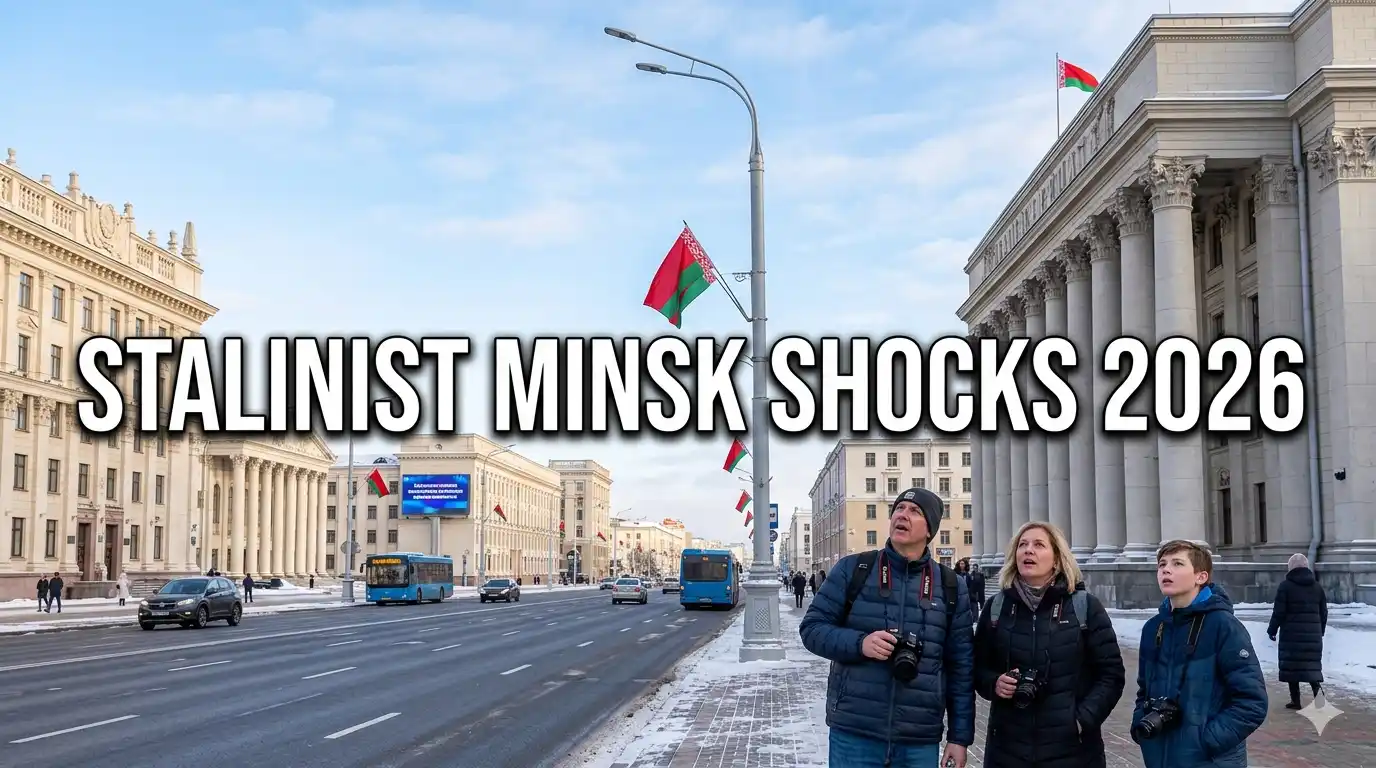
For American travelers accustomed to the diverse architectural landscape of U.S. cities—from colonial brick row houses to gleaming glass skyscrapers—arriving in Minsk, Belarus, can be a genuinely startling experience. The Belarusian capital presents a cityscape dominated by Stalinist architecture: massive, symmetrical buildings with ornate neoclassical details, soaring colonnades, and an overwhelming sense of scale that feels both impressive and disorienting to visitors from the United States.
What is Stalinist architecture in Minsk? Stalinist architecture, also known as Socialist Classicism or Soviet Empire style, is a monumental architectural approach developed in the Soviet Union during the 1930s-1950s that emphasizes grandeur, symmetry, classical motifs, and ideological messaging through built form. In Minsk, this style defines the city center, particularly along Independence Avenue, creating a cohesive urban environment unlike anything found in American cities.
As travel to Belarus becomes more accessible for American visitors in 2026—thanks to extended visa-free entry policies for short stays—understanding the cultural and historical context of Minsk's architecture enhances the travel experience. This guide explores ten specific aspects of Stalinist architecture in Minsk that frequently surprise, intrigue, or challenge American visitors, providing historical context, practical travel tips, and insights to help you appreciate this unique urban landscape with informed curiosity.
1. The Sheer Scale: Buildings That Dwarf American Expectations

What shocks Americans most about Minsk's architecture? The overwhelming scale of Stalinist buildings frequently surprises American visitors accustomed to more varied urban proportions.
Stalinist architecture in Minsk was designed to convey power, permanence, and ideological conviction through monumental proportions. Buildings along Independence Avenue often rise six to eight stories with expansive facades stretching hundreds of feet. The National Academy of Sciences building, for example, spans nearly 300 meters in length—a scale rarely seen in American civic architecture outside of federal complexes in Washington, D.C.
Why the scale matters: These proportions were intentional. Soviet urban planning sought to create spaces that made individuals feel part of a larger collective project. For Americans raised on narratives of individualism and human-scale urban design, the experience can feel simultaneously awe-inspiring and alienating.
Practical tip: Bring a wide-angle lens for photography. Standard smartphone cameras struggle to capture the full grandeur of these structures. Visit early morning or late afternoon for dramatic lighting that emphasizes architectural details without harsh midday shadows.
2. Uniformity vs. Diversity: A City Built to a Single Vision

Why does Minsk look so consistent compared to American cities? American urban landscapes typically showcase architectural eclecticism: Victorian homes next to Art Deco offices beside modern glass towers. Minsk's city center, by contrast, presents a remarkably cohesive aesthetic rooted in Stalinist design principles.
Following extensive destruction during World War II, Minsk was rebuilt in the late 1940s and 1950s according to a master plan that mandated Stalinist architecture throughout the central districts. The result is an urban environment where buildings share common features: symmetrical facades, classical columns, ornate cornices, and decorative sculptures celebrating labor, science, and Soviet achievement.
Historical context: This uniformity was not accidental. Soviet planners viewed architecture as a tool for social engineering, believing that consistent, monumental environments would foster collective identity and ideological alignment. For Americans accustomed to architectural diversity as a mark of freedom and individual expression, this intentional uniformity can provoke complex reactions.
Travel insight: Rather than viewing uniformity as monotony, approach it as an opportunity to study subtle variations within a cohesive style. Notice how decorative motifs differ between buildings, or how architects adapted the Stalinist template to different functions (government offices, apartments, cultural institutions).
3. Ornamentation as Ideology: Decoding the Symbolism

What do all those sculptures and reliefs mean? American civic architecture often favors restraint, with decorative elements serving aesthetic rather than ideological purposes. Stalinist architecture in Minsk uses ornamentation explicitly to communicate political messages.
Look closely at building facades along Independence Avenue and you'll find: wheat sheaves symbolizing agricultural abundance, gears representing industrial progress, stars denoting communist ideals, and figures of workers, scientists, and soldiers celebrating Soviet achievements. These are not merely decorative; they are visual propaganda designed to reinforce state narratives.
Understanding the symbolism: For American visitors raised in a culture skeptical of overt political messaging in public spaces, this explicit ideological ornamentation can feel unusual or even uncomfortable. Recognizing it as historical artifact rather than contemporary political statement helps contextualize the experience.
Photography tip: Use a telephoto lens to isolate decorative details. Close-up shots of sculptures, reliefs, and ornamental elements make compelling images that tell the story of Minsk's architectural ideology without requiring wide-angle context.
4. The Absence of Advertising: A Visual Quietude

Why are there so few billboards in Minsk? American cities are saturated with commercial advertising: billboards, digital displays, storefront signage, and vehicle wraps compete for visual attention. Minsk's Stalinist architecture presents a striking contrast with minimal commercial clutter.
Belarus maintains stricter regulations on outdoor advertising than the United States, particularly in historic districts. Along Independence Avenue, building facades remain largely unobscured by commercial signage, allowing architectural details to dominate the visual landscape. This creates a sense of visual calm that many American visitors find unexpectedly refreshing.
Cultural perspective: The relative absence of advertising reflects different approaches to public space. American urban design often treats visual space as a commodity to be monetized. Soviet-era planning viewed public space as a collective resource to be protected from commercial intrusion.
Practical benefit: The visual clarity makes architectural photography easier and more rewarding. Without competing signage, you can capture clean images of building facades, decorative details, and urban compositions that would be difficult in more commercially saturated American cities.
5. Grand Boulevards Designed for Parades, Not Pedestrians

Why are Minsk's streets so wide? Independence Avenue stretches over 15 kilometers in length and reaches widths of up to 100 meters in sections—a scale designed for military parades and mass demonstrations rather than pedestrian comfort or automobile traffic.
American urban design typically prioritizes either vehicular flow (post-1950s suburbs) or pedestrian experience (historic downtowns). Stalinist planning in Minsk prioritized ceremonial function: wide boulevards that could accommodate marching troops, political rallies, and symbolic displays of state power.
Walking experience: For American pedestrians accustomed to intimate streetscapes or car-centric sprawl, crossing Independence Avenue can feel like traversing a small airport runway. Sidewalks are wide but often separated from building facades by multiple lanes of traffic, creating a sense of distance between people and architecture.
Navigation tip: Use designated crosswalks and pedestrian underpasses. Traffic moves quickly on these grand boulevards, and drivers may not expect pedestrians to cross mid-block. Allow extra time for walking; distances that appear short on a map feel longer when navigating monumental-scale urban design.
6. The Integration of Green Space: Parks Within the Monumental

How does nature fit into such grand architecture? Despite the imposing scale of Stalinist buildings, Minsk incorporates significant green space within its urban fabric—a feature that frequently surprises American visitors expecting unrelenting concrete and stone.
Gorky Park, Victory Park, and numerous smaller squares and gardens are woven throughout the city center, providing pockets of tranquility amid monumental architecture. Trees line Independence Avenue, softening building facades and creating seasonal visual interest. This integration reflects Soviet planning principles that valued access to nature as a component of urban quality of life.
Seasonal considerations: Minsk's green spaces transform dramatically with the seasons. Summer brings lush foliage that contrasts beautifully with stone facades. Autumn offers spectacular fall colors against gray architecture. Winter creates a stark, graphic aesthetic with snow-dusted buildings and bare trees. Spring reveals blossoming trees that soften the urban landscape.
Photography opportunity: Use green space as a compositional element. Frame monumental buildings through tree branches, capture reflections in park ponds, or photograph seasonal transitions that reveal different aspects of the architectural environment.
7. The Preservation Paradox: Maintaining Ideological Architecture

Why preserve buildings associated with a controversial history? American approaches to historic preservation often involve complex negotiations over which histories to commemorate and which to reconsider. In Minsk, Stalinist architecture is maintained as cultural heritage without extensive public debate about its ideological origins.
Many Stalinist buildings in Minsk have been carefully restored, with facades cleaned, decorative elements repaired, and interiors modernized while preserving historical character. This preservation reflects a pragmatic approach: these buildings house essential functions (government offices, universities, apartments) and represent significant architectural achievement regardless of political context.
Cultural perspective: For Americans accustomed to vigorous public discourse about historical memory, the relatively uncontroversial preservation of Stalinist architecture in Minsk can feel surprising. Understanding that Belarusian perspectives on Soviet history differ from American interpretations helps contextualize this approach.
Respectful engagement: Approach these buildings as architectural artifacts rather than political statements. Appreciate craftsmanship, design innovation, and urban planning achievements while acknowledging the complex historical contexts that produced them.
8. Interior Grandeur: Public Spaces That Impress

What's inside these monumental buildings? American civic architecture often emphasizes functional interiors with modest decorative treatment. Stalinist architecture in Minsk frequently extends its grandeur indoors, creating public spaces that feel unexpectedly opulent.
Minsk Metro stations exemplify this approach: chandeliers, marble columns, mosaics, and sculptural reliefs transform underground transit spaces into palatial environments. Government buildings, cultural institutions, and even some apartment building lobbies feature high ceilings, decorative plasterwork, and carefully crafted details that reward close observation.
Access considerations: Not all grand interiors are publicly accessible. Government buildings may restrict entry, while cultural institutions often welcome visitors. Research opening hours and visitor policies in advance to maximize opportunities to experience interior architecture.
Photography etiquette: Interior photography may be restricted in certain buildings, particularly government facilities. Always ask permission before photographing inside, and respect posted signage regarding camera use.
9. The Human Scale Within Monumentality: Everyday Life Continues

How do people live in such grand buildings? American visitors sometimes assume that monumental architecture implies impersonal or institutional use. In Minsk, Stalinist buildings house ordinary daily life: apartments, shops, cafes, and offices where people work, socialize, and build communities.
Walking through residential districts reveals courtyards, playgrounds, and neighborhood amenities tucked behind imposing facades. Local residents go about daily routines—shopping, commuting, socializing—within architectural settings that tourists experience as extraordinary. This juxtaposition of the monumental and the mundane creates a uniquely layered urban experience.
Cultural insight: Observing everyday life within grand architecture challenges assumptions about the relationship between built form and human experience. For Americans, this can provoke reflection on how architectural scale affects community, identity, and daily routines in their own cities.
Respectful observation: When photographing residential areas or capturing street scenes, prioritize candid moments that respect residents' privacy. Focus on architectural details, public spaces, and cultural activities rather than intrusive portraits of individuals.
10. The Contemporary Context: Stalinist Architecture in Modern Belarus

How does historic architecture function in contemporary Belarus? American cities often showcase clear chronological layering: distinct neighborhoods or districts representing different eras. Minsk presents a more integrated relationship between Stalinist architecture and contemporary life.
Modern businesses operate within restored Stalinist buildings. Young professionals commute through monumental boulevards. Cultural events take place in Soviet-era venues. This continuity challenges American expectations that historic architecture belongs to the past rather than functioning as living infrastructure.
Travel perspective: Recognizing that Stalinist architecture in Minsk is not a museum exhibit but active urban fabric enhances appreciation. These buildings serve contemporary needs while preserving historical character—a model of adaptive reuse that American cities increasingly seek to emulate.
Engagement opportunity: Visit cafes, shops, or cultural events housed in Stalinist buildings to experience how historic architecture functions in daily life. Conversations with local residents can provide valuable perspectives on living within this distinctive architectural environment.
Practical Travel Tips for American Visitors to Minsk

Essential information for exploring Minsk's architecture in 2026.
Visa and Entry Requirements:
- Visa-free entry: Citizens of 38 European countries and the United States may enter Belarus visa-free for up to 30 days through Minsk National Airport (verify current policies before travel)
- Required documents: Valid passport (6+ months validity), proof of onward travel, accommodation confirmation, travel insurance with minimum €10,000 coverage
- Registration: If staying more than 5 business days, register with local authorities (hotels typically handle this automatically)
- 👉 ETIAS Malta 2026: Mandatory Travel Authorization Guide
- 👉 Poland EES April 2026 Update: Why your biometrics will be recorded at the border starting April 10.
- 👉 The Prado Experience: A 2026 Guide to the Soul of Spanish Art
Getting Around Minsk:
- Metro: Efficient, affordable, and architecturally significant; purchase tokens at stations
- Buses and trolleybuses: Extensive network; purchase tickets from drivers or kiosks
- Taxis: Use official services or ride-hailing apps (Yandex.Taxi); agree on fares in advance if using street taxis
- Walking: Independence Avenue and central districts are pedestrian-friendly; allow extra time for monumental-scale distances
- 👉 ETIAS Malta 2026: Mandatory Travel Authorization Guide
- 👉 Poland EES April 2026 Update: Why your biometrics will be recorded at the border starting April 10.
- 👉 The Prado Experience: A 2026 Guide to the Soul of Spanish Art
Best Time to Visit for Architecture Photography:
- Golden hour: Early morning or late afternoon light emphasizes architectural details and creates dramatic shadows
- Seasonal considerations: Winter snow creates graphic contrast with stone facades; summer foliage softens monumental scale; autumn colors provide rich photographic palettes
- Weather preparation: Minsk experiences cold winters and mild summers; dress appropriately for outdoor photography sessions
- 👉 ETIAS Malta 2026: Mandatory Travel Authorization Guide
- 👉 Poland EES April 2026 Update: Why your biometrics will be recorded at the border starting April 10.
- 👉 The Prado Experience: A 2026 Guide to the Soul of Spanish Art
Cultural Etiquette for American Travelers:
- Language: Russian and Belarusian are official languages; English is limited outside tourist areas; learn basic greetings
- Photography: Avoid photographing military installations, government buildings with security presence, or border areas
- Respect: Approach historical sites with cultural sensitivity; recognize that perspectives on Soviet history may differ from American interpretations
- Tipping: Not mandatory but appreciated; 10% in restaurants is generous
- 👉 ETIAS Malta 2026: Mandatory Travel Authorization Guide
- 👉 Poland EES April 2026 Update: Why your biometrics will be recorded at the border starting April 10.
- 👉 The Prado Experience: A 2026 Guide to the Soul of Spanish Art
Conclusion: Embracing Architectural Difference

For American travelers, Minsk's Stalinist architecture offers more than visual novelty—it provides an opportunity to engage with a different philosophy of urban design, historical memory, and public space. The ten shocks outlined in this guide reflect genuine cultural differences in how societies approach architecture, history, and community.
Rather than viewing these differences as deficiencies or curiosities, approach them as invitations to expand your understanding of how built environments shape human experience. The monumental scale, intentional uniformity, ideological ornamentation, and ceremonial urban planning of Stalinist architecture in Minsk represent a coherent vision of city-building that contrasts sharply with American traditions of diversity, individualism, and commercial vitality.
As you explore Minsk in 2026, bring curiosity alongside your camera. Talk with local residents about their experiences living within this distinctive architectural landscape. Visit museums and cultural institutions that provide historical context for the city's development. Allow yourself to be surprised, challenged, and inspired by an urban environment that operates on different assumptions than the American cities you know.
Stalinist architecture in Minsk is not merely a relic of the past; it is living infrastructure that continues to shape daily life for hundreds of thousands of residents. By approaching it with respect, context, and open-minded curiosity, American visitors can transform initial shock into meaningful understanding—and return home with a richer appreciation for how architecture reflects and shapes the societies that create it.
0 Comments