.webp)
.webp)
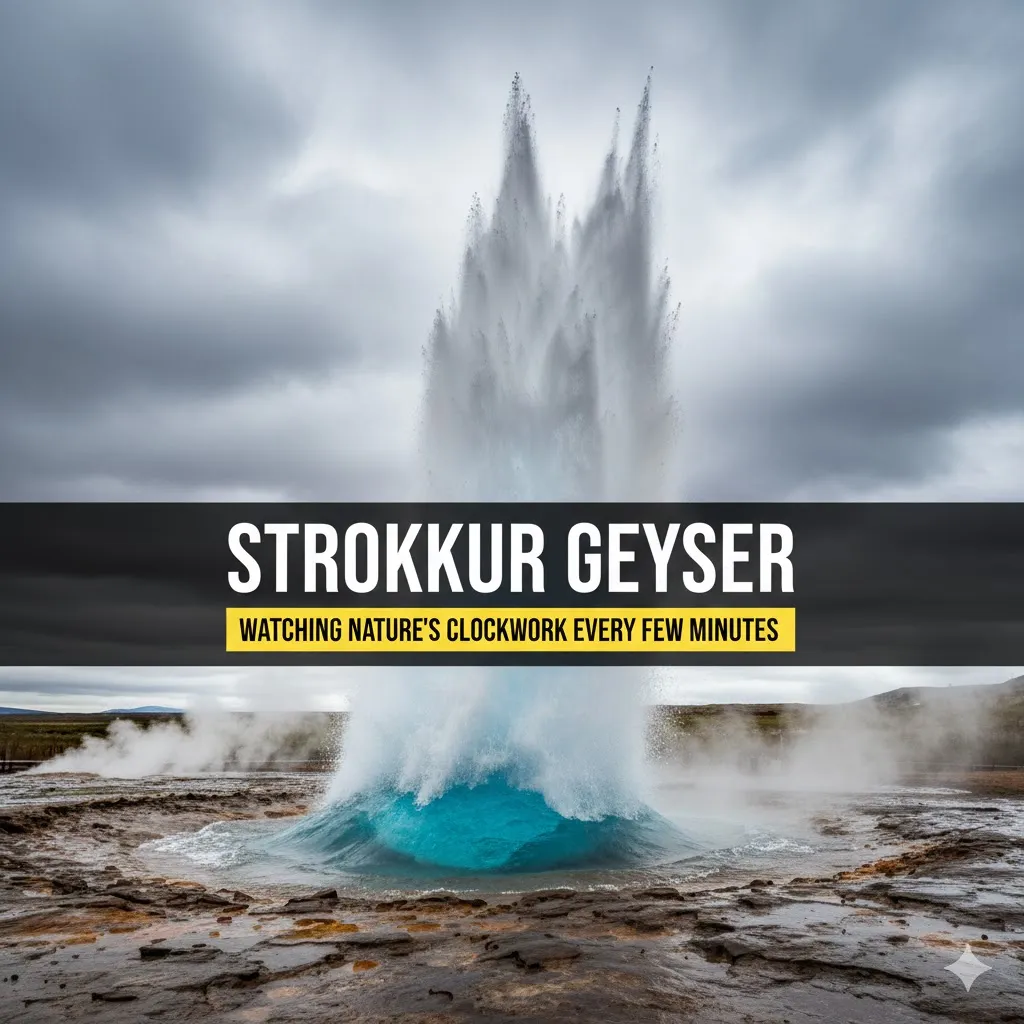
GEYSIR GEOTHERMAL AREA: WATCHING STROKKUR ERUPT EVERY FEW MINUTES
The Geysir Geothermal Area stands as one of Iceland's most spectacular and reliable natural attractions, a living laboratory of geothermal activity where the original geyser that gave its name to all geysers worldwide lies mostly dormant, while its reliable neighbor Strokkur erupts dramatically every 5-10 minutes, shooting boiling water 15-40 meters (50-130 feet) into the air. Located in Iceland's Haukadalur valley along the famous Golden Circle route, this remarkable geothermal field offers visitors an intimate encounter with the raw power of Earth's volcanic forces, where steam rises from colorful hot springs, mud pots bubble and spatter, and the ground beneath your feet hums with geothermal energy.
In 2026, as travelers seek destinations that combine natural wonder, geological significance, and accessible adventure, the Geysir Geothermal Area remains an essential Iceland experience. Whether you are a geology enthusiast fascinated by hydrothermal systems and volcanic activity, a photography enthusiast chasing the perfect eruption shot, a family seeking an educational and thrilling natural spectacle, or simply a curious traveler awed by the power of nature, this comprehensive guide will help you prepare for an unforgettable encounter with one of Earth's most dynamic geothermal landscapes.
Understanding the Geysir Geothermal Area requires more than watching Strokkur erupt; it demands engaging with the geological forces that power these spectacular displays, appreciating the historical significance of the site that gave geysers their name, and respecting the raw power and potential danger of active geothermal features. By approaching Geysir with curiosity and respect, you will discover not just a tourist attraction but a living demonstration of Iceland's position on the Mid-Atlantic Ridge, where volcanic heat meets groundwater to create nature's most spectacular fountain show.
HISTORICAL CONTEXT: THE ORIGINAL GEYSIR AND GEOTHERMAL HERITAGE
The story of Geysir is intertwined with Iceland's geological history and the global understanding of geothermal phenomena.
The Great Geysir:
The geyser that started it all:
- Name Origin: The word "geyser" derives from the Icelandic verb "geysa," meaning "to gush" or "to rush forth"
- Historical Activity: The Great Geysir was highly active from the 14th century through the early 20th century, with eruptions reaching heights of up to 170 meters (558 feet)
- Scientific Documentation: First mentioned in written records in 1294; became famous in Europe after earthquakes in the 17th century reactivated it
- Decline: Activity decreased significantly in the early 1900s; now mostly dormant with only occasional minor eruptions
Historical Significance:
- Scientific Interest: Geysir attracted scientists and travelers from around the world, helping establish the field of geothermal studies
- Cultural Impact: The geyser became a symbol of Iceland's natural wonders and geological activity
- Tourism Pioneer: One of Iceland's first major tourist attractions, drawing visitors since the 18th century
Strokkur's Rise:
How the reliable geyser came to prominence:
- Formation: Strokkur was formed by an earthquake in the 18th century that opened a new fissure
- Intermittent Activity: Erupted sporadically until another earthquake in 1963 cleared its conduit
- Modern Reliability: Since 1963, Strokkur has erupted regularly every 5-10 minutes, making it one of the world's most predictable geysers
- Name Meaning: "Strokkur" means "churn" or "buttermilk churn" in Icelandic, referring to the churning action before eruption
GEOLOGICAL WONDERS: UNDERSTANDING GEYSER MECHANICS
The Geysir Geothermal Area offers a textbook example of geothermal activity and geyser formation.
How Geysers Work:
The science behind the spectacle:
- Heat Source: Magma chambers beneath Iceland heat groundwater to boiling temperatures
- Water Supply: Rainwater and snowmelt seep through porous rock, collecting in underground chambers
- Pressure Buildup: As water heats, pressure builds in the confined underground chambers
- Eruption Cycle: When pressure exceeds the weight of water in the conduit, superheated water flashes to steam, forcing water upward in an eruption
- Recharge: After eruption, the system refills with groundwater and the cycle begins again
Strokkur's Eruption Pattern:
What to expect when watching:
- Frequency: Erupts every 5-10 minutes on average
- Height: Typically reaches 15-20 meters (50-65 feet), with some eruptions reaching 30-40 meters (100-130 feet)
- Duration: Each eruption lasts 1-2 minutes
- Warning Signs: Water level in the vent drops, then rises rapidly before eruption; bubbling and steam increase
- Eruption Sequence: Initial burst of water, followed by sustained column, then gradual decline
Geothermal Features:
Beyond the geysers, the area contains diverse geothermal phenomena:
Hot Springs:
- Temperature Range: Vary from warm to boiling (100°C/212°F)
- Colors: Mineral deposits create vibrant blues, greens, yellows, and oranges
- Formation: Heated groundwater rises to the surface, depositing minerals as it cools
Fumaroles:
- Steam Vents: Openings where volcanic gases and steam escape
- Temperature: Can exceed 100°C (212°F)
- Sounds: Hissing and roaring as steam escapes under pressure
Mud Pots:
- Formation: Acidic water dissolves surrounding rock, creating clay-rich mud
- Activity: Bubbling and spattering as gases escape through thick mud
- Colors: Range from gray to red depending on mineral content and bacterial activity
Solfataras:
- Sulfur Deposits: Yellow sulfur crystals form around steam vents
- Odor: Distinctive "rotten egg" smell from hydrogen sulfide gas
- Temperature: Extremely hot; ground can be unstable
VISITING THE GEYSIR GEOTHERMAL AREA: PRACTICAL INFORMATION FOR 2026
Planning your visit to Geysir requires understanding current facilities, access, and protocols.
Location and Access:
Getting There:
- Location: Haukadalur valley, approximately 100 kilometers (62 miles) east of Reykjavik
- Route: Along Route 35 (part of the Golden Circle); well-signed from main road
- Distance from Reykjavik: Approximately 1.5 hours drive
- Distance from Þingvellir: Approximately 60 kilometers (37 miles); 45-minute drive
- Distance from Gullfoss: Approximately 10 kilometers (6 miles); 10-minute drive
Transportation Options:
- Self-Drive: Most flexible option; paved road suitable for all vehicles in summer; 4WD recommended in winter
- Guided Tours: Golden Circle tours include Geysir as a standard stop; depart from Reykjavik
- Public Transport: Limited bus service; not practical for most visitors
Opening Hours and Access:
Park Access:
- Hours: Open 24/7 year-round; geothermal features are always active
- Visitor Center: Typically 9:00 AM - 5:00 PM (summer); 10:00 AM - 4:00 PM (winter); verify current schedule
- Best Viewing: Anytime; Strokkur erupts consistently throughout day and night
- Seasonal Considerations: Winter visits offer dramatic contrast of steam against snow; summer offers midnight sun viewing
Admission and Fees:
Entry Costs:
- Geothermal Area: Free admission to view geysers and geothermal features
- Parking: Free parking available in large lot near visitor center
- Visitor Center: Free to enter; exhibits and facilities open during center hours
Optional Costs:
- Restaurant/Café: Meals and refreshments available; budget €10-20 per person
- Gift Shop: Souvenirs, books, and Icelandic crafts; prices vary
- Guided Tours: If joining Golden Circle tour, typically €60-150 depending on tour type
Facilities and Amenities:
Visitor Center:
- Exhibits: Educational displays about geothermal activity, geology, and geyser formation
- Restrooms: Clean, modern facilities; accessible
- Information Desk: Knowledgeable staff to answer questions
- Free WiFi: Available in visitor center area
Dining Options:
- Geysir Center Restaurant: Full-service restaurant with Icelandic and international cuisine
- Café: Quick snacks, coffee, pastries, and light meals
- Outdoor Seating: Picnic tables with views of geothermal area (weather permitting)
- Prices: Tourist prices; expect to pay €15-25 for main courses
Shopping:
- Gift Shop: Icelandic souvenirs, geology books, postcards, and local crafts
- Specialty Items: Geysir-themed merchandise, volcanic rock samples, educational materials
Best Time to Visit:
Timing Your Visit:
Time of Day:
- Morning (9 AM - 12 PM): Fewer crowds; good light for photography; active geothermal features
- Midday (12 PM - 3 PM): Peak tourist hours; busiest period; still excellent viewing
- Afternoon (3 PM - 6 PM): Crowds begin to thin; golden hour lighting for photography
- Evening/Night: Dramatic steam against dark sky; fewer visitors; bring flashlight for safety
Seasonal Considerations:
Summer (June-August):
- Advantages: Long daylight hours (midnight sun), mild temperatures, all facilities open
- Disadvantages: Peak tourist crowds, higher prices
- Weather: 10-15°C (50-59°F); can be windy
- Daylight: 18-24 hours
Shoulder Seasons (May, September-October):
- Advantages: Fewer crowds, lower prices, good balance of daylight
- Disadvantages: More variable weather
- Weather: 5-10°C (41-50°F); unpredictable
Winter (November-April):
- Advantages: Fewest crowds, dramatic steam against snow, possible Northern Lights
- Disadvantages: Limited daylight, cold temperatures, challenging driving conditions
- Weather: -5 to 5°C (23-41°F); can be harsh
- Daylight: 4-8 hours
Duration of Visit:
Recommended Time:
- Minimum: 45 minutes to 1 hour to watch multiple Strokkur eruptions and explore main features
- Ideal: 1.5-2 hours for comprehensive exploration, visitor center, photography, and dining
- Photography Enthusiasts: Allow 2-3 hours for multiple angles, different lighting conditions, and patient waiting for perfect eruption shot
WHAT TO SEE: GEYSIR'S GEOTHERMAL FEATURES
The Geysir Geothermal Area contains numerous features worth exploring beyond Strokkur.
Strokkur Geyser:
The main attraction:
- Viewing Areas: Multiple platforms and viewing areas at safe distances
- Eruption Viewing: Position yourself upwind to avoid steam and spray
- Photography: Multiple eruptions provide numerous opportunities; eruptions every 5-10 minutes
- Safety: Stay behind barriers; water is boiling hot (100°C/212°F)
The Great Geysir:
The original, now mostly dormant:
- Current Activity: Occasional minor eruptions; mostly quiet pool
- Historical Significance: Walk around the large pool where the famous geyser lies
- Educational Value: Compare with active Strokkur to understand geyser life cycles
- Viewing: Large, turquoise-colored pool; steam rises from surface
Litli Geysir (Little Geysir):
A smaller, active geyser:
- Activity: Erupts less frequently and with less force than Strokkur
- Location: Short walk from main viewing area
- Interest: Good example of smaller geyser activity
Hot Springs and Pools:
Colorful geothermal features:
- Blesi: Beautiful blue hot spring near Strokkur; popular for photography
- Konungshver (King's Spring): Large, colorful hot spring
- Multiple Pools: Dozens of hot springs in various colors and temperatures
- Safety: Stay on marked paths; ground can be thin and scalding
Fumaroles and Steam Vents:
Geothermal gas emissions:
- Multiple Locations: Throughout the geothermal area
- Sounds: Hissing and roaring steam
- Temperature: Extremely hot; stay on paths
- Photography: Dramatic steam plumes, especially in cold weather
Mud Pots:
Bubbling geothermal features:
- Location: Scattered throughout the area
- Activity: Bubbling, spattering mud
- Colors: Gray, brown, and red depending on minerals
- Interest: Different type of geothermal activity; acidic environment
Solfataras:
Sulfur-rich steam vents:
- Yellow Deposits: Bright yellow sulfur crystals
- Odor: Strong sulfur smell (rotten eggs)
- Temperature: Very hot; ground unstable
- Photography: Colorful mineral deposits
PHOTOGRAPHY TIPS: CAPTURING GEYSIR ERUPTIONS
Geysir offers exceptional photography opportunities; these tips will help you capture stunning images.
Best Photography Locations:
Strokkur Eruptions:
- Front View: Position directly in front of geyser for full eruption column
- Side Angle: Capture eruption with landscape context
- Close-Up: Focus on water column details and steam
- Wide Shot: Include surrounding geothermal area and visitors for scale
Geothermal Features:
- Hot Springs: Capture vibrant colors and steam
- Blesi: Beautiful blue pool; best in morning or evening light
- Steam Vents: Dramatic plumes against sky
- Mineral Deposits: Close-ups of colorful formations
Technical Considerations:
Equipment:
- Wide-Angle Lens (16-35mm): For capturing full eruption with landscape context
- Telephoto Lens (70-200mm): For isolating eruption details and compressing perspective
- Tripod: Essential for low-light conditions and long exposures; check if allowed in crowded areas
- Polarizing Filter: Reduces glare on water, enhances sky contrast, saturates mineral colors
- Lens Cloth: Steam and spray can fog lenses; keep lens clean and dry
- Weather Protection: Camera rain cover or plastic bag; geothermal spray is hot and mineral-rich
Camera Settings:
For Eruptions:
- Shutter Speed: 1/500 or faster to freeze water droplets; 1/1000+ for sharp detail
- Aperture: f/8-f/11 for good depth of field and sharpness
- ISO: 100-400 in good light; increase as needed
- Continuous Shooting: Use burst mode to capture eruption sequence
- Focus: Pre-focus on geyser vent; use continuous autofocus
For Hot Springs and Steam:
- Aperture: f/8-f/16 for landscape sharpness
- Shutter Speed: 1/60-1/250 depending on light
- Long Exposure: 1-2 seconds for silky steam effect (tripod required)
- Polarizer: Enhances colors in hot springs
For Low Light/Winter:
- ISO: 800-3200 as needed
- Aperture: f/2.8-f/4 for maximum light
- Shutter Speed: As fast as possible while maintaining exposure
- Tripod: Essential for stability
Composition Techniques:
Framing Eruptions:
- Rule of Thirds: Position eruption column off-center for dynamic composition
- Include Foreground: Add interest with rocks, visitors, or geothermal features
- Scale: Include people to show eruption size
- Leading Lines: Use paths, steam, or landscape features to lead eye to geyser
Capturing the Moment:
- Anticipation: Watch for warning signs (water level drop, increased bubbling)
- Patience: Wait for best light and eruption height
- Sequence: Capture pre-eruption, peak eruption, and post-eruption phases
- Context: Show geyser in landscape, not isolated
Best Times for Photography:
Golden Hour:
- Summer: Extended golden hour (10 PM-midnight) with soft, warm light
- Winter: Short but dramatic golden hour (11 AM-2 PM)
- Advantage: Warm colors, long shadows, dramatic atmosphere
Blue Hour:
- Timing: Just before sunrise and just after sunset
- Effect: Soft blue light with steam glowing from geothermal heat
- Advantage: Dramatic contrast between cool sky and warm steam
Overcast Conditions:
- Advantage: Soft, even light; no harsh shadows; colors appear more saturated
- Steam Visibility: Steam more visible against gray sky
Crowd Management:
- Early Morning: Arrive before 9 AM for fewer crowds
- Late Evening: Stay after tour groups leave (after 6 PM)
- Weekdays: Tuesday-Thursday typically less crowded
- Position: Find elevated viewing spots for unobstructed shots
SAFETY GUIDELINES: STAYING SAFE IN GEOTHERMAL AREAS
Geothermal areas are beautiful but potentially dangerous; follow these safety guidelines.
Critical Safety Rules:
Stay on Marked Paths:
- Reason: Ground can be thin, unstable, and scalding hot just inches from safe areas
- Temperature: Ground temperature can exceed 100°C (212°F)
- Consequences: Severe burns or death from falling into hot springs or fumaroles
- Compliance: Never leave designated paths and viewing areas
Never Touch Geothermal Features:
- Water Temperature: Boiling hot (100°C/212°F); causes instant severe burns
- Steam Temperature: Can exceed 100°C; causes severe burns
- Mineral Deposits: Can be extremely hot and fragile
- Respect: These are natural features; touching damages them and endangers you
Keep Children Close:
- Supervision: Always hold hands with young children
- Education: Explain dangers clearly before visiting
- Barriers: Stay behind safety railings and barriers
- Awareness: Children may not recognize danger; constant supervision essential
Additional Safety Considerations:
Weather and Conditions:
- Wind: Can blow hot steam and spray unexpectedly; position yourself upwind
- Rain: Makes paths slippery; wear appropriate footwear
- Ice: Winter conditions create icy paths; use caution
- Visibility: Steam can reduce visibility; be aware of surroundings
Health Considerations:
- Respiratory Issues: Sulfur fumes can irritate lungs; those with respiratory conditions should be cautious
- Heart Conditions: Geothermal areas can be strenuous; know your limits
- Hydration: Bring water; geothermal heat can be dehydrating
- Sun Protection: Steam doesn't block UV rays; use sunscreen
Emergency Preparedness:
- Emergency Number: 112 for all emergencies in Iceland
- First Aid: Basic first aid available at visitor center
- Location: Note your location if you need to call for help
- Cell Service: Generally good coverage in Geysir area
CULTURAL AND EDUCATIONAL SIGNIFICANCE
The Geysir Geothermal Area offers more than natural spectacle; it provides important educational and cultural value.
Scientific Importance:
Geothermal Research:
- Study Site: Geysir has been studied by scientists for centuries
- Understanding: Helps scientists understand geothermal systems worldwide
- Monitoring: Ongoing research tracks geyser activity and geological changes
- Education: Living laboratory for geology, physics, and earth sciences
Geothermal Energy:
- Iceland's Resource: Geothermal energy provides most of Iceland's heating and significant electricity
- Sustainable: Renewable energy source with minimal environmental impact
- Innovation: Iceland is a world leader in geothermal energy technology
- Connection: Geysir demonstrates the power that Iceland harnesses for clean energy
Cultural Heritage:
Icelandic Identity:
- National Symbol: Geysir represents Iceland's unique geological character
- Pride: Source of national pride and international recognition
- Tourism: One of Iceland's first and most famous tourist attractions
- Heritage: Part of Iceland's cultural and natural heritage
Historical Tourism:
- Early Visitors: Attracted travelers since the 18th century
- Documentation: Extensively photographed and studied
- Influence: Inspired geothermal tourism worldwide
- Legacy: Continues to educate and inspire visitors
ENVIRONMENTAL CONSERVATION AND SUSTAINABLE TOURISM
Protecting Geysir for future generations requires mindful visitor practices.
Conservation Challenges:
Human Impact:
- Erosion: Foot traffic can damage fragile geothermal features
- Pollution: Litter and contaminants can harm geothermal systems
- Vandalism: Throwing objects into geysers can damage or alter eruption patterns
- Overcrowding: Too many visitors can degrade the experience and environment
Sustainable Practices:
Visitor Responsibilities:
- Stay on Paths: Protect fragile ecosystems by remaining on designated trails
- Pack Out Trash: Carry out all trash; use designated waste facilities
- Respect Barriers: Safety barriers also protect geothermal features
- Quiet Enjoyment: Keep noise levels moderate to respect other visitors and the natural environment
Supporting Conservation:
- Visitor Fees: Parking and facility fees support maintenance and conservation
- Donations: Consider donating to geothermal conservation organizations
- Education: Learn about geothermal conservation and share knowledge
- Responsible Tourism: Choose tour operators committed to sustainability
NEARBY ATTRACTIONS: EXTENDING YOUR GOLDEN CIRCLE JOURNEY
Geysir is perfectly positioned for combining with other Golden Circle attractions.
Golden Circle Route:
Classic Stops:
- Þingvellir National Park: 60 kilometers (37 miles) west; 45-minute drive
- Gullfoss Waterfall: 10 kilometers (6 miles) south; 10-minute drive
- Recommended Order: Þingvellir → Geysir → Gullfoss (or reverse)
Additional Stops Near Geysir:
Faxi Waterfall (Vatnsleysufoss):
- Distance: 15 kilometers (9 miles) from Geysir
- Features: Wide, powerful waterfall; less crowded than Gullfoss
- Duration: 20-30 minutes
- Interest: Salmon ladder visible during spawning season
Kerið Volcanic Crater:
- Distance: 30 kilometers (19 miles) from Geysir
- Features: Striking crater lake with red volcanic slopes and turquoise water
- Duration: 30-45 minutes
- Cost: Small entrance fee (approximately €4-6)
Laugarvatn:
- Distance: 20 kilometers (12 miles) from Geysir
- Features: Lakeside village with Fontana Geothermal Baths
- Activities: Geothermal bathing, lakeside walks, geothermal bakery
- Duration: 1-2 hours
Skálholt:
- Distance: 35 kilometers (22 miles) from Geysir
- Features: Historic bishopric with archaeological museum
- Significance: Important site in Icelandic religious history
- Duration: 45-60 minutes
Suggested Itineraries:
Half-Day Golden Circle (4-5 hours):
1. Þingvellir National Park (1.5 hours)
2. Geysir Geothermal Area (1 hour)
3. Gullfoss Waterfall (1 hour)
4. Return to Reykjavik
Full-Day Golden Circle (8-10 hours):
1. Morning: Þingvellir National Park (2 hours)
2. Midday: Geysir Geothermal Area (1.5 hours, including lunch)
3. Afternoon: Gullfoss Waterfall (1.5 hours)
4. Optional: Additional stops (Kerið, Faxi) (1-2 hours)
5. Return to Reykjavik
Multi-Day Exploration:
- Day 1: Complete Golden Circle with additional stops
- Day 2: South Coast attractions (Seljalandsfoss, Skógafoss, black sand beaches)
- Day 3: Reykjavik exploration or Blue Lagoon
PRACTICAL TIPS FOR 2026 VISITORS
Essential information for planning your Geysir visit.
Before You Go:
Research and Planning:
- Check Weather: Iceland's weather is unpredictable; check en.vedur.is
- Road Conditions: Verify road.is for current road status, especially in winter
- Eruption Predictions: While Strokkur is reliable, exact timing varies; patience required
- Packing List: Dress in layers, waterproof outer layer, sturdy footwear, camera protection
What to Bring:
- Clothing: Waterproof jacket, warm layers, hat, gloves (even in summer)
- Footwear: Sturdy, waterproof hiking boots or shoes with good traction
- Photography: Camera, tripod, lenses, filters, lens cloth, weather protection
- Essentials: Water bottle, snacks, sunscreen, sunglasses, personal medications
- Documentation: Park map, emergency contact numbers, travel insurance information
During Your Visit:
Maximizing Your Experience:
- Arrive Early: Beat crowds by arriving before 9 AM or after 6 PM
- Watch Multiple Eruptions: Strokkur erupts frequently; watch several to get best photos
- Explore Fully: Don't just watch Strokkur; explore other geothermal features
- Visit Visitor Center: Educational exhibits enhance understanding
- Be Patient: Wait for best light and eruption height for photography
Respectful Behavior:
- Follow Rules: Stay on marked paths; respect all barriers and signs
- Quiet Enjoyment: Keep noise levels moderate
- Leave No Trace: Pack out all trash; minimize impact
- Cultural Sensitivity: Respect other visitors and the natural environment
After Your Visit:
Continuing Your Journey:
- Next Stop: Continue to Gullfoss (10 minutes south) or return to Reykjavik
- Reflection: Review photos and notes; share experiences responsibly
- Learning: Explore further resources about geothermal activity and Iceland's geology
CONCLUSION: WITNESSING EARTH'S POWER
The Geysir Geothermal Area offers more than a tourist attraction; it provides a profound encounter with the raw power of Earth's volcanic forces. As you watch Strokkur erupt with clockwork reliability, feel the heat of boiling springs, smell the sulfur of fumaroles, and stand where the word "geyser" was born, you participate in a continuum of natural wonder that has captivated humans for centuries.
In 2026, as travelers seek meaningful connections to nature and authentic experiences of Earth's dynamic systems, Geysir stands ready to inspire awe, curiosity, and respect. Whether you capture the perfect eruption photograph, learn about geothermal energy, or simply stand in wonder at nature's power, Geysir invites you to appreciate the forces that shape our planet.
May your visit to the Geysir Geothermal Area deepen your appreciation for Iceland's remarkable geology and inspire your commitment to preserving these natural wonders for future generations. As the scientists who study these features, the conservationists who protect them, and the visitors who marvel at them understand, true wonder lies not just in witnessing nature's power but in respecting and preserving it. May you carry that understanding forward, wherever your journey leads.
Useful Resources:
- Visit Iceland: visiticeland.com for official tourism information
- Icelandic Meteorological Office: en.vedur.is for weather forecasts and geothermal activity
- Road Conditions: road.is for current road status and closures
- Safe Travel Iceland: safetravel.is for safety information and travel advisories
- Emergency Services: 112 for all emergencies in Iceland
Disclaimer: Information is accurate as of early 2026. Weather conditions, road closures, attraction hours, and tourism policies may change; verify current details through official channels before your visit. Geothermal areas can be dangerous; always follow safety guidelines and stay on marked paths. This guide is for informational purposes only and does not constitute professional travel advice.
0 Comments