.webp)
.webp)
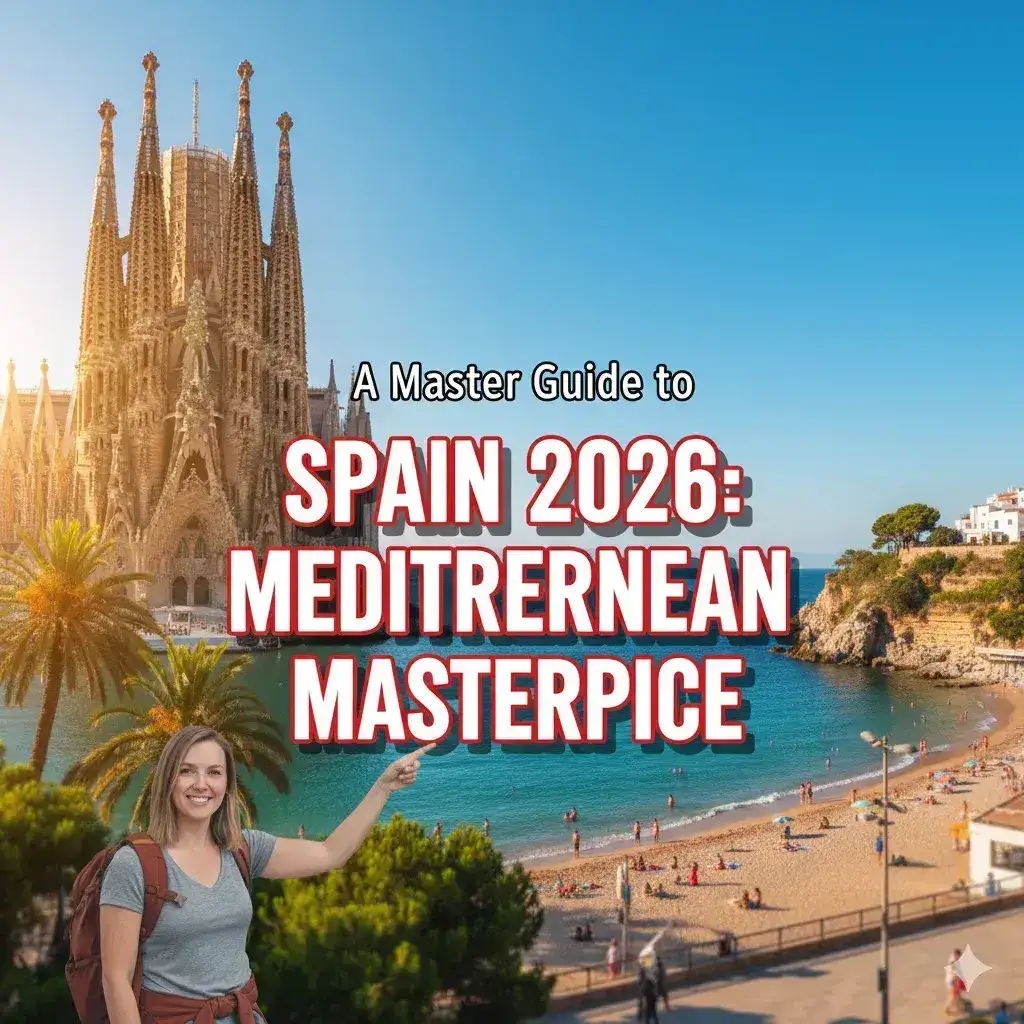
Spain 2026: A Mediterranean Masterpiece of Art, Culture, and Endless Sunshine
Spain, a sun-drenched peninsula where ancient history dances with contemporary creativity, stands as one of the world's most captivating travel destinations. From the fiery passion of flamenco in Andalusia to the avant-garde architecture of Barcelona, from the pristine beaches of the Costa Brava to the mountain villages of the Pyrenees, Spain offers a tapestry of experiences that engage every sense and enrich every perspective. As we explore this remarkable nation in 2026, Spain continues to captivate travelers with its unparalleled blend of artistic heritage, culinary excellence, vibrant festivals, and the legendary Spanish warmth that makes every visitor feel like family.
Comprising 17 autonomous regions, each with its own language, traditions, landscapes, and cultural identity, Spain is a study in delightful diversity within a single nation. Whether you're wandering the Moorish courtyards of the Alhambra, marveling at Gaudí's whimsical masterpieces in Barcelona, savoring pinchos in San Sebastián's Old Town, or hiking the ancient Camino de Santiago, Spain rewards curious travelers with endless discovery. The country's Mediterranean climate ensures over 300 days of sunshine annually in many regions, making it an ideal destination year-round for those seeking culture, relaxation, adventure, or simply the joy of living well.
This comprehensive master guide invites you on a journey through Spain's artistic treasures, cultural traditions, and natural wonders. We'll explore iconic landmarks and hidden gems, provide practical insights for navigating the country efficiently, and highlight seasonal events and local favorites that enrich your visit. Whether you're planning your first journey to this remarkable nation or returning to deepen your connection with its endless offerings, this guide will help you experience Spain with confidence, curiosity, and appreciation for all it has to offer.
Understanding Spain: A Nation of Diverse Regions and Rich Heritage
To truly appreciate Spain, one must understand the extraordinary diversity that defines this remarkable nation. Spain is not a monolithic culture but a vibrant mosaic of distinct regions, each contributing its own language, traditions, cuisine, and character to the national identity.
Key Regions and Their Character:
- Andalusia: The soulful heart of traditional Spain, home to flamenco, Moorish architecture, whitewashed pueblos, and the passionate culture of the south. Cities like Seville, Granada, and Córdoba showcase Islamic heritage, Catholic grandeur, and Gypsy artistry.
- Catalonia: A region of fierce pride and creative innovation, centered on Barcelona. Catalan culture blends Mediterranean charm with avant-garde art, from Gaudí's architecture to Picasso's paintings and Dalí's surrealism.
- Basque Country: A unique culture with its own language (Euskera), renowned for world-class cuisine, dramatic coastal landscapes, and a strong sense of identity. San Sebastián and Bilbao are cultural and gastronomic powerhouses.
- Madrid: The vibrant capital, a cosmopolitan hub of art museums, royal palaces, nightlife, and Spanish energy. Madrid offers the best of Spanish culture in a dynamic urban setting.
- Valencia and the Mediterranean Coast: Sun-soaked beaches, futuristic architecture (the City of Arts and Sciences), and the birthplace of paella. The Costa Blanca and Costa del Sol offer resort relaxation and coastal charm.
- Galicia: The misty, Celtic-influenced northwest, known for seafood, green landscapes, the pilgrimage route of Santiago de Compostela, and a slower, more contemplative pace of life.
- The Balearic and Canary Islands: Island paradises offering beach escapes, volcanic landscapes, and year-round warmth. Mallorca, Ibiza, Menorca, and the Canaries provide distinct experiences from mainland Spain.
- 👉 Salento Coolcations 2026: Escape Heat in Coffee Hills
- 👉 Coolcations Mullerthal 2026: Little Switzerland Summer Escape
- 👉 Thess-Metro App 2026: Zero-Carbon Transport Guide for Northern Greece
Historical Layers: Spain's rich heritage reflects centuries of cultural convergence: Roman ruins, Visigothic churches, Islamic palaces, Gothic cathedrals, Renaissance art, and modernist innovation all coexist. Understanding this layered history enriches your experience of Spanish art, architecture, and traditions.
Language Diversity: While Spanish (Castilian) is the national language, regional languages including Catalan, Basque, and Galician are widely spoken and celebrated. Learning a few phrases in the local language is appreciated and enhances your connection with communities.
Artistic Treasures: From Gaudí to Goya and Beyond
Spain's contribution to global art is immeasurable, with masters whose work continues to inspire and captivate audiences worldwide.
Antoni Gaudí and Barcelona's Modernisme: No discussion of Spanish art is complete without Antoni Gaudí, whose whimsical, organic architecture defines Barcelona's skyline. Must-see masterpieces include:
- Sagrada Família: Gaudí's unfinished basilica, a breathtaking fusion of Gothic and Art Nouveau forms. The intricate facades, forest-like columns, and kaleidoscopic stained glass create a spiritual experience unlike any other. Book tickets well in advance for tower access.
- Park Güell: A whimsical public park featuring mosaic sculptures, serpentine benches, and panoramic city views. Gaudí's playful imagination transforms stone and tile into living art.
- Casa Batlló and Casa Milà: These residential buildings showcase Gaudí's genius for blending function with fantasy, with undulating facades, innovative ventilation, and dreamlike interiors.
- 👉 Salento Coolcations 2026: Escape Heat in Coffee Hills
- 👉 Coolcations Mullerthal 2026: Little Switzerland Summer Escape
- 👉 Thess-Metro App 2026: Zero-Carbon Transport Guide for Northern Greece
Master Painters: Spain has produced some of history's greatest artists:
- Diego Velázquez: The Baroque master whose Las Meninas (Prado Museum, Madrid) revolutionized portraiture and perspective.
- Francisco Goya: From royal portraits to dark, psychological masterpieces, Goya's work spans joy and horror, reflecting Spain's turbulent history.
- Pablo Picasso: The co-founder of Cubism, born in Málaga. His Guernica (Museo Reina Sofía, Madrid) remains one of the most powerful anti-war statements in art.
- Salvador Dalí: The surrealist genius whose dreamlike paintings and eccentric personality captivate visitors at the Dalí Theatre-Museum in Figueres.
- Joan Miró: His playful, colorful abstractions are celebrated at the Fundació Joan Miró in Barcelona.
- 👉 Salento Coolcations 2026: Escape Heat in Coffee Hills
- 👉 Coolcations Mullerthal 2026: Little Switzerland Summer Escape
- 👉 Thess-Metro App 2026: Zero-Carbon Transport Guide for Northern Greece
World-Class Museums:
- Prado Museum (Madrid): One of the world's finest collections of European art, with unparalleled holdings of Spanish masters.
- Museo Reina Sofía (Madrid): Modern and contemporary art, home to Picasso's Guernica.
- Thyssen-Bornemisza (Madrid): Completes Madrid's "Golden Triangle of Art" with a diverse collection spanning eight centuries.
- Picasso Museum (Barcelona): Extensive collection of Picasso's early work, set in medieval palaces.
- Guggenheim Bilbao: Frank Gehry's titanium masterpiece houses cutting-edge contemporary art in the Basque Country.
- 👉 Salento Coolcations 2026: Escape Heat in Coffee Hills
- 👉 Coolcations Mullerthal 2026: Little Switzerland Summer Escape
- 👉 Thess-Metro App 2026: Zero-Carbon Transport Guide for Northern Greece
Architectural Wonders: From Moorish Palaces to Modern Marvels
Spain's architectural heritage spans millennia, reflecting the diverse cultures that have shaped the peninsula.
Islamic Architecture: The Moorish legacy is most spectacularly preserved in Andalusia:
- Alhambra (Granada): A UNESCO World Heritage Site and one of the world's most beautiful palaces. The intricate stucco work, serene courtyards, and panoramic views of the Sierra Nevada create an unforgettable experience. Book tickets months in advance—entry is strictly timed and sells out quickly.
- Mosque-Cathedral of Córdoba: A stunning fusion of Islamic and Christian architecture, with rows of red-and-white horseshoe arches creating a hypnotic forest of columns.
- Alcázar of Seville: A royal palace blending Mudéjar, Gothic, and Renaissance styles, with lush gardens that inspired the Water Gardens of Dorne in Game of Thrones.
- 👉 Salento Coolcations 2026: Escape Heat in Coffee Hills
- 👉 Coolcations Mullerthal 2026: Little Switzerland Summer Escape
- 👉 Thess-Metro App 2026: Zero-Carbon Transport Guide for Northern Greece
Gothic and Renaissance Splendor:
- Burgos Cathedral: A masterpiece of French-inspired Gothic architecture, with soaring spires and intricate stone carving.
- Toledo: A medieval city of three cultures (Christian, Muslim, Jewish), with narrow streets, historic synagogues, and El Greco's artistic legacy.
- Salamanca: The "Golden City" features a stunning Plaza Mayor and one of Europe's oldest universities, with facades adorned with intricate stone carvings.
- 👉 Salento Coolcations 2026: Escape Heat in Coffee Hills
- 👉 Coolcations Mullerthal 2026: Little Switzerland Summer Escape
- 👉 Thess-Metro App 2026: Zero-Carbon Transport Guide for Northern Greece
Contemporary Architecture:
- City of Arts and Sciences (Valencia): Santiago Calatrava's futuristic complex features an opera house, science museum, and oceanographic park in striking white forms.
- Guggenheim Bilbao: Frank Gehry's titanium-clad museum transformed Bilbao from industrial city to cultural destination.
- Metropol Parasol (Seville): A massive wooden structure offering panoramic views and a market below, blending innovation with public space.
- 👉 Salento Coolcations 2026: Escape Heat in Coffee Hills
- 👉 Coolcations Mullerthal 2026: Little Switzerland Summer Escape
- 👉 Thess-Metro App 2026: Zero-Carbon Transport Guide for Northern Greece
Culinary Excellence: A Journey Through Spanish Flavors
Spanish cuisine is a celebration of regional diversity, fresh ingredients, and communal joy. From Michelin-starred innovation to humble tapas bars, food is central to Spanish life.
Iconic Dishes to Try:
- Paella: Valencia's saffron-infused rice dish, traditionally prepared with rabbit, chicken, and beans (paella valenciana) or seafood (paella de marisco). Authentic paella is a lunchtime specialty, cooked in wide pans over open fire.
- Tapas and Pinchos: Small plates designed for sharing. In Andalusia, tapas often come free with drinks; in the Basque Country, pinchos (skewered bites) line bar counters. Must-try: patatas bravas, jamón ibérico, gambas al ajillo, tortilla española.
- Jamón Ibérico: Acorn-fed Iberian ham, thinly sliced and savored for its nutty, complex flavor. The highest grade, jamón ibérico de bellota, is a luxury worth experiencing.
- Gazpacho and Salmorejo: Chilled tomato soups perfect for hot summer days—gazpacho is blended and smooth; salmorejo is thicker, topped with ham and egg.
- Pulpo a la Gallega: Galician-style octopus, tender and seasoned with paprika, olive oil, and sea salt.
- Churros con Chocolate: Fried dough sticks dipped in thick, rich hot chocolate—a beloved breakfast or late-night treat.
- 👉 Salento Coolcations 2026: Escape Heat in Coffee Hills
- 👉 Coolcations Mullerthal 2026: Little Switzerland Summer Escape
- 👉 Thess-Metro App 2026: Zero-Carbon Transport Guide for Northern Greece
Wine and Beverages:
- Rioja and Ribera del Duero: Spain's premier red wine regions, producing elegant Tempranillo-based wines.
- Cava: Spain's sparkling wine, made using the traditional method, offers exceptional value.
- Sherry: Fortified wines from Jerez, ranging from bone-dry Fino to sweet Pedro Ximénez.
- Sangría and Tinto de Verano: Refreshing wine-based drinks perfect for summer afternoons.
- 👉 Salento Coolcations 2026: Escape Heat in Coffee Hills
- 👉 Coolcations Mullerthal 2026: Little Switzerland Summer Escape
- 👉 Thess-Metro App 2026: Zero-Carbon Transport Guide for Northern Greece
Food Experiences:
- Market Visits: Explore La Boquería (Barcelona), Mercado de San Miguel (Madrid), or Mercado Central (Valencia) for fresh produce, local specialties, and vibrant atmosphere.
- Cooking Classes: Learn to make paella, tapas, or desserts with local chefs—a delicious way to connect with Spanish culture.
- Wine Tours: Visit vineyards in Rioja, Priorat, or Rías Baixas for tastings and insights into Spanish winemaking.
- Michelin Dining: Spain boasts over 200 Michelin-starred restaurants. For a splurge, consider Arzak (San Sebastián), DiverXO (Madrid), or Disfrutar (Barcelona).
- 👉 Salento Coolcations 2026: Escape Heat in Coffee Hills
- 👉 Coolcations Mullerthal 2026: Little Switzerland Summer Escape
- 👉 Thess-Metro App 2026: Zero-Carbon Transport Guide for Northern Greece
Cultural Traditions: Flamenco, Festivals, and Living Heritage
Spain's cultural vitality is expressed through music, dance, festivals, and traditions that bring communities together and delight visitors.
Flamenco: Born in Andalusia, flamenco is a passionate art form combining song (cante), guitar (toque), dance (baile), and rhythmic handclaps (palmas). For authentic experiences:
- Seville: Visit tablaos like Los Gallos or La Carbonería for intimate performances.
- Granada: The Sacromonte cave dwellings offer flamenco in atmospheric settings.
- Madrid: Corral de la Morería is one of the world's most renowned flamenco venues.
- 👉 Salento Coolcations 2026: Escape Heat in Coffee Hills
- 👉 Coolcations Mullerthal 2026: Little Switzerland Summer Escape
- 👉 Thess-Metro App 2026: Zero-Carbon Transport Guide for Northern Greece
Major Festivals:
- La Tomatina (Buñol, August): The world's biggest food fight—tons of tomatoes thrown in joyful chaos.
- Feria de Abril (Seville, April): A week of flamenco dresses, horse parades, casetas (tents), and celebration following Easter.
- San Fermín (Pamplona, July): The running of the bulls, preceded by days of street parties and traditional festivities.
- Las Fallas (Valencia, March): Giant satirical sculptures burned in spectacular fireworks-filled nights.
- Semana Santa (Holy Week, nationwide): Solemn processions with ornate floats, especially magnificent in Seville, Granada, and Málaga.
- 👉 Salento Coolcations 2026: Escape Heat in Coffee Hills
- 👉 Coolcations Mullerthal 2026: Little Switzerland Summer Escape
- 👉 Thess-Metro App 2026: Zero-Carbon Transport Guide for Northern Greece
Living Traditions: Beyond famous festivals, Spain's everyday culture rewards observation: the evening paseo (stroll), late-night dinners, family gatherings, and regional customs that reflect local identity. Engaging respectfully with these traditions enriches your travel experience.
Natural Beauty: Beaches, Mountains, and Diverse Landscapes
Spain's geographical diversity offers experiences for every type of traveler, from beach lovers to mountain adventurers.
Coastal Paradises:
- Costa Brava: Rugged coastline with hidden coves, crystal waters, and charming fishing villages like Cadaqués and Tossa de Mar.
- Costa del Sol: Sunny beaches, resort towns, and golf courses along Andalusia's southern coast.
- Balearic Islands: Mallorca's dramatic mountains and beaches, Ibiza's nightlife and secluded calas, Menorca's unspoiled charm.
- Canary Islands: Year-round warmth, volcanic landscapes, black-sand beaches, and unique ecosystems. Tenerife, Lanzarote, and La Palma offer distinct experiences.
- 👉 Salento Coolcations 2026: Escape Heat in Coffee Hills
- 👉 Coolcations Mullerthal 2026: Little Switzerland Summer Escape
- 👉 Thess-Metro App 2026: Zero-Carbon Transport Guide for Northern Greece
Mountain and Rural Escapes:
- Pyrenees: Hiking, skiing, and picturesque villages along the French border.
- Picos de Europa: Dramatic limestone peaks in northern Spain, ideal for trekking and wildlife watching.
- Sierra Nevada: Skiing in winter, hiking in summer, with views from mainland Spain's highest peaks.
- Camino de Santiago: The ancient pilgrimage route across northern Spain, offering spiritual journey, cultural immersion, and stunning landscapes.
- 👉 Salento Coolcations 2026: Escape Heat in Coffee Hills
- 👉 Coolcations Mullerthal 2026: Little Switzerland Summer Escape
- 👉 Thess-Metro App 2026: Zero-Carbon Transport Guide for Northern Greece
National Parks: Spain has 16 national parks protecting diverse ecosystems:
- Doñana: Wetlands crucial for migratory birds.
- Teide (Tenerife): Volcanic landscape with Spain's highest peak.
- Ordesa y Monte Perdido: Pyrenean valleys with waterfalls and wildlife.
- 👉 Salento Coolcations 2026: Escape Heat in Coffee Hills
- 👉 Coolcations Mullerthal 2026: Little Switzerland Summer Escape
- 👉 Thess-Metro App 2026: Zero-Carbon Transport Guide for Northern Greece
Practical Guide: Planning Your Spain Journey in 2026
Thoughtful preparation enhances your experience of this diverse nation.
Visa Requirements: Spain is part of the Schengen Area. Citizens of visa-exempt countries (US, Canada, UK, Australia, etc.) can enter for up to 90 days within any 180-day period. Starting in 2026, visa-exempt travelers will need to obtain ETIAS authorization online before arrival—a simple, low-cost pre-screening process. Citizens of other countries should apply for a Schengen visa through Spanish consulates.
Getting Around: Spain's transportation network is efficient and affordable:
- High-Speed Rail (AVE): Connects major cities at speeds up to 310 km/h. Madrid-Barcelona takes 2.5 hours; Madrid-Seville takes 2.5 hours. Book in advance for best prices.
- Regional Trains: Slower but scenic options for exploring smaller towns and rural areas.
- Buses: Extensive network connecting cities and villages; companies like ALSA offer comfortable, affordable service.
- Domestic Flights: Useful for reaching islands or distant regions; airlines like Iberia, Vueling, and Ryanair offer frequent service.
- Car Rental: Ideal for exploring rural areas, coastal routes, and small villages. Remember: Spain drives on the right; international driving permit recommended.
- Urban Transport: Cities like Madrid and Barcelona have excellent metro systems; buses and taxis are widely available.
- 👉 Salento Coolcations 2026: Escape Heat in Coffee Hills
- 👉 Coolcations Mullerthal 2026: Little Switzerland Summer Escape
- 👉 Thess-Metro App 2026: Zero-Carbon Transport Guide for Northern Greece
Accommodation: Spain offers diverse lodging options:
- Hotels: Range from luxury paradores (historic buildings converted to hotels) to budget chains.
- Paradores: State-run hotels in castles, monasteries, and historic buildings—unique experiences with character.
- Rural Tourism: Casas rurales (country houses) offer authentic stays in villages and natural settings.
- Hostels: Affordable options in cities and along the Camino de Santiago.
- Short-Term Rentals: Apartments and villas available via platforms like Airbnb, ideal for families or longer stays.
- 👉 Salento Coolcations 2026: Escape Heat in Coffee Hills
- 👉 Coolcations Mullerthal 2026: Little Switzerland Summer Escape
- 👉 Thess-Metro App 2026: Zero-Carbon Transport Guide for Northern Greece
Money and Payments: Spain uses the Euro (€). Credit and debit cards are widely accepted, including contactless payments. Inform your bank of travel plans to avoid card blocks. ATMs are plentiful; carry some cash for small purchases in rural areas or markets.
Language Tips: While English is common in tourist areas, learning basic Spanish phrases enhances your experience: hola (hello), gracias (thank you), por favor (please), la cuenta (the bill). In Catalonia, Basque Country, and Galicia, local languages are spoken; a friendly bon dia (Catalan) or kaixo (Basque) is appreciated.
Best Time to Visit: Seasonal Considerations
Spain's climate varies by region, but most areas enjoy mild winters and warm summers.
Spring (March-May): Ideal for sightseeing. Flowers bloom, temperatures are pleasant (15-25°C / 59-77°F), and crowds are smaller than summer. Perfect for Andalusia, cities, and countryside walks.
Summer (June-August): Hot in inland areas (often 35-40°C / 95-104°F), but coastal regions offer beach relief. Festivals abound, but popular destinations can be crowded. Book accommodation well in advance.
Autumn (September-November): Another excellent time to visit. Harvest season brings wine festivals and fresh produce. Temperatures cool, crowds thin, and light is beautiful for photography.
Winter (December-February): Mild on coasts, cold in mountains. Ski season in the Pyrenees and Sierra Nevada. Cities are festive with Christmas markets and fewer tourists. Ideal for cultural exploration without crowds.
Regional Variations: The Canary Islands enjoy spring-like weather year-round. Northern Spain (Galicia, Basque Country) is greener and rainier. Andalusia is hottest in summer, mildest in winter.
Cultural Etiquette and Social Norms
Understanding Spanish customs enhances your interactions and shows respect for local traditions.
Meal Times: Spaniards eat later than many visitors expect: lunch 2-4 PM, dinner 9-11 PM. Many restaurants don't open for dinner before 8:30 PM. Embrace the rhythm—it's part of the experience.
Greetings: A handshake is appropriate for first meetings; friends often greet with two kisses (right cheek first). Saying buenos días (good morning) or buenas tardes (good afternoon) when entering shops is polite.
Tipping: Tipping is appreciated but not obligatory. In restaurants, leaving small change or 5-10% for excellent service is customary. Round up taxi fares; tip hotel staff discretionarily.
Siesta and Shop Hours: Traditional afternoon closures (2-5 PM) persist in smaller towns, though major cities and tourist areas often stay open. Check local hours for specific shops.
Respect for Traditions: Spain's regional identities are strong. Approach local customs with curiosity and respect. During religious processions or festivals, observe quietly and follow local guidance.
Sustainable and Responsible Tourism in Spain
As tourism grows, responsible travel practices help preserve Spain's heritage and environment for future generations.
Protecting Heritage Sites: Follow posted guidelines at monuments, museums, and natural areas. Don't touch fragile artifacts or climb on historic structures. Support preservation by paying entry fees and respecting conservation efforts.
Environmental Considerations: Spain faces challenges including water scarcity and coastal development. Travelers can help by: conserving water, using public transportation, disposing of waste properly, and supporting eco-friendly accommodations and tours.
Supporting Local Communities: Choose locally-owned accommodations, restaurants, and shops to ensure tourism spending benefits residents. Buy authentic crafts and products made by local artisans rather than mass-produced imports.
Cultural Sensitivity: Spain is diverse and multicultural. Approach different communities with openness and respect. Learn about local histories, including complex chapters like the Civil War and regional identities, to deepen your understanding of contemporary Spain.
Conclusion: Your Spanish Adventure Awaits
Spain in 2026 offers travelers an extraordinary journey through art, culture, cuisine, and natural beauty. From the Moorish splendor of the Alhambra to Gaudí's visionary architecture, from the passionate rhythms of flamenco to the tranquil beauty of Mediterranean coves, Spain rewards curious travelers with experiences that engage the senses and enrich the soul.
Understanding Spain's regional diversity, embracing its cultural rhythms, and approaching its heritage with respect and curiosity will transform your visit from sightseeing into meaningful connection. Whether you're savoring tapas in a bustling plaza, wandering ancient streets at golden hour, or simply soaking up sunshine on a pristine beach, Spain invites you to slow down, savor the moment, and discover the joy of living well.
As you plan your journey to Spain in 2026, remember that the most rewarding experiences often come from balancing iconic sights with local discoveries. Allow time to wander without a map, strike up conversations in a neighborhood bar, attend a local festival, or take a train to a town you've never heard of. These spontaneous moments often become the memories you cherish most.
Spain has welcomed travelers for centuries, sharing its art, history, and legendary hospitality with visitors from around the world. Today, as always, it invites you to discover its stories, savor its creativity, and find your own connection to this remarkable nation. Whether you're tracing Islamic art in Granada, marveling at modernist masterpieces in Barcelona, or simply enjoying a glass of Rioja as the sun sets over the Mediterranean, Spain offers experiences that enrich the mind and touch the heart.
¡Bienvenidos a España! Your Mediterranean masterpiece awaits.
0 Comments