.webp)
.webp)
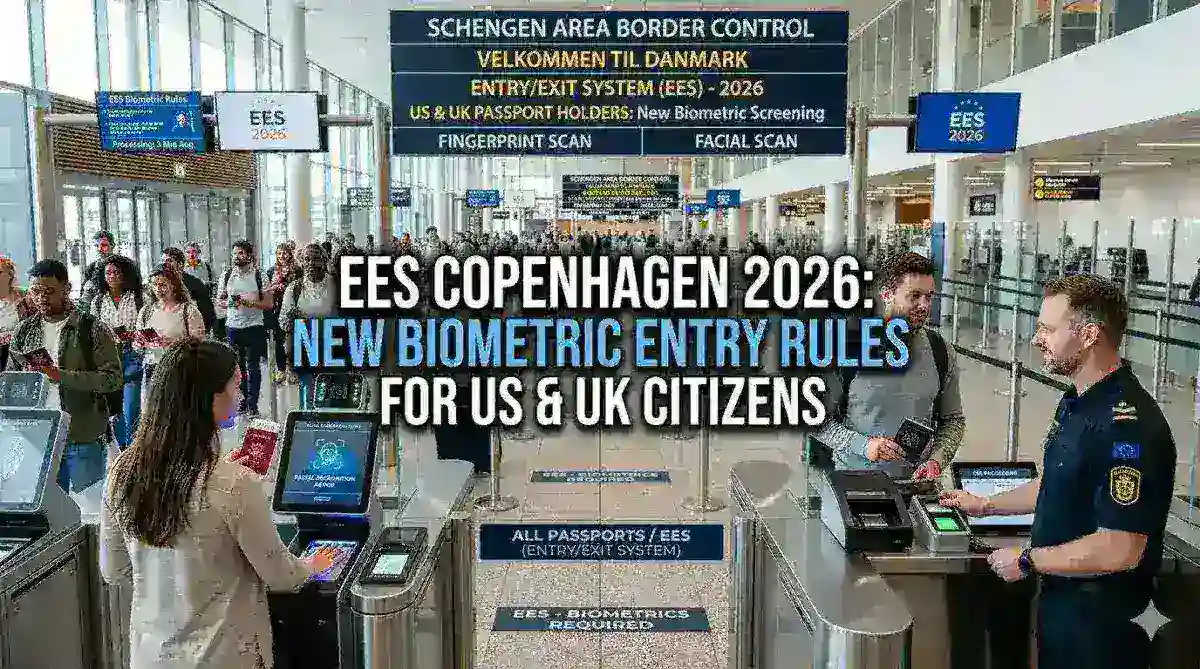
Introduction: Navigating Copenhagen Airport's New Biometric Entry System
Starting in 2026, US and UK citizens arriving at Copenhagen Airport will encounter a significant change to the entry process: the European Union's Entry/Exit System (EES), a comprehensive biometric border management system designed to enhance security, streamline border crossings, and better track visa-exempt travelers entering the Schengen Area. For American and British travelers planning trips to Denmark, Scandinavia, or broader Europe, understanding these new requirements is essential for smooth, stress-free entry.
The EES represents the most substantial overhaul of Schengen border procedures in decades. While visa-exempt travelers from the US and UK have historically enjoyed relatively quick passport checks upon arrival, the new system introduces mandatory biometric data collection—including facial images and fingerprints—for all non-EU nationals entering the Schengen Zone. Copenhagen Airport, as Denmark's primary international gateway and a major hub for transatlantic travel, is at the forefront of implementing these changes.
This comprehensive guide provides everything US and UK citizens need to know about the EES update at Copenhagen Airport in 2026. From understanding what the EES is and why it's being implemented, to the step-by-step entry process, processing times, common pitfalls to avoid, and practical tips for a smooth experience, we'll ensure you're fully prepared for your journey through Copenhagen's border control.
What Is the Entry/Exit System (EES) and Why Is It Being Implemented?

The Entry/Exit System (EES) is an automated IT system developed by the European Union to register and track non-EU nationals traveling to the Schengen Area for short stays (up to 90 days within any 180-day period). While the system has been in development for years, full implementation across all Schengen external borders—including Copenhagen Airport—is scheduled for 2026.
The Purpose Behind EES
The EES serves several critical objectives for EU border management:
Enhanced Security: By collecting biometric data (facial images and four fingerprints) from visa-exempt travelers, authorities can better verify identities, detect document fraud, and identify individuals who may pose security risks. The system cross-references data against multiple EU security databases including SIS (Schengen Information System), Europol, and Interpol.
Accurate Stay Tracking: One of the EES's primary functions is to automatically calculate and monitor the 90/180-day rule that limits visa-exempt stays in the Schengen Area. By recording exact entry and exit dates, the system helps prevent overstays and ensures compliance with Schengen regulations.
Streamlined Border Processing: While initial enrollment requires additional time, the EES is designed to speed up subsequent border crossings for returning travelers. Once biometric data is registered, returning travelers can potentially use automated e-gates for faster processing.
Reduced Administrative Burden: By automating entry/exit recording, the system reduces manual passport stamping and paperwork, allowing border guards to focus on security screening rather than administrative tasks.
EES vs. ETIAS: Understanding the Difference
Travelers often confuse the EES with ETIAS (European Travel Information and Authorization System), but they serve distinct purposes:
EES (Entry/Exit System):
- What it is: Automated border control system for recording entry/exit of non-EU travelers
- When it applies: At physical border crossings (airports, land borders, ports)
- What it collects: Biometric data (facial image, four fingerprints), passport details, entry/exit dates
- Cost: No fee for travelers
- Application: No pre-travel application; data collected at border
- Validity: Biometric data stored for 3 years or until passport expires
- 👉 Paris 2026: A Master Guide to the City of Light, Love, and Timeless Elegance
- 👉 Exploring Transnistria's Hidden Gems: First-Time Traveler's Safety Guide 2026
- 👉 EDP Art Reef Albufeira: Diving the world's first underwater sculptural gallery by Vhils.
ETIAS (European Travel Information and Authorization System):
- What it is: Pre-travel electronic authorization system (similar to US ESTA)
- When it applies: Before travel; required for boarding flights to Schengen Area
- What it collects: Personal information, travel details, security/health questions
- Cost: €7 for adults (free for under 18 and over 70)
- Application: Online application required before travel
- Validity: 3 years or until passport expires
- 👉 Paris 2026: A Master Guide to the City of Light, Love, and Timeless Elegance
- 👉 Exploring Transnistria's Hidden Gems: First-Time Traveler's Safety Guide 2026
- 👉 EDP Art Reef Albufeira: Diving the world's first underwater sculptural gallery by Vhils.
Key Takeaway: US and UK citizens traveling to Copenhagen in 2026 will likely need BOTH ETIAS authorization (obtained online before travel) AND EES biometric registration (completed at Copenhagen Airport border control).
Who Is Affected by EES at Copenhagen Airport?

Understanding whether the EES applies to you is the first step in preparing for your Copenhagen trip.
Mandatory EES Registration
You MUST undergo EES biometric registration at Copenhagen Airport if you:
- Are a US Citizen: All United States passport holders entering the Schengen Area for short stays (tourism, business, transit)
- Are a UK Citizen: All United Kingdom passport holders following Brexit (UK is now treated as a third country for Schengen purposes)
- Hold a Visa-Exempt Passport: Citizens of other visa-exempt countries (Canada, Australia, Japan, etc.)
- Are Entering the Schengen Area: The EES applies at all external Schengen borders, including Copenhagen Airport
- Plan to Stay 90 Days or Less: EES covers short-stay entries; long-stay visas have different procedures
- 👉 Paris 2026: A Master Guide to the City of Light, Love, and Timeless Elegance
- 👉 Exploring Transnistria's Hidden Gems: First-Time Traveler's Safety Guide 2026
- 👉 EDP Art Reef Albufeira: Diving the world's first underwater sculptural gallery by Vhils.
Exemptions and Special Cases
EU/EEA/Swiss Citizens: Citizens of European Union member states, European Economic Area countries, and Switzerland are exempt from EES requirements.
Long-Term Residents: Holders of valid residence permits or long-stay visas from Schengen countries may be exempt or have simplified procedures.
Diplomatic Passport Holders: Some diplomatic and official passport holders may be exempt; check with your embassy.
Transit Passengers: If you remain in the international transit area without passing through border control, EES registration may not be required. However, if you enter the Schengen Area (even briefly), registration is mandatory.
Children and Minors: All travelers, regardless of age, must undergo biometric registration. However, fingerprinting requirements for children under 12 may be modified or waived depending on final implementation rules.
The EES Entry Process at Copenhagen Airport: Step-by-Step

Understanding what to expect at Copenhagen Airport's border control will help you navigate the EES process efficiently. Here's a detailed walkthrough of the new entry procedure.
Step 1: Pre-Arrival Preparation
Before your flight lands at Copenhagen Airport:
- Ensure Valid Documentation: Your passport must be valid for at least 3 months beyond your intended departure from the Schengen Area and issued within the last 10 years
- Obtain ETIAS Authorization: Complete your ETIAS application online before travel (if mandatory by your travel date)
- Prepare Travel Details: Have your return/onward ticket, accommodation details, and purpose of visit information readily accessible
- Allow Extra Time: Plan for additional 15-30 minutes at border control for first-time EES registration
- 👉 Paris 2026: A Master Guide to the City of Light, Love, and Timeless Elegance
- 👉 Exploring Transnistria's Hidden Gems: First-Time Traveler's Safety Guide 2026
- 👉 EDP Art Reef Albufeira: Diving the world's first underwater sculptural gallery by Vhils.
Step 2: Arrival and Queue Selection
Upon disembarking at Copenhagen Airport:
- Follow Signs: Follow signage for "Non-EU/EEA Passport Control" or "Third Country Nationals"
- Queue Selection: Look for lanes designated for "First-Time EES Registration" versus "Returning Travelers." First-time registrants will undergo full biometric enrollment.
- Have Documents Ready: Keep your passport, boarding pass, and any supporting documents (hotel reservations, return ticket) easily accessible
- 👉 Paris 2026: A Master Guide to the City of Light, Love, and Timeless Elegance
- 👉 Exploring Transnistria's Hidden Gems: First-Time Traveler's Safety Guide 2026
- 👉 EDP Art Reef Albufeira: Diving the world's first underwater sculptural gallery by Vhils.
Step 3: Initial Document Check
At the border control counter:
- Passport Scan: The border officer will scan your passport's biometric chip to verify authenticity
- ETIAS Verification: If applicable, the officer will verify your ETIAS authorization in the system
- Travel Purpose Questions: Be prepared to briefly explain your purpose of visit, intended duration, and accommodation
- Supporting Documents: The officer may request to see your return ticket or accommodation confirmation
- 👉 Paris 2026: A Master Guide to the City of Light, Love, and Timeless Elegance
- 👉 Exploring Transnistria's Hidden Gems: First-Time Traveler's Safety Guide 2026
- 👉 EDP Art Reef Albufeira: Diving the world's first underwater sculptural gallery by Vhils.
Step 4: Biometric Data Collection
This is the core EES enrollment step:
Facial Image Capture:
- A high-resolution camera will capture your facial image
- You may be asked to look directly at the camera, remove glasses, or adjust your position
- The image is used for identity verification and future border crossings
- 👉 Paris 2026: A Master Guide to the City of Light, Love, and Timeless Elegance
- 👉 Exploring Transnistria's Hidden Gems: First-Time Traveler's Safety Guide 2026
- 👉 EDP Art Reef Albufeira: Diving the world's first underwater sculptural gallery by Vhils.
Fingerprint Collection:
- You'll place four fingers (typically index and middle fingers from each hand) on a digital scanner
- The process is quick, non-invasive, and similar to smartphone fingerprint sensors
- Fingerprints are encrypted and stored securely in the EES database
- 👉 Paris 2026: A Master Guide to the City of Light, Love, and Timeless Elegance
- 👉 Exploring Transnistria's Hidden Gems: First-Time Traveler's Safety Guide 2026
- 👉 EDP Art Reef Albufeira: Diving the world's first underwater sculptural gallery by Vhils.
Data Verification:
- The system cross-references your biometric data against security databases
- If no matches or alerts are found, the process continues
- If there's a potential match, additional verification may be required
- 👉 Paris 2026: A Master Guide to the City of Light, Love, and Timeless Elegance
- 👉 Exploring Transnistria's Hidden Gems: First-Time Traveler's Safety Guide 2026
- 👉 EDP Art Reef Albufeira: Diving the world's first underwater sculptural gallery by Vhils.
Step 5: Entry Authorization and Recording
Once biometric enrollment is complete:
- Entry Record Created: The system records your entry date, port of entry (Copenhagen Airport), and authorized stay duration
- Passport Stamp (if applicable): While EES automates entry recording, some countries may still provide physical stamps during the transition period
- Stay Calculator: The system automatically calculates your remaining days under the 90/180-day rule
- Authorization Granted: You're cleared to enter the Schengen Area
- 👉 Paris 2026: A Master Guide to the City of Light, Love, and Timeless Elegance
- 👉 Exploring Transnistria's Hidden Gems: First-Time Traveler's Safety Guide 2026
- 👉 EDP Art Reef Albufeira: Diving the world's first underwater sculptural gallery by Vhils.
Step 6: Proceed to Baggage and Customs
After clearing border control:
- Collect your checked baggage from the carousel
- Proceed through customs (green channel for nothing to declare, red for goods to declare)
- Exit into the public arrivals area
- 👉 Paris 2026: A Master Guide to the City of Light, Love, and Timeless Elegance
- 👉 Exploring Transnistria's Hidden Gems: First-Time Traveler's Safety Guide 2026
- 👉 EDP Art Reef Albufeira: Diving the world's first underwater sculptural gallery by Vhils.
Subsequent Entries: Faster Processing
Once your biometric data is registered in the EES:
- Returning Travelers: On future Schengen entries, you may qualify for expedited processing via automated e-gates
- Biometric Verification: At e-gates, your face or fingerprints are matched against stored data for quick verification
- Time Savings: Subsequent entries could take just 1-2 minutes versus 10-15 minutes for initial enrollment
- 👉 Paris 2026: A Master Guide to the City of Light, Love, and Timeless Elegance
- 👉 Exploring Transnistria's Hidden Gems: First-Time Traveler's Safety Guide 2026
- 👉 EDP Art Reef Albufeira: Diving the world's first underwater sculptural gallery by Vhils.
Processing Times and What to Expect

Understanding realistic timeframes helps you plan your arrival at Copenhagen Airport.
First-Time EES Registration
Estimated Time: 10-20 minutes per traveler
Factors Affecting Processing Time:
- Queue Length: Peak arrival times (early morning, afternoon) may have longer waits
- System Performance: New systems may experience initial technical adjustments
- Individual Verification: Complex cases or database matches may require additional review
- Language Assistance: Non-English speakers may need interpreter assistance
- 👉 Paris 2026: A Master Guide to the City of Light, Love, and Timeless Elegance
- 👉 Exploring Transnistria's Hidden Gems: First-Time Traveler's Safety Guide 2026
- 👉 EDP Art Reef Albufeira: Diving the world's first underwater sculptural gallery by Vhils.
Returning Traveler Processing
Estimated Time: 2-5 minutes via e-gates or expedited lanes
Requirements for Expedited Processing:
- Previous EES registration in the system
- Valid passport linked to stored biometric data
- No security alerts or changes in travel pattern requiring review
- 👉 Paris 2026: A Master Guide to the City of Light, Love, and Timeless Elegance
- 👉 Exploring Transnistria's Hidden Gems: First-Time Traveler's Safety Guide 2026
- 👉 EDP Art Reef Albufeira: Diving the world's first underwater sculptural gallery by Vhils.
Peak Travel Periods
Busy Times at Copenhagen Airport:
- Summer months (June-August): Peak tourism season
- Holiday periods: Christmas, New Year, Easter
- Early morning arrivals: 6:00-10:00 AM typically busiest
- Transatlantic flight arrivals: Afternoon/evening peaks
- 👉 Paris 2026: A Master Guide to the City of Light, Love, and Timeless Elegance
- 👉 Exploring Transnistria's Hidden Gems: First-Time Traveler's Safety Guide 2026
- 👉 EDP Art Reef Albufeira: Diving the world's first underwater sculptural gallery by Vhils.
Recommendations:
- Allow extra 30-45 minutes beyond standard border control time during peak periods
- Consider booking flights with longer connection times if transiting
- Use Copenhagen Airport's real-time wait time displays if available
- 👉 Paris 2026: A Master Guide to the City of Light, Love, and Timeless Elegance
- 👉 Exploring Transnistria's Hidden Gems: First-Time Traveler's Safety Guide 2026
- 👉 EDP Art Reef Albufeira: Diving the world's first underwater sculptural gallery by Vhils.
Common Issues and How to Avoid Them

Being aware of potential challenges helps you prepare effectively.
Issue #1: Passport Validity Problems
Problem: Passport doesn't meet Schengen validity requirements
Schengen Passport Rules:
- Must be valid for at least 3 months beyond intended departure from Schengen Area
- Must have been issued within the last 10 years
- Must have at least 2 blank pages for stamps (if still used)
- 👉 Paris 2026: A Master Guide to the City of Light, Love, and Timeless Elegance
- 👉 Exploring Transnistria's Hidden Gems: First-Time Traveler's Safety Guide 2026
- 👉 EDP Art Reef Albufeira: Diving the world's first underwater sculptural gallery by Vhils.
Solution:
- Check passport expiry date before booking travel
- Renew passport if it expires within 6 months of planned return
- Ensure passport was issued within last decade
- 👉 Paris 2026: A Master Guide to the City of Light, Love, and Timeless Elegance
- 👉 Exploring Transnistria's Hidden Gems: First-Time Traveler's Safety Guide 2026
- 👉 EDP Art Reef Albufeira: Diving the world's first underwater sculptural gallery by Vhils.
Issue #2: Biometric Data Quality Issues
Problem: Fingerprints or facial image don't meet quality standards
Common Causes:
- Worn or damaged fingerprints (manual labor, age)
- Poor lighting or positioning during facial capture
- Glasses, hats, or facial hair obscuring features
- 👉 Paris 2026: A Master Guide to the City of Light, Love, and Timeless Elegance
- 👉 Exploring Transnistria's Hidden Gems: First-Time Traveler's Safety Guide 2026
- 👉 EDP Art Reef Albufeira: Diving the world's first underwater sculptural gallery by Vhils.
Solution:
- Follow border officer instructions carefully
- Remove glasses, hats, or face coverings if requested
- Ensure fingers are clean and dry for fingerprinting
- Be patient; officers can retake biometrics if needed
- 👉 Paris 2026: A Master Guide to the City of Light, Love, and Timeless Elegance
- 👉 Exploring Transnistria's Hidden Gems: First-Time Traveler's Safety Guide 2026
- 👉 EDP Art Reef Albufeira: Diving the world's first underwater sculptural gallery by Vhils.
Issue #3: ETIAS and EES Confusion
Problem: Travelers confuse ETIAS pre-authorization with EES border registration
Clarification:
- ETIAS: Apply online BEFORE travel; required for boarding
- EES: Register at border control UPON arrival; no pre-application
- Both may be required for US/UK citizens in 2026
- 👉 Paris 2026: A Master Guide to the City of Light, Love, and Timeless Elegance
- 👉 Exploring Transnistria's Hidden Gems: First-Time Traveler's Safety Guide 2026
- 👉 EDP Art Reef Albufeira: Diving the world's first underwater sculptural gallery by Vhils.
Solution:
- Complete ETIAS application weeks before travel
- Bring ETIAS approval confirmation to airport
- Understand EES is separate process at border
- 👉 Paris 2026: A Master Guide to the City of Light, Love, and Timeless Elegance
- 👉 Exploring Transnistria's Hidden Gems: First-Time Traveler's Safety Guide 2026
- 👉 EDP Art Reef Albufeira: Diving the world's first underwater sculptural gallery by Vhils.
Issue #4: 90/180-Day Rule Miscalculations
Problem: Travelers inadvertently exceed Schengen stay limits
The Rule: Maximum 90 days of stay within any rolling 180-day period across the entire Schengen Area
Solution:
- Use the EU's online 90/180-day calculator before travel
- Keep records of all Schengen entries and exits
- Remember: Days in ANY Schengen country count toward the 90-day total
- When in doubt, consult immigration authorities before travel
- 👉 Paris 2026: A Master Guide to the City of Light, Love, and Timeless Elegance
- 👉 Exploring Transnistria's Hidden Gems: First-Time Traveler's Safety Guide 2026
- 👉 EDP Art Reef Albufeira: Diving the world's first underwater sculptural gallery by Vhils.
Issue #5: Technical System Delays
Problem: New EES systems may experience initial technical issues
Solution:
- Allow buffer time in your travel schedule
- Keep essential medications and valuables in carry-on
- Remain calm and cooperative with border staff
- Have backup plans for tight connections
- 👉 Paris 2026: A Master Guide to the City of Light, Love, and Timeless Elegance
- 👉 Exploring Transnistria's Hidden Gems: First-Time Traveler's Safety Guide 2026
- 👉 EDP Art Reef Albufeira: Diving the world's first underwater sculptural gallery by Vhils.
Practical Tips for Smooth EES Entry at Copenhagen

These strategies will help ensure a hassle-free border experience.
Before Your Flight
- Check Passport Validity: Ensure it meets Schengen requirements
- Complete ETIAS: Apply online well before travel if mandatory
- Prepare Documents: Have return ticket, accommodation details, and travel insurance accessible
- Charge Devices: Ensure phone is charged for digital documents and communication
- Download Apps: Copenhagen Airport app for real-time updates and navigation
- 👉 Paris 2026: A Master Guide to the City of Light, Love, and Timeless Elegance
- 👉 Exploring Transnistria's Hidden Gems: First-Time Traveler's Safety Guide 2026
- 👉 EDP Art Reef Albufeira: Diving the world's first underwater sculptural gallery by Vhils.
At the Airport
- Arrive Early: Allow extra time for EES processing, especially for first entry
- Follow Signage: Look for "Non-EU Passport Control" and "First-Time EES Registration" lanes
- Have Documents Ready: Keep passport and supporting documents easily accessible
- Be Patient and Polite: Border officers appreciate cooperation during new system implementation
- Ask Questions: If unsure about the process, ask officers for guidance
- 👉 Paris 2026: A Master Guide to the City of Light, Love, and Timeless Elegance
- 👉 Exploring Transnistria's Hidden Gems: First-Time Traveler's Safety Guide 2026
- 👉 EDP Art Reef Albufeira: Diving the world's first underwater sculptural gallery by Vhils.
During Biometric Enrollment
- Follow Instructions: Listen carefully to officer directions for facial image and fingerprints
- Remove Obstructions: Take off glasses, hats, or face coverings if requested
- Stay Still: Keep still during facial capture for best image quality
- Press Firmly: Apply even pressure when placing fingers on scanner
- Verify Information: Confirm that displayed entry details are correct before proceeding
- 👉 Paris 2026: A Master Guide to the City of Light, Love, and Timeless Elegance
- 👉 Exploring Transnistria's Hidden Gems: First-Time Traveler's Safety Guide 2026
- 👉 EDP Art Reef Albufeira: Diving the world's first underwater sculptural gallery by Vhils.
After Entry
- Keep Documentation: Retain entry stamp or confirmation for your records
- Track Your Stay: Monitor your days in Schengen Area to avoid overstaying
- Save Confirmation: Take photo or screenshot of entry confirmation if provided
- Prepare for Exit: Remember that exit will also be recorded in EES when you leave Schengen
- 👉 Paris 2026: A Master Guide to the City of Light, Love, and Timeless Elegance
- 👉 Exploring Transnistria's Hidden Gems: First-Time Traveler's Safety Guide 2026
- 👉 EDP Art Reef Albufeira: Diving the world's first underwater sculptural gallery by Vhils.
Special Considerations for Families and Groups

Traveling with children or in groups requires additional planning.
Children and Minors
Biometric Requirements:
- All travelers, regardless of age, must undergo EES registration
- Fingerprinting requirements for children under 12 may be modified (confirm final rules)
- Facial images are required for all ages
- 👉 Paris 2026: A Master Guide to the City of Light, Love, and Timeless Elegance
- 👉 Exploring Transnistria's Hidden Gems: First-Time Traveler's Safety Guide 2026
- 👉 EDP Art Reef Albufeira: Diving the world's first underwater sculptural gallery by Vhils.
Parental Guidance:
- Parents/guardians must accompany minors through border control
- Have birth certificates or custody documents if traveling with one parent
- Prepare children for the process: explain what to expect calmly
- 👉 Paris 2026: A Master Guide to the City of Light, Love, and Timeless Elegance
- 👉 Exploring Transnistria's Hidden Gems: First-Time Traveler's Safety Guide 2026
- 👉 EDP Art Reef Albufeira: Diving the world's first underwater sculptural gallery by Vhils.
Group Travel
Efficiency Tips:
- Have all group members' documents organized and ready
- Designate one person to communicate with border officers
- Allow extra time for group processing
- Consider splitting into smaller subgroups if queue is long
- 👉 Paris 2026: A Master Guide to the City of Light, Love, and Timeless Elegance
- 👉 Exploring Transnistria's Hidden Gems: First-Time Traveler's Safety Guide 2026
- 👉 EDP Art Reef Albufeira: Diving the world's first underwater sculptural gallery by Vhils.
Travelers with Disabilities
Accessibility Support:
- Copenhagen Airport provides assistance for travelers with reduced mobility
- Request assistance in advance through your airline or airport
- Biometric collection can be adapted for travelers with physical limitations
- Inform border officers of any special needs upon arrival
- 👉 Paris 2026: A Master Guide to the City of Light, Love, and Timeless Elegance
- 👉 Exploring Transnistria's Hidden Gems: First-Time Traveler's Safety Guide 2026
- 👉 EDP Art Reef Albufeira: Diving the world's first underwater sculptural gallery by Vhils.
Copenhagen Airport Facilities and Services

Understanding airport amenities can make your EES experience more comfortable.
Terminal Layout
Terminal 3: Primary terminal for intercontinental flights, including US/UK arrivals
Border Control Location: Located after baggage claim in Terminal 3; follow clear signage
Post-Border Facilities:
- Currency exchange and ATMs
- Transportation options: trains, buses, taxis, ride-share
- Information desks and tourist assistance
- Restrooms and refreshment options
- 👉 Paris 2026: A Master Guide to the City of Light, Love, and Timeless Elegance
- 👉 Exploring Transnistria's Hidden Gems: First-Time Traveler's Safety Guide 2026
- 👉 EDP Art Reef Albufeira: Diving the world's first underwater sculptural gallery by Vhils.
Waiting Areas
Comfort Features:
- Seating areas near border control for those waiting for group members
- Free WiFi throughout the airport
- Charging stations for electronic devices
- Family areas with space for children
- 👉 Paris 2026: A Master Guide to the City of Light, Love, and Timeless Elegance
- 👉 Exploring Transnistria's Hidden Gems: First-Time Traveler's Safety Guide 2026
- 👉 EDP Art Reef Albufeira: Diving the world's first underwater sculptural gallery by Vhils.
Language Support
English Proficiency: Copenhagen Airport staff, including border officers, generally speak excellent English
Additional Languages: Many staff also speak German, French, Spanish, and other major languages
Translation Services: Interpreter assistance available if needed; inform staff of language needs
Exit Procedures: Leaving the Schengen Area

The EES also records your exit from the Schengen Area, which is important for stay calculations.
Exit Process at Copenhagen Airport
When Departing:
- Proceed to passport control when departing the Schengen Area
- Present your passport for exit recording
- Biometric verification may be required (facial recognition or fingerprints)
- System records your exit date, completing your stay record
- 👉 Paris 2026: A Master Guide to the City of Light, Love, and Timeless Elegance
- 👉 Exploring Transnistria's Hidden Gems: First-Time Traveler's Safety Guide 2026
- 👉 EDP Art Reef Albufeira: Diving the world's first underwater sculptural gallery by Vhils.
Why Exit Recording Matters:
- Accurately calculates your remaining days under 90/180-day rule
- Prevents false overstay records if entry was recorded but exit wasn't
- Enables faster future entries by confirming compliance with stay limits
- 👉 Paris 2026: A Master Guide to the City of Light, Love, and Timeless Elegance
- 👉 Exploring Transnistria's Hidden Gems: First-Time Traveler's Safety Guide 2026
- 👉 EDP Art Reef Albufeira: Diving the world's first underwater sculptural gallery by Vhils.
Transit Considerations
Schengen to Non-Schengen Transit:
- If transiting through Copenhagen from one Schengen country to a non-Schengen destination, you'll exit Schengen at Copenhagen
- Exit recording will be completed during transit passport control
- 👉 Paris 2026: A Master Guide to the City of Light, Love, and Timeless Elegance
- 👉 Exploring Transnistria's Hidden Gems: First-Time Traveler's Safety Guide 2026
- 👉 EDP Art Reef Albufeira: Diving the world's first underwater sculptural gallery by Vhils.
Non-Schengen to Schengen Transit:
- If transiting through Copenhagen from a non-Schengen country to a Schengen destination, you'll enter Schengen at Copenhagen
- EES registration will be completed during transit passport control
- 👉 Paris 2026: A Master Guide to the City of Light, Love, and Timeless Elegance
- 👉 Exploring Transnistria's Hidden Gems: First-Time Traveler's Safety Guide 2026
- 👉 EDP Art Reef Albufeira: Diving the world's first underwater sculptural gallery by Vhils.
Privacy and Data Protection

Understanding how your biometric data is handled is important for informed travel.
Data Collection and Storage
What's Collected:
- Facial image (high-resolution photograph)
- Four fingerprints (typically index and middle fingers from each hand)
- Passport details (number, nationality, expiry date)
- Entry/exit dates and ports
- Travel purpose and intended stay duration
- 👉 Paris 2026: A Master Guide to the City of Light, Love, and Timeless Elegance
- 👉 Exploring Transnistria's Hidden Gems: First-Time Traveler's Safety Guide 2026
- 👉 EDP Art Reef Albufeira: Diving the world's first underwater sculptural gallery by Vhils.
How Data Is Stored:
- Encrypted in secure EU-managed EES database
- Retained for 3 years from last exit record or until passport expires
- Accessible only to authorized border control authorities
- Subject to strict EU data protection regulations (GDPR)
- 👉 Paris 2026: A Master Guide to the City of Light, Love, and Timeless Elegance
- 👉 Exploring Transnistria's Hidden Gems: First-Time Traveler's Safety Guide 2026
- 👉 EDP Art Reef Albufeira: Diving the world's first underwater sculptural gallery by Vhils.
Your Rights Under GDPR
Data Access: You have the right to request access to your EES data
Correction: You can request correction of inaccurate data
Deletion: Data is automatically deleted after retention period; early deletion requires specific legal grounds
Complaints: You can file complaints with national data protection authorities if you believe your rights are violated
Frequently Asked Questions: EES at Copenhagen Airport

Q: Do I need to apply for EES before traveling to Copenhagen?
A: No. EES registration occurs at the border when you arrive at Copenhagen Airport. However, you may need ETIAS authorization (separate system) obtained online before travel. Confirm current requirements before your trip.
Q: Will EES slow down my entry at Copenhagen Airport?
A: First-time registration may add 10-20 minutes to border processing. Subsequent entries using stored biometrics should be faster, potentially using automated e-gates. Allow extra time for initial entry.
Q: What if I have a connecting flight through Copenhagen?
A: If your connection requires entering the Schengen Area (e.g., from US to Denmark to Sweden), you'll undergo EES registration at Copenhagen. If staying in international transit without entering Schengen, EES may not apply. Confirm your specific itinerary with your airline.
Q: Can I use automated e-gates with EES?
A: Once your biometric data is registered in EES, you may qualify for automated e-gates on subsequent Schengen entries. Eligibility depends on system implementation and your travel history. Border officers will advise on available options.
Q: What if my fingerprints can't be captured?
A: Border officers are trained to handle cases where fingerprints are difficult to capture (due to age, occupation, or medical conditions). Alternative verification methods may be used. Inform officers of any difficulties during the process.
Q: How is EES different from passport stamps?
A: EES automates entry/exit recording digitally, reducing reliance on physical passport stamps. However, some countries may still provide stamps during the transition period. The digital record is the official record of your stay.
Q: Will EES affect my ability to visit multiple Schengen countries?
A: No. EES tracks your total stay across the entire Schengen Area. You can travel freely between Schengen countries; the system automatically calculates your remaining days under the 90/180-day rule.
Q: What happens if I overstay my Schengen visa-free period?
A: EES will automatically flag overstays. Consequences can include fines, deportation, entry bans, and difficulties with future Schengen travel. Always track your stay and depart before the 90-day limit.
Conclusion: Preparing for Seamless Copenhagen Entry in 2026

The implementation of the Entry/Exit System at Copenhagen Airport represents a significant evolution in Schengen border management. While the new biometric requirements may seem daunting initially, understanding the process and preparing appropriately will ensure a smooth entry experience for US and UK citizens.
Key takeaways for your 2026 Copenhagen trip:
- Understand the Systems: Distinguish between ETIAS (pre-travel authorization) and EES (border biometric registration)
- Check Passport Validity: Ensure your passport meets Schengen requirements well before travel
- Allow Extra Time: Plan for additional 15-30 minutes at border control for first-time EES registration
- Prepare Documents: Have return tickets, accommodation details, and travel insurance readily accessible
- Stay Informed: Monitor official EU and Danish immigration websites for final implementation details
- Remain Patient: New systems may have initial adjustments; cooperation with border staff ensures smoother processing
- 👉 Paris 2026: A Master Guide to the City of Light, Love, and Timeless Elegance
- 👉 Exploring Transnistria's Hidden Gems: First-Time Traveler's Safety Guide 2026
- 👉 EDP Art Reef Albufeira: Diving the world's first underwater sculptural gallery by Vhils.
Copenhagen Airport is well-prepared for the EES transition, with trained staff, clear signage, and passenger support services to facilitate the new procedures. By arriving prepared and informed, you can navigate the biometric entry process efficiently and begin enjoying all that Denmark and the Schengen Area have to offer.
Whether you're visiting Copenhagen for business, tourism, or transit, the EES system is designed to enhance security while ultimately streamlining border crossings for compliant travelers. Embrace the new process as part of modern, secure international travel, and look forward to potentially faster entries on future trips once your biometric data is registered.
Safe travels, and welcome to Copenhagen!
0 Comments