.webp)
.webp)
Thomas Sankara Mausoleum 2026: First Look at Ouagadougou Memorial
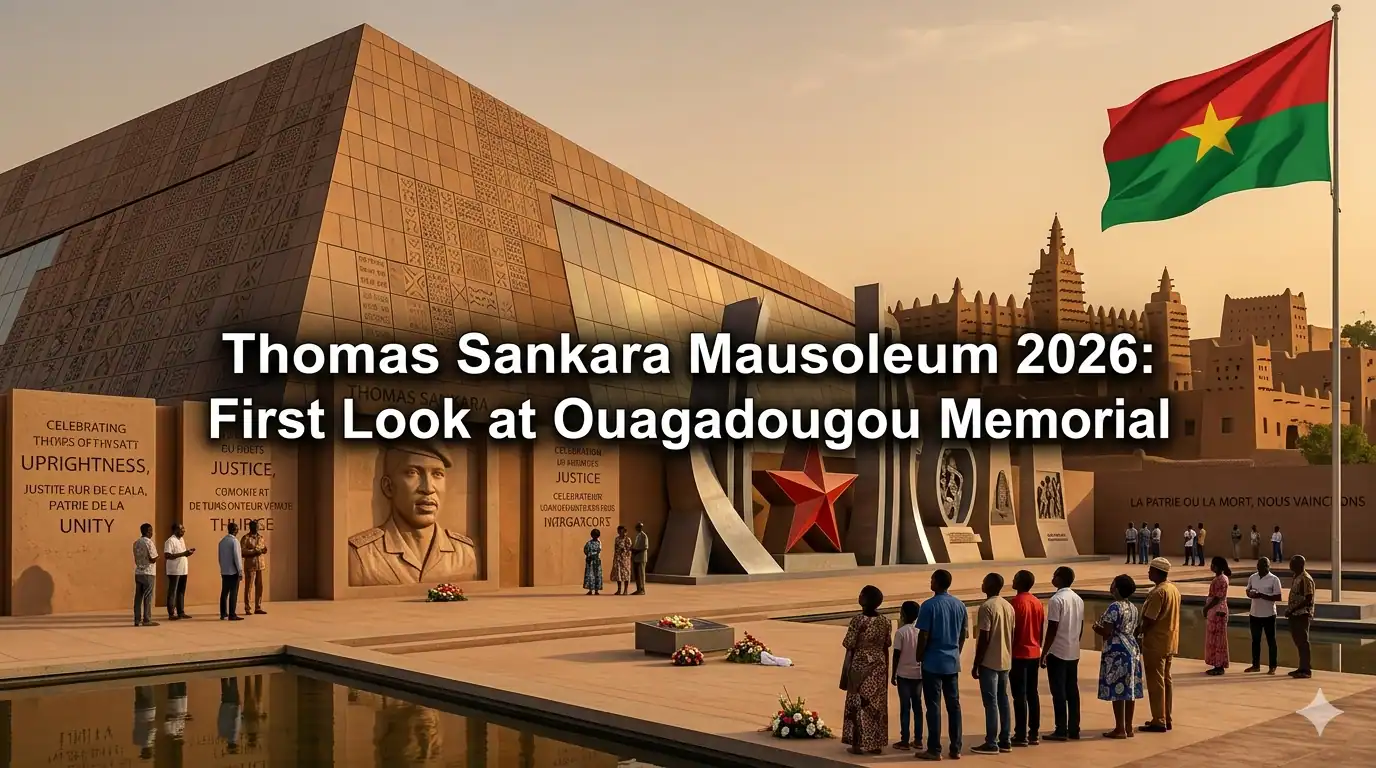
Thomas Sankara Mausoleum 2026: A Historic Memorial Completed in Ouagadougou
In 2026, Burkina Faso completed one of West Africa's most significant memorial projects: the Thomas Sankara Mausoleum in Ouagadougou. This landmark tribute honors the legacy of Thomas Sankara, the revolutionary leader, pan-Africanist, and former president of Burkina Faso whose visionary ideals and tragic assassination in 1987 continue to inspire movements for justice, self-reliance, and African dignity across the continent and beyond.
The completed mausoleum represents more than architecture; it is a powerful symbol of historical reckoning, cultural memory, and national identity. For decades, Sankara's final resting place remained a site of pilgrimage for admirers, activists, and scholars seeking to connect with his enduring message of anti-imperialism, women's rights, environmental stewardship, and grassroots empowerment. The 2026 completion of a dedicated, dignified memorial provides a permanent space for reflection, education, and celebration of a leader whose brief four-year presidency left an indelible mark on African political thought.
This comprehensive guide offers a first look at the Thomas Sankara Mausoleum, exploring its architectural design, historical context, visitor information, and cultural significance. Whether you are a traveler interested in Burkina Faso's rich heritage, a student of African history, or a supporter of Sankara's ideals, this guide provides essential insights for understanding and visiting this important memorial in the heart of Ouagadougou.
Who Was Thomas Sankara? Understanding the Legacy Honored

To fully appreciate the Thomas Sankara Mausoleum, it is essential to understand the man whose life and ideals it commemorates.
Early Life and Rise to Leadership
Thomas Isidore Noël Sankara was born on December 21, 1949, in Yako, French Upper Volta (now Burkina Faso). A charismatic military officer and revolutionary thinker, Sankara rose to prominence through his commitment to social justice, anti-corruption, and African self-determination. In 1983, at age 33, he led a popular coup that brought him to power, renaming the country Burkina Faso, meaning "Land of Upright People," to reflect his vision of national dignity and integrity.
Revolutionary Policies and Achievements
During his presidency from 1983 to 1987, Sankara implemented transformative policies that earned him both admiration and opposition:
- Women's Rights: Appointed women to high government positions, banned female genital mutilation, and promoted gender equality in education and employment
- Public Health: Launched nationwide vaccination campaigns that immunized millions of children against preventable diseases
- Environmental Action: Initiated massive tree-planting programs to combat desertification and promote sustainable agriculture
- Economic Self-Reliance: Encouraged local production, reduced dependence on foreign aid, and promoted African-made goods
- Anti-Corruption: Sold government luxury vehicles, reduced official salaries, and lived modestly to lead by example
- Education Expansion: Built schools and promoted literacy campaigns to increase access to education
- Pan-Africanism: Advocated for African unity, debt cancellation, and resistance to neocolonial influence
- 👉 12 Traditional Tunisian Dishes Beyond Couscous and Brik Must Try
- 👉 DESSU Corridor 2026: 4-Nation Pact Transforms Horn of Africa Travel
- 👉 Libya eVisa 2026: A complete step-by-step guide to the new digital application portal.
Assassination and Enduring Influence
On October 15, 1987, Thomas Sankara was assassinated in a coup led by his former colleague Blaise Compaoré. His death shocked Africa and the world, but his ideas proved impossible to extinguish. In the decades since, Sankara has become an icon of revolutionary integrity, often compared to figures like Che Guevara for his commitment to principle over power.
The movement for justice in Sankara's case culminated in a landmark 2022 trial in Burkina Faso that convicted Compaoré and others for their roles in the assassination. The completion of the mausoleum in 2026 represents a profound moment of historical closure and national reconciliation, honoring Sankara's memory while affirming Burkina Faso's commitment to the values he championed.
The Mausoleum: Architecture, Design, and Symbolism

The Thomas Sankara Mausoleum in Ouagadougou is a thoughtful fusion of contemporary architecture, traditional Sahelian design, and symbolic elements that reflect Sankara's ideals and legacy.
Architectural Vision
Design Philosophy: The mausoleum was designed to embody dignity, accessibility, and inspiration. Rather than an imposing monument, the structure invites contemplation and connection, reflecting Sankara's belief that leadership should serve the people, not elevate itself above them.
Key Architectural Features:
- Central Memorial Chamber: A serene, light-filled space housing Sankara's remains, designed for quiet reflection and respectful visitation
- Exhibition Gallery: Educational displays documenting Sankara's life, policies, and enduring influence through photographs, documents, and multimedia presentations
- Garden of Reflection: Landscaped grounds featuring native plants, walking paths, and seating areas for contemplation
- Community Space: An open area for gatherings, ceremonies, and educational programs that extend the mausoleum's purpose beyond memorialization
- Sustainable Design: Use of local materials, natural ventilation, and solar energy reflecting Sankara's environmental values
- 👉 12 Traditional Tunisian Dishes Beyond Couscous and Brik Must Try
- 👉 DESSU Corridor 2026: 4-Nation Pact Transforms Horn of Africa Travel
- 👉 Libya eVisa 2026: A complete step-by-step guide to the new digital application portal.
Symbolic Elements
The mausoleum incorporates meaningful symbols that honor Sankara's legacy:
- The Red Star: A prominent motif representing revolutionary hope and Sankara's commitment to social transformation
- Inscriptions: Quotes from Sankara's speeches carved in stone, sharing his words with visitors in multiple languages
- Water Features: Reflective pools symbolizing clarity, continuity, and the flow of ideas across generations
- Local Craftsmanship: Artwork and decorative elements created by Burkinabè artisans, celebrating national cultural heritage
- Open Design: Architectural choices that emphasize transparency and accessibility, reflecting Sankara's belief in participatory governance
- 👉 12 Traditional Tunisian Dishes Beyond Couscous and Brik Must Try
- 👉 DESSU Corridor 2026: 4-Nation Pact Transforms Horn of Africa Travel
- 👉 Libya eVisa 2026: A complete step-by-step guide to the new digital application portal.
Location and Setting
The mausoleum is situated in a prominent yet peaceful area of Ouagadougou, accessible to residents and visitors while providing a dignified environment for remembrance. Its location was chosen to balance visibility with tranquility, ensuring the memorial serves both as a landmark and a sanctuary.
Visiting the Thomas Sankara Mausoleum: Practical Information

For travelers and locals wishing to visit the Thomas Sankara Mausoleum, understanding practical details ensures a meaningful and respectful experience.
Location and Access
Address: The mausoleum is located in central Ouagadougou, Burkina Faso. Exact address details should be confirmed via official Burkina Faso tourism resources or the memorial's management office.
Getting There:
- By Taxi: Taxis are widely available in Ouagadougou; agree on fare before departure or use metered services when possible
- By Motorcycle Taxi: Local "motos" offer affordable short-distance transport; wear provided helmet for safety
- Walking: If staying in central Ouagadougou, the mausoleum may be within walking distance; verify route with local guidance
- Tour Arrangements: Many local tour operators include the mausoleum in cultural and historical itineraries
- 👉 12 Traditional Tunisian Dishes Beyond Couscous and Brik Must Try
- 👉 DESSU Corridor 2026: 4-Nation Pact Transforms Horn of Africa Travel
- 👉 Libya eVisa 2026: A complete step-by-step guide to the new digital application portal.
Opening Hours and Admission
Expected Hours: While official hours should be confirmed closer to your visit, memorial sites in Burkina Faso typically operate:
- Tuesday through Sunday: 9:00 AM to 5:00 PM
- Closed on Mondays for maintenance
- Special hours may apply during national holidays or commemorative events
- 👉 12 Traditional Tunisian Dishes Beyond Couscous and Brik Must Try
- 👉 DESSU Corridor 2026: 4-Nation Pact Transforms Horn of Africa Travel
- 👉 Libya eVisa 2026: A complete step-by-step guide to the new digital application portal.
Admission: Many memorial sites in Burkina Faso offer free or nominal admission to encourage public access. If fees apply, expect modest costs:
- Adults: Approximately 1,000-2,000 CFA francs ($1.70-3.40 USD)
- Students and youth: Reduced rates with valid identification
- Group visits: Potential discounts for educational or organized tours
- 👉 12 Traditional Tunisian Dishes Beyond Couscous and Brik Must Try
- 👉 DESSU Corridor 2026: 4-Nation Pact Transforms Horn of Africa Travel
- 👉 Libya eVisa 2026: A complete step-by-step guide to the new digital application portal.
Visitor Guidelines and Etiquette
As a memorial honoring a revered historical figure, the mausoleum expects respectful behavior from all visitors:
- Dress Modestly: Conservative attire is appropriate; avoid revealing clothing out of respect for the solemn setting
- Quiet Conduct: Maintain a respectful volume; the memorial is a space for reflection
- Photography: Photography may be permitted in certain areas; always ask staff before taking photos, especially inside the memorial chamber
- Floral Tributes: Visitors may leave flowers or small tokens; follow designated areas for tributes
- Guided Tours: Consider joining an official guided tour for deeper historical context and insight
- 👉 12 Traditional Tunisian Dishes Beyond Couscous and Brik Must Try
- 👉 DESSU Corridor 2026: 4-Nation Pact Transforms Horn of Africa Travel
- 👉 Libya eVisa 2026: A complete step-by-step guide to the new digital application portal.
Facilities and Amenities
The mausoleum complex likely includes:
- Restrooms for visitor convenience
- Small information desk with brochures and historical materials
- Seating areas in the garden for rest and contemplation
- Gift shop featuring books, educational materials, and locally made crafts (if applicable)
- Accessibility features for visitors with mobility needs
- 👉 12 Traditional Tunisian Dishes Beyond Couscous and Brik Must Try
- 👉 DESSU Corridor 2026: 4-Nation Pact Transforms Horn of Africa Travel
- 👉 Libya eVisa 2026: A complete step-by-step guide to the new digital application portal.
Historical Context: The Journey to Memorial Completion

Understanding the path to the mausoleum's 2026 completion illuminates its profound significance for Burkina Faso and the broader African diaspora.
Decades of Advocacy
Following Sankara's assassination in 1987, his family, supporters, and human rights organizations campaigned for justice and proper commemoration. For years, Sankara was buried in an unmarked grave, a painful symbol of the attempt to erase his legacy. Activists kept his memory alive through publications, conferences, and grassroots organizing, ensuring that new generations learned about his vision for Africa.
Political Transition and Reckoning
The 2014 popular uprising in Burkina Faso that ousted long-time president Blaise Compaoré marked a turning point. The new government committed to addressing historical injustices, including Sankara's assassination. The 2022 trial that convicted Compaoré and others was a landmark moment, establishing official recognition of the crime and paving the way for memorialization.
Design and Construction Process
The mausoleum project involved careful consultation with Sankara's family, historians, architects, and community representatives to ensure the memorial authentically honored his legacy. The design process emphasized:
- Historical accuracy in representing Sankara's life and work
- Cultural relevance through incorporation of Burkinabè artistic traditions
- Accessibility for diverse visitors, including international guests
- Sustainability aligned with Sankara's environmental values
- Educational purpose to inspire future generations
- 👉 12 Traditional Tunisian Dishes Beyond Couscous and Brik Must Try
- 👉 DESSU Corridor 2026: 4-Nation Pact Transforms Horn of Africa Travel
- 👉 Libya eVisa 2026: A complete step-by-step guide to the new digital application portal.
Symbolic Timing of Completion
The 2026 completion of the mausoleum carries symbolic weight, arriving as Burkina Faso navigates contemporary challenges while reflecting on its revolutionary heritage. The memorial serves not only as tribute to the past but as inspiration for ongoing struggles for justice, dignity, and self-determination across Africa.
Cultural and Educational Significance

Beyond its function as a burial site, the Thomas Sankara Mausoleum serves important cultural and educational roles.
Preserving Historical Memory
The mausoleum ensures that Sankara's story, ideas, and achievements remain accessible to future generations. Through exhibitions, archives, and interpretive materials, visitors gain nuanced understanding of a complex historical figure whose legacy continues to shape political discourse.
Inspiring Civic Engagement
Sankara's emphasis on citizen participation, anti-corruption, and social responsibility resonates with contemporary movements for good governance. The mausoleum provides a space for reflection on these values and their application to current challenges.
Promoting Cultural Tourism
As Burkina Faso develops its cultural tourism sector, the Sankara Mausoleum offers a meaningful destination for travelers interested in African history, politics, and heritage. Responsible visitation supports local economies while fostering cross-cultural understanding.
Facilitating Dialogue
The memorial can serve as a venue for conferences, educational programs, and community gatherings that explore themes central to Sankara's vision: pan-Africanism, gender equality, environmental sustainability, and economic justice.
Planning Your Visit to Ouagadougou and the Mausoleum

For international travelers planning to visit the Thomas Sankara Mausoleum, comprehensive preparation enhances the experience.
Entry Requirements for Burkina Faso
Visa Information: Most international visitors require a visa to enter Burkina Faso. Options include:
- E-visa application through official Burkinabè immigration channels
- Visa on arrival for eligible nationalities (verify current policy before travel)
- Embassy application for those preferring advance processing
- 👉 12 Traditional Tunisian Dishes Beyond Couscous and Brik Must Try
- 👉 DESSU Corridor 2026: 4-Nation Pact Transforms Horn of Africa Travel
- 👉 Libya eVisa 2026: A complete step-by-step guide to the new digital application portal.
Required Documents:
- Valid passport with at least six months remaining validity
- Yellow fever vaccination certificate (mandatory for entry)
- Proof of accommodation and return travel
- Travel insurance recommended for medical coverage
- 👉 12 Traditional Tunisian Dishes Beyond Couscous and Brik Must Try
- 👉 DESSU Corridor 2026: 4-Nation Pact Transforms Horn of Africa Travel
- 👉 Libya eVisa 2026: A complete step-by-step guide to the new digital application portal.
Getting to Ouagadougou
By Air: Thomas Sankara International Airport (OUA) serves Ouagadougou with connections from:
- West African hubs: Abidjan, Accra, Lomé, Dakar
- North African connections: Casablanca, Cairo
- European gateways: Paris, Brussels, Istanbul (via connecting flights)
- 👉 12 Traditional Tunisian Dishes Beyond Couscous and Brik Must Try
- 👉 DESSU Corridor 2026: 4-Nation Pact Transforms Horn of Africa Travel
- 👉 Libya eVisa 2026: A complete step-by-step guide to the new digital application portal.
Airlines: Air Burkina, Royal Air Maroc, Ethiopian Airlines, Turkish Airlines, and others serve the airport.
Accommodation Options
Ouagadougou offers lodging for various budgets:
Mid-Range Hotels:
- Bravia Hotel: Central location, reliable amenities, approximately $60-90 USD per night
- Azalaï Hotel Indépendance: Historic property with character, approximately $70-110 USD per night
- Onomo Hotel Ouagadougou: Modern chain hotel, approximately $65-95 USD per night
- 👉 12 Traditional Tunisian Dishes Beyond Couscous and Brik Must Try
- 👉 DESSU Corridor 2026: 4-Nation Pact Transforms Horn of Africa Travel
- 👉 Libya eVisa 2026: A complete step-by-step guide to the new digital application portal.
Budget Options:
- Guesthouses and smaller hotels: $25-50 USD per night
- Verify recent reviews for current conditions and service quality
- 👉 12 Traditional Tunisian Dishes Beyond Couscous and Brik Must Try
- 👉 DESSU Corridor 2026: 4-Nation Pact Transforms Horn of Africa Travel
- 👉 Libya eVisa 2026: A complete step-by-step guide to the new digital application portal.
Health and Safety Considerations
Health Preparations:
- Consult a travel medicine specialist 4-6 weeks before departure
- Recommended vaccinations: Hepatitis A and B, typhoid, meningitis, routine immunizations
- Malaria prophylaxis essential; Burkina Faso is a malaria-endemic country
- Carry a basic medical kit including remedies for common travel ailments
- 👉 12 Traditional Tunisian Dishes Beyond Couscous and Brik Must Try
- 👉 DESSU Corridor 2026: 4-Nation Pact Transforms Horn of Africa Travel
- 👉 Libya eVisa 2026: A complete step-by-step guide to the new digital application portal.
Safety Guidelines:
- Monitor travel advisories from your government before and during travel
- Exercise standard precautions: secure valuables, avoid displaying wealth, use licensed transportation
- Stay informed about local conditions through hotel staff and official sources
- Register with your embassy if staying for an extended period
- 👉 12 Traditional Tunisian Dishes Beyond Couscous and Brik Must Try
- 👉 DESSU Corridor 2026: 4-Nation Pact Transforms Horn of Africa Travel
- 👉 Libya eVisa 2026: A complete step-by-step guide to the new digital application portal.
Cultural Preparation
Language: French is the official language; Moore and Dioula are widely spoken local languages. English is limited outside tourism and business contexts. Learning basic French phrases enhances interactions.
Currency: West African CFA franc (XOF) is the local currency. ATMs are available in Ouagadougou; carry some cash for smaller vendors.
Customs: Burkina Faso is predominantly Muslim with significant Christian and traditional religious communities. Respectful dress and behavior are appreciated, especially at religious or memorial sites.
Exploring Ouagadougou: Beyond the Mausoleum

While the Thomas Sankara Mausoleum is a compelling destination, Ouagadougou offers additional cultural and historical experiences worth exploring.
Cultural Attractions
Museums and Historical Sites:
- Musée National: Showcases Burkinabè art, history, and cultural heritage
- Manega Crocodile Pond: Sacred site where visitors can observe and interact with revered crocodiles
- Grand Mosque: Architectural landmark reflecting Islamic heritage in Burkina Faso
- Place des Nations Unies: Central square offering insight into urban life and public gatherings
- 👉 12 Traditional Tunisian Dishes Beyond Couscous and Brik Must Try
- 👉 DESSU Corridor 2026: 4-Nation Pact Transforms Horn of Africa Travel
- 👉 Libya eVisa 2026: A complete step-by-step guide to the new digital application portal.
Markets and Crafts:
- Grand Marché: Vibrant market for textiles, crafts, and everyday goods
- Artisan Centers: Opportunities to purchase locally made pottery, jewelry, and textiles while supporting traditional crafts
- 👉 12 Traditional Tunisian Dishes Beyond Couscous and Brik Must Try
- 👉 DESSU Corridor 2026: 4-Nation Pact Transforms Horn of Africa Travel
- 👉 Libya eVisa 2026: A complete step-by-step guide to the new digital application portal.
Culinary Experiences
Burkinabè cuisine offers flavorful, affordable dining:
- Traditional Dishes: Try tô (millet or sorghum porridge) with sauce, riz gras (spiced rice with meat), and brochettes (grilled skewers)
- Street Food: Sample beignets (fried dough), grilled fish, and fresh fruit from local vendors
- Beverages: Enjoy bissap (hibiscus tea), ginger juice, or local beer
- Dining Tips: Seek busy establishments for freshness; carry hand sanitizer; drink bottled water
- 👉 12 Traditional Tunisian Dishes Beyond Couscous and Brik Must Try
- 👉 DESSU Corridor 2026: 4-Nation Pact Transforms Horn of Africa Travel
- 👉 Libya eVisa 2026: A complete step-by-step guide to the new digital application portal.
Day Trip Opportunities
For travelers with additional time, consider excursions from Ouagadougou:
- Tiébélé: Village famous for intricately decorated Kassena houses (approximately 3-4 hours drive)
- Sindou Peaks: Dramatic rock formations and hiking opportunities in western Burkina Faso
- Bobo-Dioulasso: Burkina Faso's second city, known for its old mosque and cultural vibrancy
- 👉 12 Traditional Tunisian Dishes Beyond Couscous and Brik Must Try
- 👉 DESSU Corridor 2026: 4-Nation Pact Transforms Horn of Africa Travel
- 👉 Libya eVisa 2026: A complete step-by-step guide to the new digital application portal.
Responsible Tourism and Community Impact

Visiting the Thomas Sankara Mausoleum and Burkina Faso more broadly carries opportunities and responsibilities for ethical travel.
Supporting Local Communities
- Choose locally owned accommodations, restaurants, and tour operators to ensure tourism benefits reach Burkinabè residents
- Purchase crafts directly from artisans when possible, respecting fair pricing
- Engage guides and drivers from the local community to support employment
- 👉 12 Traditional Tunisian Dishes Beyond Couscous and Brik Must Try
- 👉 DESSU Corridor 2026: 4-Nation Pact Transforms Horn of Africa Travel
- 👉 Libya eVisa 2026: A complete step-by-step guide to the new digital application portal.
Cultural Respect
- Learn about Burkinabè customs and history before visiting to engage more meaningfully
- Ask permission before photographing individuals, especially in non-tourist settings
- Respect religious and memorial sites by following posted guidelines and staff instructions
- 👉 12 Traditional Tunisian Dishes Beyond Couscous and Brik Must Try
- 👉 DESSU Corridor 2026: 4-Nation Pact Transforms Horn of Africa Travel
- 👉 Libya eVisa 2026: A complete step-by-step guide to the new digital application portal.
Environmental Considerations
- Minimize single-use plastics; carry a reusable water bottle
- Dispose of waste properly; recycling infrastructure may be limited
- Respect natural areas and wildlife during excursions
- 👉 12 Traditional Tunisian Dishes Beyond Couscous and Brik Must Try
- 👉 DESSU Corridor 2026: 4-Nation Pact Transforms Horn of Africa Travel
- 👉 Libya eVisa 2026: A complete step-by-step guide to the new digital application portal.
The Broader Significance: Sankara's Legacy in Contemporary Africa

The completion of the Thomas Sankara Mausoleum in 2026 arrives at a moment of profound reflection across Africa. Sankara's ideas about self-reliance, anti-imperialism, gender equality, and environmental stewardship resonate with contemporary movements addressing climate change, economic inequality, and democratic governance.
Inspiration for New Generations
Young Africans increasingly look to figures like Sankara for models of principled leadership and transformative vision. The mausoleum provides a tangible connection to this legacy, offering inspiration for those working to build more just and equitable societies.
Regional and Global Relevance
Sankara's pan-African vision and critique of neocolonial structures remain relevant in debates about African development, international debt, and global justice. The mausoleum serves not only Burkinabè citizens but all who seek to learn from his example.
Memory and Justice
The mausoleum represents a form of historical justice, affirming that those who struggle for dignity and equality deserve to be remembered with honor. Its completion signals Burkina Faso's commitment to confronting its past while building a future aligned with Sankara's ideals.
Conclusion: A Memorial That Honors, Educates, and Inspires

The Thomas Sankara Mausoleum, completed in Ouagadougou in 2026, stands as a powerful testament to a leader whose vision continues to resonate across Africa and the world. More than a burial site, it is a space for reflection, education, and inspiration—a place where visitors can connect with the ideals of integrity, justice, and self-determination that defined Sankara's life and work.
For travelers, the mausoleum offers a meaningful destination that combines historical significance with cultural insight. By visiting respectfully and learning about Sankara's legacy, you participate in the ongoing work of remembering and advancing the values he championed. Burkina Faso's capital, Ouagadougou, provides a welcoming context for this experience, with its rich culture, warm hospitality, and growing infrastructure for responsible tourism.
As you plan your visit, remember that the mausoleum is not just a monument to the past but a call to action for the present. Thomas Sankara believed that change comes through the courage and commitment of ordinary people. His memorial invites us to carry that belief forward, honoring his memory by working toward the more just and dignified world he envisioned.
Ready to experience this historic memorial? Begin planning your visit to Ouagadougou by researching travel requirements, booking accommodations, and connecting with local guides who can enrich your understanding of Thomas Sankara's legacy. The mausoleum awaits as a place of remembrance, learning, and inspiration—a fitting tribute to a leader whose words continue to echo: "While revolutionaries as individuals can be murdered, you cannot kill ideas."
0 Comments