.webp)
.webp)
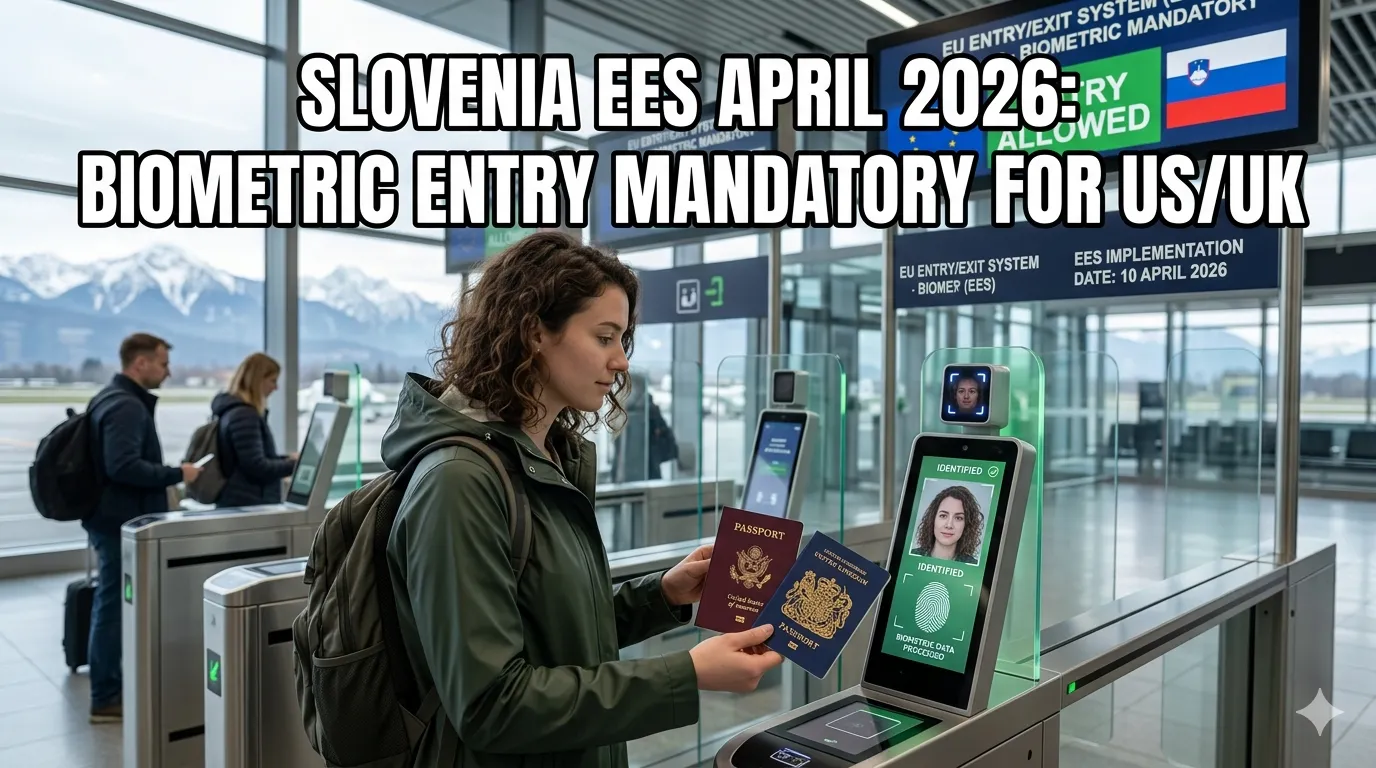
Slovenia EES April 10, 2026: Mandatory Biometric Entry for US and UK Citizens
As of April 10, 2026, Slovenia has fully implemented the European Entry/Exit System (EES), making biometric data collection mandatory for all US and UK citizens entering the country . This significant change replaces the traditional manual passport stamping system with an automated biometric registration system designed to enhance border security and track short-stay visitors more effectively .
The EES rollout in Slovenia began progressively in early 2026, with the system becoming operational at all Slovenian border crossing points by March 2, 2026 . From April 10, 2026, the system is fully operational at all external EU borders, including all Slovenian entry points . This means that US and UK citizens traveling to Slovenia must now provide fingerprints and facial images upon entry, which will be stored in the EU's centralized database .
For American and British travelers, understanding these new requirements is essential for smooth border crossings when visiting Slovenia's stunning Julian Alps, Lake Bled, Ljubljana's charming Old Town, or the Adriatic coast. This comprehensive guide explains what the EES means for your travel to Slovenia, what biometric data is collected, how the process works, and practical tips for navigating the new system efficiently.
What Is the Entry/Exit System (EES)?

The Entry/Exit System (EES) is an automated IT system developed by the European Union to register and track non-EU nationals traveling for short stays (up to 90 days within any 180-day period) . The system replaced the manual passport stamping process that had been used for decades, introducing modern biometric technology to improve border security and migration management .
Key Features of EES:
- Biometric Data Collection: Collects fingerprints (four fingers from each hand) and facial images from eligible travelers
- Automated Registration: Records date and place of entry and exit, replacing manual passport stamps
- Overstay Detection: Automatically calculates permitted stay duration and identifies overstayers
- Centralized Database: Stores data in a secure EU-wide system accessible to authorized border authorities
- First-Time Registration: Biometric data collected on first entry, then verified on subsequent visits
- 👉 Coolcations in Malbun: Why This Alpine Resort Is the 2026 Summer Escape from Heatwaves
- 👉 The Complete First-Time Travel Guide to Estonia (2026 Edition)
- 👉 The Arc de Triomphe: A Master Guide to Honoring France’s Military History
Why EES Was Implemented:
The EES addresses several key challenges with the previous manual system:
- Security Enhancement: Biometric data helps prevent identity fraud and document forgery
- Overstay Prevention: Automated tracking makes it easier to detect and prevent visa overstays
- Efficiency: Automated processing speeds up border crossings for frequent travelers
- Data Accuracy: Digital records are more reliable than manual stamps
- Schengen Compliance: Slovenia's implementation aligns with its full Schengen membership
- 👉 Coolcations in Malbun: Why This Alpine Resort Is the 2026 Summer Escape from Heatwaves
- 👉 The Complete First-Time Travel Guide to Estonia (2026 Edition)
- 👉 The Arc de Triomphe: A Master Guide to Honoring France’s Military History
Timeline: EES Implementation in Slovenia

Slovenia's EES implementation followed a phased approach throughout early 2026:
Phase 1: October 12, 2025
- EES system went live across EU Schengen countries
- Initial rollout began at select border crossing points
- 👉 Coolcations in Malbun: Why This Alpine Resort Is the 2026 Summer Escape from Heatwaves
- 👉 The Complete First-Time Travel Guide to Estonia (2026 Edition)
- 👉 The Arc de Triomphe: A Master Guide to Honoring France’s Military History
Phase 2: March 2, 2026
- EES became operational at all Slovenian border crossing points
- System activated at borders with Italy, Austria, Hungary, and Croatia
- Progressive implementation continued through early 2026
- 👉 Coolcations in Malbun: Why This Alpine Resort Is the 2026 Summer Escape from Heatwaves
- 👉 The Complete First-Time Travel Guide to Estonia (2026 Edition)
- 👉 The Arc de Triomphe: A Master Guide to Honoring France’s Military History
Phase 3: April 10, 2026 (Full Implementation)
- EES became fully operational at all EU external borders
- Mandatory biometric data collection for all eligible travelers
- Complete replacement of manual passport stamping
- All Slovenian border points fully integrated with the system
- 👉 Coolcations in Malbun: Why This Alpine Resort Is the 2026 Summer Escape from Heatwaves
- 👉 The Complete First-Time Travel Guide to Estonia (2026 Edition)
- 👉 The Arc de Triomphe: A Master Guide to Honoring France’s Military History
What This Means for Travelers:
From April 10, 2026, all US and UK citizens entering Slovenia must:
- Provide biometric data (fingerprints and facial image) on first entry
- Have biometric data verified on subsequent entries
- Expect automated processing at border control
- No longer receive manual passport stamps for short stays
- 👉 Coolcations in Malbun: Why This Alpine Resort Is the 2026 Summer Escape from Heatwaves
- 👉 The Complete First-Time Travel Guide to Estonia (2026 Edition)
- 👉 The Arc de Triomphe: A Master Guide to Honoring France’s Military History
Who Is Affected by Slovenia's EES?

The EES affects specific categories of travelers entering Slovenia. Understanding whether you're affected helps you prepare appropriately.
Travelers Required to Provide Biometric Data:
- US Citizens: All American passport holders traveling to Slovenia for short stays (tourism, business, family visits)
- UK Citizens: All British passport holders following Brexit (UK is now a third country)
- Other Visa-Exempt Nationals: Citizens of Canada, Australia, Japan, and 50+ other visa-exempt countries
- Visa Required Nationals: Travelers requiring Schengen visas for Slovenia
- 👉 Coolcations in Malbun: Why This Alpine Resort Is the 2026 Summer Escape from Heatwaves
- 👉 The Complete First-Time Travel Guide to Estonia (2026 Edition)
- 👉 The Arc de Triomphe: A Master Guide to Honoring France’s Military History
Age Requirements:
- Fingerprints: Required for travelers aged 12 and above
- Facial Image: Required for all ages (including children and infants)
- Children Under 12: Exempt from fingerprinting but still require facial image capture
- 👉 Coolcations in Malbun: Why This Alpine Resort Is the 2026 Summer Escape from Heatwaves
- 👉 The Complete First-Time Travel Guide to Estonia (2026 Edition)
- 👉 The Arc de Triomphe: A Master Guide to Honoring France’s Military History
Exemptions from EES:
Certain categories of travelers are exempt from EES biometric collection:
- EU/EEA/Swiss Citizens: Holders of EU, EEA, or Swiss passports or residence cards
- Long-Term Residents: Holders of Slovenian or EU long-term residence permits
- Diplomatic Passport Holders: Certain diplomatic and official passport holders
- Frontier Workers: Cross-border workers with proper documentation
- Transit Passengers: Travelers transiting through international zones without entering Slovenia
- 👉 Coolcations in Malbun: Why This Alpine Resort Is the 2026 Summer Escape from Heatwaves
- 👉 The Complete First-Time Travel Guide to Estonia (2026 Edition)
- 👉 The Arc de Triomphe: A Master Guide to Honoring France’s Military History
Important Note for US/UK Citizens:
As visa-exempt third-country nationals, US and UK citizens are subject to EES requirements for all short stays (up to 90 days within any 180-day period) . This applies regardless of whether you're traveling for tourism, business, or family visits to Slovenia.
What Biometric Data Is Collected?

Understanding what biometric data is collected helps travelers prepare and know what to expect at border control.
Types of Biometric Data:
- Fingerprints:
- Four fingers from each hand (eight fingerprints total)
- Collected using digital fingerprint scanners
- Required for travelers aged 12 and above
- Takes approximately 30-60 seconds
- 👉 Coolcations in Malbun: Why This Alpine Resort Is the 2026 Summer Escape from Heatwaves
- 👉 The Complete First-Time Travel Guide to Estonia (2026 Edition)
- 👉 The Arc de Triomphe: A Master Guide to Honoring France’s Military History
- Facial Image:
- Digital photograph taken at border control
- Similar to passport photo but captured live
- Required for all travelers regardless of age
- Takes approximately 10-20 seconds
- 👉 Coolcations in Malbun: Why This Alpine Resort Is the 2026 Summer Escape from Heatwaves
- 👉 The Complete First-Time Travel Guide to Estonia (2026 Edition)
- 👉 The Arc de Triomphe: A Master Guide to Honoring France’s Military History
- Alphanumeric Data:
- Full name, date of birth, nationality
- Passport number and expiration date
- Date and place of entry/exit
- Border crossing point information
- 👉 Coolcations in Malbun: Why This Alpine Resort Is the 2026 Summer Escape from Heatwaves
- 👉 The Complete First-Time Travel Guide to Estonia (2026 Edition)
- 👉 The Arc de Triomphe: A Master Guide to Honoring France’s Military History
First Entry vs. Subsequent Entries:
First Entry to Slovenia/Schengen (After EES Implementation):
- Full biometric registration required
- Fingerprints and facial image captured
- Process takes 2-5 minutes
- Data stored in EES database for future verification
- 👉 Coolcations in Malbun: Why This Alpine Resort Is the 2026 Summer Escape from Heatwaves
- 👉 The Complete First-Time Travel Guide to Estonia (2026 Edition)
- 👉 The Arc de Triomphe: A Master Guide to Honoring France’s Military History
Subsequent Entries:
- Biometric verification (not full re-registration)
- Fingerprints scanned to match stored data
- Facial image may be captured for verification
- Faster processing (1-2 minutes)
- Data updated with new entry/exit information
- 👉 Coolcations in Malbun: Why This Alpine Resort Is the 2026 Summer Escape from Heatwaves
- 👉 The Complete First-Time Travel Guide to Estonia (2026 Edition)
- 👉 The Arc de Triomphe: A Master Guide to Honoring France’s Military History
Data Storage and Retention:
- Storage Duration: Biometric data retained for 3 years from last exit record
- Automatic Deletion: Data automatically deleted after 3 years of inactivity
- Security: Encrypted storage in secure EU database
- Access: Only authorized border control authorities can access data
- Purpose: Used solely for border control and migration management
- 👉 Coolcations in Malbun: Why This Alpine Resort Is the 2026 Summer Escape from Heatwaves
- 👉 The Complete First-Time Travel Guide to Estonia (2026 Edition)
- 👉 The Arc de Triomphe: A Master Guide to Honoring France’s Military History
How the EES Process Works at Slovenian Borders

Understanding the step-by-step process helps travelers navigate border control efficiently and reduces anxiety about the new system.
Step 1: Arrival at Border Control
- Proceed to appropriate lane (EU/EEA or Non-EU/Third Country)
- US and UK citizens use Non-EU/Third Country lanes
- Have passport ready for inspection
- Follow border officer instructions
- 👉 Coolcations in Malbun: Why This Alpine Resort Is the 2026 Summer Escape from Heatwaves
- 👉 The Complete First-Time Travel Guide to Estonia (2026 Edition)
- 👉 The Arc de Triomphe: A Master Guide to Honoring France’s Military History
Step 2: Passport Verification
- Present valid passport to border officer or automated kiosk
- Passport scanned and verified against databases
- Officer checks passport validity and travel purpose
- System checks if you're a first-time or returning traveler
- 👉 Coolcations in Malbun: Why This Alpine Resort Is the 2026 Summer Escape from Heatwaves
- 👉 The Complete First-Time Travel Guide to Estonia (2026 Edition)
- 👉 The Arc de Triomphe: A Master Guide to Honoring France’s Military History
Step 3: Biometric Data Collection (First Entry Only)
Fingerprint Collection:
- Place four fingers of right hand on scanner
- Place four fingers of left hand on scanner
- Ensure fingers are clean and dry for best results
- Process takes 30-60 seconds
- 👉 Coolcations in Malbun: Why This Alpine Resort Is the 2026 Summer Escape from Heatwaves
- 👉 The Complete First-Time Travel Guide to Estonia (2026 Edition)
- 👉 The Arc de Triomphe: A Master Guide to Honoring France’s Military History
Facial Image Capture:
- Look directly at camera
- Remove glasses, hats, or face coverings (unless religious/cultural)
- Maintain neutral expression
- Process takes 10-20 seconds
- 👉 Coolcations in Malbun: Why This Alpine Resort Is the 2026 Summer Escape from Heatwaves
- 👉 The Complete First-Time Travel Guide to Estonia (2026 Edition)
- 👉 The Arc de Triomphe: A Master Guide to Honoring France’s Military History
Step 4: Data Verification (Subsequent Entries)
- Fingerprints scanned to match stored data
- Facial image may be captured for verification
- System confirms identity match
- Faster processing than first entry
- 👉 Coolcations in Malbun: Why This Alpine Resort Is the 2026 Summer Escape from Heatwaves
- 👉 The Complete First-Time Travel Guide to Estonia (2026 Edition)
- 👉 The Arc de Triomphe: A Master Guide to Honoring France’s Military History
Step 5: Entry Authorization
- System calculates permitted stay duration (90 days within 180-day period)
- Entry date and location recorded in EES database
- No manual passport stamp (replaced by digital record)
- Border officer may ask about purpose and duration of stay
- Receive entry authorization to proceed
- 👉 Coolcations in Malbun: Why This Alpine Resort Is the 2026 Summer Escape from Heatwaves
- 👉 The Complete First-Time Travel Guide to Estonia (2026 Edition)
- 👉 The Arc de Triomphe: A Master Guide to Honoring France’s Military History
Step 6: Exit Process
- Similar biometric verification at exit
- Exit date and location recorded in EES
- System calculates remaining days for future visits
- Ensures compliance with 90/180-day rule
- 👉 Coolcations in Malbun: Why This Alpine Resort Is the 2026 Summer Escape from Heatwaves
- 👉 The Complete First-Time Travel Guide to Estonia (2026 Edition)
- 👉 The Arc de Triomphe: A Master Guide to Honoring France’s Military History
Processing Time:
- First Entry: 5-10 minutes (including biometric registration)
- Subsequent Entries: 2-5 minutes (verification only)
- Peak Times: Allow extra time during busy periods (holidays, weekends)
- 👉 Coolcations in Malbun: Why This Alpine Resort Is the 2026 Summer Escape from Heatwaves
- 👉 The Complete First-Time Travel Guide to Estonia (2026 Edition)
- 👉 The Arc de Triomphe: A Master Guide to Honoring France’s Military History
Impact on US and UK Citizens

The EES implementation has specific implications for American and British travelers to Slovenia.
For US Citizens:
- Visa-Free Travel Continues: US citizens can still visit Slovenia visa-free for up to 90 days within any 180-day period
- No ETIAS Yet: ETIAS (European Travel Information and Authorization System) not required until late 2026
- Biometric Registration: Must provide fingerprints and facial image on first entry after EES implementation
- Schengen Benefits: Slovenia's full Schengen membership facilitates seamless travel
- 90/180-Day Rule: Days spent in Slovenia count toward Schengen Area 90-day limit
- 👉 Coolcations in Malbun: Why This Alpine Resort Is the 2026 Summer Escape from Heatwaves
- 👉 The Complete First-Time Travel Guide to Estonia (2026 Edition)
- 👉 The Arc de Triomphe: A Master Guide to Honoring France’s Military History
For UK Citizens:
- Post-Brexit Requirements: UK citizens now subject to third-country national rules following Brexit
- Visa-Free Travel: Can visit Slovenia visa-free for up to 90 days within any 180-day period
- Biometric Registration: Must provide fingerprints and facial image on first entry
- ETIAS Coming: Will need ETIAS authorization starting late 2026
- Passport Validity: Must have at least 3 months validity beyond intended departure date
- 👉 Coolcations in Malbun: Why This Alpine Resort Is the 2026 Summer Escape from Heatwaves
- 👉 The Complete First-Time Travel Guide to Estonia (2026 Edition)
- 👉 The Arc de Triomphe: A Master Guide to Honoring France’s Military History
Key Changes from Previous System:
Before EES (Manual Stamping):
- Passport manually stamped on entry and exit
- No biometric data collected
- Overstay detection relied on passport stamps
- Processing time: 1-3 minutes
- 👉 Coolcations in Malbun: Why This Alpine Resort Is the 2026 Summer Escape from Heatwaves
- 👉 The Complete First-Time Travel Guide to Estonia (2026 Edition)
- 👉 The Arc de Triomphe: A Master Guide to Honoring France’s Military History
After EES (Biometric System):
- No manual passport stamps for short stays
- Biometric data collected and stored
- Automated overstay detection
- Processing time: 5-10 minutes (first entry), 2-5 minutes (subsequent)
- 👉 Coolcations in Malbun: Why This Alpine Resort Is the 2026 Summer Escape from Heatwaves
- 👉 The Complete First-Time Travel Guide to Estonia (2026 Edition)
- 👉 The Arc de Triomphe: A Master Guide to Honoring France’s Military History
Practical Implications:
- Longer Processing Time: First entry takes longer due to biometric registration
- No Passport Stamps: Digital records replace physical stamps (may affect some travelers who collect stamps)
- Better Tracking: Easier to track entry/exit history and remaining days
- Enhanced Security: Reduced risk of passport fraud and identity theft
- Future Convenience: Faster processing on subsequent visits after initial registration
- 👉 Coolcations in Malbun: Why This Alpine Resort Is the 2026 Summer Escape from Heatwaves
- 👉 The Complete First-Time Travel Guide to Estonia (2026 Edition)
- 👉 The Arc de Triomphe: A Master Guide to Honoring France’s Military History
Preparing for EES Border Control: Practical Tips

Proper preparation ensures smooth passage through EES-enabled border controls. Follow these tips to minimize delays and stress.
Before Your Trip:
- Check Passport Validity:
- Ensure passport valid for at least 3 months beyond intended departure
- Check passport is in good condition (no damage, water damage, or excessive wear)
- Verify you have at least 2 blank pages (though no stamps, may be required)
- 👉 Coolcations in Malbun: Why This Alpine Resort Is the 2026 Summer Escape from Heatwaves
- 👉 The Complete First-Time Travel Guide to Estonia (2026 Edition)
- 👉 The Arc de Triomphe: A Master Guide to Honoring France’s Military History
- Understand Your Entry Rights:
- Confirm you qualify for visa-free travel (90 days within 180-day period)
- Calculate remaining days if you've visited Schengen Area recently
- Have proof of onward/return travel ready
- 👉 Coolcations in Malbun: Why This Alpine Resort Is the 2026 Summer Escape from Heatwaves
- 👉 The Complete First-Time Travel Guide to Estonia (2026 Edition)
- 👉 The Arc de Triomphe: A Master Guide to Honoring France’s Military History
- Prepare Supporting Documents:
- Proof of accommodation (hotel bookings, invitation letters)
- Proof of sufficient funds (bank statements, credit cards)
- Travel insurance documentation (recommended)
- Return or onward ticket
- 👉 Coolcations in Malbun: Why This Alpine Resort Is the 2026 Summer Escape from Heatwaves
- 👉 The Complete First-Time Travel Guide to Estonia (2026 Edition)
- 👉 The Arc de Triomphe: A Master Guide to Honoring France’s Military History
- Plan for Extra Time:
- Arrive at border crossing 30-60 minutes earlier than usual
- Allow extra time during peak travel periods (holidays, weekends)
- First entry takes longer than subsequent visits
- 👉 Coolcations in Malbun: Why This Alpine Resort Is the 2026 Summer Escape from Heatwaves
- 👉 The Complete First-Time Travel Guide to Estonia (2026 Edition)
- 👉 The Arc de Triomphe: A Master Guide to Honoring France’s Military History
At Border Control:
- Have Documents Ready:
- Keep passport easily accessible
- Have supporting documents organized
- Remove passport from protective covers for scanning
- 👉 Coolcations in Malbun: Why This Alpine Resort Is the 2026 Summer Escape from Heatwaves
- 👉 The Complete First-Time Travel Guide to Estonia (2026 Edition)
- 👉 The Arc de Triomphe: A Master Guide to Honoring France’s Military History
- For Fingerprint Collection:
- Ensure fingers are clean and dry
- Remove bandages or coverings if possible
- Follow border officer instructions carefully
- Place fingers flat on scanner as directed
- 👉 Coolcations in Malbun: Why This Alpine Resort Is the 2026 Summer Escape from Heatwaves
- 👉 The Complete First-Time Travel Guide to Estonia (2026 Edition)
- 👉 The Arc de Triomphe: A Master Guide to Honoring France’s Military History
- For Facial Image:
- Remove glasses, hats, or face coverings (unless religious/cultural)
- Look directly at camera
- Maintain neutral expression
- Ensure good lighting on face
- 👉 Coolcations in Malbun: Why This Alpine Resort Is the 2026 Summer Escape from Heatwaves
- 👉 The Complete First-Time Travel Guide to Estonia (2026 Edition)
- 👉 The Arc de Triomphe: A Master Guide to Honoring France’s Military History
- Cooperate with Officers:
- Answer questions clearly and honestly
- State purpose and duration of visit
- Be patient during processing
- Follow all instructions from border personnel
- 👉 Coolcations in Malbun: Why This Alpine Resort Is the 2026 Summer Escape from Heatwaves
- 👉 The Complete First-Time Travel Guide to Estonia (2026 Edition)
- 👉 The Arc de Triomphe: A Master Guide to Honoring France’s Military History
Special Considerations:
- Traveling with Children:
- Children under 12 exempt from fingerprints but need facial image
- Have birth certificates or proof of relationship ready
- Both parents' consent may be required for minors traveling alone
- 👉 Coolcations in Malbun: Why This Alpine Resort Is the 2026 Summer Escape from Heatwaves
- 👉 The Complete First-Time Travel Guide to Estonia (2026 Edition)
- 👉 The Arc de Triomphe: A Master Guide to Honoring France’s Military History
- Medical Conditions:
- Inform border officer if you have conditions affecting fingerprinting (injuries, skin conditions)
- Alternative verification methods may be available
- Carry medical documentation if applicable
- 👉 Coolcations in Malbun: Why This Alpine Resort Is the 2026 Summer Escape from Heatwaves
- 👉 The Complete First-Time Travel Guide to Estonia (2026 Edition)
- 👉 The Arc de Triomphe: A Master Guide to Honoring France’s Military History
- Frequent Travelers:
- After first registration, subsequent entries are faster
- Biometric data valid for 3 years
- Consider enrolling in facilitation programs if available
- 👉 Coolcations in Malbun: Why This Alpine Resort Is the 2026 Summer Escape from Heatwaves
- 👉 The Complete First-Time Travel Guide to Estonia (2026 Edition)
- 👉 The Arc de Triomphe: A Master Guide to Honoring France’s Military History
- 👉 Coolcations in Malbun: Why This Alpine Resort Is the 2026 Summer Escape from Heatwaves
- 👉 The Complete First-Time Travel Guide to Estonia (2026 Edition)
- 👉 The Arc de Triomphe: A Master Guide to Honoring France’s Military History
Common Questions and Concerns

Q: Will I still get passport stamps?
A: No. EES replaces manual passport stamping with digital records. Your entry and exit will be recorded electronically in the EES database .
Q: How long does biometric registration take?
A: First-time registration takes 5-10 minutes. Subsequent entries with verification take 2-5 minutes.
Q: What if I refuse to provide biometric data?
A: Providing biometric data is mandatory for entry. Refusal may result in denial of entry to Slovenia and the Schengen Area.
Q: Is my biometric data secure?
A: Yes. Data is encrypted and stored in a secure EU database with strict access controls. Only authorized border authorities can access the information.
Q: How long is my biometric data stored?
A: Biometric data is retained for 3 years from your last exit record, then automatically deleted.
Q: Do I need to register at every Schengen country?
A: No. Once registered in the EES system at any Schengen external border, your data is accessible at all Schengen borders. However, Slovenia-specific entry will be recorded.
Q: What if my fingerprints can't be captured?
A: If fingerprints cannot be captured due to medical conditions or other reasons, border officers will use alternative verification methods, typically facial image verification.
Q: Does EES affect my 90-day visa-free allowance?
A: No. EES doesn't change your visa-free rights. You can still stay up to 90 days within any 180-day period. EES simply tracks your stays more accurately.
Q: Will ETIAS be required in addition to EES?
A: Yes, starting in late 2026, US and UK citizens will need both ETIAS authorization (pre-travel approval) and EES registration (at border) .
Q: Can I see my EES data?
A: Yes. You have the right to access your personal data stored in EES. Contact the Slovenian border authority or the data protection authority to request access.
ETIAS and EES: Understanding Both Systems

While EES is now mandatory (as of April 10, 2026), another system—ETIAS—will be required starting in late 2026. Understanding both systems helps travelers prepare for future requirements.
EES (Entry/Exit System):
- Status: Fully operational since April 10, 2026
- What It Is: Automated border control system with biometric data collection
- When Required: At border crossing on entry to Slovenia/Schengen
- Cost: Free (no fee)
- Validity: Biometric data stored for 3 years
- Application: Done at border control (in-person)
- 👉 Coolcations in Malbun: Why This Alpine Resort Is the 2026 Summer Escape from Heatwaves
- 👉 The Complete First-Time Travel Guide to Estonia (2026 Edition)
- 👉 The Arc de Triomphe: A Master Guide to Honoring France’s Military History
ETIAS (European Travel Information and Authorization System):
- Status: Expected late 2026 (not yet implemented)
- What It Is: Pre-travel authorization system (similar to US ESTA)
- When Required: Before travel (online application)
- Cost: €7 fee (free for under 18 or over 70)
- Validity: 3 years or until passport expires
- Application: Online application (takes 10-15 minutes)
- 👉 Coolcations in Malbun: Why This Alpine Resort Is the 2026 Summer Escape from Heatwaves
- 👉 The Complete First-Time Travel Guide to Estonia (2026 Edition)
- 👉 The Arc de Triomphe: A Master Guide to Honoring France’s Military History
How They Work Together:
Starting in late 2026, US and UK citizens will need both:
- ETIAS Authorization: Obtain online before traveling to Slovenia
- EES Registration: Provide biometric data at border on first entry
Timeline:
- Now - Late 2026: Only EES required (biometric registration at border)
- Late 2026 Onward: Both ETIAS (pre-approval) and EES (border registration) required
- 👉 Coolcations in Malbun: Why This Alpine Resort Is the 2026 Summer Escape from Heatwaves
- 👉 The Complete First-Time Travel Guide to Estonia (2026 Edition)
- 👉 The Arc de Triomphe: A Master Guide to Honoring France’s Military History
Essential Travel Tips for Slovenia in 2026

Beyond EES requirements, here are practical tips for traveling to Slovenia:
Best Time to Visit:
- Spring (April-June): Mild weather, blooming flowers, fewer crowds, ideal for Lake Bled and Julian Alps
- Summer (July-August): Warm weather, outdoor activities peak season, Adriatic coast accessible
- Fall (September-October): Pleasant temperatures, autumn colors in mountains, wine harvest season
- Winter (November-March): Skiing in Julian Alps, Christmas markets, lower prices
- 👉 Coolcations in Malbun: Why This Alpine Resort Is the 2026 Summer Escape from Heatwaves
- 👉 The Complete First-Time Travel Guide to Estonia (2026 Edition)
- 👉 The Arc de Triomphe: A Master Guide to Honoring France’s Military History
Language:
Slovenian is the official language. English is widely spoken in tourist areas, hotels, and restaurants, especially in Ljubljana, Bled, and coastal areas. Learning basic Slovenian phrases is appreciated but not essential.
Currency:
Slovenia uses the Euro (€). Credit and debit cards are widely accepted throughout the country. Carrying some cash is advisable for small purchases in rural areas or markets.
Transportation:
- Trains: Slovenian Railways (SŽ) connects major cities; scenic routes through Alps
- Buses: Extensive bus network for urban and intercity travel
- Car Rental: Recommended for exploring rural areas and Julian Alps
- Cycling: Excellent cycling infrastructure; bike-friendly country
- 👉 Coolcations in Malbun: Why This Alpine Resort Is the 2026 Summer Escape from Heatwaves
- 👉 The Complete First-Time Travel Guide to Estonia (2026 Edition)
- 👉 The Arc de Triomphe: A Master Guide to Honoring France’s Military History
Must-Visit Destinations:
- Ljubljana: Charming capital with castle, riverside cafés, and dragon bridge
- Lake Bled: Iconic lake with island church and medieval castle
- Triglav National Park: Julian Alps hiking, Vintgar Gorge, mountain adventures
- Piran: Venetian-style coastal town on Adriatic Sea
- Postojna Cave: Spectacular karst cave system with train ride
- Škocjan Caves: UNESCO World Heritage cave system
- 👉 Coolcations in Malbun: Why This Alpine Resort Is the 2026 Summer Escape from Heatwaves
- 👉 The Complete First-Time Travel Guide to Estonia (2026 Edition)
- 👉 The Arc de Triomphe: A Master Guide to Honoring France’s Military History
Cultural Etiquette:
- Greet with a handshake in formal situations
- Be punctual for appointments and meetings
- Tipping is appreciated (10% for good service)
- Remove shoes when entering someone's home
- Try local specialties: štruklji, potica, kraški pršut, Slovenian wines
- 👉 Coolcations in Malbun: Why This Alpine Resort Is the 2026 Summer Escape from Heatwaves
- 👉 The Complete First-Time Travel Guide to Estonia (2026 Edition)
- 👉 The Arc de Triomphe: A Master Guide to Honoring France’s Military History
Frequently Asked Questions About Slovenia EES 2026

Do I need EES if I'm just transiting through Slovenia?
Yes, US and UK citizens transiting through Slovenian airports or land borders require EES registration, even if you're not leaving the international transit area. This applies to all border crossings in Schengen countries .
Can I apply for EES on behalf of my family members?
EES registration is done in-person at border control. Each traveler must provide their own biometric data. Parents or guardians can assist children during the process.
What if my passport expires soon?
Your EES biometric data is linked to your specific passport. If your passport expires, you must apply for new EES registration with your new passport. Always ensure your passport is valid for at least 3 months beyond your planned departure from the Schengen Area .
Can I extend my stay in Slovenia beyond 90 days?
No, EES cannot be extended. If you need to stay in Slovenia longer than 90 days, you must apply for a long-stay visa (Type D) or residence permit before your 90-day limit expires. You cannot convert EES registration to a long-stay visa while in Slovenia.
Do children need EES registration?
Yes, all travelers regardless of age need EES registration, including infants and minors . However, children under 12 are exempt from fingerprinting but still require facial image capture.
What if I have dual citizenship (US and UK)?
You can use either passport to enter Slovenia, but you must use the same passport for EES registration and all subsequent travel. Choose the passport with the longest validity to maximize convenience.
Can I travel to Slovenia if my EES registration is pending?
EES registration is completed at the border upon entry. You don't apply in advance. However, ensure you meet all entry requirements and have proper documentation before traveling.
Is EES valid for work or study in Slovenia?
EES covers short-term visits (tourism, business meetings, short-term study up to 90 days). For employment, long-term study, or stays exceeding 90 days, you need a work visa or student visa, not just EES registration.
What happens if I lose my passport with EES data?
If your passport is lost or stolen, your EES registration becomes invalid because it's electronically linked to that specific passport. You must complete new EES registration with your replacement passport upon re-entry.
Can I visit non-Schengen countries from Slovenia with EES?
EES is only valid for Schengen Area countries. You can visit neighboring non-Schengen countries like Croatia (partially Schengen), Serbia, or Bosnia, but you'll need to check their specific entry requirements separately.
Preparing for Your Slovenia Trip: Final Checklist
As your Slovenia travel date approaches, use this checklist to ensure you're fully prepared:
Before Travel:
- ✓ Verify passport validity (at least 3 months beyond departure date)
- ✓ Check passport condition (no damage)
- ✓ Gather travel itinerary details
- ✓ Prepare supporting documents (accommodation, funds proof, return ticket)
- ✓ Purchase comprehensive travel insurance
- ✓ Download useful apps (maps, translation, train schedules)
- ✓ Check weather forecast and pack accordingly
- 👉 Coolcations in Malbun: Why This Alpine Resort Is the 2026 Summer Escape from Heatwaves
- 👉 The Complete First-Time Travel Guide to Estonia (2026 Edition)
- 👉 The Arc de Triomphe: A Master Guide to Honoring France’s Military History
48 Hours Before Travel:
- ✓ Check in online for your flight
- ✓ Print or download boarding passes
- ✓ Prepare travel documents in carry-on luggage
- ✓ Charge electronic devices
- ✓ Confirm accommodation details
- 👉 Coolcations in Malbun: Why This Alpine Resort Is the 2026 Summer Escape from Heatwaves
- 👉 The Complete First-Time Travel Guide to Estonia (2026 Edition)
- 👉 The Arc de Triomphe: A Master Guide to Honoring France’s Military History
At Border Control:
- ✓ Have passport ready and easily accessible
- ✓ Allow extra time for biometric registration (first entry)
- ✓ Follow border officer instructions for fingerprint and facial image capture
- ✓ Answer questions about purpose and duration of stay clearly
- ✓ Keep supporting documents accessible if requested
- 👉 Coolcations in Malbun: Why This Alpine Resort Is the 2026 Summer Escape from Heatwaves
- 👉 The Complete First-Time Travel Guide to Estonia (2026 Edition)
- 👉 The Arc de Triomphe: A Master Guide to Honoring France’s Military History
Documents to Carry:
- ✓ Valid passport (with at least 3 months validity)
- ✓ Return or onward ticket
- ✓ Travel insurance policy
- ✓ Accommodation confirmations
- ✓ Proof of sufficient funds (bank statements, credit cards)
- ✓ Emergency contact information
- ✓ Copy of important documents (stored separately)
- 👉 Coolcations in Malbun: Why This Alpine Resort Is the 2026 Summer Escape from Heatwaves
- 👉 The Complete First-Time Travel Guide to Estonia (2026 Edition)
- 👉 The Arc de Triomphe: A Master Guide to Honoring France’s Military History
Conclusion: Adapting to Slovenia's New Border System
The implementation of the Entry/Exit System (EES) in Slovenia as of April 10, 2026, represents a significant modernization of border control procedures . While the new biometric requirements may seem daunting at first, understanding the system and preparing appropriately ensures smooth passage through Slovenian borders.
For US and UK citizens, the key takeaways are:
- Biometric registration is mandatory: Fingerprints and facial images required on first entry
- Processing takes longer initially: Allow 5-10 minutes for first registration, 2-5 minutes for subsequent visits
- No more passport stamps: Digital records replace manual stamping
- Your rights remain unchanged: Still entitled to 90-day visa-free stays within 180-day period
- Enhanced security: System protects against fraud and improves border management
- 👉 Coolcations in Malbun: Why This Alpine Resort Is the 2026 Summer Escape from Heatwaves
- 👉 The Complete First-Time Travel Guide to Estonia (2026 Edition)
- 👉 The Arc de Triomphe: A Master Guide to Honoring France’s Military History
By understanding the EES requirements, preparing necessary documents, and allowing extra time for border processing, US and UK travelers can navigate Slovenia's new biometric entry system with confidence. The initial registration may take a few extra minutes, but subsequent visits will be faster, and the enhanced security benefits all travelers.
Slovenia offers extraordinary experiences for visitors—from the fairy-tale beauty of Lake Bled to the dramatic peaks of the Julian Alps, from the charming streets of Ljubljana to the Venetian charm of Piran. The EES system ensures these experiences remain accessible while maintaining secure and efficient border management.
As Slovenia continues to thrive as a sustainable tourism destination and fully integrates into EU-wide systems like EES (and soon ETIAS), staying informed about entry requirements ensures hassle-free travel to this beautiful Central European gem.
Safe travels to Slovenia, and welcome to the new era of smart borders!
0 Comments