.webp)
.webp)
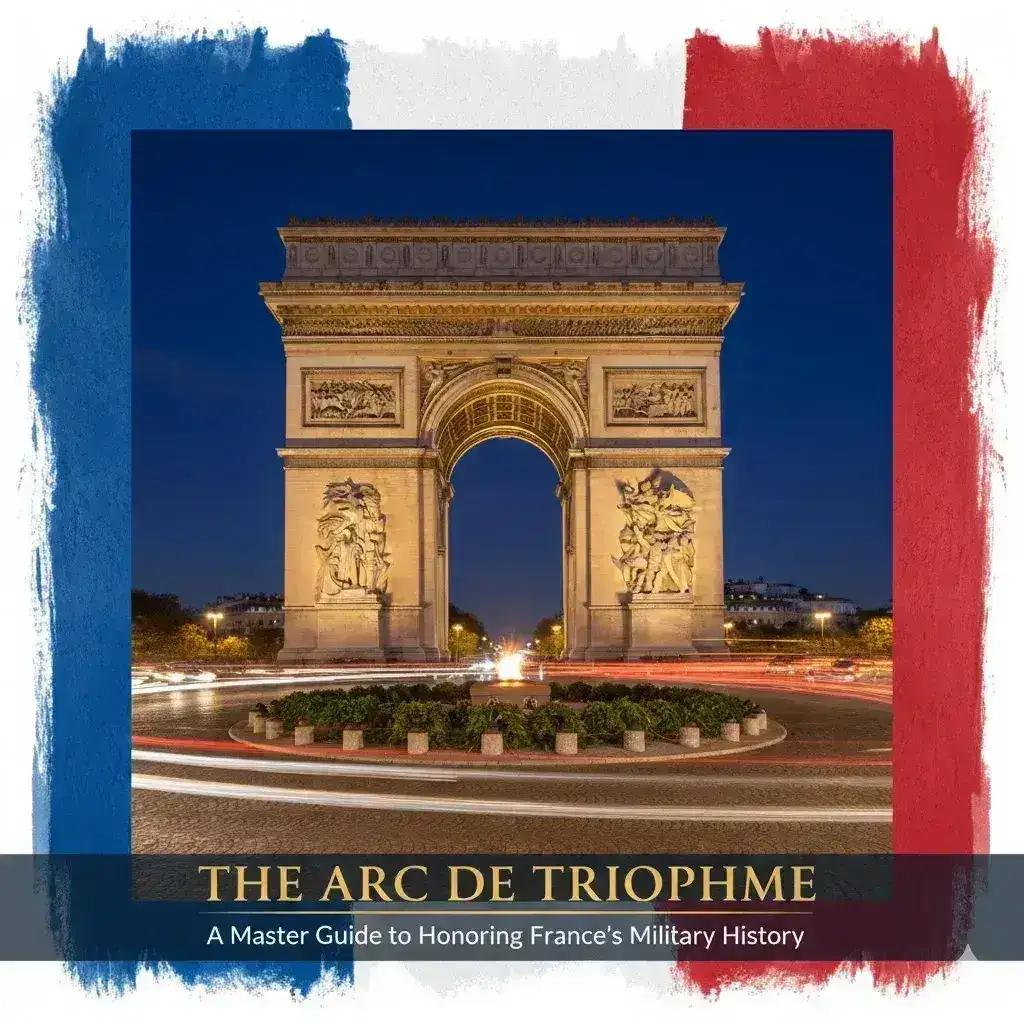
The Arc de Triomphe: A Master Guide to Honoring France's Military History
Standing majestically at the western end of the Champs-Élysées, the Arc de Triomphe dominates the Parisian skyline as one of the world's most iconic monuments to military valor and national pride. Commissioned by Napoleon Bonaparte in 1806 to commemorate his great victories, this colossal triumphal arch has witnessed over two centuries of French history, from imperial glory to republican democracy, from wartime occupation to celebrations of liberation. As we explore this magnificent monument in 2026, the Arc de Triomphe continues to serve as a powerful symbol of France's military heritage, a sacred memorial to those who fought for the nation, and an architectural masterpiece that draws millions of visitors annually.
Located at the center of Place Charles de Gaulle (formerly Place de l'Étoile), the Arc de Triomphe stands at the heart of a complex star-shaped junction where twelve grand avenues radiate outward, creating one of the most dramatic urban designs in the world. The monument rises 50 meters (164 feet) high and spans 45 meters (148 feet) wide, making it the second-largest triumphal arch in the world after the Arch of Constantine in Rome. Its massive stone structure is adorned with intricate sculptural reliefs depicting famous battles, allegorical figures representing French victories, and the names of 558 generals and 128 battles from the French Revolutionary and Napoleonic Wars.
This comprehensive master guide delves deep into the Arc de Triomphe's rich history, architectural splendor, military significance, and cultural importance. From understanding Napoleon's vision and the monument's construction challenges to exploring the Tomb of the Unknown Soldier and the eternal flame that burns in perpetual remembrance, this exploration reveals why the Arc de Triomphe remains not just a tourist attraction, but a living symbol of French identity, sacrifice, and resilience. Whether you're planning your first visit to Paris or seeking to understand the profound historical significance of this monument, this guide provides everything you need to appreciate one of France's greatest treasures.
Napoleon's Vision: The Birth of a Monument
The story of the Arc de Triomphe begins with one of history's most ambitious military leaders. After his decisive victory at the Battle of Austerlitz in December 1805, where his Grande Armée defeated the combined forces of Austria and Russia, Napoleon Bonaparte stood at the zenith of his power. It was during this triumphant period that he conceived the idea of building a monumental arch dedicated to the glory of the French army.
On February 18, 1806, Napoleon issued a decree ordering the construction of a triumphal arch "dedicated to the glory of the French armies." The emperor envisioned a monument that would surpass anything built by the Romans, celebrating French military achievements and immortalizing the names of generals and battles that had secured France's dominance in Europe. The chosen location was the Butte Chaillot, a hill at the western edge of Paris that offered commanding views and symbolic significance as the starting point for military parades along the Champs-Élysées.
Napoleon selected architect Jean Chalgrin to design the monument. Chalgrin, a neoclassical architect influenced by Roman antiquity, proposed a single massive arch rather than the triple-arched design initially considered. His vision drew inspiration from the Roman Arch of Titus but on a grander scale, incorporating French artistic sensibilities and contemporary neoclassical aesthetics. The design featured four main sculptural groups, intricate friezes depicting military campaigns, and attic levels inscribed with the names of battles and generals.
The foundation stone was laid on August 15, 1806, Napoleon's 37th birthday, in a grand ceremony attended by the emperor himself. However, the construction would prove far more complex and time-consuming than anticipated, plagued by engineering challenges, political upheavals, and financial constraints that would delay completion for nearly three decades.
Construction Challenges and Engineering Marvels
Building the Arc de Triomphe presented enormous technical challenges that tested the limits of early 19th-century engineering. The monument's massive scale required innovative construction techniques and unwavering determination to overcome obstacles that threatened to halt the project entirely.
Foundation Work: The first major challenge was creating a stable foundation capable of supporting the arch's enormous weight. Workers excavated deep into the ground, driving wooden piles into the earth to create a solid base. The foundation extends several meters below ground level, ensuring stability for the 50-meter-high structure. This phase alone took over a year to complete.
Material Selection: The arch was constructed primarily from Château-Landon limestone, chosen for its durability and aesthetic qualities. This fine-grained stone could be carved with precision for the intricate sculptural details while withstanding the elements. Over 100,000 cubic meters of stone were quarried, transported, and precisely fitted together without the use of modern machinery.
Construction Techniques: Builders employed traditional masonry techniques, using wooden scaffolding and cranes powered by human and animal labor. Each stone block was carefully shaped and positioned, with joints so precise that mortar was barely visible. The construction required hundreds of skilled stonemasons, carpenters, and laborers working in dangerous conditions at great heights.
Political Interruptions: The project faced numerous interruptions due to political turmoil. After Napoleon's abdication in 1814 and the Bourbon Restoration, construction nearly stopped. King Louis XVIII considered demolishing the incomplete arch, viewing it as a symbol of the Napoleonic era he wished to erase. However, the monument's cultural and architectural significance ultimately prevailed, and work resumed, albeit slowly.
Completion: The Arc de Triomphe was finally completed in 1836 during the reign of King Louis-Philippe, thirty years after construction began. The total cost exceeded 11 million francs, a staggering sum for the era. The inauguration on July 29, 1836, was a grand ceremony celebrating French military history, though Napoleon himself never saw his vision realized—he had died in exile on Saint Helena in 1821.
Architectural Features and Sculptural Masterpieces
The Arc de Triomphe is a masterpiece of neoclassical architecture, adorned with sculptures and reliefs that tell the story of France's military glory. Every element, from the grand archway to the smallest decorative detail, was carefully designed to inspire awe and commemorate valor.
The Four Main Sculptural Groups:
- Le Départ de 1792 (The Departure of 1792): Also known as La Marseillaise, this is the most famous sculptural group on the arch, created by François Rude. It depicts volunteers marching to defend the nation during the French Revolutionary Wars, led by a winged figure of Liberty. The sculpture's dynamic energy and emotional intensity make it a masterpiece of French Romantic sculpture.
- Le Triomphe de 1810 (The Triumph of 1810): Created by Jean-Pierre Cortot, this group celebrates Napoleon's victories and the Treaty of Schönbrunn. It features Napoleon crowned by Victory, flanked by allegorical figures representing Strength and Peace.
- La Résistance de 1814 (The Resistance of 1814): Sculpted by Antoine Étex, this group commemorates French resistance during the War of the Sixth Coalition, depicting a soldier defending the nation against invaders.
- La Paix de 1815 (The Peace of 1815): Also by Antoine Étex, this sculpture represents the peace that followed Napoleon's defeat, showing a warrior laying down arms.
- 👉 ETIAS Malta 2026: Mandatory Travel Authorization Guide
- 👉 ETIAS Czechia 2026: Mandatory Rules for US & UK Citizens
- 👉 Vilnius Pink Soup Fest 2026: Dates & Best Places
The Friezes: Running along the attic level beneath the main sculptures are four large friezes depicting significant military events:
- Departure of the Armies: Shows French troops mobilizing for war
- Return of the Armies: Depicts victorious soldiers returning home
- Funeral of Marceau: Honors General François Marceau, killed in 1796
- Victory of Napoleon: Celebrates the Battle of Austerlitz
- 👉 ETIAS Malta 2026: Mandatory Travel Authorization Guide
- 👉 ETIAS Czechia 2026: Mandatory Rules for US & UK Citizens
- 👉 Vilnius Pink Soup Fest 2026: Dates & Best Places
The Names of Battles and Generals: The inner surfaces of the arch are inscribed with the names of 128 battles from the French Revolutionary and Napoleonic Wars, as well as 558 generals who served during this period. Names of generals who died in battle are underlined, creating a permanent memorial to their sacrifice. These inscriptions serve as a comprehensive record of France's military history during this transformative era.
The Grand Archway: The central arch spans 29.19 meters (95.7 feet) high and 14.62 meters (48 feet) wide, creating a monumental passage that has witnessed countless military parades, state processions, and historic moments. The sheer scale of the opening emphasizes the grandeur of French military achievement.
The Tomb of the Unknown Soldier and Eternal Flame
Beneath the Arc de Triomphe lies one of France's most sacred memorials: the Tomb of the Unknown Soldier, accompanied by an eternal flame that has burned continuously since 1923. This powerful tribute honors all French soldiers who died in combat, particularly during World War I.
Historical Context: After the devastation of World War I, which claimed over 1.3 million French lives, the nation sought a way to honor the countless soldiers whose bodies were never identified or recovered. On November 11, 1920, the anniversary of the Armistice, the remains of an unknown French soldier were selected from nine unidentified bodies and interred beneath the Arc de Triomphe. This symbolic burial represented all French soldiers who died for their country.
The Eternal Flame: On November 11, 1923, Minister of War André Maginot lit the eternal flame (la flamme éternelle) at the tomb, becoming the first flame of remembrance lit since the Vestal Virgins' fire was extinguished in 391 AD. The flame is rekindled every evening at 6:30 PM in a solemn ceremony that has continued uninterrupted for over a century, even during the Nazi occupation of Paris in World War II.
The Inscription: The tomb bears a simple yet powerful inscription: "ICI REPOSE UN SOLDAT FRANÇAIS MORT POUR LA PATRIE 1914-1918" (Here lies a French soldier who died for the fatherland 1914-1918). This memorial has since come to represent all French soldiers who have died in conflict, from World War I to modern peacekeeping missions.
Ceremonial Significance: The Tomb of the Unknown Soldier serves as the focal point for national commemorations, particularly on Armistice Day (November 11) and Bastille Day (July 14). French presidents traditionally lay wreaths at the tomb during these ceremonies, reaffirming the nation's commitment to remembering those who sacrificed their lives for freedom.
Military History and National Celebrations
The Arc de Triomphe has been the stage for some of the most significant moments in French military and national history, serving as both a monument to past victories and a living symbol of contemporary France.
Napoleon's Funeral Procession: In 1840, nineteen years after his death, Napoleon's remains were returned to France from Saint Helena in a grand ceremony known as Le Retour des Cendres (The Return of the Ashes). The funeral procession passed beneath the Arc de Triomphe, allowing the emperor to finally pass through the monument he had commissioned. This poignant moment symbolically reunited Napoleon with his greatest architectural legacy.
World War I Victory Parade: On July 14, 1919, following the Allied victory in World War I, a massive parade passed beneath the arch, celebrating the triumph of France and its allies. This ceremony marked a new chapter in the monument's history, transforming it from a symbol of Napoleonic glory to a broader memorial of French military sacrifice.
World War II Liberation: On August 26, 1944, following the liberation of Paris from Nazi occupation, General Charles de Gaulle led a triumphant procession down the Champs-Élysées, passing beneath the Arc de Triomphe. This moment symbolized the restoration of French sovereignty and the resilience of the nation after four years of occupation.
Bastille Day Celebrations: Every year on July 14, France's national day, the Arc de Triomphe serves as the starting point for the grand military parade down the Champs-Élysées. The President of France lays a wreath at the Tomb of the Unknown Soldier before the parade begins, reaffirming the connection between past sacrifice and present freedom.
State Funerals and Memorials: The Arc de Triomphe has been the site of numerous state funerals and memorial services for French leaders and heroes. Notable figures whose funeral processions passed beneath the arch include Marshal Ferdinand Foch, World War I commander, and President Charles de Gaulle.
Visiting the Arc de Triomphe: Practical Guide for 2026
Experiencing the Arc de Triomphe up close offers visitors a unique perspective on French history and breathtaking views of Paris. Here's everything you need to know to plan your visit.
Opening Hours:
- April to September: 10:00 AM to 11:00 PM daily
- October to March: 10:00 AM to 10:30 PM daily
- Closed: January 1, May 1, May 8 (morning), July 14 (morning), November 11 (morning), December 25
- 👉 ETIAS Malta 2026: Mandatory Travel Authorization Guide
- 👉 ETIAS Czechia 2026: Mandatory Rules for US & UK Citizens
- 👉 Vilnius Pink Soup Fest 2026: Dates & Best Places
Ticket Prices (2026):
- Adults (18-64): €13
- Youth (18-25, EU residents): Free
- Under 18: Free
- Disabled visitors and companion: Free
- Audio guide: Included in ticket price
- 👉 ETIAS Malta 2026: Mandatory Travel Authorization Guide
- 👉 ETIAS Czechia 2026: Mandatory Rules for US & UK Citizens
- 👉 Vilnius Pink Soup Fest 2026: Dates & Best Places
How to Access the Monument:
- Underground Passage: Due to the dangerous traffic circle surrounding the arch, visitors must use the underground passage accessible from the Champs-Élysées side. Never attempt to cross the roundabout on foot.
- Metro: Lines 1, 2, and 6 to Charles de Gaulle-Étoile station
- RER: Line A to Charles de Gaulle-Étoile
- Bus: Lines 22, 30, 31, 52, 73, 92
- 👉 ETIAS Malta 2026: Mandatory Travel Authorization Guide
- 👉 ETIAS Czechia 2026: Mandatory Rules for US & UK Citizens
- 👉 Vilnius Pink Soup Fest 2026: Dates & Best Places
Climbing to the Top:
- Stairs: 284 steps to the rooftop terrace (no elevator to the top)
- Elevator: Available for visitors with reduced mobility to the attic level, then 46 steps to the terrace
- Duration: Allow 30-45 minutes for the climb and visit
- Views: Panoramic views of Paris, including the Eiffel Tower, Champs-Élysées, La Défense, and Sacré-Cœur
- 👉 ETIAS Malta 2026: Mandatory Travel Authorization Guide
- 👉 ETIAS Czechia 2026: Mandatory Rules for US & UK Citizens
- 👉 Vilnius Pink Soup Fest 2026: Dates & Best Places
Best Time to Visit:
- Sunset: Arrive 1-2 hours before sunset to see Paris in daylight, watch the sunset from the terrace, and see the city illuminated at night
- Early Morning: Fewer crowds and softer light for photography
- Weekdays: Less crowded than weekends
- Evening: The Champs-Élysées and city lights create a magical atmosphere
- 👉 ETIAS Malta 2026: Mandatory Travel Authorization Guide
- 👉 ETIAS Czechia 2026: Mandatory Rules for US & UK Citizens
- 👉 Vilnius Pink Soup Fest 2026: Dates & Best Places
Photography Tips:
- The rooftop terrace offers 360-degree panoramic views—bring a wide-angle lens
- Best exterior photos: from the Champs-Élysées looking west, or from Avenue de la Grande Armée looking east
- Golden hour (just before sunset) provides the most dramatic lighting
- Night photography: the arch is beautifully illuminated after dark
- 👉 ETIAS Malta 2026: Mandatory Travel Authorization Guide
- 👉 ETIAS Czechia 2026: Mandatory Rules for US & UK Citizens
- 👉 Vilnius Pink Soup Fest 2026: Dates & Best Places
The Champs-Élysées and Historic Axis
The Arc de Triomphe is not an isolated monument but the centerpiece of one of the world's most famous urban designs: the Axe Historique (Historic Axis) of Paris.
The Twelve Radiating Avenues: From the Arc de Triomphe, twelve grand avenues radiate outward in a star pattern (hence the former name Place de l'Étoile, meaning "Square of the Star"). These avenues include:
- Avenue des Champs-Élysées: The most famous, leading to Place de la Concorde and the Louvre
- Avenue de la Grande Armée: Continues west toward La Défense
- Avenue Foch: One of the widest streets in Paris, leading to the Bois de Boulogne
- Avenue Kléber, Avenue Hoche, Avenue de Wagram: Named after Napoleon's marshals
- 👉 ETIAS Malta 2026: Mandatory Travel Authorization Guide
- 👉 ETIAS Czechia 2026: Mandatory Rules for US & UK Citizens
- 👉 Vilnius Pink Soup Fest 2026: Dates & Best Places
The Historic Axis: The Arc de Triomphe sits on a straight line that extends from the Louvre through the Tuileries Garden, Place de la Concorde, up the Champs-Élysées, through the arch, and continues to La Défense and the Grande Arche. This carefully planned axis represents centuries of Parisian urban development and symbolizes the connection between France's royal past, imperial glory, and modern prosperity.
Champs-Élysées: Often called "the world's most beautiful avenue," the Champs-Élysées stretches 1.9 kilometers (1.2 miles) from Place de la Concorde to the Arc de Triomphe. Lined with theaters, cafés, luxury shops, and theaters, it serves as the stage for national celebrations and a symbol of Parisian elegance.
Cultural Significance and Modern Legacy
Beyond its historical and architectural importance, the Arc de Triomphe holds deep cultural significance for France and the world.
Symbol of National Unity: The Arc de Triomphe transcends political divisions, serving as a unifying symbol for all French people. Whether celebrating victory, mourning loss, or commemorating sacrifice, the nation gathers at this monument to express collective identity and shared values.
International Recognition: As one of the most recognizable monuments in the world, the Arc de Triomphe represents France on the global stage. It appears in countless films,文学作品, paintings, and photographs, making it an enduring icon of Parisian and French culture.
Inspiration for Other Monuments: The Arc de Triomphe has inspired similar triumphal arches worldwide, including:
- Marble Arch and Wellington Arch in London
- Washington Square Arch in New York
- India Gate in New Delhi
- Triumphal Arch in Pyongyang, North Korea (the largest in the world)
- 👉 ETIAS Malta 2026: Mandatory Travel Authorization Guide
- 👉 ETIAS Czechia 2026: Mandatory Rules for US & UK Citizens
- 👉 Vilnius Pink Soup Fest 2026: Dates & Best Places
Modern Ceremonies: The Arc de Triomphe remains central to contemporary French life. Beyond Bastille Day and Armistice Day, it serves as the site for:
- Presidential inaugurations and state visits
- Memorial services for national tragedies
- Celebrations of sporting victories (particularly the FIFA World Cup)
- Protests and demonstrations (the arch has witnessed countless marches)
- 👉 ETIAS Malta 2026: Mandatory Travel Authorization Guide
- 👉 ETIAS Czechia 2026: Mandatory Rules for US & UK Citizens
- 👉 Vilnius Pink Soup Fest 2026: Dates & Best Places
Conservation Efforts: The French government invests significant resources in preserving the Arc de Triomphe. Regular cleaning, restoration of sculptures, and structural maintenance ensure the monument will endure for future generations. Recent projects have included cleaning the stone facade and restoring sculptural details damaged by pollution and weathering.
Conclusion: An Enduring Symbol of French Glory and Sacrifice
The Arc de Triomphe stands as far more than a monument to military victory—it is a testament to the complexity of French history, the cost of freedom, and the enduring power of national memory. From Napoleon's ambitious vision to its role as a sacred memorial for unknown soldiers, the arch has evolved from a celebration of imperial conquest to a symbol of democratic values and collective remembrance.
As you stand beneath its massive archway or gaze across Paris from its rooftop terrace, you're not just observing a historical monument—you're connecting with centuries of French history, from revolutionary fervor to imperial glory, from wartime sacrifice to peacetime celebration. The names inscribed on its walls, the sculptures that adorn its facade, and the eternal flame that burns below all tell stories of courage, loss, and the enduring human spirit.
The Arc de Triomphe reminds us that history is not static—it is living, evolving, and continually reinterpreted by each generation. What began as Napoleon's tribute to military victory has become France's most powerful symbol of national unity and remembrance. It honors not just the glory of conquest but the sacrifice of those who fought for freedom, the resilience of a nation that has endured revolution, war, and occupation, and the hope for a peaceful future built on the lessons of the past.
As you plan your visit to Paris in 2026, the Arc de Triomphe should be at the top of your itinerary. Whether you climb to the top for panoramic views, stand in solemn reflection at the Tomb of the Unknown Soldier, or simply admire its architectural grandeur from the Champs-Élysées, this monument offers an unforgettable encounter with French history and culture. The Arc de Triomphe is not just a place to visit—it is an experience that connects you to the heart and soul of France.
Vive la France. Honor the past. Celebrate the present. The Arc de Triomphe awaits.
0 Comments