.webp)
.webp)
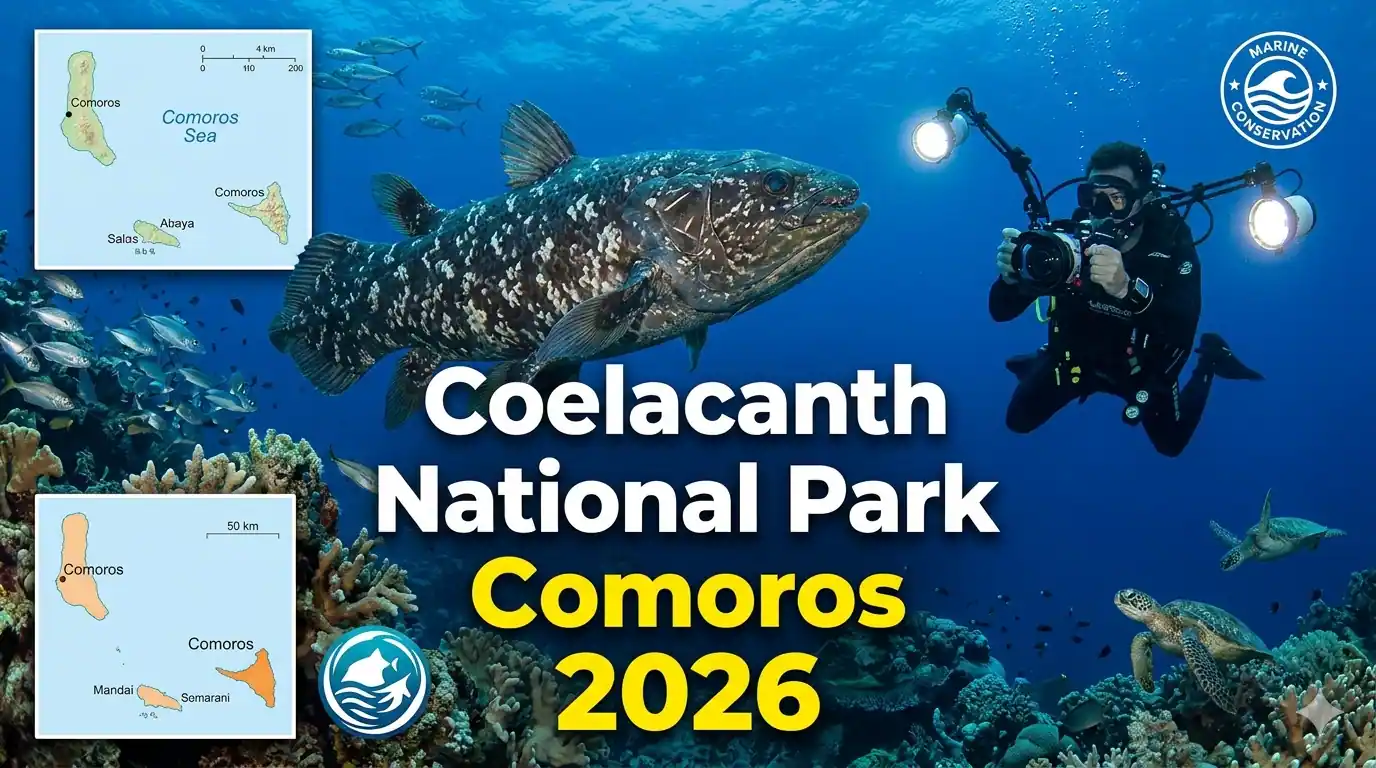
Introduction: The Living Fossil That Put Comoros on the Marine Conservation Map
In the deep, volcanic waters surrounding the Comoros archipelago swims one of the most remarkable creatures on Earth—the coelacanth, a "living fossil" that has remained virtually unchanged for over 400 million years . Thought to have gone extinct alongside the dinosaurs 66 million years ago, this prehistoric fish was miraculously rediscovered in 1938 off the coast of South Africa, and later found to have a significant population in the waters around Comoros, making this small island nation the global stronghold for one of Earth's most ancient species .
In 2026, the Comoros is taking a bold step forward in marine conservation with the establishment and promotion of the Coelacanth National Park (Parc National du Coelacanthe), a flagship marine protected area that not only safeguards this extraordinary species but also protects the rich biodiversity of the surrounding waters, including coral reefs, deep-sea habitats, and countless other marine species that call these volcanic islands home .
This comprehensive guide explores why 2026 marks a pivotal year for the Coelacanth National Park, what makes this marine protected area so significant, how visitors can responsibly experience this unique ecosystem, and why protecting the coelacanth is about much more than preserving a single species—it's about safeguarding an entire marine ecosystem and honoring our planet's evolutionary heritage.
The Coelacanth: Earth's Living Fossil

Understanding the coelacanth is essential to appreciating the significance of the national park dedicated to its protection.
What Is a Coelacanth?
Ancient Lineage:
- Age: Coelacanths have existed for over 400 million years
- Extinction Myth: Believed extinct for 66 million years (since dinosaur extinction)
- Rediscovery: First modern specimen caught in 1938 off South Africa
- Comoros Discovery: Second population found in Comoros waters in 1952
- Scientific Name: Latimeria chalumnae (West Indian Ocean coelacanth)
- 👉 Liberia-EU Business Forum 2026: Investment Opportunities in the ARREST Agenda
- 👉 DRC eVisa 2026: Step-by-Step Digital Visa Application Guide
- 👉 Angola as Host Country of ITB Berlin 2026: What this means for global travelers.
Physical Characteristics:
- Size: Can grow up to 2 meters (6.5 feet) in length
- Weight: Typically 80-90 kg (176-198 lbs)
- Appearance: Blue-gray coloration with white spots
- Distinctive Features: Lobed fins with bone structure similar to limbs
- Lifespan: Can live 60+ years
- Habitat: Deep volcanic waters (150-700 meters depth)
- 👉 Liberia-EU Business Forum 2026: Investment Opportunities in the ARREST Agenda
- 👉 DRC eVisa 2026: Step-by-Step Digital Visa Application Guide
- 👉 Angola as Host Country of ITB Berlin 2026: What this means for global travelers.
Why Comoros Is Critical for Coelacanth Survival
Global Population Center:
- Comoros waters host one of the world's largest known coelacanth populations
- Estimated 200-300 individuals in Comoros exclusive economic zone
- Deep volcanic slopes provide ideal habitat
- Stable population compared to other locations
- Critical genetic diversity reservoir
- 👉 Liberia-EU Business Forum 2026: Investment Opportunities in the ARREST Agenda
- 👉 DRC eVisa 2026: Step-by-Step Digital Visa Application Guide
- 👉 Angola as Host Country of ITB Berlin 2026: What this means for global travelers.
Unique Habitat:
- Volcanic underwater caves and crevices
- Deep-water trenches and drop-offs
- Cool, oxygen-rich waters
- Minimal human disturbance at depth
- Natural protection from surface activities
- 👉 Liberia-EU Business Forum 2026: Investment Opportunities in the ARREST Agenda
- 👉 DRC eVisa 2026: Step-by-Step Digital Visa Application Guide
- 👉 Angola as Host Country of ITB Berlin 2026: What this means for global travelers.
The Coelacanth National Park: Scope and Significance

The establishment of the Coelacanth National Park represents a major conservation milestone for Comoros and global marine protection efforts.
Park Boundaries and Coverage
Protected Area:
- Location: Primarily around Grande Comore (Ngazidja) island
- Marine Area: Approximately 43,000 hectares (430 km²)
- Depth Range: Surface to 1,000+ meters
- Key Zones: Deep volcanic slopes, coral reefs, seamounts
- Coastal Coverage: Western and northern coasts of Grande Comore
- 👉 Liberia-EU Business Forum 2026: Investment Opportunities in the ARREST Agenda
- 👉 DRC eVisa 2026: Step-by-Step Digital Visa Application Guide
- 👉 Angola as Host Country of ITB Berlin 2026: What this means for global travelers.
Protection Levels:
- No-Take Zones: Strict protection for coelacanth habitat
- Limited Fishing Zones: Sustainable artisanal fishing allowed
- Research Zones: Scientific study permitted with permits
- Tourism Zones: Controlled diving and observation
- Buffer Zones: Transitional areas with regulated activities
- 👉 Liberia-EU Business Forum 2026: Investment Opportunities in the ARREST Agenda
- 👉 DRC eVisa 2026: Step-by-Step Digital Visa Application Guide
- 👉 Angola as Host Country of ITB Berlin 2026: What this means for global travelers.
Why 2026 Is Pivotal
Conservation Milestones:
- Full operational status of national park management
- Enhanced protection measures implemented
- International recognition and support secured
- Research programs expanded
- Community engagement initiatives launched
- Sustainable tourism framework established
- 👉 Liberia-EU Business Forum 2026: Investment Opportunities in the ARREST Agenda
- 👉 DRC eVisa 2026: Step-by-Step Digital Visa Application Guide
- 👉 Angola as Host Country of ITB Berlin 2026: What this means for global travelers.
Global Significance:
- Model for deep-sea marine protected areas
- International collaboration on coelacanth research
- UNESCO World Heritage potential
- Climate change resilience demonstration
- Biodiversity conservation flagship
- 👉 Liberia-EU Business Forum 2026: Investment Opportunities in the ARREST Agenda
- 👉 DRC eVisa 2026: Step-by-Step Digital Visa Application Guide
- 👉 Angola as Host Country of ITB Berlin 2026: What this means for global travelers.
Biodiversity Beyond the Coelacanth

While the coelacanth is the flagship species, the national park protects an incredibly rich marine ecosystem.
Coral Reef Ecosystems
Reef Diversity:
- Coral Species: Over 150 species of hard and soft corals
- Reef Types: Fringing reefs, barrier reefs, patch reefs
- Health Status: Relatively healthy compared to regional averages
- Threats: Climate change, ocean acidification, local pressures
- Conservation: Active reef monitoring and restoration
- 👉 Liberia-EU Business Forum 2026: Investment Opportunities in the ARREST Agenda
- 👉 DRC eVisa 2026: Step-by-Step Digital Visa Application Guide
- 👉 Angola as Host Country of ITB Berlin 2026: What this means for global travelers.
Reef-Associated Species:
- Fish: Over 1,000 species of reef fish
- Invertebrates: Lobsters, crabs, sea urchins, starfish
- Mollusks: Giant clams, colorful nudibranchs, octopus
- Sharks and Rays: Reef sharks, eagle rays, manta rays
- Sea Turtles: Green turtles, hawksbill turtles nesting sites
- 👉 Liberia-EU Business Forum 2026: Investment Opportunities in the ARREST Agenda
- 👉 DRC eVisa 2026: Step-by-Step Digital Visa Application Guide
- 👉 Angola as Host Country of ITB Berlin 2026: What this means for global travelers.
Deep-Sea Habitats
Volcanic Slopes and Trenches:
- Steep underwater volcanic slopes (150-1,000m depth)
- Underwater caves and crevices
- Cold-water coral communities
- Deep-sea fish species
- Unique geological formations
- Hydrothermal vent systems (potential)
- 👉 Liberia-EU Business Forum 2026: Investment Opportunities in the ARREST Agenda
- 👉 DRC eVisa 2026: Step-by-Step Digital Visa Application Guide
- 👉 Angola as Host Country of ITB Berlin 2026: What this means for global travelers.
Deep-Sea Species:
- Coelacanths (flagship species)
- Deep-sea sharks and rays
- Bioluminescent organisms
- Rare deep-water fish species
- Sponge and coral communities
- Endemic species found nowhere else
- 👉 Liberia-EU Business Forum 2026: Investment Opportunities in the ARREST Agenda
- 👉 DRC eVisa 2026: Step-by-Step Digital Visa Application Guide
- 👉 Angola as Host Country of ITB Berlin 2026: What this means for global travelers.
Coastal and Mangrove Ecosystems
Mangrove Forests:
- Critical nursery habitats for juvenile fish
- Coastal protection from storms
- Carbon sequestration
- Traditional fishing grounds
- Bird nesting sites
- Water quality filtration
- 👉 Liberia-EU Business Forum 2026: Investment Opportunities in the ARREST Agenda
- 👉 DRC eVisa 2026: Step-by-Step Digital Visa Application Guide
- 👉 Angola as Host Country of ITB Berlin 2026: What this means for global travelers.
Conservation Efforts and Research

The Coelacanth National Park is supported by extensive conservation programs and scientific research.
Coelacanth Research Programs
Population Monitoring:
- Underwater submersible surveys
- ROV (Remotely Operated Vehicle) exploration
- Acoustic tagging and tracking
- Population census and genetics studies
- Behavioral observation programs
- Habitat mapping initiatives
- 👉 Liberia-EU Business Forum 2026: Investment Opportunities in the ARREST Agenda
- 👉 DRC eVisa 2026: Step-by-Step Digital Visa Application Guide
- 👉 Angola as Host Country of ITB Berlin 2026: What this means for global travelers.
International Collaboration:
- Partnership with Japanese coelacanth research institutes
- French marine research organizations
- South African coelacanth conservation groups
- UNESCO marine science programs
- Regional Indian Ocean cooperation
- University research partnerships
- 👉 Liberia-EU Business Forum 2026: Investment Opportunities in the ARREST Agenda
- 👉 DRC eVisa 2026: Step-by-Step Digital Visa Application Guide
- 👉 Angola as Host Country of ITB Berlin 2026: What this means for global travelers.
Protection Measures
Enforcement:
- Marine park rangers and patrols
- Monitoring of fishing activities
- Surveillance of protected zones
- Penalties for illegal fishing
- Community-based surveillance
- International support for enforcement
- 👉 Liberia-EU Business Forum 2026: Investment Opportunities in the ARREST Agenda
- 👉 DRC eVisa 2026: Step-by-Step Digital Visa Application Guide
- 👉 Angola as Host Country of ITB Berlin 2026: What this means for global travelers.
Threat Mitigation:
- Bycatch reduction programs
- Deep-sea fishing restrictions
- Pollution control measures
- Climate change adaptation strategies
- Habitat restoration projects
- Sustainable tourism guidelines
- 👉 Liberia-EU Business Forum 2026: Investment Opportunities in the ARREST Agenda
- 👉 DRC eVisa 2026: Step-by-Step Digital Visa Application Guide
- 👉 Angola as Host Country of ITB Berlin 2026: What this means for global travelers.
Visiting the Coelacanth National Park

For responsible travelers, the park offers unique opportunities to experience this remarkable marine environment.
Can You See a Coelacanth?
The Reality:
- Extremely Rare: Coelacanths live at 150-700m depth
- No Recreational Diving: Far beyond recreational diving limits
- Research Only: Only scientists with submersibles can observe them
- Protected Status: Strictly protected; no disturbance allowed
- Alternative: Visit the coelacanth museum and learning center
- 👉 Liberia-EU Business Forum 2026: Investment Opportunities in the ARREST Agenda
- 👉 DRC eVisa 2026: Step-by-Step Digital Visa Application Guide
- 👉 Angola as Host Country of ITB Berlin 2026: What this means for global travelers.
Where to Learn About Coelacanths:
- Musée de la Coelacanthe: Coelacanth museum in Moroni
- Research Center: Educational facilities and exhibits
- Guided Talks: Presentations by marine biologists
- Documentary Screenings: Films about coelacanth research
- Interactive Displays: Models and educational materials
- 👉 Liberia-EU Business Forum 2026: Investment Opportunities in the ARREST Agenda
- 👉 DRC eVisa 2026: Step-by-Step Digital Visa Application Guide
- 👉 Angola as Host Country of ITB Berlin 2026: What this means for global travelers.
Responsible Marine Tourism
What Visitors CAN Do:
- Reef Diving: Explore shallow coral reefs (10-40m depth)
- Snorkeling: Shallow reef and coastal areas
- Whale Watching: Seasonal humpback whale watching (July-October)
- Coastal Tours: Mangrove and coastal ecosystem tours
- Educational Programs: Marine conservation workshops
- Beach Activities: Turtle nesting site visits (with guides)
- 👉 Liberia-EU Business Forum 2026: Investment Opportunities in the ARREST Agenda
- 👉 DRC eVisa 2026: Step-by-Step Digital Visa Application Guide
- 👉 Angola as Host Country of ITB Berlin 2026: What this means for global travelers.
Diving and Snorkeling Guidelines:
- Use certified, eco-friendly dive operators
- Never touch or stand on coral
- Maintain safe distance from marine life
- Use reef-safe sunscreen
- Follow all park regulations
- Report any illegal activities observed
- 👉 Liberia-EU Business Forum 2026: Investment Opportunities in the ARREST Agenda
- 👉 DRC eVisa 2026: Step-by-Step Digital Visa Application Guide
- 👉 Angola as Host Country of ITB Berlin 2026: What this means for global travelers.
Best Time to Visit
Optimal Seasons:
- Dry Season (May-October): Best visibility for diving
- Whale Season (July-October): Humpback whale watching
- Turtle Nesting (November-March): Sea turtle nesting season
- Year-Round: Coelacanth museum and educational facilities
- Avoid: Cyclone season (January-March) for safety
- 👉 Liberia-EU Business Forum 2026: Investment Opportunities in the ARREST Agenda
- 👉 DRC eVisa 2026: Step-by-Step Digital Visa Application Guide
- 👉 Angola as Host Country of ITB Berlin 2026: What this means for global travelers.
Community Involvement and Sustainable Development

The success of the Coelacanth National Park depends on local community support and participation.
Local Community Benefits
Economic Opportunities:
- Sustainable fishing zones for local communities
- Eco-tourism employment (guides, boat operators, hospitality)
- Marine park ranger positions
- Handicraft and souvenir sales to tourists
- Research support jobs
- Education and training programs
- 👉 Liberia-EU Business Forum 2026: Investment Opportunities in the ARREST Agenda
- 👉 DRC eVisa 2026: Step-by-Step Digital Visa Application Guide
- 👉 Angola as Host Country of ITB Berlin 2026: What this means for global travelers.
Cultural Preservation:
- Traditional fishing practices respected
- Local knowledge integrated into management
- Cultural sites protected within park
- Traditional ecological knowledge valued
- Community decision-making involvement
- Cultural education programs
- 👉 Liberia-EU Business Forum 2026: Investment Opportunities in the ARREST Agenda
- 👉 DRC eVisa 2026: Step-by-Step Digital Visa Application Guide
- 👉 Angola as Host Country of ITB Berlin 2026: What this means for global travelers.
Sustainable Fishing Practices
Artisanal Fishing Zones:
- Designated areas for traditional fishing
- Sustainable gear requirements
- Seasonal closures to protect spawning
- Size limits for target species
- No-take zones for recovery
- Community-based management
- 👉 Liberia-EU Business Forum 2026: Investment Opportunities in the ARREST Agenda
- 👉 DRC eVisa 2026: Step-by-Step Digital Visa Application Guide
- 👉 Angola as Host Country of ITB Berlin 2026: What this means for global travelers.
Climate Change and the Future of the Park

The Coelacanth National Park faces both challenges and opportunities in the face of climate change.
Climate Threats
Ocean Warming:
- Coral bleaching events
- Species distribution changes
- Altered ocean currents
- Impact on deep-water habitats
- Potential coelacanth habitat shifts
- Ecosystem disruption
- 👉 Liberia-EU Business Forum 2026: Investment Opportunities in the ARREST Agenda
- 👉 DRC eVisa 2026: Step-by-Step Digital Visa Application Guide
- 👉 Angola as Host Country of ITB Berlin 2026: What this means for global travelers.
Ocean Acidification:
- Coral reef degradation
- Shell-forming organism impacts
- Food web disruptions
- Habitat quality decline
- Biodiversity loss risks
- Ecosystem resilience challenges
- 👉 Liberia-EU Business Forum 2026: Investment Opportunities in the ARREST Agenda
- 👉 DRC eVisa 2026: Step-by-Step Digital Visa Application Guide
- 👉 Angola as Host Country of ITB Berlin 2026: What this means for global travelers.
Conservation Adaptation
Resilience Strategies:
- Protecting climate refugia areas
- Enhancing ecosystem connectivity
- Reducing local stressors (pollution, overfishing)
- Monitoring climate impacts
- Adaptive management approaches
- International climate action advocacy
- 👉 Liberia-EU Business Forum 2026: Investment Opportunities in the ARREST Agenda
- 👉 DRC eVisa 2026: Step-by-Step Digital Visa Application Guide
- 👉 Angola as Host Country of ITB Berlin 2026: What this means for global travelers.
How to Support Coelacanth Conservation

Visitors and supporters can contribute to the park's success in meaningful ways.
Responsible Tourism Practices
Before You Go:
- Choose eco-certified tour operators
- Learn about park rules and regulations
- Pack reef-safe sunscreen and biodegradable products
- Bring reusable water bottles and bags
- Educate yourself about coelacanths and marine conservation
- Support conservation organizations financially
- 👉 Liberia-EU Business Forum 2026: Investment Opportunities in the ARREST Agenda
- 👉 DRC eVisa 2026: Step-by-Step Digital Visa Application Guide
- 👉 Angola as Host Country of ITB Berlin 2026: What this means for global travelers.
While Visiting:
- Follow all park regulations strictly
- Never touch or disturb marine life
- Don't remove anything from the ocean
- Use mooring buoys instead of anchoring on coral
- Report illegal activities to authorities
- Support local conservation initiatives
- Share responsible practices with other visitors
- 👉 Liberia-EU Business Forum 2026: Investment Opportunities in the ARREST Agenda
- 👉 DRC eVisa 2026: Step-by-Step Digital Visa Application Guide
- 👉 Angola as Host Country of ITB Berlin 2026: What this means for global travelers.
Conservation Organizations
Support These Groups:
- Comoros National Park Authority
- Coelacanth Conservation Council
- Local Comoros marine conservation NGOs
- International coelacanth research institutes
- Regional Indian Ocean conservation networks
- Global marine protection organizations
- 👉 Liberia-EU Business Forum 2026: Investment Opportunities in the ARREST Agenda
- 👉 DRC eVisa 2026: Step-by-Step Digital Visa Application Guide
- 👉 Angola as Host Country of ITB Berlin 2026: What this means for global travelers.
The Global Significance of Coelacanth Conservation

Protecting the coelacanth in Comoros has implications far beyond the islands themselves.
Scientific Importance
Evolutionary Insights:
- Understanding vertebrate evolution
- Insights into fish-to-tetrapod transition
- Ancient genetic information preservation
- Comparative biology studies
- Adaptation to deep-sea environments
- Long-term species survival strategies
- 👉 Liberia-EU Business Forum 2026: Investment Opportunities in the ARREST Agenda
- 👉 DRC eVisa 2026: Step-by-Step Digital Visa Application Guide
- 👉 Angola as Host Country of ITB Berlin 2026: What this means for global travelers.
Conservation Science:
- Model for deep-sea protected areas
- Endangered species management
- Community-based conservation approaches
- International cooperation frameworks
- Sustainable tourism in sensitive areas
- Climate change adaptation strategies
- 👉 Liberia-EU Business Forum 2026: Investment Opportunities in the ARREST Agenda
- 👉 DRC eVisa 2026: Step-by-Step Digital Visa Application Guide
- 👉 Angola as Host Country of ITB Berlin 2026: What this means for global travelers.
Conclusion: A Living Legacy for Future Generations
The Coelacanth National Park in Comoros represents far more than just a protected area for a single species—it's a testament to humanity's commitment to preserving our planet's extraordinary biodiversity and evolutionary heritage. As we move through 2026, this flagship marine protected area stands as a beacon of hope, demonstrating that even the rarest and most vulnerable species can be protected through dedicated conservation efforts, community involvement, and international cooperation.
The coelacanth, having survived mass extinctions and witnessed the rise and fall of countless species over 400 million years, now depends on us for its continued survival. By establishing and supporting the Coelacanth National Park, Comoros is not just protecting a fish—it's safeguarding an entire marine ecosystem, supporting local communities, advancing scientific knowledge, and preserving a living link to our planet's distant past for future generations to discover and appreciate.
For visitors, the park offers a unique opportunity to witness the beauty and diversity of Comoros' marine environment, to learn about one of Earth's most remarkable creatures, and to participate in responsible, sustainable tourism that supports conservation rather than undermines it. Whether you're diving on vibrant coral reefs, learning about coelacanths at the museum, or simply enjoying the pristine beaches, your visit can contribute to the ongoing protection of this remarkable place.
As 2026 unfolds, the Coelacanth National Park stands ready to welcome responsible visitors, support local communities, advance scientific research, and continue its vital mission of protecting one of Earth's most extraordinary living fossils. The coelacanth has survived for 400 million years—let's ensure it survives for 400 million more.
For more information about visiting the Coelacanth National Park responsibly, supporting conservation efforts, or learning about coelacanth research, contact the Comoros National Park Authority or visit official conservation organization websites.
0 Comments