.webp)
.webp)
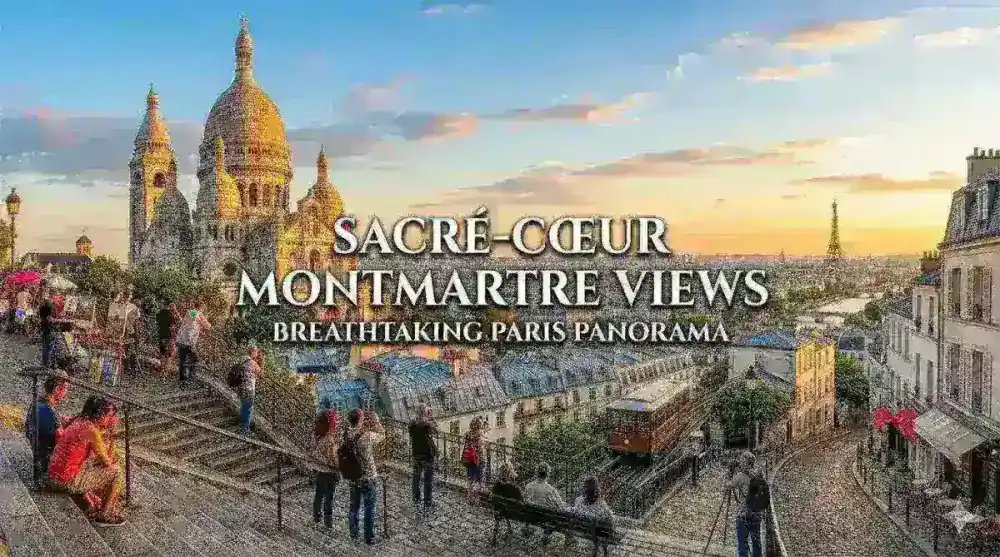
Introduction: Paris from Above – The Magic of Sacré-Cœur
Perched atop the highest point in Paris, the Sacré-Cœur Basilica stands as a luminous beacon overlooking the City of Light. This stunning Romano-Byzantine masterpiece, with its gleaming white travertine domes and commanding position on Montmartre Hill, offers visitors one of the most breathtaking panoramic views in all of Europe. From its sweeping steps and elevated terrace, Paris unfolds like a living painting: the Eiffel Tower piercing the skyline, the Seine winding gracefully through the city, Haussmannian rooftops stretching to the horizon, and on clear days, the distant silhouette of La Défense's modern towers.
But Sacré-Cœur is more than just a viewpoint. It is a place of profound spiritual significance, architectural splendor, and artistic heritage. Built in the late 19th century as a symbol of hope and renewal following the turmoil of the Franco-Prussian War and the Paris Commune, the basilica has welcomed millions of pilgrims and travelers seeking both spiritual solace and spectacular vistas. Its location in Montmartre – historically the artistic heart of Paris, home to Picasso, Van Gogh, and countless other creative souls – adds layers of cultural richness to every visit.
For photographers, dreamers, romantics, and anyone who has ever longed to see Paris from a new perspective, Sacré-Cœur delivers an unforgettable experience. Whether you arrive at sunrise to witness the city awakening in golden light, at sunset to watch the Eiffel Tower sparkle against a twilight sky, or under a blanket of stars to see Paris illuminated like a jewel box, the views from Montmartre Hill never fail to captivate.
This comprehensive guide explores everything you need to know about experiencing the breathtaking views from Sacré-Cœur Basilica: the history and architecture of this extraordinary landmark, the best viewpoints and photography spots, optimal timing for light and crowds, practical visiting information, and the surrounding Montmartre attractions that make a visit to Sacré-Cœur part of an unforgettable Parisian journey.
The Basilica: History, Architecture, and Significance

Understanding the Sacré-Cœur Basilica enriches the experience of visiting it. This is not merely a pretty building with a nice view – it is a monument steeped in history, crafted with extraordinary artistry, and imbued with spiritual meaning.
Historical Context
The idea for Sacré-Cœur emerged in the aftermath of France's devastating defeat in the Franco-Prussian War (1870-1871) and the bloody suppression of the Paris Commune in 1871. In a nation grappling with trauma and uncertainty, Catholic leaders proposed building a basilica dedicated to the Sacred Heart of Jesus as a symbol of moral renewal and national hope.
The site chosen was Montmartre Hill – historically significant as the place where Saint Denis, Paris's patron saint, was martyred in the 3rd century. The hill's elevated position offered both symbolic prominence and practical visibility across the city.
Construction began in 1875 and continued for over four decades, with the basilica finally consecrated in 1919, following the end of World War I. The prolonged construction period meant the basilica witnessed some of France's most tumultuous historical moments, adding layers of meaning to its presence.
Architectural Mastery
Designed by architect Paul Abadie, Sacré-Cœur represents a unique blend of Romano-Byzantine and Romanesque architectural styles – a deliberate departure from the Gothic traditions that dominate Parisian religious architecture.
Key architectural features include:
- White Travertine Stone: The basilica's luminous white exterior comes from Château-Landon travertine, a stone that exudes calcite when wet, naturally bleaching and protecting the building while creating its distinctive glowing appearance
- Grand Dome: Rising 83 meters (272 feet) high, the central dome is visible from across Paris and offers an additional viewing platform for those willing to climb its 300 steps
- Bell Tower and Savoyarde: The campanile houses "La Savoyarde," one of the world's heaviest bells, weighing 19 tons and audible across Paris
- Byzantine Mosaics: The interior features one of the world's largest mosaics, "Christ in Majesty," covering 475 square meters in the apse
- Ornate Details: Intricate carvings, stained glass windows, and decorative elements showcase exceptional craftsmanship
- 👉 Guide Traditional Sevdalinka Music History Live Performances 2026
- 👉 10-Day North Macedonia Itinerary: Lakes, Mountains & Ancient Cities
- 👉 Entry Requirements for Global Travelers New 2026 Digital Nomad Visa Options
Spiritual Significance
As an active place of worship, Sacré-Cœur maintains a continuous cycle of prayer and adoration. The basilica welcomes visitors of all faiths and backgrounds, offering a space for reflection, contemplation, and spiritual connection. The perpetual adoration of the Blessed Sacrament, ongoing since 1885, adds a profound dimension to the visitor experience.
Understanding this spiritual context enhances appreciation of the basilica: it is not merely a tourist attraction but a living sanctuary where faith, history, and art converge.
The View: What You'll See from Sacré-Cœur

The panoramic vista from Sacré-Cœur is the primary draw for many visitors, and it does not disappoint. From the basilica's terrace and steps, Paris reveals itself in all its glory.
Iconic Landmarks Visible
On a clear day, the view encompasses many of Paris's most famous landmarks:
- Eiffel Tower: Standing prominently to the southwest, the iron lady dominates the skyline and is particularly magical at sunset or when illuminated at night
- Tour Montparnasse: The distinctive black skyscraper stands out among Paris's predominantly low-rise architecture
- La Défense: On exceptionally clear days, the modern business district's skyscrapers appear on the western horizon
- Panthéon and Latin Quarter: To the southeast, the dome of the Panthéon and the historic Latin Quarter are visible
- Notre-Dame: Though partially obscured by other buildings, the iconic cathedral's towers can be spotted with careful observation
- Opéra Garnier: The ornate opera house is visible in the mid-distance
- 👉 Guide Traditional Sevdalinka Music History Live Performances 2026
- 👉 10-Day North Macedonia Itinerary: Lakes, Mountains & Ancient Cities
- 👉 Entry Requirements for Global Travelers New 2026 Digital Nomad Visa Options
The Parisian Tapestry
Beyond individual landmarks, the view offers something equally captivating: the quintessential Parisian cityscape. From Montmartre Hill, you see:
- Haussmannian Rooftops: The uniform gray zinc rooftops and cream-colored limestone facades that define Paris's architectural character
- The Seine: The river winds gracefully through the city, its bridges and embankments creating elegant lines across the urban landscape
- Green Spaces: Parks like the Tuileries, Luxembourg Gardens, and Bois de Boulogne appear as emerald patches amid the urban fabric
- Neighborhood Diversity: The distinct characters of different arrondissements – from the artistic flair of Montmartre to the elegance of the 7th and 16th arrondissements
- 👉 Guide Traditional Sevdalinka Music History Live Performances 2026
- 👉 10-Day North Macedonia Itinerary: Lakes, Mountains & Ancient Cities
- 👉 Entry Requirements for Global Travelers New 2026 Digital Nomad Visa Options
Atmospheric Magic
The view from Sacré-Cœur changes dramatically with light and weather, offering different experiences throughout the day:
Sunrise: Early morning brings soft golden light, minimal crowds, and the magical sight of Paris awakening. Mist often lingers in the valleys between hills, creating an ethereal atmosphere.
Midday: Bright, clear light reveals maximum detail and vibrant colors. Ideal for photography with sharp contrasts and deep blue skies.
Sunset: The "golden hour" bathes Paris in warm amber light. The Eiffel Tower begins to sparkle on the hour, creating a quintessentially romantic Parisian moment.
Blue Hour and Night: After sunset, Paris transforms into a sea of twinkling lights. The Eiffel Tower's hourly sparkle, illuminated monuments, and the glow of streetlights create a magical nocturnal panorama.
Seasonal Variations
Each season offers unique viewing conditions:
- Spring: Blossoming trees add soft greens and pinks to the landscape; mild temperatures and longer days
- Summer: Longest daylight hours, vibrant atmosphere, but larger crowds
- Autumn: Golden foliage, dramatic skies, and comfortable temperatures
- Winter: Crisp air often provides exceptional clarity; occasional snow creates a fairy-tale scene
- 👉 Guide Traditional Sevdalinka Music History Live Performances 2026
- 👉 10-Day North Macedonia Itinerary: Lakes, Mountains & Ancient Cities
- 👉 Entry Requirements for Global Travelers New 2026 Digital Nomad Visa Options
Best Viewpoints: Where to Capture the Perfect Shot

While the entire terrace offers spectacular views, certain spots provide optimal perspectives for photography and contemplation.
The Grand Staircase
The sweeping stone steps leading up to the basilica offer one of the most iconic viewpoints in Paris.
Why it's special: The elevated position provides an unobstructed panoramic view; the steps themselves create leading lines for composition; the bustling atmosphere adds life to photos.
Best for: Wide-angle cityscape shots, sunset photography, people-watching, romantic moments.
Photography tips: Arrive early to secure a spot on the steps; use a tripod for stability during golden hour; include the basilica's facade in foreground for context.
The Terrace Parvis
The wide plaza directly in front of the basilica offers 180-degree views with the basilica's facade as a dramatic backdrop.
Why it's special: Elevated position with railings for safety; space to move and find different angles; the basilica's architecture frames the view beautifully.
Best for: Architectural photography combining basilica and cityscape; portrait photography with Paris as backdrop; panoramic shots.
Photography tips: Shoot during golden hour for warm light on the white stone; use the basilica's columns and arches as natural frames; experiment with different focal lengths.
The Dome Climb
For the ultimate view, climb the 300 steps to the top of the basilica's dome.
Why it's special: The highest publicly accessible viewpoint in central Paris; 360-degree panoramic views; intimate perspective on the basilica's architecture.
Best for: Dedicated photographers; those seeking the most comprehensive Paris panorama; adventurous visitors.
Photography tips: Bring a wide-angle lens for interior dome shots and telephoto for distant landmarks; be prepared for narrow staircases; allow extra time for the climb.
Side Terraces and Gardens
Less crowded spots along the basilica's sides and in the adjacent Square Louise Michel offer alternative perspectives.
Why it's special: Fewer crowds for peaceful contemplation; unique angles of the basilica and city; access to green space.
Best for: Quiet reflection; intimate photography; avoiding crowds while still enjoying the view.
Photography tips: Explore different vantage points around the basilica's perimeter; use foliage as natural framing; capture the contrast between nature and architecture.
Timing Your Visit: Light, Crowds, and Magic

When you visit Sacré-Cœur dramatically affects your experience. Strategic timing can transform a good visit into an extraordinary one.
Best Times of Day
Sunrise (Approximately 6-8 AM, Seasonal):
- Advantages: Minimal crowds, soft golden light, peaceful atmosphere, Paris awakening
- Considerations: Early wake-up required; some services may not yet be open
- Best for: Photographers, romantics, those seeking tranquility
- 👉 Guide Traditional Sevdalinka Music History Live Performances 2026
- 👉 10-Day North Macedonia Itinerary: Lakes, Mountains & Ancient Cities
- 👉 Entry Requirements for Global Travelers New 2026 Digital Nomad Visa Options
Mid-Morning (9-11 AM):
- Advantages: Good light, most facilities open, manageable crowds
- Considerations: Crowds begin to build; light can be harsh for photography
- Best for: General sightseeing, combining with Montmartre exploration
- 👉 Guide Traditional Sevdalinka Music History Live Performances 2026
- 👉 10-Day North Macedonia Itinerary: Lakes, Mountains & Ancient Cities
- 👉 Entry Requirements for Global Travelers New 2026 Digital Nomad Visa Options
Midday (11 AM-2 PM):
- Advantages: Maximum visibility, all services open
- Considerations: Peak crowds; harsh overhead light for photography
- Best for: Visitors prioritizing convenience over photography
- 👉 Guide Traditional Sevdalinka Music History Live Performances 2026
- 👉 10-Day North Macedonia Itinerary: Lakes, Mountains & Ancient Cities
- 👉 Entry Requirements for Global Travelers New 2026 Digital Nomad Visa Options
Late Afternoon (3-5 PM):
- Advantages: Warming light, crowds beginning to thin, golden hour approaching
- Considerations: Light still can be challenging for photography
- Best for: Balanced experience of views and atmosphere
- 👉 Guide Traditional Sevdalinka Music History Live Performances 2026
- 👉 10-Day North Macedonia Itinerary: Lakes, Mountains & Ancient Cities
- 👉 Entry Requirements for Global Travelers New 2026 Digital Nomad Visa Options
Sunset (Time Varies Seasonally):
- Advantages: Golden hour magic, romantic atmosphere, Eiffel Tower sparkle begins
- Considerations: Crowded; arrive early to secure good viewing spots
- Best for: Photographers, couples, those seeking quintessential Paris moments
- 👉 Guide Traditional Sevdalinka Music History Live Performances 2026
- 👉 10-Day North Macedonia Itinerary: Lakes, Mountains & Ancient Cities
- 👉 Entry Requirements for Global Travelers New 2026 Digital Nomad Visa Options
Evening/Night (After Sunset):
- Advantages: Illuminated Paris, fewer crowds, magical atmosphere
- Considerations: Cooler temperatures; limited services; ensure safe transportation
- Best for: Night photography, romantic evenings, unique perspectives
- 👉 Guide Traditional Sevdalinka Music History Live Performances 2026
- 👉 10-Day North Macedonia Itinerary: Lakes, Mountains & Ancient Cities
- 👉 Entry Requirements for Global Travelers New 2026 Digital Nomad Visa Options
Seasonal Considerations
Spring (April-June): Mild temperatures, blooming gardens, longer days. Ideal for extended exploration. Watch for occasional rain.
Summer (July-August): Warmest weather, longest days, peak tourist season. Expect large crowds but vibrant atmosphere. Book accommodations well in advance.
Autumn (September-November): Comfortable temperatures, beautiful foliage, fewer crowds than summer. Excellent for photography with dramatic skies.
Winter (December-March): Cooler temperatures, potential for snow, exceptional atmospheric clarity. Fewer crowds but shorter days. Dress warmly for extended outdoor viewing.
Special Events and Considerations
- Religious Services: The basilica hosts regular masses and special ceremonies; check schedule if you wish to attend or avoid
- Public Holidays: French holidays may affect opening hours and crowd levels
- Special Illuminations: The basilica and Paris landmarks have special lighting for holidays and events
- Weather Alerts: Check forecasts; fog or heavy rain can obscure views
- 👉 Guide Traditional Sevdalinka Music History Live Performances 2026
- 👉 10-Day North Macedonia Itinerary: Lakes, Mountains & Ancient Cities
- 👉 Entry Requirements for Global Travelers New 2026 Digital Nomad Visa Options
Practical Visitor Information

Planning your visit to Sacré-Cœur requires attention to practical details to ensure a smooth, enjoyable experience.
Getting There
By Metro:
- Line 12 to Abbesses station (exit to Rue Steinkerque, then climb or take funicular)
- Line 2 to Anvers station (then walk up or take funicular)
- Both routes involve uphill walking; the funicular is a convenient alternative
- 👉 Guide Traditional Sevdalinka Music History Live Performances 2026
- 👉 10-Day North Macedonia Itinerary: Lakes, Mountains & Ancient Cities
- 👉 Entry Requirements for Global Travelers New 2026 Digital Nomad Visa Options
By Funicular:
- The Montmartre funicular connects the base of the hill to the basilica
- Operates like a metro; regular metro tickets or Navigo passes accepted
- Wheelchair accessible; convenient for those with mobility concerns
- 👉 Guide Traditional Sevdalinka Music History Live Performances 2026
- 👉 10-Day North Macedonia Itinerary: Lakes, Mountains & Ancient Cities
- 👉 Entry Requirements for Global Travelers New 2026 Digital Nomad Visa Options
By Bus:
- Bus 30, 31, 54, 80, 85 serve the Montmartre area
- Bus 40 stops near the basilica
- 👉 Guide Traditional Sevdalinka Music History Live Performances 2026
- 👉 10-Day North Macedonia Itinerary: Lakes, Mountains & Ancient Cities
- 👉 Entry Requirements for Global Travelers New 2026 Digital Nomad Visa Options
By Car:
- Limited parking near the basilica; not recommended
- Nearest parking: Parking Montmartre or street parking (limited and regulated)
- 👉 Guide Traditional Sevdalinka Music History Live Performances 2026
- 👉 10-Day North Macedonia Itinerary: Lakes, Mountains & Ancient Cities
- 👉 Entry Requirements for Global Travelers New 2026 Digital Nomad Visa Options
Opening Hours and Admission
Basilica:
- Open daily: 6:00 AM - 10:30 PM
- Admission to basilica: Free
- Dress code: Shoulders and knees must be covered; no hats inside
- 👉 Guide Traditional Sevdalinka Music History Live Performances 2026
- 👉 10-Day North Macedonia Itinerary: Lakes, Mountains & Ancient Cities
- 👉 Entry Requirements for Global Travelers New 2026 Digital Nomad Visa Options
Dome Climb:
- Hours: Varies by season (typically 9:00 AM - 7:00 PM in summer, shorter in winter)
- Admission: Approximately €7 for adults, reduced rates for children and groups
- 300 steps to the top; no elevator
- 👉 Guide Traditional Sevdalinka Music History Live Performances 2026
- 👉 10-Day North Macedonia Itinerary: Lakes, Mountains & Ancient Cities
- 👉 Entry Requirements for Global Travelers New 2026 Digital Nomad Visa Options
Crypt:
- Hours: Same as basilica
- Admission: Included with dome ticket or small separate fee
- 👉 Guide Traditional Sevdalinka Music History Live Performances 2026
- 👉 10-Day North Macedonia Itinerary: Lakes, Mountains & Ancient Cities
- 👉 Entry Requirements for Global Travelers New 2026 Digital Nomad Visa Options
What to Bring
- Comfortable walking shoes: Cobblestone streets and hill climbing
- Weather-appropriate clothing: Layers for changing conditions; jacket for evenings
- Camera and accessories: Wide-angle lens recommended; tripod useful for low light
- Water and snacks: Especially if visiting during peak hours or extended exploration
- Cash: For dome tickets, donations, and small vendors
- Modest attire: Required for entering the basilica
- 👉 Guide Traditional Sevdalinka Music History Live Performances 2026
- 👉 10-Day North Macedonia Itinerary: Lakes, Mountains & Ancient Cities
- 👉 Entry Requirements for Global Travelers New 2026 Digital Nomad Visa Options
On-Site Facilities
- Restrooms: Available near the basilica entrance
- Gift shop: Religious items, souvenirs, guidebooks
- Information: Staff and volunteers available for questions
- Accessibility: Funicular and ramps available; dome climb not accessible
- 👉 Guide Traditional Sevdalinka Music History Live Performances 2026
- 👉 10-Day North Macedonia Itinerary: Lakes, Mountains & Ancient Cities
- 👉 Entry Requirements for Global Travelers New 2026 Digital Nomad Visa Options
Safety and Etiquette
- Pickpocket awareness: Crowded tourist areas attract pickpockets; secure valuables
- Respectful behavior: The basilica is an active place of worship; maintain quiet and reverence inside
- Photography rules: Photography permitted in most areas; flash and tripods may be restricted inside
- Street vendors: Be cautious of unofficial vendors; purchase from authorized sources
- 👉 Guide Traditional Sevdalinka Music History Live Performances 2026
- 👉 10-Day North Macedonia Itinerary: Lakes, Mountains & Ancient Cities
- 👉 Entry Requirements for Global Travelers New 2026 Digital Nomad Visa Options
Exploring Montmartre: Beyond the Basilica

A visit to Sacré-Cœur is most rewarding when combined with exploration of the surrounding Montmartre neighborhood, one of Paris's most charming and historically rich districts.
Place du Tertre
Just steps from the basilica, this charming square is the heart of Montmartre's artistic heritage.
What to expect: Artists painting portraits and landscapes, outdoor cafés, souvenir vendors, and a lively atmosphere.
Photography opportunities: Capture artists at work, the square's cobblestones and cafés, and the interplay of art and tourism.
Tip: Visit early morning or evening to avoid peak crowds; negotiate portrait prices in advance.
Rue des Martyrs and Montmartre Streets
Wander the charming cobblestone streets that define Montmartre's character.
Highlights: Boutique shops, traditional bakeries, historic buildings, and the neighborhood's village-like atmosphere.
Photography opportunities: Capture the quintessential Parisian streetscape, architectural details, and daily life.
Tip: Get lost intentionally; some of the best discoveries come from unplanned exploration.
Moulin Rouge
The world-famous cabaret at the foot of Montmartre Hill.
What to know: Iconic red windmill facade; shows require advance booking and significant expense.
Photography opportunities: The exterior is photogenic, especially at night when illuminated.
Tip: Photograph from across the street; respect performers and patrons.
Vineyard of Montmartre
Paris's last remaining vineyard, producing a small amount of wine annually.
What to expect: A charming, unexpected slice of rural France in the heart of Paris.
Photography opportunities: The vineyard against the urban backdrop creates striking juxtapositions.
Tip: Visit during the annual wine festival in October for special access.
Cimetière de Montmartre
The historic cemetery where many artists, writers, and musicians are buried.
Notable graves: Edgar Degas, François Truffaut, Dalida, and many others.
Photography opportunities: Atmospheric cemetery scenes, sculptural tombstones, and peaceful green space.
Tip: Obtain a map at the entrance to locate notable graves; maintain respectful silence.
Photography Masterclass: Capturing Sacré-Cœur and Paris

For photographers, Sacré-Cœur offers extraordinary opportunities. These technical and creative tips will help you capture stunning images.
Equipment Recommendations
Camera: DSLR or mirrorless with good low-light performance; smartphone cameras can also produce excellent results with proper technique.
Lenses:
- Wide-angle (16-35mm): Essential for capturing the basilica and panoramic cityscape
- Standard zoom (24-70mm): Versatile for general photography and details
- Telephoto (70-200mm): Compress distant landmarks like the Eiffel Tower
- 👉 Guide Traditional Sevdalinka Music History Live Performances 2026
- 👉 10-Day North Macedonia Itinerary: Lakes, Mountains & Ancient Cities
- 👉 Entry Requirements for Global Travelers New 2026 Digital Nomad Visa Options
Accessories:
- Tripod: Crucial for golden hour, blue hour, and night photography
- Polarizing filter: Reduce glare, enhance sky contrast
- Extra batteries and memory cards: Cold weather and extensive shooting drain power
- Lens cleaning kit: Humidity and urban environment can fog lenses
- 👉 Guide Traditional Sevdalinka Music History Live Performances 2026
- 👉 10-Day North Macedonia Itinerary: Lakes, Mountains & Ancient Cities
- 👉 Entry Requirements for Global Travelers New 2026 Digital Nomad Visa Options
Camera Settings
For Panoramic Cityscapes:
- Mode: Aperture Priority (A/Av) or Manual
- Aperture: f/8-f/11 for sharpness throughout the frame
- ISO: 100-400 for best quality
- Shutter speed: Adjust for proper exposure; use tripod for slower speeds
- Focus: Single-point AF, focus approximately 1/3 into the scene
- 👉 Guide Traditional Sevdalinka Music History Live Performances 2026
- 👉 10-Day North Macedonia Itinerary: Lakes, Mountains & Ancient Cities
- 👉 Entry Requirements for Global Travelers New 2026 Digital Nomad Visa Options
For Golden Hour and Sunset:
- Mode: Manual for precise control
- Aperture: f/8-f/11
- ISO: 100-800 depending on light
- Shutter speed: Varies; use tripod for stability
- White balance: Daylight or cloudy to enhance warm tones
- Bracketing: Shoot multiple exposures for HDR blending
- 👉 Guide Traditional Sevdalinka Music History Live Performances 2026
- 👉 10-Day North Macedonia Itinerary: Lakes, Mountains & Ancient Cities
- 👉 Entry Requirements for Global Travelers New 2026 Digital Nomad Visa Options
For Night Photography:
- Mode: Manual
- Aperture: f/2.8-f/5.6 depending on lens
- ISO: 800-3200 to balance noise and shutter speed
- Shutter speed: Several seconds to minutes; tripod essential
- Remote release: Prevent camera shake during long exposures
- Focus: Manual focus on distant lights or use live view magnification
- 👉 Guide Traditional Sevdalinka Music History Live Performances 2026
- 👉 10-Day North Macedonia Itinerary: Lakes, Mountains & Ancient Cities
- 👉 Entry Requirements for Global Travelers New 2026 Digital Nomad Visa Options
Composition Techniques
Include Foreground Interest: Use the basilica's architecture, steps, or visitors to add depth and context to cityscape shots.
Leading Lines: The basilica's steps, railings, and architectural elements create natural lines that guide the viewer's eye through the frame.
Rule of Thirds: Position the horizon and key landmarks along the rule-of-thirds grid for balanced, dynamic compositions.
Layering: Incorporate foreground (basilica), midground (Paris rooftops), and background (distant landmarks) to create depth.
Human Element: Include people to add scale, life, and narrative to your images.
Post-Processing Tips
- Exposure blending: Combine bracketed shots for high dynamic range scenes
- Color grading: Enhance golden hour warmth or create moody blue hour tones
- Sharpening: Apply selectively to architectural details
- Cropping: Refine composition and remove distractions
- Perspective correction: Adjust vertical lines for architectural accuracy
- 👉 Guide Traditional Sevdalinka Music History Live Performances 2026
- 👉 10-Day North Macedonia Itinerary: Lakes, Mountains & Ancient Cities
- 👉 Entry Requirements for Global Travelers New 2026 Digital Nomad Visa Options
Conclusion: A View That Captivates the Soul

The view from Sacré-Cœur Basilica is more than a panorama; it is an experience that captures the essence of Paris. From this elevated perch, the City of Light reveals itself in all its romantic splendor: a tapestry of history, art, architecture, and human endeavor stretching to the horizon.
Whether you come for the spiritual significance of the basilica, the artistic heritage of Montmartre, the photographic opportunities, or simply the joy of seeing Paris from a new perspective, Sacré-Cœur delivers something unforgettable. The gleaming white domes against a Parisian sky, the sweep of the city below, the interplay of light and shadow across rooftops and monuments – these are images that stay with you long after you've descended the hill.
As you plan your visit, remember that timing, preparation, and an open heart will enhance your experience. Arrive early to beat crowds, stay late to witness Paris illuminated, wander the surrounding streets to discover Montmartre's charm, and take time simply to look, to feel, to be present in this extraordinary place.
The Sacré-Cœur Basilica has watched over Paris for over a century, welcoming generations of pilgrims, artists, dreamers, and travelers. Its view has inspired countless paintings, photographs, poems, and love stories. Now it awaits you.
Climb the hill, step onto the terrace, and let Paris unfold before you. In that moment, you'll understand why this view is considered one of the world's most breathtaking – and why Sacré-Cœur remains an essential destination for anyone who loves Paris.
The City of Light is waiting. From Montmartre Hill, it has never looked more beautiful.
0 Comments