.webp)
.webp)
Entry Requirements for Global Travelers New 2026 Digital Nomad Visa Options
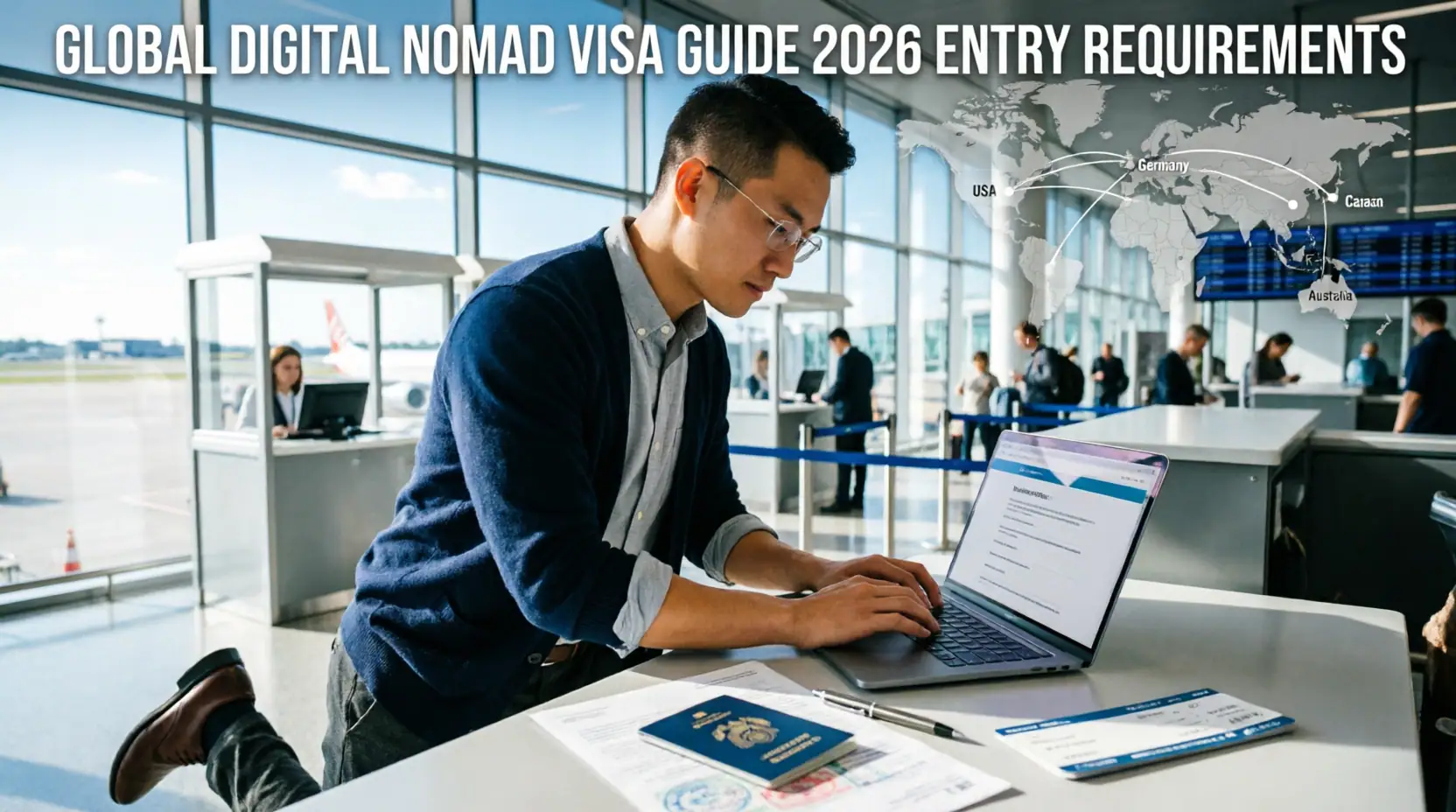
Entry Requirements for Global Travelers New 2026 Digital Nomad Visa Options
The landscape of international travel for remote workers has transformed dramatically in recent years. Countries worldwide now compete to attract digital nomads with specialized visa programs designed for location-independent professionals.
Understanding entry requirements and visa options proves essential for digital nomads planning global travel in 2026. Regulations change frequently, and new programs launch regularly as nations recognize the economic benefits of remote worker tourism.
This comprehensive 2026 guide examines digital nomad visa options across multiple continents. You will discover eligibility requirements, application procedures, costs, and practical considerations for choosing the right destination for your remote work lifestyle.
Whether you seek tropical beaches, European culture, or Asian affordability, this resource helps you navigate the complex world of digital nomad immigration with confidence and clarity.
Understanding Digital Nomad Visas in 2026

Digital nomad visas represent a new category of residence permits designed specifically for remote workers earning income from outside the host country. These programs differ from traditional tourist or work visas in important ways.
Unlike tourist visas that typically limit stays to 30-90 days, digital nomad visas permit extended residence ranging from six months to several years. This stability enables nomads to establish routines and integrate into local communities.
Most digital nomad visas require proof of remote employment or self-employment with clients or companies based outside the host country. This distinction separates nomads from local workers competing for domestic jobs.
Income requirements vary significantly between programs, typically ranging from 1500 to 4000 USD monthly. These thresholds ensure nomads can support themselves without burdening local social services.
How Digital Nomad Visas Differ from Traditional Visas
Tourist visas prohibit employment and limit stay durations, creating uncertainty for remote workers needing stability. Digital nomad visas explicitly authorize remote work while providing longer validity periods.
Work visas typically require local employer sponsorship and restrict employment to the sponsoring company. Digital nomad visas permit flexible work arrangements with multiple international clients or employers.
Tax implications differ significantly between visa types. Digital nomad visas often include specific tax provisions or exemptions that traditional visas do not address.
Application processes for digital nomad visas frequently occur online with digital documentation, streamlining procedures compared to embassy visits required for many traditional visas.
Why Countries Offer Digital Nomad Visas
Nations recognize digital nomads as valuable economic contributors who spend money locally without competing for domestic jobs. This creates mutual benefit without labor market disruption.
Remote workers often extend stays beyond typical tourist durations, supporting local businesses through consistent spending on accommodation, food, transportation, and services.
Digital nomads frequently share positive experiences on social media and professional networks, providing free marketing that attracts additional visitors and potential long-term residents.
Some countries view digital nomad programs as pathways to attracting skilled professionals who might eventually establish businesses, invest locally, or contribute to knowledge economies.
European Digital Nomad Visa Options

Europe leads in digital nomad visa innovation with numerous countries offering attractive programs for remote workers. The Schengen Area context creates unique considerations for visa planning.
Portugal's D8 Digital Nomad Visa permits stays up to one year with renewal options. Applicants must demonstrate monthly income of approximately 3280 EUR and maintain health insurance coverage.
Spain's digital nomad visa allows stays up to five years with favorable tax treatment under the Beckham Law. Income requirements approximate 2400 EUR monthly with additional documentation for self-employed applicants.
Croatia offers a digital nomad permit valid up to one year without renewal within a two-year period. Monthly income requirements approximate 2300 EUR with health insurance and accommodation proof required.
Greece's digital nomad visa permits one-year stays with renewal options. Income thresholds approximate 3500 EUR monthly with tax benefits available under specific conditions.
Portugal D8 Digital Nomad Visa Details
Portugal's D8 visa attracts remote workers with its combination of affordable living, excellent infrastructure, and welcoming culture. The application process occurs through Portuguese consulates or online platforms.
Required documentation includes proof of remote employment or self-employment, bank statements demonstrating income requirements, health insurance coverage, and accommodation arrangements in Portugal.
Processing times typically range from 60 to 90 days, so applicants should plan well in advance of intended travel dates. Approval grants initial residence permits renewable for additional periods.
Tax implications require careful consideration. Portugal offers favorable regimes for new residents, but professional tax advice proves essential for understanding obligations in both Portugal and home countries.
The visa permits travel within the Schengen Area for up to 90 days within any 180-day period, though the Portuguese residence permit itself does not grant unrestricted Schengen movement.
Spain Digital Nomad Visa and Tax Benefits
Spain's digital nomad visa launched recently with attractive features including potential five-year validity and favorable tax treatment under the Special Expats Regime known as the Beckham Law.
Income requirements approximate 2400 EUR monthly for employees or higher thresholds for self-employed applicants with additional business documentation. Proof of remote work relationships with non-Spanish entities proves essential.
Application procedures involve submission through Spanish consulates with processing times varying by location. Approved visas grant initial one-year permits renewable up to five years total.
Tax benefits under the Beckham Law allow qualifying nomads to pay Spanish taxes only on Spanish-source income at reduced rates for six years. Professional guidance ensures proper compliance with complex regulations.
Spain's infrastructure, culture, and geographic diversity make it particularly appealing for digital nomads seeking European bases with excellent connectivity to other destinations.
Other European Programs Worth Considering
Estonia pioneered digital nomad visas with its e-Residency program and dedicated remote work permit. Monthly income requirements approximate 3504 EUR with straightforward online application processes.
Czech Republic offers the Zivnostensky List trade license route for freelancers, though requirements and processes prove more complex than dedicated nomad visas in other countries.
Italy recently introduced digital nomad visa provisions with income requirements and application procedures still evolving. Monitoring official sources ensures current information for prospective applicants.
Non-European European countries like Georgia offer extremely accessible remote work programs with minimal requirements, though Schengen access considerations affect overall travel planning.
Asian Digital Nomad Visa Opportunities

Asia offers diverse digital nomad visa options combining affordability, culture, and connectivity. Programs vary significantly in requirements, costs, and benefits across the continent.
Thailand's new Long-Term Resident visa includes categories for remote workers with income requirements around 80000 USD annually or 40000 USD with additional qualifications. Benefits include multiple-year validity and expedited airport processing.
Malaysia's DE Rantau program targets digital nomads with income requirements of approximately 24000 USD annually. The program offers one to two-year permits with renewal options and family inclusion possibilities.
Indonesia's proposed digital nomad visa aims to attract remote workers to Bali and beyond, though final regulations and implementation timelines remain subject to official confirmation.
South Korea's Workation Visa permits stays up to one year for remote workers employed by foreign companies with income thresholds around 48000 USD annually.
Thailand Long-Term Resident Visa for Remote Workers
Thailand's LTR visa represents a significant development for digital nomads seeking extended stays in Southeast Asia. The Remote Worker category specifically addresses location-independent professionals.
Income requirements approximate 80000 USD annually or 40000 USD combined with master's degrees, intellectual property, or venture funding. Documentation must verify employment with companies outside Thailand.
Benefits include five-year renewable permits, multiple entry privileges, expedited airport processing, and permission to open Thai bank accounts. These features address common nomad pain points.
Application processes occur online through the Thailand Board of Investment portal with processing times typically ranging from 30 to 60 days. Professional assistance may streamline complex applications.
Tax implications require careful planning as Thailand taxes worldwide income for residents staying over 180 days annually. Professional tax advice proves essential for compliance optimization.
Malaysia DE Rantau Digital Nomad Program
Malaysia's DE Rantau program offers structured pathways for digital nomads with clear requirements and benefits. The program targets technology professionals and remote workers in digital industries.
Income requirements approximate 24000 USD annually with proof of employment contracts or client relationships outside Malaysia. Additional documentation includes professional credentials and health insurance coverage.
Permits grant one to two-year validity with renewal options and potential family inclusion. Holders may enter and exit Malaysia freely during permit validity periods.
Application procedures occur through Malaysia Digital Economy Corporation channels with processing typically requiring 30 to 45 days. Approved applicants receive digital permits facilitating entry and residence.
Malaysia's affordability, infrastructure, and cultural diversity make it attractive for nomads seeking Asian bases with English accessibility and modern amenities.
American Continent Digital Nomad Visas

The Americas offer compelling digital nomad visa options combining proximity to North American markets with diverse cultural experiences and cost advantages.
Mexico's temporary residence visa serves many digital nomads though not specifically labeled as such. Income or savings requirements approximate 2600 USD monthly with application through Mexican consulates.
Brazil's digital nomad visa permits one-year stays with renewal options. Income requirements approximate 1500 USD monthly or bank deposits of 18000 USD with health insurance coverage required.
Colombia's digital nomad visa allows stays up to two years with income requirements around 685 USD monthly. The program attracts remote workers with affordable living and vibrant culture.
Costa Rica's Rentista visa serves remote workers with income requirements of 2500 USD monthly or 60000 USD deposits. The program offers stability in a biodiverse, welcoming destination.
Brazil Digital Nomad Visa Requirements
Brazil's digital nomad visa launched to attract remote workers to its diverse regions from urban centers to tropical beaches. The program balances accessibility with reasonable requirements.
Income thresholds approximate 1500 USD monthly or bank deposits of 18000 USD demonstrating financial self-sufficiency. Proof of remote employment with non-Brazilian entities proves essential.
Application procedures occur through Brazilian consulates with required documentation including passports, income verification, health insurance, and accommodation arrangements. Processing times vary by consulate workload.
Approved visas grant one-year validity with renewal possibilities. Holders may enter and exit Brazil freely during permit periods while maintaining remote work for foreign employers or clients.
Tax considerations require professional guidance as Brazil taxes worldwide income for residents. Understanding obligations in both Brazil and home countries prevents compliance issues.
Colombia Digital Nomad Visa Advantages
Colombia's digital nomad visa offers exceptional value with low income requirements and attractive living costs. The program targets remote workers seeking affordable Latin American bases.
Income requirements approximate 685 USD monthly, significantly lower than many competing programs. Documentation must verify remote employment or self-employment with foreign income sources.
Visa validity extends up to two years with potential renewal options. Holders enjoy multiple entry privileges and permission to establish Colombian bank accounts and phone services.
Application processes occur through Colombian consulates or online platforms with processing typically requiring 30 to 60 days. Approved applicants receive digital or physical permits facilitating entry.
Colombia's geographic diversity, cultural richness, and improving infrastructure make it increasingly popular among digital nomads seeking authentic Latin American experiences.
African and Middle Eastern Digital Nomad Options

Africa and the Middle East offer emerging digital nomad visa programs combining unique cultural experiences with strategic locations for global remote work.
Mauritius' Premium Visa permits one-year stays for remote workers with income requirements around 1500 USD monthly. The program targets professionals seeking Indian Ocean bases with excellent connectivity.
Cape Verde's Remote Working program offers six-month permits renewable for additional periods. Income requirements approximate 1500 EUR monthly with health insurance and accommodation proof required.
Dubai's Virtual Working Program permits one-year stays for remote employees with salary requirements around 5000 USD monthly. Benefits include access to world-class infrastructure and tax advantages.
Seychelles' Workcation Retreat program targets remote workers with flexible requirements and stunning natural settings, though specific regulations continue evolving.
Dubai Virtual Working Program Details
Dubai's Virtual Working Program attracts remote professionals with world-class infrastructure, safety, and strategic location connecting East and West.
Income requirements approximate 5000 USD monthly with proof of employment contracts from companies outside the UAE. Self-employed applicants must demonstrate business registration and client relationships.
Application procedures occur online through Dubai's official portals with processing typically requiring 30 to 45 days. Approved applicants receive residence permits facilitating entry and extended stays.
Benefits include access to Dubai's exceptional infrastructure, healthcare, education options for families, and tax advantages on foreign income. The program permits multiple entries and exits during validity periods.
Cost of living in Dubai exceeds many digital nomad destinations, requiring budget planning. However, the quality of life, safety, and connectivity justify expenses for many remote workers.
Mauritius Premium Visa Program
Mauritius' Premium Visa offers digital nomads a tropical Indian Ocean base with excellent connectivity to Africa, Asia, and Europe. The program balances accessibility with attractive lifestyle benefits.
Income requirements approximate 1500 USD monthly with documentation verifying remote employment or self-employment with foreign income sources. Health insurance coverage and accommodation proof complete application requirements.
Visa validity extends one year with renewal possibilities. Holders may enter and exit Mauritius freely while maintaining remote work arrangements with non-Mauritian employers or clients.
Application processes occur through Mauritius' immigration portals with processing typically requiring 30 to 60 days. Approved applicants receive permits facilitating entry and residence.
Mauritius' natural beauty, cultural diversity, and political stability make it appealing for nomads seeking safe, scenic bases with reliable infrastructure for remote work.
Application Processes and Documentation

Understanding application procedures proves essential for successful digital nomad visa acquisition. While requirements vary between countries, common elements streamline preparation.
Most applications require valid passports with six months minimum validity beyond intended stay periods. Some countries require specific blank page counts for visa stamps.
Income verification typically involves bank statements, employment contracts, or client agreements demonstrating consistent remote earnings meeting program thresholds. Documentation usually must cover three to six months.
Health insurance coverage proves universally required with minimum coverage amounts varying by program. Policies must remain valid throughout intended stay periods and cover the host country.
Common Documentation Requirements
Passport copies including biographical pages and any previous visa stamps form application foundations. Some countries require notarized or certified translations of passport information.
Proof of remote employment includes employment letters, contracts, or client agreements specifying work arrangements and income. Self-employed applicants provide business registration, tax documents, and client portfolios.
Bank statements demonstrating income requirements typically must show consistent deposits over three to six months. Some programs accept alternative financial documentation like investment statements or property ownership.
Health insurance certificates must specify coverage amounts, validity periods, and geographic scope including the host country. Digital copies often suffice though some consulates request physical documents.
Accommodation proof may include hotel reservations, rental agreements, or invitation letters from hosts. Requirements vary between programs with some accepting provisional arrangements during application.
Application Submission and Processing
Many digital nomad visa applications occur through online portals enabling digital document submission and status tracking. These systems streamline processes compared to traditional embassy visits.
Processing times typically range from 30 to 90 days depending on program complexity and application volumes. Planning applications well in advance of intended travel dates prevents delays.
Application fees vary significantly between programs ranging from 50 to 500 USD or more. Some programs charge additional fees for permit issuance, renewals, or family inclusions.
Professional assistance from immigration consultants or specialized services may expedite complex applications though adds costs. Evaluating whether assistance proves worthwhile depends on individual circumstances and program complexity.
Financial and Tax Considerations

Understanding financial obligations proves critical for digital nomads navigating multiple jurisdictions. Tax implications, banking access, and currency considerations affect overall viability of destinations.
Tax residency rules vary significantly between countries with some taxing worldwide income after specific stay durations. Understanding these thresholds prevents unexpected tax liabilities.
Double taxation agreements between countries may prevent paying taxes on the same income in multiple jurisdictions. Professional tax advice proves essential for optimizing compliance across borders.
Banking access affects practical daily life with some countries restricting account opening for non-residents. Researching banking options before arrival prevents financial complications.
Tax Residency and Compliance
Tax residency typically triggers after staying in a country for 183 days or more within a calendar year, though specific rules vary. Residency may create obligations to report and potentially pay taxes on worldwide income.
Some digital nomad visa programs include specific tax provisions or exemptions for limited periods. Understanding these benefits and their conditions requires careful review of program regulations.
Home country tax obligations may continue regardless of physical location. US citizens, for example, must file taxes on worldwide income regardless of residence, though foreign earned income exclusions may reduce liabilities.
Professional tax advisors specializing in international mobility provide invaluable guidance for navigating complex cross-border obligations. Investing in expert advice often saves money and prevents compliance issues.
Banking and Financial Access
Opening local bank accounts facilitates daily transactions, bill payments, and potential salary deposits. Requirements vary with some countries permitting account opening with digital nomad visas while others restrict access to permanent residents.
International banking solutions like Wise, Revolut, or similar services provide flexible multi-currency accounts suitable for nomads. These platforms often offer better exchange rates and lower fees than traditional banks.
Currency considerations affect budgeting with some destinations offering favorable exchange rates for certain currencies. Monitoring exchange trends helps optimize financial planning and timing of transfers.
Payment infrastructure varies between destinations with some locations favoring cash while others embrace digital payments. Researching local payment norms prevents practical difficulties during stays.
Practical Considerations for Digital Nomad Life

Beyond visa requirements, successful digital nomad experiences depend on practical factors including connectivity, accommodation, healthcare, and community integration.
Internet reliability and speed prove essential for remote work productivity. Researching connectivity options and backup solutions before arrival prevents work disruptions.
Accommodation choices affect both work effectiveness and quality of life. Options range from short-term rentals to co-living spaces designed specifically for digital nomads.
Healthcare access and insurance coverage require careful planning particularly in destinations with limited medical infrastructure or high costs for non-residents.
Connectivity and Workspace Considerations
Internet speed and reliability vary significantly between destinations and even within cities. Researching neighborhood connectivity and having backup mobile data options proves prudent.
Co-working spaces provide professional environments with reliable connectivity, networking opportunities, and separation between work and living spaces. Many digital nomad destinations feature growing co-working ecosystems.
Time zone considerations affect collaboration with clients or teams in other regions. Choosing destinations with compatible time zones or flexible work schedules optimizes productivity.
Power reliability and backup solutions matter particularly in developing destinations. Portable power banks and uninterruptible power supplies provide insurance against outages affecting work.
Community and Social Integration
Digital nomad communities provide valuable support networks for newcomers including practical advice, social connections, and professional opportunities. Many destinations feature active nomad groups organizing events and meetups.
Language barriers affect daily life and integration even in destinations with significant English-speaking populations. Learning basic local phrases demonstrates respect and facilitates smoother interactions.
Cultural adaptation requires patience and openness to different norms regarding business practices, social interactions, and daily life. Researching cultural expectations before arrival reduces friction.
Balancing work commitments with exploration and social activities proves essential for sustainable nomad lifestyles. Establishing routines that accommodate both productivity and experience maximizes the benefits of location independence.
Choosing the Right Destination for Your Needs

Selecting optimal digital nomad destinations requires balancing multiple factors including visa requirements, cost of living, connectivity, lifestyle preferences, and long-term goals.
Income requirements eliminate some options for nomads with lower earnings while opening others with more accessible thresholds. Matching financial capacity to program requirements proves foundational.
Cost of living varies dramatically between destinations with Southeast Asia offering exceptional affordability while European cities command premium prices. Budgeting realistically prevents financial stress.
Lifestyle preferences regarding climate, culture, activities, and pace of life significantly affect satisfaction. Choosing destinations aligning with personal values and interests enhances overall experience quality.
Matching Destinations to Professional Needs
Time zone compatibility affects collaboration with clients or teams in specific regions. Choosing destinations with overlapping work hours optimizes communication and productivity.
Industry-specific communities and networking opportunities vary between destinations. Technology hubs may offer more professional connections while creative centers provide different networking value.
Infrastructure quality including transportation, healthcare, and services affects daily life efficiency. Researching practical amenities prevents frustrations that could undermine work effectiveness.
Long-term goals including potential permanent relocation, business establishment, or family considerations should influence destination selection beyond immediate visa convenience.
Balancing Adventure and Stability
Some nomads prioritize frequent destination changes while others prefer establishing semi-permanent bases. Visa validity periods and renewal policies affect flexibility for different travel styles.
Regional proximity enables easier exploration of neighboring countries during weekends or breaks. Choosing bases with good connectivity to other destinations maximizes travel opportunities.
Seasonal considerations including weather patterns, tourist crowds, and pricing fluctuations affect timing decisions. Planning arrivals during optimal seasons enhances experience quality and value.
Personal safety and political stability prove essential considerations particularly for solo travelers or those with families. Researching current conditions and travel advisories informs responsible destination selection.
Final Thoughts on Digital Nomad Visas in 2026

The proliferation of digital nomad visas in 2026 reflects growing global recognition of remote work as a legitimate and valuable lifestyle. These programs create opportunities for location-independent professionals to experience diverse cultures while maintaining careers.
Understanding entry requirements, application procedures, and practical considerations proves essential for successful navigation of this evolving landscape. Careful preparation prevents complications and maximizes the benefits of digital nomad travel.
Choosing destinations aligned with professional needs, financial capacity, and personal preferences creates sustainable and rewarding nomad experiences. Flexibility and adaptability remain valuable traits in an ever-changing regulatory environment.
As digital nomad visa programs continue evolving, staying informed through official government sources and reputable nomad communities ensures access to current information. The global remote work revolution offers unprecedented opportunities for those prepared to navigate its complexities thoughtfully.
0 Comments