.webp)
.webp)
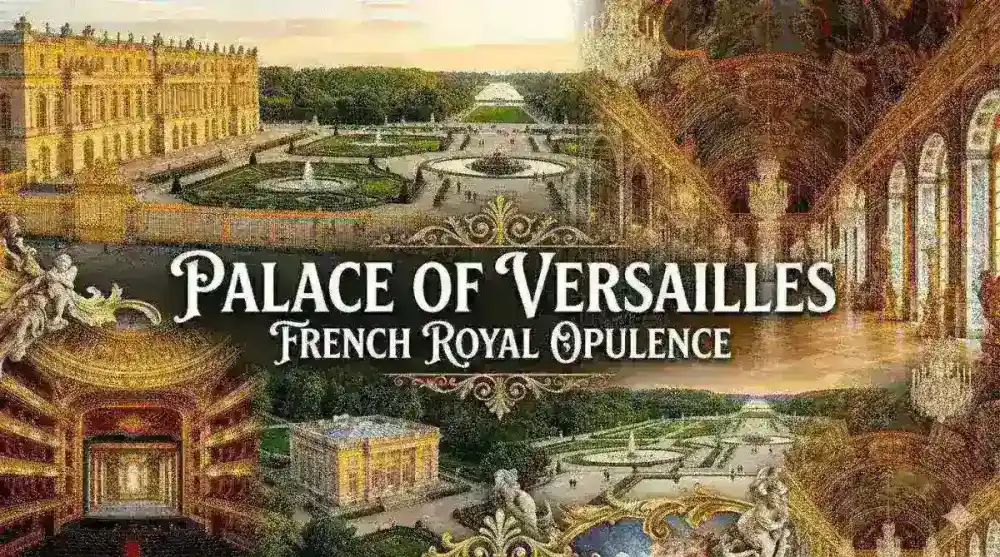
Introduction: A Monument to Absolute Power
Few structures in human history embody the concept of absolute monarchy as completely as the Palace of Versailles. What began as a modest hunting lodge in the French countryside transformed under Louis XIV into the most magnificent palace in Europe, a symbol of royal power so complete that it reshaped the very nature of French governance and culture. Today, Versailles stands not merely as a museum of French history but as a testament to human ambition, artistic achievement, and the intoxicating allure of absolute power.
Located just 20 kilometers southwest of Paris, Versailles welcomed over 7 million visitors in 2024, making it one of the most visited cultural sites in the world. Yet numbers alone cannot capture the overwhelming sensory experience of walking through the Hall of Mirrors, wandering the meticulously manicured gardens designed by André Le Nôtre, or standing in the intimate spaces where Marie Antoinette sought refuge from court life.
This comprehensive guide explores every facet of Versailles: from the political machinations that transformed a hunting lodge into the seat of French power, to the architectural innovations that defined French Baroque style, to the gardens that became the model for formal landscape design across Europe. Whether you're planning your first visit or seeking deeper understanding of this extraordinary monument, you'll discover why Versailles remains the ultimate expression of royal opulence and why it continues to captivate visitors more than three centuries after Louis XIV moved his court here in 1682.
The Vision of the Sun King: Louis XIV and the Creation of Versailles

To understand Versailles, one must first understand Louis XIV, the longest-reigning monarch in European history. When he ascended to the throne in 1643 at age four, France was a kingdom fractured by noble rivalries and religious conflict. By the time of his death in 1715, France stood as Europe's dominant power, and Versailles stood as the physical manifestation of that dominance.
From Hunting Lodge to Palace
The site's transformation began modestly. Louis XIII, Louis XIV's father, purchased the land in 1624 and built a small hunting lodge of brick and stone. The young Louis XIV first visited at age seven, and the location clearly made an impression. In 1661, shortly after taking personal control of the government following the death of his chief minister Cardinal Mazarin, Louis XIV began expanding the property.
The king's vision was audacious: to create a palace that would not only house the royal family but would also serve as the headquarters of government and the stage upon which the elaborate theater of court life would play out. By concentrating the nobility at Versailles, Louis XIV effectively neutralized them as political threats while creating a system where status depended entirely on royal favor.
The Architecture of Power
Louis XIV employed the greatest architects, artists, and craftsmen of his era. Charles Le Brun directed the interior decoration, creating a unified artistic vision that celebrated the king's glory at every turn. André Le Nôtre designed the gardens, transforming flat, marshy land into the most spectacular formal gardens Europe had ever seen. Jules Hardouin-Mansart designed the Hall of Mirrors and the chapel, pushing French classical architecture to its zenith.
The construction employed up to 36,000 workers at its peak. The financial cost was staggering – some estimates suggest Versailles consumed 10% of France's entire annual revenue during peak construction years. Yet for Louis XIV, the expense was justified: Versailles was not merely a residence but a tool of statecraft, a weapon of political control, and a statement of French supremacy that echoed across Europe.
The Court at Versailles
Life at Versailles operated according to elaborate ritual. The king's day followed a precise schedule, from the lever (rising ceremony) to the coucher (bedtime ceremony), with nobles competing for the honor of participating in these intimate moments. The palace housed approximately 10,000 people at its peak – royalty, nobles, government officials, and servants all living in a carefully orchestrated hierarchy.
This system of court life served a crucial political function. By keeping the nobility occupied with ceremonial duties and competition for royal favor, Louis XIV prevented them from challenging his authority in the provinces. The famous phrase "L'état, c'est moi" (I am the state), whether actually spoken or not, perfectly captures the concentration of power that Versailles represented.
Architectural Splendor: The Palace Interiors

The Palace of Versailles contains over 2,300 rooms spread across 63,000 square meters. While visitors can only access a fraction of these spaces, the rooms open to the public represent some of the finest examples of French Baroque and Rococo design ever created.
The Hall of Mirrors (Galerie des Glaces)
No space at Versailles captures the imagination quite like the Hall of Mirrors. Completed in 1684, this 73-meter-long gallery represents the absolute zenith of Louis XIV's artistic ambitions. Seventeen arched windows overlooking the gardens are mirrored by seventeen arcades containing 357 individual mirrors – an extraordinary display of wealth at a time when mirrors were among the most expensive luxury goods in Europe.
The ceiling paintings by Charles Le Brun depict the early military victories of Louis XIV, presenting the king as a figure of almost divine power. The gallery served not merely as a passageway but as a stage for court ceremonies, diplomatic receptions, and displays of royal magnificence designed to overwhelm visitors with the sheer scale of French power.
Historically, the Hall of Mirrors has witnessed moments that shaped world history. In 1871, the German Empire was proclaimed here following France's defeat in the Franco-Prussian War. In 1919, the Treaty of Versailles was signed in this same gallery, formally ending World War I – a bitter irony given that the palace built to celebrate French supremacy now witnessed French humiliation and, later, the terms of German defeat.
The Royal Apartments
The State Apartments (Grands Appartements) consist of seven salons, each dedicated to a different planet and its associated Roman deity, reflecting the baroque fascination with astrology and classical mythology. These rooms served as the setting for the king's formal daily routine and elaborate evening entertainments.
The King's Grand Apartment features rooms of increasing intimacy and splendor, from the Hercules Salon with its massive ceiling painting to the Apollo Salon, the throne room dedicated to the sun god – and thus to Louis XIV himself, the Sun King. The decoration throughout features lavish use of gold, marble, and precious materials, with every surface designed to dazzle and overwhelm.
The Queen's Apartments mirror the King's in layout and served successive queens from Marie Thérèse, wife of Louis XIV, to Marie Antoinette. The Queen's Bedchamber witnessed some of Versailles' most significant moments, including the birth of numerous royal children and, infamously, the invasion of the queen's chambers by revolutionary women in October 1789.
The Royal Chapel
The final major addition to Versailles, the Royal Chapel was completed in 1710, just five years before Louis XIV's death. Its two-tiered design reflects the strict hierarchy of court life: the king and royal family worshipped on the upper level, while courtiers occupied the ground floor. The chapel's baroque architecture, with its soaring columns and elaborate decoration, provided a fittingly grand setting for the religious ceremonies that punctuated court life.
The chapel also served as the setting for important dynastic marriages, including the 1770 wedding of the future Louis XVI and Marie Antoinette. Standing in this space, one can almost hear the organ music and feel the weight of ceremony that defined royal religious observance.
The Royal Opera
Completed in 1770 for the wedding of the future Louis XVI, the Royal Opera represents the pinnacle of 18th-century theater design. Built entirely of wood for superior acoustics, the opera house could seat 712 spectators and featured innovative stage machinery for elaborate productions. The space remains one of the finest examples of pre-revolutionary theater architecture and is still used for performances today.
The Gardens of Versailles: Nature Perfected by Human Hands

If the palace represents the apex of French architectural achievement, the gardens represent the equally ambitious attempt to impose human order on nature itself. André Le Nôtre, Louis XIV's gardener, created not merely a garden but an entire landscape that extended the palace's power and symmetry into the natural world.
Le Nôtre's Vision
André Le Nôtre came from a family of gardeners and brought to Versailles an understanding of perspective, geometry, and hydraulics that transformed landscape design forever. Working with a virtually unlimited budget and workforce, Le Nôtre created gardens that stretched for kilometers, featuring perfectly symmetrical parterres, precisely aligned pathways, and elaborate water features that demonstrated both artistic vision and engineering prowess.
The gardens extend over 800 hectares and feature 200,000 trees, 210,000 flowers planted annually, 50 fountains, and 600 water jets. The sheer scale defies comprehension until experienced in person. What appears from the palace as a unified, harmonious design reveals itself upon exploration as a series of distinct spaces, each with its own character and purpose.
The Grand Perspective
From the palace terrace, the main axis extends westward in a perfectly straight line for three kilometers. This Grand Perspective includes the Latona Fountain, the Royal Allée, the Apollo Fountain, and the Grand Canal. Each element serves both aesthetic and symbolic functions, creating a visual narrative that celebrates Louis XIV as the Sun King, with the entire landscape oriented around his glory.
The Latona Fountain depicts the goddess Latona protecting her children Apollo and Diana from mocking peasants – an allegory for Louis XIV's mother Anne of Austria protecting the young king during the Fronde rebellions. The Apollo Fountain, depicting the sun god rising from the sea, directly references Louis XIV's chosen symbol. The Grand Canal, stretching 1.6 kilometers, served both as a decorative feature and as a venue for naval reviews and festive boating parties.
The Fountains
Versailles' fountains represent some of the most elaborate hydraulic engineering of the 17th century. The Machine de Marly, built to pump water from the Seine to Versailles, was considered one of the wonders of the world despite its constant mechanical problems. The fountains themselves feature elaborate sculptural groups depicting mythological scenes, with water jets that could reach impressive heights – though Louis XIV could only run all the fountains simultaneously for brief periods due to water pressure limitations.
Today, the Musical Fountains Shows (Grandes Eaux Musicales) allow visitors to experience the gardens as Louis XIV intended, with fountains dancing to baroque music on weekends during the high season. These spectacular displays give some sense of the overwhelming sensory experience that Versailles was designed to provide.
The Groves (Bosquets)
Beyond the formal parterres, Le Nôtre created numerous groves – enclosed garden rooms that provided variety and surprise within the overall formal design. Each grove had its own theme and character: the Ballroom Grove featured a cascading waterfall, the Enceladus Grove depicted a giant buried under rocks, and the Colonnade Grove featured a circular peristyle perfect for intimate concerts.
These spaces demonstrated that French formal gardening could accommodate variety and even elements of the picturesque within its overall geometric order. They also provided private spaces where courtiers could escape, however briefly, the constant surveillance of court life.
Marie Antoinette's Estate: The Queen's Rural Retreat

While the main palace embodied the formal, ceremonial aspects of royal life, Marie Antoinette created for herself an alternative vision of royalty at the Petit Trianon and her famous Hameau (hamlet). These spaces reveal the human side of Versailles and the queen's desire to escape the rigid formality of court life.
The Petit Trianon
Louis XV built the Petit Trianon between 1762 and 1768 as a retreat from the formality of the main palace. When Louis XVI ascended to the throne in 1774, he gave the estate to his young queen, Marie Antoinette, with the famous words "You love flowers, Madame, I have a bouquet for you." For Marie Antoinette, the Petit Trianon represented freedom from the suffocating etiquette of Versailles.
The building itself is a masterpiece of neoclassical architecture, designed by Ange-Jacques Gabriel. Its clean lines and harmonious proportions represent a reaction against the baroque excess of the main palace. Inside, Marie Antoinette created intimate spaces decorated in the latest styles, including her famous silver furniture (later melted down to fund the war effort) and delicate floral decorations.
The Queen's Hamlet (Hameau de la Reine)
Between 1783 and 1785, Marie Antoinette created her most famous retreat: a working farm village where she and her ladies could play at being shepherdesses. The Hameau consisted of a dozen thatched-roof cottages arranged around a pond, complete with a dairy, mill, and dovecote. While appearing rustic, the buildings were actually quite comfortable and decorated with surprising elegance.
Marie Antoinette's hamlet has often been criticized as an expensive fantasy that demonstrated the queen's detachment from the realities of peasant life. Yet it also represented a genuine interest in agricultural improvement and the pastoral ideals that were fashionable among the aristocracy. The farm actually produced milk, eggs, and other products used in the royal kitchens.
Today, the Hameau remains one of Versailles' most charming attractions, offering visitors a glimpse of an entirely different vision of royal life – one that emphasized simplicity, nature, and privacy over ceremony and display.
Practical Visitor Information

Planning a visit to Versailles requires some preparation to make the most of this vast estate. Here's everything you need to know:
Getting There
By RER Train: The most economical option is the RER C line from central Paris. The journey takes approximately 40 minutes from central stations like Musée d'Orsay or Invalides. The station "Versailles Château Rive Gauche" is a 10-minute walk from the palace. Cost: approximately €7.50 round-trip with a Paris Visite pass or Navigo card.
By Train: SNCF trains depart from Paris Montparnasse to Versailles Chantiers (15-minute walk to palace) or from Paris Saint-Lazare to Versailles Rive Droite (15-minute walk). These are faster but more expensive than the RER. Cost: approximately €10-15 round-trip.
By Car: Driving allows flexibility but parking can be challenging. Two main parking areas serve the palace (Place d'Armes and Avenue de Paris). Cost: €6-12 depending on duration. Note that traffic can be heavy, especially on weekends and during fountain shows.
By Guided Tour: Many companies offer guided tours from Paris including transportation and skip-the-line access. Cost: €50-150 depending on inclusions. Advantageous for first-time visitors who want context and don't want to navigate logistics.
Tickets and Admission
Palace Ticket: €21 (includes palace, temporary exhibitions, and gardens on non-fountain show days). Online booking strongly recommended to avoid long queues.
Passport Ticket: €29 (includes palace, Trianon estates, and gardens on non-fountain show days). Best value for visitors wanting to see everything.
Gardens Only: €10 on fountain show days, free on other days.
Free Admission: Under 18 years old, EU residents under 26, disabled visitors and one companion. First Sunday of the month (November-March) offers free palace admission but expect massive crowds.
Musical Events: Additional fees apply for Musical Gardens (€9.50) and Fountain Shows (€10.50) on specified days during high season.
Opening Hours
Palace:
- High Season (April-October): Tuesday-Sunday, 9:00 AM - 6:30 PM
- Low Season (November-March): Tuesday-Sunday, 9:00 AM - 5:30 PM
- Closed Mondays
- 👉 ETIAS Czechia 2026: Mandatory Rules for US & UK Citizens
- 👉 ETIAS Latvia 2026: Mandatory Travel Authorization for US & UK Citizens
- 👉 Denmark Coolcations 2026: Nordic Summer Alternative
Gardens:
- Open daily year-round
- High Season: 8:00 AM - 8:30 PM
- Low Season: 8:00 AM - 6:00 PM
- 👉 ETIAS Czechia 2026: Mandatory Rules for US & UK Citizens
- 👉 ETIAS Latvia 2026: Mandatory Travel Authorization for US & UK Citizens
- 👉 Denmark Coolcations 2026: Nordic Summer Alternative
Trianon Estates:
- Tuesday-Sunday, 12:00 PM - 6:30 PM (high season)
- Tuesday-Sunday, 12:00 PM - 5:00 PM (low season)
- Closed Mondays
- 👉 ETIAS Czechia 2026: Mandatory Rules for US & UK Citizens
- 👉 ETIAS Latvia 2026: Mandatory Travel Authorization for US & UK Citizens
- 👉 Denmark Coolcations 2026: Nordic Summer Alternative
Best Time to Visit
Time of Year:
- Spring (April-June): Ideal weather, gardens in bloom, moderate crowds
- Summer (July-August): Warm weather, fountain shows, but peak crowds and heat
- Fall (September-October): Beautiful foliage, fewer crowds, pleasant weather
- Winter (November-March): Fewest crowds, but gardens less impressive, shorter hours
- 👉 ETIAS Czechia 2026: Mandatory Rules for US & UK Citizens
- 👉 ETIAS Latvia 2026: Mandatory Travel Authorization for US & UK Citizens
- 👉 Denmark Coolcations 2026: Nordic Summer Alternative
Time of Day:
- Early Morning: Arrive at opening to beat crowds, best light for photography
- Late Afternoon: Crowds thin, golden hour lighting, but less time to see everything
- Avoid: Midday on weekends and holidays when crowds peak
- 👉 ETIAS Czechia 2026: Mandatory Rules for US & UK Citizens
- 👉 ETIAS Latvia 2026: Mandatory Travel Authorization for US & UK Citizens
- 👉 Denmark Coolcations 2026: Nordic Summer Alternative
How Much Time to Allow
Minimum: Half day (4-5 hours) for palace and main gardens
Ideal: Full day (7-8 hours) to see palace, gardens, and Trianon estates
Enthusiasts: Two days to fully explore all gardens, fountains, and estates at a leisurely pace
Tips for an Unforgettable Visit

Maximize your Versailles experience with these insider tips:
Before You Go
- Book Online: Purchase tickets in advance to skip the ticket office lines. Choose a timed entry slot.
- Download the App: The official Versailles app offers maps, audio guides, and practical information.
- Wear Comfortable Shoes: You'll walk several kilometers on varied surfaces including gravel, grass, and marble floors.
- Check the Calendar: Verify fountain show dates and special events that might affect your visit.
- Pack Essentials: Bring water, snacks, sun protection in summer, and layers as weather can change.
- 👉 ETIAS Czechia 2026: Mandatory Rules for US & UK Citizens
- 👉 ETIAS Latvia 2026: Mandatory Travel Authorization for US & UK Citizens
- 👉 Denmark Coolcations 2026: Nordic Summer Alternative
At the Palace
- Start Early: Head straight to the Hall of Mirrors first thing to see it before crowds arrive.
- Use the Audio Guide: The included audio guide provides valuable context that enhances understanding of what you're seeing.
- Don't Rush: Allow at least 2 hours for the palace itself to appreciate the rooms and decorations.
- Photography: Photography is permitted in most areas but no flash. The Hall of Mirrors is spectacular but challenging to photograph due to reflections and crowds.
- Restrooms: Note restroom locations when you enter; they're limited inside the palace.
- 👉 ETIAS Czechia 2026: Mandatory Rules for US & UK Citizens
- 👉 ETIAS Latvia 2026: Mandatory Travel Authorization for US & UK Citizens
- 👉 Denmark Coolcations 2026: Nordic Summer Alternative
In the Gardens
- Wear Appropriate Footwear: Gravel paths and grass require sturdy, comfortable shoes.
- Consider a Golf Cart: For €18/hour, golf carts allow you to cover more ground, especially useful for reaching the Trianon estates.
- Picnic: Picnicking is allowed in the gardens (not on formal parterres). Bring food or buy from vendors.
- Don't Miss the Groves: The bosquets offer variety and often fewer crowds than the main axes.
- Time Your Visit: On fountain show days, position yourself near major fountains 10-15 minutes before show times.
- 👉 ETIAS Czechia 2026: Mandatory Rules for US & UK Citizens
- 👉 ETIAS Latvia 2026: Mandatory Travel Authorization for US & UK Citizens
- 👉 Denmark Coolcations 2026: Nordic Summer Alternative
At the Trianon Estates
- Save Energy: Visit the Trianon estates after the main palace when crowds have thinned.
- Allow Time: The Queen's Hamlet alone deserves at least an hour to explore properly.
- Enjoy the Atmosphere: This area feels less crowded and more relaxed than the main palace.
- 👉 ETIAS Czechia 2026: Mandatory Rules for US & UK Citizens
- 👉 ETIAS Latvia 2026: Mandatory Travel Authorization for US & UK Citizens
- 👉 Denmark Coolcations 2026: Nordic Summer Alternative
The Legacy of Versailles

The Palace of Versailles represents far more than a beautiful building or impressive gardens. It stands as a monument to a particular vision of power, culture, and society that shaped not just France but all of Europe. The architectural style developed at Versailles was copied by monarchs across the continent, from Schönbrunn in Vienna to Peterhof in Russia. The French language, manners, and culture that flourished at Versailles became the international standard for aristocratic society.
Yet Versailles also embodies the contradictions of the ancien régime. The staggering expense of building and maintaining the palace contributed to the financial crisis that led to the French Revolution. The rigid hierarchy and ceremonial life that Louis XIV created to control the nobility ultimately proved unsustainable. Marie Antoinette's retreat to the Petit Trianon, intended as innocent escape, became evidence of royal detachment from the suffering of ordinary French people.
Today, Versailles serves multiple functions. It is a museum preserving France's royal heritage, a UNESCO World Heritage Site protected for its universal value, a working venue for state ceremonies and diplomatic receptions, and one of the world's premier tourist destinations. The ongoing restoration efforts, funded in part by private donations and corporate sponsorships, ensure that future generations can continue to experience this extraordinary monument.
Perhaps most importantly, Versailles remains a place of beauty and wonder. Whether you're marveling at the Hall of Mirrors, wandering the formal gardens, or sitting quietly in Marie Antoinette's hamlet, Versailles offers moments of genuine transcendence. It reminds us of human capacity for both magnificent achievement and tragic excess, for artistic creation and political manipulation, for the pursuit of beauty and the corruption of power.
Conclusion: A Timeless Monument to Royal Grandeur

The Palace of Versailles stands as the ultimate expression of French royal opulence, a monument that continues to awe visitors more than three centuries after Louis XIV moved his court here. From the breathtaking Hall of Mirrors to the meticulously designed gardens, from the intimate spaces of the Petit Trianon to the grand ceremonial apartments, Versailles offers an unparalleled glimpse into the world of absolute monarchy.
Yet Versailles is more than a museum of the past. It remains a living testament to French culture, art, and history, continuing to inspire artists, architects, and visitors from around the world. The palace reminds us of the heights human creativity can reach when backed by unlimited resources and absolute power, while also serving as a cautionary tale about the dangers of excess and detachment.
Whether you're a history enthusiast, an architecture lover, a garden admirer, or simply someone seeking to experience one of humanity's greatest cultural achievements, Versailles deserves a place on your travel itinerary. Plan your visit carefully, allow sufficient time to explore, and prepare to be overwhelmed by the sheer scale and beauty of this extraordinary place.
As you walk through the Hall of Mirrors, wander the gardens designed by Le Nôtre, or sit in Marie Antoinette's rustic hamlet, you're not just visiting a palace – you're stepping into the very heart of French history and experiencing the zenith of royal opulence that continues to define our understanding of absolute monarchy. Versailles awaits, ready to reveal its secrets and leave you with memories that will last a lifetime.
0 Comments