.webp)
.webp)
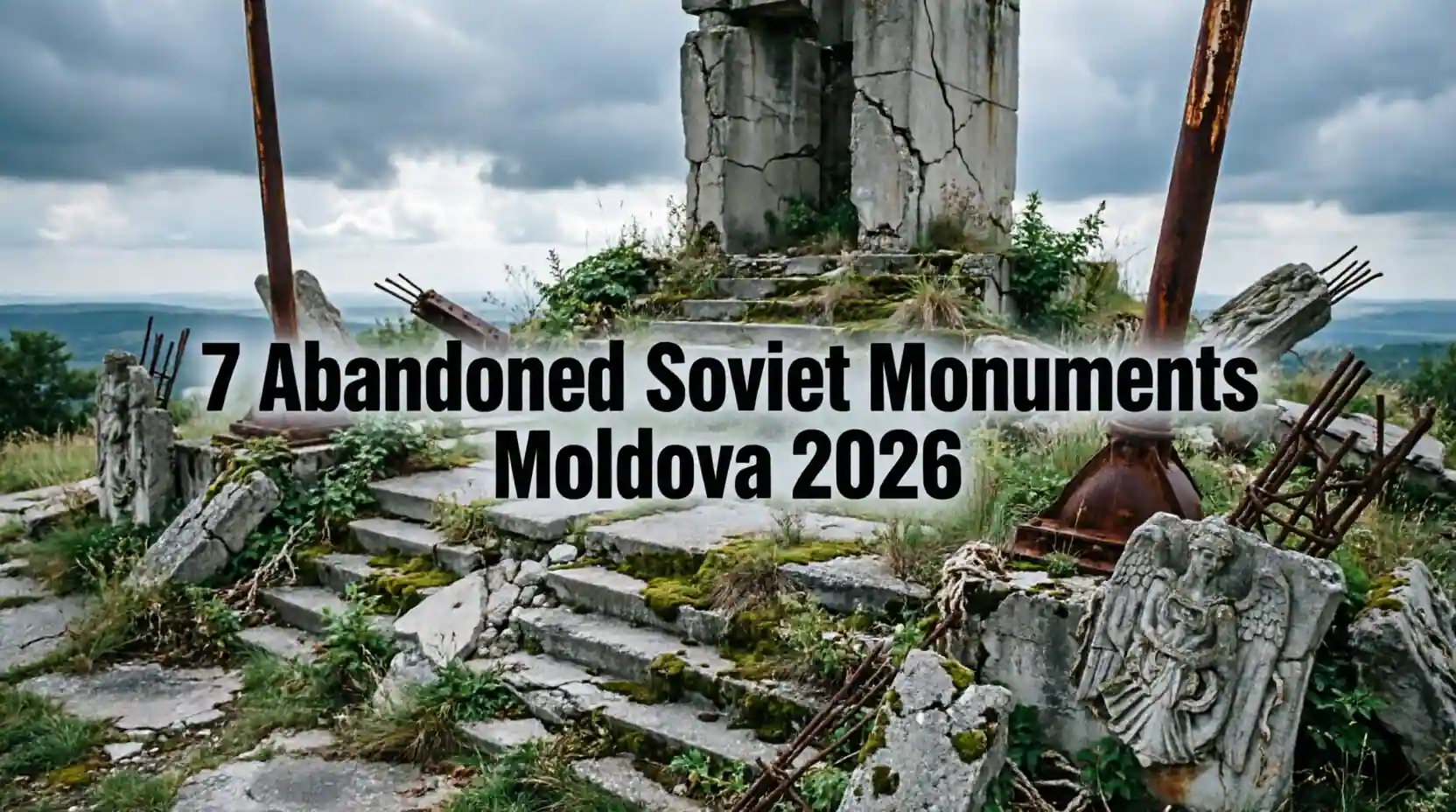
7 Abandoned Soviet Monuments in Moldova Every History Buff Needs to See
Moldova stands as one of Europe's most fascinating repositories of Soviet-era monuments, offering history enthusiasts an unparalleled opportunity to explore the physical remnants of nearly five decades of communist rule. From colossal statues honoring Soviet war heroes to decaying memorials celebrating communist ideology, Moldova's landscape is dotted with abandoned monuments that tell the complex story of a nation caught between East and West.
For history buffs, urban explorers, and photographers, these abandoned Soviet monuments provide a haunting glimpse into Moldova's Soviet past (1944-1991) and the dramatic transformation that followed independence. While some monuments have been removed or relocated since independence, many remain scattered across the country—some crumbling into ruin, others preserved in eerie stillness, and a few controversially maintained in the breakaway region of Transnistria.
This comprehensive guide reveals seven of the most significant abandoned Soviet monuments in Moldova that every history enthusiast should visit. From the massive Glory Memorial in Tiraspol to forgotten war memorials in rural villages, these sites offer powerful insights into Soviet ideology, Moldova's complex relationship with its past, and the ongoing process of historical reckoning in post-Soviet space. Whether you're a dark tourism enthusiast, a photography lover, or simply curious about this pivotal period in Eastern European history, these monuments provide an unforgettable journey through time.
Why are there so many Soviet monuments in Moldova?
Moldova was part of the Soviet Union from 1944 to 1991, during which time Soviet authorities erected thousands of monuments celebrating communist ideology, WWII victories, and Soviet heroes. After independence in 1991, many monuments were removed, but hundreds remain—some abandoned due to lack of funds for removal, others preserved for historical significance, and some maintained in pro-Russian Transnistria. These monuments serve as physical reminders of Moldova's complex Soviet legacy and ongoing debates about historical memory and national identity.
1. Glory Memorial (Memorialul Gloriei) – Tiraspol, Transnistria

Location: Tiraspol, Transnistria (breakaway region)
Year Built: 1972
Current Status: Maintained (not abandoned, but significant Soviet monument)
Access: Open to public; requires crossing into Transnistria
Historical Significance:
The Glory Memorial in Tiraspol stands as one of the most impressive and well-preserved Soviet war memorials in the region. Built to commemorate the 30th anniversary of the liberation of Moldova from fascist occupation during WWII, this massive complex represents the Soviet narrative of the "Great Patriotic War" and Moldova's role in the Soviet victory.
The memorial features a towering 30-meter obelisk topped with the Soviet star, flanked by eternal flame and sculptures of Soviet soldiers. The complex includes bas-reliefs depicting battle scenes and inscriptions honoring fallen soldiers. Unlike many Soviet monuments in Moldova proper that have been removed or abandoned, the Glory Memorial remains actively maintained by Transnistrian authorities, reflecting the region's continued ideological alignment with Soviet-era symbolism.
What to See:
• Main Obelisk: Soaring 30-meter concrete pillar topped with bronze Soviet star
• Eternal Flame: Continuously burning flame honoring fallen soldiers
• Sculpture Group: Bronze statues of Soviet soldiers in dynamic poses
• Bas-Reliefs: Detailed panels depicting WWII battles and partisan resistance
• Memory Alley: Walkway with plaques listing names of fallen soldiers
• Military Equipment: Display of WWII-era tanks, artillery, and aircraft (some added post-Soviet)
Photography Tips:
• Best light: Early morning or late afternoon for dramatic shadows
• Wide-angle lens essential to capture full scale of obelisk
• Eternal flame creates striking night photography opportunities
• Respect memorial nature—avoid inappropriate poses or behavior
Visiting Information:
• Access: Free entry; open 24/7
• Location: Central Tiraspol, 15-minute walk from bus station
• Transnistria Entry: US citizens can enter Transnistria with passport; registration required if staying over 24 hours
• Guided Tours: Available through local operators in Tiraspol
• Time Needed: 1-2 hours to explore complex
Important Note: Transnistria is a breakaway region not recognized by most countries. While generally safe for tourists, be aware of political sensitivities. The region maintains strong Soviet-era symbolism and Russian military presence.
Is it safe to visit Soviet monuments in Transnistria?
Yes, Transnistria is generally safe for tourists visiting Soviet monuments. The region has low crime rates, and visitors are welcomed. However, be aware that Transnistria is a breakaway region with ongoing political tensions. Register with local authorities if staying over 24 hours, respect local laws, avoid photographing military installations, and stay informed about current political situation. Most tourists visit Tiraspol's Soviet monuments without issues, but exercise normal caution and common sense.
2. Stepan the Great Statue (Statuia lui Ștefan cel Mare) – Chișinău

Location: Central Chișinău (Great National Assembly Square)
Year Built: 1928 (original), Soviet modifications 1940s-1991
Current Status: Modified/partially abandoned Soviet elements
Historical Significance:
While primarily a Romanian national monument honoring Stephen the Great (medieval Moldavian prince), this statue's history reflects Moldova's turbulent 20th century. Originally erected in 1928 during Romanian rule, the monument underwent various modifications during Soviet occupation. The Soviets attempted to suppress its Romanian national symbolism, and the square was renamed and used for Soviet parades and propaganda events.
Surrounding the statue are remnants of Soviet-era modifications to the square, including abandoned Soviet plaques, foundations of removed monuments, and architectural elements from the Soviet period. The area represents the layered history of Chișinău—where Romanian national identity, Soviet occupation, and post-independence identity all intersect.
What to See:
• Central Statue: Bronze equestrian statue of Stephen the Great
• Soviet-Era Square: Vast parade ground designed for Soviet military displays
• Abandoned Foundations: Remnants of removed Soviet monuments
• Soviet Plaques: Weathered commemorative plaques from Soviet era
• Government Building: Former Communist Party headquarters overlooking square
• Architectural Contrast: Mix of Romanian, Soviet, and modern architecture
Photography Tips:
• Capture contrast between historic statue and Soviet-era buildings
• Evening light creates dramatic shadows across square
• Wide shots show scale of Soviet urban planning
• Detail shots of weathered Soviet plaques and inscriptions
Visiting Information:
• Access: Free; open 24/7
• Location: City center, walking distance from most hotels
• Guided Tours: Walking tours of Chișinău include this site
• Time Needed: 30-60 minutes
• Best Time: Early morning or evening for best light and fewer crowds
Can I visit Soviet monuments in Chișinău?
Yes, several Soviet-era monuments and sites are accessible in Chișinău, though many have been removed or relocated since independence. The Great National Assembly Square features Soviet-era architecture and remnants, while the National Museum of History displays removed Soviet statues. Some abandoned Soviet monuments exist in outskirts and cemeteries. Most sites are free to visit and safe, though some may be overgrown or in disrepair. Guided tours focusing on Soviet heritage are available.
3. Soviet War Memorial – Bender (Tighina)

Location: Bender (Tighina), Transnistria
Year Built: 1970s
Current Status: Maintained but with abandoned elements
Access: Open to public
Historical Significance:
Bender, a strategically important city on the Dniester River, was the site of fierce fighting during WWII and the 1992 Transnistria conflict. The Soviet War Memorial commemorates Red Army soldiers who died liberating the city from Nazi occupation in 1944. Like many Soviet monuments in Transnistria, it remains maintained and serves as a focal point for Victory Day celebrations.
The memorial complex features typical Soviet monumental architecture with statues of soldiers, eternal flame, and mass graves. Surrounding the main memorial are abandoned or partially-maintained elements from the Soviet era, including weathered plaques, deteriorating concrete structures, and overgrown memorial pathways that create a haunting atmosphere of decay amidst preservation.
What to See:
• Main Memorial: Large concrete and bronze monument with soldier statues
• Eternal Flame: Continuously burning flame
• Mass Graves: Burial sites of Soviet soldiers
• Abandoned Plaques: Weathered commemorative inscriptions
• Soviet Artillery: Display of military equipment (some deteriorating)
• Memorial Pathway: Overgrown walkway with deteriorating monuments
Photography Tips:
• Contrast between maintained and abandoned elements creates powerful imagery
• Overgrown vegetation adds to atmosphere of decay
• Morning mist creates eerie atmosphere
• Detail shots of weathered inscriptions and deteriorating concrete
Visiting Information:
• Access: Free; open during daylight hours
• Location: Bender city center, 20-minute walk from bus station
• Time Needed: 45-90 minutes
• Guides: Local guides available in Bender
• Note: Some areas overgrown; wear sturdy shoes
What's the difference between Soviet monuments in Moldova and Transnistria?
Soviet monuments in Moldova proper have largely been removed, relocated to museums, or abandoned since independence in 1991, reflecting the country's pro-European orientation and rejection of Soviet legacy. In contrast, Transnistria actively maintains Soviet monuments as part of its pro-Russian identity and Soviet nostalgia. Transnistria's monuments are well-preserved and celebrated, while Moldova's are often neglected, removed, or controversial. This reflects the fundamental political and ideological divide between Moldova and the breakaway region.
4. Abandoned Soviet Military Base – Cobasna

Location: Cobasna, Transnistria
Year Built: 1960s-1980s
Current Status: Partially abandoned/partially active
Access: Restricted (view from outside only)
Historical Significance:
The Cobasna ammunition depot represents one of the largest Soviet military installations in Eastern Europe. Built during the Cold War, this massive complex stored enough ammunition and weapons to equip an entire army. Today, it remains under Russian control as part of the Operational Group of Russian Forces stationed in Transnistria, making it a living relic of Soviet military power.
While the active portions are strictly off-limits, the surrounding area features abandoned Soviet military structures, deteriorating barracks, forgotten storage facilities, and decaying infrastructure that provide a haunting glimpse into the scale of Soviet military presence. The contrast between maintained active facilities and abandoned structures tells the story of post-Soviet military decline.
What to See (from outside):
• Abandoned Barracks: Deteriorating concrete buildings
• Storage Bunkers: Massive concrete ammunition storage facilities (external view)
• Overgrown Infrastructure: Abandoned roads, railways, and support buildings
• Soviet-Era Architecture: Typical brutalist military construction
• Decay: Nature reclaiming abandoned structures
• Active Base: Visible maintained portions (photography restricted)
Photography Tips:
• WARNING: Do NOT photograph active military facilities—this is illegal and dangerous
• Focus on abandoned structures visible from public areas
• Long lens useful for distant shots of abandoned buildings
• Respect all warning signs and barriers
• Decay and overgrowth create compelling images
Visiting Information:
• Access: External viewing only from public roads
• Location: Cobasna village, approximately 100km from Chișinău
• Warning: Active military base—do not trespass
• Legal Note: Photography of active military installations is prohibited
• Safety: Stay on public roads; respect all barriers and warnings
• Time Needed: 30-60 minutes for external viewing
Important Safety Note: This is an active military installation with unexploded ordnance risks. Do not attempt to enter abandoned structures. View only from public areas and respect all warning signs.
Is it legal to photograph abandoned Soviet military sites in Moldova?
Photographing abandoned civilian Soviet monuments is generally legal and encouraged. However, photographing active military installations, including the Cobasna ammunition depot, is strictly prohibited and can result in detention or legal consequences. Always respect warning signs, stay on public property, and avoid photographing military personnel, equipment, or active facilities. When in doubt, ask permission or focus on clearly abandoned civilian monuments. Use common sense and respect local laws.
5. Soviet Komsomol Memorial – Orhei

Location: Orhei, Moldova
Year Built: 1970s
Current Status: Abandoned and deteriorating
Access: Open but overgrown
Historical Significance:
The Komsomol Memorial in Orhei commemorates young communist activists (Komsomol members) who died during WWII and the Soviet partisan resistance. Komsomol, the Communist Union of Youth, was a key instrument of Soviet ideological indoctrination, and monuments honoring young communists were erected throughout the USSR.
Since Moldova's independence, this memorial has been largely abandoned and left to decay. Overgrown vegetation, crumbling concrete, and weathered inscriptions create a powerful visual metaphor for the death of communist ideology. The deterioration of the monument reflects Moldova's rejection of its Soviet past and the fading memory of the Komsomol generation.
What to See:
• Main Monument: Deteriorating concrete sculpture of young pioneers
• Komsomol Symbol: Weathered hammer and sickle emblem
• Memorial Plaques: Fading inscriptions honoring fallen youth
• Overgrown Grounds: Nature reclaiming the memorial space
• Broken Elements: Crumbling concrete and damaged sculptures
• Abandoned Pathways: Overgrown walkways leading to monument
Photography Tips:
• Decay and overgrowth create compelling urban exploration imagery
• Early morning light through overgrown vegetation adds atmosphere
• Detail shots of weathered Soviet symbols and inscriptions
• Contrast between youthful imagery and decay tells powerful story
• Wide shots show scale of abandonment
Visiting Information:
• Access: Free; accessible but overgrown
• Location: Orhei city, approximately 60km north of Chișinău
• Time Needed: 30-45 minutes
• Condition: Overgrown; wear sturdy shoes
• Safety: Watch for unstable concrete and hidden obstacles
• Best Time: Spring or fall when vegetation is manageable
Urban Exploration Note: This is a genuine abandoned site with deteriorating structures. Exercise caution, don't climb on unstable elements, and respect the site's historical significance.
Are abandoned Soviet monuments safe to explore in Moldova?
Most abandoned Soviet monuments in Moldova are safe for casual exploration, but exercise caution. Watch for unstable concrete, broken glass, rusted metal, and overgrown vegetation. Some structures may have deteriorating foundations or sharp edges. Don't climb on monuments, respect warning signs, and avoid entering structurally unsound buildings. Bring sturdy shoes, watch your step, and use common sense. Some sites may have security guards or be on private property—respect boundaries. Generally, outdoor monuments are safer than abandoned buildings.
6. Soviet WWII Memorial – Căușeni

Location: Căușeni, Moldova
Year Built: 1975
Current Status: Partially abandoned
Access: Open to public
Historical Significance:
This memorial in Căușeni commemorates local soldiers and civilians who died during WWII. Built during the Brezhnev era of "stagnation," it features typical Soviet monumental architecture with grandiose scale and ideological messaging. The memorial includes statues of Soviet soldiers, eternal flame (now extinguished), and mass graves of war dead.
Unlike monuments in Transnistria that remain actively maintained, this memorial has fallen into partial neglect. The eternal flame has been extinguished, vegetation is overgrown, and some elements show significant deterioration. However, the main monument remains standing, creating a poignant contrast between intended permanence and actual decay.
What to See:
• Main Monument: Large concrete and bronze soldier statues
• Extinguished Eternal Flame: Now-dry fountain structure
• Mass Graves: Burial sites with weathered markers
• Soviet Inscriptions: Fading Russian-language commemorations
• Overgrown Grounds: Unmaintained memorial park
• Deteriorating Plaques: Names of fallen soldiers becoming illegible
Photography Tips:
• Extinct eternal flame symbolizes end of Soviet era
• Overgrown vegetation adds melancholy atmosphere
• Detail shots of weathered Soviet symbols
• Contrast between grandiose design and current neglect
• Black and white photography enhances mood
Visiting Information:
• Access: Free; open during daylight
• Location: Căușeni city center, 80km southeast of Chișinău
• Time Needed: 30-45 minutes
• Transportation: Bus from Chișinău to Căușeni (2 hours)
• Best Time: Weekday mornings for fewer visitors
• Local Guide: Optional; available through tourist information
How do I get to Soviet monuments outside Chișinău?
Most Soviet monuments outside Chișinău are accessible by public bus or marshrutka (minibus) from the capital. Buses depart regularly from Chișinău's Central Bus Station (Gara de Nord) to cities like Orhei (1 hour), Căușeni (2 hours), and Bender/Tiraspol (2-3 hours). Tickets cost $2-5 USD. For remote monuments, consider renting a car ($30-50/day) or hiring a local guide/driver. Some monuments in villages may require walking from the nearest town. Always check current bus schedules as they can change.
7. Abandoned Lenin Statue Park – Various Locations

Location: Multiple locations across Moldova
Year Built: 1940s-1980s
Current Status: Mostly removed; some abandoned in storage
Access: Varies by location
Historical Significance:
Following independence in 1991, Moldova undertook a process of "decommunization," removing thousands of Lenin statues and Soviet monuments from public spaces. While most were destroyed or melted down, some were relocated to storage facilities, abandoned in remote areas, or preserved in museums. These displaced monuments represent the physical manifestation of Moldova's rejection of Soviet ideology.
Several locations around Moldova house collections of removed Soviet statues, creating impromptu "graveyards" of communist monuments. These sites offer a surreal experience—rows of decapitated Lenins, broken hammer and sickle emblems, and deteriorating Soviet sculptures left to the elements. They serve as powerful reminders of the scale of Soviet propaganda and the completeness of its rejection.
Known Locations:
• Museum of History Storage (Chișinău): Some removed statues stored here
• Abandoned Collective Farms: Remote locations with forgotten statues
• Village Outskirts: Some villages left statues in place but neglected
• Scrap Yards: Some monuments sent for metal recycling (not accessible)
• Private Collections: Some collectors have acquired Soviet statues
What to See:
• Decapitated Lenins: Headless statues of Soviet leader
• Broken Emblems: Damaged hammer and sickle symbols
• Soviet Sculptures: Various communist-era statues
• Weathered Inscriptions: Fading Soviet slogans
• Decay: Nature reclaiming ideological monuments
• Historical Contrast: Juxtaposition of past ideology and present abandonment
Photography Tips:
• Rows of statues create powerful visual impact
• Decay and weathering tell story of ideological collapse
• Detail shots of damaged features and inscriptions
• Wide shots show scale of decommunization
• Black and white enhances historical mood
Visiting Information:
• Access: Varies; some locations require permission
• Museum Storage: Contact National Museum of History for access
• Remote Locations: GPS coordinates sometimes available online
• Local Knowledge: Ask locals about abandoned statues in area
• Respect: Some sites on private property; ask permission
• Documentation: Locations change as statues are removed or destroyed
What happened to Moldova's Lenin statues after independence?
After Moldova's independence in 1991, most Lenin statues were removed from public spaces as part of decommunization efforts. Many were destroyed, melted down for scrap metal, or buried. Some were relocated to storage facilities or museums for historical preservation. A few remain in remote locations, abandoned and overgrown. Transnistria, however, maintained its Lenin statues and Soviet monuments. The removal of Lenin statues symbolized Moldova's rejection of Soviet ideology and desire to forge a new national identity independent from Russia.
Practical Information for Visiting Soviet Monuments

Best Time to Visit:
• Spring (April-June): Mild weather, overgrowth manageable, good photography light
• Fall (September-October): Pleasant temperatures, autumn colors enhance atmosphere
• Winter: Snow creates dramatic contrast with concrete monuments
• Summer: Overgrown vegetation can obscure monuments; hot weather
• Avoid: Major Soviet holidays (May 9 Victory Day) when monuments may have crowds or restricted access
Transportation Options:
• Public Bus: Affordable ($2-5) but time-consuming; limited schedules
• Marshrutka: Minibuses faster than buses; depart when full
• Rental Car: Most flexible option ($30-50/day); allows access to remote sites
• Guided Tour: Some operators offer Soviet heritage tours ($50-100/day)
• Taxi: Expensive for long distances; negotiate price in advance
What to Bring:
• Sturdy walking shoes (sites often overgrown)
• Camera with wide-angle lens
• Water and snacks (remote locations lack facilities)
• Insect repellent (overgrown areas have mosquitoes)
• First aid kit
• Flashlight (for exploring interiors if accessible)
• Notebook for historical documentation
• Respectful attitude toward historical sites
Safety Considerations:
• Structural Stability: Don't climb on deteriorating monuments
• Unexploded Ordnance: Never enter abandoned military sites
• Trespassing: Respect private property and warning signs
• Wildlife: Overgrown areas may have snakes or insects
• Weather: Check forecast; avoid storms near concrete structures
• Local Awareness: Some monuments may be controversial; be respectful
• Emergency Contacts: Save local emergency numbers (112 in Moldova)
Photography Ethics:
• Ask permission before photographing people at memorial sites
• Respect the solemn nature of war memorials
• Don't pose inappropriately with monuments
• Some sites may restrict commercial photography
• Be sensitive to local feelings about Soviet legacy
• Share images responsibly with historical context
Do I need a guide to visit Soviet monuments in Moldova?
A guide is not required but highly recommended for several reasons. Local guides provide historical context, help locate remote or poorly-marked sites, navigate language barriers (many signs are in Russian), ensure you respect local sensitivities, and share stories not found in guidebooks. Guides are particularly valuable for Transnistria visits and remote monuments. However, self-guided exploration is possible for accessible sites near Chișinău. Consider a guide for your first visits, then explore independently once familiar with the area.
Understanding the Historical Context

To fully appreciate these monuments, understanding Moldova's complex 20th-century history is essential.
Soviet Occupation (1944-1991):
• 1944: Soviet forces reoccupy Moldova from Romania
• 1940s-1950s: Stalinist repression, deportations to Siberia
• 1960s-1980s: Monument construction boom during Brezhnev era
• Purpose: Monuments served as tools of ideological control and Soviet identity formation
• Scale: Thousands of monuments erected across Moldova
WWII and the "Great Patriotic War":
• Soviet narrative emphasized liberation from fascism
• Monuments honored Red Army soldiers and partisans
• Suppressed Romanian perspective of Soviet occupation
• Eternal flames and mass graves common features
• Victory Day (May 9) remains important in Transnistria
Independence and Decommunization (1991-Present):
• 1991: Moldova declares independence from USSR
• 1990s: Removal of Lenin statues and Soviet symbols
• Controversy: Debate over preserving vs. destroying monuments
• Transnistria: Breakaway region maintains Soviet monuments
• Current: Ongoing negotiations over historical memory and identity
Regional Divisions:
• Moldova Proper: Generally pro-European; rejects Soviet legacy
• Transnistria: Pro-Russian; maintains Soviet symbols
• Gagauzia: Autonomous region; mixed attitudes toward Soviet past
• Rural vs. Urban: Older generations may have nostalgia; youth reject Soviet past
Why do attitudes toward Soviet monuments differ in Moldova?
Attitudes toward Soviet monuments in Moldova reflect deep divisions about national identity and historical memory. Pro-European Moldovans view Soviet monuments as symbols of occupation, repression, and lost independence, advocating for their removal. Pro-Russian populations, especially in Transnistria and among older generations, see them as honoring WWII sacrifices and preserving historical heritage. Younger Moldovans generally reject Soviet legacy, while some elderly citizens feel nostalgia for Soviet stability. These divisions mirror Moldova's broader struggle between European integration and Russian influence, making Soviet monuments politically controversial symbols rather than neutral historical artifacts.
Responsible Tourism and Cultural Sensitivity

Visiting Soviet monuments requires cultural sensitivity and responsible behavior.
Respectful Engagement:
• War Memorials: Treat with solemnity; these commemorate real deaths
• Local Feelings: Be aware that monuments may be controversial
• Avoid Politics: Don't impose your views on locals
• Listen and Learn: Ask questions respectfully; listen to local perspectives
• Historical Context: Understand multiple perspectives on Soviet era
Preservation Ethics:
• Don't Damage: Never vandalize or remove pieces from monuments
• Leave No Trace: Don't leave trash at sites
• Report Issues: If you see dangerous conditions, inform authorities
• Document Responsibly: Photograph for education, not exploitation
• Support Preservation: Consider donating to historical preservation efforts
Cultural Sensitivity:
• Transnistria: Be respectful of different political views
• War Veterans: Show respect to elderly veterans you may encounter
• Religious Sites: Some monuments near churches; be respectful
• Language: Learn basic Romanian/Russian phrases
• Dress Code: Modest dress at memorial sites
How can I visit Soviet monuments responsibly?
Visit Soviet monuments responsibly by: treating war memorials with solemnity and respect, understanding the controversial nature of these sites, listening to local perspectives without imposing your views, not vandalizing or damaging monuments, being sensitive to different political views (especially in Transnistria), dressing modestly at memorial sites, asking permission before photographing people, leaving no trace, and educating yourself about historical context before visiting. Remember these sites represent real historical events and ongoing debates about memory and identity.
Final Thoughts: Why These Monuments Matter

The abandoned Soviet monuments of Moldova are more than decaying concrete and bronze—they are physical manifestations of a nation's struggle with its past, its search for identity, and its ongoing negotiation between East and West. For history buffs, these sites offer invaluable insights into Soviet ideology, the mechanics of totalitarian propaganda, and the complex process of post-Soviet transformation.
Each monument tells multiple stories: the official Soviet narrative of liberation and progress, the suppressed stories of occupation and repression, the personal memories of those who lived through the era, and the contemporary debates about how to remember this contested past. By visiting these sites with respect, curiosity, and historical awareness, you contribute to the preservation of historical memory and the ongoing dialogue about Moldova's complex identity.
Whether you're drawn by the aesthetic of decay, the allure of dark tourism, the passion for historical preservation, or simply the desire to understand this pivotal period in Eastern European history, Moldova's Soviet monuments offer an unforgettable journey through time. They remind us that history is not just recorded in books—it's carved in stone, cast in bronze, and etched in the landscape, waiting for those willing to explore, understand, and remember.
Istorie plăcută (enjoy your history) exploring Moldova's Soviet heritage!
0 Comments