.webp)
.webp)
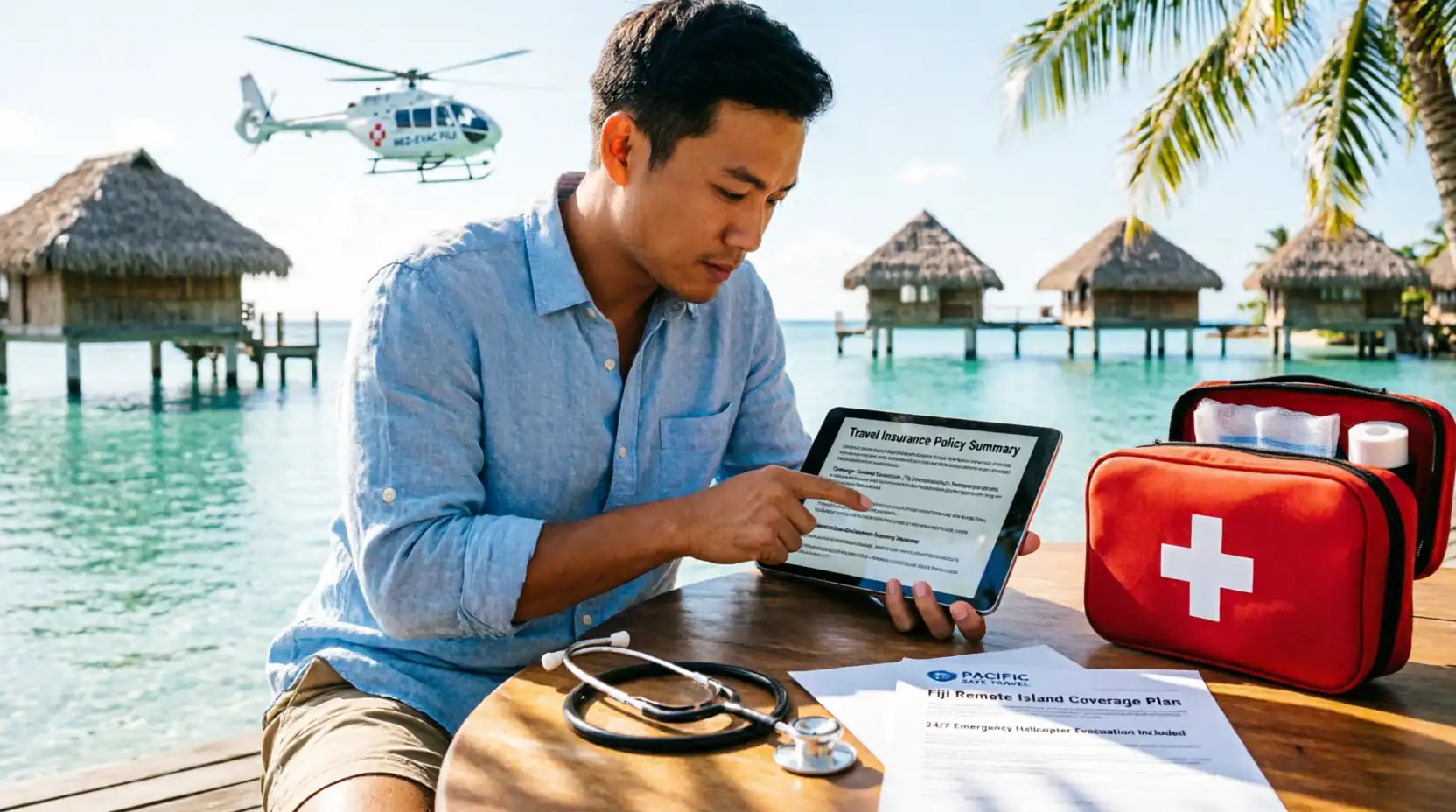
Understanding Fiji Travel Insurance Essentials
Fiji represents one of the South Pacific's most captivating destinations with pristine beaches vibrant coral reefs and warm hospitality. However remote island resorts present unique risks requiring specialized travel insurance coverage.
Medical evacuation coverage proves particularly critical for Fiji travelers visiting outer islands where medical facilities remain limited. Understanding this coverage protects against potentially catastrophic expenses during emergencies.
Without adequate medical evacuation insurance a single emergency could cost tens of thousands of dollars for helicopter transport to mainland facilities or repatriation to home countries. This guide explains why this coverage matters and how to secure appropriate protection.
Fiji's geography spanning over three hundred islands means medical resources concentrate on Viti Levu and Vanua Levu. Remote resorts rely on evacuation protocols for serious medical situations making insurance essential.
This comprehensive 2026 guide covers everything travelers need to know about Fiji travel insurance with emphasis on medical evacuation coverage for remote island resorts including provider comparisons costs claims processes and practical selection strategies.
Why Medical Evacuation Coverage Matters for Fiji

Medical evacuation coverage addresses a specific risk profile unique to remote island travel that standard travel insurance may not adequately cover.
Remote Fiji resorts typically maintain basic first aid capabilities and perhaps a nurse on staff but lack hospitals surgeons or advanced diagnostic equipment. Serious medical situations require transport to larger facilities.
Helicopter evacuations from outer islands to Nadi or Suva hospitals cost fifteen thousand to fifty thousand dollars depending on distance complexity and aircraft type. These expenses typically exceed what most travelers could pay out-of-pocket.
International medical repatriation returning patients to home countries for continued care adds another layer of expense potentially reaching one hundred thousand dollars or more for complex cases.
Standard travel insurance policies may include some medical coverage but often exclude or limit evacuation benefits. Dedicated medical evacuation coverage ensures these critical services receive adequate protection.
Climate-related risks including tropical storms and cyclones can delay evacuations or complicate emergency responses. Comprehensive coverage accounts for these environmental factors unique to Pacific island travel.
Medical Facilities Across Fiji's Islands
Understanding Fiji's healthcare infrastructure helps travelers assess evacuation risks and insurance needs for different island destinations.
Major hospitals including Colonial War Memorial Hospital in Suva and Lautoka Hospital on Viti Levu offer comprehensive medical services though resources may differ from developed nations.
Regional health centers on larger outer islands provide basic emergency care minor procedures and stabilization though lack surgical capabilities or intensive care units.
Remote resort clinics typically employ nurses or paramedics trained in wilderness medicine capable of managing minor injuries illnesses and initial emergency response.
Medical evacuation becomes necessary for conditions requiring surgery advanced diagnostics intensive care or specialized treatment unavailable at local facilities.
Common evacuation triggers include severe trauma cardiac events complicated pregnancies severe infections and conditions requiring surgical intervention beyond local capabilities.
Weather conditions significantly impact evacuation feasibility with helicopter operations suspended during high winds heavy rain or poor visibility. Insurance coverage should account for potential delays.
What Medical Evacuation Coverage Includes
Medical evacuation coverage encompasses specific services that protect travelers during medical emergencies in remote locations.
Emergency transport covers helicopter boat or aircraft evacuation from remote locations to appropriate medical facilities. This includes coordination with local authorities and medical providers.
Medical escort services provide qualified medical personnel to accompany patients during transport ensuring continuous care throughout evacuation journeys.
Repatriation coverage enables return to home countries for continued treatment when medically advisable or requested by patients and physicians.
Family transportation benefits cover travel expenses for family members to join patients during extended medical treatment or repatriation processes.
Pre-authorization services connect travelers with medical coordination teams who arrange evacuations verify coverage and manage logistics during emergencies.
Coverage limits typically range from one hundred thousand to five hundred thousand dollars depending on policy tier. Higher limits provide greater protection for complex or prolonged evacuations.
Choosing the Right Insurance Provider
Selecting appropriate travel insurance requires evaluating providers based on coverage specifics network quality and claims reliability.
Specialized medical evacuation providers like Global Rescue Medjet and Air Ambulance Card focus exclusively on evacuation services offering robust networks and expertise.
Comprehensive travel insurance companies including Allianz Travel Insurance Seven Corners and IMG Global offer medical evacuation as part of broader policies though coverage details vary significantly.
Verify that providers maintain active contracts with air ambulance operators serving the Pacific region. Regional partnerships ensure faster response times and coordinated care.
Review provider networks for Fiji specifically confirming relationships with local hospitals evacuation services and medical coordination centers.
Read independent reviews regarding claims processing speed customer service quality and emergency response effectiveness. Real-world performance matters more than marketing claims.
Consider providers offering twenty-four seven multilingual assistance teams capable of coordinating complex international medical evacuations under time pressure.
Understanding Coverage Limits and Exclusions
Carefully reviewing policy details prevents unpleasant surprises when filing claims during medical emergencies.
Coverage limits define maximum reimbursement amounts for evacuation services. Ensure limits adequately cover potential costs for your specific itinerary and health profile.
Pre-existing condition exclusions may deny coverage for emergencies related to known medical conditions. Some policies offer waivers if purchased within specified timeframes after booking travel.
Adventure activity exclusions may limit coverage for injuries sustained during scuba diving zip-lining or other activities common in Fiji. Verify that planned activities receive coverage.
Alcohol and drug-related exclusions typically deny coverage for emergencies occurring while intoxicated. Understanding these limitations encourages responsible behavior.
War civil unrest and terrorism exclusions may affect coverage during periods of political instability though Fiji generally maintains stable conditions.
Read the certificate of insurance thoroughly rather than relying solely on marketing summaries. Specific policy language determines coverage eligibility.
Cost Considerations for Medical Evacuation Coverage
Understanding insurance costs enables informed decisions balancing protection value against budget constraints.
Standalone medical evacuation policies typically cost one hundred to four hundred dollars annually depending on coverage limits and traveler age. These policies focus exclusively on evacuation services.
Comprehensive travel insurance including medical evacuation ranges from four to ten percent of total trip costs. A two-week Fiji vacation might require one hundred to five hundred dollars for adequate coverage.
Age significantly impacts premiums with travelers over sixty-five potentially paying double or triple standard rates. Some providers offer senior-specific policies with adjusted pricing.
Coverage limits directly affect costs with higher limits commanding higher premiums. Balance adequate protection against unnecessary over-insurance.
Multi-trip annual policies prove cost-effective for frequent travelers visiting Fiji or other remote destinations multiple times yearly.
Compare quotes from multiple providers using identical coverage parameters. Price variations can exceed fifty percent for equivalent coverage levels.
Real Scenarios Requiring Medical Evacuation
Understanding realistic emergency scenarios illustrates why medical evacuation coverage proves essential for remote Fiji travel.
Severe diving accidents including decompression sickness or marine life injuries may require hyperbaric chamber treatment available only at major hospitals. Evacuation from remote resorts proves time-sensitive and expensive.
Cardiac events heart attacks or arrhythmias require immediate advanced care unavailable at resort clinics. Rapid evacuation to facilities with cardiac capabilities saves lives.
Traumatic injuries from water sports hiking or transportation accidents may need surgical intervention beyond resort capabilities. Helicopter evacuation enables timely treatment.
Severe infections or tropical illnesses may require intensive care or specialized medications unavailable locally. Medical evacuation ensures appropriate treatment.
Complicated pregnancies or childbirth emergencies necessitate hospital facilities with obstetric capabilities. Remote resorts cannot manage high-risk deliveries.
These scenarios demonstrate that medical emergencies in remote locations require rapid specialized responses that insurance coverage facilitates.
The Claims Process During Emergencies
Understanding how to activate and navigate insurance claims during medical emergencies reduces stress during critical moments.
Most policies require contacting assistance teams before arranging evacuation. These teams coordinate logistics verify coverage and ensure appropriate care facilities.
Document all medical treatments expenses and communications during emergencies. Detailed records facilitate smoother claims processing and reimbursement.
Obtain itemized bills and medical reports from treating facilities. These documents prove essential for claims substantiation.
Maintain communication with insurance providers throughout evacuation and treatment processes. Regular updates ensure coverage remains active and appropriate.
Submit claims promptly following policy guidelines. Delays may complicate processing or trigger additional documentation requirements.
Keep copies of all submitted documents and correspondence. Backup records protect against lost paperwork or administrative errors.
Pre-Trip Preparation for Medical Emergencies
Proactive preparation enhances safety and simplifies emergency response when traveling to remote Fiji resorts.
Carry insurance documentation including policy numbers emergency contact numbers and coverage summaries in both digital and printed formats.
Share itinerary and insurance details with trusted contacts at home. These contacts can assist with coordination if travelers become incapacitated.
Research medical facilities near planned destinations including contact information and capabilities. Knowledge of local resources aids emergency decision-making.
Pack adequate prescription medications plus extras in case of travel delays. Include copies of prescriptions and physician letters for controlled substances.
Learn basic first aid and emergency response skills. Personal preparedness complements insurance coverage during initial emergency moments.
Register with your country's travel advisory program like STEP for US citizens. These programs facilitate emergency communications and assistance.
Common Mistakes When Purchasing Travel Insurance
Avoiding frequent insurance purchasing errors ensures adequate protection for Fiji remote island travel.
Assuming credit card travel insurance provides adequate medical evacuation coverage proves dangerous. Most card benefits offer minimal evacuation protection insufficient for remote island needs.
Purchasing insurance after booking travel may trigger pre-existing condition exclusions. Buy coverage promptly after initial trip payments to maximize protection.
Focusing solely on price rather than coverage specifics risks inadequate protection. The cheapest policy may exclude critical evacuation benefits.
Overlooking activity exclusions may leave adventures like scuba diving unprotected. Verify that planned activities receive coverage before purchasing.
Failing to understand claims procedures creates confusion during emergencies. Review activation processes before travel begins.
Neglecting to update policies for itinerary changes may create coverage gaps. Modify coverage when extending trips or adding destinations.
Special Considerations for Adventure Travelers
Fiji attracts adventure seekers requiring specialized insurance considerations beyond standard coverage.
Scuba diving coverage requires verification that policies cover recreational diving depths and activities. Some policies exclude diving beyond specific depths or require additional riders.
Water sports including jet skiing parasailing and kayaking may require adventure sport riders for full coverage. Verify activity coverage before participation.
Hiking and trekking in remote areas may trigger wilderness evacuation benefits. Ensure policies cover land-based evacuations in addition to air transport.
Adventure tour operators sometimes include basic insurance though coverage often proves insufficient for serious emergencies. Supplement operator coverage with personal policies.
Equipment coverage for lost or damaged adventure gear may require separate riders. Evaluate whether gear protection justifies additional premiums.
Group adventure travel may benefit from group insurance policies though individual coverage provides more control over coverage specifics.
Family and Senior Traveler Considerations
Different traveler demographics require tailored insurance approaches for Fiji remote island travel.
Family policies may offer cost savings versus individual policies though verify that coverage limits adequately protect all family members.
Children's coverage should include pediatric medical evacuation capabilities. Verify that evacuation networks include facilities equipped for pediatric care.
Senior travelers may face higher premiums and coverage limitations. Seek providers offering senior-friendly policies with appropriate medical evacuation limits.
Pre-existing condition management requires careful policy selection. Some providers offer waivers if purchased within specified timeframes after booking.
Multi-generational travel may require coordinating multiple policies with varying coverage levels. Ensure all family members receive adequate protection.
Consider policies offering family transportation benefits enabling relatives to join patients during extended medical treatment.
Post-Emergency Recovery and Follow-Up
Understanding post-emergency processes ensures comprehensive care and proper claims resolution after medical evacuations.
Continue communication with insurance providers during recovery phases. Ongoing coordination ensures coverage extends through complete treatment cycles.
Document all follow-up treatments expenses and communications. Comprehensive records support complete reimbursement for all covered services.
Understand policy provisions for extended stays if recovery requires remaining in Fiji longer than planned. Coverage may include accommodation and living expenses during recovery.
Coordinate with home country healthcare providers for continuity of care after repatriation. Insurance teams often facilitate these transitions.
Submit final claims promptly after treatment completion. Timely submission accelerates reimbursement and closes insurance files efficiently.
Review claims outcomes to understand coverage performance. This knowledge informs future insurance purchasing decisions.
Conclusion Protecting Your Fiji Adventure
Medical evacuation coverage represents essential protection for travelers visiting Fiji's remote island resorts. The combination of limited local medical facilities and high evacuation costs creates significant financial risks without adequate insurance.
Understanding coverage specifics provider networks claims processes and common exclusions enables informed insurance selection. Investing in appropriate protection safeguards both health and financial wellbeing during Fiji adventures.
Remote island travel offers extraordinary experiences though requires realistic risk assessment and preparation. Medical evacuation insurance transforms potential catastrophes into manageable emergencies with professional support.
Your Fiji journey deserves protection matching its value. Comprehensive medical evacuation coverage provides peace of mind enabling full immersion in Fiji's beauty culture and adventure without worrying about worst-case scenarios.
Choose insurance wisely prepare thoroughly and travel confidently. Your remote Fiji adventure awaits with the security of knowing medical emergencies receive professional coordinated responses backed by adequate financial protection.
0 Comments