.webp)
.webp)
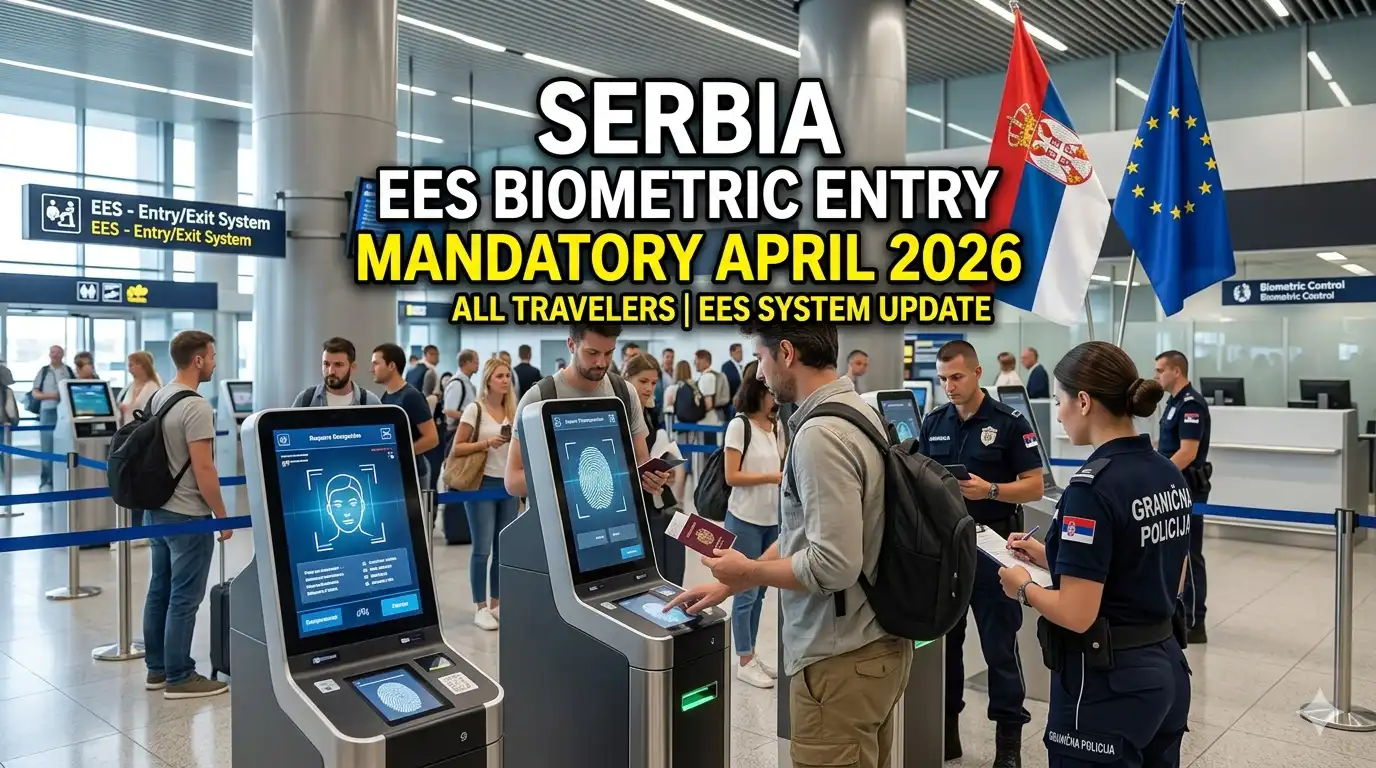
Starting April 10, 2026, US and UK citizens entering the Schengen Area via Serbia's external border crossings will encounter a fundamentally transformed border control process: biometric registration under the European Union's Entry/Exit System (EES) is now mandatory. This significant update means that instead of receiving a traditional passport stamp, travelers must provide facial images and fingerprints during their first entry into any EES-participating country, with Serbia's border points fully integrated into the system by the April deadline .
The EES represents the EU's most substantial border security modernization in decades, replacing manual passport stamping with an automated, biometric-based digital tracking system. For US and UK travelers—both visa-exempt for short Schengen stays but now classified as "non-EU nationals" under EES rules—this change introduces new procedural requirements, potential processing delays, and stricter automated enforcement of the 90/180-day stay limit . Understanding these requirements before travel is essential to avoid border complications, extended wait times, or entry refusals.
This comprehensive guide explains everything US and UK citizens need to know about Serbia's EES implementation as of April 10, 2026: why biometric entry is now mandatory, what the registration process entails, how data is stored and used, practical preparation tips, and how this system affects your travel rights and obligations when entering the Schengen Area via Serbian border crossings.
What Is the EES and Why Does Serbia Implement It?
The Entry/Exit System (EES) is an automated IT system designed to register non-EU nationals traveling for short stays (up to 90 days within any 180-day period) each time they cross the external borders of participating European countries . Serbia, while not an EU member, cooperates with the EU on border management and implements EES requirements at border crossings that serve as external Schengen entry points for travelers continuing into EU territory.
Core EES Functions:
- Biometric Registration: Captures facial images and four fingerprints from eligible travelers during first entry
- Digital Entry/Exit Logging: Replaces physical passport stamps with electronic records of border crossings
- Automated 90/180-Day Tracking: Calculates remaining authorized stay duration across all Schengen countries
- Security Enhancement: Enables real-time verification against watchlists and detection of document fraud
- Overstay Prevention: Flags individuals who exceed permitted stay durations automatically
- 👉 Ohrid Lakefront Villas vs Skopje Boutique: Macedonia Stay
- 👉 Family Friendly Itinerary for 3 Hours Gallery of Maps Kids Engagement
- 👉 Why the "Wild Atlantic Way" is better explored by electric car in 2026.
Why Biometric Entry Is Now Mandatory:
The mandatory biometric requirement serves multiple policy objectives:
- Security Standardization: Creates uniform identity verification across all Schengen external borders, reducing vulnerabilities from inconsistent manual checks
- Migration Management: Provides accurate, real-time data on non-EU national movements to support evidence-based policy decisions
- Fraud Prevention: Biometric data makes it significantly harder to use forged documents or assume false identities at borders
- Efficiency Gains: After initial registration, return visits process faster through biometric verification rather than document re-examination
- Legal Compliance: Implements EU Regulation 2017/2226, which mandates EES adoption by all Schengen external border management authorities
- 👉 Ohrid Lakefront Villas vs Skopje Boutique: Macedonia Stay
- 👉 Family Friendly Itinerary for 3 Hours Gallery of Maps Kids Engagement
- 👉 Why the "Wild Atlantic Way" is better explored by electric car in 2026.
For US and UK citizens specifically, the mandatory biometric requirement reflects their classification as "non-EU nationals" under EES rules, regardless of visa-exempt status for short stays . Post-Brexit, UK citizens no longer benefit from EU freedom of movement provisions and are subject to the same EES requirements as other third-country nationals.
EES Implementation Timeline: Serbia's April 10, 2026 Deadline

The EES rollout follows a structured phased implementation schedule designed to minimize disruption while ensuring system readiness across all border points.
Key Implementation Milestones:
- October 12, 2025: Phased EES operations begin at select Serbian border crossing points with limited hours
- October 2025 - April 2026: Transition period where passport stamping continues alongside EES data collection at progressively more border locations
- April 10, 2026: Full EES implementation mandatory at all Serbian external border crossings serving Schengen entry; passport stamping ceases completely
- Post-April 2026: All non-EU national entries/exits processed exclusively through EES biometric system
- 👉 Ohrid Lakefront Villas vs Skopje Boutique: Macedonia Stay
- 👉 Family Friendly Itinerary for 3 Hours Gallery of Maps Kids Engagement
- 👉 Why the "Wild Atlantic Way" is better explored by electric car in 2026.
Why April 10, 2026 Matters:
This date represents the regulatory deadline for complete EES operationalization across all Schengen external borders . After this date:
- No border crossing may process non-EU nationals without EES registration capability
- Passport stamps are no longer issued or recognized as valid entry/exit documentation
- Biometric verification becomes the sole method for confirming traveler identity and stay duration
- Systems must automatically calculate and enforce 90/180-day limits without manual intervention
- 👉 Ohrid Lakefront Villas vs Skopje Boutique: Macedonia Stay
- 👉 Family Friendly Itinerary for 3 Hours Gallery of Maps Kids Engagement
- 👉 Why the "Wild Atlantic Way" is better explored by electric car in 2026.
Travelers entering the Schengen Area via Serbian border points after April 10, 2026 who have not previously registered under EES will undergo mandatory biometric enrollment during their first crossing. Those with existing EES records will experience faster processing through biometric verification .
Who Must Register: US and UK Citizen Eligibility

Understanding whether you fall under EES registration requirements is critical for travel planning.
US and UK Citizens: Mandatory Registration Applies
Both US and UK passport holders must register under EES when entering the Schengen Area for short stays because:
- Non-EU National Status: Neither citizenship confers EU/EEA nationality under EES definitions
- Short-Stay Travel: Tourism, business visits, and family visits under 90 days fall within EES scope
- Visa-Exempt ≠ EES-Exempt: Visa waiver for Schengen entry does not exempt travelers from biometric registration
- External Border Crossing: Entry via Serbian border points that serve as Schengen external borders triggers EES requirements
- 👉 Ohrid Lakefront Villas vs Skopje Boutique: Macedonia Stay
- 👉 Family Friendly Itinerary for 3 Hours Gallery of Maps Kids Engagement
- 👉 Why the "Wild Atlantic Way" is better explored by electric car in 2026.
Exemptions That May Apply:
Certain categories of travelers are exempt from EES registration:
- Children Under 12: Minors are exempt from fingerprint collection, though facial images may still be captured
- Medical Exemptions: Documented physical conditions preventing fingerprint capture exempt travelers from that specific requirement
- Long-Stay Visa Holders: Individuals entering with national long-stay visas or residence permits follow different procedures
- Diplomatic/Official Passport Holders: Certain government officials may have special arrangements
- EU/EEA Family Members: Non-EU nationals who are immediate family members of EU citizens holding residence cards
- 👉 Ohrid Lakefront Villas vs Skopje Boutique: Macedonia Stay
- 👉 Family Friendly Itinerary for 3 Hours Gallery of Maps Kids Engagement
- 👉 Why the "Wild Atlantic Way" is better explored by electric car in 2026.
Important Clarification: Serbia itself is not a Schengen member state. However, travelers entering the Schengen Area via Serbian border crossings that serve as external Schengen entry points (e.g., land borders with Hungary, Romania, Bulgaria, or Croatia) will encounter EES requirements when crossing into Schengen territory . The biometric registration occurs at the Schengen external border, not necessarily within Serbian territory itself.
The Biometric Registration Process: Step-by-Step

First-time EES registration involves specific procedural steps that travelers should anticipate to minimize delays.
Step 1: Document Presentation
- Present a valid biometric passport (machine-readable with embedded chip) to border control
- Ensure passport was issued within the last 10 years and remains valid for at least 3 months beyond intended departure from Schengen Area
- Passport cards are not accepted for EES registration; traditional passport books required
- 👉 Ohrid Lakefront Villas vs Skopje Boutique: Macedonia Stay
- 👉 Family Friendly Itinerary for 3 Hours Gallery of Maps Kids Engagement
- 👉 Why the "Wild Atlantic Way" is better explored by electric car in 2026.
Step 2: Biographic Data Entry
- Border officer or self-service kiosk scans passport to extract biographic information
- Traveler may be asked to confirm or supplement details: full name, date of birth, nationality, passport number
- Entry purpose, intended duration of stay, and accommodation details may be recorded
- 👉 Ohrid Lakefront Villas vs Skopje Boutique: Macedonia Stay
- 👉 Family Friendly Itinerary for 3 Hours Gallery of Maps Kids Engagement
- 👉 Why the "Wild Atlantic Way" is better explored by electric car in 2026.
Step 3: Facial Image Capture
- Traveler positions face before camera at border control booth or self-service kiosk
- System captures high-resolution facial image for biometric template creation
- Remove glasses, hats, or face coverings that may obstruct facial recognition
- Process typically takes 10-30 seconds
- 👉 Ohrid Lakefront Villas vs Skopje Boutique: Macedonia Stay
- 👉 Family Friendly Itinerary for 3 Hours Gallery of Maps Kids Engagement
- 👉 Why the "Wild Atlantic Way" is better explored by electric car in 2026.
Step 4: Fingerprint Collection
- Traveler places four fingers (typically index through pinky) flat on biometric scanner
- System captures digital fingerprint images for identity verification template
- Process repeated for both hands in some implementations
- Children under 12 exempt from this step
- 👉 Ohrid Lakefront Villas vs Skopje Boutique: Macedonia Stay
- 👉 Family Friendly Itinerary for 3 Hours Gallery of Maps Kids Engagement
- 👉 Why the "Wild Atlantic Way" is better explored by electric car in 2026.
Step 5: Data Verification and File Creation
- System links biometric data with passport information and entry details
- Creates unique EES file for traveler with 3-year retention period
- Border officer reviews and approves registration
- Traveler receives entry authorization; no physical stamp issued
- 👉 Ohrid Lakefront Villas vs Skopje Boutique: Macedonia Stay
- 👉 Family Friendly Itinerary for 3 Hours Gallery of Maps Kids Engagement
- 👉 Why the "Wild Atlantic Way" is better explored by electric car in 2026.
Subsequent Entries: Faster Verification
After initial registration, return visits to Schengen Area process more quickly:
- Biometric verification replaces full re-registration
- System matches live facial image/fingerprints against stored template
- Entry/exit automatically logged to existing file
- 90/180-day calculation updated in real-time
- 👉 Ohrid Lakefront Villas vs Skopje Boutique: Macedonia Stay
- 👉 Family Friendly Itinerary for 3 Hours Gallery of Maps Kids Engagement
- 👉 Why the "Wild Atlantic Way" is better explored by electric car in 2026.
Self-Service Options:
Some border crossings offer self-service EES kiosks for eligible travelers with biometric passports :
- Scan passport independently at kiosk
- Follow on-screen prompts for facial capture
- Provide fingerprints at integrated scanner
- Receive verification receipt for officer review
- Reduces processing time for straightforward cases
- 👉 Ohrid Lakefront Villas vs Skopje Boutique: Macedonia Stay
- 👉 Family Friendly Itinerary for 3 Hours Gallery of Maps Kids Engagement
- 👉 Why the "Wild Atlantic Way" is better explored by electric car in 2026.
Data Storage, Retention, and Privacy Protections

Understanding how your biometric data is handled under EES is essential for informed travel decisions.
What Data Does EES Store?
The system collects and retains specific categories of information:
- Biographic Data: Name, date of birth, nationality, passport number, issuing country
- Biometric Data: Facial image and four fingerprint templates
- Travel Records: Date, time, and location of each entry and exit
- Stay Duration: Calculated remaining days under 90/180-day rule
- Refusal Records: Any entry denials with reasons documented
- 👉 Ohrid Lakefront Villas vs Skopje Boutique: Macedonia Stay
- 👉 Family Friendly Itinerary for 3 Hours Gallery of Maps Kids Engagement
- 👉 Why the "Wild Atlantic Way" is better explored by electric car in 2026.
Retention Periods:
EES data retention follows strict regulatory timelines :
- Individual Biometric File: Retained for 3 years and 1 day after traveler's last recorded exit from Schengen Area
- Entry/Exit Event Records: Stored for 3 years from creation date
- Overstay Records: If no exit is recorded (potential overstay), data may be retained up to 5 years under specific conditions
- Automatic Deletion: System purges data automatically when retention periods expire
- 👉 Ohrid Lakefront Villas vs Skopje Boutique: Macedonia Stay
- 👉 Family Friendly Itinerary for 3 Hours Gallery of Maps Kids Engagement
- 👉 Why the "Wild Atlantic Way" is better explored by electric car in 2026.
Privacy and Data Protection Safeguards:
EES implementation incorporates multiple privacy protections:
- GDPR Compliance: Processing adheres to EU General Data Protection Regulation standards
- Purpose Limitation: Data used exclusively for border management, migration control, and security purposes
- Access Controls: Strict authorization protocols limit which officials may access EES data
- Encryption: Biometric templates stored using cryptographic protection
- Audit Trails: All data accesses logged for accountability and oversight
- 👉 Ohrid Lakefront Villas vs Skopje Boutique: Macedonia Stay
- 👉 Family Friendly Itinerary for 3 Hours Gallery of Maps Kids Engagement
- 👉 Why the "Wild Atlantic Way" is better explored by electric car in 2026.
Traveler Rights:
Under EU data protection law, individuals have specific rights regarding EES data:
- Access: Request confirmation of whether your data is stored and obtain copies
- Correction: Request rectification of inaccurate or incomplete information
- Deletion: Request erasure under specific circumstances (e.g., unlawful processing)
- Restriction: Request limitation of processing while accuracy is verified
- Complaint: Lodge complaints with national data protection authorities
- 👉 Ohrid Lakefront Villas vs Skopje Boutique: Macedonia Stay
- 👉 Family Friendly Itinerary for 3 Hours Gallery of Maps Kids Engagement
- 👉 Why the "Wild Atlantic Way" is better explored by electric car in 2026.
To exercise these rights, contact the border authority of the Schengen country where your data was recorded or the European Data Protection Supervisor .
How EES Affects the 90/180-Day Rule

One of EES's most significant impacts for US and UK travelers is automated enforcement of the Schengen short-stay limit.
Understanding the 90/180-Day Rule:
The Schengen Area permits visa-exempt nationals to stay for:
- Maximum 90 days within any rolling 180-day period
- Calculated cumulatively across all Schengen member states
- Applies to tourism, business visits, family visits, and other short-term purposes
- Does not permit "resetting" the clock by leaving and re-entering
- 👉 Ohrid Lakefront Villas vs Skopje Boutique: Macedonia Stay
- 👉 Family Friendly Itinerary for 3 Hours Gallery of Maps Kids Engagement
- 👉 Why the "Wild Atlantic Way" is better explored by electric car in 2026.
Pre-EES Enforcement Challenges:
Before EES, compliance relied on:
- Manual passport stamp inspection by border officers
- Traveler self-reporting of entry/exit dates
- Inconsistent record-keeping across different countries
- Potential for errors, omissions, or intentional circumvention
- 👉 Ohrid Lakefront Villas vs Skopje Boutique: Macedonia Stay
- 👉 Family Friendly Itinerary for 3 Hours Gallery of Maps Kids Engagement
- 👉 Why the "Wild Atlantic Way" is better explored by electric car in 2026.
EES Automated Tracking:
The new system transforms enforcement:
- Real-Time Calculation: System automatically computes used and remaining days upon each border crossing
- Schengen-Wide Visibility: All member states access the same centralized data
- Instant Overstay Detection: Attempts to enter with exhausted allowance flagged immediately
- Reduced Ambiguity: Eliminates disputes about stamp interpretation or date calculation
- 👉 Ohrid Lakefront Villas vs Skopje Boutique: Macedonia Stay
- 👉 Family Friendly Itinerary for 3 Hours Gallery of Maps Kids Engagement
- 👉 Why the "Wild Atlantic Way" is better explored by electric car in 2026.
Practical Example:
A US citizen's travel pattern under EES:
- January 15: Enters Schengen via Serbia-Hungary border; EES records entry, starts 90-day count
- March 10: Exits Schengen via Croatia-Serbia border; EES logs exit, pauses count at 55 days used
- May 1: Re-enters Schengen via Romania-Serbia border; EES verifies 35 days remaining, permits entry
- June 4: Attempts re-entry after using remaining 35 days; EES blocks entry, 90-day limit exhausted
- 👉 Ohrid Lakefront Villas vs Skopje Boutique: Macedonia Stay
- 👉 Family Friendly Itinerary for 3 Hours Gallery of Maps Kids Engagement
- 👉 Why the "Wild Atlantic Way" is better explored by electric car in 2026.
Consequences of Overstay:
EES detection of unauthorized stay may result in:
- Entry refusal at border with formal documentation
- Fines imposed by national authorities
- Future Schengen visa application complications
- Potential entry bans for repeated or prolonged violations
- 👉 Ohrid Lakefront Villas vs Skopje Boutique: Macedonia Stay
- 👉 Family Friendly Itinerary for 3 Hours Gallery of Maps Kids Engagement
- 👉 Why the "Wild Atlantic Way" is better explored by electric car in 2026.
Travelers should use the EU's official short-stay calculator to verify remaining days before travel .
Practical Preparation for US and UK Travelers

Proactive preparation minimizes border delays and ensures compliance with EES requirements.
Before Departure:
- Verify Passport Validity: Ensure passport issued within last 10 years and valid 3+ months beyond planned Schengen departure
- Check Biometric Passport Status: Confirm passport contains embedded chip (symbol on cover); non-biometric passports may face processing delays
- Review Travel Itinerary: Calculate cumulative Schengen days used in past 180 days; confirm remaining allowance
- Prepare Supporting Documents: Have return tickets, accommodation confirmations, travel insurance, and proof of sufficient funds readily accessible
- Allow Extra Time: Plan for extended border processing during initial EES registration; arrive 2-3 hours before connecting transport
- 👉 Ohrid Lakefront Villas vs Skopje Boutique: Macedonia Stay
- 👉 Family Friendly Itinerary for 3 Hours Gallery of Maps Kids Engagement
- 👉 Why the "Wild Atlantic Way" is better explored by electric car in 2026.
At the Border:
- Follow Instructions: Comply with border officer directions for biometric capture positioning and procedure
- Remove Obstructions: Take off glasses, hats, or face coverings that may interfere with facial recognition
- Stay Patient: First-time registration takes longer; maintain calm demeanor to facilitate smooth processing
- Ask Questions: Request clarification if procedures are unclear; officers trained to assist travelers
- Keep Documents Accessible: Have passport and supporting materials ready for verification requests
- 👉 Ohrid Lakefront Villas vs Skopje Boutique: Macedonia Stay
- 👉 Family Friendly Itinerary for 3 Hours Gallery of Maps Kids Engagement
- 👉 Why the "Wild Atlantic Way" is better explored by electric car in 2026.
Technology Considerations:
- Mobile Apps: Some Schengen countries offer pre-registration apps; check destination country resources
- Self-Service Kiosks: Utilize where available to expedite processing for biometric passport holders
- Backup Documentation: Carry printed copies of digital confirmations in case of device failure
- Power Management: Ensure mobile devices charged for potential app use or QR code display
- 👉 Ohrid Lakefront Villas vs Skopje Boutique: Macedonia Stay
- 👉 Family Friendly Itinerary for 3 Hours Gallery of Maps Kids Engagement
- 👉 Why the "Wild Atlantic Way" is better explored by electric car in 2026.
Special Circumstances:
- Traveling with Children: Prepare documentation proving parentage/guardianship; minors under 12 exempt from fingerprints
- Medical Conditions: Carry medical documentation if physical conditions prevent fingerprint capture
- Dual Citizenship: Present the passport corresponding to your travel status; EU citizenship exempts from EES
- Group Travel: Allow additional time for multiple registrations; coordinate document preparation
- 👉 Ohrid Lakefront Villas vs Skopje Boutique: Macedonia Stay
- 👉 Family Friendly Itinerary for 3 Hours Gallery of Maps Kids Engagement
- 👉 Why the "Wild Atlantic Way" is better explored by electric car in 2026.
Common Questions and Concerns

Will EES registration happen every time I cross a Schengen border?
No. Biometric registration occurs only during your first entry into the Schengen Area under EES. Subsequent entries use faster biometric verification against your existing file. Internal Schengen border crossings (between member states) typically involve no border checks .
How long does EES registration take at the border?
First-time registration typically adds 5-15 minutes to standard border processing time, depending on queue length and system efficiency. Return visits with biometric verification usually process as quickly as pre-EES stamping . During the transition period (October 2025-April 2026), allow extra time for potential system adjustments.
Can I opt out of biometric registration?
No. EES registration is mandatory for eligible non-EU nationals entering the Schengen Area. Refusal to provide required biometrics may result in entry denial. Exemptions apply only to specific categories (children under 12, documented medical conditions) .
Does EES apply to land borders with Serbia?
Yes. By April 10, 2026, all Schengen external borders—including land crossings with Serbia—must implement full EES functionality . Travelers entering Schengen territory via Serbian border points will undergo EES procedures at the Schengen side of the border.
What if my fingerprints cannot be captured?
Temporary conditions (cuts, bandages) may require reattempt at a later entry. Permanent physical conditions preventing fingerprint capture exempt travelers from that requirement with proper medical documentation; facial image and biographic data still recorded .
How does EES interact with ETIAS?
EES and ETIAS are separate but complementary systems. ETIAS (European Travel Information and Authorization System) is a pre-travel online authorization for visa-exempt travelers, similar to US ESTA. EES handles biometric registration at the border. Both will eventually apply to US/UK citizens, but with different implementation timelines .
Can I access my EES data?
Yes. Under EU data protection law, you have the right to access, correct, or request deletion of your EES data. Contact the border authority of the Schengen country where your data was recorded or the European Data Protection Supervisor for procedures .
Will EES affect my ability to work or study in Schengen countries?
EES applies only to short-stay travel (up to 90 days). Long-stay visas, residence permits, work authorizations, and student visas follow separate procedures and generally exempt holders from EES short-stay registration for entries covered by those permits .
Potential Challenges and Mitigation Strategies

Understanding possible complications helps travelers prepare effectively.
Extended Processing Times:
Initial EES implementation may cause border delays:
- Mitigation: Arrive 2-3 hours before connecting transport; avoid peak travel times when possible; monitor border wait time reports
- Reality Check: Delays likely temporary as systems stabilize and staff gain proficiency
- 👉 Ohrid Lakefront Villas vs Skopje Boutique: Macedonia Stay
- 👉 Family Friendly Itinerary for 3 Hours Gallery of Maps Kids Engagement
- 👉 Why the "Wild Atlantic Way" is better explored by electric car in 2026.
Technical System Issues:
As with any new technology, glitches may occur:
- Mitigation: Carry printed backup documentation; remain patient with border staff; request supervisor assistance if needed
- Contingency: Border authorities maintain manual fallback procedures for system outages
- 👉 Ohrid Lakefront Villas vs Skopje Boutique: Macedonia Stay
- 👉 Family Friendly Itinerary for 3 Hours Gallery of Maps Kids Engagement
- 👉 Why the "Wild Atlantic Way" is better explored by electric car in 2026.
Data Accuracy Concerns:
Incorrect biometric matching or data entry errors could cause problems:
- Mitigation: Verify displayed information during registration; request corrections immediately if errors noticed
- Follow-up: Document any issues with officer badge numbers for potential follow-up complaints
- 👉 Ohrid Lakefront Villas vs Skopje Boutique: Macedonia Stay
- 👉 Family Friendly Itinerary for 3 Hours Gallery of Maps Kids Engagement
- 👉 Why the "Wild Atlantic Way" is better explored by electric car in 2026.
Privacy Apprehensions:
Some travelers may have concerns about biometric data collection:
- Education: Review official EES privacy documentation to understand safeguards and retention limits
- Rights Awareness: Know your GDPR rights regarding access, correction, and deletion requests
- Practical Perspective: Recognize that biometric border systems are increasingly global standard for security and efficiency
- 👉 Ohrid Lakefront Villas vs Skopje Boutique: Macedonia Stay
- 👉 Family Friendly Itinerary for 3 Hours Gallery of Maps Kids Engagement
- 👉 Why the "Wild Atlantic Way" is better explored by electric car in 2026.
Broader Implications for US-UK-Serbia Travel

EES implementation reflects larger trends in international travel management.
Standardization of Border Procedures:
The shift toward biometric, automated border control represents global convergence:
- US uses similar systems (e.g., Global Entry, Mobile Passport Control)
- UK implements Electronic Travel Authorizations (ETA) for visa-exempt visitors
- EES aligns European practices with these international standards
- Travelers increasingly encounter biometric verification worldwide
- 👉 Ohrid Lakefront Villas vs Skopje Boutique: Macedonia Stay
- 👉 Family Friendly Itinerary for 3 Hours Gallery of Maps Kids Engagement
- 👉 Why the "Wild Atlantic Way" is better explored by electric car in 2026.
Serbia's Strategic Position:
Serbia's cooperation with EES implementation demonstrates:
- Commitment to EU integration processes and border security standards
- Practical benefits of interoperable systems for legitimate travelers
- Balancing sovereignty concerns with regional security cooperation
- Potential model for other non-EU states managing Schengen-adjacent borders
- 👉 Ohrid Lakefront Villas vs Skopje Boutique: Macedonia Stay
- 👉 Family Friendly Itinerary for 3 Hours Gallery of Maps Kids Engagement
- 👉 Why the "Wild Atlantic Way" is better explored by electric car in 2026.
Future Developments to Monitor:
Travelers should watch for related system evolutions:
- ETIAS Launch: Pre-travel authorization requirement for visa-exempt nationals (separate timeline from EES)
- System Enhancements: Potential mobile pre-registration, expanded self-service options
- Regional Expansion: Possible EES adoption by additional neighboring states
- Policy Adjustments: Refinements to retention periods, exemption criteria, or processing procedures based on operational experience
- 👉 Ohrid Lakefront Villas vs Skopje Boutique: Macedonia Stay
- 👉 Family Friendly Itinerary for 3 Hours Gallery of Maps Kids Engagement
- 👉 Why the "Wild Atlantic Way" is better explored by electric car in 2026.
Conclusion: Navigating the New Border Reality
The April 10, 2026 implementation of mandatory biometric entry under the Entry/Exit System represents a fundamental shift in how US and UK citizens experience border crossings when entering the Schengen Area via Serbian border points. While the requirement to provide facial images and fingerprints may initially seem burdensome, the system ultimately delivers significant benefits: enhanced security, more efficient processing for return travelers, and unambiguous enforcement of stay duration limits that protect both travelers and host countries.
For US and UK citizens, success under the new regime depends on preparation: verifying passport validity, understanding the 90/180-day calculation, allowing extra time for initial registration, and approaching border procedures with patience and cooperation. The transition period through April 2026 offers opportunities to familiarize oneself with the system while fallback procedures remain available.
As biometric border management becomes the global standard, early adaptation to EES requirements positions travelers advantageously for future international travel. The system's emphasis on data protection, traveler rights, and procedural transparency reflects mature implementation of security technology that respects individual privacy while serving legitimate public interests.
By understanding the "why" behind mandatory biometric entry—not merely as bureaucratic procedure but as part of a coordinated approach to secure, efficient, and fair border management—US and UK travelers can navigate Serbia's EES implementation with confidence. The result: smoother crossings, clearer expectations, and continued access to the rich cultural and natural experiences that make Schengen Area travel so rewarding.
Before your next journey, verify current EES procedures through official EU and Serbian government sources, as implementation details may evolve during the transition period. Safe travels.
0 Comments