.webp)
.webp)
EDP Art Reef Albufeira: Diving the world's first underwater sculptural gallery by Vhils.
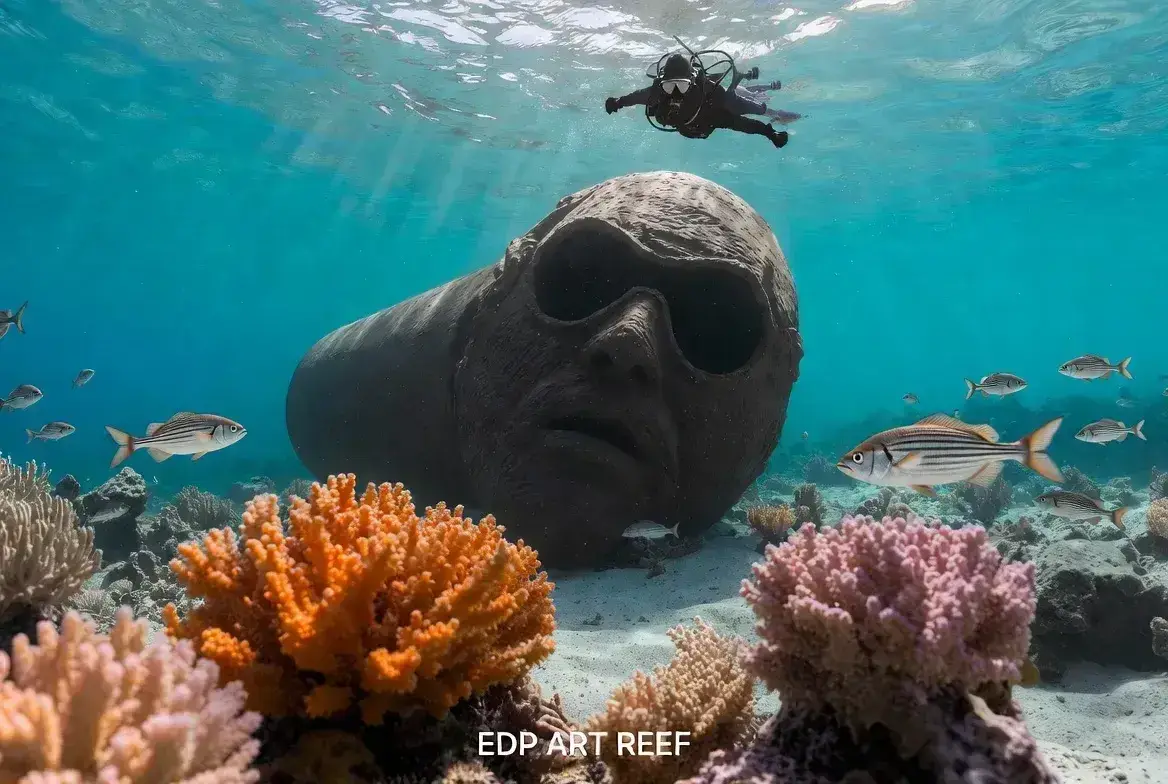
EDP Art Reef Albufeira: Diving the World's First Underwater Sculptural Gallery by Vhils
Off the sun-drenched coast of Albufeira in Portugal's Algarve region, a revolutionary fusion of art, conservation, and adventure awaits beneath the Atlantic waves. The EDP Art Reef Albufeira represents a world-first: an underwater sculptural gallery created by renowned Portuguese street artist Vhils (Alexandre Farto), designed to serve simultaneously as a breathtaking artistic experience for divers and a thriving artificial reef supporting marine biodiversity. This groundbreaking project, sponsored by EDP (Energias de Portugal) as part of their commitment to sustainability and cultural innovation, invites divers, art enthusiasts, and eco-conscious travelers to explore a submerged masterpiece where contemporary art meets ocean conservation.
Located approximately 300 meters offshore at depths ranging from 8 to 18 meters, the EDP Art Reef features a series of large-scale concrete sculptures carved using Vhils' signature technique—originally developed for urban walls—adapted for the marine environment. These textured artworks, designed to evolve over time as marine life colonizes their surfaces, create a dynamic, living gallery that changes with the seasons and the growth of the reef ecosystem. For certified divers, this offers an unparalleled opportunity to experience art in an entirely new dimension: floating among sculptures that are simultaneously artistic expressions and habitats for fish, crustaceans, and algae.
This comprehensive guide provides everything you need to know about diving the EDP Art Reef Albufeira. From understanding the artistic vision and environmental purpose to planning your dive, choosing the right certification, and combining your underwater art experience with the broader attractions of the Algarve, we'll help you navigate this unique attraction. Whether you're an experienced diver seeking a novel underwater experience, an art lover curious about Vhils' innovative work, or a sustainable traveler looking to support conservation through tourism, this guide will help you make the most of your journey to the world's first underwater sculptural gallery.
Understanding the Vision: Art Meets Conservation
The EDP Art Reef Albufeira is not merely an art installation or an artificial reef—it is a deliberate synthesis of both, designed to demonstrate how human creativity can actively support environmental restoration.
The Artist: Vhils (Alexandre Farto)
Born in 1987 in Seixal, Portugal, Vhils has gained international acclaim for his distinctive artistic technique: rather than adding paint to surfaces, he carves, etches, and excavates layers to reveal hidden portraits and textures. His work appears on walls across the globe, from Lisbon to London, New York to Hong Kong, often commenting on urbanization, identity, and the passage of time. For the EDP Art Reef, Vhils adapted his signature "deconstruction" method to concrete structures designed for submersion, creating textured surfaces that mimic natural rock formations while bearing his artistic imprint.
Environmental Purpose:
- Artificial Reef Function: The sculptures provide hard substrate for marine organisms to colonize, creating habitat for fish, invertebrates, and algae in an area where natural reef structures are limited.
- Biodiversity Enhancement: Over time, the concrete surfaces will be colonized by coralline algae, sponges, barnacles, and other marine life, attracting fish species and enhancing local biodiversity.
- Coastal Protection: Artificial reefs can help dissipate wave energy, potentially reducing coastal erosion in vulnerable areas.
- Education and Awareness: By combining art with conservation, the project raises awareness about marine ecosystems and the importance of protecting ocean environments.
- 👉 Germany Digital Nomad Visa 2026: €2,539 Income & New Rules
- 👉 Belarus Visa-Free 2026: 30-Day Entry Guide for Europeans
- 👉 DO AMERICANS NEED A VISA FOR ITALY? (italy travel tips 2026 new etias rules)
EDP's Sustainability Commitment:
As Portugal's leading energy company, EDP has positioned the Art Reef as part of its broader sustainability strategy, demonstrating how corporate initiatives can support both cultural innovation and environmental stewardship. The project aligns with EDP's goals of promoting renewable energy, biodiversity conservation, and community engagement.
The Underwater Gallery: What to Expect When You Dive
The EDP Art Reef Albufeira consists of multiple sculptural elements strategically placed to create an engaging underwater experience while maximizing ecological benefits.
Sculptural Elements:
- Large-Scale Concrete Structures: The primary artworks are substantial concrete forms, each weighing several tons, designed to remain stable on the seabed while providing complex surfaces for marine colonization.
- Vhils' Signature Textures: Each sculpture features the artist's characteristic carved patterns—deep grooves, layered surfaces, and portrait-like forms—that create visual interest for divers and microhabitats for marine life.
- Strategic Placement: Sculptures are arranged to create a "gallery" experience, with pathways allowing divers to move between pieces while minimizing disturbance to the developing ecosystem.
- Depth Variation: Installations are placed at depths from 8 to 18 meters, accommodating divers of different certification levels and creating varied lighting conditions for photography.
- 👉 Germany Digital Nomad Visa 2026: €2,539 Income & New Rules
- 👉 Belarus Visa-Free 2026: 30-Day Entry Guide for Europeans
- 👉 DO AMERICANS NEED A VISA FOR ITALY? (italy travel tips 2026 new etias rules)
Marine Life You May Encounter:
While the reef is still developing, divers can expect to see:
- Early Colonizers: Coralline algae, barnacles, tube worms, and sponges beginning to establish on the concrete surfaces.
- Fish Species: Common Algarve species including sea bream, wrasse, groupers, and occasionally octopus seeking shelter among the structures.
- Seasonal Visitors: Depending on the season, you may encounter larger pelagic species, rays, or even occasional dolphin sightings in the surrounding waters.
- Photographic Opportunities: The interplay of Vhils' textures with emerging marine life creates unique photographic subjects, especially with the dramatic light filtering through Atlantic waters.
- 👉 Germany Digital Nomad Visa 2026: €2,539 Income & New Rules
- 👉 Belarus Visa-Free 2026: 30-Day Entry Guide for Europeans
- 👉 DO AMERICANS NEED A VISA FOR ITALY? (italy travel tips 2026 new etias rules)
Dive Experience:
- Accessibility: Suitable for Open Water certified divers and above; the shallowest elements are accessible to Advanced Open Water divers with proper supervision.
- Guided Dives: All dives to the Art Reef must be conducted through authorized dive centers in Albufeira, ensuring safety and minimizing environmental impact.
- Duration: Typical dives last 30-45 minutes, depending on depth, air consumption, and conditions.
- Best Visibility: Atlantic visibility varies; best conditions typically occur in late spring through early autumn (May-October) with visibility ranging from 10-25 meters.
- 👉 Germany Digital Nomad Visa 2026: €2,539 Income & New Rules
- 👉 Belarus Visa-Free 2026: 30-Day Entry Guide for Europeans
- 👉 DO AMERICANS NEED A VISA FOR ITALY? (italy travel tips 2026 new etias rules)
Planning Your Dive: Practical Information for Visitors
Visiting the EDP Art Reef requires careful planning to ensure a safe, enjoyable, and responsible experience.
Certification Requirements:
- Minimum Certification: Open Water Diver (or equivalent) from a recognized agency (PADI, SSI, NAUI, etc.).
- Recommended: Advanced Open Water certification for deeper elements and better buoyancy control around delicate structures.
- Recent Experience: Dive centers may require proof of recent diving activity (within last 6-12 months) or a refresher course.
- Specialty Courses: Some centers offer "Art Reef Diver" specialty modules focusing on underwater photography and conservation awareness.
- 👉 Germany Digital Nomad Visa 2026: €2,539 Income & New Rules
- 👉 Belarus Visa-Free 2026: 30-Day Entry Guide for Europeans
- 👉 DO AMERICANS NEED A VISA FOR ITALY? (italy travel tips 2026 new etias rules)
Authorized Dive Centers in Albufeira:
Only dive centers authorized by the EDP Art Reef project may take divers to the site. These centers have received specific training on the reef's layout, environmental protocols, and artistic context. Look for centers displaying the official EDP Art Reef authorization.
Booking Your Dive:
- Advance Reservation: Book at least 48-72 hours in advance, especially during peak season (June-September).
- Group Size: Dives are typically limited to small groups (4-6 divers per guide) to minimize environmental impact.
- What's Included: Most packages include equipment rental, guide services, briefings on the art and ecology, and sometimes underwater photography assistance.
- Cost: Expect to pay €60-100 per person for a single tank dive; two-tank dives or specialty packages cost more.
- 👉 Germany Digital Nomad Visa 2026: €2,539 Income & New Rules
- 👉 Belarus Visa-Free 2026: 30-Day Entry Guide for Europeans
- 👉 DO AMERICANS NEED A VISA FOR ITALY? (italy travel tips 2026 new etias rules)
What to Bring:
- Certification Card: Physical or digital proof of your diving certification.
- Logbook: Some centers require proof of recent dives.
- Personal Gear: Mask, snorkel, and exposure protection if you prefer your own (most centers provide full equipment).
- Underwater Camera: If you plan to photograph the art; ensure it's rated for your planned depth.
- Reef-Safe Sunscreen: If applying sunscreen before diving, use only reef-safe, non-toxic formulations.
- 👉 Germany Digital Nomad Visa 2026: €2,539 Income & New Rules
- 👉 Belarus Visa-Free 2026: 30-Day Entry Guide for Europeans
- 👉 DO AMERICANS NEED A VISA FOR ITALY? (italy travel tips 2026 new etias rules)
Best Time to Visit: Seasonal Considerations for Diving
The Algarve's Atlantic location means diving conditions vary significantly by season. Planning your visit strategically enhances both safety and enjoyment.
Optimal Diving Seasons:
- May-June (Late Spring): Water temperatures warming (16-19°C), improving visibility, fewer crowds, and active marine life. Ideal balance of comfort and conditions.
- July-September (Summer): Warmest water (19-22°C), best visibility (15-25 meters), calmest seas. Peak tourist season means more divers; book early.
- October (Early Autumn): Still-warm water, good visibility, fewer crowds than summer. Excellent photography light with lower sun angles.
- 👉 Germany Digital Nomad Visa 2026: €2,539 Income & New Rules
- 👉 Belarus Visa-Free 2026: 30-Day Entry Guide for Europeans
- 👉 DO AMERICANS NEED A VISA FOR ITALY? (italy travel tips 2026 new etias rules)
Less Ideal Periods:
- November-April (Winter): Cooler water (14-16°C), variable visibility, stronger currents, and rougher seas. Suitable only for experienced cold-water divers with appropriate exposure protection.
- Storm Seasons: Winter storms can create hazardous conditions; dive centers may cancel trips for safety.
- 👉 Germany Digital Nomad Visa 2026: €2,539 Income & New Rules
- 👉 Belarus Visa-Free 2026: 30-Day Entry Guide for Europeans
- 👉 DO AMERICANS NEED A VISA FOR ITALY? (italy travel tips 2026 new etias rules)
Daily Timing:
- Morning Dives: Typically calmer seas and better visibility; marine life often more active.
- Afternoon Dives: Warmer surface temperatures but potentially choppier conditions; dramatic lighting for photography.
- Golden Hour: Dives scheduled near sunrise or sunset offer exceptional photographic opportunities with angled light penetrating the water column.
- 👉 Germany Digital Nomad Visa 2026: €2,539 Income & New Rules
- 👉 Belarus Visa-Free 2026: 30-Day Entry Guide for Europeans
- 👉 DO AMERICANS NEED A VISA FOR ITALY? (italy travel tips 2026 new etias rules)
Combining Art and Adventure: Beyond the Dive
Your visit to the EDP Art Reef can be part of a broader Algarve experience that combines underwater art with terrestrial attractions.
Albufeira Highlights:
- Old Town: Explore the charming cobbled streets, whitewashed buildings, and traditional restaurants of Albufeira's historic center.
- Beaches: Relax on Praia dos Pescadores or Praia da Oura, or discover more secluded coves accessible by boat or foot.
- Coastal Walks: The Algarve's cliff-top trails offer spectacular ocean views and photo opportunities of the coastline where the Art Reef lies beneath.
- Local Cuisine: Sample fresh seafood, cataplana (traditional seafood stew), and Algarve wines at local restaurants.
- 👉 Germany Digital Nomad Visa 2026: €2,539 Income & New Rules
- 👉 Belarus Visa-Free 2026: 30-Day Entry Guide for Europeans
- 👉 DO AMERICANS NEED A VISA FOR ITALY? (italy travel tips 2026 new etias rules)
Other Diving Opportunities in the Algarve:
- Natural Reefs: Explore the Algarve's natural rocky reefs, caves, and swim-throughs at sites like Ponta da Piedade near Lagos.
- Wreck Dives: Several shipwrecks off the Algarve coast offer advanced diving opportunities.
- Marine Protected Areas: Dive in protected zones where biodiversity is particularly rich and conservation efforts are focused.
- 👉 Germany Digital Nomad Visa 2026: €2,539 Income & New Rules
- 👉 Belarus Visa-Free 2026: 30-Day Entry Guide for Europeans
- 👉 DO AMERICANS NEED A VISA FOR ITALY? (italy travel tips 2026 new etias rules)
Cultural Experiences:
- Vhils' Terrestrial Work: Seek out Vhils' street art in Lisbon, Porto, or other Portuguese cities to see his technique in its original urban context.
- Local Art Scene: Explore galleries and studios in the Algarve showcasing regional artists and traditional crafts.
- Historical Sites: Visit Moorish castles, Roman ruins, and traditional fishing villages that tell the Algarve's rich history.
- 👉 Germany Digital Nomad Visa 2026: €2,539 Income & New Rules
- 👉 Belarus Visa-Free 2026: 30-Day Entry Guide for Europeans
- 👉 DO AMERICANS NEED A VISA FOR ITALY? (italy travel tips 2026 new etias rules)
Responsible Diving: Protecting the Art Reef Ecosystem
The EDP Art Reef is both an artistic installation and a developing ecosystem. Responsible diving practices are essential to protect both.
Essential Guidelines:
- Perfect Buoyancy: Maintain neutral buoyancy at all times to avoid contacting sculptures or the seabed. Practice buoyancy skills before visiting the reef.
- No Touching: Never touch the sculptures or marine life. Oils from human skin can harm developing organisms; physical contact can damage delicate structures.
- Minimize Disturbance: Move slowly and deliberately; avoid stirring up sediment which can smother emerging marine life and reduce visibility.
- Follow Guide Instructions: Authorized guides know the reef's layout and ecological sensitivities; follow their directions precisely.
- Photography Etiquette: Use natural light when possible; avoid bright video lights that can disturb marine life; never use flash on sensitive organisms.
- Leave No Trace: Take nothing but photos; leave nothing but bubbles. Do not collect souvenirs or disturb the environment.
- 👉 Germany Digital Nomad Visa 2026: €2,539 Income & New Rules
- 👉 Belarus Visa-Free 2026: 30-Day Entry Guide for Europeans
- 👉 DO AMERICANS NEED A VISA FOR ITALY? (italy travel tips 2026 new etias rules)
Environmental Monitoring:
The EDP Art Reef project includes ongoing scientific monitoring of marine colonization and ecosystem development. Divers may be invited to contribute to citizen science efforts by reporting observations of species or changes to the reef. Ask your dive center about participation opportunities.
Photography Tips: Capturing the Underwater Art
The EDP Art Reef offers unique photographic opportunities. These tips help you capture its essence responsibly.
Equipment Recommendations:
- Camera: Any underwater-rated camera or housing; mirrorless or DSLR systems offer greatest flexibility.
- Lenses: Wide-angle (10-17mm) for capturing sculptures in context; macro (60-100mm) for details of marine life colonizing the art.
- Lighting: Video lights or strobes for illuminating textures; use sparingly to avoid disturbing marine life.
- Accessories: Red filter for restoring color at depth; buoyancy control devices for stable shooting.
- 👉 Germany Digital Nomad Visa 2026: €2,539 Income & New Rules
- 👉 Belarus Visa-Free 2026: 30-Day Entry Guide for Europeans
- 👉 DO AMERICANS NEED A VISA FOR ITALY? (italy travel tips 2026 new etias rules)
Composition Strategies:
- Context Shots: Include divers or natural elements to convey scale of the sculptures.
- Texture Focus: Highlight Vhils' carved patterns as marine life begins to colonize them.
- Light Play: Position yourself to capture sunbeams penetrating the water and illuminating the art.
- Marine Integration: Photograph fish or invertebrates interacting with the sculptures to show the reef's ecological function.
- 👉 Germany Digital Nomad Visa 2026: €2,539 Income & New Rules
- 👉 Belarus Visa-Free 2026: 30-Day Entry Guide for Europeans
- 👉 DO AMERICANS NEED A VISA FOR ITALY? (italy travel tips 2026 new etias rules)
Technical Considerations:
- White Balance: Adjust for blue/green cast of Atlantic water; shoot in RAW for post-processing flexibility.
- Shutter Speed: Use fast shutter speeds (1/125 or faster) to freeze motion of fish and divers.
- Aperture: Use f/8-f/11 for sufficient depth of field to keep sculptures and marine life in focus.
- ISO: Keep ISO as low as possible to minimize noise; increase only as needed for proper exposure.
- 👉 Germany Digital Nomad Visa 2026: €2,539 Income & New Rules
- 👉 Belarus Visa-Free 2026: 30-Day Entry Guide for Europeans
- 👉 DO AMERICANS NEED A VISA FOR ITALY? (italy travel tips 2026 new etias rules)
Accessibility and Inclusivity: Diving for All
The EDP Art Reef project aims to make underwater art accessible while maintaining safety and environmental standards.
Adaptive Diving Options:
- Certified Adaptive Programs: Some authorized dive centers offer programs for divers with physical disabilities, with specialized equipment and trained staff.
- Shallow Elements: The shallowest sculptures (8-10 meters) are accessible to divers with basic certification and good buoyancy control.
- Snorkeling Viewing: While the main sculptures require scuba certification, some surface elements may be visible to snorkelers in calm conditions (check with dive centers).
- 👉 Germany Digital Nomad Visa 2026: €2,539 Income & New Rules
- 👉 Belarus Visa-Free 2026: 30-Day Entry Guide for Europeans
- 👉 DO AMERICANS NEED A VISA FOR ITALY? (italy travel tips 2026 new etias rules)
Non-Diver Experiences:
- Boat Tours: Some operators offer glass-bottom boat tours that provide glimpses of the reef from above.
- Underwater Cameras: Dive centers may share footage or photos from guided dives with non-diving companions.
- Educational Programs: Onshore exhibits and presentations about the Art Reef's art and ecology are available at participating centers.
- 👉 Germany Digital Nomad Visa 2026: €2,539 Income & New Rules
- 👉 Belarus Visa-Free 2026: 30-Day Entry Guide for Europeans
- 👉 DO AMERICANS NEED A VISA FOR ITALY? (italy travel tips 2026 new etias rules)
Budget Planning: Costs for Your Art Reef Experience
Understanding costs helps you plan a realistic budget for your EDP Art Reef visit.
Dive Costs (Per Person):
- Single Tank Dive: €60-80 including equipment and guide
- Two-Tank Dive: €100-130 for extended exploration
- Specialty Packages: €120-180 for photography-focused dives or conservation education modules
- Equipment Rental: Included in most packages; personal gear may reduce cost slightly
- 👉 Germany Digital Nomad Visa 2026: €2,539 Income & New Rules
- 👉 Belarus Visa-Free 2026: 30-Day Entry Guide for Europeans
- 👉 DO AMERICANS NEED A VISA FOR ITALY? (italy travel tips 2026 new etias rules)
Additional Expenses:
- Certification: If you need to get certified, Open Water courses cost €350-500 in the Algarve
- Accommodation: Albufeira hotels range from €50-200+ per night depending on season and location
- Meals: Local restaurants: €15-30 per meal; self-catering options available
- Transport: Rental car €30-60/day; taxis or tours for airport transfers
- Insurance: Dive insurance (highly recommended): €10-30 for short-term coverage
- 👉 Germany Digital Nomad Visa 2026: €2,539 Income & New Rules
- 👉 Belarus Visa-Free 2026: 30-Day Entry Guide for Europeans
- 👉 DO AMERICANS NEED A VISA FOR ITALY? (italy travel tips 2026 new etias rules)
Budget Tips:
- Book dive packages in advance for potential discounts
- Travel in shoulder seasons (May-June, September-October) for lower accommodation rates
- Share costs by traveling with a group
- Consider multi-dive packages if planning multiple underwater experiences
- 👉 Germany Digital Nomad Visa 2026: €2,539 Income & New Rules
- 👉 Belarus Visa-Free 2026: 30-Day Entry Guide for Europeans
- 👉 DO AMERICANS NEED A VISA FOR ITALY? (italy travel tips 2026 new etias rules)
Safety Considerations: Diving the Atlantic
The Atlantic Ocean presents specific conditions that require preparation and respect.
Environmental Factors:
- Currents: Atlantic currents can be strong; dive with authorized guides who know local patterns
- Temperature: Water ranges from 14-22°C; use appropriate exposure protection (5-7mm wetsuit recommended)
- Visibility: Varies from 5-25 meters; plan dives for optimal conditions
- Marine Life: Generally harmless, but respect all wildlife; avoid touching or provoking any organisms
- 👉 Germany Digital Nomad Visa 2026: €2,539 Income & New Rules
- 👉 Belarus Visa-Free 2026: 30-Day Entry Guide for Europeans
- 👉 DO AMERICANS NEED A VISA FOR ITALY? (italy travel tips 2026 new etias rules)
Personal Preparedness:
- Health: Ensure you're medically fit for diving; consult a physician if you have concerns
- Hydration: Drink plenty of water before and after diving to reduce decompression sickness risk
- Rest: Avoid alcohol before diving; get adequate rest the night before
- Buddy System: Always dive with a buddy; maintain visual or physical contact
- 👉 Germany Digital Nomad Visa 2026: €2,539 Income & New Rules
- 👉 Belarus Visa-Free 2026: 30-Day Entry Guide for Europeans
- 👉 DO AMERICANS NEED A VISA FOR ITALY? (italy travel tips 2026 new etias rules)
Emergency Protocols:
- Dive Centers: All authorized centers have emergency action plans and first aid equipment
- Decompression: Follow no-decompression limits; use dive computers to monitor depth and time
- Surface Support: Dive boats carry oxygen, first aid, and communication equipment
- Local Emergency: Portugal's emergency number is 112; dive centers have direct contacts with coastal rescue
- 👉 Germany Digital Nomad Visa 2026: €2,539 Income & New Rules
- 👉 Belarus Visa-Free 2026: 30-Day Entry Guide for Europeans
- 👉 DO AMERICANS NEED A VISA FOR ITALY? (italy travel tips 2026 new etias rules)
Conclusion: Where Art, Adventure, and Conservation Converge
The EDP Art Reef Albufeira represents a bold vision for the future of both art and environmental stewardship. By submerging Vhils' distinctive sculptural language beneath the Atlantic, this project invites us to reconsider the boundaries between human creativity and natural systems, between cultural expression and ecological restoration.
For divers, the experience offers something truly unique: the opportunity to float among artworks that are simultaneously aesthetic objects and living habitats, to witness the slow, beautiful process of marine colonization, and to participate—through responsible diving—in the ongoing story of this evolving reef. For art lovers, it provides a new dimension for experiencing Vhils' work: not on urban walls, but in the fluid, dynamic medium of the ocean. For conservation-minded travelers, it demonstrates how tourism, when conducted responsibly, can support rather than harm fragile ecosystems.
As you plan your journey to dive the EDP Art Reef, remember that you're not just visiting an attraction—you're participating in an experiment in sustainable creativity. By following responsible diving practices, supporting authorized operators, and approaching the reef with curiosity and respect, you help ensure that this underwater gallery continues to thrive as both an artistic masterpiece and a thriving marine habitat.
The Atlantic waters off Albufeira hold a quiet revolution: art that breathes with the ocean, sculptures that become homes, and a vision of human creativity working in harmony with nature. For those willing to descend beneath the waves, the EDP Art Reef offers a glimpse of what's possible when we imagine not just what art can be, but what it can do.
Dive deep. Discover art that lives. Your underwater journey to the world's first sculptural gallery begins now.
0 Comments