.webp)
.webp)
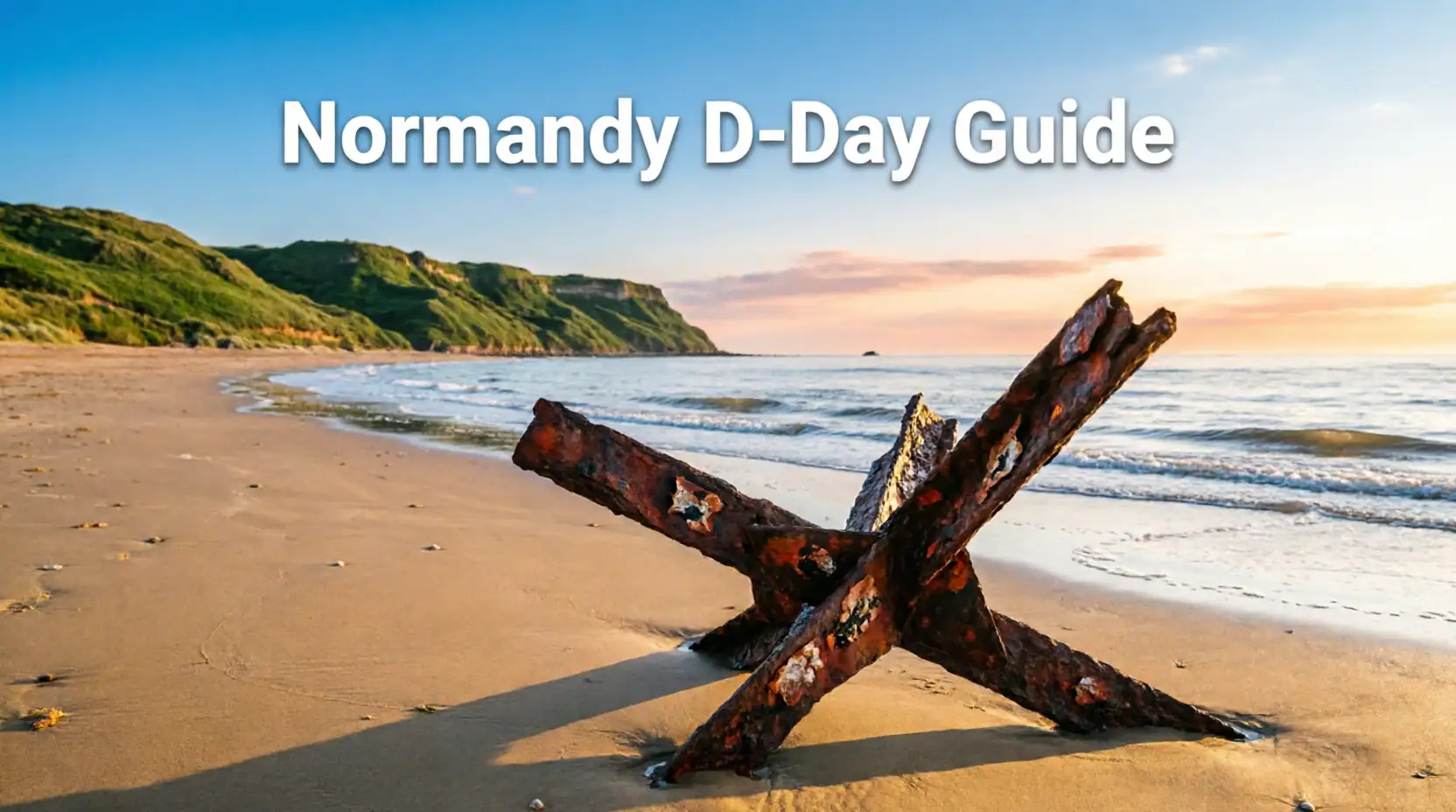
Complete Guide to the D-Day Landing Beaches and Normandy WWII History
The D-Day landing beaches represent one of the most significant turning points in modern history. On June 6, 1944, Allied forces launched Operation Overlord, the largest seaborne invasion in history, along a 50 mile stretch of the Normandy coast. Today, these beaches serve as powerful open air museums and places of solemn remembrance.
Visitors from the United States, United Kingdom, and beyond travel here to pay their respects and understand the sheer scale of the Allied effort. This guide provides a detailed roadmap for exploring the five main sectors: Utah, Omaha, Gold, Juno, and Sword. Whether you are a history buff or a first time traveler, this guide ensures your visit is respectful, organized, and deeply informative.
Quick Summary of the D-Day Beaches
The invasion was divided into five sectors assigned to different Allied nations. Utah and Omaha were the American zones, while Gold and Sword were British, and Juno was Canadian. Each site offers a unique perspective on the battle, from the sheer cliffs of Pointe du Hoc to the artificial harbor remains at Arromanches.
| Beach Sector | Allied Nation | Key Landmark | Primary Focus |
| Utah Beach | United States | Utah Beach Museum | Amphibious landings and paratroopers |
| Omaha Beach | United States | American Cemetery | Heavy resistance and sacrifice |
| Gold Beach | United Kingdom | Arromanches Mulberry Harbor | Logistics and engineering |
| Juno Beach | Canada | Juno Beach Centre | Canadian contribution and liberation |
| Sword Beach | United Kingdom | Ouistreham / Pegasus Bridge | Airborne links and inland push |
How to Reach Normandy from the USA and Europe
Most international travelers arrive in France via Paris. From Paris, the gateway to the D-Day beaches is the city of Caen or the historic town of Bayeux. Traveling by train from Paris Saint Lazare to Bayeux takes approximately 2 hours and 15 minutes.
For those coming from the United Kingdom, the ferry from Portsmouth to Caen (Ouistreham) is a popular and scenic route. This allows travelers to bring their own vehicles, which is highly recommended for exploring the rural Normandy countryside. Flight costs from major US hubs like New York or Chicago to Paris typically range between $600 and $1,200 depending on the season.
- Flight to Paris (CDG): $650 to $1,100 USD (Average)
- Train (Paris to Bayeux): $30 to $65 USD
- Car Rental (Daily): $55 to $95 USD
- 👉 Ohrid Lakefront Villas vs Skopje Boutique: Macedonia Stay
- 👉 Russia Entry Requirements 2026: Do US Citizens Still Need a Paper Invitation for Visas
- 👉 Palace of Versailles: The Zenith of French Royal Opulence
- 👉 Mareterra Monaco 2026: Complete Guide to the Eco-District
- 👉 Sarajevo Airport Tourist Pitfalls Avoidance Guide 2026
Visa and ETIAS Requirements for 2026
Starting in 2026, travelers from visa exempt countries including the United States, Canada, United Kingdom, and Australia must obtain an ETIAS (European Travel Information and Authorization System) before arrival. This is a mandatory electronic authorization linked to your passport.
The ETIAS application is completed online and costs approximately $8 USD (7 Euro) for adults. It is valid for three years or until your passport expires. Travelers from Bangladesh and other regions requiring a Schengen Visa should apply through the French consulate at least two months in advance.
Best Time to Visit the D-Day Sites
The most popular time to visit is around the June 6 anniversary. However, this period is extremely crowded with official ceremonies and limited access to certain sites. For a better experience, consider visiting in May or September when the weather is mild and the sites are less congested.
Winter months (November to March) can be cold and rainy, but they offer a quiet, contemplative atmosphere. Note that some smaller museums may have reduced hours or close entirely during the deepest part of the winter season.
Detailed Breakdown of the American Sectors
Omaha Beach and the Normandy American Cemetery
Omaha Beach was the most heavily defended of all landing zones. The terrain, featuring steep bluffs, gave German defenders a significant advantage. Today, the beach is a quiet stretch of sand, but the bunkers on the hills remain as chilling reminders of the "Bloody Omaha" struggle.
Overlooking the beach is the Normandy American Cemetery in Colleville sur Mer. This 172 acre site contains the graves of 9,387 American military dead. It is managed by the American Battle Monuments Commission and entry is free. Arriving for the flag lowering ceremony at the end of the day is a moving experience for any visitor.
Utah Beach and Sainte Mere Eglise
Utah Beach was the westernmost landing zone. The objective here was to secure a beachhead on the Cotentin Peninsula to eventually capture the port of Cherbourg. Success here was aided by the 101st and 82nd Airborne Divisions who dropped inland during the night before the landings.
Sainte Mere Eglise is the famous village where paratrooper John Steele became caught on the church steeple. The Airborne Museum in the town square is one of the best in Normandy, featuring an original C-47 transport plane and immersive exhibits on the night drops.
The British and Canadian Sectors
Gold Beach and the Mulberry Harbor
At Arromanches, you can still see the massive concrete caissons of the Mulberry Harbor. These were artificial ports towed across the English Channel to allow the Allies to offload heavy equipment without capturing a major port first. The Arromanches 360 Circular Cinema provides a high definition overview of the battle.
Juno Beach and Sword Beach
Juno Beach was the responsibility of the 3rd Canadian Infantry Division. The Juno Beach Centre in Courseulles sur Mer is a world class museum that highlights not only the military action but also the civilian life in Canada during the war. Sword Beach, the easternmost site, was the landing spot for British troops and French commandos aiming to link up with paratroopers at Pegasus Bridge.
Cost Comparison for Travelers
Planning a trip to Normandy requires balancing accommodation, transport, and museum fees. Staying in Bayeux is often the most cost effective strategy due to its central location and proximity to all five beaches.
| Category | Budget (Daily) | Mid Range (Daily) | Luxury (Daily) |
| Accommodation | $75 (Hostel/B and B) | $160 (3 Star Hotel) | $450+ (Chateau) |
| Meals | $35 (Bakeries/Markets) | $70 (Bistros) | $150+ (Fine Dining) |
| Transport | $25 (Public Bus) | $85 (Car Rental) | $250+ (Private Guide) |
| Total | $135 USD | $315 USD | $850+ USD |
Practical Travel Tips and Safety
Normandy is a very safe region for international travelers. However, there are logistical considerations to keep in mind. Driving is the most efficient way to see the beaches, as public transportation between the small coastal villages can be infrequent.
Travel Insurance: It is highly recommended to purchase travel insurance that covers trip cancellation and medical emergencies. While French healthcare is excellent, out of pocket costs for non residents can be high. Look for policies that include "Cancel for Any Reason" coverage for maximum flexibility.
- Driving: Cars drive on the right side of the road. Be aware of narrow rural lanes.
- Language: While many museum staff speak English, learning basic French phrases like "Bonjour" and "Merci" is highly appreciated by locals.
- Footwear: You will be walking on sand, pebbles, and grass. Comfortable, waterproof walking shoes are essential.
- 👉 Ohrid Lakefront Villas vs Skopje Boutique: Macedonia Stay
- 👉 Russia Entry Requirements 2026: Do US Citizens Still Need a Paper Invitation for Visas
- 👉 Palace of Versailles: The Zenith of French Royal Opulence
- 👉 Mareterra Monaco 2026: Complete Guide to the Eco-District
- 👉 Sarajevo Airport Tourist Pitfalls Avoidance Guide 2026
Recommended 3 Day Itinerary
If you have limited time, focus on the American and British highlights. This itinerary assumes you are based in Bayeux with a rental car.
Day 1: The American Story
Start early at Utah Beach and the Airborne Museum in Sainte Mere Eglise. After lunch, drive to Pointe du Hoc to see the cliffside craters and bunkers. End your day at the Normandy American Cemetery for the 4:15 PM flag ceremony.
Day 2: Engineering and Logistics
Head to Arromanches to view the Mulberry Harbor remains. Visit the D-Day Museum on the seafront. In the afternoon, explore Longues sur Mer, which features the only German coastal battery in Normandy that still has its original guns in place.
Day 3: Canadian and British Sacrifice
Visit the Juno Beach Centre in Courseulles sur Mer. Spend the afternoon at Pegasus Bridge, the site of the first Allied action on D-Day. Visit the museum there to see the original bridge that was captured by British glider troops.
Final Thoughts on Visiting Normandy
Visiting the D-Day landing beaches is a powerful experience that puts global history into perspective. By planning ahead, understanding the costs, and respecting the solemnity of the sites, you can ensure a meaningful journey. The landscape of Normandy has healed since 1944, but the stories of bravery and sacrifice remain etched in every bunker and beachhead along this historic coast.
0 Comments