.webp)
.webp)
Canada: The Second Largest Country in the World and a Nature Lover's Paradise
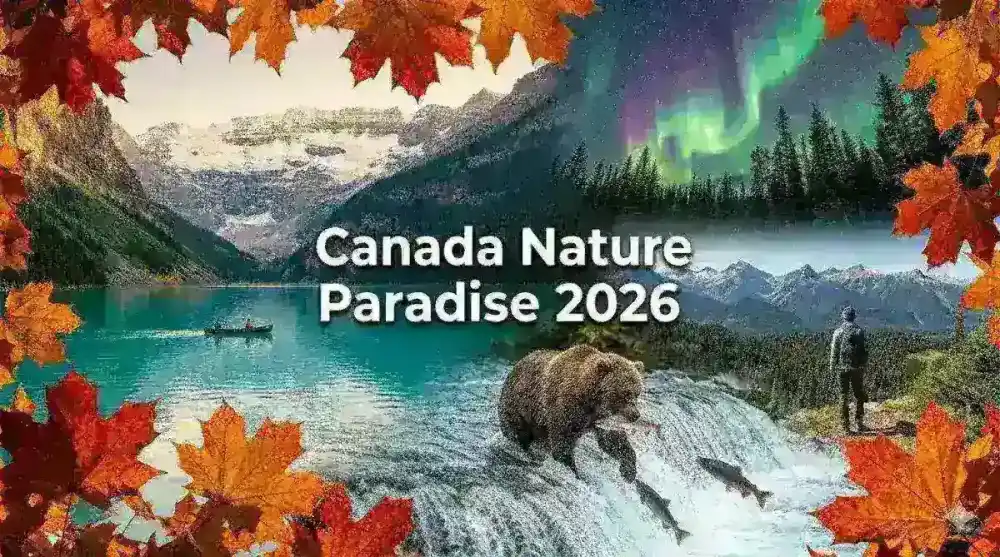
Canada stretches across the northern portion of North America like a vast wilderness tapestry, encompassing ten provinces and three territories that span six time zones and nearly ten million square kilometers. As the second largest country in the world by total area, Canada offers an unparalleled diversity of natural landscapes, from the rugged Pacific coastline of British Columbia to the ancient Appalachian highlands of the Atlantic provinces, from the Arctic tundra of Nunavut to the rolling prairies of the interior, and from the Great Lakes-St. Lawrence lowlands to the majestic peaks of the Canadian Rockies. For nature lovers, outdoor enthusiasts, wildlife photographers, and travelers seeking solitude and connection with the natural world, Canada represents one of the planet's last great wilderness frontiers.
This comprehensive guide explores Canada's extraordinary natural heritage, highlighting the national parks, provincial parks, wildlife reserves, and protected areas that make this country a paradise for those who cherish the outdoors. We will journey through iconic destinations like Banff and Jasper National Parks, explore the rugged beauty of the Atlantic and Pacific coasts, venture into the remote Arctic wilderness, and discover the hidden gems that make Canada a bucket-list destination for nature enthusiasts. Whether you seek the adrenaline of whitewater rafting, the tranquility of backcountry camping, the thrill of wildlife encounters, or simply the peace of walking through ancient forests, Canada offers experiences that will leave you in awe of the natural world.
Understanding Canada's scale is essential for planning any nature-focused journey. Distances are vast, climates vary dramatically from region to region, and access to remote wilderness areas often requires careful preparation. This guide provides practical information for traveling responsibly in Canada's natural spaces, including best times to visit, transportation options, accommodation choices, safety considerations, and principles of Leave No Trace ethics. By approaching Canada's wilderness with respect and preparation, you can experience the profound beauty and power of one of the world's last great wild places.
THE CANADIAN ROCKIES: MOUNTAIN MAJESTY
No exploration of Canada's natural wonders begins without the Canadian Rockies, a mountain range that defines the western edge of the prairies and offers some of the most spectacular alpine scenery on Earth. Stretching from northern British Columbia through Alberta, the Canadian Rockies contain five national parks that form a UNESCO World Heritage Site: Banff, Jasper, Kootenay, Yoho, and Waterton Lakes.
Banff National Park, established in 1885 as Canada's first national park, remains the crown jewel of the Rockies. The town of Banff serves as a gateway to iconic destinations including Lake Louise, with its turquoise waters reflecting Victoria Glacier; Moraine Lake, nestled in the Valley of the Ten Peaks; and the Icefields Parkway, one of the world's most scenic drives. Hiking trails range from easy lakeside walks to challenging backcountry routes leading to glaciers and alpine meadows. Wildlife viewing opportunities include elk, bighorn sheep, black bears, and occasionally grizzly bears. In winter, Banff transforms into a paradise for skiing, snowshoeing, and soaking in the Banff Upper Hot Springs.
Jasper National Park, larger and less developed than Banff, offers a more rugged wilderness experience. The town of Jasper provides a base for exploring Maligne Lake, Athabasca Falls, and the Columbia Icefield, where visitors can walk on the Athabasca Glacier or board specialized vehicles for glacier exploration. Jasper is renowned for dark sky preservation, offering exceptional stargazing and Northern Lights viewing. Wildlife encounters are frequent, with opportunities to see elk, moose, caribou, wolves, and bears. The park's extensive trail system includes day hikes and multi-day backcountry routes for all skill levels.
Kootenay National Park, straddling the Continental Divide, features dramatic elevation changes from subtropical valleys to alpine peaks. The park's highlight is the Vermilion Pass, offering panoramic views and access to hiking trails leading to waterfalls, hot springs, and alpine meadows. Radium Hot Springs provides natural thermal pools for relaxation after a day of hiking. The park's diverse ecosystems support a wide range of wildlife, including bighorn sheep, mountain goats, and grizzly bears.
Yoho National Park, though smaller than its neighbors, packs extraordinary scenery into a compact area. Emerald Lake, with its vivid green waters, is one of the most photographed locations in Canada. Takakkaw Falls, one of Canada's highest waterfalls, thunders down a cliff face accessible by a short hike. The Burgess Shale, a UNESCO World Heritage Site within Yoho, contains fossil beds of exceptional importance that document the Cambrian explosion of life.
Waterton Lakes National Park, where the Rockies meet the prairies, forms an international peace park with Glacier National Park in Montana. The park features dramatic lake scenery, wildflower meadows, and opportunities for boating, hiking, and wildlife viewing. The Prince of Wales Hotel, perched on a bluff overlooking Waterton Lake, offers historic charm and spectacular views.
ATLANTIC CANADA: COASTAL BEAUTY AND MARINE WILDLIFE
The Atlantic provinces of Newfoundland and Labrador, Prince Edward Island, Nova Scotia, and New Brunswick offer a different but equally compelling nature experience, defined by rugged coastlines, ancient highlands, and rich marine ecosystems.
Newfoundland and Labrador, Canada's easternmost province, is a wilderness of dramatic contrasts. Gros Morne National Park, a UNESCO World Heritage Site, showcases geological wonders including the Tablelands, where Earth's mantle is exposed at the surface, and Western Brook Pond, a fjord carved by glaciers and accessible only by boat. The province's coastline is a haven for seabirds, with colonies of puffins, murres, and gannets nesting on sea cliffs. Whale watching opportunities abound, with humpback, minke, and fin whales feeding in nutrient-rich waters. The East Coast Trail offers over three hundred kilometers of coastal hiking through remote wilderness, fishing villages, and seabird colonies.
Nova Scotia's Cabot Trail, winding through Cape Breton Highlands National Park, is one of North America's most scenic drives. The park's highland plateau, carved by deep river canyons, offers hiking trails with panoramic ocean views, opportunities to see moose and bald eagles, and the chance to experience Acadian and Mi'kmaq cultures. The Bay of Fundy, shared with New Brunswick, boasts the world's highest tides, exposing vast mudflats that support diverse ecosystems and offer unique experiences like tidal bore rafting and fossil hunting.
Prince Edward Island, Canada's smallest province, charms visitors with its gentle landscapes, red sand beaches, and literary heritage. Prince Edward Island National Park protects forty-seven kilometers of coastline featuring dunes, beaches, and salt marshes. The park's trails offer opportunities for walking, cycling, and birdwatching, while its beaches provide opportunities for swimming and beachcombing.
New Brunswick's Fundy National Park showcases the dramatic effects of the Bay of Fundy's tides, with hiking trails leading to waterfalls, sea caves, and coastal viewpoints. The province's interior features extensive forests and lakes that offer opportunities for canoeing, fishing, and wilderness camping.
PACIFIC CANADA: RAINFORESTS AND ISLANDS
British Columbia's Pacific coastline presents a nature experience defined by temperate rainforests, rugged islands, and abundant marine life. The province's diverse ecosystems range from coastal temperate rainforests to alpine meadows, from arid interior valleys to subarctic wilderness.
Pacific Rim National Park Reserve, on Vancouver Island's west coast, protects ancient rainforests, wild beaches, and offshore islands. The West Coast Trail, a challenging multi-day hike, traverses some of the most spectacular coastal scenery in North America, with opportunities to see gray whales, sea lions, and seabirds. Long Beach offers miles of sandy shoreline for walking, beachcombing, and storm watching in winter.
Haida Gwaii, an archipelago off British Columbia's north coast, is a place of profound cultural and natural significance. Gwaii Haanas National Park Reserve, co-managed with the Haida Nation, protects ancient rainforests, pristine coastlines, and Haida heritage sites including totem poles and village remains. The archipelago's isolation has created unique ecosystems with endemic species, while its waters support abundant marine life including whales, sea otters, and seabirds.
The Great Bear Rainforest, stretching along British Columbia's central and north coast, is one of the world's largest remaining temperate rainforests. This vast wilderness is home to the rare spirit bear, a white-phase black bear found nowhere else on Earth, as well as grizzly bears, wolves, and abundant salmon. Responsible eco-tourism operators offer opportunities to view wildlife while supporting conservation and indigenous communities.
Vancouver Island's interior features Strathcona Provincial Park, British Columbia's oldest provincial park, with alpine meadows, glaciers, and hiking trails leading to panoramic viewpoints. The island's west coast offers world-class surfing, while its east coast provides calmer waters for kayaking and wildlife viewing.
THE NORTH: ARCTIC WILDERNESS AND POLAR EXPERIENCES
Canada's three northern territories—Yukon, Northwest Territories, and Nunavut—encompass vast wilderness areas that offer some of the planet's most remote and pristine natural experiences.
Yukon Territory, where the Klondike Gold Rush unfolded, combines gold rush history with spectacular wilderness. Kluane National Park and Reserve, a UNESCO World Heritage Site, contains the world's largest non-polar icefield and Canada's highest peak, Mount Logan. The park offers opportunities for flightseeing, hiking, and wildlife viewing, including Dall sheep, grizzly bears, and caribou. The Dempster Highway, Canada's only public road to cross the Arctic Circle, provides access to remote wilderness and opportunities to see the Northern Lights.
Northwest Territories features Nahanni National Park Reserve, a UNESCO World Heritage Site centered on the South Nahanni River, which carves through deep canyons, past Virginia Falls (twice the height of Niagara), and through karst landscapes with caves and sinkholes. The park is accessible by floatplane or river expedition, offering wilderness experiences for experienced adventurers. Wood Buffalo National Park, Canada's largest national park, protects the world's largest free-roaming wood bison herd and the whooping crane, one of North America's rarest birds.
Nunavut, Canada's newest and largest territory, encompasses most of the Canadian Arctic Archipelago. Auyuittuq National Park, on Baffin Island, features dramatic fjords, glaciers, and Mount Thor, the world's tallest purely vertical drop. Sirmilik National Park offers opportunities to see icebergs, glaciers, and Arctic wildlife including polar bears, narwhals, and bowhead whales. Visiting Nunavut requires careful planning and often involves guided expeditions, but rewards travelers with unparalleled Arctic wilderness experiences.
Northern Canada is also one of the world's best destinations for viewing the Aurora Borealis, or Northern Lights. From September to April, dark skies and clear weather create optimal conditions for witnessing this spectacular natural phenomenon. Many lodges and tour operators specialize in Northern Lights viewing, offering comfortable accommodations and expert guidance.
THE PRAIRIES AND GREAT LAKES: GRASSLANDS AND FRESHWATER WONDERS
Canada's interior provinces of Manitoba, Saskatchewan, and Alberta (outside the Rockies) offer nature experiences defined by vast grasslands, boreal forests, and freshwater ecosystems.
Grasslands National Park in Saskatchewan protects one of North America's last remaining stretches of mixed-grass prairie. The park's rolling hills, coulees, and badlands support diverse wildlife including pronghorn antelope, bison, and burrowing owls. Dark sky preservation makes the park an exceptional location for stargazing.
Riding Mountain National Park in Manitoba sits at the intersection of three ecosystems: prairie, boreal forest, and aspen parkland. This diversity supports an exceptional range of wildlife, including black bears, elk, moose, and wolves. The park offers hiking, camping, and wildlife viewing opportunities, with the town of Wasagaming providing a charming base for exploration.
The Great Lakes, shared with the United States, form the world's largest group of freshwater lakes. Pukaskwa National Park on Lake Superior's north shore protects rugged coastline, boreal forest, and the largest remaining stretch of undeveloped shoreline on the Great Lakes. The park's Coastal Hike offers a challenging multi-day wilderness experience with opportunities to see black bears, wolves, and migratory birds.
OUTDOOR ACTIVITIES: EXPERIENCING CANADA'S NATURE
Canada's vast wilderness offers endless opportunities for outdoor recreation, from gentle nature walks to extreme adventures.
Hiking and backpacking: Canada's national and provincial parks maintain thousands of kilometers of trails ranging from easy interpretive walks to challenging backcountry routes. Iconic hikes include the Plain of Six Glaciers in Banff, the Skyline Trail in Jasper, and the West Coast Trail on Vancouver Island. Many parks offer guided hikes and educational programs for visitors of all skill levels.
Wildlife viewing: Canada's diverse ecosystems support an extraordinary range of wildlife. Opportunities include bear viewing in British Columbia and Alberta, whale watching on both coasts and in the Arctic, birdwatching in migratory flyways, and viewing large mammals like elk, moose, caribou, and bison in their natural habitats. Responsible wildlife viewing practices, including maintaining safe distances and using telephoto lenses, are essential for protecting animals and ensuring positive experiences.
Water activities: Canada's lakes, rivers, and coastlines offer opportunities for canoeing, kayaking, rafting, and sailing. Iconic paddling routes include the Bowron Lake Circuit in British Columbia, the Algonquin Park canoe routes in Ontario, and the Nahanni River in the Northwest Territories. Coastal kayaking opportunities abound on both the Pacific and Atlantic coasts.
Winter activities: Canada's long winters create opportunities for snowshoeing, cross-country skiing, downhill skiing, ice fishing, and dog sledding. Many national parks maintain groomed trails for winter recreation, while ski resorts in the Rockies and eastern provinces offer world-class downhill skiing.
Photography: Canada's dramatic landscapes and abundant wildlife make it a paradise for nature photographers. Best practices include respecting wildlife distances, following park regulations, and practicing Leave No Trace principles. Golden hour lighting, seasonal changes, and weather conditions all influence photographic opportunities.
PRACTICAL TRAVEL INFORMATION FOR NATURE TRAVEL IN CANADA
Visiting Canada's natural spaces requires planning and preparation. Here is essential information for nature-focused travel in 2026.
Best times to visit: Canada's climate varies dramatically by region. Summer (June to August) offers the most reliable weather and full access to parks and trails, but also the largest crowds. Spring (April to May) and fall (September to October) offer fewer crowds and beautiful seasonal changes, though some facilities may have reduced hours. Winter (November to March) offers unique experiences like Northern Lights viewing and winter sports, but requires preparation for cold weather and limited access to some areas.
Transportation: Canada's vast distances make transportation planning essential. Major cities are connected by air, rail, and highway networks, but access to remote wilderness areas often requires rental vehicles, guided tours, or charter flights. National parks are accessible by car, but many backcountry areas require hiking, paddling, or flightseeing. Consider fly-drive itineraries to maximize time in nature while minimizing long drives.
Accommodation: Options range from campgrounds and backcountry shelters to lodges and luxury resorts. National park campgrounds often require advance reservations, especially for summer travel. Backcountry camping requires permits and preparation. For remote wilderness experiences, guided tours often include accommodations.
Park passes and permits: Parks Canada offers a Discovery Pass providing unlimited admission to national parks for one year. Provincial parks have separate fee structures. Backcountry camping, fishing, and certain activities require additional permits. Reserve popular campgrounds and permits well in advance, especially for summer travel.
Safety considerations: Canada's wilderness presents real risks including wildlife encounters, changing weather, remote locations, and challenging terrain. Always carry appropriate gear, check weather forecasts, inform others of your plans, and know your limits. Carry bear spray in bear country and know how to use it. Cell service is limited in remote areas; consider satellite communication devices for backcountry travel.
Leave No Trace principles: Protect Canada's natural heritage by following Leave No Trace ethics: plan ahead and prepare, travel and camp on durable surfaces, dispose of waste properly, leave what you find, minimize campfire impacts, respect wildlife, and be considerate of other visitors.
Indigenous experiences: Many of Canada's natural areas are traditional territories of First Nations, Inuit, and Métis peoples. Seek opportunities to learn about indigenous cultures, histories, and relationships with the land through guided experiences, cultural centers, and respectful engagement.
SUSTAINABLE AND RESPONSIBLE NATURE TRAVEL
Visiting Canada's wilderness carries responsibility to preserve these irreplaceable spaces for future generations. In 2026, sustainable tourism practices are essential for protecting Canada's natural heritage.
Minimize environmental impact: Stay on designated trails to protect fragile ecosystems. Pack out all waste, including biodegradable items. Use established campfires or camp stoves to minimize fire impact. Choose eco-certified tour operators and accommodations that prioritize sustainability.
Respect wildlife: Observe animals from safe distances using binoculars or telephoto lenses. Never feed wildlife, as this alters natural behaviors and can create dangerous situations. Store food properly in bear country. Follow park regulations regarding wildlife viewing.
Support conservation: Choose tour operators and accommodations that contribute to conservation efforts. Consider donating to organizations that protect Canada's wilderness. Share your experiences in ways that promote responsible travel.
Engage with local communities: Support local economies by choosing locally-owned businesses. Learn about the cultures and histories of the places you visit. Respect private property and indigenous territories.
CONCLUSION: CANADA'S ENDURING NATURAL LEGACY
Canada's status as the second largest country in the world is not just a geographic fact; it is an invitation to explore one of the planet's last great wilderness frontiers. From the glacier-carved valleys of the Rockies to the ancient rainforests of the Pacific coast, from the vast prairies to the Arctic tundra, Canada offers nature experiences that inspire awe, foster connection, and remind us of the power and beauty of the natural world.
As you plan your journey through Canada's wilderness, approach these landscapes with curiosity, humility, and respect. Listen to the stories of the land, engage with indigenous perspectives, and travel in ways that protect the places you visit. By doing so, you honor not just Canada's natural heritage but the responsibility we all share to preserve wild places for future generations.
May your Canadian adventure deepen your appreciation for the natural world and inspire you to be a steward of the wilderness experiences that make this country so extraordinary.
Useful resources include Parks Canada at pc.gc.ca, provincial park websites for regional information, and the Leave No Trace Center at lnt.org for wilderness ethics. Emergency services can be reached at 911 throughout Canada. Disclaimer: Information is accurate as of early 2026. Park hours, fees, and policies may change; verify details before travel. This guide is for informational purposes only and does not constitute professional travel advice.
0 Comments