.webp)
.webp)
Backpacking Mexico on $40 a Day Realistic Budget Strategies
Quick Answer for Budget Travelers
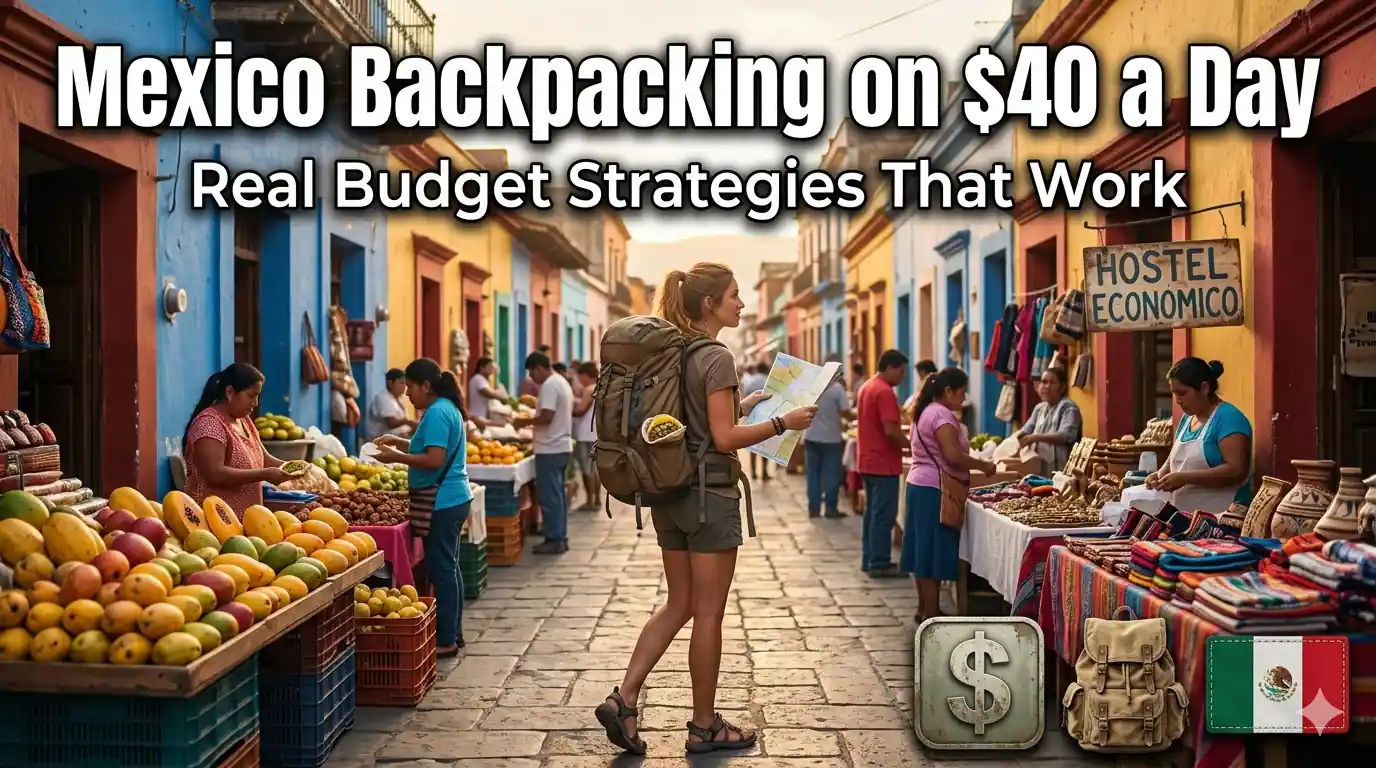
Yes, backpacking Mexico on $40 USD per day is realistic with strategic planning. This budget covers hostel dorm beds ($8-15), street food and market meals ($10-15), local transportation via buses and colectivos ($5-10), and low-cost activities like beaches, hiking, and free walking tours ($5-10). US citizens need only a valid passport for entry with no visa required for stays under 180 days. The key to success: travel slow to reduce transportation costs, eat where locals eat, use overnight buses to save on accommodation, and prioritize central/southern Mexico where prices are 30-50% lower than tourist hotspots. Avoid peak season (December-March) for better deals, and always carry cash in small peso denominations for bargaining and small purchases. With discipline and smart choices, $40 daily enables authentic Mexican experiences without sacrificing safety or enjoyment.
Why $40 a Day Works in Mexico

Mexico remains one of the world's best values for budget travelers, offering rich culture, diverse landscapes, and delicious food at prices that stretch limited budgets further than most destinations. The $40 daily target isn't about deprivation—it's about prioritizing experiences over luxury and making informed choices that maximize value.
Several factors enable budget travel in Mexico. The favorable exchange rate (approximately 17-20 pesos per USD) amplifies purchasing power for international visitors. A robust network of affordable hostels, guesthouses, and budget hotels provides safe, clean accommodations without resort pricing. Street food culture delivers nutritious, flavorful meals at a fraction of restaurant costs. Extensive public transportation connects cities and towns efficiently at low prices.
Regional cost variations significantly impact budget feasibility. Southern states like Oaxaca, Chiapas, and Guerrero offer exceptional value with hostel beds from $6-10 and meals under $3. Central Mexico, including Mexico City, Puebla, and Guanajuato, balances affordability with infrastructure, with daily budgets of $35-45 realistic. Northern tourist zones like Los Cabos and Puerto Vallarta command premium prices, requiring careful spending or shorter stays to maintain the $40 target.
Understanding what $40 covers prevents disappointment. This budget assumes dormitory accommodation, primarily street food and market dining, public transportation, and free or low-cost activities. It does not include international flights, travel insurance, major tours, or significant shopping. By allocating funds strategically and tracking daily spending, backpackers can enjoy Mexico authentically without financial stress.
Accommodation Strategies for Budget Backpackers

Accommodation typically consumes the largest portion of a daily budget. Smart selection balances cost, location, safety, and social opportunities.
Hostel Dorm Beds: The backbone of budget travel, hostel dorms in Mexico range $6-15 USD nightly depending on location and amenities. Southern cities like Oaxaca and San Cristóbal de las Casas offer beds from $6-9, while Mexico City and popular beach towns charge $10-15. Look for hostels with free breakfast, kitchen access, and lockers to maximize value. Booking platforms like Hostelworld enable price comparison and review reading, but contacting properties directly via WhatsApp sometimes yields discounts for stays over 3 nights.
Budget Guesthouses: Small family-run guesthouses (hospedajes) often provide private rooms for $12-20 USD, ideal for travelers seeking privacy without resort prices. These properties typically include basic amenities like fans, shared bathrooms, and sometimes breakfast. They're common in colonial towns and rural areas, offering authentic local experiences. Payment is usually cash-only, so carry pesos.
Work Exchange Programs: Platforms like Workaway and Worldpackers connect travelers with hostels, eco-lodges, and families offering free accommodation in exchange for 4-5 hours daily work. Tasks include reception, cleaning, gardening, or teaching English. This strategy reduces accommodation costs to zero, enabling extended stays on minimal budgets. Commit to at least 2-4 weeks to justify travel time and application effort.
Camping: While less developed than in North America or Europe, camping is viable in certain Mexican regions. National parks like Nevado de Toluca and areas near beaches sometimes permit camping for $3-8 USD nightly. Bring your own gear and verify safety, water access, and regulations beforehand. Not recommended for solo travelers or unfamiliar areas.
Accommodation Cost Comparison by Region:
| Region | Hostel Dorm | Budget Private Room | Best For |
| Southern Mexico (Oaxaca, Chiapas) | $6-9 | $12-18 | Maximum value, culture |
| Central Mexico (Mexico City, Puebla) | $8-12 | $15-25 | Balance of cost and amenities |
| Pacific Coast (Puerto Vallarta, Sayulita) | $10-15 | $20-35 | Beach access, surf culture |
| Yucatán Peninsula (Tulum, Bacalar) | $12-20 | $25-45 | Cenotes, Caribbean beaches |
| Northern Mexico (Monterrey, Copper Canyon) | $8-14 | $18-30 | Adventure, less tourism |
Money-Saving Accommodation Tips:
- Book directly with properties after comparing online rates—many offer 10-15% discounts for direct bookings
- Stay longer in one location to negotiate weekly rates (often 20-30% off nightly prices)
- Choose hostels with kitchens to cook occasional meals, reducing food costs
- Travel during shoulder seasons (May-June, October-November) for lower prices and fewer crowds
- Use overnight buses to combine transportation and accommodation costs
- 👉 Sanctuary Rainforest Eco Resort Dominica: 2026 Luxury Opening
- 👉 Belize Digital Nomad Visa 2026: $75K Income Worth It
- 👉 Canada Entry Requirements for US Citizens (2026 Essential Guide)
- 👉 Boquete Eco-Lodges and Buenaventura Luxury Resorts Compared
- 👉 Luxury Catamaran Charters in Nevis: The Most Exclusive Private Island Tours for 2026
Food and Dining on a Budget

Mexico's street food culture is a budget traveler's greatest asset, delivering nutritious, flavorful meals at remarkably low prices. Understanding where and what to eat maximizes both savings and culinary experience.
Street Food Essentials: Tacos, tamales, quesadillas, and tortas from street vendors typically cost $1-3 USD each. A satisfying meal of 3-4 tacos with drinks runs $3-6. Look for busy stalls with high turnover—this ensures freshness and safety. Popular options include al pastor tacos, cochinita pibil, and chilaquiles. Carry small peso bills for easy payment.
Market Dining: Municipal markets (mercados) house food stalls serving regional specialties for $2-5 per plate. These comedores offer authentic local cuisine in a casual setting. Try sopa de lima in Yucatán, mole in Oaxaca, or carnitas in Michoacán. Markets also sell fresh fruit, snacks, and ingredients for self-catering.
Self-Catering: Hostels with kitchens enable significant savings. Purchase ingredients at local markets: eggs ($1-2/dozen), tortillas ($0.50/pack), beans ($1/bag), rice ($1/bag), and seasonal produce ($0.50-2/lb). Preparing simple meals like huevos rancheros or bean-and-rice bowls costs $1-3 versus $5-10 for restaurant equivalents.
Budget Restaurant Strategies: When dining out, choose lunch menus (comida corrida) offering soup, main course, drink, and sometimes dessert for $4-8. Dinner prices are typically higher, so make lunch your main meal. Avoid tourist-focused restaurants in hotel zones; walk 2-3 blocks inland for authentic pricing.
Daily Food Budget Breakdown:
| Meal | Budget Option | Cost (USD) |
| Breakfast | Street tamales or hostel breakfast | $1-3 |
| Lunch | Market comida corrida or tacos | $3-6 |
| Dinner | Street food or self-cooked meal | $2-5 |
| Snacks/Water | Fruit, bottled water, coffee | $2-4 |
| Daily Total | $8-18 |
Food Safety Tips: Street food is generally safe when vendors cook food fresh to order and maintain busy operations. Avoid raw vegetables washed in tap water if you have a sensitive stomach. Drink bottled or purified water exclusively. Carry hand sanitizer and probiotics as preventative measures.
Transportation: Getting Around Cheaply

Efficient, affordable transportation is essential for maintaining a $40 daily budget while exploring Mexico's diverse regions.
Long-Distance Buses: Mexico's first-class bus system (ADO, ETN, Primera Plus) offers comfortable, reliable travel at budget prices. Routes between major cities cost $15-40 USD for 4-8 hour journeys. Book online at ado.com.mx or at terminals. Overnight buses save accommodation costs—book a reclining seat (primera clase) for $25-35 and arrive refreshed at your destination.
Colectivos (Shared Vans): For shorter distances and rural routes, colectivos provide affordable transportation at $2-10 USD per ride. These shared vans depart when full from designated stops. They're slower than buses but reach areas inaccessible to larger vehicles. Confirm the destination with the driver before boarding and have exact change ready.
Local Transportation: Within cities, metro systems (Mexico City, Guadalajara, Monterrey) cost $0.25-0.50 per ride. City buses range $0.30-0.70. Uber and DiDi operate in major urban areas at competitive prices, often cheaper than taxis. For budget travelers, walking remains the most economical option in compact colonial towns.
Regional Transportation Costs:
| Route | Method | Cost (USD) | Duration |
| Mexico City to Oaxaca | ADO Bus | $18-28 | 6-7 hours |
| Oaxaca to San Cristóbal | ADO Bus | $12-18 | 4-5 hours |
| San Cristóbal to Palenque | Colectivo | $8-12 | 3 hours |
| Guadalajara to Puerto Vallarta | Bus | $15-25 | 4-5 hours |
| Cancún to Tulum | ADO Bus | $8-12 | 2 hours |
Transportation Money-Saving Strategies:
- Travel overnight to combine transport and accommodation costs
- Book bus tickets 1-2 days in advance for better seat selection without premium pricing
- Use colectivos for short regional trips instead of private taxis
- Walk whenever possible—many historic centers are compact and pedestrian-friendly
- Avoid renting cars unless traveling with a group to split costs
- 👉 Sanctuary Rainforest Eco Resort Dominica: 2026 Luxury Opening
- 👉 Belize Digital Nomad Visa 2026: $75K Income Worth It
- 👉 Canada Entry Requirements for US Citizens (2026 Essential Guide)
- 👉 Boquete Eco-Lodges and Buenaventura Luxury Resorts Compared
- 👉 Luxury Catamaran Charters in Nevis: The Most Exclusive Private Island Tours for 2026
Activities and Entertainment on a Budget

Experiencing Mexico's culture, nature, and history doesn't require expensive tours. Strategic activity selection maximizes enjoyment while preserving budget.
Free Activities: Many of Mexico's best experiences cost nothing. Explore colonial plazas, wander colorful neighborhoods, visit public beaches, hike accessible trails, and attend free cultural events. Cities like Mexico City, Oaxaca, and Guanajuato offer free walking tours (tip-based) that provide excellent orientation and historical context.
Low-Cost Attractions: Entry fees for archaeological sites, museums, and natural attractions typically range $2-8 USD. Teotihuacan costs $5, Chichen Itza $25 (higher but worth it for the experience), and most cenotes $3-8. Prioritize sites with historical or personal significance rather than attempting to visit everything.
Budget-Friendly Experiences:
- Beach Days: Public beach access is free throughout Mexico. Bring your own towel and snacks to avoid rental fees.
- Hiking: Volcanoes near Mexico City (Iztaccíhuatl, Nevado de Toluca) and trails in Copper Canyon offer spectacular views at minimal cost. Hire local guides for remote routes ($10-20) for safety.
- Market Exploration: Wandering local markets provides cultural immersion and photo opportunities without spending.
- Community Events: Check local listings for free concerts, festivals, or traditional ceremonies. These offer authentic cultural experiences at no cost.
- 👉 Sanctuary Rainforest Eco Resort Dominica: 2026 Luxury Opening
- 👉 Belize Digital Nomad Visa 2026: $75K Income Worth It
- 👉 Canada Entry Requirements for US Citizens (2026 Essential Guide)
- 👉 Boquete Eco-Lodges and Buenaventura Luxury Resorts Compared
- 👉 Luxury Catamaran Charters in Nevis: The Most Exclusive Private Island Tours for 2026
Activity Budget Allocation: Allocate $5-10 daily for paid activities. This covers one moderate-cost attraction or several free experiences with small incidental expenses. Track spending to avoid overspending early in your trip.
Sample $40 Daily Budget Breakdown

Concrete examples demonstrate how $40 daily translates to real-world spending across different travel styles and regions.
Budget Breakdown: Southern Mexico (Oaxaca Region)
| Category | Item | Cost (USD) |
| Accommodation | Hostel dorm bed with breakfast | $8 |
| Food | Street breakfast, market lunch, street dinner | $12 |
| Transportation | Local buses and walking | $3 |
| Activities | Museum entry and free walking tour tip | $7 |
| Miscellaneous | Water, snacks, laundry, SIM card | $5 |
| Buffer | Unexpected expenses or savings | $5 |
| Daily Total | $40 |
Budget Breakdown: Central Mexico (Mexico City)
| Category | Item | Cost (USD) |
| Accommodation | Hostel dorm in Roma/Condesa | $12 |
| Food | Market meals and street snacks | $14 |
| Transportation | Metro and occasional Uber | $4 |
| Activities | Museum entry and free tour tip | $6 |
| Miscellaneous | Water, coffee, souvenirs | $4 |
| Daily Total | $40 |
Budget Breakdown: Yucatán Peninsula (Tulum Area)
| Category | Item | Cost (USD) |
| Accommodation | Hostel dorm near Tulum town | $15 |
| Food | Street tacos and market meals | $13 |
| Transportation | Bicycle rental and colectivos | $5 |
| Activities | Cenote entry and beach access | $5 |
| Miscellaneous | Water, sunscreen, small purchases | $2 |
| Daily Total | $40 |
These examples show that $40 daily is achievable across Mexico with strategic choices. Southern regions offer the most flexibility, while tourist-heavy areas require more disciplined spending. The key is prioritizing value: spend on experiences that matter most to you and cut costs elsewhere.
Visa Requirements and Entry Logistics

Understanding entry requirements prevents costly delays or denied entry that could derail a budget trip.
US Citizens: No visa required for tourist stays under 180 days. Present a valid passport with at least six months validity and a return or onward ticket. Upon arrival, immigration issues a Forma Migratoria Múltiple (FMM) tourist permit at no cost for air travelers. Keep this document safe—you'll need it for exit.
Canadian, UK, and European Citizens: Similar visa-free entry for up to 180 days. Verify current requirements through official government sources before travel, as policies can change. Carry proof of sufficient funds ($1,000+ USD recommended) and accommodation details, though these are rarely requested.
Border Crossings: Land entries may incur a small FMM fee ($25-30 USD). Have exact change in USD or pesos ready. Allow extra time for processing at busy crossings like Tijuana or Ciudad Juárez.
Travel Insurance: While not legally required, comprehensive travel insurance is essential for budget travelers. Medical emergencies without coverage can bankrupt a trip. Policies from providers like SafetyWing or World Nomads cost $40-80 monthly and cover medical care, evacuation, and trip interruption. Consider this a non-negotiable budget line item.
Best Time to Visit for Budget Travel

Timing significantly impacts costs, crowd levels, and overall experience quality for budget backpackers.
Shoulder Seasons (May-June, October-November): These periods offer the optimal balance for budget travel. Accommodation prices drop 20-30% compared to peak season. Weather remains favorable with minimal rainfall in most regions. Fewer tourists mean better bargaining power and more authentic interactions. This is the sweet spot for $40/day travel.
Low Season (July-September): Rainy season brings afternoon showers but also the deepest discounts. Accommodation costs can fall 30-50%, and attractions are less crowded. The trade-off: higher humidity, potential travel disruptions from heavy rain, and increased mosquito activity. Pack rain gear and flexible scheduling to capitalize on savings.
Peak Season (December-April): Ideal weather attracts maximum visitors, driving up prices and crowding popular destinations. Accommodation costs rise 30-60%, and advance booking becomes essential. If traveling during peak season, focus on less-visited regions like central highlands or northern Mexico to maintain budget feasibility.
Regional Climate Considerations: Mexico's diverse geography creates varied weather patterns. Coastal areas are hot and humid year-round; highland cities like Mexico City and Oaxaca enjoy mild temperatures. Plan your route to follow favorable weather while avoiding peak pricing in any single region.
Sample Budget Itineraries

These itineraries demonstrate how to structure a Mexico backpacking trip within a $40 daily budget, balancing travel time, experiences, and cost management.
7-Day Southern Mexico Circuit:
Day 1: Arrive Oaxaca City. Hostel check-in ($8), street food dinner ($4), evening plaza walk (free). Total: $12.
Day 2: Free walking tour (tip $3), market lunch ($4), Monte Albán bus and entry ($6), street dinner ($4). Total: $17 plus accommodation $8 = $25.
Day 3: Day trip to Hierve el Agua via colectivo ($10 round-trip), picnic lunch ($3), free hiking. Total: $13 plus accommodation $8 = $21.
Day 4: Travel to San Cristóbal de las Casas via ADO bus ($15), hostel check-in ($7), market dinner ($4). Total: $26.
Day 5: Free exploration of San Cristóbal, visit to nearby village via colectivo ($5), street meals ($8). Total: $13 plus accommodation $7 = $20.
Day 6: Day trip to Sumidero Canyon tour ($20 budget option), street meals ($6). Total: $26 plus accommodation $7 = $33.
Day 7: Morning market visit, travel to next destination or departure. Budget remaining for transport.
Average daily spend: $35-40 with strategic choices.
14-Day Central and Southern Loop:
Combine Mexico City (4 days), Puebla (2 days), Oaxaca (4 days), and San Cristóbal (4 days). Use overnight buses between cities to save accommodation costs. Focus on free activities, street food, and selective paid attractions. Average daily spend: $38-42 with careful planning.
30-Day Extended Backpacking Route:
Start in Mexico City, travel south through Puebla, Oaxaca, Chiapas, then east to Yucatán Peninsula. Stay 4-7 days per location to reduce transportation frequency and negotiate weekly accommodation rates. Cook some meals in hostel kitchens. Average daily spend: $35-40 by spreading costs across the month.
Itinerary Planning Tips:
- Travel slow: Fewer moves mean lower transportation costs and better weekly accommodation rates
- Mix free and paid activities: Balance museum visits with free walking tours and nature exploration
- Use overnight buses strategically: Save one night's accommodation while covering long distances
- Build buffer days: Allow flexibility for unexpected opportunities or rest without budget stress
- 👉 Sanctuary Rainforest Eco Resort Dominica: 2026 Luxury Opening
- 👉 Belize Digital Nomad Visa 2026: $75K Income Worth It
- 👉 Canada Entry Requirements for US Citizens (2026 Essential Guide)
- 👉 Boquete Eco-Lodges and Buenaventura Luxury Resorts Compared
- 👉 Luxury Catamaran Charters in Nevis: The Most Exclusive Private Island Tours for 2026
Safety Considerations for Budget Backpackers

Traveling affordably doesn't mean compromising safety. Smart precautions protect both personal well-being and financial resources.
Personal Security: Mexico is generally safe for tourists who exercise standard precautions. Avoid displaying expensive electronics or jewelry, use hotel safes for valuables, and stay aware of surroundings in crowded areas. Violent crime against tourists remains rare in backpacker-friendly regions like Oaxaca, Chiapas, and central Mexico.
Regional Safety Awareness: Some Mexican states experience higher crime rates. Research current conditions through official government travel advisories before visiting. Generally, stick to well-traveled backpacker routes and avoid border regions or areas with active security concerns. When in doubt, ask hostel staff or local tourism offices for guidance.
Health Precautions: Drink only bottled or purified water. Use hand sanitizer before meals. Carry basic medications for common travel ailments (anti-diarrheal, pain relievers, rehydration salts). Consider vaccinations for hepatitis A and typhoid before travel. Travel insurance with medical coverage is essential—unexpected health costs can exceed an entire trip budget.
Money Security: Carry cash in small denominations for daily spending, but keep the majority of funds secure. Use ATMs inside banks during daylight hours to minimize skimming risks. Notify your bank of travel dates to prevent card blocks. Keep digital copies of important documents (passport, insurance) stored securely online.
Transportation Safety: Use authorized transportation: registered taxis, rideshare apps, or reputable bus companies. Avoid unmarked vehicles, especially at night. For overnight buses, choose first-class services with assigned seats and secure luggage storage.
Money-Saving Strategies That Actually Work

Beyond basic budgeting, these proven tactics stretch every dollar further while enhancing the travel experience.
Travel Slow: The single most effective budget strategy. Staying 5-7 days in one location reduces transportation costs, enables weekly accommodation discounts, and deepens cultural immersion. Rushing between destinations burns cash on buses and prevents negotiation leverage.
Eat Like a Local: Street food and market dining aren't just cheap—they're authentic and delicious. Avoid tourist-oriented restaurants in hotel zones. Walk a few blocks inland to find where residents eat. Learn basic Spanish food phrases to navigate menus confidently.
Use Public Transportation: Buses, colectivos, and metros cost a fraction of taxis or rental cars. Embrace the local pace of travel. Overnight buses combine transport and accommodation savings. Download offline maps to navigate public transit confidently.
Leverage Free Resources: Many cities offer free walking tours (tip-based), public beaches, parks, and cultural events. Libraries, plazas, and markets provide entertainment without cost. Prioritize these experiences alongside selective paid attractions.
Carry a Reusable Water Bottle: Buying bottled water daily adds up. Many hostels provide filtered water refills. A $10 investment in a quality bottle saves $1-2 daily and reduces plastic waste.
Track Daily Spending: Use a simple app or notebook to record expenses. Awareness prevents budget creep and helps adjust spending mid-trip. Review weekly to identify areas for improvement.
Learn Basic Spanish: Even minimal language skills improve bargaining power, access to local prices, and cultural connection. Free apps like Duolingo provide effective pre-trip preparation.
Connect with Other Travelers: Hostel common areas facilitate information sharing about budget tips, safe routes, and affordable activities. Group tours or shared transportation can reduce individual costs.
Final Recommendations for Successful Budget Backpacking

Backpacking Mexico on $40 a day requires intentionality, flexibility, and respect for local culture. These final principles maximize success and enjoyment.
Embrace Flexibility: Rigid itineraries create stress when unexpected opportunities or challenges arise. Build buffer days, remain open to route changes, and prioritize experiences over checklist completion. The best travel memories often emerge from spontaneous decisions.
Respect Local Economies: Budget travel shouldn't mean exploiting local workers. Pay fair prices for services, tip appropriately (10-15% at restaurants), and support locally-owned businesses. Your spending choices impact communities directly.
Invest in Experiences, Not Things: Allocate limited funds toward meaningful activities—cultural tours, nature excursions, cooking classes—rather than souvenirs or luxury upgrades. Memories last longer than material purchases.
Practice Sustainable Travel: Minimize environmental impact through reusable items, responsible waste disposal, and respect for natural areas. Choose eco-conscious accommodations and tour operators when possible. Preserve Mexico's beauty for future travelers.
Stay Connected Safely: Purchase a local SIM card ($10-15 for data) for navigation, translation, and emergency communication. Share your itinerary with trusted contacts and check in regularly. Balance digital connectivity with present-moment immersion.
Trust Your Instincts: If a situation feels unsafe or uncomfortable, remove yourself. Budget constraints shouldn't override personal security. Hostels, tourism offices, and fellow travelers are valuable resources when uncertainty arises.
Celebrate Small Wins: Successfully navigating a colectivos route, ordering a meal in Spanish, or finding a hidden gem plaza are achievements worth acknowledging. Budget travel builds resilience, resourcefulness, and confidence that extend far beyond the trip itself.
Mexico rewards backpackers who approach it with curiosity, respect, and smart planning. The $40 daily target isn't about deprivation—it's about prioritizing authentic experiences, cultural connection, and personal growth over luxury consumption. By making informed choices, embracing local ways, and staying adaptable, you can explore one of the world's most diverse and welcoming countries without financial stress.
The journey matters more than the destination. Every peso saved through smart choices becomes an opportunity for another day of exploration, another meaningful interaction, another memory that shapes your perspective. Backpack Mexico with intention, travel with respect, and discover that the richest experiences often cost the least.
0 Comments