.webp)
.webp)
Exploring the Ruins of the Old British Military Cemetery in Vieux Fort: A Journey Through Saint Lucia's Colonial Military History
Introduction: Uncovering Saint Lucia's Forgotten Military Heritage
Tucked away in the southern town of Vieux Fort lies one of Saint Lucia's most historically significant yet often overlooked sites: the ruins of the Old British Military Cemetery. This weathered burial ground, with its crumbling tombstones and overgrown pathways, serves as a poignant reminder of Saint Lucia's turbulent colonial past and the British military presence that shaped the island's history for over a century. For history enthusiasts, genealogists, and travelers seeking authentic cultural experiences beyond Saint Lucia's famous beaches and resorts, this cemetery offers a unique window into the lives and deaths of British soldiers, their families, and colonial administrators who called this Caribbean outpost home.
The cemetery's ruins tell stories of disease, warfare, and the harsh realities of colonial military service in the tropics. Many of those buried here succumbed to yellow fever, malaria, and other tropical diseases that claimed far more lives than combat during Britain's Caribbean campaigns. The weathered inscriptions, though often difficult to decipher, provide valuable genealogical information and historical context for understanding Saint Lucia's role in British imperial strategy during the 18th and 19th centuries.
Visiting this historic site requires respectful exploration and an appreciation for the passage of time. While the cemetery has suffered from neglect and tropical weathering, ongoing preservation efforts and growing interest in Saint Lucia's colonial heritage are bringing renewed attention to this important historical landmark. This comprehensive guide will help you plan your visit, understand the historical context, and appreciate the significance of this forgotten corner of British military history in the Caribbean.
Historical Context: British Military Presence in Vieux Fort

Vieux Fort's strategic location at the southern tip of Saint Lucia made it a crucial military outpost during the colonial era. The British established a significant garrison in the area following their final acquisition of Saint Lucia from the French in 1814, though the island had changed hands between the two European powers fourteen times during the preceding century. The military cemetery served the garrison from the early 19th century until the British military withdrawal in the mid-20th century, providing a final resting place for soldiers, officers, and their dependents who died while stationed on the island.
The British military presence in Vieux Fort was part of a broader defensive strategy to protect British interests in the Eastern Caribbean. The garrison maintained fortifications, monitored shipping lanes, and served as a staging ground for regional operations. Life for British soldiers in the Caribbean was notoriously difficult. Tropical diseases, particularly yellow fever and malaria, earned the region the grim nickname "the white man's grave," with mortality rates among European troops often exceeding 50 percent annually during epidemic periods.
The Cemetery's Operational Period
The cemetery was actively used from approximately 1815 to 1940, spanning over a century of British military occupation. During this period, Saint Lucia served various strategic functions, from naval base to army garrison, and the cemetery reflects this long history through its diverse range of monuments and burial styles. The earliest graves date from the immediate post-Napoleonic period, while the latest burials occurred before World War II, when the British military presence began to diminish.
The cemetery's layout followed British military burial traditions, with officers typically receiving more elaborate monuments than enlisted men, and separate sections sometimes designated for different regiments or for civilians associated with the garrison. Family plots accommodated the wives and children of military personnel, many of whom succumbed to the same diseases that afflicted the soldiers.
Notable Regiments and Units
Various British regiments served in Saint Lucia during the cemetery's operational period, including units from the Royal Artillery, Royal Engineers, and multiple infantry regiments that rotated through Caribbean service. The West India Regiments, composed of soldiers of African descent, also played a significant role in the island's defense, though their members were often buried in separate cemeteries or sections. Inscriptions on surviving monuments provide valuable information about regimental deployments and the human cost of imperial service in the tropics.
Navigating to the Cemetery: Location and Access

The Old British Military Cemetery is located in Vieux Fort, Saint Lucia's second-largest town, situated at the island's southern tip. The cemetery lies approximately 2 kilometers from the town center, in an area that was once part of the British military reservation. Modern landmarks near the site include the Vieux Fort General Hospital and the former military barracks area, which has since been repurposed for civilian use.
Reaching the cemetery requires some local knowledge, as signage is limited and the site is not prominently marked on most tourist maps. From Castries, the capital, Vieux Fort is approximately a 45-minute drive via the busy East Coast Road or the more scenic West Coast Road. Once in Vieux Fort, visitors should ask locals for directions to the "old military cemetery" or "British cemetery," as these terms are more commonly used than official designations.
Transportation Options
Most visitors reach Vieux Fort by rental car, taxi, or organized tour. Rental cars provide the most flexibility for exploring the cemetery and surrounding historical sites at your own pace. Taxis from Rodney Bay or Castries can be arranged for half-day or full-day tours that include the cemetery along with other southern attractions. Some tour operators offer historical tours of Vieux Fort that incorporate the cemetery as part of a broader exploration of the town's colonial heritage.
Public transportation via minibuses is available from Castries and other towns, though this option requires more time and local knowledge. Minibuses depart from the Castries bus terminal and travel to Vieux Fort regularly throughout the day. From the Vieux Fort bus terminal, you will need to take a short taxi ride or walk to reach the cemetery, depending on your comfort level with navigating unfamiliar areas.
Site Conditions and Accessibility
Visitors should be prepared for overgrown vegetation, uneven ground, and weathered pathways. The cemetery has not been actively maintained for decades, and tropical vegetation has reclaimed much of the grounds. Sturdy walking shoes, long pants, and insect repellent are essential. The site is not wheelchair accessible, and mobility-impaired visitors may find navigation challenging.
The cemetery is unfenced and open to the public, though there are no formal opening hours or admission fees. Visitors should plan to explore during daylight hours for safety and visibility. Bringing a flashlight, even during the day, can help illuminate shaded areas and read weathered inscriptions. The site can be visited year-round, though the dry season (December through May) offers more comfortable conditions for exploration.
What Remains: Documenting the Ruins

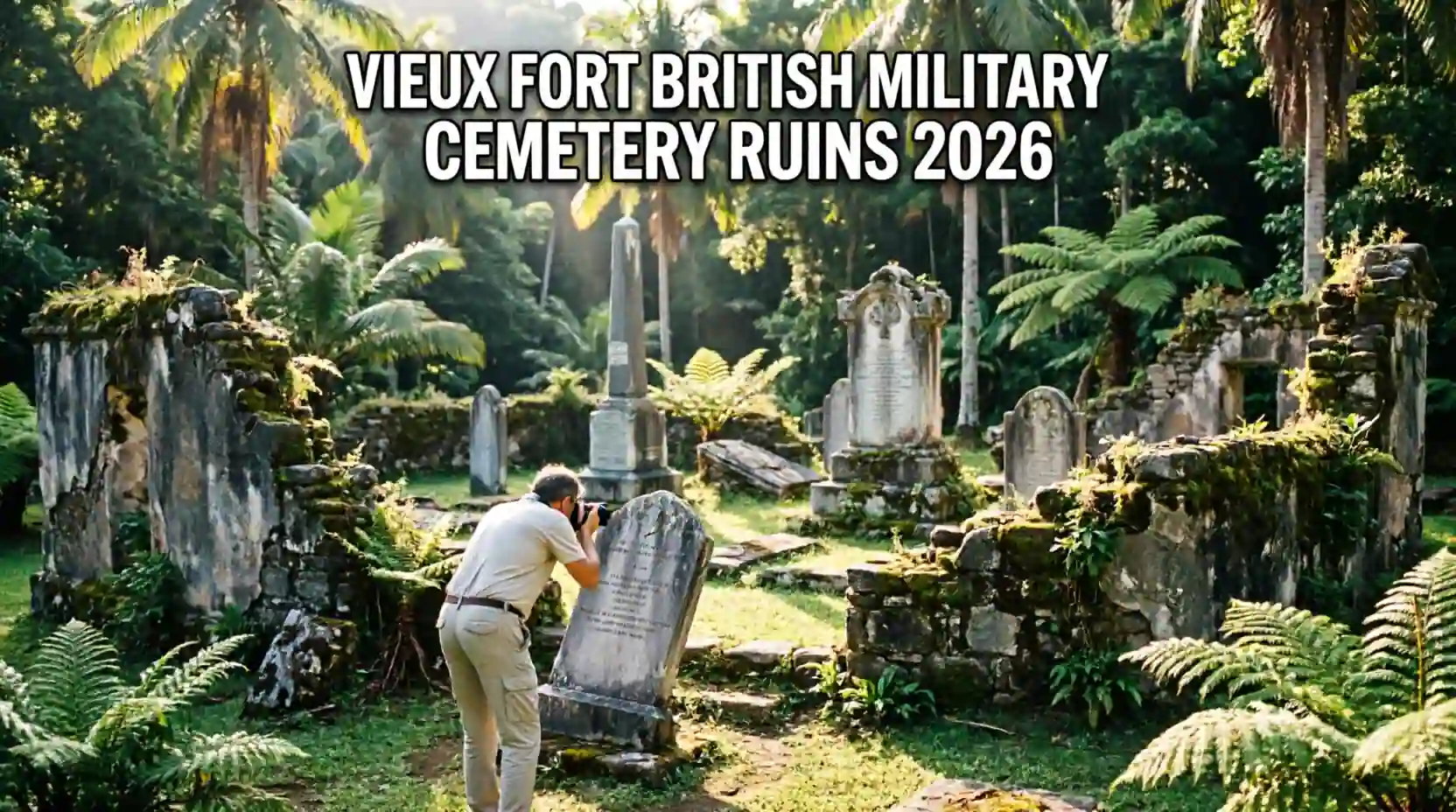
Today, the Old British Military Cemetery exists in a state of atmospheric decay that speaks to both the passage of time and the challenges of preserving historical sites in tropical climates. Many tombstones have fallen, cracked, or become illegible due to weathering, lichen growth, and vegetation encroachment. However, numerous monuments remain standing, offering tangible connections to the individuals who served and died in this distant outpost of empire.
The cemetery contains a variety of monument types, from simple headstones marking the graves of enlisted men to more elaborate table tombs and chest tombs that commemorated officers and their families. Some monuments feature classical architectural elements typical of British military cemeteries, including urns, obelisks, and decorative carvings. The inscriptions, where legible, typically include the deceased's name, rank, regiment, date of death, and age, along with epitaphs that reflect the religious and cultural values of the period.
Notable Monuments and Inscriptions
Among the more prominent surviving monuments are several table tombs that once marked the graves of senior officers and their families. These substantial stone structures, though now cracked and overgrown, demonstrate the resources that were sometimes devoted to commemorating the colonial dead. Inscriptions on these monuments often provide detailed biographical information, including previous postings, military achievements, and family connections.
More common are the simple headstones that marked the graves of ordinary soldiers. Many of these stones bear poignant inscriptions noting deaths from disease rather than combat, with phrases like "died of fever" or "cut down in the prime of life" appearing repeatedly. The ages recorded on these stones are often startlingly young, with many soldiers dying in their twenties or early thirties, a stark reminder of the lethal conditions of Caribbean military service.
Archaeological and Genealogical Significance
The cemetery holds significant value for both archaeological research and genealogical investigation. For descendants of British military personnel who served in the Caribbean, the cemetery may contain the graves of ancestors whose stories have been lost to time. The inscriptions provide crucial data for family historians, including full names, dates, places of origin, and regimental affiliations that can be cross-referenced with military records in British archives.
From an archaeological perspective, the cemetery represents an important example of British military burial practices in the Caribbean during the 19th and early 20th centuries. The monument styles, materials, and layout provide insights into colonial attitudes toward death, commemoration, and social hierarchy. The cemetery also offers evidence of changing burial practices over time, as Victorian-era monuments differ from earlier Georgian examples and later Edwardian markers.
Preservation Challenges and Conservation Efforts

The Old British Military Cemetery in Vieux Fort faces significant preservation challenges common to tropical historical sites. The combination of high humidity, heavy rainfall, salt air, and aggressive vegetation growth creates a hostile environment for stone monuments. Lichen and moss colonize stone surfaces, accelerating weathering and obscuring inscriptions. Tree roots destabilize foundations and crack monuments, while falling branches pose ongoing risks to fragile structures.
Human factors compound these natural challenges. The cemetery has suffered from vandalism, neglect, and competing land use pressures. Without regular maintenance, vegetation quickly reclaims cleared areas, and monuments continue to deteriorate. Limited resources for heritage conservation in Saint Lucia mean that many historical sites, including this cemetery, compete for attention and funding.
Current Conservation Status
As of 2026, the cemetery remains in a semi-abandoned state, though there is growing recognition of its historical importance. The Saint Lucia National Trust and the Archaeological and Historical Society of Saint Lucia have documented the site and advocated for its preservation, but comprehensive restoration has not yet been undertaken. Some individual monuments have received attention from descendants or heritage enthusiasts, but these efforts are sporadic and under-resourced.
Recent years have seen increased interest in documenting the cemetery through photography, rubbings, and transcription projects. Volunteers and researchers have begun the painstaking work of recording legible inscriptions and mapping the site, creating a digital archive that will preserve information even as physical monuments continue to deteriorate. These documentation efforts are crucial for both historical research and future restoration planning.
Future Preservation Prospects
The future of the cemetery depends on several factors, including increased public awareness, funding availability, and institutional commitment to heritage conservation. Potential preservation strategies include clearing vegetation, stabilizing monuments, creating protective barriers, installing interpretive signage, and developing the site as a heritage tourism destination. International partnerships with British heritage organizations or military history groups could provide expertise and resources for conservation work.
Community involvement is essential for long-term preservation success. Engaging local residents, schools, and tour operators in the cemetery's story helps build support for conservation and ensures that the site is valued as part of Saint Lucia's diverse heritage. Educational programs that connect the cemetery to broader themes of colonial history, military service, and public health can help visitors understand its significance beyond its physical appearance.
Planning Your Visit: Practical Tips and Etiquette

Visiting the Old British Military Cemetery requires preparation and respect for both the historical significance of the site and its current condition. This is not a manicured tourist attraction but a weathered historical site that demands thoughtful engagement. Proper preparation will enhance your experience and ensure that your visit is safe, respectful, and rewarding.
Before your visit, research the cemetery's history and the broader context of British military presence in Saint Lucia. Understanding what you are seeing will transform a walk through old stones into a meaningful historical experience. Consider bringing reference materials about British military regiments that served in the Caribbean, as this information can help you interpret the inscriptions you encounter.
What to Bring
Essential items for your visit include sturdy hiking boots or shoes with good traction, long pants and long-sleeved shirts to protect against vegetation and insects, insect repellent (preferably DEET-based), sun protection including hat, sunglasses, and sunscreen, plenty of drinking water, a flashlight or headlamp for illuminating shaded inscriptions, a camera for documentation, a notebook and pencil for recording inscriptions, and a small brush for gently clearing debris from stones (use with extreme care).
Optional but useful items include a magnifying glass for reading weathered text, GPS device or smartphone with offline maps, rubbing materials (if you plan to make brass rubbings, though this should only be done with permission and extreme care), and a copy of any transcriptions or maps you may have found in your research.
Photography and Documentation
Photography is encouraged as a way to document the cemetery's current condition and preserve inscriptions that may become illegible in the future. Use natural light when possible, and consider visiting during early morning or late afternoon when angled light can reveal details obscured by direct overhead sun. A polarizing filter can help reduce glare from wet or lichen-covered stones.
When photographing monuments, take multiple shots from different angles and distances. Overall views show the monument's context and condition, while close-ups capture inscription details. If you discover legible inscriptions, consider sharing them with heritage organizations working to document the cemetery. Your photographs may contribute to ongoing preservation efforts.
Respectful Behavior
Remember that this is a burial ground, and treat it with the respect due to any cemetery. Speak quietly, avoid climbing on monuments, and do not move stones or debris. If you encounter recent flowers or other signs that descendants still visit certain graves, be particularly respectful of those areas. Do not remove any artifacts or stones from the site, as this is both disrespectful and potentially illegal.
Be mindful that the cemetery is unfenced and may be used by local residents for various purposes. You may encounter people using the grounds for other activities; be polite and explain your interest if asked. Some locals may have knowledge about the cemetery's history or specific graves and may be willing to share information if approached respectfully.
Connecting the Cemetery to Broader Historical Themes

The Old British Military Cemetery in Vieux Fort is more than a collection of old gravestones; it is a physical manifestation of broader historical processes that shaped not only Saint Lucia but the entire Caribbean region. Understanding these connections enriches your visit and helps place individual graves within their proper historical context.
The cemetery tells the story of empire and its human cost. Each grave represents an individual who left home, family, and familiar surroundings to serve in a distant colony, many never to return. The predominance of disease-related deaths reflects the brutal reality of tropical service for European troops unaccustomed to Caribbean pathogens. The cemetery also speaks to class and racial hierarchies of the colonial era, visible in the differential treatment of officers and enlisted men, and in the separate burial grounds maintained for different groups.
Military History and Imperial Strategy
Saint Lucia's strategic importance to Britain stemmed from its location in the Windward Islands, its deep-water harbors, and its position relative to French territories. The military cemetery is a reminder that Caribbean islands were not merely plantation economies but crucial military assets in the struggle for imperial dominance. The garrison at Vieux Fort was part of a network of British military installations across the Caribbean that protected trade routes, suppressed piracy, and projected British power throughout the region.
The cemetery's timeline, spanning from the post-Napoleonic era through World War II, encompasses major shifts in British imperial policy, military technology, and colonial administration. The changing styles of monuments reflect evolving attitudes toward death and commemoration, while the declining number of burials in the 20th century mirrors the gradual withdrawal of British military forces from the Caribbean.
Public Health and Tropical Medicine
The cemetery serves as a sobering monument to the history of tropical medicine and public health. The high mortality rates from yellow fever, malaria, and other diseases prompted extensive research into tropical medicine and eventually led to improvements in sanitation, mosquito control, and medical treatment that made Caribbean service less lethal. The cemetery's graves mark the human cost of this learning process.
Medical officers buried in the cemetery represent the frontline of this struggle against disease. Their inscriptions often note their medical credentials and their efforts to protect the health of their commands, even as they themselves fell victim to the diseases they fought to understand and prevent.
Exploring Vieux Fort: Beyond the Cemetery

A visit to the Old British Military Cemetery can be combined with exploration of other historical and cultural sites in Vieux Fort, creating a fuller understanding of the town's role in Saint Lucian history. Vieux Fort, whose name means "old fort" in French, has a rich multicultural heritage shaped by indigenous Kalinago people, French and British colonizers, enslaved Africans, and later indentured laborers from Asia.
The town center features colonial-era architecture, local markets, and restaurants serving traditional Saint Lucian cuisine. The Vieux Fort Museum, if open during your visit, may provide additional context about the town's military history and the cemetery's place in the broader narrative of Saint Lucian development.
Nearby Historical Sites
Other historical sites in the Vieux Fort area may include remnants of French and British fortifications, old plantation houses, and churches with colonial-era architecture. Local guides can help you locate and interpret these sites, providing context that enhances your understanding of the region's complex history. Some sites may be on private property and require permission to visit, so always ask before entering.
The nearby Maria Islands Nature Reserve, while primarily known for its wildlife, also has historical significance related to both indigenous habitation and colonial use of the islands. Combining natural and historical exploration provides a more complete picture of the Vieux Fort region's heritage.
Local Culture and Cuisine
After exploring the cemetery and other historical sites, take time to experience Vieux Fort's contemporary culture. The town's restaurants serve authentic Saint Lucian dishes including green fig and saltfish, callaloo soup, and fresh seafood. Local bars and cafes provide opportunities to interact with residents and hear their perspectives on the town's history and development.
Saturday mornings are particularly lively in Vieux Fort, when the market draws vendors and shoppers from across the southern part of the island. This is an excellent opportunity to experience local culture, purchase fresh tropical fruits, and observe daily life in a Saint Lucian town less influenced by tourism than areas in the north.
Conclusion: Preserving Memory in Stone and Story

The Old British Military Cemetery in Vieux Fort stands as a testament to the complex, often painful history of colonialism in the Caribbean. Its weathered stones and overgrown pathways tell stories of young lives cut short, of empire's reach and its human cost, of disease and duty, and of the passage of time that eventually claims even the mightiest monuments. For visitors willing to explore this site with respect and curiosity, it offers a powerful reminder of history's personal dimension.
As Saint Lucia continues to develop its heritage tourism sector and grapple with questions of how to preserve and interpret its colonial past, sites like this cemetery will require increased attention and resources. The challenge is to balance preservation with accessibility, to honor the dead while educating the living, and to acknowledge difficult histories while building inclusive narratives that serve all Saint Lucians.
Your visit to the Old British Military Cemetery contributes to this ongoing process. By documenting what you find, sharing your experiences respectfully, and supporting local preservation efforts, you help ensure that these stones continue to tell their stories for future generations. In an age of rapid change and development, places like this cemetery serve as anchors to the past, reminding us of the human experiences that shaped the world we inherit today. May your exploration be thoughtful, your discoveries meaningful, and your contribution to preserving this heritage a positive one.
0 Comments