.webp)
.webp)
Why "Kuakata" is the only beach in Asia to view both sunrise and sunset from one spot.
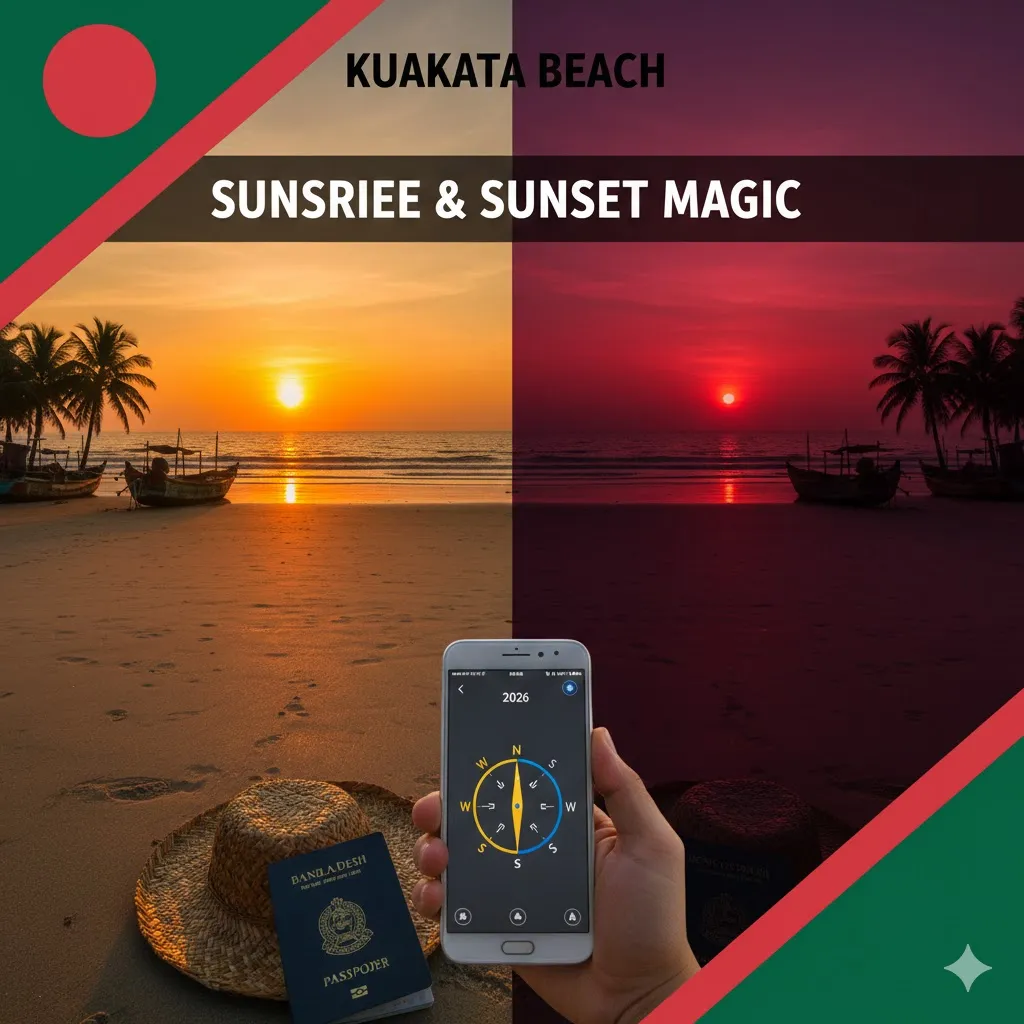
The Phenomenal Beach That Defies Convention: Kuakata's Unique Gift
On the southern coast of Bangladesh, where the Bay of Bengal embraces the deltaic landscape, lies a beach so extraordinary that it stands alone in all of Asia. Kuakata, often called the "Daughter of the Sea," holds a distinction that seems almost magical: it is the only beach in Asia where you can witness both sunrise and sunset from the exact same spot. This remarkable natural phenomenon has made Kuakata not just a tourist destination, but a pilgrimage site for photographers, nature lovers, and anyone seeking to experience one of nature's most captivating dual performances.
While beaches around the world offer either spectacular sunrises or breathtaking sunsets, Kuakata offers both in equal measure, creating a complete daily cycle of celestial beauty that few places on Earth can match. From the golden glow of dawn breaking over the eastern horizon to the fiery descent of the sun into the western waters, Kuakata provides a front-row seat to nature's most reliable yet endlessly surprising spectacle.
This comprehensive guide explores the science, geography, and magic behind Kuakata's unique position, explaining why this beach stands alone in Asia, how visitors can make the most of this rare opportunity, and what makes experiencing both sunrise and sunset from one location such a profound and memorable journey.
Understanding the Phenomenon: The Science Behind Kuakata's Uniqueness

To truly appreciate Kuakata's distinction, we must first understand the geographical and astronomical factors that make this dual viewing possible. The phenomenon is not magic, but rather a perfect alignment of natural circumstances that rarely occur together.
The East-West Orientation
Kuakata beach possesses a unique geographical orientation that runs almost perfectly east to west along the Bay of Bengal coastline. This alignment is the fundamental reason why both sunrise and sunset are visible from the same stretch of sand. Most beaches face either east or west, allowing viewers to see either sunrise or sunset over the water, but not both.
The beach's orientation creates an unobstructed view of the horizon in both directions. To the east, the sun rises from behind the distant coastline and islands, painting the sky in shades of pink, orange, and gold. To the west, the sun descends directly into the Bay of Bengal, creating spectacular reflections on the water's surface. This east-west alignment, combined with the relatively flat terrain and absence of significant obstacles, creates the perfect viewing platform.
The Bay of Bengal's Role
The Bay of Bengal itself plays a crucial role in this phenomenon. As a large body of water extending both eastward and westward from Kuakata's position, it provides the necessary water horizon for both sunrise and sunset viewing. The bay's shape and Kuakata's position on its northern shore create a natural amphitheater where the sun's daily journey can be observed in its entirety.
During sunrise, the eastern expanse of the bay catches the first light, while at sunset, the western waters reflect the day's final glow. The water acts as a natural mirror, doubling the visual impact of both events and creating the stunning reflections that photographers prize.
Latitude and Seasonal Considerations
Kuakata's position at approximately 21.8° North latitude places it in an optimal zone for observing dramatic sunrise and sunset displays throughout the year. This tropical-subtropical position means the sun's path creates significant variation in viewing angles across seasons, but both sunrise and sunset remain visible year-round.
During the winter months (November to February), the sun's path is lower in the sky, creating longer, more dramatic sunrises and sunsets with extended golden hours. The summer months bring the sun higher, but the monsoon clouds often add dramatic elements to the sky, creating equally spectacular displays with different characteristics.
Why Other Asian Beaches Can't Match This
Several factors prevent other Asian beaches from offering the same dual viewing experience:
Coastal Orientation: Most Asian coastlines run north-south rather than east-west. India's western coast faces west (sunset only over water), while its eastern coast faces east (sunrise only over water). Similar patterns exist throughout Southeast Asia, China, and other Asian coastal regions.
Land Obstructions: Even beaches with favorable orientations often have land masses, islands, or geographical features that block either the eastern or western horizon. Kuakata benefits from a remarkably clear view in both directions.
Bay Configuration: The specific configuration of the Bay of Bengal at Kuakata's location is unique. The bay extends sufficiently in both directions without major land interruptions at the critical viewing angles.
Beach Topography: Kuakata's wide, flat beach with gradual slope into the water provides unobstructed viewing. Many beaches have cliffs, dense vegetation, or development that blocks one horizon or the other.
Geographical Context: Kuakata's Position in Bangladesh

Understanding Kuakata's location within Bangladesh helps explain why this phenomenon occurs here and nowhere else in the region.
Location Details
Kuakata is situated in the Kalapara upazila of Patuakhali district, approximately 70 kilometers south of Patuakhali town and about 320 kilometers from Dhaka, the capital of Bangladesh. The beach lies at the southernmost tip of the country, where the Ganges-Brahmaputra delta meets the Bay of Bengal.
This position at the delta's edge is crucial. The deltaic formation has created a coastline that curves in such a way that Kuakata faces both east and west along its length. The beach stretches approximately 18 kilometers in length and about 3 kilometers in width, providing ample space for viewing both phenomena from various points along the shore.
The Deltaic Landscape
Kuakata exists within the dynamic landscape of the Ganges-Brahmaputra delta, one of the world's largest and most active delta systems. This deltaic environment has shaped the coastline over millennia, creating the specific orientation that makes dual viewing possible.
The beach itself is relatively young in geological terms, continuously shaped by tidal action, sediment deposition, and the powerful forces of the Bay of Bengal. This ongoing formation process has maintained the east-west orientation that is so critical to Kuakata's uniqueness.
Surrounding Ecosystem
Kuakata doesn't exist in isolation. The beach is part of a larger coastal ecosystem that includes:
- Mangrove forests: Patches of mangrove vegetation protect the coastline and provide habitat for diverse species
- Char islands: Small, shifting islands formed by sediment deposition dot the nearby waters
- Estuarine systems: Freshwater from rivers mixes with saltwater from the bay, creating rich ecosystems
- Fishing grounds: The waters support traditional fishing communities whose boats and nets add cultural interest to sunrise and sunset scenes
- 👉 Hidden Gems Vertical Garden Muharraq Green Exploration Guide 2026
- 👉 Ashgabat Digital Nomad Internet and Connectivity Guide 2026
- 👉 How to travel Bangladesh by luxury train: A guide to the "Cox's Bazar Express."
This ecological context enhances the viewing experience, as the natural environment provides ever-changing foreground elements that complement the celestial displays.
The Sunrise Experience: Dawn at Kuakata

Experiencing sunrise at Kuakata is a ritual that draws thousands of visitors each year. The early morning transformation of sky, sea, and shore creates memories that last a lifetime.
Timing and Preparation
Sunrise timing at Kuakata varies throughout the year:
- Winter (November-February): Sunrise occurs between 6:15 AM and 6:45 AM
- Summer (March-May): Sunrise occurs between 5:30 AM and 6:00 AM
- Monsoon (June-October): Sunrise occurs between 5:45 AM and 6:15 AM
- 👉 Hidden Gems Vertical Garden Muharraq Green Exploration Guide 2026
- 👉 Ashgabat Digital Nomad Internet and Connectivity Guide 2026
- 👉 How to travel Bangladesh by luxury train: A guide to the "Cox's Bazar Express."
To fully experience the sunrise, arrive at the beach at least 45 minutes before the scheduled sunrise time. This allows you to witness the entire progression from pre-dawn darkness through the golden hour that follows sunrise.
The Visual Progression
The Kuakata sunrise unfolds in distinct stages:
Pre-Dawn (30-45 minutes before sunrise): The eastern sky begins to lighten, shifting from deep black to navy blue, then to purple and pink hues. The first light reflects on the wet sand from the receding tide, creating a mirror-like surface.
Dawn Break (15-20 minutes before sunrise): Orange and gold colors intensify along the horizon. Silhouettes of fishing boats, nets, and palm trees become visible against the brightening sky. The temperature is at its coolest, and the air is often still.
Sunrise Moment: The sun's first edge appears above the horizon, initially as a small red-orange arc. Within minutes, the full solar disk emerges, casting brilliant light across the water. This is the moment when photographers capture their most dramatic images.
Golden Hour (30-60 minutes after sunrise): The sun climbs higher, but the light remains warm and golden. This period offers excellent photography conditions with softer shadows and rich colors. Local fishermen begin their activities, adding human interest to the scene.
Best Viewing Locations for Sunrise
Several specific spots along Kuakata beach offer optimal sunrise viewing:
Zero Point: The easternmost accessible point of the beach provides unobstructed eastern views. This is the most popular sunrise viewing location.
Main Beach Area: The central section of the beach near the hotel zone offers convenient access with good views.
Fishermen's Landing Areas: Sections where traditional fishing boats launch provide cultural context and interesting foreground elements.
The Sunset Experience: Dusk at Kuakata

If sunrise at Kuakata is about renewal and hope, sunset is about reflection and closure. The evening display offers a different but equally captivating experience.
Timing and Atmosphere
Sunset timing also varies seasonally:
- Winter (November-February): Sunset occurs between 5:15 PM and 5:45 PM
- Summer (March-May): Sunset occurs between 6:15 PM and 6:45 PM
- Monsoon (June-October): Sunset occurs between 6:00 PM and 6:30 PM
- 👉 Hidden Gems Vertical Garden Muharraq Green Exploration Guide 2026
- 👉 Ashgabat Digital Nomad Internet and Connectivity Guide 2026
- 👉 How to travel Bangladesh by luxury train: A guide to the "Cox's Bazar Express."
The atmosphere before sunset differs from sunrise. The beach is more active, with families, couples, and groups gathering to watch. The day's heat begins to dissipate, and a gentle breeze often picks up from the bay.
The Visual Progression
Sunset at Kuakata follows its own dramatic arc:
Golden Hour Before Sunset: The afternoon light softens, taking on warm golden tones. The western sky begins to show hints of orange and pink. Shadows lengthen across the beach.
Sunset Approach (30 minutes before): Colors intensify dramatically. The sky may display multiple bands of color – deep orange near the horizon, pink above, transitioning to purple and blue higher up. Cloud formations, if present, catch fire with reflected light.
Sunset Moment: The sun descends toward the water, appearing larger due to atmospheric effects. As it touches the horizon, it creates a brilliant path of light across the water's surface. The final moments before the sun disappears are intensely colorful.
Twilight (30-45 minutes after sunset): Even after the sun disappears, the show continues. The sky transitions through spectacular color phases – from orange to pink to purple to deep blue. This is the "blue hour" beloved by photographers.
Best Viewing Locations for Sunset
While the entire beach offers sunset views, certain areas excel:
Western Beach Section: The areas toward the western end provide the most direct western views.
Echo Point: A specific location known for good sunset viewing and acoustic phenomena.
Beachside Restaurants and Cafes: Several establishments offer comfortable seating with sunset views, combining dining with the visual spectacle.
Photography at Kuakata: Capturing Both Celestial Events

For photographers, Kuakata represents a rare opportunity to capture both sunrise and sunset in a single day from the same location. Here's how to make the most of this unique setting.
Essential Equipment
Camera: A DSLR or mirrorless camera with manual controls is ideal, though modern smartphones can also capture impressive images.
Lenses:
- Wide-angle (16-35mm): Essential for capturing the full expanse of sky and beach
- Telephoto (70-200mm or longer): Useful for compressing the sun's disk and capturing details
- Standard zoom (24-70mm): Versatile for various compositions
- 👉 Hidden Gems Vertical Garden Muharraq Green Exploration Guide 2026
- 👉 Ashgabat Digital Nomad Internet and Connectivity Guide 2026
- 👉 How to travel Bangladesh by luxury train: A guide to the "Cox's Bazar Express."
Tripod: Crucial for long exposures during low light conditions and for creating sharp images.
Filters:
- Graduated ND filter: Balances bright sky with darker foreground
- Polarizing filter: Reduces glare and enhances sky colors
- ND filter: Allows long exposures even in brighter conditions
- 👉 Hidden Gems Vertical Garden Muharraq Green Exploration Guide 2026
- 👉 Ashgabat Digital Nomad Internet and Connectivity Guide 2026
- 👉 How to travel Bangladesh by luxury train: A guide to the "Cox's Bazar Express."
Camera Settings
For Sunrise/Sunset:
- Mode: Aperture Priority or Manual
- Aperture: f/8 to f/16 for maximum depth of field
- ISO: 100-400 for best quality; increase as light decreases
- Shutter Speed: Varies with light; use tripod for speeds slower than 1/60s
- White Balance: Daylight or Cloudy for warm tones; avoid Auto WB
- Format: RAW for maximum post-processing flexibility
- 👉 Hidden Gems Vertical Garden Muharraq Green Exploration Guide 2026
- 👉 Ashgabat Digital Nomad Internet and Connectivity Guide 2026
- 👉 How to travel Bangladesh by luxury train: A guide to the "Cox's Bazar Express."
For Silhouettes:
- Expose for the sky, allowing foreground subjects to go dark
- Use spot metering on the bright sky
- Position subjects against the brightest part of the sky
- 👉 Hidden Gems Vertical Garden Muharraq Green Exploration Guide 2026
- 👉 Ashgabat Digital Nomad Internet and Connectivity Guide 2026
- 👉 How to travel Bangladesh by luxury train: A guide to the "Cox's Bazar Express."
Composition Techniques
Rule of Thirds: Position the horizon on the upper or lower third line, not in the center. Place the sun near intersection points.
Leading Lines: Use the shoreline, waves, or beach patterns to lead the eye toward the sun.
Foreground Interest: Include fishing boats, nets, people, or palm trees to add scale and context.
Reflections: Capture the sun's reflection on wet sand or calm water for symmetrical compositions.
Silhouettes: Position people or objects between you and the sun for dramatic silhouettes.
Unique Photography Opportunities
Same-Day Sunrise and Sunset Series: Create a diptych or series showing both events from the same location, demonstrating Kuakata's unique capability.
Time-lapse: Set up your camera to capture the entire progression of sunrise or sunset.
Long Exposure: Use ND filters for exposures of 30 seconds or more to smooth water and create ethereal effects.
Human Element: Photograph local fishermen, families, and tourists interacting with the sunrise/sunset to tell a complete story.
Comparing Kuakata to Other Notable Beaches

Understanding how Kuakata compares to other famous beaches helps appreciate its uniqueness.
Kuakata vs. Puri Beach, India
Puri Beach on India's eastern coast faces east, offering spectacular sunrises over the Bay of Bengal. However, sunsets occur over land to the west, not over water. While Puri is culturally and spiritually significant, it cannot offer the dual water-viewing experience of Kuakata.
Kuakata vs. Goa Beaches, India
Goa's western coast beaches face west, providing stunning sunsets over the Arabian Sea. However, sunrises occur over land to the east. Goa's beaches are more developed and commercialized than Kuakata's relatively pristine shores.
Kuakata vs. Phuket Beaches, Thailand
Phuket's beaches, facing various directions around the island, offer either sunrise or sunset views depending on orientation. No single beach provides both phenomena over water.
Kuakata vs. Boracay, Philippines
Boracay's famous White Beach faces west, offering spectacular sunsets. Sunrises are visible but over land on the opposite side of the island, requiring travel to a different location.
What Makes Kuakata Unique
The comparison reveals Kuakata's singular position: it is genuinely the only beach in Asia where both sunrise and sunset can be viewed over water from the same stretch of sand without relocating. This distinction is not marketing hyperbole but geographical fact.
Planning Your Visit: Complete Travel Guide

Making the most of Kuakata's unique offering requires proper planning and preparation.
Best Time to Visit
Optimal Season: November to February (Winter)
- Pleasant temperatures (15-25°C / 59-77°F)
- Clear skies and excellent visibility
- Low humidity
- Peak tourist season with full services available
- Best photography conditions
- 👉 Hidden Gems Vertical Garden Muharraq Green Exploration Guide 2026
- 👉 Ashgabat Digital Nomad Internet and Connectivity Guide 2026
- 👉 How to travel Bangladesh by luxury train: A guide to the "Cox's Bazar Express."
Good Season: March to May (Pre-Monsoon/Summer)
- Warmer temperatures (25-35°C / 77-95°F)
- Fewer crowds
- Lower accommodation prices
- Occasional dramatic cloud formations
- Can be very hot during midday
- 👉 Hidden Gems Vertical Garden Muharraq Green Exploration Guide 2026
- 👉 Ashgabat Digital Nomad Internet and Connectivity Guide 2026
- 👉 How to travel Bangladesh by luxury train: A guide to the "Cox's Bazar Express."
Challenging Season: June to October (Monsoon)
- Heavy rainfall, especially July-September
- High humidity
- Difficult travel conditions
- Some services may be limited
- Lush green landscape
- Dramatic stormy skies (for adventurous photographers)
- 👉 Hidden Gems Vertical Garden Muharraq Green Exploration Guide 2026
- 👉 Ashgabat Digital Nomad Internet and Connectivity Guide 2026
- 👉 How to travel Bangladesh by luxury train: A guide to the "Cox's Bazar Express."
How to Reach Kuakata
From Dhaka:
By Bus (Most Common):
- Direct buses from Dhaka to Kuakata: 10-12 hours
- Cost: BDT 800-1,500 for AC coaches
- Operators: Green Line, Shohag, S. Alam, and others
- Night buses available for early morning arrival
- 👉 Hidden Gems Vertical Garden Muharraq Green Exploration Guide 2026
- 👉 Ashgabat Digital Nomad Internet and Connectivity Guide 2026
- 👉 How to travel Bangladesh by luxury train: A guide to the "Cox's Bazar Express."
By Bus + Ferry:
- Dhaka to Barisal by bus or launch: 6-8 hours
- Barisal to Kuakata by bus: 4-5 hours
- More scenic route through river country
- 👉 Hidden Gems Vertical Garden Muharraq Green Exploration Guide 2026
- 👉 Ashgabat Digital Nomad Internet and Connectivity Guide 2026
- 👉 How to travel Bangladesh by luxury train: A guide to the "Cox's Bazar Express."
By Private Vehicle:
- Distance: approximately 320 km
- Driving time: 8-10 hours
- Allows flexibility for stops and exploration
- 👉 Hidden Gems Vertical Garden Muharraq Green Exploration Guide 2026
- 👉 Ashgabat Digital Nomad Internet and Connectivity Guide 2026
- 👉 How to travel Bangladesh by luxury train: A guide to the "Cox's Bazar Express."
From Other Cities:
- Chittagong: 8-10 hours by bus
- Khulna: 5-6 hours by bus
- Patuakhali: 2-3 hours by bus or CNG
- 👉 Hidden Gems Vertical Garden Muharraq Green Exploration Guide 2026
- 👉 Ashgabat Digital Nomad Internet and Connectivity Guide 2026
- 👉 How to travel Bangladesh by luxury train: A guide to the "Cox's Bazar Express."
Accommodation Options
Kuakata offers various lodging options to suit different budgets:
Luxury Resorts:
- Sea Crown Hotel, Hotel Al-Falah, and similar properties
- Cost: BDT 3,000-6,000 per night
- Amenities: AC, attached bathroom, restaurant, sea view
- 👉 Hidden Gems Vertical Garden Muharraq Green Exploration Guide 2026
- 👉 Ashgabat Digital Nomad Internet and Connectivity Guide 2026
- 👉 How to travel Bangladesh by luxury train: A guide to the "Cox's Bazar Express."
Mid-Range Hotels:
- Numerous options along the beach and in town
- Cost: BDT 1,500-3,000 per night
- Basic amenities, clean rooms, often AC
- 👉 Hidden Gems Vertical Garden Muharraq Green Exploration Guide 2026
- 👉 Ashgabat Digital Nomad Internet and Connectivity Guide 2026
- 👉 How to travel Bangladesh by luxury train: A guide to the "Cox's Bazar Express."
Budget Guesthouses:
- Simple accommodations near the beach
- Cost: BDT 500-1,500 per night
- Basic facilities, fan or AC, shared or attached bathroom
- 👉 Hidden Gems Vertical Garden Muharraq Green Exploration Guide 2026
- 👉 Ashgabat Digital Nomad Internet and Connectivity Guide 2026
- 👉 How to travel Bangladesh by luxury train: A guide to the "Cox's Bazar Express."
Booking Tips:
- Reserve in advance during peak season (November-February)
- Request sea-view rooms for sunrise/sunset viewing from your room
- Check recent reviews for cleanliness and service quality
- 👉 Hidden Gems Vertical Garden Muharraq Green Exploration Guide 2026
- 👉 Ashgabat Digital Nomad Internet and Connectivity Guide 2026
- 👉 How to travel Bangladesh by luxury train: A guide to the "Cox's Bazar Express."
Food and Dining
Kuakata offers diverse dining options:
- Seafood: Fresh fish, crab, and shrimp are local specialties
- Bangladeshi Cuisine: Rice, fish, vegetables, and traditional dishes
- International Options: Some hotels offer Chinese and continental food
- Street Food: Local snacks and refreshments available
- Cost: BDT 200-500 per meal at restaurants; less at local eateries
- 👉 Hidden Gems Vertical Garden Muharraq Green Exploration Guide 2026
- 👉 Ashgabat Digital Nomad Internet and Connectivity Guide 2026
- 👉 How to travel Bangladesh by luxury train: A guide to the "Cox's Bazar Express."
Local Transportation
Getting around Kuakata:
- Walking: The beach is easily walkable
- CNG Auto-rickshaw: Available for short distances; BDT 50-150 per ride
- Bicycle Rental: Some hotels offer bicycles; BDT 100-200 per day
- Motorcycle Rental: Available in town; BDT 500-800 per day
- 👉 Hidden Gems Vertical Garden Muharraq Green Exploration Guide 2026
- 👉 Ashgabat Digital Nomad Internet and Connectivity Guide 2026
- 👉 How to travel Bangladesh by luxury train: A guide to the "Cox's Bazar Express."
Activities Beyond Sunrise and Sunset

While sunrise and sunset are Kuakata's main attractions, the beach and surrounding area offer additional activities:
Water Activities
- Swimming: The gentle slope and relatively calm waters make swimming safe
- Boat Rides: Traditional fishing boat rides to nearby islands
- Jet Ski: Available during peak season
- 👉 Hidden Gems Vertical Garden Muharraq Green Exploration Guide 2026
- 👉 Ashgabat Digital Nomad Internet and Connectivity Guide 2026
- 👉 How to travel Bangladesh by luxury train: A guide to the "Cox's Bazar Express."
Cultural Experiences
- Fishing Village Visits: Observe traditional fishing methods and daily life
- Local Markets: Explore markets selling fresh seafood and local products
- Buddhist Temple: Visit the nearby Buddhist temple and monastery
- 👉 Hidden Gems Vertical Garden Muharraq Green Exploration Guide 2026
- 👉 Ashgabat Digital Nomad Internet and Connectivity Guide 2026
- 👉 How to travel Bangladesh by luxury train: A guide to the "Cox's Bazar Express."
Nature Exploration
- Mangrove Forest: Explore nearby mangrove areas
- Char Islands: Take boat trips to nearby char (island) formations
- Bird Watching: Migratory birds visit during winter months
- 👉 Hidden Gems Vertical Garden Muharraq Green Exploration Guide 2026
- 👉 Ashgabat Digital Nomad Internet and Connectivity Guide 2026
- 👉 How to travel Bangladesh by luxury train: A guide to the "Cox's Bazar Express."
Cultural and Spiritual Significance

Kuakata holds cultural and spiritual importance beyond its natural beauty:
Religious Diversity
The area is home to both Muslim and Buddhist communities, reflecting Bangladesh's religious diversity. Several Buddhist temples and monasteries exist in the region, and the name "Kuakata" itself has interesting etymological roots related to local history and culture.
Traditional Fishing Culture
The beach remains a working beach where traditional fishing continues. The sight of fishermen mending nets, launching boats at dawn, and returning with catches at dusk adds authentic cultural depth to the sunrise and sunset experience.
Local Festivals
Various local festivals and celebrations occur throughout the year, offering visitors opportunities to experience Bengali culture, music, dance, and cuisine.
Environmental Conservation and Responsible Tourism

Preserving Kuakata's unique beauty requires responsible tourism practices:
Conservation Challenges
- Coastal Erosion: The dynamic deltaic coastline faces ongoing erosion
- Pollution: Plastic waste and litter threaten the beach ecosystem
- Development Pressure: Unplanned construction can damage the natural environment
- Climate Change: Rising sea levels and increased storm intensity pose long-term threats
- 👉 Hidden Gems Vertical Garden Muharraq Green Exploration Guide 2026
- 👉 Ashgabat Digital Nomad Internet and Connectivity Guide 2026
- 👉 How to travel Bangladesh by luxury train: A guide to the "Cox's Bazar Express."
How Visitors Can Help
- Leave No Trace: Take all trash with you; don't litter on the beach
- Respect Wildlife: Don't disturb nesting birds or marine life
- Support Local: Buy from local vendors and use local guides
- Conserve Water: Freshwater is limited in coastal areas
- Use Eco-Friendly Products: Avoid single-use plastics
- Respect Local Culture: Dress modestly and follow local customs
- 👉 Hidden Gems Vertical Garden Muharraq Green Exploration Guide 2026
- 👉 Ashgabat Digital Nomad Internet and Connectivity Guide 2026
- 👉 How to travel Bangladesh by luxury train: A guide to the "Cox's Bazar Express."
Practical Tips for the Complete Experience

Maximize your Kuakata visit with these practical recommendations:
Packing Essentials
- Light, breathable clothing for daytime
- Warmer layers for early morning and evening
- Sunscreen, hat, and sunglasses
- Comfortable walking shoes and sandals
- Swimwear
- Camera equipment and extra batteries
- Insect repellent
- Personal medications
- Cash (ATMs are limited)
- 👉 Hidden Gems Vertical Garden Muharraq Green Exploration Guide 2026
- 👉 Ashgabat Digital Nomad Internet and Connectivity Guide 2026
- 👉 How to travel Bangladesh by luxury train: A guide to the "Cox's Bazar Express."
Safety Considerations
- Swim only in designated areas; currents can be strong
- Don't venture too far into the water
- Be aware of tide times
- Keep valuables secure
- Stay hydrated, especially in summer
- Use reputable transportation and accommodation
- 👉 Hidden Gems Vertical Garden Muharraq Green Exploration Guide 2026
- 👉 Ashgabat Digital Nomad Internet and Connectivity Guide 2026
- 👉 How to travel Bangladesh by luxury train: A guide to the "Cox's Bazar Express."
Maximizing the Sunrise-Sunset Experience
- Spend at least 2-3 days to experience multiple sunrises and sunsets
- Wake up early for sunrise; don't sleep through this spectacle
- Arrive at the beach 45 minutes before sunrise/sunset
- Walk the beach between events to discover your favorite spots
- Try viewing from different locations along the beach
- Bring a book or journal to enjoy during the intervals
- Connect with other travelers and share experiences
- 👉 Hidden Gems Vertical Garden Muharraq Green Exploration Guide 2026
- 👉 Ashgabat Digital Nomad Internet and Connectivity Guide 2026
- 👉 How to travel Bangladesh by luxury train: A guide to the "Cox's Bazar Express."
The Emotional Impact: Why This Experience Matters
Beyond the geographical uniqueness and photographic opportunities, experiencing both sunrise and sunset from the same beach at Kuakata offers something deeper – a complete daily cycle of natural beauty that connects us to fundamental rhythms of existence.
Witnessing sunrise represents new beginnings, hope, and renewal. The world awakens, possibilities emerge, and the day stretches before us full of potential. Sunset, conversely, represents completion, reflection, and gratitude. The day's work is done, lessons have been learned, and we prepare for rest.
To experience both from the same spot is to witness the full circle of a day, to understand that endings and beginnings are part of the same continuous flow. At Kuakata, standing on the same sand at dawn and dusk, watching the same water reflect different lights, we're reminded of nature's constancy and change, of cycles that continue regardless of human concerns.
This is why Kuakata transcends being merely a tourist destination. It's a place for contemplation, for photography, for romance, for solitude, and for connection with the natural world. It's a place where the extraordinary becomes accessible, where one of Asia's rarest natural phenomena can be experienced by anyone willing to make the journey.
Conclusion: A Beach Like No Other
Kuakata's distinction as the only beach in Asia where both sunrise and sunset can be viewed from the same spot is not just a geographical curiosity – it's an invitation to witness nature's daily masterpiece in its complete form. This unique capability, born from perfect alignment of coastal orientation, bay configuration, and geographical position, creates an experience that draws visitors from around the world.
Whether you're a photographer seeking the perfect shot, a traveler chasing unique experiences, a couple looking for romance, or a soul seeker finding peace, Kuakata delivers. The beach offers more than just two spectacular views; it offers perspective, beauty, and a reminder of nature's generous gifts to those who take time to observe.
As you stand on Kuakata's sands, watching the sun rise in the east and later set in the west, you're participating in a experience shared by relatively few people. You're witnessing why this beach is singular in all of Asia. And in that moment, watching light transform water and sky twice in one day from the same spot, you'll understand why Kuakata deserves its reputation and why it remains one of Bangladesh's most treasured natural wonders.
The beach will continue to offer this dual spectacle long after visitors return home. But the memories, the photographs, and the sense of having witnessed something truly special – these remain with you, making the journey to Kuakata not just a trip, but a pilgrimage to one of Asia's most unique coastal experiences.
0 Comments