.webp)
.webp)
Tower Bridge: A Master Guide to the World’s Most Iconic Victorian Engineering Marvel
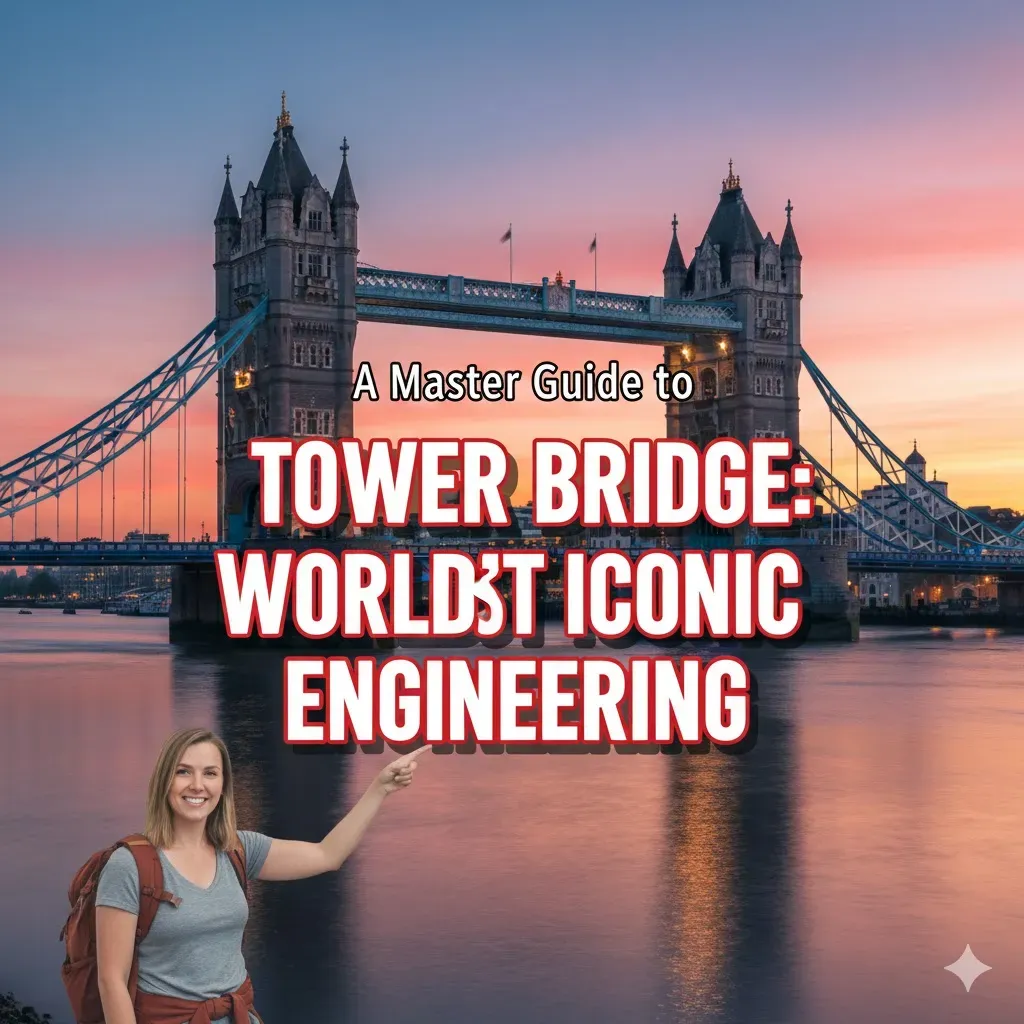
Tower Bridge: A Master Guide to the World's Most Iconic Victorian Engineering Marvel
Spanning the River Thames with its distinctive twin towers and soaring suspension chains, Tower Bridge stands as one of the most recognizable landmarks in the world—a masterpiece of Victorian engineering that seamlessly blends form and function, beauty and utility. Completed in 1894 after eight years of construction, this iconic bascule and suspension bridge has served London for over 130 years, accommodating both river traffic and road vehicles while captivating millions of visitors with its Gothic Revival architecture, innovative mechanics, and breathtaking views. As we explore this extraordinary structure in 2026, Tower Bridge continues to operate as a working bridge, a museum of industrial heritage, and a symbol of London's enduring ingenuity.
Often mistaken for London Bridge (a common confusion that amuses locals), Tower Bridge is uniquely distinguished by its two massive towers connected by upper walkways and its ability to raise its central sections—called bascules—to allow tall ships to pass beneath. This remarkable feat of Victorian engineering, powered originally by steam and now by electricity, represents the pinnacle of 19th-century innovation and remains fully operational today. The bridge's Exhibition, housed within its towers and walkways, offers visitors an immersive journey through its construction, mechanics, and cultural significance, complete with glass-floor walkways, original engine rooms, and panoramic views of London's skyline.
This comprehensive master guide invites you to explore Tower Bridge not merely as a photo opportunity, but as a living testament to human creativity, industrial progress, and architectural artistry. We'll delve into the bridge's fascinating history, explain the ingenious engineering that allows it to function, provide practical insights for experiencing the Exhibition and glass walkways, and reveal lesser-known stories that bring this iconic landmark to life. Whether you're planning your first visit to London or seeking to deepen your appreciation for Victorian engineering, this guide will help you experience Tower Bridge with curiosity, context, and wonder.
Victorian Vision: The Birth of an Icon
The story of Tower Bridge begins with the rapid expansion of Victorian London. By the late 19th century, the East End's commercial growth created an urgent need for a new river crossing downstream of London Bridge. However, traditional fixed bridges would obstruct access to the Pool of London—the vital port area where tall-masted ships delivered goods from around the empire. The solution required a bridge that could accommodate both road traffic and river navigation: a bascule bridge (from the French word for "seesaw") with movable sections.
In 1876, the City of London Corporation launched a public competition to design a bridge that met these complex requirements. Over 50 proposals were submitted, but it wasn't until 1884 that the design by city architect Sir Horace Jones, in collaboration with engineer Sir John Wolfe Barry, was selected. Jones envisioned a structure that would harmonize with the nearby Tower of London, while Barry developed the innovative mechanical systems that would make the bridge functional.
Tragically, Jones died in 1887, just as construction began. Barry took full responsibility for completing the project, working with specialist contractors to bring the ambitious design to life. Construction commenced in 1886 and employed over 400 workers for eight years. The project required 70,000 tons of concrete for the foundations, 11,000 tons of steel for the framework, and intricate stonework to create the distinctive Gothic Revival appearance.
Key Construction Milestones:
- 1886: Foundation work begins; two massive piers are sunk into the riverbed using compressed air caissons, a cutting-edge technique for the era.
- 1887-1890: Steel framework erected; twin towers rise to their full height of 65 meters (213 feet).
- 1891-1893: Bascule mechanisms installed; suspension chains and walkways completed; Gothic stone cladding applied to conceal the industrial steel structure.
- June 30, 1894: Tower Bridge officially opened by the Prince and Princess of Wales (later King Edward VII and Queen Alexandra) in a grand ceremony attended by thousands.
- 👉 25th Anniversary of Moldova National Wine Day 2026: Dates, events, and festival guide.
- 👉 The Louvre Museum: A Master Guide to the Mona Lisa and the World’s Ancient Treasures
- 👉 Luxembourg Free Transport 2026: Travel Countrywide for $0
The finished bridge was an instant sensation—a triumph of engineering that solved a practical problem while creating a landmark of extraordinary beauty. Its ability to raise its bascules in just 90 seconds (originally powered by steam hydraulics) was considered miraculous, and the Gothic towers ensured the structure complemented rather than competed with the historic Tower of London nearby.
Engineering Genius: How Tower Bridge Works
Tower Bridge is a hybrid structure combining two distinct bridge types: a suspension bridge for the side spans and a bascule bridge for the central section. Understanding this dual design reveals the brilliance of Victorian engineering.
The Bascule Mechanism: The bridge's two central sections, or bascules, each weigh over 1,000 tons. To raise them, Victorian engineers devised an ingenious hydraulic system powered by steam engines. Water under pressure was pumped into accumulators (large weighted cylinders), storing energy that could be released instantly to drive hydraulic engines. These engines rotated massive pinions that engaged racks on the bascules, lifting them to an angle of 83 degrees—sufficient clearance for tall ships.
Original Steam Power: The bridge's engine rooms housed four massive beam engines, two of which pumped water into the accumulators while two served as backups. Coal-fired boilers generated the steam, and the entire system was controlled from a central console. Remarkably, this Victorian technology remained in use until 1976, when it was replaced by an electro-hydraulic system for improved efficiency and reliability.
Modern Upgrades: Today, Tower Bridge's bascules are raised by electric motors driving oil-based hydraulics, but the original Victorian machinery has been preserved and is on display in the Engine Rooms. The bridge still opens approximately 800 times per year for river traffic, though advance notice is now required. The raising process takes about 90 seconds, and the bridge's iconic horns sound a warning before movement begins.
Structural Innovation: Beyond the bascules, Tower Bridge showcases numerous engineering advances:
- Suspension Chains: The bridge's side spans are supported by two massive steel chains, each weighing 700 tons, anchored into massive abutments on either bank.
- Flexible Joints: The bridge was designed to accommodate thermal expansion and movement from traffic, with expansion joints that allow the structure to "breathe" without damage.
- Foundation Engineering: The two river piers rest on foundations extending 25 meters (82 feet) below high tide, constructed using innovative compressed-air techniques that allowed workers to excavate in dry conditions beneath the Thames.
- 👉 25th Anniversary of Moldova National Wine Day 2026: Dates, events, and festival guide.
- 👉 The Louvre Museum: A Master Guide to the Mona Lisa and the World’s Ancient Treasures
- 👉 Luxembourg Free Transport 2026: Travel Countrywide for $0
These innovations ensured Tower Bridge's longevity and functionality, allowing it to serve London continuously for over 130 years while carrying up to 40,000 vehicles and pedestrians daily.
Gothic Grandeur: Architecture and Aesthetic Design
While Tower Bridge is an engineering marvel, its visual impact stems from its distinctive Gothic Revival architecture, deliberately chosen to harmonize with the nearby Tower of London and create a landmark worthy of the Victorian age.
Design Philosophy: Architect Horace Jones believed that a purely industrial structure would clash with London's historic skyline. By cladding the steel framework in Cornish granite and Portland stone, and incorporating Gothic elements like turrets, arches, and ornamental ironwork, he created a bridge that appears medieval while concealing cutting-edge technology. This fusion of old and new became a hallmark of Victorian public architecture.
Key Architectural Features:
- Twin Towers: Each tower rises 65 meters (213 feet) above the river, featuring pointed arches, decorative stonework, and small turrets that echo medieval castle design. The towers house the Exhibition spaces, lift shafts, and original machinery.
- High-Level Walkways: Connecting the towers at 42 meters (138 feet) above the Thames, these enclosed walkways were originally intended for pedestrians when the bascules were raised. Though little used for that purpose, they now offer spectacular panoramic views and house the glass-floor sections.
- Suspension Chains: The bridge's iconic blue-painted chains are not merely decorative; they carry the weight of the side spans. Their graceful curves create the bridge's distinctive silhouette against the sky.
- Ornamental Details: Intricate ironwork, heraldic shields, and sculpted stonework adorn the bridge, rewarding close inspection. Look for the City of London coat of arms, maritime motifs, and Victorian-era craftsmanship.
- 👉 25th Anniversary of Moldova National Wine Day 2026: Dates, events, and festival guide.
- 👉 The Louvre Museum: A Master Guide to the Mona Lisa and the World’s Ancient Treasures
- 👉 Luxembourg Free Transport 2026: Travel Countrywide for $0
Color and Maintenance: Tower Bridge's distinctive blue and white color scheme was adopted in 1977 to celebrate Queen Elizabeth II's Silver Jubilee. Prior to that, the bridge was painted chocolate brown. Today, the bridge undergoes continuous maintenance, with a full repainting cycle taking approximately 10 years and requiring 25,000 liters of specially formulated paint to protect the steel from Thames corrosion.
The Tower Bridge Exhibition: An Immersive Experience
The Tower Bridge Exhibition transforms the bridge from a passive landmark into an interactive journey through history, engineering, and London life. Included with admission, the self-guided experience combines multimedia displays, original artifacts, and breathtaking views.
North Tower Experience: Your visit begins in the North Tower, where exhibits explain the bridge's construction, Victorian London context, and the lives of the workers who built it. Interactive displays allow you to "operate" the bascules, explore 3D models of the bridge's mechanics, and hear firsthand accounts from bridge staff past and present.
High-Level Walkways: Ascend by lift or stairs to the glass-floor walkways connecting the towers at 42 meters above the Thames. The glass floors, installed in 2014, offer a thrilling perspective: look directly down to see vehicles crossing the bridge, boats passing on the river, and pedestrians walking beneath your feet. For those hesitant about heights, solid flooring is available alongside the glass sections.
Panoramic Views: The walkways provide 360-degree views of London's skyline. On clear days, you can spot landmarks including the Shard, St. Paul's Cathedral, the London Eye, and Canary Wharf. Interpretive panels identify key sights and explain the bridge's role in London's transportation network.
South Tower and Descent: The South Tower features exhibits on the bridge's cultural significance, including its appearances in film, literature, and art. Descend via the original Victorian staircases or modern lifts to reach the Engine Rooms.
Victorian Engine Rooms: Located at river level, these atmospheric chambers house the original steam engines, boilers, and accumulators that powered the bridge from 1894 to 1976. Informative displays explain how the hydraulic system worked, and you can see the massive flywheels, pistons, and control consoles that Victorian engineers operated. The Engine Rooms are a highlight for engineering enthusiasts and offer a tangible connection to the industrial age.
Practical Guide: Visiting Tower Bridge in 2026
Planning your visit ensures you make the most of this extraordinary landmark.
Opening Hours:
- Exhibition: Daily, 9:30 AM to 6:00 PM (last admission 5:00 PM)
- Bridge Deck: Open 24/7 for pedestrians and vehicles (free to cross)
- Closed: December 24-26 (Exhibition only; bridge remains open for traffic)
- 👉 25th Anniversary of Moldova National Wine Day 2026: Dates, events, and festival guide.
- 👉 The Louvre Museum: A Master Guide to the Mona Lisa and the World’s Ancient Treasures
- 👉 Luxembourg Free Transport 2026: Travel Countrywide for $0
Ticket Prices (2026):
- Adults: £12.30
- Children (5-15): £6.20
- Concessions (60+, students): £9.80
- Family Ticket (2 adults + 3 children): £31.00
- London Pass: Tower Bridge Exhibition included; excellent value if visiting multiple attractions
- 👉 25th Anniversary of Moldova National Wine Day 2026: Dates, events, and festival guide.
- 👉 The Louvre Museum: A Master Guide to the Mona Lisa and the World’s Ancient Treasures
- 👉 Luxembourg Free Transport 2026: Travel Countrywide for $0
Booking Tips:
- Book Online: Advance booking guarantees entry, often at a slight discount, and allows timed slots to manage crowds.
- Combine Tickets: Consider packages with Thames River cruises or nearby attractions like the Tower of London for added value.
- Free Crossing: Walking or driving across the bridge deck is always free; the Exhibition fee applies only to accessing the towers, walkways, and Engine Rooms.
- 👉 25th Anniversary of Moldova National Wine Day 2026: Dates, events, and festival guide.
- 👉 The Louvre Museum: A Master Guide to the Mona Lisa and the World’s Ancient Treasures
- 👉 Luxembourg Free Transport 2026: Travel Countrywide for $0
Getting There:
- Tube: Tower Hill station (Circle and District lines) is a 5-minute walk.
- Train: Fenchurch Street or London Bridge stations, then short walk.
- Bus: Routes 15, 42, 78, 100, and RV1 serve the area.
- River: Thames Clippers stop at Tower Pier, offering scenic arrival by boat.
- 👉 25th Anniversary of Moldova National Wine Day 2026: Dates, events, and festival guide.
- 👉 The Louvre Museum: A Master Guide to the Mona Lisa and the World’s Ancient Treasures
- 👉 Luxembourg Free Transport 2026: Travel Countrywide for $0
Best Time to Visit:
- Early Morning: Arrive at opening (9:30 AM) to experience the glass walkways and Engine Rooms with minimal crowds.
- Sunset: Visit 1-2 hours before sunset for golden light on the bridge and spectacular views as London transitions to evening illumination.
- Weekdays: Tuesday-Thursday typically see fewer visitors than weekends.
- Off-Peak Seasons: November-February (excluding holidays) offer shorter queues and atmospheric winter light, though weather may be cooler.
- 👉 25th Anniversary of Moldova National Wine Day 2026: Dates, events, and festival guide.
- 👉 The Louvre Museum: A Master Guide to the Mona Lisa and the World’s Ancient Treasures
- 👉 Luxembourg Free Transport 2026: Travel Countrywide for $0
Accessibility: Tower Bridge Exhibition is fully accessible for visitors with reduced mobility. Lifts provide access to all levels, including the high-level walkways. Wheelchairs are available to borrow free of charge. Accessible toilets and hearing loops are provided. Check the official website for detailed accessibility information before your visit.
Watching the Bridge Raise: A Spectacular Sight
One of Tower Bridge's most thrilling experiences is witnessing the bascules raise to allow river traffic to pass. Though openings are less frequent than in the bridge's early days (when tall-masted ships were common), the spectacle remains unforgettable.
Bridge Lift Schedule: Tower Bridge opens approximately 800 times per year, primarily for tall ships, cruise vessels, and special events. Lifts are scheduled in advance and published on the official Tower Bridge website. Typical opening times vary, but many occur mid-morning or early afternoon. Arrive at least 15 minutes early to secure a good viewing position.
Best Viewing Locations:
- Tower Bridge Approach: The pedestrian walkways on either side of the bridge deck offer close-up views of the bascules rising.
- River Thames: View from a Thames Clippers boat or riverside path for dramatic perspectives of the bridge in motion.
- Potters Fields Park: This green space on the South Bank provides an elevated, unobstructed view of the entire bridge during lifts.
- Exhibition Walkways: If you're already inside the Exhibition, the high-level walkways offer a unique vantage point (though glass floors may be covered during lifts for safety).
- 👉 25th Anniversary of Moldova National Wine Day 2026: Dates, events, and festival guide.
- 👉 The Louvre Museum: A Master Guide to the Mona Lisa and the World’s Ancient Treasures
- 👉 Luxembourg Free Transport 2026: Travel Countrywide for $0
What to Expect: Approximately 20 minutes before a lift, the bridge's iconic horns sound a warning. Traffic barriers lower, and the bascules begin to rise slowly, reaching 83 degrees in about 90 seconds. The entire process—from warning to lowering—takes roughly 10-15 minutes. Photography is encouraged, but be mindful of other visitors when positioning yourself.
Photography Tips: Capturing Tower Bridge's Beauty
Tower Bridge is one of the world's most photographed landmarks. These tips will help you capture its essence.
Best Angles and Locations:
- Sunset from the South Bank: Position yourself near City Hall or Potters Fields Park for golden-hour light on the bridge with the Thames in the foreground.
- Reflection Shots: After rain, puddles on the bridge deck or riverside paths create stunning reflections of the towers.
- Long Exposure: Use a tripod for nighttime shots; light trails from traffic and illuminated towers create dramatic images.
- Bridge Lift Action: Capture the bascules mid-rise for dynamic compositions; use a fast shutter speed to freeze motion or slow shutter for artistic blur.
- From the Walkways: The Exhibition's glass floors offer unique downward perspectives; shoot early to avoid crowds in your frame.
- 👉 25th Anniversary of Moldova National Wine Day 2026: Dates, events, and festival guide.
- 👉 The Louvre Museum: A Master Guide to the Mona Lisa and the World’s Ancient Treasures
- 👉 Luxembourg Free Transport 2026: Travel Countrywide for $0
Lighting Considerations:
- Golden Hour: The hour after sunrise and before sunset provides warm, directional light that enhances the bridge's stonework and creates long shadows.
- Blue Hour: The period just after sunset, when the sky turns deep blue and the bridge's lights illuminate, offers magical atmospheric shots.
- Overcast Days: Don't dismiss cloudy weather—soft, diffused light reduces harsh contrasts and is ideal for capturing architectural details.
- 👉 25th Anniversary of Moldova National Wine Day 2026: Dates, events, and festival guide.
- 👉 The Louvre Museum: A Master Guide to the Mona Lisa and the World’s Ancient Treasures
- 👉 Luxembourg Free Transport 2026: Travel Countrywide for $0
Etiquette: Be mindful of other visitors when taking photos. Avoid blocking pathways or exhibits. Respect signage regarding photography restrictions, particularly in the Engine Rooms where flash may damage historic machinery.
Tower Bridge vs. London Bridge: Clearing the Confusion
One of the most common questions about Tower Bridge is: "Isn't this London Bridge?" The answer is no—and understanding the distinction adds context to your visit.
London Bridge: Located approximately 800 meters upstream, London Bridge is a functional road bridge with a much simpler design. The current London Bridge, opened in 1973, replaced a 19th-century stone arch bridge (which was famously sold to an American developer and relocated to Arizona). London Bridge has no towers, no bascules, and no Exhibition—it is primarily a transportation link.
Tower Bridge: With its twin Gothic towers, suspension chains, and raising bascules, Tower Bridge is unmistakable. Built 20 years after the old London Bridge it was designed to complement, Tower Bridge was specifically engineered to preserve river access to the Pool of London while providing a new crossing.
Memory Tip: "Tower Bridge has towers; London Bridge does not." If you see Gothic turrets and blue suspension chains, you're at Tower Bridge. If you see a straightforward concrete structure, you're at London Bridge.
This confusion is so widespread that it has become part of London's cultural lore, referenced in jokes, quizzes, and even the famous nursery rhyme "London Bridge Is Falling Down" (which actually refers to the older London Bridge, not Tower Bridge).
Cultural Significance and Global Icon Status
Beyond its engineering and architectural merits, Tower Bridge has become a global symbol of London, appearing in countless films, television shows, advertisements, and works of art.
Film and Television: Tower Bridge has featured in iconic scenes from Mary Poppins, The Italian Job, Harry Potter and the Order of the Phoenix, and James Bond: The World Is Not Enough. Its distinctive silhouette makes it instantly recognizable to audiences worldwide, often serving as shorthand for "London" in visual media.
Art and Literature: Victorian painters like William Lionel Wyllie celebrated the bridge's construction, while modern photographers continue to reinterpret its form. Writers from Charles Dickens to contemporary authors have used Tower Bridge as a setting for drama, romance, and social commentary.
Symbolic Meaning: Tower Bridge represents Victorian ambition, industrial innovation, and the harmonious blending of tradition and progress. Its endurance through two World Wars, technological change, and urban transformation makes it a metaphor for resilience and adaptation.
Global Replicas: Tower Bridge's iconic design has inspired replicas worldwide, from a miniature version at Legoland to a full-scale reproduction in Suzhou, China. While none match the original's historical significance, these homages testify to the bridge's universal appeal.
Family-Friendly Experiences and Educational Value
Tower Bridge offers engaging activities for visitors of all ages, making it an ideal destination for families and school groups.
Interactive Exhibits: Children can "operate" the bascules via touchscreens, explore 3D models of the bridge's mechanics, and try on replica Victorian engineer outfits. These hands-on experiences make engineering concepts accessible and fun.
Glass Floor Adventure: The walkways' glass sections provide a thrilling (but safe) experience for older children and teens. Staff are on hand to reassure nervous visitors and explain the engineering behind the transparent flooring.
Educational Resources: The Tower Bridge website offers downloadable activity sheets, curriculum-linked resources for teachers, and virtual tours for remote learning. School groups can book guided tours focused on Victorian history, engineering principles, or London's development.
Family Facilities: Baby changing facilities, family-friendly dining options nearby, and stroller-accessible routes make visiting with young children manageable. The Exhibition's self-guided format allows families to proceed at their own pace.
Sustainable Tourism and Preservation Efforts
Visiting Tower Bridge responsibly helps preserve this irreplaceable heritage for future generations.
Protecting the Structure: Follow posted guidelines: don't lean on historic railings, avoid touching ornamental stonework, and respect barriers protecting sensitive areas. The bridge's Victorian fabric requires careful conservation.
Environmental Considerations: Use public transportation to reach the bridge. Dispose of waste properly and recycle where facilities exist. Tower Bridge is working to reduce its environmental impact through energy-efficient lighting and sustainable maintenance practices.
Supporting Conservation: Consider purchasing official guidebooks or merchandise, with proceeds supporting the bridge's ongoing preservation. Membership programs and donations to the Tower Bridge Foundation directly fund conservation work.
Cultural Respect: Approach the bridge's history with curiosity and empathy. Exhibits present multiple perspectives on Victorian industry, labor, and London's development, inviting visitors to reflect on complex historical narratives.
Conclusion: A Timeless Testament to Human Ingenuity
Tower Bridge is far more than a picturesque landmark or a convenient river crossing—it is a profound testament to Victorian vision, engineering brilliance, and the enduring power of human creativity. From its ambitious conception to its meticulous construction, from its innovative hydraulic systems to its Gothic Revival beauty, the bridge embodies an era when industrial progress and artistic aspiration walked hand in hand.
As you walk its high-level walkways, gaze down through the glass floor, or stand in the atmospheric Engine Rooms surrounded by Victorian machinery, you're not merely observing history—you're connecting with the ingenuity, determination, and artistry of those who built a structure meant to last. Tower Bridge has done exactly that: serving London continuously for over 130 years while captivating generations of visitors with its unique blend of function and form.
Whether you're fascinated by the mechanics of bascule bridges, moved by the stories of the workers who constructed this marvel, or simply awed by the panoramic views of London's skyline, Tower Bridge offers experiences that enrich the mind and inspire the imagination. It reminds us that great achievements arise when practical needs meet creative vision, and that enduring beauty can emerge from the marriage of steel and stone, innovation and tradition.
As you plan your visit to London in 2026, make time to experience Tower Bridge not as a checklist item, but as a journey through Victorian engineering and London's living history. Allow its stories to unfold at their own pace. Watch the bascules rise. Marvel at the craftsmanship. Stand where engineers once operated the controls that move this iconic structure. These moments of connection transform a visit into a memory, and a memory into a deeper appreciation for the human capacity to build, to create, and to endure.
Tower Bridge awaits. Step into Victorian ingenuity. Walk the glass floors. Witness the mechanics. Your journey through London's most iconic engineering marvel begins now.
0 Comments