.webp)
.webp)
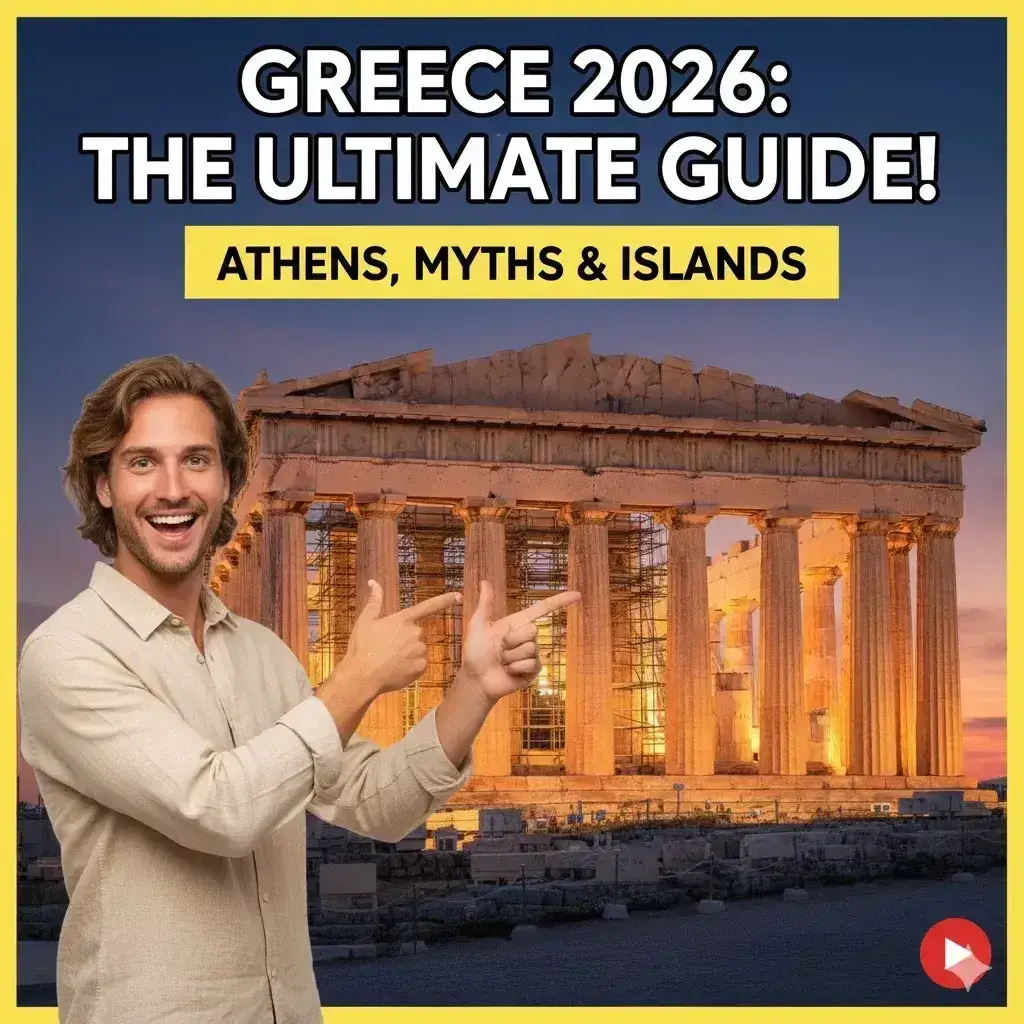
THE GLORY OF GREECE: A 2026 GUIDE TO THE BIRTHPLACE OF DEMOCRACY
Greece stands as one of humanity's most profound cultural legacies, the cradle of Western civilization where democracy, philosophy, theater, and the Olympic Games were born. In 2026, this remarkable country continues to captivate travelers seeking to walk in the footsteps of Socrates, stand where citizens first voted, and experience the timeless beauty of ancient ruins set against azure seas and golden sunlight. This comprehensive guide explores Greece's democratic heritage, taking you from the iconic Acropolis of Athens to the sacred oracle of Delphi, from the ancient stadium of Olympia to the sun-drenched islands where democratic ideals continue to inspire. Whether you are a history enthusiast, a philosophy student, a cultural traveler, or simply someone drawn to the origins of democratic governance, Greece in 2026 offers an unparalleled journey through the foundations of free society.
Understanding Greece's democratic legacy requires more than visiting ruins; it demands engaging with the ideas, debates, and human stories that shaped a political system still evolving today. This guide provides practical information for visiting Greece's most significant democratic heritage sites, cultural context for understanding ancient Greek society, and tips for responsible tourism that supports preservation efforts. By approaching Greece with curiosity and respect, you will discover not just ancient stones but living ideas that continue to shape our world.
ATHENS: THE HEART OF ANCIENT DEMOCRACY
No exploration of Greek democracy begins without Athens, the city where citizens first gathered to debate laws, elect leaders, and shape their collective destiny. In 2026, Athens seamlessly blends its ancient heritage with vibrant modern life, offering visitors multiple entry points into its democratic past.
The Acropolis remains the undisputed symbol of Athenian achievement. Perched atop a rocky outcrop overlooking the city, this UNESCO World Heritage site features the Parthenon, the Erechtheion, the Temple of Athena Nike, and the Propylaea gateway. While primarily a religious complex, the Acropolis represented the power and prosperity of democratic Athens at its height. In 2026, visiting the Acropolis requires advance ticket booking through the official Greek Ministry of Culture website to manage crowds and preserve the site. Entry costs approximately twenty euros, with combined tickets available for multiple archaeological sites. The best times to visit are early morning or late afternoon to avoid peak crowds and intense summer heat. Audio guides and licensed guides provide essential context for understanding the Parthenon's architectural innovations and political symbolism.
Below the Acropolis lies the Ancient Agora, the true heart of Athenian democracy. This was where citizens gathered to debate, vote, and conduct the business of self-government. The reconstructed Stoa of Attalos now houses the Museum of the Ancient Agora, displaying artifacts that illuminate daily life in democratic Athens. The Temple of Hephaestus, one of the best-preserved ancient Greek temples, stands prominently within the Agora. Walking among the ruins, visitors can imagine the bustling marketplace, political speeches, and philosophical discussions that shaped Western political thought. Entry to the Agora costs approximately ten euros, and combined tickets with the Acropolis offer excellent value.
The Pnyx Hill, located near the Agora, was the official meeting place of the Athenian Assembly where citizens voted on laws and policies. Though less developed for tourism than the Acropolis or Agora, the Pnyx offers a powerful sense of place for understanding direct democracy. Standing on the rocky hillside, you can envision thousands of citizens gathered to debate war, peace, and justice. Access is free, and the site provides panoramic views of Athens and the Acropolis.
The Kerameikos, Athens' ancient cemetery, offers insights into Athenian values and social structure. The site includes the Dipylon Gate, through which funeral processions passed, and numerous grave markers that reveal Athenian attitudes toward death, family, and civic virtue. The small museum displays poignant artifacts including funeral sculptures and inscriptions. Entry costs approximately eight euros.
Modern Athens also offers democratic heritage experiences. The Hellenic Parliament building on Syntagma Square, where the Greek government meets today, stands on the site of the ancient Athenian agora's eastern edge. The changing of the guard ceremony featuring the Evzones, elite presidential guards in traditional costume, occurs hourly and is free to observe. The National Historical Museum, housed in the Old Parliament building, traces Greece's political evolution from ancient times through the modern state.
Beyond central Athens, the National Archaeological Museum houses the world's finest collection of ancient Greek artifacts, including sculptures, pottery, and inscriptions that illuminate democratic society. Allow at least half a day to explore its extensive galleries. The Acropolis Museum, located at the foot of the Acropolis, presents artifacts in their historical context with stunning views of the Parthenon above.
DELPHI: THE ORACLE AND PANHELLENIC UNITY
Located on the slopes of Mount Parnassus, Delphi was considered the center of the world in ancient Greek cosmology. The Oracle of Apollo, priestess of the sanctuary, provided guidance to individuals and city-states on matters of war, colonization, and governance. While not a democratic institution per se, Delphi played a crucial role in the political life of ancient Greece, as city-states sought divine sanction for their decisions.
In 2026, visiting Delphi offers a profound connection to ancient Greek spirituality and politics. The archaeological site includes the Temple of Apollo, where the Oracle delivered her prophecies, the ancient theater with panoramic views, the stadium where athletic competitions were held, and the Tholos, a mysterious circular building of uncertain purpose. The Delphi Archaeological Museum displays treasures from the sanctuary, including the famous Charioteer of Delphi and inscriptions recording political decisions.
Reaching Delphi from Athens takes approximately two and a half hours by car or bus. Many visitors combine Delphi with a visit to the nearby monastery of Hosios Loukas, a UNESCO World Heritage site featuring stunning Byzantine mosaics. Guided tours from Athens typically include transportation, entrance fees, and expert commentary, though independent travel allows greater flexibility.
OLYMPIA: THE BIRTHPLACE OF THE OLYMPIC GAMES
Ancient Olympia, located in the Peloponnese region, was the sanctuary where the Olympic Games were held every four years in honor of Zeus. While primarily a religious festival, the Olympics fostered a sense of shared Greek identity that transcended city-state rivalries and supported the broader political culture within which democracy flourished.
In 2026, Olympia remains a powerful destination for understanding ancient Greek values. The archaeological site includes the Temple of Zeus, once home to one of the Seven Wonders of the Ancient World, the ancient stadium where athletes competed, the gymnasium and palaestra where training occurred, and the Philippeion, a circular memorial built by Philip II of Macedon. The Archaeological Museum of Olympia displays sculptures from the Temple of Zeus, including the famous Hermes of Praxiteles, and artifacts illuminating athletic competition and religious practice.
Reaching Olympia from Athens takes approximately three hours by car or bus. Many travelers combine Olympia with visits to other Peloponnesian sites such as Mycenae, Epidaurus, or Nafplio. The region's natural beauty, including mountains, rivers, and olive groves, enhances the experience of connecting with ancient Greek life.
THE ISLANDS: DEMOCRACY BEYOND ATHENS
While Athens is synonymous with ancient democracy, Greek islands also contributed to democratic development and offer unique perspectives on Greek political culture.
Aegina, located in the Saronic Gulf near Athens, was an early rival of Athens and developed its own democratic institutions. The island's Temple of Aphaia, part of the "sacred triangle" with the Parthenon and the Temple of Poseidon at Sounion, offers stunning views and insights into ancient religious and political networks.
Crete, the largest Greek island, was home to the Minoan civilization, which predated classical democracy but influenced later Greek political thought. The Palace of Knossos, though primarily a Bronze Age site, provides context for understanding the evolution of Greek governance.
Rhodes, in the Dodecanese, developed a sophisticated democratic system in the Hellenistic period. The medieval Old Town of Rhodes, a UNESCO World Heritage site, layers medieval and ancient history, offering insights into how democratic ideals persisted through different eras.
CULTURAL EXPERIENCES: LIVING THE DEMOCRATIC LEGACY
Understanding Greek democracy requires more than visiting ruins; it demands engaging with living culture. In 2026, Greece offers numerous opportunities to connect ancient ideals with contemporary practice.
Theater remains central to Greek cultural life. Ancient dramas by Aeschylus, Sophocles, Euripides, and Aristophanes continue to be performed in ancient theaters such as the Epidaurus, whose acoustics remain miraculous after two millennia. Attending a performance in an ancient theater connects visitors to the democratic function of theater as a space for civic debate and moral reflection.
Philosophy walks and discussion groups in Athens offer opportunities to engage with Socratic dialogue in the settings where it originated. Organizations such as the Athens Philosophy Walks lead discussions in the Ancient Agora, the Pnyx, and other significant sites, connecting ancient ideas to contemporary questions.
Local festivals and religious celebrations provide insights into how ancient traditions continue to shape Greek community life. While respecting the sacred nature of these events, visitors can observe processions, music, and communal meals that reflect enduring Greek values of hospitality, family, and civic participation.
Culinary experiences also connect to democratic heritage. Ancient Greek symposia, or drinking parties, were spaces for philosophical discussion and political debate. Modern Greek tavernas, with their emphasis on shared meals and conversation, echo this tradition of communal dialogue.
PRACTICAL TRAVEL INFORMATION FOR GREECE IN 2026
Visiting Greece's democratic heritage sites requires practical planning. Here is essential information for travelers in 2026.
Entry requirements: Citizens of many countries, including the United States, Canada, the United Kingdom, and European Union nations, can enter Greece visa-free for tourism for up to ninety days. Passports must be valid for at least three months beyond the intended departure date. Always verify current entry requirements through official government channels before travel.
Best time to visit: Greece's Mediterranean climate offers long, hot summers and mild winters. The best times to visit archaeological sites are spring (April to June) and fall (September to October), when temperatures are pleasant and crowds are smaller. Summer (July to August) brings intense heat and peak tourist crowds, though it is ideal for combining historical sites with beach time. Winter (November to March) offers the fewest crowds and lowest prices, though some sites may have reduced hours and some islands have limited ferry service.
Transportation: Greece's transportation network connects major historical sites efficiently. Athens International Airport serves as the primary entry point, with domestic flights connecting to islands and regional cities. The national rail network connects Athens to Thessaloniki and other mainland destinations, though service can be slow. Buses provide extensive coverage, including routes to archaeological sites. For flexibility, renting a car is recommended for exploring the Peloponnese and mainland sites, though driving in Athens can be challenging. Ferry services connect the mainland to islands, with high-speed options reducing travel time.
Accommodation: Greece offers diverse accommodation options, from luxury hotels to budget hostels and traditional guesthouses. In Athens, staying near the Plaka neighborhood provides easy walking access to the Acropolis and Ancient Agora. For island visits, booking in advance is essential during peak season. Eco-lodges and heritage hotels offer sustainable options that support local communities.
Budgeting: Greece remains affordable compared to many Western European destinations. Daily budgets vary by travel style: budget travelers can manage on forty to sixty euros per day including hostels, street food, and public transport; mid-range travelers might spend eighty to one hundred fifty euros per day for boutique hotels, taverna meals, and occasional tours; luxury travelers can expect to spend two hundred euros or more per day for upscale hotels, fine dining, and private guides. Entrance fees to major archaeological sites range from eight to twenty euros, with combined tickets offering savings.
Language: Greek is the official language, though English is widely spoken in tourist areas, hotels, and restaurants. Learning basic Greek phrases such as hello (yasas), thank you (efharisto), and please (parakalo) enhances interactions and shows respect for local culture.
Currency: Greece uses the euro. Credit cards are widely accepted in cities and tourist areas, though cash is essential for small purchases, markets, and rural areas. ATMs are widely available, though fees may apply for international cards.
Health and safety: Greece is generally safe for travelers. Standard precautions apply: safeguard valuables, be aware of pickpockets in crowded areas, and follow local guidance for swimming and hiking. Tap water is safe to drink in most urban areas, though bottled water is recommended on islands. Travel insurance covering medical emergencies is strongly recommended.
SUSTAINABLE AND RESPONSIBLE TOURISM
Visiting Greece's democratic heritage carries responsibility to preserve these irreplaceable sites for future generations. In 2026, sustainable tourism practices are increasingly important.
Respect archaeological sites: Stay on marked paths, do not touch or climb on ancient structures, and follow all posted guidelines. Photography is generally permitted, but flash may be prohibited in museums. Drones require special permits and are often restricted near archaeological sites.
Support local communities: Choose locally-owned accommodations, restaurants, and tour operators to ensure tourism benefits reach Greek communities. Purchase handicrafts directly from artisans rather than mass-produced souvenirs.
Minimize environmental impact: Greece faces challenges including water scarcity and waste management. Reduce plastic use by carrying reusable water bottles and bags. Choose eco-certified accommodations and tour operators. Respect marine environments when visiting coastal sites.
Cultural sensitivity: Greece is a predominantly Orthodox Christian country with conservative social norms in many areas. Dress modestly when visiting churches and monasteries, covering shoulders and knees. Ask permission before photographing people, especially in rural areas.
Engage thoughtfully: Democracy was born through debate and critical thinking. Approach Greek heritage not just as spectacle but as an opportunity to reflect on governance, citizenship, and civic responsibility. Consider how ancient democratic ideals inform contemporary challenges.
ITINERARY SUGGESTIONS: DEMOCRATIC HERITAGE JOURNEYS
For travelers planning a Greece itinerary focused on democratic heritage, here are suggested frameworks.
Five-day Athens focus: Day one, arrive in Athens and acclimate with a walk through the Plaka neighborhood. Day two, visit the Acropolis and Acropolis Museum in the morning, then explore the Ancient Agora and Pnyx in the afternoon. Day three, visit the National Archaeological Museum in the morning, then attend an evening performance at the Odeon of Herodes Atticus if available. Day four, take a day trip to Cape Sounion to visit the Temple of Poseidon and reflect on Athens' maritime power. Day five, explore the Kerameikos and National Historical Museum, then depart.
Seven-day mainland circuit: Days one to three as above in Athens. Day four, travel to Delphi, explore the sanctuary and museum, overnight in the region. Day five, travel to Olympia, explore the ancient site and museum, overnight in the Peloponnese. Day six, visit Epidaurus to experience the ancient theater, then travel to Nafplio for a charming overnight stay. Day seven, return to Athens for departure.
Ten-day comprehensive journey: Days one to five as in the mainland circuit. Days six to seven, add a visit to Mycenae and the Corinth Canal to understand the broader political geography of ancient Greece. Days eight to ten, add an island extension to Aegina or Hydra for a perspective on how democratic ideals spread beyond Athens.
CONCLUSION: DEMOCRACY'S ENDURING LEGACY
Greece in 2026 offers more than ancient ruins and beautiful landscapes; it offers a living connection to ideas that continue to shape our world. Standing on the Pnyx where citizens voted, walking through the Agora where debates shaped laws, or contemplating the Parthenon's harmony of form and function, visitors engage with the origins of democratic governance.
Yet Greece's democratic legacy is not merely historical. Modern Greece continues to grapple with questions of citizenship, participation, and justice that echo ancient debates. By visiting Greece thoughtfully, travelers can reflect on how democratic ideals evolve, how civic engagement strengthens societies, and how each generation must renew its commitment to self-government.
As you plan your journey to the birthplace of democracy, approach Greece with curiosity, humility, and respect. Listen to local voices, support sustainable practices, and allow ancient stones to inspire contemporary reflection. In doing so, you honor not just Greece's past but democracy's ongoing promise.
May your journey through Greece deepen your appreciation for the fragile, precious gift of self-government. As the ancient Greeks understood, democracy is not a destination but a practice, not a monument but a conversation. May you return home inspired to participate in that conversation, wherever you live.
Useful resources include the Greek National Tourism Organization at visitgreece.gr, the Hellenic Ministry of Culture and Sports for archaeological site information, and emergency services at one one two for all emergencies. Disclaimer: Information is accurate as of early 2026. Site hours, prices, and policies may change; verify details before travel. This guide is for informational purposes only and does not constitute professional travel or historical advice.
0 Comments