.webp)
.webp)
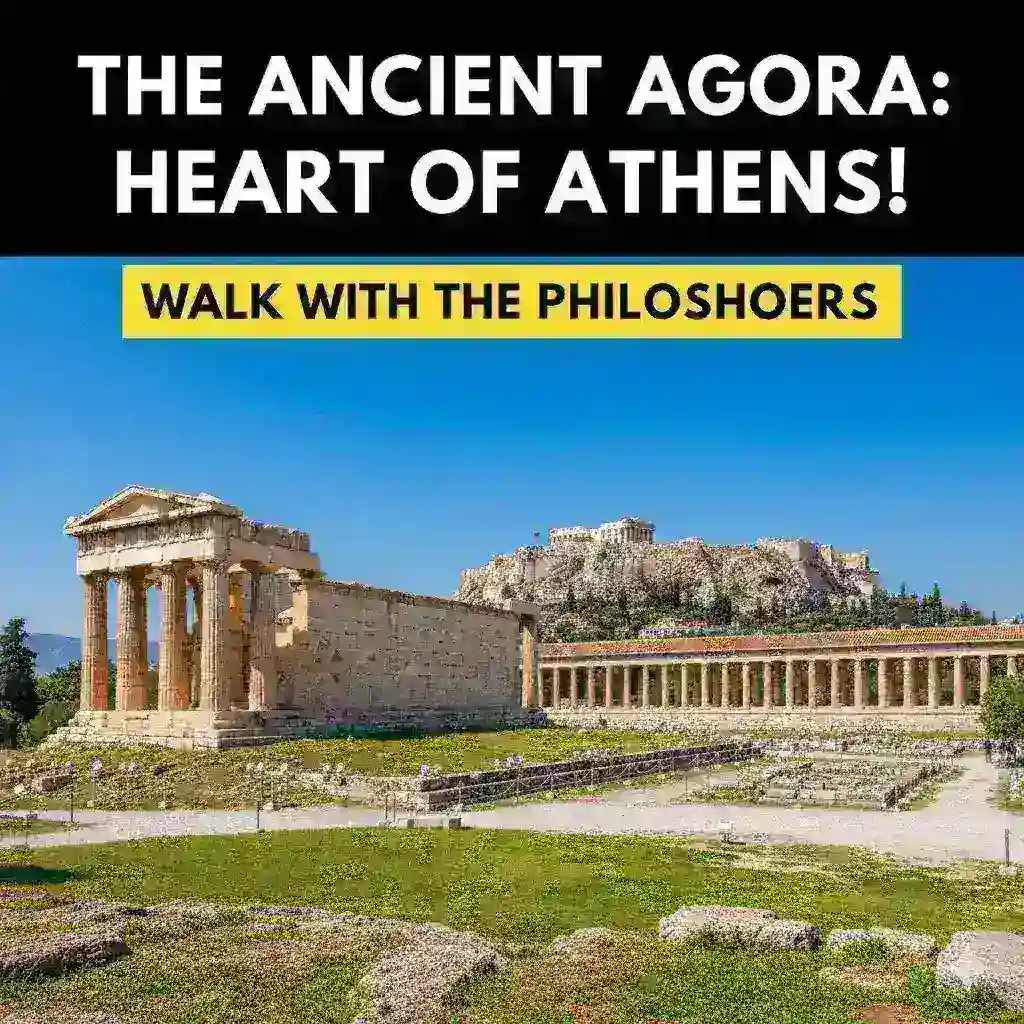
THE ANCIENT AGORA: WALKING WHERE SOCRATES AND PLATO PHILOSOPHIZED
There are few places on Earth where you can walk the same ground as some of history's greatest thinkers, stand where democracy was debated and decided, and feel the weight of ideas that continue to shape our world. The Ancient Agora of Athens is such a place. This expansive public square, nestled at the foot of the Acropolis, served as the heart of ancient Athenian life for over a millennium. Here, Socrates questioned passersby about virtue and justice, Plato absorbed the lessons that would shape his philosophy, citizens gathered to vote on laws and policies, merchants sold their wares, and athletes trained for competition. In 2026, as travelers seek meaningful connections to history and culture, the Ancient Agora offers an unparalleled opportunity to engage with the origins of Western philosophy, democratic governance, and civic life.
This comprehensive guide invites you to explore the Ancient Agora with deeper understanding and greater appreciation. We will examine the historical context that made this space so significant, identify the key structures that defined its function, reflect on the philosophical activity that took place here, and provide practical information for visiting in 2026. Whether you are a philosophy student, a history enthusiast, a politics lover, or simply a curious traveler, this guide will help you prepare for an encounter with one of humanity's most influential public spaces.
Understanding the Ancient Agora requires more than admiring ancient ruins; it demands engaging with the ideas, debates, and human stories that unfolded here. By approaching the Agora with curiosity and respect, you will discover not just stones and columns but a living dialogue between past and present, between ancient wisdom and contemporary questions about justice, truth, and the good life.
HISTORICAL CONTEXT: THE HEART OF ATHENIAN LIFE
The word "agora" means gathering place or marketplace in ancient Greek, and the Athenian Agora embodied both meanings. From its earliest use in the sixth century BCE through the Roman period and beyond, this open space served as the commercial, political, religious, and social center of Athens. It was where citizens came to buy and sell goods, to participate in government, to worship the gods, to attend festivals, and to engage in the philosophical discussions that would shape Western thought.
The Agora's significance grew alongside Athenian democracy. In the fifth century BCE, during the height of Athenian power under Pericles, the Agora became the stage for democratic practice. Citizens gathered here to hear speeches, debate policies, serve on juries, and vote on matters of war and peace. The buildings surrounding the square housed the institutions of democratic governance: the Bouleuterion, where the council of five hundred met; the Tholos, where executive officials dined and worked; and the Stoa Poikile, where paintings celebrated Athenian military victories.
The Agora was also a sacred space, dedicated to multiple deities including Hephaestus, Apollo, and the Mother of the Gods. Temples, altars, and shrines dotted the landscape, reminding visitors that political life in Athens was inseparable from religious practice. The Panathenaic Way, the grand processional route connecting the Agora to the Acropolis, hosted the quadrennial Panathenaic Festival, when Athenians celebrated their patron goddess Athena with athletic competitions, musical contests, and a grand procession bearing a new robe for her statue.
Philosophy flourished in this vibrant environment. Socrates, the gadfly of Athens, spent his days in the Agora questioning citizens about virtue, knowledge, and the good life. His method of dialectical inquiry, recorded by his student Plato, revolutionized Western thought by emphasizing critical thinking, self-examination, and the pursuit of truth through dialogue. Plato himself likely walked these same paths, absorbing the lessons that would shape his Academy and his philosophical writings. Other thinkers, including the Sophists who taught rhetoric and the pre-Socratic philosophers who pondered the nature of reality, contributed to the intellectual ferment that made Athens the cultural capital of the ancient world.
The Agora suffered damage during the Persian invasion of 480 BCE but was rebuilt as part of Pericles' ambitious reconstruction program. It continued to serve as Athens' civic center through the Hellenistic and Roman periods, though its character evolved as political power shifted. In the third century CE, the Heruli sacked the Agora, and much of the area was incorporated into a fortified circuit wall. Over the centuries, the site was buried under layers of earth and debris, preserving its ruins for modern archaeology.
Systematic excavations began in 1931 under the auspices of the American School of Classical Studies at Athens and continue to this day. These excavations have revealed a wealth of artifacts, inscriptions, and architectural remains that illuminate daily life in ancient Athens. The reconstruction of the Stoa of Attalos in the 1950s provided a stunning example of classical architecture and now houses the Museum of the Ancient Agora, which displays artifacts from the site.
Today, the Ancient Agora is a UNESCO World Heritage Site and one of Athens' most rewarding archaeological parks. For visitors in 2026, it offers a unique opportunity to walk in the footsteps of Socrates and Plato, to imagine the debates that shaped democracy, and to reflect on the enduring relevance of ancient questions about justice, truth, and the good life.
KEY STRUCTURES: EXPLORING THE AGORA'S ARCHITECTURE
The Ancient Agora contains numerous structures that reveal the complexity of ancient Athenian public life. Understanding these buildings enhances the visitor experience by providing context for the activities that took place here.
The Stoa of Attalos:
The most prominent structure in the Agora today is the Stoa of Attalos, a two-story colonnade built by King Attalos II of Pergamon around 150 BCE. This elegant building, reconstructed in the 1950s using original materials and techniques, now houses the Museum of the Ancient Agora. The stoa features forty-two shops on the ground floor and twenty-one rooms on the upper floor, all opening onto a covered walkway supported by Doric columns on the exterior and Ionic columns on the interior.
The museum's exhibits illuminate daily life in ancient Athens through pottery, sculptures, inscriptions, and everyday objects. Highlights include ostraka (pottery shards used for voting in ostracism trials), official weights and measures, coins, and items related to Athenian democracy. The museum's displays combine scholarly rigor with accessible interpretation, helping visitors understand the social, political, and economic dimensions of ancient Athenian life.
The Temple of Hephaestus:
Perched on the hill known as the Agoraios Kolonos at the western edge of the Agora, the Temple of Hephaestus is one of the best-preserved ancient Greek temples. Built between 449 and 415 BCE, this Doric temple was dedicated to Hephaestus, the god of metalworking and craftsmanship, and Athena Ergane, Athena as patron of crafts. Its excellent preservation allows visitors to appreciate the proportions, materials, and decorative elements that defined classical architecture.
The temple features six columns on the short ends and thirteen on the long sides, constructed of Pentelic marble with a frieze depicting the labors of Theseus and the Centauromachy. Inside, the cella once housed cult statues of Hephaestus and Athena. The temple's location overlooking the Agora provided a dramatic backdrop for civic and religious activities below.
The Bouleuterion and Tholos:
The Bouleuterion, or council house, was where the Boule, the council of five hundred citizens chosen by lot, met to prepare legislation for the Assembly. This building, of which only foundations remain, was a square structure with tiered seating arranged around a central space. Nearby stood the Tholos, a circular building where the prytaneis, the executive committee of the Boule, dined and worked. The Tholos also housed the official weights and measures and served as a refuge for citizens seeking asylum.
These buildings illustrate the practical mechanisms of Athenian democracy. The Boule's role in drafting legislation, the prytaneis' responsibility for daily administration, and the use of sortition (selection by lot) to prevent corruption all reflect the Athenians' commitment to participatory governance and civic equality.
The Stoa Poikile and Stoa Basileios:
The Stoa Poikile, or Painted Stoa, was famous for its murals depicting Athenian military victories, including the Battle of Marathon. This building gave its name to the Stoic school of philosophy, founded by Zeno of Citium, who taught in the stoa in the early third century BCE. Though little remains of the structure today, its legacy lives on in the philosophical tradition it inspired.
The Stoa Basileios, or Royal Stoa, was one of the oldest buildings in the Agora, dating to the sixth century BCE. It housed the office of the archon basileus, the chief religious official, and displayed Athens' earliest law code, inscribed on stone by Draco and later revised by Solon. A stone in front of the stoa, the Lithos, was where officials swore oaths of office.
The Altar of the Twelve Gods:
Located in the northwest corner of the Agora, the Altar of the Twelve Gods served as the central milestone from which all distances in Attica were measured. Dedicated to the twelve major Olympian deities, this altar was a focal point for religious processions and civic ceremonies. Though only foundations remain, the altar's significance as a symbolic and practical center of Athenian life is profound.
The Panathenaic Way:
The grand processional route that connected the Agora to the Acropolis, the Panathenaic Way was the stage for the quadrennial Panathenaic Festival. During this celebration, Athenians processed from the Dipylon Gate through the Agora and up to the Acropolis, bearing a new peplos (robe) for the statue of Athena. The road was lined with shops, monuments, and statues, creating a ceremonial corridor that linked the civic and religious centers of the city.
PHILOSOPHY IN THE AGORA: SOCRATES, PLATO, AND THE PURSUIT OF WISDOM
The Ancient Agora was not just a place of commerce and politics; it was the birthplace of Western philosophy. Understanding the philosophical activity that took place here enriches the visitor experience by connecting ancient stones to enduring ideas.
Socrates in the Agora:
Socrates (470-399 BCE) spent his days in the Agora engaging citizens in dialogue about virtue, justice, courage, and the good life. His method, known as the Socratic method or elenchus, involved asking probing questions that exposed contradictions in his interlocutors' beliefs and encouraged self-examination. Rather than lecturing, Socrates claimed to know nothing and sought wisdom through collaborative inquiry.
Plato's dialogues, which record Socrates' conversations, often specify the Agora as their setting. In the Euthyphro, Socrates meets Euthyphro near the Stoa Basileios and questions him about piety. In the Laches, Socrates discusses courage with two generals in the Agora. In the Republic, the opening scene takes place at the house of Cephalus in the Piraeus, but the dialogue reflects the kind of philosophical inquiry that characterized Agora conversations.
Socrates' presence in the Agora was both literal and symbolic. Literally, he walked these paths, questioned passersby, and engaged in the public life of the city. Symbolically, his commitment to critical thinking, moral inquiry, and the examined life represents the highest aspirations of democratic citizenship. His trial and execution in 399 BCE, on charges of impiety and corrupting the youth, remain a powerful reminder of the tensions between philosophical inquiry and political authority.
Plato and the Legacy of Socratic Inquiry:
Plato (427-347 BCE), Socrates' most famous student, likely absorbed many of his philosophical lessons in the Agora. Though Plato later founded the Academy, a school located outside the city walls, his writings reflect the dialogical method he learned from Socrates in the public square.
Plato's dialogues explore fundamental questions about knowledge, reality, ethics, and politics. The Republic, perhaps his most famous work, imagines an ideal city governed by philosopher-kings, reflecting on the relationship between philosophy and politics that Socrates embodied in the Agora. The Apology records Socrates' defense at his trial, offering a powerful statement about the philosopher's duty to question and the citizen's duty to think.
The philosophical activity of the Agora was not limited to Socrates and Plato. The Sophists, itinerant teachers who taught rhetoric and argumentation, also practiced in the Agora, offering practical skills for success in democratic politics. Pre-Socratic philosophers like Anaxagoras and Archelaus pondered the nature of reality and the cosmos. Later, the Stoics and Epicureans developed philosophical schools that addressed questions of ethics, happiness, and the good life.
The Enduring Relevance of Agora Philosophy:
The philosophical inquiries that took place in the Ancient Agora remain profoundly relevant today. Questions about justice, truth, virtue, and the good life continue to animate contemporary debates in ethics, politics, and education. The Socratic method of critical questioning remains a powerful tool for education and democratic deliberation. The tension between philosophical inquiry and political authority, exemplified by Socrates' trial, continues to challenge societies that value both free thought and social cohesion.
For visitors to the Agora in 2026, walking these ancient paths offers an opportunity to reflect on these enduring questions. As you stand where Socrates questioned his fellow citizens, consider what questions matter most to you. As you imagine the debates that shaped Athenian democracy, reflect on how democratic deliberation functions in your own society. As you contemplate the ruins of institutions that served the public good, consider what institutions serve the common good today.
VISITOR INFORMATION FOR 2026
Planning a visit to the Ancient Agora in 2026 requires some preparation to ensure a smooth and rewarding experience.
Tickets and Admission:
Entry to the Ancient Agora requires a ticket, which can be purchased online in advance or at the site. In 2026, advance online booking is recommended during peak season (April to October) to avoid queues, though walk-up tickets are generally available.
Ticket options include:
- Single-site ticket for the Ancient Agora only (approximately 10 euros)
- Combined ticket (valid for five days, approximately 30 euros) providing entry to the Ancient Agora, Acropolis, Roman Agora, Hadrian's Library, Kerameikos, Aristotle's Lyceum, and Temple of Olympian Zeus
The combined ticket offers excellent value if you plan to visit multiple archaeological sites. Reduced rates are available for students, seniors, and EU youth.
Opening Hours:
The Ancient Agora is generally open daily from 8 AM to 8 PM in summer (April to October) and 8 AM to 5 PM in winter (November to March), though hours may vary for holidays and special events. The last entry is typically thirty minutes before closing. Check the official Hellenic Ministry of Culture website for current hours before your visit.
Best Times to Visit:
To avoid crowds and enjoy optimal lighting for photography, consider these strategies:
- Arrive at opening time (8 AM) for the smallest crowds and soft morning light
- Visit in late afternoon for golden hour lighting and fewer tour groups
- Avoid midday in summer, when heat and crowds peak
- Consider visiting on weekday mornings rather than weekends
Weather Considerations:
Athens has a Mediterranean climate with hot, dry summers and mild, wet winters. Summer temperatures can exceed 35 degrees Celsius (95 degrees Fahrenheit), so bring water, sunscreen, and a hat. The Agora offers some shade from trees and reconstructed colonnades, but plan accordingly. Winter visits offer cooler temperatures and fewer crowds, though rain is possible and stone pathways may be slippery.
Accessibility:
The Ancient Agora has made efforts to improve accessibility for visitors with mobility challenges. Paved pathways connect major structures, and the Stoa of Attalos museum is accessible via ramp. Wheelchairs are available for loan at the entrance. However, some areas, including the hillside around the Temple of Hephaestus, have uneven terrain and steps that may limit access. Contact the site in advance to arrange assistance if needed.
Guided Tours vs. Self-Guided Exploration:
Both options have merits. Guided tours provide expert context, historical insights, and efficient navigation of the site. Licensed guides can bring the Agora to life with stories of Socrates, Plato, and ancient Athenian democracy. Self-guided exploration offers flexibility to linger at favorite spots and discover details at your own pace. Audio guides and mobile apps provide a middle ground, offering commentary without the structure of a group tour.
What to Bring:
- Comfortable walking shoes with good grip (stone pathways can be uneven)
- Water bottle (refill stations available near the entrance)
- Sunscreen, hat, and sunglasses (limited shade in open areas)
- Camera with extra batteries and memory cards
- Light jacket or layers (can be breezy in open spaces)
- Small backpack for essentials
- Printed or digital copy of your ticket confirmation
- Notebook for reflections or sketching (optional)
Photography Tips:
- Golden hour (early morning or late afternoon) provides the most dramatic lighting for classical architecture
- Use a polarizing filter to reduce glare on marble surfaces
- Include human figures for scale and context
- Capture details: column capitals, inscriptions, views of the Acropolis
- Respect other visitors and avoid blocking pathways for photos
PRACTICAL TIPS FOR ENHANCING YOUR VISIT
Crowd Avoidance Strategies:
- Book timed-entry tickets online in advance during peak season
- Arrive at opening time or late afternoon for smaller crowds
- Visit during shoulder seasons (April-May, September-October) for pleasant weather and fewer visitors
- Explore lesser-known areas like the northwest corner of the Agora or the hillside around the Temple of Hephaestus
- Combine your visit with nearby sites like the Roman Agora or Monastiraki to distribute crowds
Combining with Other Sites:
The Ancient Agora is part of a rich archaeological landscape in central Athens. Consider combining your visit with:
- The Acropolis: The iconic citadel with the Parthenon, just a short walk uphill
- The Roman Agora and Tower of the Winds: A later forum with elegant architecture
- Hadrian's Library: A Roman-era cultural complex with impressive ruins
- Monastiraki Square: A vibrant neighborhood with shops, tavernas, and views of the Acropolis
- The Plaka: Athens' oldest neighborhood, with charming streets and traditional architecture
Museum Highlights:
The Museum of the Ancient Agora, housed in the reconstructed Stoa of Attalos, is essential for understanding the site. Allow at least one hour to explore its exhibits, which include:
- Ostraka used in ostracism trials, illustrating democratic practices
- Official weights and measures that regulated commerce
- Sculptures and inscriptions that illuminate religious and civic life
- Everyday objects that reveal the texture of ancient Athenian life
- Interactive displays that help visualize the Agora in its classical heyday
The museum's top floor offers panoramic views of the Agora and the Acropolis, providing excellent photo opportunities and a sense of the site's spatial relationships.
Engaging with Philosophy:
To deepen your connection to the Agora's philosophical heritage:
- Read excerpts from Plato's dialogues before your visit, especially those set in the Agora
- Reflect on Socratic questions: What is justice? What is courage? What is the good life?
- Consider how ancient debates about democracy, knowledge, and ethics resonate today
- Journal your reflections or discuss them with travel companions
- Visit the site at a contemplative pace, allowing time for reflection as well as observation
CULTURAL SIGNIFICANCE: WHY THE AGORA MATTERS TODAY
The Ancient Agora is more than an archaeological site; it is a symbol of enduring human values. Its significance extends far beyond its historical context to offer insights relevant to contemporary life.
Democratic Heritage:
The Agora was the birthplace of democratic governance, where citizens gathered to debate, vote, and shape their collective destiny. Its institutions—the Assembly, the Boule, the law courts—established principles of participatory governance, civic equality, and rule of law that continue to inform democratic practice today. Visiting the Agora invites reflection on the responsibilities and challenges of democratic citizenship in our own time.
Philosophical Legacy:
The philosophical inquiries that took place in the Agora established foundational questions about knowledge, ethics, and the good life that continue to animate Western thought. The Socratic method of critical questioning remains a powerful tool for education and deliberation. Plato's dialogues continue to inspire readers to examine their beliefs and aspire to wisdom. Engaging with this legacy enriches contemporary discussions about truth, justice, and human flourishing.
Public Space and Civic Life:
The Agora exemplifies the importance of public space for civic engagement, cultural exchange, and community building. In an era of digital communication and privatized spaces, the Agora reminds us of the value of physical gathering places where diverse citizens can encounter one another, debate ideas, and build shared understanding. Its design, which integrated commercial, political, religious, and social functions, offers a model for creating vibrant, inclusive public spaces today.
Cultural Preservation:
The ongoing excavation, conservation, and interpretation of the Ancient Agora demonstrate the commitment to preserving cultural heritage for future generations. The reconstruction of the Stoa of Attalos shows how modern technology and traditional craftsmanship can work together to bring ancient architecture to life. The site's management, which balances access with preservation, offers lessons for sustainable cultural tourism.
CONCLUSION: WALKING WITH THE ANCIENTS
Standing in the Ancient Agora of Athens is an experience that transcends ordinary tourism. As you walk the Panathenaic Way where processions once passed, stand in the shadow of the Temple of Hephaestus where craftsmen once worshipped, or imagine Socrates questioning passersby near the Stoa Basileios, you encounter something profound: the enduring power of human ideas to shape societies, the fragility and resilience of democratic institutions, and the possibility of wisdom that speaks across millennia.
In 2026, as the world grapples with challenges of polarization, misinformation, and civic disengagement, the Ancient Agora offers not just a window into the past but inspiration for the future. The ancient Athenians who gathered here believed in the power of dialogue, the value of critical thinking, and the possibility of self-governance. Their achievements, though imperfect and incomplete, continue to challenge and inspire us to create, to question, and to aspire.
As you plan your visit to the Ancient Agora, approach this sacred space with curiosity, humility, and respect. Listen to the stories the stones tell, engage with the complexities of history, and allow the questions of Socrates and Plato to provoke your own thinking. In doing so, you join the long line of travelers, scholars, and citizens who have found meaning in this foundational public space.
May your encounter with the Ancient Agora deepen your appreciation for the achievements of the past and inspire your contribution to the future. As the ancient Greeks understood, true greatness lies not in monuments alone but in the ideas, values, and actions that give them meaning. May you carry that understanding forward, wherever your journey leads.
Useful resources include the Hellenic Ministry of Culture and Sports for ticket information and site updates, the American School of Classical Studies at Athens for archaeological research, and the Ancient Agora Museum for exhibits and educational programs. Emergency services in Greece can be reached at 112. Disclaimer: Information is accurate as of early 2026. Site hours, ticket prices, and policies may change; verify details before travel. This guide is for informational purposes only and does not constitute professional travel or historical advice.
0 Comments