.webp)
.webp)
The 2026 Canada Tourism Master Guide Planning Your Country Wide Adventure
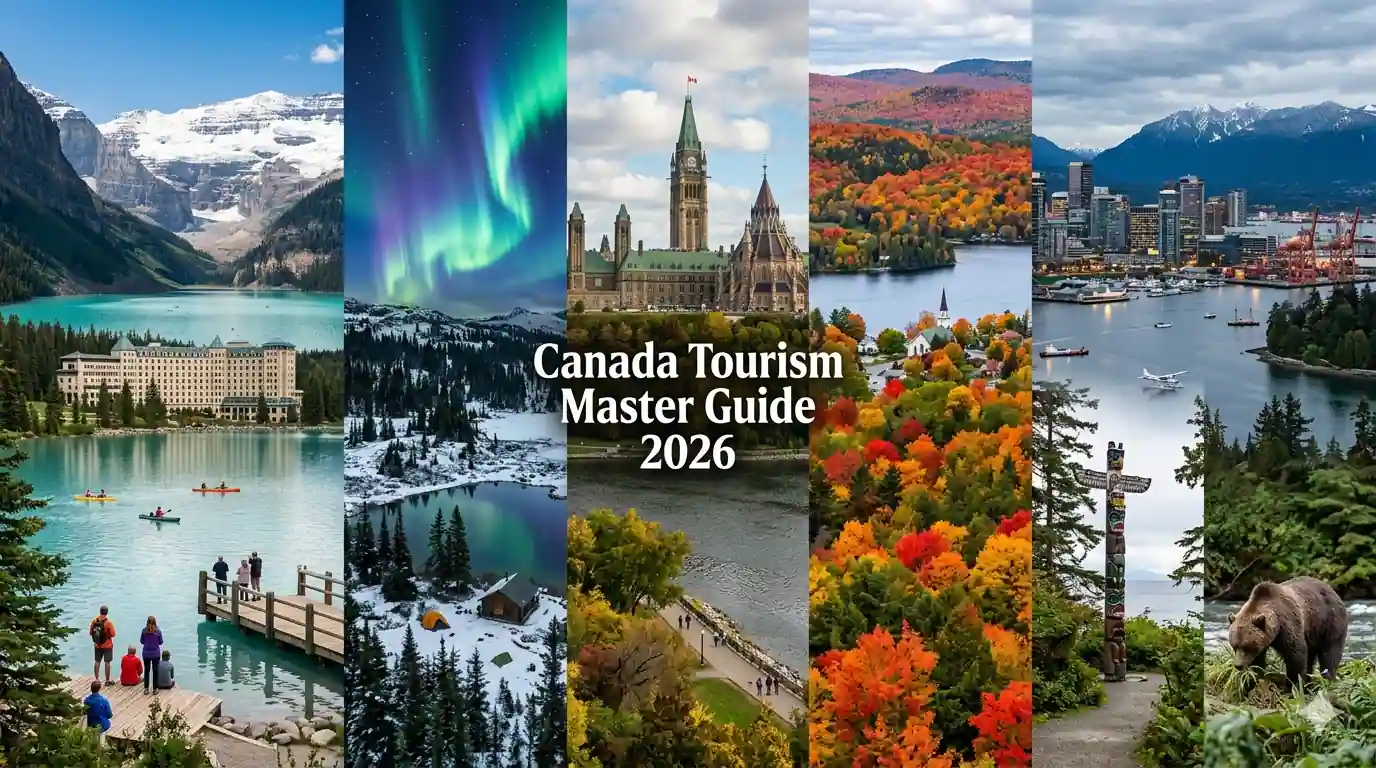
Discovering Canadas Vast Beauty From Coast To Coast To Coast
Planning a country-wide adventure across Canada in 2026 offers travelers an unparalleled opportunity to experience one of the world's most diverse and welcoming destinations, spanning ten provinces and three territories with landscapes ranging from Atlantic coastlines to Pacific rainforests, Arctic tundra to prairie grasslands, and world-class cities to pristine wilderness. The optimal travel window for a comprehensive Canada tour spans May through September, when most regions enjoy mild temperatures, extended daylight hours, and full access to national parks, though winter enthusiasts can target December through March for world-class skiing, aurora viewing, and winter festivals. Total trip costs for a 14-day country-wide Canada adventure range from $1,800-$4,500 USD per person depending on travel style, with budget backpackers focusing on hostels and public transit, mid-range travelers enjoying boutique hotels and regional flights, and luxury seekers indulging in wilderness lodges and private guided experiences.
This comprehensive master guide provides everything you need to plan your 2026 Canada adventure, including regional highlights, seasonal considerations, transportation strategies, budget breakdowns, entry requirements, and step-by-step itinerary planning. Whether you seek wildlife encounters in Banff, cultural immersion in Quebec City, urban exploration in Toronto and Vancouver, or Arctic adventures in the Yukon, this resource will help you navigate Canada's vast geography while maximizing your time, budget, and authentic experiences across this remarkable nation.
Understanding Canadas Geographic Diversity and Regional Planning
Canada's immense size—second only to Russia globally—requires strategic regional planning to avoid the common mistake of attempting to "see everything" in a single trip. The country spans six time zones and over 9.9 million square kilometers, making thoughtful routing essential for a rewarding experience. Most successful country-wide itineraries focus on 2-3 regions rather than attempting coast-to-coast coverage in under three weeks.
Canada's Six Major Travel Regions:
| Region | Key Destinations | Best For | Ideal Duration |
| Atlantic Canada | Hallifax, PEI, Cape Breton, Fundy | Coastal scenery, seafood, maritime culture | 4-6 days |
| Quebec and Ontario | Montreal, Quebec City, Ottawa, Toronto, Niagara | Urban culture, history, bilingual experiences | 5-7 days |
| Canadian Rockies | Banff, Jasper, Lake Louise, Yoho | Mountain scenery, wildlife, outdoor adventure | 5-8 days |
| Pacific Coast | Vancouver, Victoria, Whistler, Tofino | Coastal rainforest, Indigenous culture, outdoor sports | 4-6 days |
| Prairies and North | Winnipeg, Saskatoon, Yellowknife, Churchill | Aurora viewing, polar bears, Indigenous experiences | 3-5 days |
| Arctic Territories | Yukon, Northwest Territories, Nunavut | Wilderness expeditions, Indigenous culture, midnight sun | 5-10 days |
For travelers planning broader North American journeys, consulting the ultimate Canada road trip itinerary from the USA reveals logical routing strategies that connect Canadian highlights with U.S. destinations like Seattle, Minneapolis, or Buffalo, creating seamless cross-border adventures.
Seasonal Planning: When to Visit Each Canadian Region
Canada's climate varies dramatically by region and season, making timing critical for optimal experiences. Understanding seasonal patterns helps you align your itinerary with ideal conditions for your preferred activities.
Seasonal Guide by Region:
| Region | Spring (Apr-May) | Summer (Jun-Aug) | Fall (Sep-Oct) | Winter (Nov-Mar) |
| Atlantic Canada | Cool, unpredictable; whale watching begins | Peak season; ideal for coastal drives, festivals | Fall foliage; fewer crowds; mild temperatures | Cold, stormy; limited services; aurora possible |
| Quebec/Ontario | Maple syrup season; variable weather | Warm, busy; festivals, outdoor dining, boating | Peak foliage; ideal for city exploration | Cold, snowy; winter festivals, skiing, ice skating |
| Canadian Rockies | Mud season; some trails closed; wildlife active | Peak season; all trails open; wildlife viewing | Larch trees golden; fewer crowds; crisp air | Winter sports; frozen lakes; northern lights |
| Pacific Coast | Rainy; cherry blossoms; whale watching | Driest season; ideal for hiking, kayaking | Mild; fall colors; fewer tourists | Rainy; storm watching; skiing in Whistler |
| Prairies/North | Muddy; wildlife emerging; variable temps | Warm days, cool nights; ideal for wildlife | Golden landscapes; ideal for photography | Extreme cold; aurora viewing; polar bear season |
For travelers interested in comprehensive seasonal planning, reviewing the best time to visit guide provides a useful framework for understanding how seasonal patterns affect travel planning across different global destinations, including Canada.
Entry Requirements and Documentation for International Visitors
Understanding entry requirements is essential for seamless Canada travel planning. Most international visitors require either an Electronic Travel Authorization (eTA) or a visitor visa, depending on citizenship.
Entry Requirements by Citizenship:
- U.S. Citizens: Valid passport required; no visa or eTA needed for tourist stays under 180 days
- Visa-Exempt Countries: Valid passport plus eTA ($7 CAD, applied online) required for air travel
- Visa-Required Countries: Valid passport plus visitor visa required; apply 2-3 months in advance
- All Travelers: Proof of onward travel, sufficient funds, and return ticket may be requested
Essential Documentation Checklist:
| Document | Required For | Application Timeline | Cost (CAD) |
| Valid Passport | All international travelers | 6+ months before travel | Varies by country |
| eTA (Electronic Travel Authorization) | Visa-exempt air travelers | Apply online 72+ hours before flight | $7 |
| Visitor Visa | Visa-required travelers | Apply 2-3 months before travel | $100 |
| Proof of Funds | All visitors | Prepare before border crossing | N/A |
| Travel Insurance | Strongly recommended | Purchase before departure | $50-$200 for 2 weeks |
For U.S. travelers specifically, reviewing the Canada entry requirements for US citizens provides detailed guidance on passport validity, border crossing procedures, and documentation tips specific to American visitors.
Transportation Strategies for Country Wide Travel
Navigating Canada's vast geography requires thoughtful transportation planning. Multiple options exist, each with distinct advantages depending on your itinerary, budget, and travel style.
Transportation Comparison:
| Mode | Best For | Cost Range (USD) | Pros | Cons |
| Rental Car | Rockies, Atlantic Canada, flexible itineraries | $40-$120/day + fuel | Flexibility, access to remote areas | Winter driving challenges, parking costs |
| Domestic Flights | Coast-to-coast travel, time-sensitive trips | $150-$400 per flight | Time-efficient, covers long distances | Expensive, baggage fees, airport time |
| VIA Rail | Scenic journeys, urban connections | $100-$300 per segment | Scenic views, relaxed travel, city-center stations | Limited routes, slower than flying |
| Bus (Greyhound/Megabus) | Budget travel, urban connections | $30-$100 per segment | Affordable, extensive network | Long travel times, limited comfort |
| RV/Campervan | Outdoor enthusiasts, flexible camping | $100-$250/day + campground fees | Accommodation + transport combined, nature access | Fuel costs, driving challenges, campground bookings |
Strategic Routing Tips:
- Focus on Regions: Rather than attempting coast-to-coast in 10 days, focus on 2-3 regions for deeper experiences
- One-Way Rentals: Consider one-way car rentals to avoid backtracking; factor in drop-off fees ($100-$300)
- Flight + Drive Combos: Fly between distant regions (e.g., Toronto to Calgary), then rent cars for regional exploration
- Seasonal Considerations: Winter driving requires experience with snow/ice; consider flights or trains during harsh weather
- Border Crossings: If combining with U.S. travel, research border wait times and documentation requirements
For travelers interested in scenic rail journeys, exploring the domestic train systems guide provides useful insights into how rail travel can enhance cultural immersion and scenic appreciation, principles that apply equally to Canada's VIA Rail network.
Budget Planning: Costs for Country Wide Canada Travel
Understanding cost structures helps travelers allocate resources effectively across Canada's diverse regions. Prices vary significantly by season, location, and travel style.
Daily Cost Breakdown by Travel Style:
| Expense Category | Budget ($75-125/day) | Mid-Range ($150-300/day) | Luxury ($400-800+/day) |
| Accommodation | Hostels, budget motels: $30-60 | Boutique hotels, B&Bs: $100-200 | Luxury lodges, resorts: $300-600+ |
| Meals | Self-catering, street food: $20-35 | Casual dining, local restaurants: $40-70 | Fine dining, gourmet experiences: $100-200+ |
| Transportation | Bus, budget car rental: $25-40 | Mid-range car rental, domestic flights: $60-120 | Premium car rental, private transfers: $150-300+ |
| Activities | Free hikes, self-guided tours: $10-20 | Guided tours, park passes: $30-60 | Private guides, helicopter tours: $100-300+ |
| Total Daily | $85-155 | $230-450 | $650-1,400+ |
Regional Cost Variations:
- Major Cities (Toronto, Vancouver, Montreal): 20-40% higher accommodation and dining costs
- National Parks (Banff, Jasper): Premium pricing during peak season; book accommodations 6-12 months ahead
- Remote/Northern Regions: Higher transportation and supply costs due to logistics
- Atlantic Canada: Generally more affordable than western provinces; excellent value for seafood
Money-Saving Strategies:
- Travel Off-Peak: May-June and September offer lower prices with good weather in most regions
- Park Passes: Purchase Discovery Pass ($75 CAD/adult) for unlimited national park access
- Self-Catering: Choose accommodations with kitchen facilities to reduce dining costs
- Regional Focus: Concentrate travel in 2-3 regions to minimize transportation expenses
- Advance Booking: Reserve accommodations and major activities 3-6 months ahead for better rates
For budget-conscious travelers, reviewing the budget travel strategies guide provides transferable principles for maximizing value while maintaining quality experiences, applicable to Canada travel planning.
Sample 14 Day Country Wide Itinerary Framework
While attempting true coast-to-coast coverage in 14 days is ambitious, this framework demonstrates strategic regional focus with efficient connections.
Option A: Eastern Canada Cultural Circuit (Quebec/Ontario/Atlantic)
Days 1-3: Montreal
- Explore Old Montreal, Mount Royal, and bilingual culture
- Experience local cuisine: poutine, bagels, smoked meat
- Day trip to Mont-Tremblant or Eastern Townships
Days 4-5: Quebec City
- Wander historic Old Quebec (UNESCO World Heritage)
- Visit Château Frontenac, Plains of Abraham, Montmorency Falls
- Experience French-Canadian culture and cuisine
Days 6-7: Ottawa
- Tour Parliament Hill, Rideau Canal, national museums
- Experience Canada's capital culture and bilingual atmosphere
- Optional day trip to Kingston or Thousand Islands
Days 8-10: Toronto and Niagara
- Explore Toronto's diverse neighborhoods, CN Tower, waterfront
- Day trip to Niagara Falls for iconic waterfall experience
- Optional wine tour in Niagara-on-the-Lake
Days 11-14: Atlantic Canada Extension
- Fly to Halifax; explore maritime culture and seafood
- Day trip to Peggy's Cove, Lunenburg (UNESCO)
- Optional extension to Cape Breton or PEI for coastal scenery
Option B: Western Canada Mountain Adventure (Rockies/Pacific)
Days 1-4: Canadian Rockies (Banff/Jasper)
- Explore Banff townsite, Lake Louise, Moraine Lake
- Drive Icefields Parkway to Jasper; wildlife viewing
- Hiking, photography, and mountain experiences
Days 5-7: Vancouver
- Fly or drive to Vancouver; explore Stanley Park, Granville Island
- Experience Pacific Northwest culture, seafood, outdoor activities
- Day trip to Whistler or Victoria
Days 8-10: Pacific Coast
- Explore Tofino or Pacific Rim National Park for coastal rainforest
- Whale watching, surfing, or rainforest hiking
- Experience Indigenous culture and sustainable tourism
Days 11-14: Rockies Extension or Urban Focus
- Return to Rockies for Yoho or Kootenay National Parks
- Alternative: Extend Vancouver time for Gulf Islands or Okanagan wine region
- Depart from Vancouver or Calgary
For travelers seeking structured itinerary planning, reviewing the perfect 10-day Canada travel plan provides additional routing ideas and timing strategies optimized for first-time visitors.
Accommodation Strategies Across Canadian Regions
Canada offers diverse accommodation options reflecting regional character and travel styles. Strategic booking enhances both experience quality and value.
Accommodation Types by Region:
| Region | Budget Options | Mid-Range Options | Luxury Options |
| Atlantic Canada | Hostels, B&Bs, campgrounds | Coastal inns, heritage hotels | Oceanfront resorts, luxury lodges |
| Quebec/Ontario | Urban hostels, budget hotels | Boutique hotels, B&Bs in historic areas | Luxury urban hotels, château-style resorts |
| Canadian Rockies | Hostels, campgrounds, budget motels | Mountain lodges, mid-range hotels in park towns | Wilderness lodges, luxury resorts with mountain views |
| Pacific Coast | Hostels, campgrounds, budget motels | Coastal B&Bs, boutique hotels | Oceanfront resorts, eco-luxury lodges |
| Northern/Arctic | Limited budget options; focus on mid-range | Regional hotels, wilderness lodges | Exclusive wilderness lodges, aurora-viewing resorts |
Booking Strategies:
- National Parks: Book accommodations 6-12 months ahead for peak season (June-September)
- Urban Centers: Book 2-3 months ahead for better rates; consider locations near public transit
- Remote Regions: Research availability early; limited options may require flexibility
- Winter Travel: Many mountain lodges offer significant discounts; verify winter access
- Alternative Stays: Consider vacation rentals, farm stays, or Indigenous-owned accommodations for authentic experiences
For travelers interested in luxury experiences, exploring the luxury hospitality guide provides insights into evaluating premium accommodations, principles applicable to selecting Canada's wilderness lodges and urban luxury hotels.
Cultural Experiences and Indigenous Tourism
Canada's cultural landscape reflects Indigenous heritage, French-Canadian traditions, and multicultural urban centers. Meaningful engagement enhances travel depth and supports authentic cultural preservation.
Indigenous Tourism Experiences:
- Cultural Centers: Visit Indigenous cultural centers in Vancouver, Ottawa, Yellowknife for authentic storytelling and art
- Guided Experiences: Participate in Indigenous-led wildlife tours, canoe journeys, or traditional craft workshops
- Art and Cuisine: Support Indigenous artists and chefs; seek authentic bannock, wild game, and traditional crafts
- Respectful Engagement: Learn basic protocols; ask permission before photographing people or ceremonies
French-Canadian Cultural Experiences:
- Quebec City: Experience historic architecture, French cuisine, and winter carnival traditions
- Montreal: Explore bilingual neighborhoods, jazz festivals, and contemporary French-Canadian culture
- Rural Quebec: Visit sugar shacks (cabanes à sucre) in spring; experience agritourism and traditional crafts
Multicultural Urban Experiences:
- Toronto: Explore diverse neighborhoods like Kensington Market, Chinatown, Little Italy
- Vancouver: Experience Asian-Canadian culture, Pacific Rim influences, and sustainable urban living
- Food Scenes: Sample regional specialties: poutine, Montreal bagels, Atlantic lobster, Pacific salmon
For travelers interested in cultural immersion principles, reviewing the meaningful travel guide provides frameworks for respectful cultural engagement applicable to Canadian Indigenous and multicultural experiences.
Outdoor Activities and National Park Exploration
Canada's 47 national parks and countless provincial parks offer world-class outdoor experiences. Strategic planning maximizes access while minimizing environmental impact.
Iconic National Park Experiences:
| Park | Signature Experience | Best Season | Difficulty |
| Banff (AB) | Lake Louise, Moraine Lake, wildlife viewing | June-September | Easy-Moderate |
| Jasper (AB) | Icefields Parkway, Maligne Lake, dark sky viewing | June-September | Easy-Moderate |
| Yoho (BC) | Emerald Lake, Takakkaw Falls, Burgess Shale | July-September | Moderate-Challenging |
| Pacific Rim (BC) | Coastal rainforest, whale watching, surfing | May-September | Easy-Moderate |
| Gros Morne (NL) | Tablelands geology, fjord cruises, hiking | June-September | Moderate |
| Auyuittuq (NU) | Arctic wilderness, midnight sun, Inuit culture | June-August | Challenging |
Outdoor Activity Planning Tips:
- Park Passes: Purchase Discovery Pass ($75 CAD/adult) for unlimited national park access; valid 12 months
- Permits: Reserve backcountry camping, popular trail access, and special activities in advance
- Wildlife Safety: Learn bear safety protocols; carry bear spray in wilderness areas
- Weather Preparedness: Mountain weather changes rapidly; pack layers and emergency gear
- Leave No Trace: Follow principles to minimize environmental impact; pack out all waste
For travelers interested in outdoor adventure planning, reviewing the essential packing guide provides transferable principles for preparing gear and supplies for diverse outdoor conditions, applicable to Canada's varied climates.
Practical Tips for Seamless Canada Travel
Successful country-wide Canada travel requires attention to practical details that enhance comfort, safety, and cultural respect.
Essential Practical Tips:
- Connectivity: Purchase Canadian SIM card or international plan; coverage varies in remote areas
- Currency: Canadian dollars (CAD) widely accepted; credit cards common; carry some cash for remote areas
- Healthcare: Purchase comprehensive travel insurance; Canadian healthcare not free for visitors
- Weather Preparedness: Pack layers for variable conditions; even summer evenings can be cool in mountains
- Language: English predominant; French essential in Quebec; basic phrases appreciated
- Tipping: 15-20% standard in restaurants; tip tour guides, hotel staff, taxi drivers
- Driving: Valid license required; winter driving requires experience; familiarize with road signs
- Time Zones: Canada spans six time zones; confirm local times for connections and activities
Safety Considerations:
- Wildlife: Maintain safe distances; never feed wildlife; store food properly in bear country
- Weather Emergencies: Monitor forecasts; have contingency plans for severe weather
- Remote Travel: Inform others of itineraries; carry emergency communication in wilderness areas
- Border Crossings: If combining with U.S. travel, research wait times and documentation
For travelers concerned about safety planning, reviewing the solo travel safety guide provides frameworks for risk assessment and preparedness applicable to Canada travel, particularly for solo or remote adventures.
Conclusion: Crafting Your Unforgettable Canada Adventure
Planning a country-wide Canada adventure in 2026 offers the opportunity to experience one of the world's most diverse and welcoming destinations. From the rugged Atlantic coastlines to the majestic Rocky Mountains, from vibrant multicultural cities to pristine Arctic wilderness, Canada delivers experiences that resonate long after your journey ends.
Success lies in strategic regional focus, seasonal alignment, thoughtful transportation planning, and respectful cultural engagement. Whether you choose the cultural richness of Eastern Canada, the mountain majesty of the West, or the remote beauty of the North, your Canada adventure will be shaped by the connections you make—with landscapes, wildlife, cultures, and fellow travelers.
As you finalize your 2026 Canada plans, remember that flexibility enhances discovery. Allow space for unexpected encounters, local recommendations, and spontaneous detours that often become the most cherished memories. Canada's vastness invites exploration, but its warmth invites connection.
Begin your planning today: research regions that call to you, secure essential documentation, book key accommodations early, and prepare to discover why Canada remains one of the world's most rewarding travel destinations. Your country-wide Canadian adventure awaits.
Ready to plan your 2026 Canada adventure? Start with regional research, secure entry requirements, and begin crafting the itinerary that will connect you with Canada's extraordinary landscapes, cultures, and hospitality.
0 Comments