.webp)
.webp)
Templo Mayor: Exploring the Ruins of the Aztec Empire
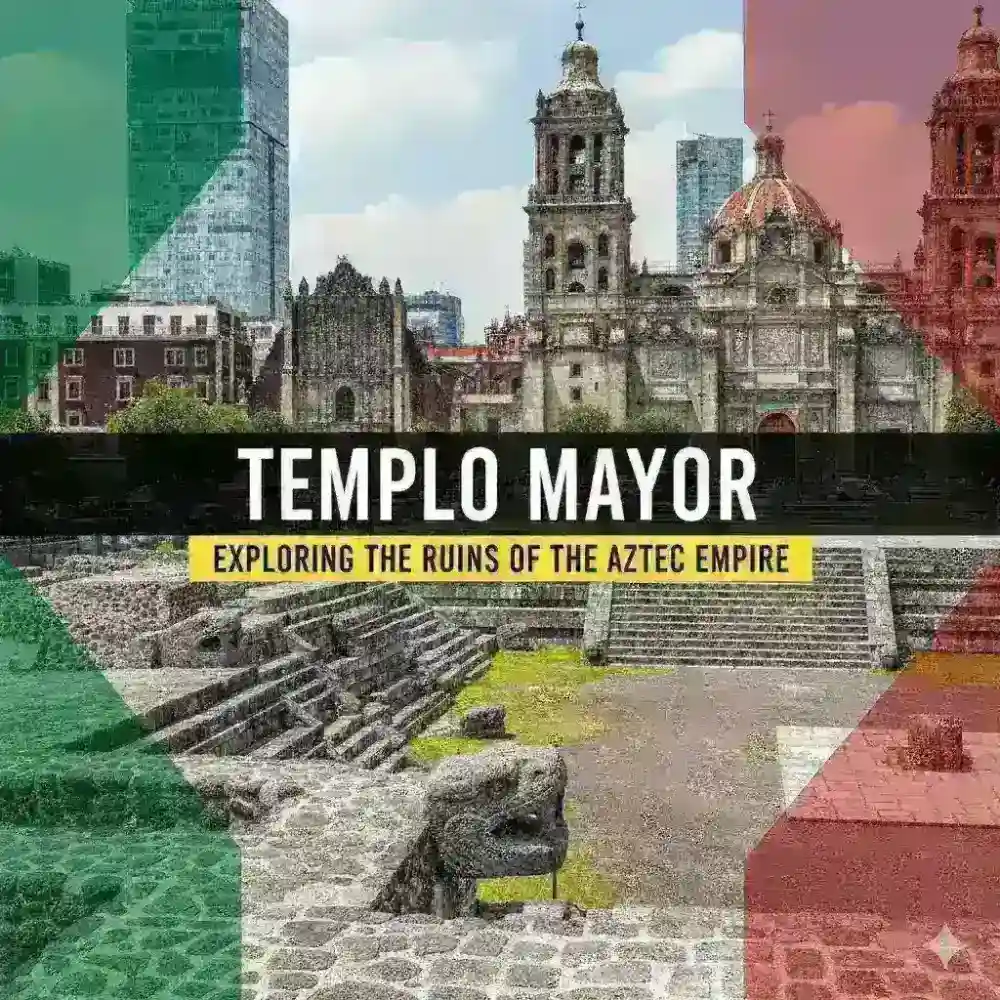
Templo Mayor: Exploring the Ruins of the Aztec Empire
Templo Mayor (Main Temple) stands as one of the most significant archaeological discoveries of the 20th century and a profound window into the heart of the Aztec Empire. Located in the historic center of Mexico City, just steps from the Metropolitan Cathedral and the Zócalo, this sacred site was the religious and political center of Tenochtitlan, the magnificent Aztec capital founded in 1325. For centuries, the temple lay buried beneath colonial and modern buildings—until its dramatic rediscovery in 1978 revealed a treasure trove of artifacts, architecture, and insights into one of history's most sophisticated civilizations.
Today, Templo Mayor offers visitors an unparalleled opportunity to walk among the ruins of the Aztec world. The archaeological site, combined with the world-class Templo Mayor Museum, presents over 7,000 artifacts including the monumental Coyolxauhqui stone, exquisite jade masks, obsidian blades, ceremonial offerings, and architectural remnants that bring the Aztec empire vividly to life.
This comprehensive guide explores everything you need to know about visiting Templo Mayor: the history and significance of the temple, what to see at the archaeological site and museum, practical visiting information, photography tips, nearby attractions, and insider advice to help you make the most of this unforgettable encounter with the Aztec Empire in the heart of modern Mexico City.
The Sacred Heart of Tenochtitlan

Founding and Significance
According to Aztec legend, the Mexica people wandered for generations before their god Huitzilopochtli instructed them to build their city where they saw an eagle perched on a cactus, devouring a serpent. In 1325, they founded Tenochtitlan on an island in Lake Texcoco, and at its center, they constructed the Templo Mayor—the most sacred structure in their empire.
The temple served as the spiritual and political axis of the Aztec world:
- Religious Center: Dedicated to two principal deities: Huitzilopochtli (god of war and the sun) and Tlaloc (god of rain and agriculture)
- Political Symbol: Embodied Aztec power, cosmology, and imperial authority
- Ceremonial Hub: Site of rituals, sacrifices, coronations, and public celebrations
- Cosmic Axis: Represented the center of the Aztec universe, connecting earth, sky, and underworld
- 👉 "Coolcations" in Monteverde: Escaping the 2026 heatwaves in the cloud forest canopy.
- 👉 Scuba Diving the River Gold Shipwreck: The Ultimate First-Timer's Guide to Nevis Reefs and Caribbean Wreck Diving in 2026
- 👉 10 Day Panama Itinerary From Panama City to Bocas del Toro
Architecture and Design
The Templo Mayor was a massive double pyramid, unique in Mesoamerican architecture:
- Structure: Two temples atop a single pyramid base, each dedicated to one of the patron gods
- Height: Approximately 60 meters (200 feet) at its final construction phase
- Base: Approximately 100 meters by 80 meters
- Staircases: Two grand staircases leading to the twin temples
- Orientation: Aligned with astronomical events, particularly equinoxes and solstices
- 👉 "Coolcations" in Monteverde: Escaping the 2026 heatwaves in the cloud forest canopy.
- 👉 Scuba Diving the River Gold Shipwreck: The Ultimate First-Timer's Guide to Nevis Reefs and Caribbean Wreck Diving in 2026
- 👉 10 Day Panama Itinerary From Panama City to Bocas del Toro
Construction Phases
The temple was not built all at once but expanded in seven major construction phases between 1325 and 1521:
- Phase I (1325): Original small temple
- Phases II-VI: Successive expansions, each built over the previous structure
- Phase VII (1487): Final and largest version, dedicated by Emperor Ahuitzotl
- 👉 "Coolcations" in Monteverde: Escaping the 2026 heatwaves in the cloud forest canopy.
- 👉 Scuba Diving the River Gold Shipwreck: The Ultimate First-Timer's Guide to Nevis Reefs and Caribbean Wreck Diving in 2026
- 👉 10 Day Panama Itinerary From Panama City to Bocas del Toro
Each expansion reflected the growing power and wealth of the Aztec Empire, with new layers of stone, stucco, and vibrant paint covering the older structures. This practice of building over previous temples—common in Mesoamerica—proved fortuitous for archaeologists, as it preserved earlier phases beneath later ones.
The Spanish Conquest and Destruction
In 1521, after a brutal siege, Spanish conquistador Hernán Cortés and his indigenous allies conquered Tenochtitlan. The Templo Mayor, as the symbolic heart of Aztec power and religion, was systematically destroyed:
- Demolition: Spanish forces tore down the temple, using its stones to build colonial structures
- Cathedral Construction: The Metropolitan Cathedral was built directly adjacent to the temple site, symbolizing the triumph of Christianity over indigenous religion
- Urban Transformation: The sacred precinct was replaced by the grid of colonial Mexico City
- Historical Erasure: For centuries, the temple's location was forgotten, known only through colonial chronicles
- 👉 "Coolcations" in Monteverde: Escaping the 2026 heatwaves in the cloud forest canopy.
- 👉 Scuba Diving the River Gold Shipwreck: The Ultimate First-Timer's Guide to Nevis Reefs and Caribbean Wreck Diving in 2026
- 👉 10 Day Panama Itinerary From Panama City to Bocas del Toro
Rediscovery: The 1978 Excavation
The Accidental Discovery
The modern story of Templo Mayor began on February 21, 1978, when electrical workers digging near the Cathedral uncovered a massive stone disk depicting the dismembered moon goddess Coyolxauhqui. This discovery triggered one of the most important archaeological excavations in the Americas.
Major Excavation (1978-1982)
Under the direction of archaeologist Eduardo Matos Moctezuma, a massive excavation project unearthed:
- Architectural Remains: Multiple construction phases of the temple complex
- Sculptures: Hundreds of stone carvings, including deities, warriors, and symbolic animals
- Offerings: Over 100 ritual caches containing precious objects, human remains, and sacrificial items
- Artifacts: Thousands of objects including jade, obsidian, shell, ceramics, and organic materials
- 👉 "Coolcations" in Monteverde: Escaping the 2026 heatwaves in the cloud forest canopy.
- 👉 Scuba Diving the River Gold Shipwreck: The Ultimate First-Timer's Guide to Nevis Reefs and Caribbean Wreck Diving in 2026
- 👉 10 Day Panama Itinerary From Panama City to Bocas del Toro
Significance of the Find
The Templo Mayor excavation transformed our understanding of Aztec civilization:
- Urban Context: Revealed the layout and scale of the sacred precinct
- Religious Practices: Provided direct evidence of rituals, sacrifices, and cosmology
- Artistic Achievement: Showcased the sophistication of Aztec sculpture and craftsmanship
- Historical Continuity: Connected colonial chronicles with physical archaeological evidence
- 👉 "Coolcations" in Monteverde: Escaping the 2026 heatwaves in the cloud forest canopy.
- 👉 Scuba Diving the River Gold Shipwreck: The Ultimate First-Timer's Guide to Nevis Reefs and Caribbean Wreck Diving in 2026
- 👉 10 Day Panama Itinerary From Panama City to Bocas del Toro
The Archaeological Site: Walking Among Aztec Ruins
Layout and Key Features
The excavated site allows visitors to walk among the ruins of the sacred precinct:
The Main Pyramid
- Base Platform: Massive foundation showing the temple's original footprint
- Staircase Remnants: Portions of the grand staircases leading to the twin temples
- Temple Platforms: Elevated platforms where the shrines to Huitzilopochtli and Tlaloc once stood
- Serpent Heads: Carved stone serpent heads flanking the staircases, symbols of Quetzalcoatl
- 👉 "Coolcations" in Monteverde: Escaping the 2026 heatwaves in the cloud forest canopy.
- 👉 Scuba Diving the River Gold Shipwreck: The Ultimate First-Timer's Guide to Nevis Reefs and Caribbean Wreck Diving in 2026
- 👉 10 Day Panama Itinerary From Panama City to Bocas del Toro
The Coyolxauhqui Stone
- Location: Originally positioned at the base of the pyramid's western staircase
- Depiction: Massive disk (3.5 meters diameter) showing the dismembered moon goddess
- Symbolism: Represents Huitzilopochtli's victory over his sister Coyolxauhqui, symbolizing the triumph of the sun over the moon
- Artistic Achievement: Masterpiece of Aztec stone carving with intricate details
- 👉 "Coolcations" in Monteverde: Escaping the 2026 heatwaves in the cloud forest canopy.
- 👉 Scuba Diving the River Gold Shipwreck: The Ultimate First-Timer's Guide to Nevis Reefs and Caribbean Wreck Diving in 2026
- 👉 10 Day Panama Itinerary From Panama City to Bocas del Toro
Offering Chambers and Ritual Spaces
- Ritual Caches: Excavated chambers containing ceremonial offerings
- Sacrificial Areas: Spaces where rituals and sacrifices were performed
- Altars and Platforms: Smaller structures surrounding the main pyramid
- 👉 "Coolcations" in Monteverde: Escaping the 2026 heatwaves in the cloud forest canopy.
- 👉 Scuba Diving the River Gold Shipwreck: The Ultimate First-Timer's Guide to Nevis Reefs and Caribbean Wreck Diving in 2026
- 👉 10 Day Panama Itinerary From Panama City to Bocas del Toro
The Sacred Precinct
- Surrounding Structures: Remains of temples, palaces, and administrative buildings
- Ball Court: Evidence of the sacred Mesoamerican ballgame
- Tzompantli: Skull rack where sacrificial victims' heads were displayed
- 👉 "Coolcations" in Monteverde: Escaping the 2026 heatwaves in the cloud forest canopy.
- 👉 Scuba Diving the River Gold Shipwreck: The Ultimate First-Timer's Guide to Nevis Reefs and Caribbean Wreck Diving in 2026
- 👉 10 Day Panama Itinerary From Panama City to Bocas del Toro
Interpretive Signage and Pathways
The site is designed for visitor comprehension:
- Walkways: Elevated paths allow viewing without damaging ruins
- Information Panels: Bilingual (Spanish/English) signs explain key features
- Reconstructions: Diagrams and models show how the temple originally appeared
- Audio Guides: Available for deeper interpretation (additional fee)
- 👉 "Coolcations" in Monteverde: Escaping the 2026 heatwaves in the cloud forest canopy.
- 👉 Scuba Diving the River Gold Shipwreck: The Ultimate First-Timer's Guide to Nevis Reefs and Caribbean Wreck Diving in 2026
- 👉 10 Day Panama Itinerary From Panama City to Bocas del Toro
The Templo Mayor Museum: Treasures of the Aztec World
Museum Overview
Adjacent to the archaeological site, the Templo Mayor Museum houses over 7,000 artifacts discovered during excavation. The museum is organized into eight thematic halls that guide visitors through Aztec cosmology, religion, daily life, and the temple's history.
Hall 1: The Coatlicue Room
Named for the massive statue of the earth goddess Coatlicue:
- Coatlicue Statue: Monumental sculpture of the mother of Huitzilopochtli, adorned with serpents and skulls
- Cosmology: Introduction to Aztec beliefs about creation, deities, and the universe
- Symbolism: Explanation of key symbols: serpents, eagles, water, fire
- 👉 "Coolcations" in Monteverde: Escaping the 2026 heatwaves in the cloud forest canopy.
- 👉 Scuba Diving the River Gold Shipwreck: The Ultimate First-Timer's Guide to Nevis Reefs and Caribbean Wreck Diving in 2026
- 👉 10 Day Panama Itinerary From Panama City to Bocas del Toro
Hall 2: The Ritual Room
Focuses on religious practices and ceremonies:
- Sacrificial Offerings: Objects placed in ritual caches: jade, obsidian, shell, ceramics
- Human Remains: Evidence of sacrificial practices (presented respectfully and educationally)
- Ritual Objects: Incense burners, ceremonial knives, and ritual attire
- 👉 "Coolcations" in Monteverde: Escaping the 2026 heatwaves in the cloud forest canopy.
- 👉 Scuba Diving the River Gold Shipwreck: The Ultimate First-Timer's Guide to Nevis Reefs and Caribbean Wreck Diving in 2026
- 👉 10 Day Panama Itinerary From Panama City to Bocas del Toro
Hall 3: The Huitzilopochtli Room
Dedicated to the god of war and the sun:
- War Imagery: Weapons, armor, and symbols of military power
- Solar Symbolism: Representations of the sun, eagles, and celestial cycles
- Imperial Ideology: How Huitzilopochtli legitimized Aztec expansion and rule
- 👉 "Coolcations" in Monteverde: Escaping the 2026 heatwaves in the cloud forest canopy.
- 👉 Scuba Diving the River Gold Shipwreck: The Ultimate First-Timer's Guide to Nevis Reefs and Caribbean Wreck Diving in 2026
- 👉 10 Day Panama Itinerary From Panama City to Bocas del Toro
Hall 4: The Tlaloc Room
Explores the god of rain and agriculture:
- Water Imagery: Sculptures of Tlaloc with goggle eyes and fangs
- Agricultural Tools: Implements for farming and irrigation
- Rain Rituals: Ceremonies to ensure agricultural fertility
- 👉 "Coolcations" in Monteverde: Escaping the 2026 heatwaves in the cloud forest canopy.
- 👉 Scuba Diving the River Gold Shipwreck: The Ultimate First-Timer's Guide to Nevis Reefs and Caribbean Wreck Diving in 2026
- 👉 10 Day Panama Itinerary From Panama City to Bocas del Toro
Hall 5: The Offering Room
Showcases the extraordinary ritual caches discovered at the site:
- Jade Masks: Exquisitely carved masks, some of the finest examples of Aztec art
- Obsidian Blades: Razor-sharp ceremonial and sacrificial knives
- Shell and Coral: Marine offerings brought from distant coasts, demonstrating imperial reach
- Exotic Materials: Objects from across Mesoamerica, showing trade and tribute networks
- 👉 "Coolcations" in Monteverde: Escaping the 2026 heatwaves in the cloud forest canopy.
- 👉 Scuba Diving the River Gold Shipwreck: The Ultimate First-Timer's Guide to Nevis Reefs and Caribbean Wreck Diving in 2026
- 👉 10 Day Panama Itinerary From Panama City to Bocas del Toro
Hall 6: The Eagle Warriors Room
Focuses on Aztec military orders and warrior culture:
- Eagle and Jaguar Warriors: Elite military orders with distinctive attire
- Weapons and Armor: Macuahuitl (obsidian-bladed club), shields, and protective gear
- Warfare and Empire: How military power sustained the Aztec state
- 👉 "Coolcations" in Monteverde: Escaping the 2026 heatwaves in the cloud forest canopy.
- 👉 Scuba Diving the River Gold Shipwreck: The Ultimate First-Timer's Guide to Nevis Reefs and Caribbean Wreck Diving in 2026
- 👉 10 Day Panama Itinerary From Panama City to Bocas del Toro
Hall 7: The Death and Renewal Room
Explores Aztec beliefs about death, sacrifice, and cosmic renewal:
- Death Imagery: Skulls, skeletons, and underworld deities
- Renewal Symbolism: Concepts of cyclical time, sacrifice, and regeneration
- Afterlife Beliefs: Aztec conceptions of the afterlife and ancestral veneration
- 👉 "Coolcations" in Monteverde: Escaping the 2026 heatwaves in the cloud forest canopy.
- 👉 Scuba Diving the River Gold Shipwreck: The Ultimate First-Timer's Guide to Nevis Reefs and Caribbean Wreck Diving in 2026
- 👉 10 Day Panama Itinerary From Panama City to Bocas del Toro
Hall 8: The Templo Mayor Room
Brings the story full circle with the temple's history and excavation:
- Construction Phases: Models and diagrams showing the temple's seven building phases
- Excavation Story: The 1978 discovery and subsequent archaeological work
- Preservation: How the site is protected and studied today
- 👉 "Coolcations" in Monteverde: Escaping the 2026 heatwaves in the cloud forest canopy.
- 👉 Scuba Diving the River Gold Shipwreck: The Ultimate First-Timer's Guide to Nevis Reefs and Caribbean Wreck Diving in 2026
- 👉 10 Day Panama Itinerary From Panama City to Bocas del Toro
Museum Highlights: Must-See Artifacts
The Coyolxauhqui Stone
- Significance: The discovery that launched the excavation
- Artistry: Masterful carving depicting the goddess in dynamic, dismembered pose
- Context: Originally positioned to be "defeated" by worshippers ascending the pyramid
- 👉 "Coolcations" in Monteverde: Escaping the 2026 heatwaves in the cloud forest canopy.
- 👉 Scuba Diving the River Gold Shipwreck: The Ultimate First-Timer's Guide to Nevis Reefs and Caribbean Wreck Diving in 2026
- 👉 10 Day Panama Itinerary From Panama City to Bocas del Toro
Jade Mask of Tezcatlipoca
- Material: Carved from a single piece of jade, a highly valued material
- Craftsmanship: Exquisite detail in facial features and decorative elements
- Symbolism: Represents the powerful deity Tezcatlipoca, "Smoking Mirror"
- 👉 "Coolcations" in Monteverde: Escaping the 2026 heatwaves in the cloud forest canopy.
- 👉 Scuba Diving the River Gold Shipwreck: The Ultimate First-Timer's Guide to Nevis Reefs and Caribbean Wreck Diving in 2026
- 👉 10 Day Panama Itinerary From Panama City to Bocas del Toro
Obsidian Eagle Warrior
- Material: Carved from volcanic obsidian, demonstrating advanced lapidary skills
- Attire: Depicts an elite warrior in eagle regalia
- Function: Likely a ritual object or offering
- 👉 "Coolcations" in Monteverde: Escaping the 2026 heatwaves in the cloud forest canopy.
- 👉 Scuba Diving the River Gold Shipwreck: The Ultimate First-Timer's Guide to Nevis Reefs and Caribbean Wreck Diving in 2026
- 👉 10 Day Panama Itinerary From Panama City to Bocas del Toro
Ceramic Urns and Effigies
- Variety: Hundreds of ceramic vessels in diverse forms and styles
- Function: Used for offerings, rituals, and daily life
- Artistic Range: From simple utilitarian vessels to elaborate sculptural pieces
- 👉 "Coolcations" in Monteverde: Escaping the 2026 heatwaves in the cloud forest canopy.
- 👉 Scuba Diving the River Gold Shipwreck: The Ultimate First-Timer's Guide to Nevis Reefs and Caribbean Wreck Diving in 2026
- 👉 10 Day Panama Itinerary From Panama City to Bocas del Toro
Practical Visiting Information
Location and Access
Address: Seminario 8, Centro Histórico, Mexico City
Location: Northeast corner of the Zócalo, adjacent to the Metropolitan Cathedral
Getting There
- Metro: Zócalo/Tenochtitlan station (Line 2, blue line); 2-minute walk
- Metrobús: Zócalo station (Line 4); 3-minute walk
- Ride-Hailing: Uber or DiDi; request drop-off at Seminario Street
- Walking: From most Historic Center locations, 5-10 minute walk
- 👉 "Coolcations" in Monteverde: Escaping the 2026 heatwaves in the cloud forest canopy.
- 👉 Scuba Diving the River Gold Shipwreck: The Ultimate First-Timer's Guide to Nevis Reefs and Caribbean Wreck Diving in 2026
- 👉 10 Day Panama Itinerary From Panama City to Bocas del Toro
Opening Hours and Admission
- Hours: Tuesday-Sunday, 9:00 AM - 5:00 PM (closed Mondays)
- Last Entry: 4:30 PM
- Admission: Approximately 85-90 MXN (approximately $5 USD) for adults
- Free Entry: Sundays for Mexican citizens and foreign residents with valid ID
- Student/Senior Discounts: Available with valid ID
- Combined Tickets: Sometimes available with other Historic Center sites
- 👉 "Coolcations" in Monteverde: Escaping the 2026 heatwaves in the cloud forest canopy.
- 👉 Scuba Diving the River Gold Shipwreck: The Ultimate First-Timer's Guide to Nevis Reefs and Caribbean Wreck Diving in 2026
- 👉 10 Day Panama Itinerary From Panama City to Bocas del Toro
Time Needed for Visit
- Minimum: 1.5 hours (quick overview of site and museum)
- Recommended: 2-3 hours (thorough exploration with audio guide)
- Enthusiasts: 3-4 hours (detailed study of artifacts and archaeology)
- 👉 "Coolcations" in Monteverde: Escaping the 2026 heatwaves in the cloud forest canopy.
- 👉 Scuba Diving the River Gold Shipwreck: The Ultimate First-Timer's Guide to Nevis Reefs and Caribbean Wreck Diving in 2026
- 👉 10 Day Panama Itinerary From Panama City to Bocas del Toro
Guided Tours and Audio Guides
Official Guided Tours
- Availability: Free guided tours in Spanish at scheduled times (typically 11 AM, 1 PM, 3 PM)
- English Tours: May be available on request; inquire at entrance
- Duration: Approximately 45-60 minutes
- Benefit: Expert interpretation of archaeological context and artifact significance
- 👉 "Coolcations" in Monteverde: Escaping the 2026 heatwaves in the cloud forest canopy.
- 👉 Scuba Diving the River Gold Shipwreck: The Ultimate First-Timer's Guide to Nevis Reefs and Caribbean Wreck Diving in 2026
- 👉 10 Day Panama Itinerary From Panama City to Bocas del Toro
Audio Guides
- Availability: Available for rent at museum entrance
- Languages: Spanish, English, French, German, Italian
- Cost: Approximately 70-100 MXN
- Content: Detailed commentary on key artifacts and site features
- 👉 "Coolcations" in Monteverde: Escaping the 2026 heatwaves in the cloud forest canopy.
- 👉 Scuba Diving the River Gold Shipwreck: The Ultimate First-Timer's Guide to Nevis Reefs and Caribbean Wreck Diving in 2026
- 👉 10 Day Panama Itinerary From Panama City to Bocas del Toro
Independent Exploration
- Information Panels: Bilingual signage throughout museum and site
- Guidebooks: Available for purchase at museum shop
- Preparation: Researching Aztec history beforehand enhances understanding
- 👉 "Coolcations" in Monteverde: Escaping the 2026 heatwaves in the cloud forest canopy.
- 👉 Scuba Diving the River Gold Shipwreck: The Ultimate First-Timer's Guide to Nevis Reefs and Caribbean Wreck Diving in 2026
- 👉 10 Day Panama Itinerary From Panama City to Bocas del Toro
Photography at Templo Mayor
Photography Policies
- Allowed: Photography permitted without flash in most areas
- Restricted: Flash photography prohibited to protect artifacts
- Tripods: Generally not permitted in crowded museum spaces
- Commercial Use: Requires special permission
- Respect: Be mindful of other visitors when photographing
- 👉 "Coolcations" in Monteverde: Escaping the 2026 heatwaves in the cloud forest canopy.
- 👉 Scuba Diving the River Gold Shipwreck: The Ultimate First-Timer's Guide to Nevis Reefs and Caribbean Wreck Diving in 2026
- 👉 10 Day Panama Itinerary From Panama City to Bocas del Toro
Best Photography Locations
Archaeological Site
- Coyolxauhqui Stone: Dramatic low-angle shots emphasizing scale and detail
- Pyramid Base: Wide shots showing the temple's footprint and surrounding structures
- Serpent Heads: Close-ups of carved details and symbolic imagery
- Context Shots: Include the Cathedral in background to show historical layering
- 👉 "Coolcations" in Monteverde: Escaping the 2026 heatwaves in the cloud forest canopy.
- 👉 Scuba Diving the River Gold Shipwreck: The Ultimate First-Timer's Guide to Nevis Reefs and Caribbean Wreck Diving in 2026
- 👉 10 Day Panama Itinerary From Panama City to Bocas del Toro
Museum Interior
- Jade Masks: Close-ups highlighting craftsmanship and material beauty
- Obsidian Objects: Capture the reflective quality of volcanic glass
- Ceramic Effigies: Detail shots of facial expressions and decorative elements
- Exhibition Design: Wide shots showing how artifacts are presented in context
- 👉 "Coolcations" in Monteverde: Escaping the 2026 heatwaves in the cloud forest canopy.
- 👉 Scuba Diving the River Gold Shipwreck: The Ultimate First-Timer's Guide to Nevis Reefs and Caribbean Wreck Diving in 2026
- 👉 10 Day Panama Itinerary From Panama City to Bocas del Toro
Camera Settings and Equipment
Recommended Gear
- Lens: Standard zoom (24-70mm) for versatility; macro lens for artifact details
- Low-Light Capability: Museum lighting can be dim; lens with wide aperture helpful
- Image Stabilization: Useful for handheld shooting in lower light
- Extra Batteries: Full visit with photography drains batteries
- 👉 "Coolcations" in Monteverde: Escaping the 2026 heatwaves in the cloud forest canopy.
- 👉 Scuba Diving the River Gold Shipwreck: The Ultimate First-Timer's Guide to Nevis Reefs and Caribbean Wreck Diving in 2026
- 👉 10 Day Panama Itinerary From Panama City to Bocas del Toro
Camera Settings
For Artifact Details
- Aperture: f/2.8 - f/4 to isolate subject and blur background
- Shutter Speed: 1/125 sec or faster to avoid blur
- ISO: 400-1600 depending on lighting
- Focus: Single-point autofocus on key details
- 👉 "Coolcations" in Monteverde: Escaping the 2026 heatwaves in the cloud forest canopy.
- 👉 Scuba Diving the River Gold Shipwreck: The Ultimate First-Timer's Guide to Nevis Reefs and Caribbean Wreck Diving in 2026
- 👉 10 Day Panama Itinerary From Panama City to Bocas del Toro
For Site Overview
- Aperture: f/8 - f/11 for sharpness throughout scene
- Shutter Speed: 1/125 sec or faster
- ISO: 100-400 in good light
- 👉 "Coolcations" in Monteverde: Escaping the 2026 heatwaves in the cloud forest canopy.
- 👉 Scuba Diving the River Gold Shipwreck: The Ultimate First-Timer's Guide to Nevis Reefs and Caribbean Wreck Diving in 2026
- 👉 10 Day Panama Itinerary From Panama City to Bocas del Toro
Photography Etiquette
- Respect Artifacts: Don't touch objects or lean on display cases
- No Flash: Protects sensitive materials and respects other visitors
- Be Mindful: Don't block pathways or views while photographing
- Cultural Sensitivity: Some artifacts have spiritual significance; photograph respectfully
- 👉 "Coolcations" in Monteverde: Escaping the 2026 heatwaves in the cloud forest canopy.
- 👉 Scuba Diving the River Gold Shipwreck: The Ultimate First-Timer's Guide to Nevis Reefs and Caribbean Wreck Diving in 2026
- 👉 10 Day Panama Itinerary From Panama City to Bocas del Toro
What to Bring and Practical Tips
Essentials
- Valid ID: Required for admission discounts
- Comfortable Shoes: Extensive walking on stone and tile surfaces
- Water Bottle: Stay hydrated; refill stations available
- Small Backpack: For essentials; large bags may need to be checked
- Cash: For admission, audio guide, souvenirs (cards accepted but cash faster)
- 👉 "Coolcations" in Monteverde: Escaping the 2026 heatwaves in the cloud forest canopy.
- 👉 Scuba Diving the River Gold Shipwreck: The Ultimate First-Timer's Guide to Nevis Reefs and Caribbean Wreck Diving in 2026
- 👉 10 Day Panama Itinerary From Panama City to Bocas del Toro
Recommended
- Camera: With extra batteries and memory cards
- Notebook: For sketching or notes if studying artifacts
- Spanish Phrasebook: Helpful but not essential; many staff speak English
- Light Jacket: Museum can be cool; outdoor site can be windy
- 👉 "Coolcations" in Monteverde: Escaping the 2026 heatwaves in the cloud forest canopy.
- 👉 Scuba Diving the River Gold Shipwreck: The Ultimate First-Timer's Guide to Nevis Reefs and Caribbean Wreck Diving in 2026
- 👉 10 Day Panama Itinerary From Panama City to Bocas del Toro
What NOT to Bring
- Large Bags: May need to be checked; use small daypack
- Food and Drink: Not permitted in museum; eat before or after visit
- Selfie Sticks: Generally not permitted in museum spaces
- Excessive Valuables: Keep valuables minimal and secure
- 👉 "Coolcations" in Monteverde: Escaping the 2026 heatwaves in the cloud forest canopy.
- 👉 Scuba Diving the River Gold Shipwreck: The Ultimate First-Timer's Guide to Nevis Reefs and Caribbean Wreck Diving in 2026
- 👉 10 Day Panama Itinerary From Panama City to Bocas del Toro
Accessibility
- Wheelchair Access: Museum has ramp access and elevators; archaeological site has some accessible pathways
- Restrooms: Accessible facilities available
- Seating: Benches throughout museum for rest
- Assistance: Staff available to help; contact in advance for specific needs
- 👉 "Coolcations" in Monteverde: Escaping the 2026 heatwaves in the cloud forest canopy.
- 👉 Scuba Diving the River Gold Shipwreck: The Ultimate First-Timer's Guide to Nevis Reefs and Caribbean Wreck Diving in 2026
- 👉 10 Day Panama Itinerary From Panama City to Bocas del Toro
Nearby Attractions in the Historic Center
Within the Zócalo Complex
Metropolitan Cathedral
- Distance: Adjacent to Templo Mayor
- Highlights: Stunning colonial architecture, ornate interior, historic religious art
- Time Needed: 45-60 minutes
- Admission: Free
- 👉 "Coolcations" in Monteverde: Escaping the 2026 heatwaves in the cloud forest canopy.
- 👉 Scuba Diving the River Gold Shipwreck: The Ultimate First-Timer's Guide to Nevis Reefs and Caribbean Wreck Diving in 2026
- 👉 10 Day Panama Itinerary From Panama City to Bocas del Toro
National Palace
- Distance: Eastern side of Zócalo, 2-minute walk
- Highlights: Diego Rivera murals depicting Mexican history
- Time Needed: 1.5-2 hours
- Admission: Free with valid ID
- 👉 "Coolcations" in Monteverde: Escaping the 2026 heatwaves in the cloud forest canopy.
- 👉 Scuba Diving the River Gold Shipwreck: The Ultimate First-Timer's Guide to Nevis Reefs and Caribbean Wreck Diving in 2026
- 👉 10 Day Panama Itinerary From Panama City to Bocas del Toro
Zócalo (Plaza de la Constitución)
- Distance: Directly adjacent
- Highlights: One of world's largest public squares, flag ceremonies, cultural events
- Time Needed: 30-60 minutes
- Admission: Free
- 👉 "Coolcations" in Monteverde: Escaping the 2026 heatwaves in the cloud forest canopy.
- 👉 Scuba Diving the River Gold Shipwreck: The Ultimate First-Timer's Guide to Nevis Reefs and Caribbean Wreck Diving in 2026
- 👉 10 Day Panama Itinerary From Panama City to Bocas del Toro
Short Walk from Templo Mayor
Palacio de Bellas Artes
- Distance: 10-minute walk west
- Highlights: Stunning Art Nouveau architecture, Rivera murals, cultural performances
- Time Needed: 1-2 hours
- Admission: Varies by exhibition; courtyard free
- 👉 "Coolcations" in Monteverde: Escaping the 2026 heatwaves in the cloud forest canopy.
- 👉 Scuba Diving the River Gold Shipwreck: The Ultimate First-Timer's Guide to Nevis Reefs and Caribbean Wreck Diving in 2026
- 👉 10 Day Panama Itinerary From Panama City to Bocas del Toro
Calle Madero
- Distance: Pedestrian street leading west from Zócalo
- Highlights: Historic buildings, shopping, street performers, Casa de los Azulejos
- Time Needed: 30-60 minutes for stroll
- 👉 "Coolcations" in Monteverde: Escaping the 2026 heatwaves in the cloud forest canopy.
- 👉 Scuba Diving the River Gold Shipwreck: The Ultimate First-Timer's Guide to Nevis Reefs and Caribbean Wreck Diving in 2026
- 👉 10 Day Panama Itinerary From Panama City to Bocas del Toro
Mercado de San Juan
- Distance: 10-minute walk southwest
- Highlights: Gourmet market with exotic ingredients and food stalls
- Time Needed: 1 hour for exploration and tasting
- 👉 "Coolcations" in Monteverde: Escaping the 2026 heatwaves in the cloud forest canopy.
- 👉 Scuba Diving the River Gold Shipwreck: The Ultimate First-Timer's Guide to Nevis Reefs and Caribbean Wreck Diving in 2026
- 👉 10 Day Panama Itinerary From Panama City to Bocas del Toro
Extended Historic Center Route
For a full day exploring the Historic Center:
- Morning: Templo Mayor (2-3 hours)
- Late Morning: Metropolitan Cathedral and Zócalo (1 hour)
- Lunch: Traditional meal at nearby restaurant or market
- Afternoon: National Palace for Rivera murals (1.5-2 hours)
- Late Afternoon: Walk Calle Madero to Bellas Artes (1-2 hours)
- Evening: Dinner in Historic Center or nearby Roma/Condesa
Cultural Context: Understanding the Aztec World
Aztec Cosmology and Religion
Understanding Templo Mayor requires grasping key Aztec beliefs:
- Dual Deities: Huitzilopochtli (sun/war) and Tlaloc (rain/agriculture) represented complementary forces
- Sacrifice and Renewal: Ritual sacrifice was believed necessary to sustain the cosmos and ensure agricultural fertility
- Cyclical Time: Aztecs viewed time as cyclical, with eras of creation and destruction
- Cosmic Order: The temple represented the axis mundi, connecting earthly and divine realms
- 👉 "Coolcations" in Monteverde: Escaping the 2026 heatwaves in the cloud forest canopy.
- 👉 Scuba Diving the River Gold Shipwreck: The Ultimate First-Timer's Guide to Nevis Reefs and Caribbean Wreck Diving in 2026
- 👉 10 Day Panama Itinerary From Panama City to Bocas del Toro
Daily Life in Tenochtitlan
Beyond the temple, the museum artifacts reveal Aztec society:
- Urban Sophistication: Tenochtitlan was one of world's largest cities, with advanced infrastructure
- Trade Networks: Artifacts from across Mesoamerica demonstrate extensive trade and tribute systems
- Artistic Achievement: Exquisite craftsmanship in jade, obsidian, ceramics, and featherwork
- Social Complexity: Evidence of nobility, priests, warriors, merchants, and commoners
- 👉 "Coolcations" in Monteverde: Escaping the 2026 heatwaves in the cloud forest canopy.
- 👉 Scuba Diving the River Gold Shipwreck: The Ultimate First-Timer's Guide to Nevis Reefs and Caribbean Wreck Diving in 2026
- 👉 10 Day Panama Itinerary From Panama City to Bocas del Toro
The Spanish Conquest and Its Legacy
Templo Mayor also tells the story of conquest and cultural transformation:
- Collision of Worlds: The temple's destruction symbolizes the clash of indigenous and European civilizations
- Cultural Syncretism: Despite conquest, indigenous traditions persisted and blended with Spanish culture
- Historical Memory: The excavation represents Mexico's reclaiming of its pre-Hispanic heritage
- Contemporary Identity: Templo Mayor remains central to Mexican national identity and indigenous pride
- 👉 "Coolcations" in Monteverde: Escaping the 2026 heatwaves in the cloud forest canopy.
- 👉 Scuba Diving the River Gold Shipwreck: The Ultimate First-Timer's Guide to Nevis Reefs and Caribbean Wreck Diving in 2026
- 👉 10 Day Panama Itinerary From Panama City to Bocas del Toro
Frequently Asked Questions
Q: How long does it take to visit Templo Mayor?
A: Allow at least 1.5-2 hours for a basic visit. For a thorough exploration of both the archaeological site and museum, plan for 2.5-3 hours. Enthusiasts may want 4 hours.
Q: Is Templo Mayor worth visiting if I'm short on time?
A: Absolutely. Even a 1.5-hour visit provides profound insights into Aztec civilization and is uniquely located in the heart of Mexico City. It's one of the most significant archaeological sites in the Americas.
Q: Can I climb on the ruins?
A: No, climbing on the ruins is strictly prohibited to protect the archaeological remains. Elevated walkways allow viewing without damaging the site.
Q: Is the museum suitable for children?
A: Yes, the museum is family-friendly with engaging exhibits. Some content about sacrifice may require parental guidance for younger children. Interactive elements and visual displays appeal to various ages.
Q: Are photos allowed in the museum?
A: Yes, photography is permitted without flash. Tripods and commercial photography require special permission.
Q: Can I visit Templo Mayor and the Cathedral on the same ticket?
A: No, they have separate admissions. However, the Cathedral is free to enter, and both are adjacent, making it easy to visit both in one trip.
Q: What's the best time of day to visit?
A: Early morning (9-10 AM) offers fewer crowds and better light for photography. Weekdays are less crowded than weekends.
Q: Is there a gift shop?
A: Yes, the museum has an excellent gift shop with books, replicas, crafts, and educational materials related to Aztec culture.
Conclusion: A Portal to the Aztec World
Visiting Templo Mayor is more than an archaeological excursion—it's a profound encounter with one of history's most fascinating civilizations. Standing among the ruins of the sacred pyramid, gazing upon the monumental Coyolxauhqui stone, and marveling at the exquisite jade masks and ceremonial offerings, you connect directly with the spiritual, political, and artistic world of the Aztec Empire.
The site's location—nestled between the colonial Cathedral and the modern Zócalo—powerfully illustrates Mexico's layered history: indigenous, colonial, and contemporary. Templo Mayor reminds us that history is not distant or abstract but present, tangible, and deeply relevant to understanding the complex, vibrant nation that Mexico is today.
Whether you're a history enthusiast, archaeology buff, art lover, or simply a curious traveler, Templo Mayor rewards you with an unforgettable experience. The combination of outdoor ruins and world-class museum, the dramatic story of discovery and preservation, and the sheer beauty and sophistication of Aztec artistry create a visit that lingers in memory long after you've left the site.
Key Takeaways:
- ✓ Templo Mayor was the sacred heart of the Aztec capital Tenochtitlan
- ✓ Rediscovered in 1978; one of the most important archaeological finds in the Americas
- ✓ Museum houses over 7,000 artifacts including the iconic Coyolxauhqui stone
- ✓ Admission approximately 85-90 MXN; free Sundays for Mexican citizens/residents
- ✓ Allow 2-3 hours for thorough visit; audio guides enhance understanding
- ✓ Located in Historic Center; easily combined with Cathedral, National Palace, Zócalo
- ✓ Photography permitted without flash; respect preservation guidelines
- ✓ Understand Aztec cosmology to deepen appreciation of the site
- ✓ Visit early morning on weekdays for fewer crowds
- 👉 "Coolcations" in Monteverde: Escaping the 2026 heatwaves in the cloud forest canopy.
- 👉 Scuba Diving the River Gold Shipwreck: The Ultimate First-Timer's Guide to Nevis Reefs and Caribbean Wreck Diving in 2026
- 👉 10 Day Panama Itinerary From Panama City to Bocas del Toro
As you walk among these ancient stones, you participate in a continuum of human experience that spans nearly 700 years. Templo Mayor invites you not just to observe history, but to feel it—to understand that the Aztec Empire was not a distant, primitive society but a sophisticated, complex civilization whose legacy continues to shape Mexico and the world.
¡Bienvenido al Templo Mayor! (Welcome to the Main Temple!)
Remember to explore respectfully, support preservation efforts, and help ensure that this extraordinary testament to human achievement remains for future generations to experience and learn from.
0 Comments