.webp)
.webp)
Latin America Travel Guide Best Destinations Cost and Safety Tips 2026
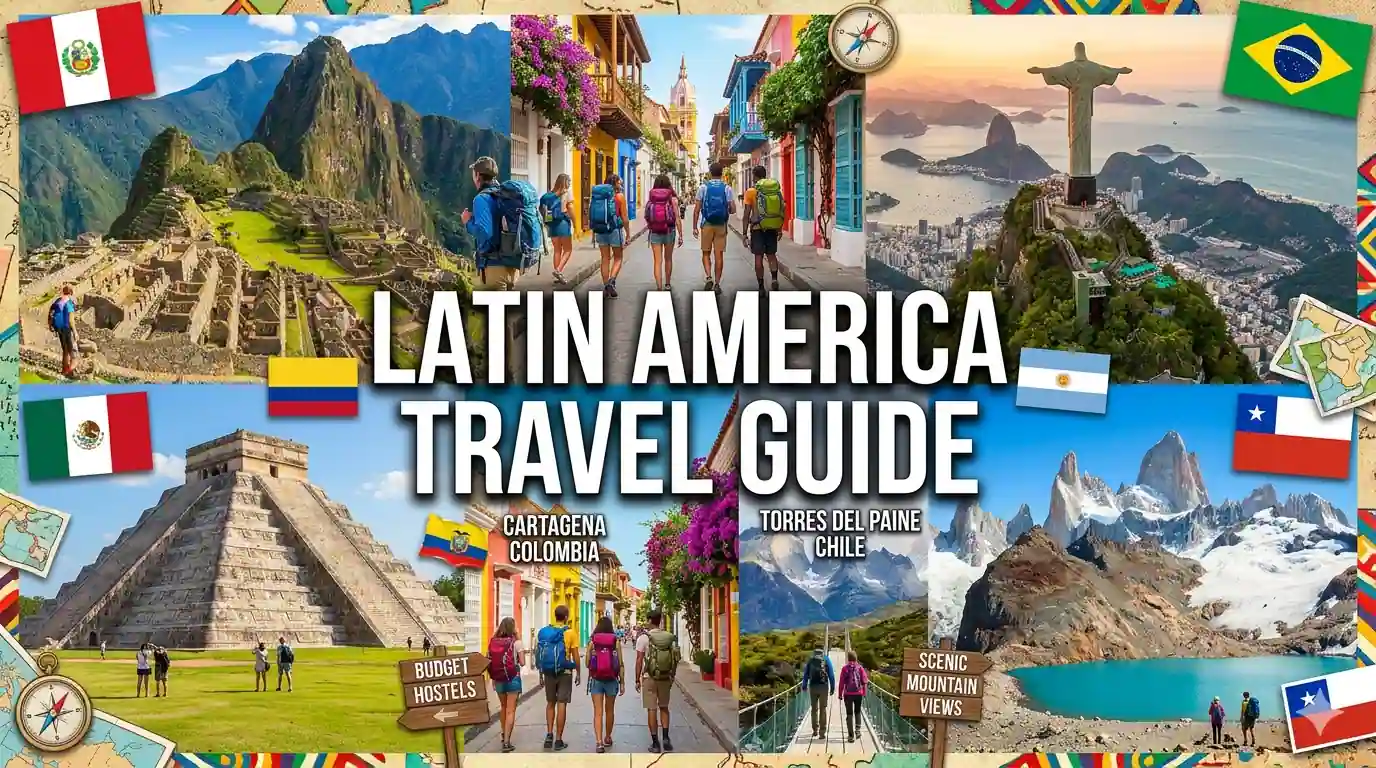
Complete Latin America Travel Guide for 2026
Latin America offers incredible diversity with ancient ruins, vibrant cities, stunning beaches, and dramatic landscapes spanning from Mexico to Patagonia.
This comprehensive guide covers essential information for visiting Latin America in 2026 including safety tips, visa requirements, realistic costs, transportation, and expert travel advice.
Whether you are planning your first trip to the region or returning to explore new destinations, this resource provides verified and practical guidance for a memorable journey.
Why Visit Latin America in 2026
Latin America combines rich indigenous heritage, colonial history, and modern culture creating unique travel experiences unavailable elsewhere.
The region offers exceptional value for money with lower costs than North America or Europe while maintaining quality experiences.
Diverse landscapes range from Amazon rainforests and Andean mountains to Caribbean beaches and Patagonian glaciers.
Warm hospitality and vibrant traditions make visitors feel welcome across the region.
Adventure activities include hiking, surfing, diving, and wildlife encounters at accessible prices.
Countries Covered in This Guide
This guide focuses on six major Latin American destinations offering diverse experiences for travelers.
Mexico Travel Overview
Mexico combines ancient Mayan and Aztec ruins with beautiful beaches and vibrant colonial cities.
Popular destinations include Mexico City, Cancun, Tulum, Oaxaca, and Guadalajara.
The country offers excellent tourism infrastructure and is generally safe in tourist areas.
Mexican cuisine is UNESCO-recognized and ranges from street tacos to fine dining.
Brazil Travel Overview
Brazil delivers stunning beaches, Amazon rainforest, vibrant carnival culture, and iconic landmarks.
Rio de Janeiro, Sao Paulo, Salvador, and Florianopolis are top destinations.
Portuguese is the primary language though English is spoken in tourist areas.
The country offers diverse experiences from urban energy to pristine natural areas.
Peru Travel Overview
Peru features Machu Picchu, Cusco, Lima's culinary scene, and Amazon biodiversity.
The country is a top destination for history, hiking, and gastronomy enthusiasts.
Spanish and Quechua are widely spoken with growing English accessibility in tourist zones.
Altitude considerations apply when visiting Cusco and the Sacred Valley.
Argentina Travel Overview
Argentina offers European-influenced Buenos Aires, Patagonian landscapes, and world-class wine regions.
The country provides excellent value despite economic fluctuations.
Spanish is the primary language with Italian influences in culture and cuisine.
Patagonia, Iguazu Falls, and Mendoza are must-visit destinations.
Colombia Travel Overview
Colombia has transformed into a top Latin American destination with Cartagena, Medellin, and Bogota leading the way.
The country offers Caribbean beaches, coffee regions, and vibrant city life.
Safety has improved dramatically though awareness remains important.
Spanish is essential as English is less common outside tourist areas.
Chile Travel Overview
Chile features dramatic landscapes from Atacama Desert to Patagonian glaciers.
Santiago, Valparaiso, and Torres del Paine are highlights.
The country is one of Latin America's safest and most developed.
Costs are higher than neighboring countries but infrastructure is excellent.
Safety in Latin America What You Need to Know
Safety concerns are the top question for Latin America travelers and require realistic understanding.
Is Latin America safe for tourists
Latin America has varying safety levels by country, city, and even neighborhood.
Tourist areas in major destinations are generally safe with standard precautions.
Violent crime against tourists is rare in well-traveled areas.
Petty crime like pickpocketing and bag snatching occurs in crowded places.
Research specific neighborhoods before visiting any city.
Use common sense and stay aware of your surroundings.
Safe versus risky areas
Stick to tourist zones, well-lit areas, and recommended neighborhoods.
Avoid displaying expensive jewelry, cameras, or phones openly.
Use registered taxis or ride-hailing apps like Uber instead of street cabs.
Keep valuables in hotel safes and carry only daily spending money.
Avoid walking alone at night especially in unfamiliar areas.
Consult your hotel or hostel staff about areas to avoid.
Common scams targeting tourists
Taxi meter tampering occurs so use apps or agree on fares beforehand.
Distraction thefts happen in crowded areas with teams working together.
Fake police officers may request to see wallets always ask for identification.
Overcharging at markets is common negotiate prices before purchasing.
ATM skimming devices exist use machines inside banks when possible.
Never leave drinks unattended in bars or clubs.
Transportation safety tips
Use official airport taxis or pre-arranged transfers upon arrival.
Long-distance buses from reputable companies are generally safe.
Avoid overnight buses in certain regions research company reputations.
Keep bags on your lap or between your feet on buses.
Never accept food or drinks from strangers on transportation.
Book domestic flights with established airlines for long distances.
Visa Requirements for Latin America
Visa policies vary by country and your nationality requiring advance research.
General visa information for US and Canadian citizens
US and Canadian citizens can visit most Latin American countries visa-free for tourism.
Mexico allows 180 days visa-free with a tourist card obtained on arrival.
Brazil requires visas for some nationalities but offers e-visa options.
Peru, Colombia, Chile, and Argentina typically allow 90 days visa-free.
Always verify current requirements with official embassy websites before travel.
Passports must be valid for at least six months beyond entry dates.
Entry requirements and documentation
Proof of onward travel may be requested at immigration.
Some countries require proof of sufficient funds for your stay.
Yellow fever vaccination certificates are required for certain countries if arriving from endemic areas.
Keep copies of your passport, visa, and travel insurance separate from originals.
Register with your embassy's travel program for safety updates.
Transportation in Latin America
Understanding transportation options helps you travel efficiently and safely across the region.
Domestic flights versus buses
Domestic flights save time for long distances and are increasingly affordable.
Major airlines include LATAM, Avianca, Aeromexico, Gol, and Sky Airlines.
Book flights in advance for best prices especially during peak seasons.
Long-distance buses are economical and comfortable with reclining seats.
Premium bus companies offer semi-cama and cama seats that recline significantly.
Bus travel is scenic but time-consuming for very long distances.
Local transportation options
Uber operates in most major Latin American cities and is generally safe.
Official taxi stands are safer than hailing cabs on the street.
Metro systems in Mexico City, Sao Paulo, Santiago, and Buenos Aires are efficient.
Colectivos and shared vans are common for short intercity routes.
Always confirm prices before entering any vehicle.
Car rental considerations
Car rental provides flexibility for exploring remote areas and national parks.
Requirements include valid license, credit card, and minimum age of 21 to 25.
International Driving Permits are recommended though not always required.
Insurance is essential and often expensive verify coverage carefully.
Driving conditions vary significantly research routes and local customs.
Avoid driving at night in rural areas due to road conditions and safety.
Latin America Travel Cost Breakdown in USD
Latin America offers excellent value with costs significantly lower than North America or Europe.
Budget Traveler Costs per Day
Budget travelers can explore Latin America on 30 to 50 USD per day.
Hostel dorm beds cost 8 to 20 USD per night depending on location.
Street food and local markets provide meals for 3 to 8 USD.
Local buses and colectivos keep transport costs at 5 to 10 USD daily.
Free walking tours and public beaches minimize entertainment expenses.
Countries like Colombia, Peru, and Mexico offer the best budget value.
Mid-Range Traveler Costs per Day
Mid-range travelers spending 60 to 120 USD daily enjoy greater comfort.
Private rooms in hostels or budget hotels cost 25 to 60 USD per night.
Restaurant meals including one nice dinner range from 15 to 35 USD daily.
Domestic flights, taxis, and occasional tours cost 15 to 30 USD daily.
Paid attractions, guided tours, and activities budget 10 to 25 USD daily.
This level allows mixing budget and splurge experiences comfortably.
Luxury Traveler Costs per Day
Luxury travelers spending 150 to 300 plus USD daily experience the region in style.
Four and five-star hotels range from 80 to 250 USD per night.
Fine dining and wine experiences cost 40 to 100 USD daily.
Private transfers, domestic flights, and car rental cost 40 to 100 USD daily.
Private guides, exclusive tours, and premium activities budget 50 to 150 USD daily.
Luxury travel in Latin America offers exceptional value compared to other regions.
Country-Specific Cost Comparison
Chile and Brazil are among the more expensive destinations in the region.
Argentina offers excellent value due to favorable exchange rates.
Mexico varies widely with tourist zones costing more than local areas.
Peru and Colombia provide excellent mid-range value for money.
Remote areas and islands typically cost more than mainland destinations.
Popular Backpacking Routes in Latin America
Well-established routes connect major destinations efficiently for overland travelers.
The Gringo Trail overview
The classic route runs from Mexico through Central America to South America.
Popular stops include Mexico City, Guatemala, Nicaragua, Costa Rica, and Panama.
Continue to Colombia, Ecuador, Peru, Bolivia, Chile, and Argentina.
This route can take 3 to 12 months depending on pace and budget.
Many travelers focus on specific regions rather than the entire route.
Peru to Bolivia circuit
This popular route connects Cusco, Puno, Lake Titicaca, and La Paz.
Cross borders at well-established crossings with tourist infrastructure.
Allow 2 to 3 weeks for this circuit including Machu Picchu.
Acclimatize to altitude gradually to avoid sickness.
Book Machu Picchu tickets and train reservations well in advance.
Mexico circuit options
The Yucatan Peninsula route covers Cancun, Tulum, Merida, and Chichen Itza.
Central Mexico includes Mexico City, Puebla, Oaxaca, and Guanajuato.
Pacific Coast runs from Puerto Vallarta to Mazatlan and beyond.
Allow 2 to 4 weeks to explore one region thoroughly.
Domestic flights connect regions efficiently if time is limited.
Southern South America route
This route covers Buenos Aires, Mendoza, Santiago, and Patagonia.
Cross the Andes between Argentina and Chile at multiple points.
Allow 3 to 4 weeks for Patagonia alone during summer season.
Winter travel limits access to southern regions due to weather.
Book accommodations in advance for Torres del Paine and popular areas.
Cultural Tips for Latin America Travel
Understanding local customs enhances your experience and shows respect.
Language barriers and communication
Spanish is spoken in most countries except Brazil where Portuguese dominates.
Learning basic phrases in Spanish or Portuguese greatly improves interactions.
English is limited outside tourist areas and major cities.
Download offline translation apps like Google Translate for assistance.
Carry a phrasebook or language app for menus and basic communication.
Locals appreciate effort to speak their language even imperfectly.
Local customs and etiquette
Greetings often include handshakes or kisses on the cheek among friends.
Punctuality is flexible with events often starting later than scheduled.
Tipping 10 percent is standard in restaurants though sometimes included.
Ask permission before photographing people especially in indigenous communities.
Dress modestly when visiting churches and religious sites.
Respect siesta time in smaller towns when businesses close midday.
Dining customs
Dinner is typically eaten late often after 8 or 9 PM.
Lunch is the main meal of the day in many countries.
Try local specialties and street food for authentic experiences.
Drink bottled or filtered water to avoid stomach issues.
Wait to be seated in restaurants rather than choosing your own table.
Best Time to Visit Latin America
Timing your trip significantly impacts weather, crowds, and costs across the region.
Regional climate differences
Latin America spans multiple climate zones from tropical to temperate.
Northern regions like Mexico have wet and dry seasons rather than four seasons.
Southern regions like Argentina and Chile experience traditional seasons opposite the Northern Hemisphere.
Andean countries like Peru and Bolivia have distinct wet and dry seasons.
Coastal areas are generally warm year-round with rainy periods.
Peak season versus off-season
Peak season runs from December to March and June to August.
These periods offer best weather but highest prices and largest crowds.
Shoulder seasons in April-May and September-November provide good weather with fewer tourists.
Off-season travel offers lowest prices but some activities may be limited.
Carnival season in February or March is spectacular but extremely crowded and expensive.
Best time by destination
Mexico's best time is November to April for dry weather.
Peru's dry season from May to September is ideal for Machu Picchu.
Patagonia is best visited from November to March during summer.
Brazil's peak season is December to March for beach weather.
Colombia has relatively consistent weather year-round due to equatorial location.
Recommended Latin America Itineraries
Well-planned itineraries maximize your time across this vast region.
Seven Day Highlights Itinerary
Focus on one country or region for a week-long trip.
Mexico City with 3 days plus 4 days in Oaxaca or Yucatan provides cultural diversity.
Lima and Cusco with Machu Picchu offers Peru's highlights in 7 days.
Buenos Aires with 4 days plus 3 days in Mendoza or Iguazu Falls works well.
Cartagena and Medellin showcase Colombia's Caribbean and mountain regions.
Allow buffer time for travel delays and jet lag recovery.
Ten Day Multi-Country Itinerary
Combine two countries with efficient flight connections.
Mexico City and Cancun provide culture and beaches in 10 days.
Lima, Cusco, and La Paz connect Peru and Bolivia efficiently.
Buenos Aires and Santiago offer urban culture and Andean scenery.
Bogota and Cartagena showcase Colombia's diversity.
Book domestic or regional flights in advance for best prices.
Two Week Classic Route
Peru's highlights with Lima, Cusco, Sacred Valley, and Machu Picchu need 10 to 14 days.
Mexico's cultural triangle of Mexico City, Oaxaca, and Merida requires 2 weeks.
Argentina's Buenos Aires, Mendoza, and Iguazu Falls work well in 14 days.
Colombia's Bogota, Medellin, and Cartagena circuit is perfect for 2 weeks.
Allow time for altitude acclimatization in Andean destinations.
Health and Vaccination Requirements
Protecting your health ensures an enjoyable Latin America experience.
Recommended vaccinations
Hepatitis A and Typhoid vaccines are recommended for most travelers.
Yellow Fever vaccination is required for certain countries if arriving from endemic areas.
Rabies vaccine is recommended for extended stays or rural travel.
Consult a travel clinic 4 to 6 weeks before departure for personalized advice.
Bring prescription medications in original containers with doctor's notes.
Food and water safety
Drink only bottled or purified water throughout the region.
Avoid ice in drinks unless certain it is made from purified water.
Eat at busy establishments with high food turnover.
Peel fruits yourself and avoid raw vegetables unless washed properly.
Carry oral rehydration salts and anti-diarrheal medication.
Altitude sickness medication may be needed for high-altitude destinations.
Money and Banking Tips
Managing money effectively enhances your travel experience.
Currencies and exchange
Mexico uses Mexican Peso, Brazil uses Brazilian Real, Peru uses Sol.
Argentina uses Argentine Peso, Colombia uses Colombian Peso, Chile uses Chilean Peso.
Exchange money at banks or official exchange houses for best rates.
Avoid exchanging money on the street due to counterfeit risks.
ATMs are widely available in cities but less common in rural areas.
Notify your bank of travel plans to avoid card blocks.
Cash versus cards
Carry both cash and cards as backup payment methods.
Small establishments and markets often accept only cash.
Visa and Mastercard are widely accepted in tourist areas.
American Express is less commonly accepted.
Keep small bills for tips, taxis, and small purchases.
Final Recommendations for Latin America Travel
Latin America rewards curious travelers with incredible experiences and lasting memories.
Start with one or two countries rather than trying to see everything.
Learn basic Spanish or Portuguese phrases before traveling.
Remain aware of your surroundings while staying open to new experiences.
Respect local customs and cultures as a guest in these countries.
Build flexibility into your itinerary for spontaneous discoveries.
Travel insurance with medical evacuation coverage is essential.
Embrace the slower pace and different concept of time in many regions.
Latin America's warmth, diversity, and beauty make it a destination that captures hearts and invites return visits.
Begin planning your Latin American adventure today and discover why this region is beloved by travelers worldwide.
0 Comments