.webp)
.webp)
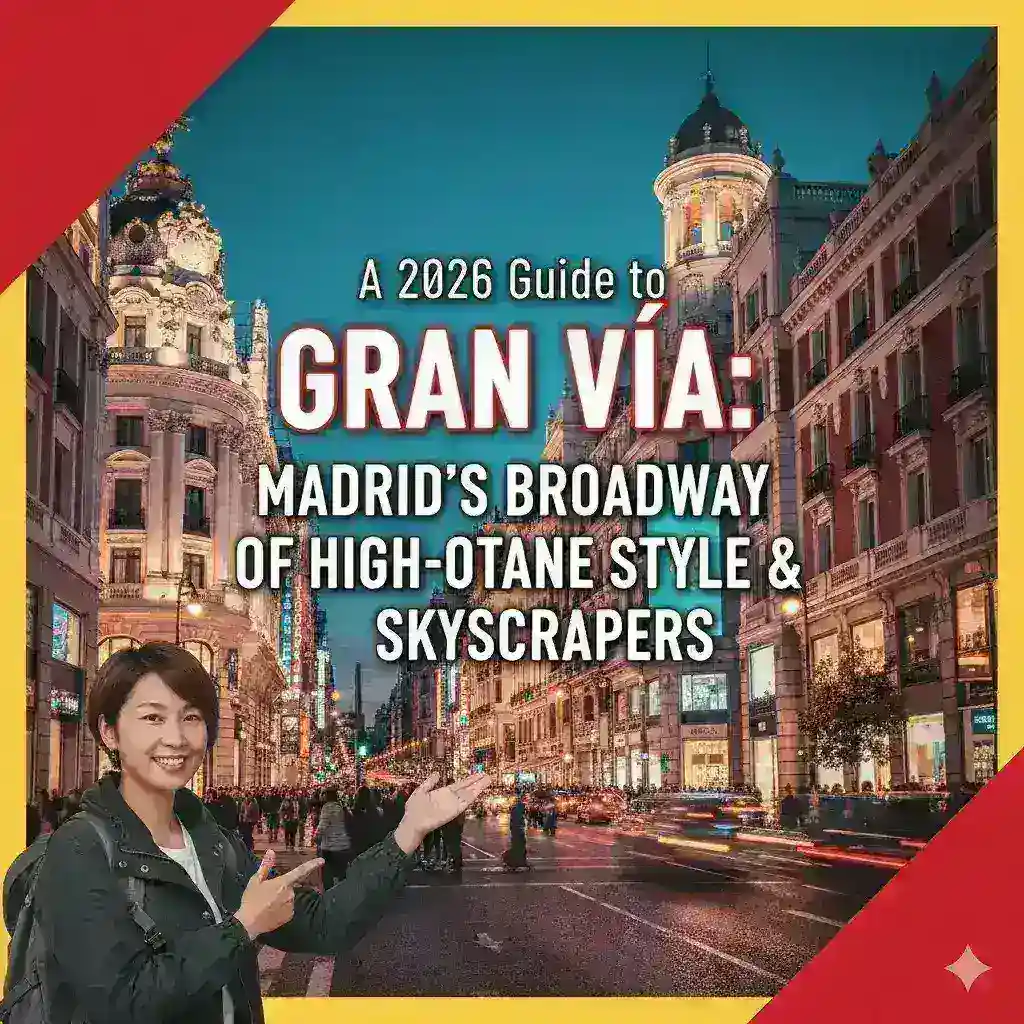
Gran Vía: A 2026 Guide to Madrid's Broadway of High-Octane Style and Skyscrapers
In the pulsing heart of Madrid stretches an avenue that embodies the city's modern spirit, architectural ambition, and theatrical flair. Gran Vía, often called "Madrid's Broadway" or "La Calle que Nunca Duerme" (The Street That Never Sleeps), is far more than a thoroughfare—it is a living showcase of early 20th-century urban innovation, a temple of shopping and entertainment, and one of Europe's most iconic urban landscapes. As we explore this extraordinary avenue in 2026, Gran Vía continues to captivate millions of visitors annually with its soaring skyscrapers, glittering neon signs, world-class theaters, and the electric energy that defines Madrid's most famous street.
Opened in stages between 1910 and 1931, Gran Vía was Madrid's bold answer to the great avenues of Paris, London, and New York. This ambitious urban project transformed the city's medieval fabric, creating a modern boulevard lined with groundbreaking architecture, luxury hotels, department stores, and entertainment venues. Today, the avenue stretches 1,319 meters (4,327 feet) from Calle de Alcalá to Plaza de España, serving as Madrid's premier shopping destination, theatrical hub, and architectural showcase. From the iconic Edificio Metrópolis with its gilded winged victory to the Art Deco splendor of the Edificio Telefónica, from dazzling musicals in historic theaters to rooftop bars with panoramic city views, Gran Vía offers an immersive experience of Madrid's high-octane style and cosmopolitan spirit.
This comprehensive master guide invites you to explore Gran Vía not merely as a shopping street, but as a living document of Madrid's modernization, a stage for contemporary culture, and a vibrant urban experience that captures the essence of Spanish city life. We'll delve into the avenue's fascinating history, highlight architectural masterpieces and cultural landmarks, provide practical insights for experiencing Gran Vía's shopping, dining, and entertainment, and reveal lesser-known corners that reward curious explorers. Whether you're planning your first visit to Madrid or seeking to deepen your connection with this remarkable avenue, this guide will help you experience Gran Vía with curiosity, context, and wonder.
A Vision of Modernity: The Creation of Gran Vía
The story of Gran Vía begins with ambition and urban necessity. By the late 19th century, Madrid's medieval street pattern was choking the city's growth. Narrow, winding streets couldn't accommodate increasing traffic, and the city lacked a modern boulevard befitting a European capital. The solution was radical: carve a grand avenue through the heart of the old city, demolishing hundreds of buildings and displacing thousands of residents.
Key Historical Milestones:
- 1862: First proposals for a grand east-west avenue appear in urban planning documents, though financial and political obstacles delay implementation for decades.
- 1904: The project receives final approval after decades of debate. The avenue is planned in three sections, each requiring massive demolition and reconstruction.
- 1910: King Alfonso XIII inaugurates the first section (from Calle de Alcalá to Red de San Luis), marking the birth of Gran Vía. The project employs thousands of workers and showcases cutting-edge construction techniques.
- 1917: The second section (Red de San Luis to Plaza del Callao) opens, featuring the iconic Edificio Metrópolis and early examples of Madrid's skyscraper architecture.
- 1929: The final section (Plaza del Callao to Plaza de España) is completed, including the monumental Edificio Telefónica, then the tallest building in Europe.
- 1931: The entire avenue is officially named "Gran Vía," though locals had already embraced it as Madrid's premier boulevard.
- 21st Century: Gran Vía undergoes pedestrianization and renovation projects, balancing preservation of historic architecture with contemporary urban needs.
- 👉 Slovenia EES April 2026: Biometric Entry Mandatory for US/UK
- 👉 Spain Visa Rules for Americans (2026 Essential Update)
- 👉 ETIAS 2026: Digital Authorization Required for Andorra via Spain/France
Understanding this history enriches your visit: every building, every facade, every architectural detail reflects the optimism and innovation of early 20th-century Madrid. Gran Vía is not merely a street but a testament to urban ambition, architectural experimentation, and the city's transformation into a modern metropolis.
Architectural Masterpieces: Skyscrapers and Style
Gran Vía is an open-air museum of early 20th-century architecture, showcasing eclectic styles from Beaux-Arts to Art Deco, from Rationalism to Neo-Mudéjar. These architectural landmarks define Madrid's skyline and represent some of the city's most photographed buildings.
Edificio Metrópolis (Corner of Calle de Alcalá): Completed in 1911, this is Gran Vía's most iconic building and one of Madrid's most recognizable landmarks. Designed by architects Jules and Raymond Fevrier, the building features:
- Winged Victory Statue: A gilded bronze sculpture crowns the dome, originally representing Victory but later modified to represent Fame. The statue is illuminated at night, creating a beacon visible from across the city.
- Beaux-Arts Facade: Ornate stone carvings, columns, and decorative elements reflect French academic architecture adapted for Madrid.
- Corner Location: The building's prominent position at Gran Vía's eastern terminus makes it a natural starting point for exploring the avenue.
- 👉 Slovenia EES April 2026: Biometric Entry Mandatory for US/UK
- 👉 Spain Visa Rules for Americans (2026 Essential Update)
- 👉 ETIAS 2026: Digital Authorization Required for Andorra via Spain/France
Edificio Telefónica (Gran Vía 28): Completed in 1929, this was Europe's tallest building at the time and remains one of Gran Vía's most impressive structures. Designed by Spanish architect Ignacio de Cárdenas Pastor, the building showcases:
- Art Deco Design: Vertical lines, geometric ornamentation, and a stepped tower reflect the modernist aesthetic of the 1920s.
- Height and Scale: At 89 meters (292 feet) with 11 floors, it dominated Madrid's skyline for decades and announced the city's arrival as a modern capital.
- Historic Significance: Originally built as headquarters for the Spanish telephone company, it represented technological progress and communication innovation.
- Current Use: Now houses Telefónica Foundation cultural spaces and offices, with occasional public exhibitions.
- 👉 Slovenia EES April 2026: Biometric Entry Mandatory for US/UK
- 👉 Spain Visa Rules for Americans (2026 Essential Update)
- 👉 ETIAS 2026: Digital Authorization Required for Andorra via Spain/France
Palacio de la Prensa (Plaza del Callao): Completed in 1930, this building by architect Pedro Muguruza is a masterpiece of Spanish Rationalist architecture:
- Cinema and Offices: Originally housed a cinema and newspaper offices, reflecting Gran Vía's role as Madrid's entertainment and media center.
- Geometric Facade: Clean lines, horizontal emphasis, and minimal ornamentation exemplify the modernist movement.
- Corner Tower: A distinctive cylindrical tower adds vertical interest and makes the building a landmark at the busy Callao intersection.
- 👉 Slovenia EES April 2026: Biometric Entry Mandatory for US/UK
- 👉 Spain Visa Rules for Americans (2026 Essential Update)
- 👉 ETIAS 2026: Digital Authorization Required for Andorra via Spain/France
Edificio Carrión (Plaza del Callao): Also known as Cine Capitol, this 1933 building combines residential, commercial, and entertainment functions:
- Art Deco Cinema: The historic cinema features a stunning interior with decorative plasterwork and a grand staircase.
- Hotel and Apartments: Upper floors house the Vincci Capitol Hotel, offering rooms with Gran Vía views.
- Schweppes Sign: The building's iconic neon sign is one of Gran Vía's most photographed features, especially at night.
- 👉 Slovenia EES April 2026: Biometric Entry Mandatory for US/UK
- 👉 Spain Visa Rules for Americans (2026 Essential Update)
- 👉 ETIAS 2026: Digital Authorization Required for Andorra via Spain/France
Edificio España (Plaza de España): Completed in 1953, this massive building by architects Julián and José Luis Otamendi was once Spain's tallest building:
- Monumental Scale: At 117 meters (384 feet) with 25 floors, it dominates the western end of Gran Vía and Plaza de España.
- Rationalist Design: Stark, imposing facade reflects post-war architectural trends and the building's mixed-use function.
- Recent Renovation: After years of abandonment, the building was renovated and reopened as a luxury hotel and residential complex.
- 👉 Slovenia EES April 2026: Biometric Entry Mandatory for US/UK
- 👉 Spain Visa Rules for Americans (2026 Essential Update)
- 👉 ETIAS 2026: Digital Authorization Required for Andorra via Spain/France
Theater and Entertainment: Madrid's Broadway
Gran Vía's nickname as "Madrid's Broadway" is well-earned. The avenue is home to some of Spain's most important theaters, hosting world-class musicals, plays, and performances that draw audiences from across the country.
Major Theaters:
- Teatro Lope de Vega: One of Madrid's premier musical theaters, hosting long-running productions like The Lion King and other international hits. The theater's elegant interior and excellent acoustics make it a favorite venue.
- Teatro Coliseum: A historic venue that has hosted everything from zarzuela (Spanish operetta) to contemporary musicals. Its Art Deco interior is a work of art in itself.
- Teatro Rialto: A beautifully restored theater featuring a mix of musicals, concerts, and cultural events. The building's facade is a Gran Vía landmark.
- Teatro Calderón: One of the oldest theaters on Gran Vía, offering a diverse program of musicals, plays, and performances.
- Cine Callao: A historic cinema that premiered many important films and continues to show major releases in a grand setting.
- 👉 Slovenia EES April 2026: Biometric Entry Mandatory for US/UK
- 👉 Spain Visa Rules for Americans (2026 Essential Update)
- 👉 ETIAS 2026: Digital Authorization Required for Andorra via Spain/France
Musical Productions: Gran Vía's theaters regularly host Spanish and international musicals. Current and recent productions have included:
- The Lion King (El Rey León) - A long-running favorite
- Mamma Mia! - ABBA's musical phenomenon
- Les Misérables - The classic musical adaptation
- The Phantom of the Opera - Andrew Lloyd Webber's masterpiece
- Spanish productions of contemporary musicals and zarzuelas
- 👉 Slovenia EES April 2026: Biometric Entry Mandatory for US/UK
- 👉 Spain Visa Rules for Americans (2026 Essential Update)
- 👉 ETIAS 2026: Digital Authorization Required for Andorra via Spain/France
Ticket Information: Book theater tickets in advance, especially for popular productions and weekend performances. Prices range from €25-100+ depending on the show and seat location. Online booking through theater websites or platforms like Ticketmaster is recommended.
Theater District Atmosphere: The section of Gran Vía between Plaza del Callao and Plaza de España is the theatrical heart of the avenue. Before performances, the area buzzes with excitement as theatergoers gather, street performers entertain, and cafés fill with pre-show diners. This vibrant atmosphere is part of the Gran Vía experience.
Shopping and Style: From High Street to Luxury
Gran Vía is Madrid's premier shopping destination, offering everything from international high-street brands to luxury boutiques, from historic department stores to trendy concept shops.
Major Shopping Destinations:
- El Corte Inglés (Callao): Spain's largest department store chain has a flagship location on Gran Vía, offering fashion, cosmetics, home goods, and a gourmet food hall. The building's rooftop terrace offers panoramic city views.
- Primark (Gran Vía 32): One of Europe's largest Primark stores occupies a historic building, offering affordable fashion across multiple floors. The building's restored facade is a Gran Vía landmark.
- Zara, Mango, H&M: Major Spanish and international fashion brands have flagship stores along the avenue, showcasing their latest collections in prominent locations.
- Sephora and Douglas: Beauty and cosmetics retailers offer extensive selections of international and Spanish brands.
- Fnac: A French retailer offering books, music, electronics, and cultural products, with a café and occasional events.
- 👉 Slovenia EES April 2026: Biometric Entry Mandatory for US/UK
- 👉 Spain Visa Rules for Americans (2026 Essential Update)
- 👉 ETIAS 2026: Digital Authorization Required for Andorra via Spain/France
Luxury and Specialty Shopping:
- Jewelry and Watches: Historic jewelers and watchmakers have shops on Gran Vía, offering both classic and contemporary pieces.
- Spanish Fashion: Look for Spanish designers and brands that showcase Madrid's fashion innovation.
- Souvenirs and Gifts: While Gran Vía is less touristy than other areas, you'll find quality Spanish products, gourmet foods, and design objects.
- 👉 Slovenia EES April 2026: Biometric Entry Mandatory for US/UK
- 👉 Spain Visa Rules for Americans (2026 Essential Update)
- 👉 ETIAS 2026: Digital Authorization Required for Andorra via Spain/France
Shopping Hours:
- Monday-Saturday: Most stores open 10:00 AM to 9:00 or 10:00 PM
- Sunday: Some stores open, particularly during tourist season; hours vary
- Sales Seasons: January-February (winter sales) and July-August (summer sales) offer significant discounts
- 👉 Slovenia EES April 2026: Biometric Entry Mandatory for US/UK
- 👉 Spain Visa Rules for Americans (2026 Essential Update)
- 👉 ETIAS 2026: Digital Authorization Required for Andorra via Spain/France
Shopping Tips:
- Tax-Free Shopping: Non-EU residents can claim VAT refunds on purchases over €90.15; look for "Tax-Free Shopping" signs and ask store staff for assistance.
- Payment: Credit and debit cards are widely accepted; contactless payment is common.
- Crowds: Gran Vía is busiest on Saturday afternoons and during sales periods; visit weekday mornings for a more relaxed experience.
- 👉 Slovenia EES April 2026: Biometric Entry Mandatory for US/UK
- 👉 Spain Visa Rules for Americans (2026 Essential Update)
- 👉 ETIAS 2026: Digital Authorization Required for Andorra via Spain/France
Dining and Nightlife: Flavors and Entertainment
Gran Vía offers diverse dining and nightlife options, from quick bites to fine dining, from traditional Spanish taverns to trendy cocktail bars.
Dining Options:
- Rooftop Bars and Restaurants: Several buildings on Gran Vía feature rooftop terraces with panoramic city views. Notable options include:
- Círculo de Bellas Artes: The rooftop terrace offers 360-degree views, cocktails, and light fare in a cultural setting.
- Hotel Rooftops: Hotels like the Vincci Capitol and others offer rooftop bars with Gran Vía views.
- Traditional Spanish: Look for tapas bars and restaurants serving classic Spanish dishes, particularly on side streets off Gran Vía.
- International Cuisine: Gran Vía and surrounding areas offer Italian, Asian, Latin American, and other international options.
- Cafés and Bakeries: Historic cafés and modern coffee shops provide perfect spots for people-watching and rest breaks.
- 👉 Slovenia EES April 2026: Biometric Entry Mandatory for US/UK
- 👉 Spain Visa Rules for Americans (2026 Essential Update)
- 👉 ETIAS 2026: Digital Authorization Required for Andorra via Spain/France
Nightlife:
- Theater District Bars: Pre- and post-theater drinks are a Gran Vía tradition; bars near theaters fill with theatergoers before shows and during intermissions.
- Cocktail Bars: Trendy cocktail bars and lounges offer creative drinks and sophisticated atmospheres.
- Live Music: Some venues feature live music, from jazz to flamenco to contemporary bands.
- Late-Night Scene: Gran Vía stays lively late into the night, particularly on weekends, with bars and clubs attracting both locals and visitors.
- 👉 Slovenia EES April 2026: Biometric Entry Mandatory for US/UK
- 👉 Spain Visa Rules for Americans (2026 Essential Update)
- 👉 ETIAS 2026: Digital Authorization Required for Andorra via Spain/France
Practical Guide: Visiting Gran Vía in 2026
Thoughtful planning enhances your experience of this vibrant avenue.
Best Time to Visit:
- Morning (10 AM-12 PM): Shops open, streets are less crowded, and natural light is ideal for photography.
- Late Afternoon (5-7 PM): Golden hour light enhances building facades; theater crowds begin to gather; vibrant atmosphere.
- Evening (After 8 PM): Neon signs illuminate the avenue; theaters fill; nightlife begins; Gran Vía's energy peaks.
- Weekdays: Tuesday-Thursday typically see fewer crowds than weekends.
- Avoid: Saturday afternoons and major sales periods if you prefer less crowded conditions.
- 👉 Slovenia EES April 2026: Biometric Entry Mandatory for US/UK
- 👉 Spain Visa Rules for Americans (2026 Essential Update)
- 👉 ETIAS 2026: Digital Authorization Required for Andorra via Spain/France
Getting There:
- Metro: Multiple stations serve Gran Vía: Gran Vía (Lines 1, 5), Callao (Lines 3, 5), Tribunal (Lines 1, 10), and Plaza de España (Lines 3, 10)
- Bus: Numerous bus routes run along or near Gran Vía, including routes 1, 2, 46, 74, 133, 146, 147, 148
- Walking: Gran Vía is easily reached on foot from Puerta del Sol, Plaza Mayor, or Malasaña neighborhood
- Bike: Madrid's public bike system (BiciMAD) has stations near Gran Vía
- 👉 Slovenia EES April 2026: Biometric Entry Mandatory for US/UK
- 👉 Spain Visa Rules for Americans (2026 Essential Update)
- 👉 ETIAS 2026: Digital Authorization Required for Andorra via Spain/France
Accessibility:
- Wheelchair Access: Sidewalks are generally accessible, though some historic buildings may have steps at entrances.
- Metro Access: Gran Vía and Callao metro stations have elevators for accessibility.
- Theaters: Major theaters offer accessible seating and facilities; inquire when booking tickets.
- Shops: Most major retailers are accessible; some historic buildings may have limited access.
- 👉 Slovenia EES April 2026: Biometric Entry Mandatory for US/UK
- 👉 Spain Visa Rules for Americans (2026 Essential Update)
- 👉 ETIAS 2026: Digital Authorization Required for Andorra via Spain/France
Walking the Avenue:
- Distance: Full length is 1,319 meters (about 0.8 miles); allow 30-45 minutes to walk end-to-end without stops.
- Sections: Gran Vía is divided into three sections: from Calle de Alcalá to Red de San Luis, from Red de San Luis to Plaza del Callao, and from Plaza del Callao to Plaza de España.
- Pedestrianization: Parts of Gran Vía have been pedestrianized or have widened sidewalks, making walking more pleasant.
- 👉 Slovenia EES April 2026: Biometric Entry Mandatory for US/UK
- 👉 Spain Visa Rules for Americans (2026 Essential Update)
- 👉 ETIAS 2026: Digital Authorization Required for Andorra via Spain/France
Photography Tips: Capturing Gran Vía's Energy
Gran Vía offers exceptional photographic opportunities, from architectural details to street life to nighttime neon.
Best Angles and Locations:
- Edificio Metrópolis at Sunrise: Early morning light illuminates the gilded statue and facade with fewer crowds.
- Gran Vía from Above: Rooftop terraces at Círculo de Bellas Artes or hotel bars offer elevated perspectives of the avenue.
- Neon Signs at Night: After dark, Gran Vía's neon signs create a spectacular display; long exposures capture light trails from traffic.
- Architectural Details: Focus on ornate facades, Art Deco elements, and decorative ironwork for compelling close-ups.
- Street Life: Capture the energy of pedestrians, street performers, and the avenue's constant motion.
- Plaza del Callao: This busy intersection offers dynamic compositions with buildings, traffic, and people.
- 👉 Slovenia EES April 2026: Biometric Entry Mandatory for US/UK
- 👉 Spain Visa Rules for Americans (2026 Essential Update)
- 👉 ETIAS 2026: Digital Authorization Required for Andorra via Spain/France
Lighting Considerations:
- Golden Hour: The hour before sunset provides warm, directional light that enhances building facades and creates long shadows.
- Blue Hour: The period just after sunset, when the sky turns deep blue and neon signs illuminate, offers magical atmospheric shots.
- Night Photography: Use a tripod for long exposures; capture light trails from traffic and illuminated buildings.
- Overcast Days: Soft, diffused light is ideal for photographing architectural details without harsh shadows.
- 👉 Slovenia EES April 2026: Biometric Entry Mandatory for US/UK
- 👉 Spain Visa Rules for Americans (2026 Essential Update)
- 👉 ETIAS 2026: Digital Authorization Required for Andorra via Spain/France
Etiquette: Be mindful of traffic and pedestrians when taking photos. Avoid blocking sidewalks or creating safety hazards. Respect people's privacy when photographing street scenes.
Cultural Significance and Modern Life
Gran Vía is more than a shopping street—it is a symbol of Madrid's modernity, a stage for cultural expression, and a living part of the city's identity.
Urban Heritage: Gran Vía represents a pivotal moment in Madrid's urban development. Its creation required demolishing entire neighborhoods and reshaping the city's fabric. Today, it stands as a protected historic ensemble, with many buildings designated as Bienes de Interés Cultural (Cultural Interest Assets).
Cinematic Icon: Gran Vía has appeared in countless Spanish and international films, music videos, and advertisements. Its distinctive architecture and vibrant atmosphere make it a natural setting for stories about Madrid.
Contemporary Challenges: Like many iconic urban streets, Gran Vía faces challenges: balancing tourism with local life, preserving historic architecture while accommodating modern needs, and managing crowds and traffic. Ongoing renovation and pedestrianization projects aim to address these issues while maintaining the avenue's character.
Community and Identity: For Madrileños, Gran Vía is both a source of pride and a part of daily life. Locals shop here, attend theater, meet friends, and celebrate special occasions. Understanding this local connection enriches your experience of the avenue.
Seasonal Highlights and Special Events
Gran Vía transforms with the seasons and hosts various events throughout the year.
Christmas Season (November-January):
- Lights and Decorations: Gran Vía's Christmas lights are spectacular, with elaborate displays spanning the avenue.
- Holiday Shopping: Department stores and shops feature festive displays and special promotions.
- New Year's Eve: Gran Vía is a popular gathering place for New Year's celebrations, though Puerta del Sol is the main event location.
- 👉 Slovenia EES April 2026: Biometric Entry Mandatory for US/UK
- 👉 Spain Visa Rules for Americans (2026 Essential Update)
- 👉 ETIAS 2026: Digital Authorization Required for Andorra via Spain/France
Spring and Summer:
- Outdoor Events: Occasional street festivals, concerts, and cultural events take place on Gran Vía or nearby plazas.
- Longer Days: Extended daylight hours allow for evening strolls and outdoor dining.
- Theater Season: Major productions often run through spring and early summer.
- 👉 Slovenia EES April 2026: Biometric Entry Mandatory for US/UK
- 👉 Spain Visa Rules for Americans (2026 Essential Update)
- 👉 ETIAS 2026: Digital Authorization Required for Andorra via Spain/France
Year-Round:
- Theater Premieres: New productions open throughout the year, particularly in fall and spring.
- Sales Periods: January-February and July-August feature major sales with significant discounts.
- Cultural Events: Check local listings for special exhibitions, concerts, and performances.
- 👉 Slovenia EES April 2026: Biometric Entry Mandatory for US/UK
- 👉 Spain Visa Rules for Americans (2026 Essential Update)
- 👉 ETIAS 2026: Digital Authorization Required for Andorra via Spain/France
Sustainable and Responsible Tourism
Visiting Gran Vía responsibly helps preserve this iconic avenue for future generations.
Respectful Behavior:
- Pedestrian Etiquette: Gran Vía is busy; walk on the right, avoid blocking sidewalks, and be mindful of others.
- Noise Levels: Keep conversations at reasonable volumes, especially in residential areas above shops.
- Waste Disposal: Use public bins; don't litter. Madrid has strict anti-littering regulations.
- Photography Respect: Be mindful of people's privacy when photographing street scenes.
- 👉 Slovenia EES April 2026: Biometric Entry Mandatory for US/UK
- 👉 Spain Visa Rules for Americans (2026 Essential Update)
- 👉 ETIAS 2026: Digital Authorization Required for Andorra via Spain/France
Supporting Local:
- Shop Local: While international brands dominate, look for Spanish products and locally-owned shops on side streets.
- Dine Locally: Explore restaurants and cafés on streets branching from Gran Vía for more authentic experiences and to support local businesses.
- Cultural Participation: Attend theater performances, visit cultural centers, and engage with Madrid's artistic life.
- 👉 Slovenia EES April 2026: Biometric Entry Mandatory for US/UK
- 👉 Spain Visa Rules for Americans (2026 Essential Update)
- 👉 ETIAS 2026: Digital Authorization Required for Andorra via Spain/France
Environmental Considerations:
- Public Transportation: Use metro, bus, or walk to reach Gran Vía rather than driving.
- Sustainable Shopping: Consider the environmental impact of purchases; support brands with sustainable practices.
- Waste Reduction: Use reusable bags when shopping; avoid single-use plastics.
- 👉 Slovenia EES April 2026: Biometric Entry Mandatory for US/UK
- 👉 Spain Visa Rules for Americans (2026 Essential Update)
- 👉 ETIAS 2026: Digital Authorization Required for Andorra via Spain/France
Conclusion: The Heart of Modern Madrid
Gran Vía in 2026 offers travelers an electrifying journey through Madrid's modern soul. From the gilded heights of the Edificio Metrópolis to the Art Deco grandeur of the Edificio Telefónica, from the thrill of a Broadway-style musical to the joy of discovering the perfect pair of shoes, from rooftop sunsets to neon-lit nights, Gran Vía embodies the energy, style, and sophistication of contemporary Madrid.
Understanding Gran Vía's history as a bold urban project, appreciating its architectural diversity, and engaging with its vibrant street life will transform your visit from simple sightseeing into meaningful connection. Whether you're watching a sunset from a rooftop terrace, feeling the thrill of a theater curtain rising, or simply people-watching from a café terrace, Gran Vía invites you to experience Madrid at its most dynamic.
As you plan your journey to Madrid in 2026, make time to experience Gran Vía not as a checklist of shops and sights, but as a living expression of Madrid's urban spirit. Allow its energy to energize you. Follow your curiosity into theaters, shops, and cafés. Reflect on the conversations it invites about urban life, culture, and the cities we create. These moments of connection transform a visit into a memory, and a memory into a deeper appreciation for Madrid's modern heart.
Gran Vía awaits. Step into Madrid's Broadway. Discover the architecture. Experience the energy. Your journey through Madrid's most iconic avenue begins now.
0 Comments